6 min read

The Soul Named Its Gilgul Before the Bell Rang

At the edge of one life the soul finally understood the assignment. Unfinished work still waited, and resurrection stood ahead as more than a soft rumor.

Curated by Arthur · Told by Maggid ·
Table of Contents
  1. Clarity at the Wrong Hour
  2. Unfinished Work After Understanding
  3. The Soul That Began at the Peak
  4. Resurrection as Hard Certainty
  5. When the Bell Is About to Ring
The Soul Named Its Gilgul Before the Bell Rang Click for full size

Clarity at the Wrong Hour

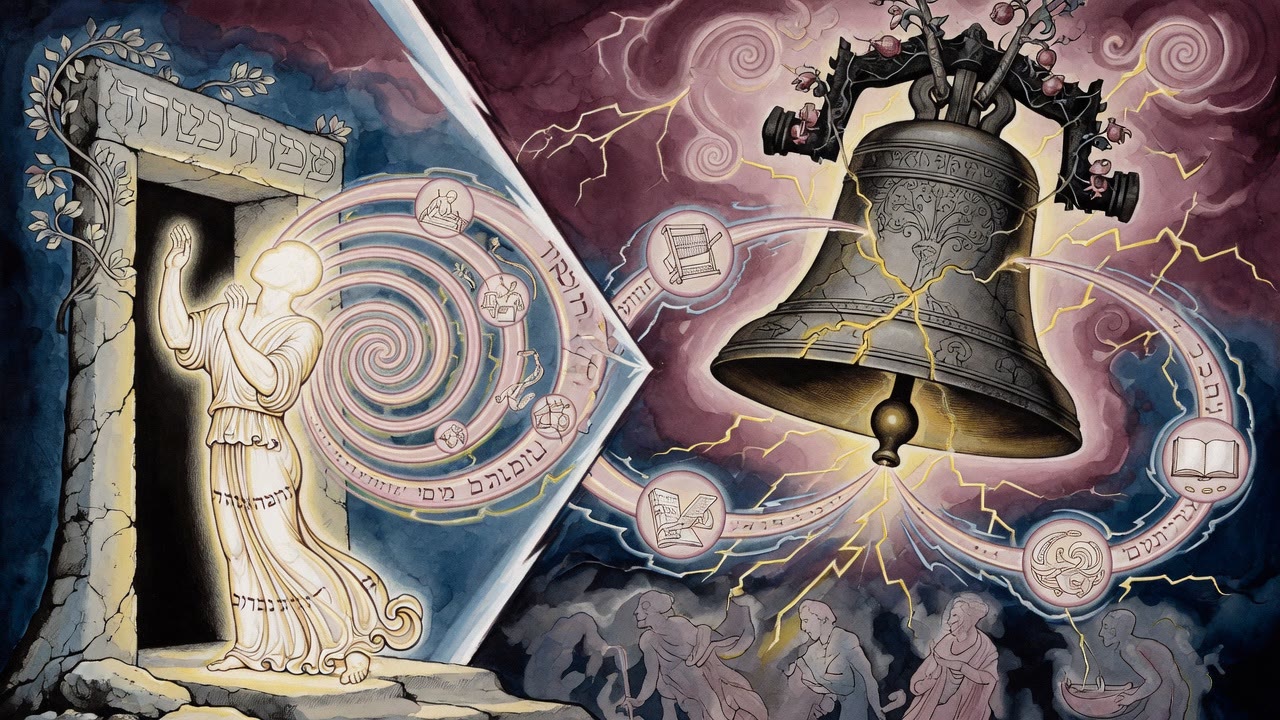
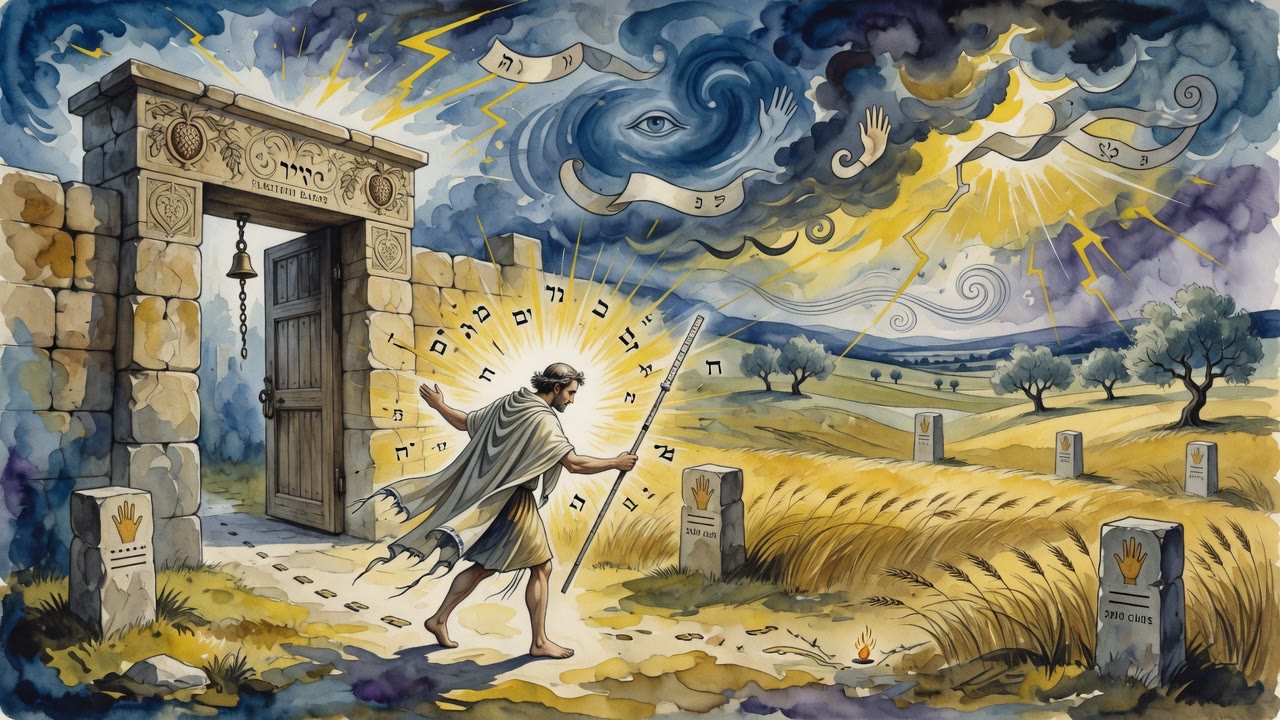
The Soul spoke from inside a body that had almost finished its years. Not with lungs alone. With the kind of knowing that arrives when excuses run out and the calendar stops negotiating. "I now understand what is adequate for me in this incarnation and the reward of the future." The sentence landed like a bell in an empty hall. Late clarity. Useful anyway. Better late than the lifelong shrug that pretends there was never an assignment.

A whole gilgul (גלגול), a turning of the soul through a life with a name and a set of parents and a street that remembered its footsteps, had been the classroom. The Soul had complained, delayed, pretended not to hear, bargained for easier lessons. Now the map made sense in a way that hurt. The hard teacher. The closed door. The love that did not fit. The talent used sideways. Each piece showed its edge, sharp enough to cut the finger that traced it.

Outside, someone boiled water. Ordinary sound. Inside, the incarnation was being named at last, which is a kind of death before death, and also a kind of birth of responsibility.

Unfinished Work After Understanding

Understanding did not cancel the syllabus. "Now we need to complete the matters that we started." The Soul did not mean nostalgia for youth. It meant loose ends that still belonged to this body, this name, this set of debts and repairs that no later life would cleanly inherit without residue. Insight without completion is a lamp left in a hallway while the rooms stay dark and the guests still trip.

So the last stretch of life tightened. Words that needed saying across a table sticky with old silence. A grudge that needed burying before the body needed burying. A mitzvah (a commandment) postponed until "later," which had almost become never and now had a date. Money owed. Thanks owed. A public face that needed one honest correction. The incarnation was not a story to summarize for a eulogy. It was a job to finish while hands still moved and a mouth could still shape apology without needing a medium.

Some nights the Soul wanted to rest in the new understanding as if understanding itself were the finish line. The body knew better. Understanding is a tool. Tools do not replace the work.

The Soul That Began at the Peak

Before this descent, the teaching says, the soul was emanated in great strength, already holding the perfected state planned for the end-time of perfection. Then came the strange order from above: go and diminish yourself until you return to your original place, elevated by your actions. Nothing new under the sun. The end was the first thought. The middle is the climb back to a height already known above, forgotten below, recovered in fragments through choice.

That is why a gilgul (reincarnation) can feel like failure when it is only distance from a remembered peak the mind cannot quite picture. The soul is not inventing a self from zero like a potter with no model. It is recovering a form it once wore in pure light. Diminishment is not insult. It is the field where merit grows because there is resistance. Without the fall in degree, return would be tourism, not repair. Tourists take pictures. Repairers bleed a little and stay.

The late-understanding Soul saw the geometry. Peak, descent, climb. The bell had not rung yet. The climb still had stairs under the feet.

Resurrection as Hard Certainty

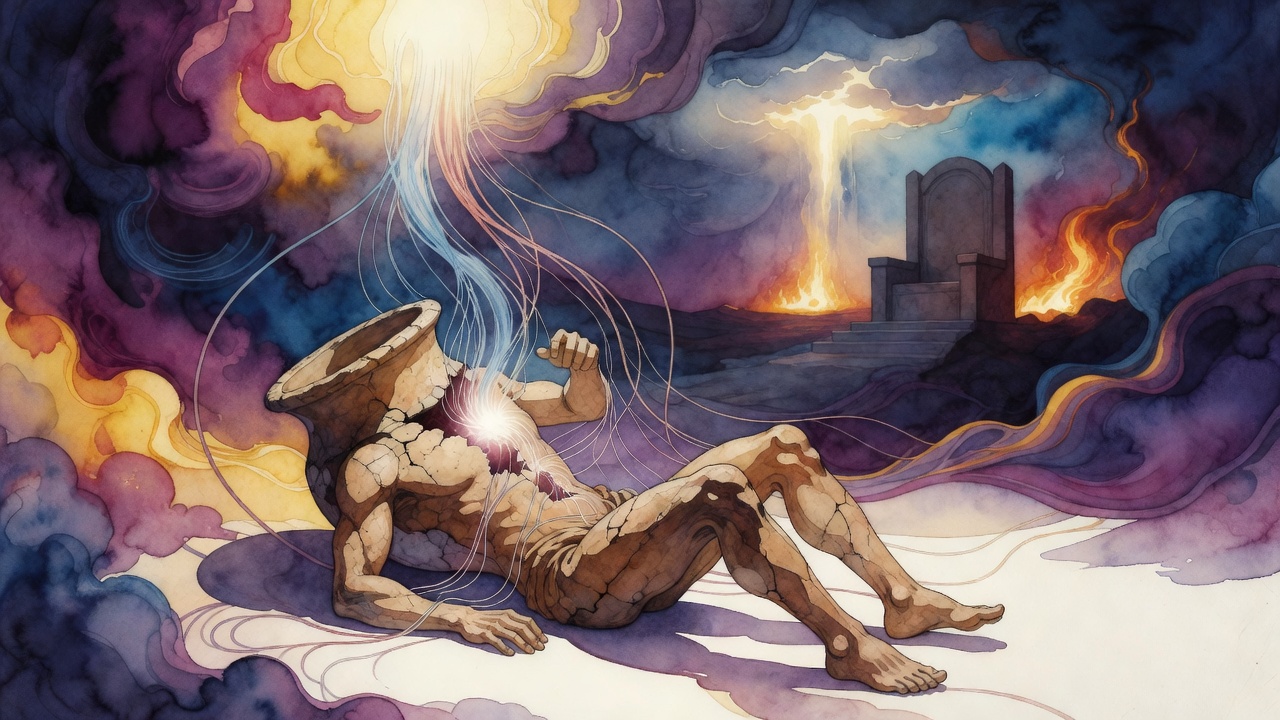
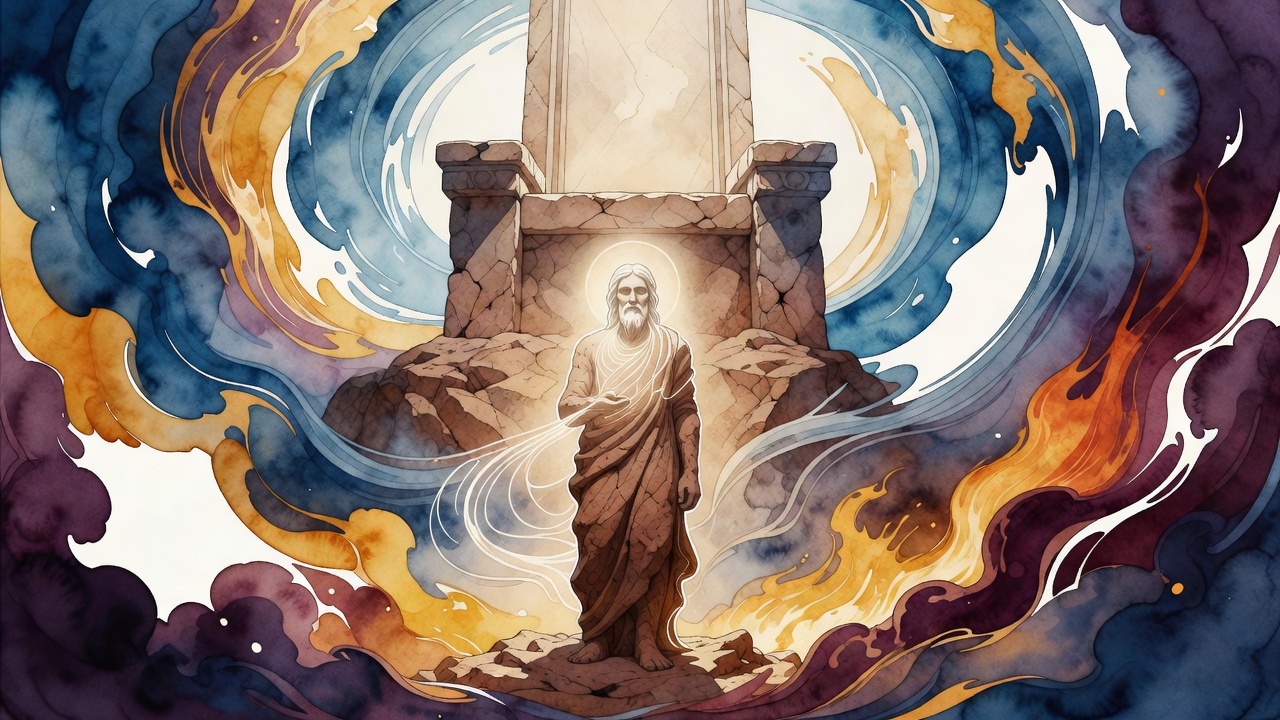
The Intellect does not treat techiyat hameitim (תחיית המתים), the revival of the dead, as a soft hope for soft hours. It names it with absolute certainty, the way one names sunrise before dawn because the pattern has been promised and built into the world's aim. The body that carried the work is not trash to be discarded forever while the soul floats free of consequence. The soul's journey aims at reunion, not permanent divorce. Justice wants the same hands that bruised and healed to stand again in a mended world and recognize what they did.

Cycles of mourning in Jewish life already behave as if stories are unfinished. Names are repeated in rooms. Stones are set on markers. The dead are treated as more than closed files in a drawer no one opens. Resurrection is that instinct raised to doctrine and aimed at a perfected future for the many, not only private comfort for the grieving few. The Soul at the edge of its gilgul felt that future as pressure, not perfume. If bones will rise, then what these bones do now still counts twice.

When the Bell Is About to Ring

The Soul at the edge of its gilgul does not panic into empty mysticism. It inventories with a clerk's stubbornness. What was this life for? What still sits unpaid on the ledger? What reward is not bribe but consequence of form restored? Curtains feel near. The play is not over until the last line is spoken with a whole mouth, even if the voice cracks on the vowels.

Some incarnations end clean, accounts balanced, hands open. Some end with a list that shames the one who sees it late. The list is not cruelty from a bored heaven. It is the respect heaven pays to freedom. A soul that understands late still has late work, and late work is still work. The bell has not rung while breath remains. Complete what you started. Then let the future, including bones that will rise under a renewed light, hold the rest without lying about the middle years that made the list necessary.

In the kitchen the water boiled over. Someone cursed softly and reached for a cloth. The Soul smiled without lips. Ordinary world, still the classroom. Still time for one more repair before the bell.


← All myths

From the tradition

Sources

3 sources

The texts behind this telling. Some cards carry a translation of the source; others are our own retelling of it, and each card says which. Every card links out to the original.

Da'at Tevunot 75:1Da'at Tevunot

Retold in our words. Read the original at the link below.Sefaria Community Translation · CC-BY

Curtains. Game over. We've all been there. But what if that "something" wasn't just a project or a hobby, but your entire life? Your very gilgul (the reincarnation of souls), your incarnation?

That's the kind of moment we find ourselves in as we explore Da'at (Knowledge) Tevunot, a fascinating exploration of Jewish thought. In this particular passage, we encounter the Soul itself speaking. And what it has to say is The Soul declares, "I now understand that which is adequate for me now in the matter of this incarnation and the reward of the future."

Pause for a moment. Let that sink in. The Soul, after presumably a whole lifetime of experience, of learning, of growth, feels it finally gets it. It understands what was necessary for this particular journey, this particular lifetime. It understands, too, the reward that awaits.

A wave of clarity washes over you. But then…what?

And that's exactly what the Soul addresses next. "Now we need to complete the matters that we started."

Doesn't that just resonate? There's a sense of unfinished business, of loose ends that need tying up. This isn't about regretting the past, but about recognizing that there are still things to be done. Even with the wisdom gained, even with an understanding of the bigger picture, there's still a sense of responsibility, a drive to complete what was begun.

This passage is so short, but it hints at something so much larger: the ongoing nature of the soul's journey. It suggests that even after death, after we’ve (hopefully!) earned our reward, there's still work to be done, a continuation of the process of tikkun (spiritual repair) olam, repairing the world.

What unfinished business do we carry with us? What tasks are we meant to complete, not just in this lifetime, but perhaps beyond? And how can we gain the kind of understanding that allows us to truly say, "I get it," and then, more importantly, "Let's get to work."

Full source
Da'at Tevunot 66:1Da'at Tevunot

Retold in our words. Read the original at the link below.Sefaria Community Translation · CC-BY

This isn't just some abstract theological idea. It's something we believe in with absolute certainty, without a shadow of a doubt. At least, that's what the Intellect tells us in Da'at (Knowledge) Tevunot.

What is Da'at Tevunot anyway? It's a work attributed to Rabbi Moshe Chaim Luzzatto (the Ramchal), a brilliant 18th-century Italian Kabbalist. In it, the "Intellect" guides a seeker, revealing profound truths about God, creation, and, yes, even the afterlife.

So, why this unwavering belief in resurrection? What makes it so central?

Perhaps it’s because the idea of resurrection speaks to something fundamental within us: the desire for justice, for wholeness, for the ultimate triumph of life over death. The Zohar, that foundational text of Kabbalah, hints at the mystical underpinnings of this belief, describing the soul's journey and its eventual reunion with the body.

And it's not just about what happens to us as individuals. Resurrection also speaks to the ultimate destiny of the world, the promise of a perfected future, a messianic age where death itself is swallowed up in victory.: The very structure of Jewish life, with its cycles of mourning and remembrance, points towards this hope. We remember those who have passed, not just as memories, but as beings whose stories are still unfolding, whose potential is yet to be fully realized.

Belief in techiyat hameitim isn’t just about accepting a doctrine. It’s about embracing a vision of hope, a conviction that even in the face of death, life – and meaning – ultimately prevails.

So, as we confront the mysteries of life and death, let's remember the profound and enduring promise of resurrection.

Full source
Da'at Tevunot 88:1Da'at Tevunot

Retold in our words. Read the original at the link below.Sefaria Community Translation · CC-BY

Not just the spark, but the blueprint, the ultimate goal already in place before the journey even starts. It's a mind-bending concept, especially when we apply it to ourselves.

In Da'at (Knowledge) Tevunot – a profound exploration of wisdom and understanding – we encounter just this idea. It speaks of the "joining of these two characteristics as one," hinting at a state of wholeness, a perfected state that humanity is destined for in the "end-time of perfection."

Here’s the twist. This perfected state isn’t something we gradually stumble upon. According to Da'at Tevunot, it's actually established first. Imagine the soul, newly emanated from its source. It exists in its ultimate, most complete form. Then, a fascinating instruction comes from above: "Go and diminish yourself, until you return to your original place when elevated by your actions."

So, the soul doesn't start small and grow into greatness. Instead, it begins at its peak and then…descends. It diminishes. It seems counterintuitive. We tend to think of progress as a linear climb, an upward trajectory. But this is something else entirely. It suggests a cycle, a journey of descent followed by ascent.

Da'at Tevunot emphasizes that "there is nothing new under the sun." The soul’s creation isn't diminished from the beginning, only to later elevate itself to something greater. No, the order is reversed. It emanated in its "great strength," and then it diminished, only to eventually return to that initial strength.

Think of it like this: the end action, the final perfected state, is actually the original thought. The seed contains the full potential of the tree. The perfection is established first, followed by the diminishment, and then a return, step by step, to that initial perfection.

Perhaps it suggests that deep down, we already possess the potential for wholeness, for perfection. The journey isn't about creating something new, but about uncovering what's already within us, buried beneath layers of experience, challenges, and diminishment. It's about returning to our source, to the strength and perfection that was there all along.

That even in our moments of doubt, struggle, and apparent imperfection, the blueprint for our ultimate wholeness is already in place, waiting to be rediscovered. Maybe the real work is simply remembering who we truly are.

Full source