5 min read

Rav Sheshet Seeks the House Where Comfort Ends

Under threat of ban, Rav Sheshet hunted one obscure word. The answer named a house of mourning God Himself would not enter.

Curated by Arthur · Told by Maggid ·
Table of Contents
  1. The Word That Would Not Answer Itself
  2. When Rabbi Wept Over the Hidden Ledger
  3. Good That Shames Is Still Judged
  4. One Word, One Ledger, One Room
  5. Why a Ban Hung Over a Dictionary Errand

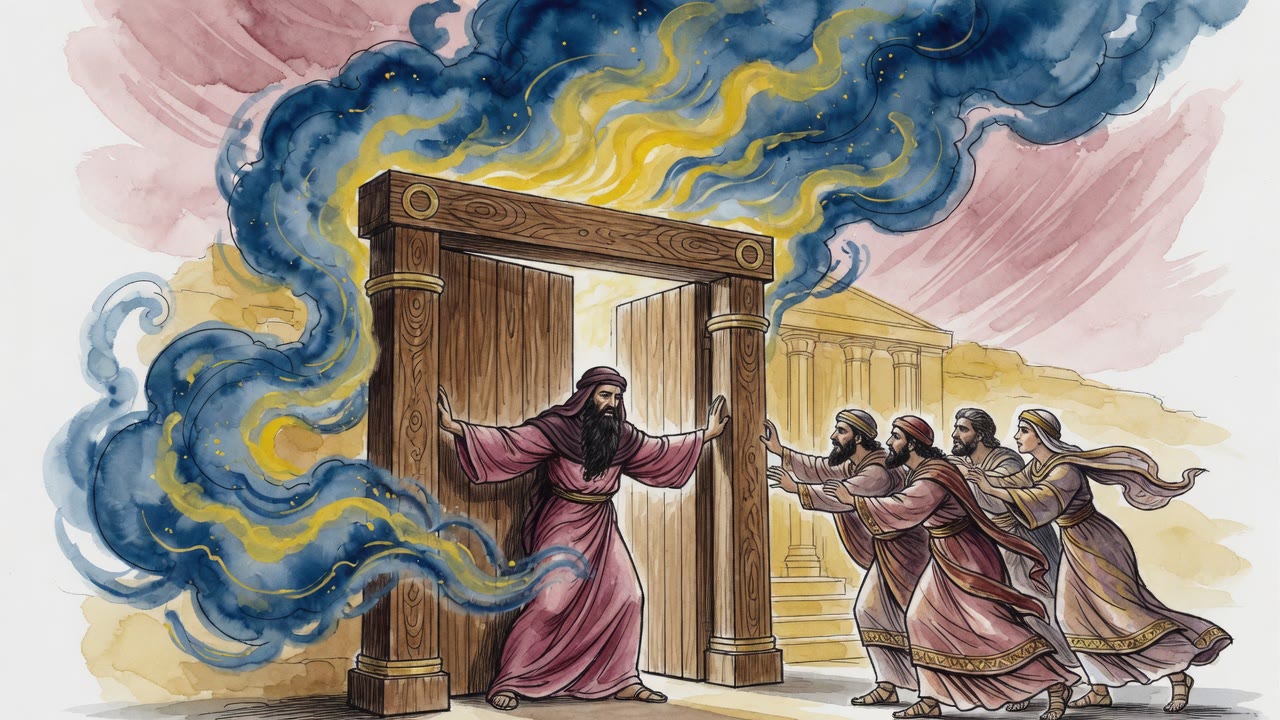
Rav Huna did not send a messenger for a favor. He sent Rav Sheshet with a threat of excommunication if the errand failed. The question sounded small enough to laugh at, until you felt the weight behind it. Who presides at a house of Marzeiah, and what does that last word even mean?
Rav Sheshet Seeks the House Where Comfort Ends Click for full size

Sheshet walked with the ban hanging over his neck like a second collar. In the rabbinic world a single obscure word could empty a life of its standing. He was not hunting gossip. He was hunting a definition that might keep a generation from misreading grief.

The Word That Would Not Answer Itself

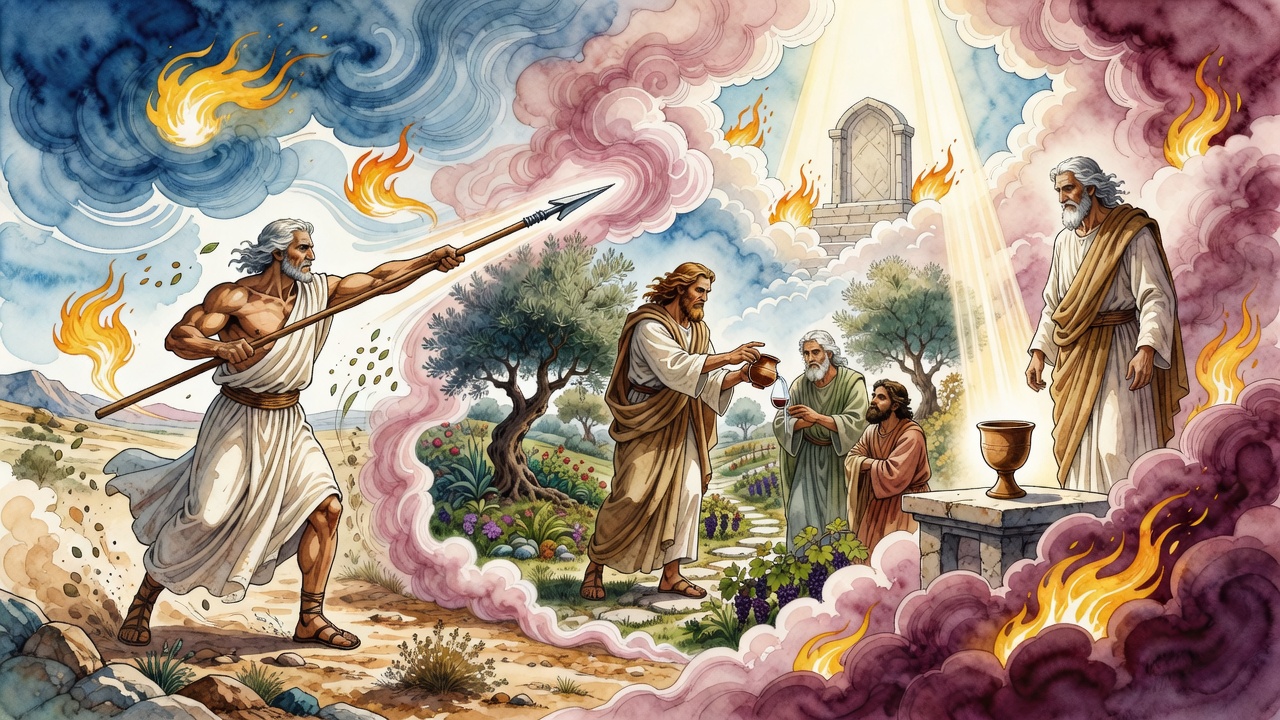
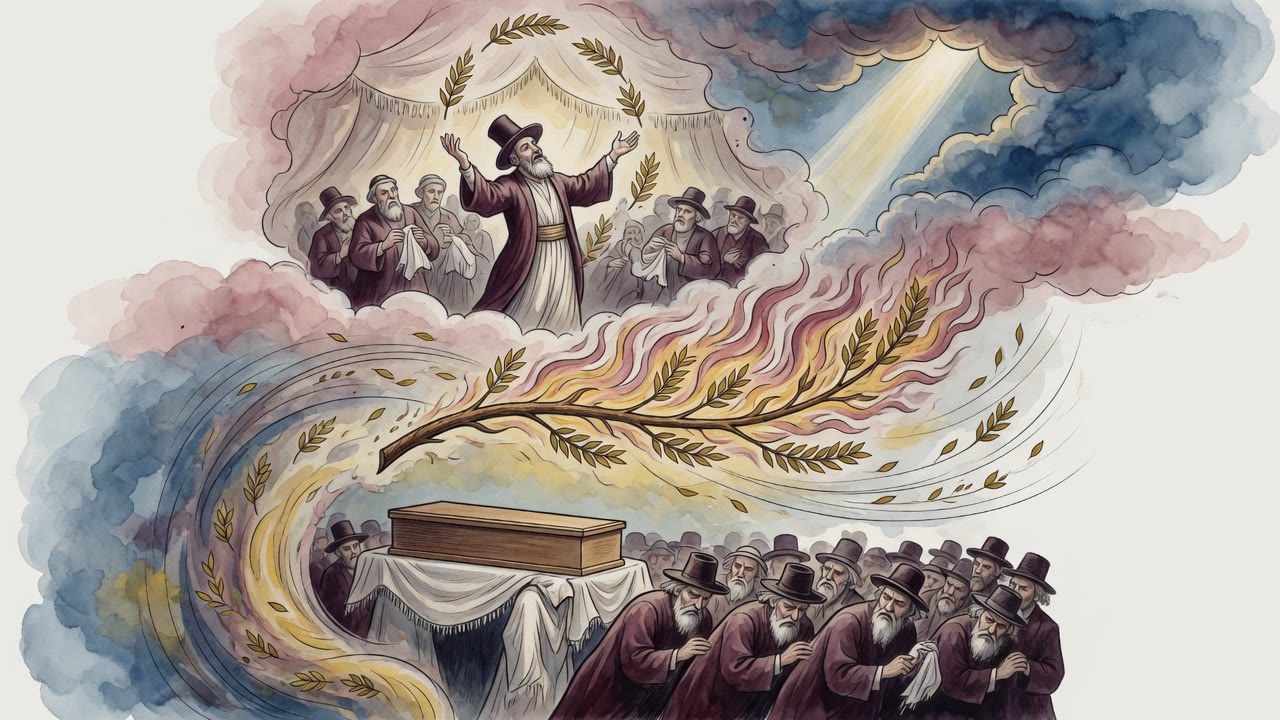
Anan could not answer. The silence in the room thickened. Then Mar Ukba spoke and pointed to Jeremiah. "Do not enter the house of Marzeiah." The prophet had named a house of mourning, a place where the funeral feast gathered the living around the newly dead. But Jeremiah's command was not etiquette. It was a sign that compassion itself had been withdrawn. God had turned away. Comfort was forbidden because the Presence that comforts had stepped back.

So Marzeiah was not any shiva house. It was mourning under divine absence. A room where people sat with their dead and the usual mercy did not arrive. Sheshet carried that meaning home like a coal that would not cool. Huna's urgency made sense. Lose the word, and you lose the difference between ordinary grief and grief that heaven itself refuses to soothe.

When Rabbi Wept Over the Hidden Ledger

Elsewhere, Rabbi would reach the end of Ecclesiastes and weep. "For every action God will bring to judgment, for every unknown, whether good or evil." Unknown. The word undid him. Not only the sins a person meant. The ones a person never named. Matters without substance, still written. Amos's God who turns dawn into darkness keeps the ledger. A man who forgets his wife's cycle and errs in the dark still walks into consequence. A buyer who takes non-kosher meat by mistake still carries weight. A walker who violates Shabbat on a thorny path he did not map still answers.

Rabbi Beivai and the midrash on Kohelet kept stacking examples until the room felt small. Ignorance was not a clean cloak. Rushing down a path that leads to sin leaves a person responsible even for what he did not plan.

Good That Shames Is Still Judged

Then the sages turned the verse's other edge. Good, too, can be judged. Charity given in public that shames the poor. Charity given in secret to a woman that breeds suspicion. Meat sent home before Shabbat that traps a household in a dietary mistake. Rabbi Yannai saw a man press a coin into a beggar's hand where everyone could watch and said it would have been better not to give than to give and humiliate.

The servant whose master counts unwitting faults like intended ones has no easy appeal. The midrash leaves that question open on purpose. Awareness becomes the only decent answer.

One Word, One Ledger, One Room

Put the errand and the weeping in one house. Sheshet risks ban to recover a word for mourning without comfort. Rabbi weeps because nothing falls off the book, not even the good done badly. Between them, language and judgment share a spine. Call the room by the wrong name and you will bring soup into a place heaven has closed. Do a kindness with the wrong posture and the ledger still writes it down.

Sheshet returned. The ban did not fall. The definition stood. Somewhere a student copied Marzeiah into the margin so the next generation would not have to risk excommunication for a single lost sound. And somewhere Rabbi closed Kohelet with wet eyes, because the unknown is never unknown above.

Why a Ban Hung Over a Dictionary Errand

Excommunication for a definition sounds like cruelty until you watch what wrong words do in a house of grief. Call every mourning room by the same name and you will bring the wrong comfort into a room heaven has closed. Fail to recover Jeremiah's term and a generation will misread divine absence as ordinary sadness. Huna's threat was brutal pedagogy. The word mattered enough to risk a sage's standing.

Sheshet's feet on the road are the body of that claim. He is not a librarian. He is a man walking under a suspended ban because language about God and death must stay sharp. When Ukba finally opens Jeremiah, the air in the room changes. Marzeiah is not etymology for its own sake. It is a map of where compassion has been withdrawn as a sign.

Rabbi's tears at the end of Kohelet answer from another angle. If the unknown is written, then the mouth that teaches must also fear careless speech and careless kindness. A coin that shames. A gift that traps. A path taken too fast into thorns. The ledger does not only watch thieves. It watches teachers, givers, and men who send other men on errands.

Between the threatened ban and the wet eyes sits a single demand: take words and deeds as if someone is keeping score who never loses the page. Sheshet returns with Marzeiah. Rabbi closes the scroll still shaken. The study house keeps both stories because a people that forgets either will misname grief or underestimate the hidden cost of a "small" act.


← All myths
From the tradition

Sources

2 sources

The texts behind this telling. Some cards carry a translation of the source; others are our own retelling of it, and each card says which. Every card links out to the original.

Exempla of the Rabbis, No. 230Exempla of the Rabbis (Gaster, 1924)

Retold in our words. Read the original at the link below.The Exempla of the Rabbis, Moses Gaster (1924) · Public Domain

Rav Huna once sent Rav Sheshet on a mission that neither man took lightly: to consult Anan on a question of law, with the threat of excommunication hanging over Rav Sheshet's head if he failed to carry out the errand.

Among the questions Rav Sheshet was to ask was a peculiar one: "Who presides at a house of Marzeiah, and what does that last word mean?" The term "Marzeiah" was obscure, it appeared in ancient texts but its meaning had become unclear.

Anan could not answer the question himself, but Mar Ukba was present and provided the explanation. He pointed to the prophet Jeremiah, who wrote: "Do not enter the house of Marzeiah" (Jeremiah 16:5). The word referred to a house of mourning, specifically, a place where mourners gathered for the funeral feast.

The significance went beyond etymology. Jeremiah had used this word in the context of God's command to abstain from comforting mourners, a sign that God's compassion had been withdrawn from Israel. The "house of Marzeiah" was not just any mourning house. It was a place marked by divine absence, a space where grief went uncomforted because God Himself had turned away.

The exchange between these sages, Huna's urgent demand, Sheshet's obedient mission, Ukba's learned answer, preserved a piece of linguistic knowledge that might otherwise have been lost. In the rabbinic world, even a single obscure word was worth the threat of excommunication to recover. Every word of Torah carries worlds within it.

Full source
Kohelet Rabbah 12:14Kohelet Rabbah

Retold in our words. Read the original at the link below.The Sefaria Midrash Rabbah, 2022 · CC-BY

The book of Ecclesiastes, or Kohelet, as it’s known in Hebrew, ends with this rather stark line: "For every action God will bring to judgment, for every unknown, whether good or evil" (Ecclesiastes 12:14).

Sounds The Kohelet Rabbah, a midrashic (rabbinic interpretive commentary) commentary on Ecclesiastes, explores this verse, and it's fascinating – and maybe a little unsettling. Imagine Rabbi, a central figure in the Talmud, pausing at this verse, overcome with emotion. He would weep whenever he reached this line, or similar verses elsewhere. Why? Because it speaks to the immense responsibility we carry for our actions, both the obvious and the seemingly insignificant.

The commentary in Kohelet Rabbah then brings in verses from Amos and Zephaniah, all hinting at this idea of a cosmic ledger. Even "matters that do not have substance or sin are written for Him," the verse states. Who's keeping track? (Amos 4:13) tells us it's "He who renders dawn, darkness…the Lord, God of hosts, is His name." Quite a job description, wouldn't you say?

What does it really mean, "for every unknown"? The Rabbis confront this. Rabbi Beivai uses an example of a man who forgets his wife’s cycle and engages in relations when she is menstruating, a serious transgression. (Proverbs 19:2) says, "Without knowledge, even the soul is no good." Even if unintentional, there's a consequence.

The text continues with more examples. Someone accidentally buying non-kosher meat. Someone unknowingly violating Shabbat (the Sabbath) by walking on a thorny path. These aren't malicious acts, but they still carry weight. As the Midrash HaMevo’ar explains, "One who rushes down a path leading to sin is held responsible for his sins, even if he committed them unwittingly."

Then, Rabbi Yochanan and Reish Lakish offer a surprising twist. They suggest that constantly bringing sin offerings to the Temple for unknown sins might not be the best approach. Better, they argue, to be careful and avoid sin in the first place! It's a fascinating perspective, shifting the focus from atonement to proactive righteousness.

And what about the "good" in "whether good or evil"? Can we be judged for doing something good? Apparently so. The text presents scenarios where good intentions can have negative consequences. Giving charity publicly and shaming the recipient. Giving charity secretly to a woman, causing suspicion. Even sending unprepared meat to one's wife before Shabbat, potentially leading to her accidentally violating dietary laws!

The school of Rabbi Yannai points out the problem with public charity. When Rabbi Yannai himself saw a man giving a coin to a poor person in public, he said: "It would have been preferable had you not given to him, than now, when you gave to him and shamed him."

These examples highlight a crucial point: It's not enough to do good; we must also consider the impact of our actions. Our intentions matter, but so do the consequences, intended or otherwise.

The passage ends with a stark question: "A servant whose master considers his unwitting transgressions like intentional transgressions, does he have recourse?" It's a sobering thought. It pushes us to strive for awareness, to consider the ripple effects of our choices, and to act with intention and compassion in all that we do.

Think about the potential consequences, the seen and the unseen. Because, according to Jewish tradition, it's all being recorded. And it all matters.

Full source