5 min read

Rebecca Asked to Sleep Beside Sarah Forever

Dying Rebecca demanded burial beside Sarah and peace between Jacob and Esau. She blessed holy seed, then Jacob swore her bones would rest near Sarah's.

Curated by Arthur · Told by Maggid ·
Table of Contents
  1. The Son's Oath at the Bedside
  2. A Mother's Mouth Blesses the Seed
  3. A Father's Charge Against Uncleanness
  4. Bones Beside Bones

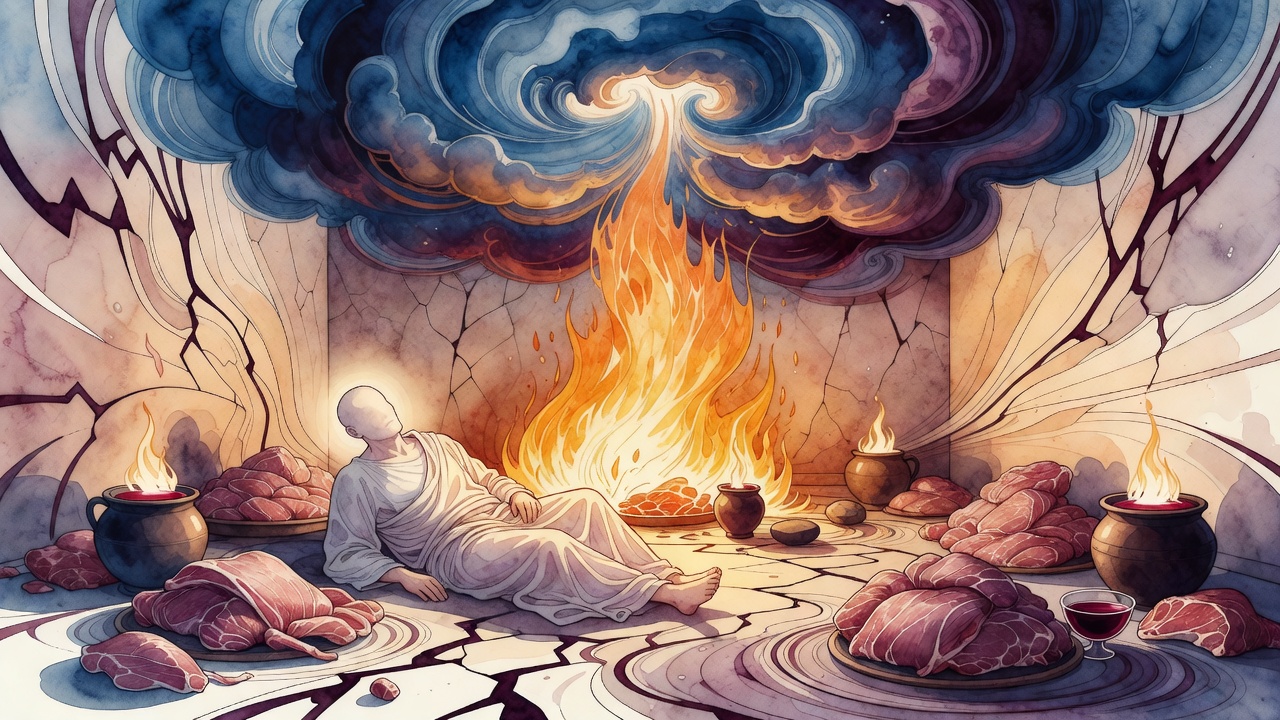
Rebecca did not spend her last strength on property. She called Jacob close and named two hungers. First, burial. "I ask you that the day I die, thou wilt take me in and bury me near Sarah, thy father's mother." She wanted her bones beside the first mother of the line, as if the cave could still hold a conversation.
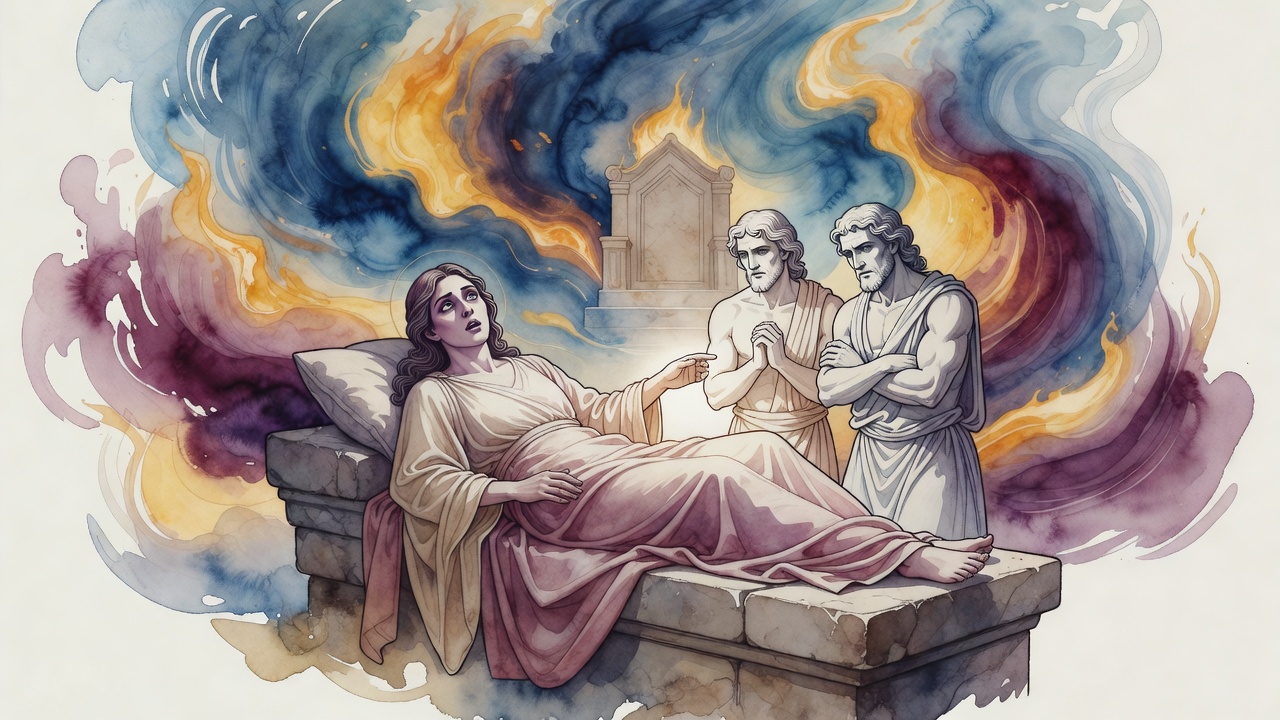
Rebecca Asked to Sleep Beside Sarah Forever Click for full size

Second, peace. She asked that Jacob and Esau love each other, that neither desire evil against the other, only mutual love. "And so ye will prosper, my sons, and be honoured in the midst of the land, and no enemy will rejoice over you, and ye will be a blessing and a mercy in the eyes of all those that love you."

The Son's Oath at the Bedside

"I will do all that thou hast told me," Jacob said, "and I shall bury thee on the day thou diest near Sarah, my father's mother, as thou hast desired that her bones may be near thy bones." The day of death became a scheduled kindness. No delay for politics. No waiting for cooler weather between brothers.

The rivalry that had already bent the house did not vanish because a mother asked. The oath still bound the living son. A promise made at a deathbed is a rope thrown across a future the dying cannot police.

Jacob's voice did not shake. He had practiced hard bargains with men and with night. This bargain was softer and heavier. Bones beside bones. Love instead of ambush. He said yes while Esau's face still lived in the room as a possibility of war.

A Mother's Mouth Blesses the Seed

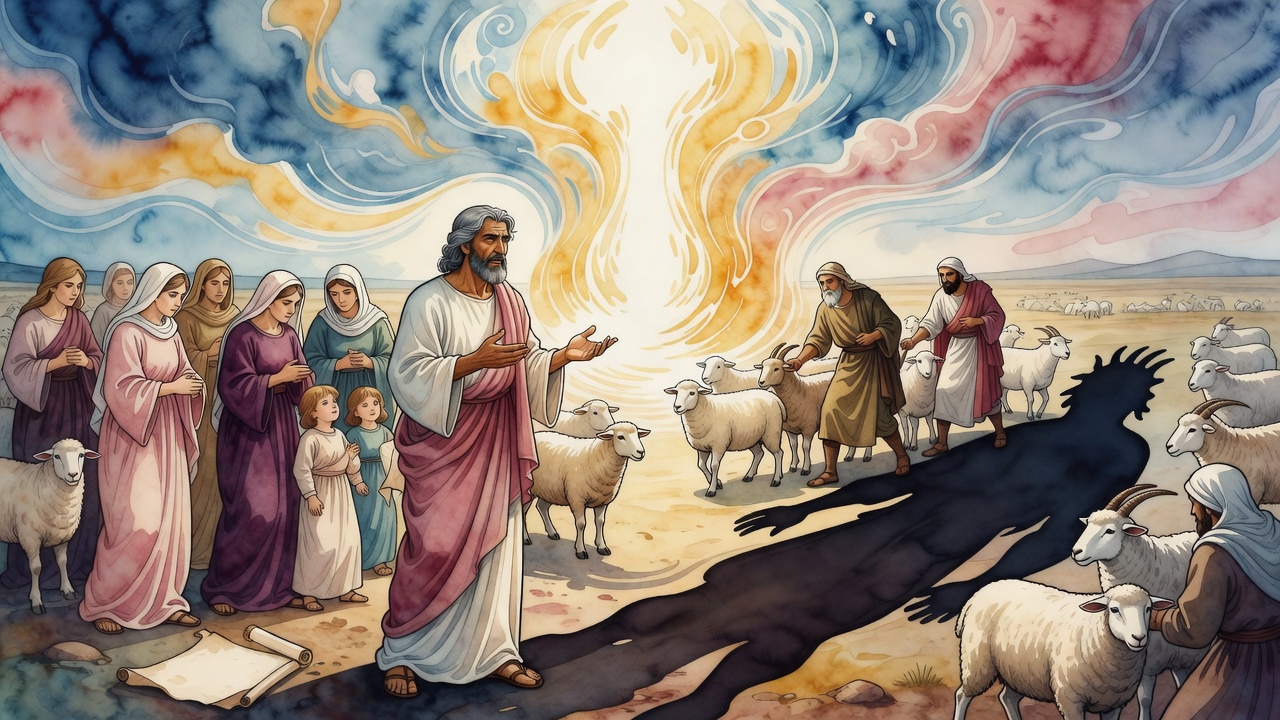
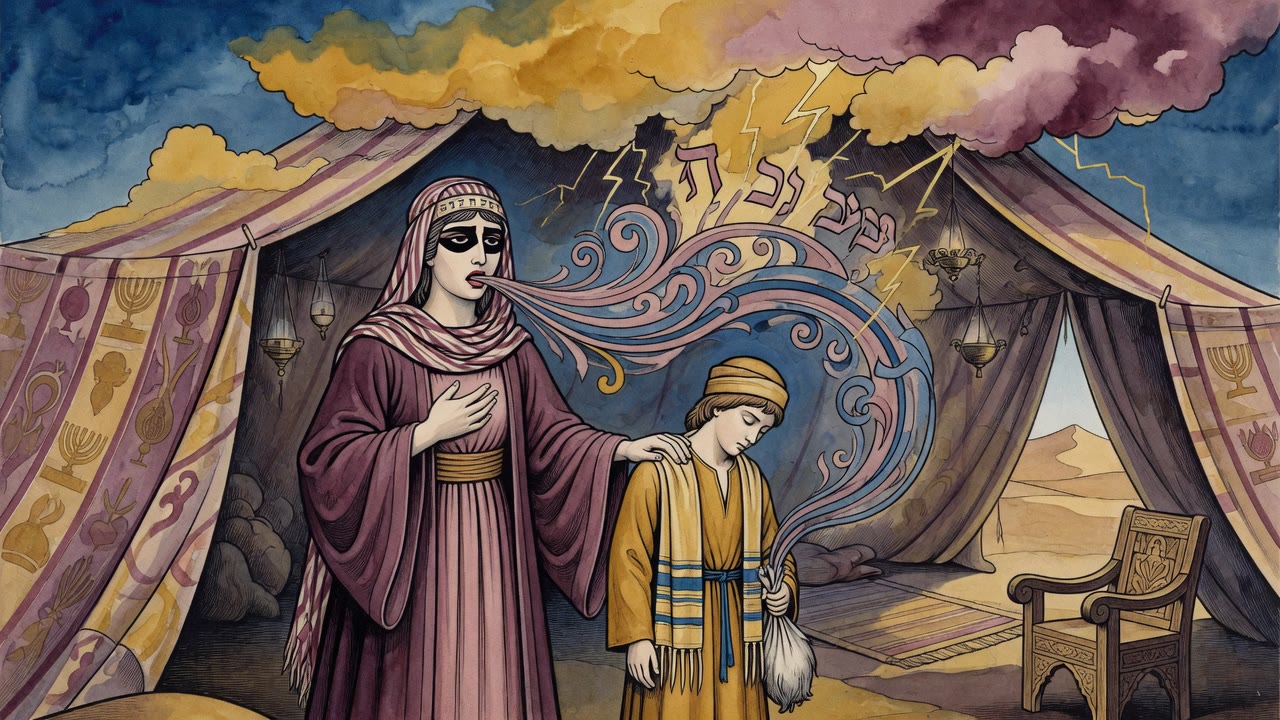
"May I see born unto thee, my son, blessed children during my life, and a blessed and holy seed may all thy seed be." The womb that bore him blesses him. Breasts and mouth and tongue join the speech. Increase spreads over the earth. Seed is to be perfect in the joy of heaven and earth forever. On the great day of peace, that seed is to have peace.

"May the Most High God be their God, and may the God of righteousness dwell with them, and by them may His sanctuary be built unto all the ages." A mother's last poetry is not only children. It is a house for God rising from those children.

The blessing moved from body to sanctuary without apology. Milk and Temple share a paragraph because both feed a people. Rebecca's mouth, near the end, still built futures out of breath.

A Father's Charge Against Uncleanness

Fathers in the same book speak a harder line. Turn away from all their deeds and all their uncleanness. Observe the ordinance of the Most High God. Do His will and be upright in all things. The reward is a plant of righteousness raised through all the earth, through all generations. Names will not be forgotten under heaven forever.

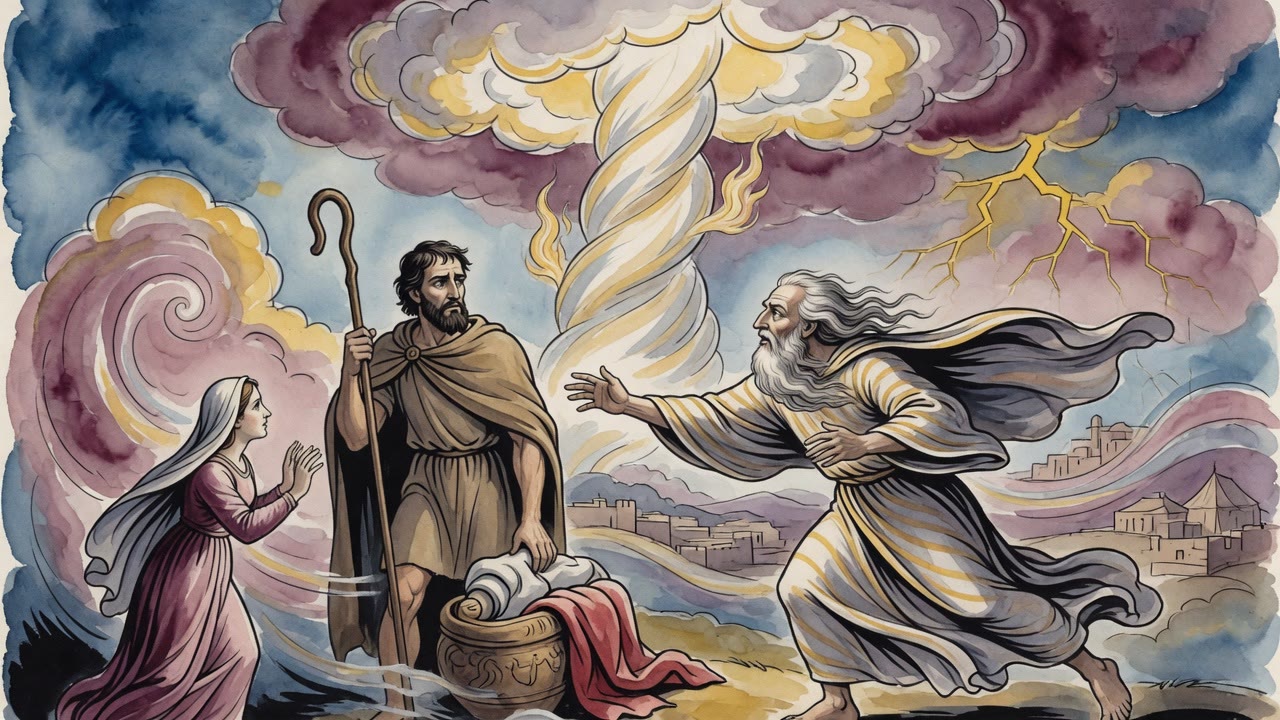
"Go, my son, in peace," the father says. "May the Most High God, my God and thy God, strengthen thee to do His will, and may He bless all thy seed and the residue of thy seed for the generations for ever, with all righteous blessings, that thou mayest be a blessing on all the earth." The son leaves rejoicing. Strength is the gift, not soft permission.

Where mothers plead for mutual love, fathers draw lines against uncleanness. The house needs both speeches. Without peace, bones fight even in the cave. Without purity, peace becomes a market of compromise.

Bones Beside Bones

Rebecca's request stitches the women of the covenant into one resting place. Sarah's grave becomes a second home for the daughter-in-law who once covered for a blind husband and a hungry son. The peace she demands between Jacob and Esau is the other half of the same desire. A family that fights forever cannot keep a cave holy.

Enemies rejoice over divided brothers. Blessing and mercy, in her mouth, require mutual love first. The land honors those who stop wishing each other dead. That is the politics of a dying matriarch. No army. One oath. Two sets of bones that must not be strangers.

When the day came, the cave received her as promised. The rivalry above ground did not end with the closing of stone. Still the oath stood, a thin bright wire between a mother's last request and a son's hands on the burial tools.

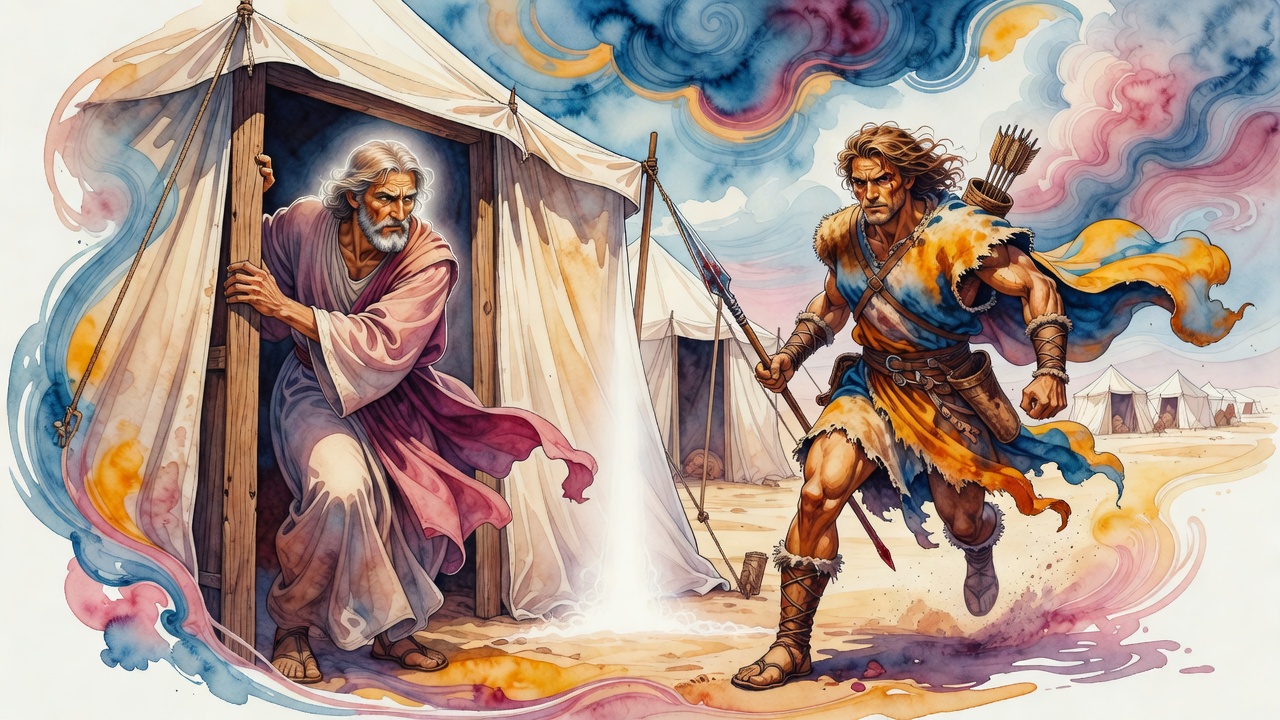
Outside the tent the flocks shifted and settled. Inside, the air held the salt of final talk. Rebecca's hands found Jacob's once more, not to steer a blessing theft this time, but to press a map of peace into his skin. Sarah waited in the cave already. The living still had work before they earned the right to lie down beside her.


← All myths
From the tradition

Sources

3 sources

The texts behind this telling. Some cards carry a translation of the source; others are our own retelling of it, and each card says which. Every card links out to the original.

Book of Jubilees 35:32Book of Jubilees

Retold in our words. Read the original at the link below.Sefaria Community Translation · CC-BY

Book of Jubilees turns to Rebecca and the Patriarchs of Jacob.

Her request is simple, yet profound. "I ask you," she says, "that the day I die, thou wilt take me in and bury me near Sarah, thy father's mother." She desires to be laid to rest alongside her mother-in-law, Sarah. It speaks volumes about the respect, the love, and the connection she felt to Sarah – a desire to be near her even in death. This isn't just about geography; it's about legacy.

She doesn't stop there. Her heart is also filled with concern for her sons, Jacob and Esau. We know their story. The sibling rivalry, the trickery, the stolen blessing. Rebekah pleads with Jacob: "…that thou and Jacob will love each other, and that neither will desire evil against the other, but mutual love only."

She understands the potential for conflict, the deep-seated wounds that could fester between them. Her dying wish isn't for riches or power, but for peace. For shalom bayit, peace in the home.

And then, the beautiful promise: "…and (so) ye will prosper, my sons, and be honoured in the midst of the land, and no enemy will rejoice over you, and ye will be a blessing and a mercy in the eyes of all those that love you." She believes that their unity, their love for each other, is the key to their success and their ability to be a blessing to others. It's a powerful connection between inner harmony and outward impact.

Jacob's response is simple and direct. "I will do all that thou hast told me, and I shall bury thee on the day thou diest near Sarah, my father's mother, as thou hast desired that her bones may be near thy bones." A son's promise to his mother. A commitment to honor her wishes, both in burial and in striving for peace with his brother.

What does this brief passage from the Book of Jubilees tell us? It reminds us of the enduring power of a mother's love, the importance of family harmony, and the significance of honoring our ancestors. Rebekah's final words are evidence of the values that have sustained the Jewish people for generations: respect, love, and the pursuit of peace.

And perhaps, a gentle nudge to consider our own legacies. What will our last words be? What hopes will we leave for those who come after us?

Full source
Book of Jubilees 25:28Book of Jubilees

Retold in our words. Read the original at the link below.Sefaria Community Translation · CC-BY

In it, we find a powerful blessing, overflowing with hope for the future.

This blessing is delivered by a parent to their child, and it's rich with imagery of fertility, peace, and a lasting connection with the divine. It starts with a simple, heartfelt wish: "And may I see (born) unto thee, my son, blessed children during my life, And a blessed and holy seed may all thy seed be."

The joy, the anticipation! A parent longing to witness the continuation of their lineage, and praying that that lineage will be blessed and holy.

It doesn't stop there. The blessing continues, "And as thou hast refreshed thy mother's spirit during my life, The womb of her that bare thee blesseth thee, [My affection] and my breasts bless thee And my mouth and my tongue praise thee greatly."

Here, we see the deep bond between parent and child, a connection that goes beyond the physical. The parent acknowledges the joy and refreshment the child has brought into their life. The very womb that bore the child offers its own blessing, a powerful image of maternal love and gratitude. It's not just words; it's a blessing from the very essence of motherhood.

Then comes a vision of expansion and prosperity: "Increase and spread over the earth, And may thy seed be perfect in the joy of heaven and earth for ever; And may thy seed rejoice, And on the great day of peace may it have peace."

This isn't just about physical growth; it's about spiritual fulfillment. The blessing envisions a future where the child's descendants thrive, experiencing the joy of both the earthly and heavenly realms. And crucially, it speaks of peace – not just any peace, but peace on "the great day of peace." What is this great day? The text doesn't say explicitly, but we can imagine it as a time of ultimate harmony and reconciliation.

The blessing culminates in a powerful statement of enduring faith: "And may thy name and thy seed endure to all the ages, And may the Most High God be their God, And may the God of righteousness dwell with them, And by them may His sanctuary be built unto all the ages."

This is the heart of the blessing: a prayer for the eternal continuation of the family's name and legacy, anchored in a steadfast relationship with God. It’s a vision of a future where God dwells with them, not just above them. And perhaps most significantly, it suggests that they, the descendants, will be instrumental in building God's sanctuary for all time. This isn't just a physical sanctuary; it's a spiritual one, a place where God's presence can be felt by all. A blessing that isn't just about personal success or happiness, but about contributing to something larger than oneself, something eternal.

So, what does this ancient blessing mean for us today? Perhaps it's a reminder that the blessings we give – to our children, our families, our communities – have the power to shape the future in profound ways. Perhaps it’s a call to consider what kind of legacy we want to leave behind, and how we can contribute to building a more peaceful and just world for generations to come.

Full source
Book of Jubilees 21:34Book of Jubilees

Retold in our words. Read the original at the link below.Sefaria Community Translation · CC-BY

It's a fascinating, often overlooked text that expands on the stories we find in Genesis, and it's full of wisdom about living a righteous life.

Today, I want to share a small but powerful passage from chapter 21. It's a father's blessing to his son, a charge to live a life dedicated to God.

This scene: A father, nearing the end of his life, imparting his wisdom to his son. He urges him to "Turn away from all their deeds and all their uncleanness, and observe the ordinance of the Most High God, and do His will and be upright in all things." It's a call for radical purity, a complete dedication to living according to God's laws.

What does that even mean, though? Well, the Book of Jubilees, also known as Lesser Genesis, is really concerned with calendar observance and ritual purity. The "uncleanness" probably refers to idolatrous practices, intermarriage, and neglecting the commandments. It's about choosing God's way, which is always a little counter-cultural.

And what's the reward for this dedication? It's not just personal salvation, but something far grander. "And He will bless thee in all thy deeds, and will raise up from thee the plant of righteousness through all the earth, throughout all generations of the earth." The choices we make today can have a ripple effect that extends far beyond our own lives. We have the potential to plant seeds of righteousness that will blossom and bear fruit for generations to come.

There's more! The father continues, "And my name and thy name will not be forgotten under heaven for ever." This isn't just about earthly fame or legacy. It's about something deeper – a connection to the divine narrative, an assurance that our lives have meaning and purpose in the grand scheme of things. Our actions, our commitment to righteousness, will resonate eternally.

And then comes the heartfelt blessing: "Go, my son, in peace. May the Most High God, my God and thy God, strengthen thee to do His will, and may He bless all thy seed and the residue of thy seed for the generations for ever, with all righteous blessings, that thou mayest be a blessing on all the earth."

Notice how personal this is. “My God and thy God.” It's an acknowledgement of shared faith, a passing of the torch from one generation to the next. It's a prayer for strength, for guidance, and for the ability to be a blessing to others. It also highlights the idea of zera kodesh, a holy seed or righteous offspring, that will continue to uphold God's values.

And the final line? "And he went out from him rejoicing."

What a beautiful image! He is going out rejoicing! He understands the weight of the responsibility, but he's not burdened by it. He's empowered by it.

So, what does this ancient text have to say to us today? Are we living in a way that honors God's will? Are we planting seeds of righteousness for future generations? Are we striving to be a blessing to all the earth? Maybe, just maybe, we too can go out rejoicing, knowing that we're playing our part in a story that's far bigger than ourselves.

Full source