7 min read

Rebecca Felt Two Nations Fighting Before Birth

Rebecca's pregnancy became a battlefield before Jacob and Esau were born, forcing her to seek God's answer in the house of Shem.

Curated by Arthur · Told by Maggid ·
Table of Contents
  1. The Womb Became a Battlefield
  2. The Mother Went to Seek Mercy
  3. The Oracle Split the Future
  4. The Angels Took Their Sides
  5. The Unborn Sons Divided the Worlds
  6. The Heel Held On

Rebecca had prayed for a child, but the child came as a battle.
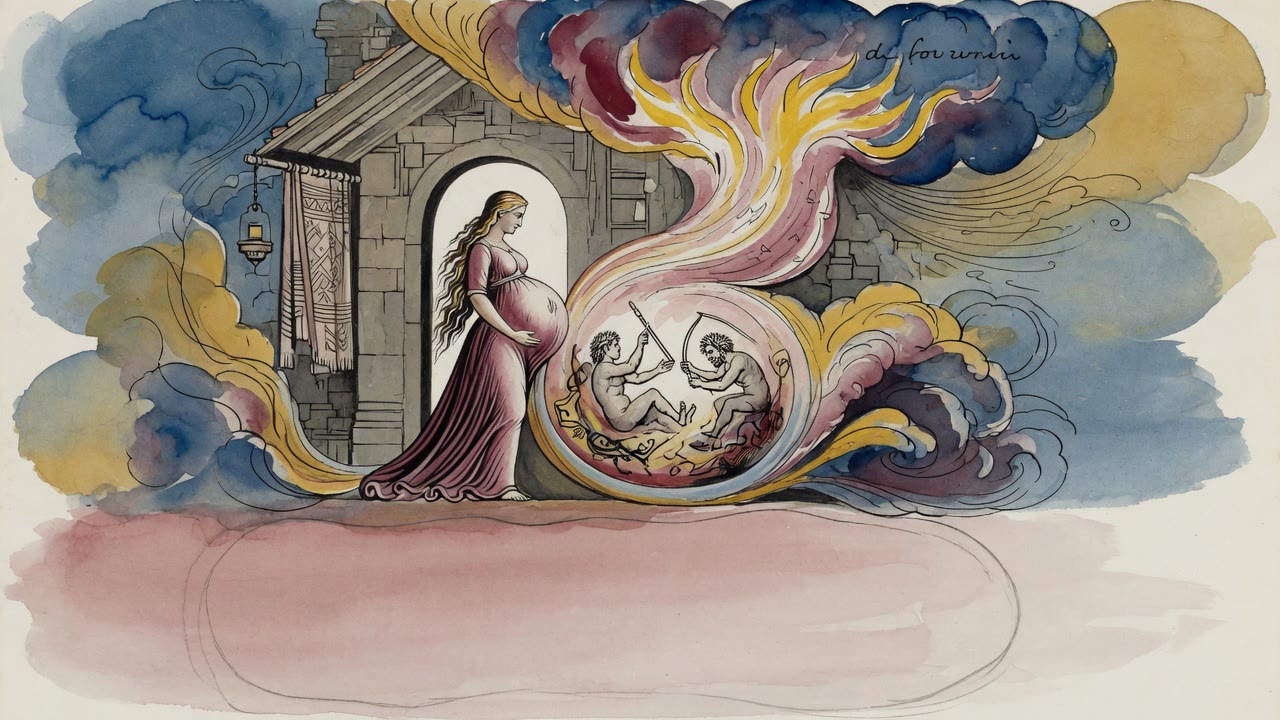
For years her tent had been quiet in the wrong way. No infant cry. No small hand closing around her finger. Isaac pleaded with God, and heaven opened the womb that had remained shut. Then joy turned violent.

The movement inside her was not the flutter of life settling into place. It was pressure against pressure, a crushing, a thrusting, two bodies fighting in a room too small for war. Rebecca pressed her hands against herself and felt the future strike back.

The Womb Became a Battlefield

One child drove toward one door. The other dragged him back.

Rebecca walked through the settled places of the land, and the violence changed with the path. Near a house of idols, one child surged as if the walls had called his name. Near a place of Torah, the other strained forward, urgent, alive, pulled toward words he had not yet heard with ears.

No mother should have to read the souls of her children through pain. Rebecca did. Each step translated the hidden life inside her. One son wanted the smoke and noise of false worship. One son wanted the house of study. Her body became the first map of their separation.

The blows did not stop when she stood still. The children pressed against one another like soldiers locked at a gate. Before they had names, before skin met air, before a father could bless or misread them, they had already begun choosing.

Rebecca's breath shortened. A prayer can be answered so fiercely that the answer feels like punishment. She had asked for life. Now life tore at her from within.

The Mother Went to Seek Mercy

If this is motherhood, she cried, what are children to me?

She did not wait for Isaac to explain it. She did not ask the household to soften the matter with kind words. She rose and went to inquire of God.

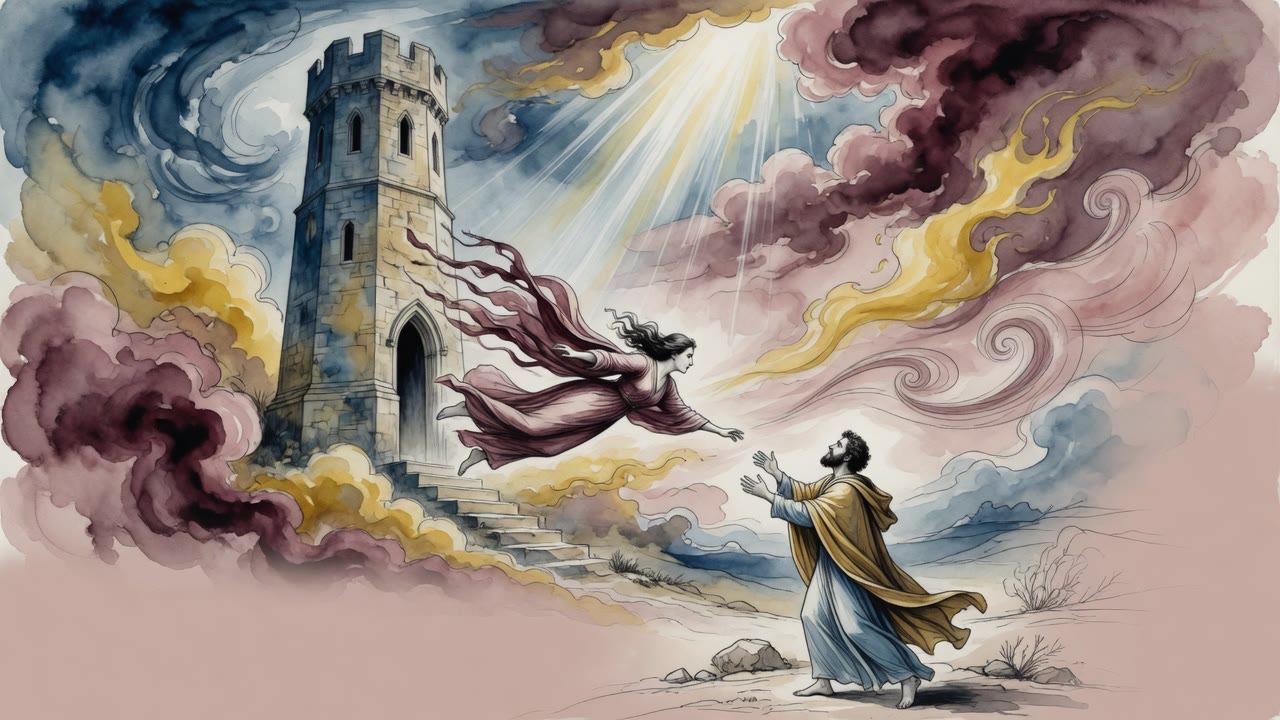
The road led her to the house of Shem the Great, the old keeper of memory from the generation after the Flood. There, the air carried the weight of a world that had once drowned and begun again. Shem's school was not a palace. It was older than kings. It held the stubborn thread of knowledge that had passed through Noah's house into Abraham's world.

Rebecca entered as a woman in pain, not as an ornament in someone else's prophecy. The children fought inside her while she stood before the place of instruction. No one could see the war. Everyone could see what it was doing to her.

Mercy was the first thing she sought. Explanation came with it, but not comfort. Some answers do not remove pain. They name it.

The Oracle Split the Future

The word came back with the force of a decree.

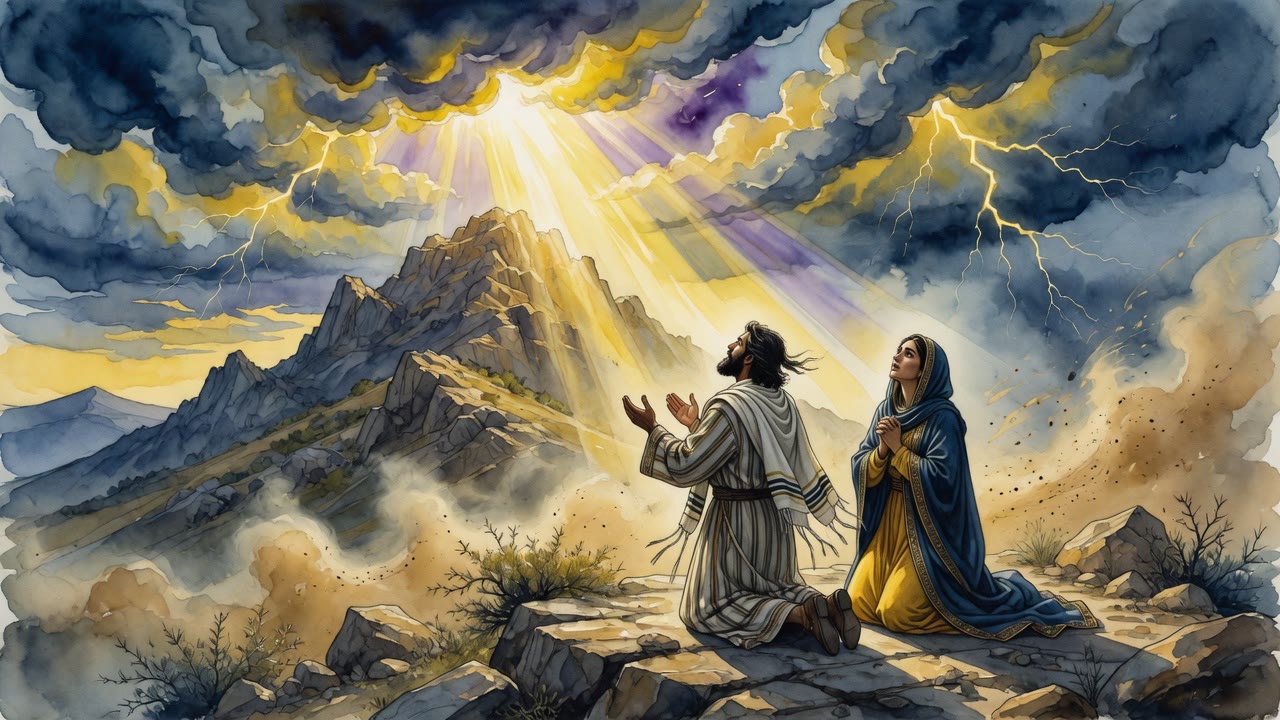
Two nations are in your womb. Two peoples will separate from inside you. One people will be stronger than the other. The older will serve the younger.

Rebecca stood with that sentence over her like weather. She had thought perhaps something had gone wrong with the pregnancy. Instead, heaven told her that history had begun early. The struggle was not a private accident inside one mother. It was peoples, kingdoms, tables, armies, markets, study halls, and thrones compressed into flesh.

One son would come out first, red and rough, his body like a cloak of hair. One son would follow with his hand on the heel, refusing even in birth to let the firstborn go unchallenged. Esau would carry the smell of fields and blood. Jacob would carry the pressure of tents, speech, calculation, blessing, and fear.

Rebecca heard the reversal before anyone else did. The older would not rule simply because he arrived first. The younger would not disappear simply because he arrived second. Birth order stood at the door. Prophecy reached past it.

The Angels Took Their Sides

The struggle was not only below.

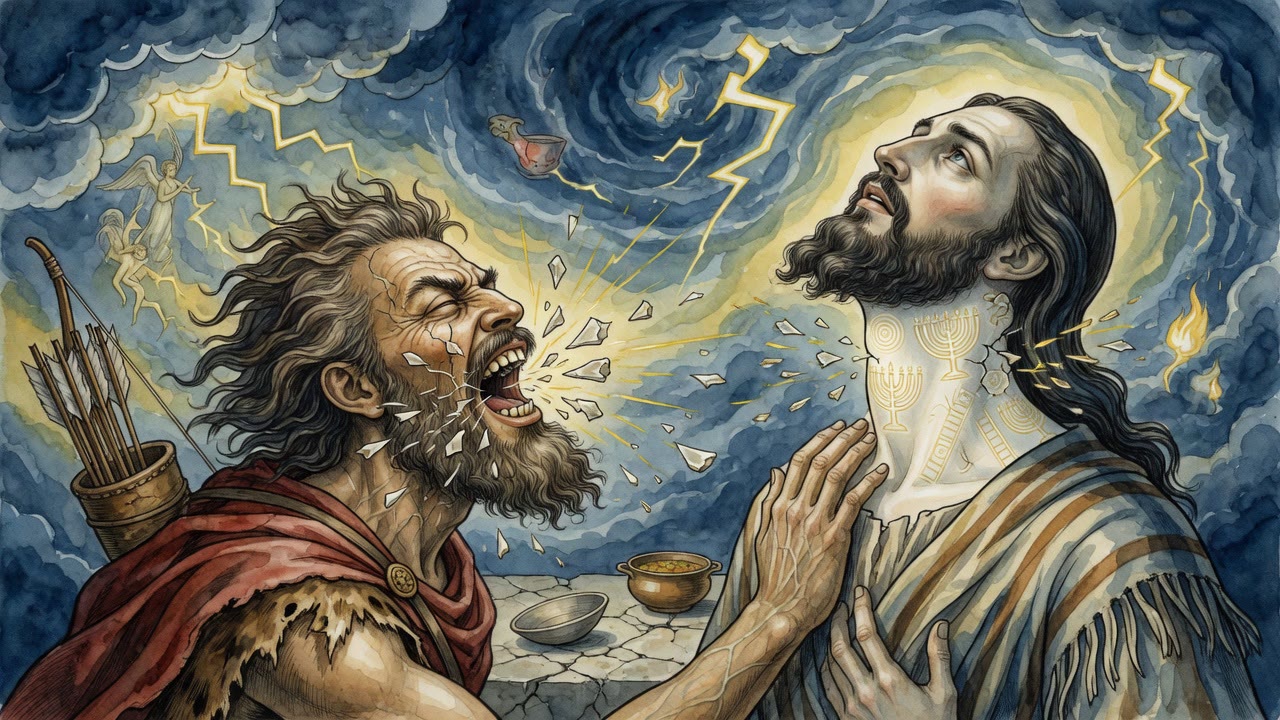
Above the unborn twins stood powers assigned to their futures. Samael moved toward Jacob with murder in his intention, eager to cut the line before it could breathe. Michael rose against him, guarding the child whose descendants would carry covenant, exile, return, argument, law, and longing.

The clash grew too hot for the hidden chamber of the womb. Michael moved to burn Samael away. Samael pressed harder. The mother below felt the heavenly pressure as bodily pain, every shove translated into flesh.

Then God set judgment between them.

Courts were placed like barriers in the invisible realm, holding the forces apart so that the child would not be consumed before birth. The future had enemies before it had lungs. It also had defenders. Rebecca could not see the seats of judgment, but the violence in her body had told her enough. This was no ordinary pregnancy. The nations had already brought their advocates.

The house of Shem gave her the answer. Heaven gave her the boundary. The children remained inside her, still dangerous, still alive.

The Unborn Sons Divided the Worlds

Even before birth, the brothers bargained.

Take this world, one said, and I will take the world to come.

The words belonged to children no midwife had touched. Still, the division fit the lives waiting for them. Esau reached toward appetite, field, heat, red stew, the visible thing close enough to seize. Jacob reached toward the unseen inheritance, the blessing that could be delayed, disguised, fought for, and carried with a limp.

The bargain inside the womb threw a shadow forward. Years later, when Esau came in exhausted from the field and Jacob held the lentils, the sale of the birthright did not begin from nothing. It answered an old division. Esau asked for the red food in front of him. Jacob asked for the firstborn right that belonged to tomorrow.

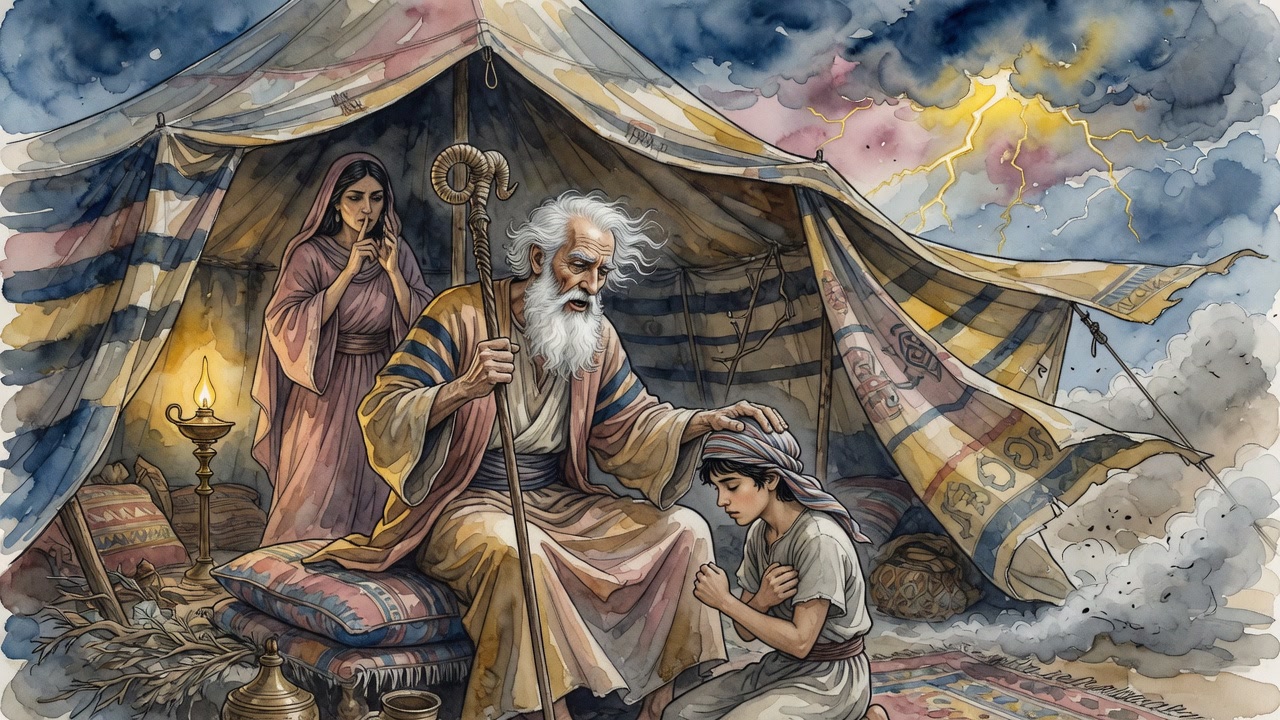
Rebecca had felt that bargain before either son could speak aloud. She knew which child leaned toward which door. She knew the oracle. She knew the older would serve the younger. When the time came for Isaac's blessing, she did not act from ignorance. She acted from a word she had carried since the days when the twins bruised her from within.

The Heel Held On

Birth came, and the oracle took on skin.

The first child emerged red, hairy, complete in wildness. They named him Esau. The second came after him with his hand gripping the heel, as if the struggle had not paused for labor, as if the younger refused to let the world mistake sequence for destiny. They named him Jacob.

Isaac loved the hunter's savor. Rebecca loved the quiet son of the tents. A house divided around the twins because the womb had already been divided before the house ever saw them.

From those two infants came the long seesaw Rebecca heard in the oracle. When one power rose, the other fell. One table filled while the other emptied. One city stood while the other lay broken. Their rivalry was not a childish quarrel that time could smooth away. It was a rhythm built into their birth.

Rebecca began as a woman begging to understand her pain. She came away as the first witness to a future no one else in the tent could read. The boys were born, and everyone saw twins.

She had already felt nations.


← All myths
From the tradition

Sources

7 sources

The texts this telling draws on, in full. Open a card to read inline, or expand it for a wider, quieter read.

Targum Pseudo-Jonathan on Genesis 25:22Targum Pseudo-Jonathan on Genesis

Rebekah is pregnant at last. And the pregnancy is not gentle. Targum Pseudo-Jonathan on (Genesis 25:22) describes the twins inside her pressing against each other like men at war. She is so shaken by the violence of it that she cries out a half-line that breaks the reader's heart: "If this is the anguish of a mother, what then are children to me?"

Then she does something stunning. The Torah says simply, "She went to inquire of the Lord." The Targum is more specific. She "went into the school of Shem Rabba to supplicate mercy before the Lord."

Shem Rabba. Shem the Great. The same beit midrash where Isaac had been studying when Eliezer brought Rebekah home (Genesis 24:62 in the Targum). The study house of the son of Noah, the school that kept monotheism alive before Abraham, was apparently still open, still teaching, still accessible to a pregnant woman in distress.

Notice what Rebekah does not do. She does not go to a priestess. She does not consult an oracle. She does not interpret the kicking as a bad omen and panic. She goes to the beit midrash, where wise teachers can help her carry her question up to God.

This is the Jewish shape of spiritual distress. When the body hurts and the meaning is unclear, go to a place of Torah. Bring the question. Let the tradition help you address the heavens. Rebekah is the first person in the Torah to model what every Jewish woman after her has done, walk into the house of study carrying a pain too heavy to carry alone.

Full source
Midrash Aggadah, Genesis 25:22Midrash Aggadah

The twins fought before they were born, and they fought over which world they wanted.

Whenever Rebecca walked past a house of idols, Esau kicked and writhed to get out. Whenever she passed a synagogue or a study hall, Jacob strained toward it. Two destinies pulling in opposite directions inside one body.

The midrash says they were already negotiating. "Let us divide the world," one said. Take this world, said Jacob, and I will take the world to come. So it was settled, even then. Jacob asked Esau to sell him the birthright, and Esau, still unborn, agreed to a deal struck in the womb that day (Genesis 25:31).

Rebecca felt all of it and broke. "If this is how it is, why do I even exist?" Had she known childbirth would feel like this, she said, she never would have prayed for it. Another reading: she sensed twelve tribes were meant to come through Isaac and asked why such a future had to tear through her like this. So she went to ask God directly, walking to the study hall of Shem to find an answer.

Full source
Midrash Aggadah, Genesis 25:23Midrash Aggadah

Rebecca felt the war before either child was born. Two nations were fighting inside her, and she went looking for an answer. The midrash says the answer came through Shem, son of Noah, who carried God's word to her: there are two nations in your womb (Genesis 25:23).

The rabbis read those two nations forward across centuries. They saw Rabbi Yehudah HaNasi and the Roman emperor Antoninus, two rulers whose tables never lacked, radish or horseradish, sun season or rain. Jacob's line and Esau's line, locked together yet utterly apart, separated from the very innards outward.

One people will always overpower the other, the verse says, and the rabbis heard a grim seesaw in it. Rome falls and Jerusalem stands. Jerusalem falls and Rome stands. They cannot both be full at once. As the prophet says of Tyre, "Now that it is laid in ruins" (Ezekiel 26:2), the rise of one is built on the rubble of the other.

And the last line settles the whole struggle. "The older will serve the younger." Princes and kings will come from both houses (Genesis 36:31), but in the end Esau bends to Jacob.

Full source
Yalkut Shimoni on Torah 110:19Yalkut Shimoni on Torah

"And the children struggled within her" they were contending over this world and the world to come. At that moment Samael wished to kill Jacob in his mother's belly, but Michael stood against him. At that hour Michael rose and wished to burn Samael, until the Holy One, blessed be He, seated courts of judgment between them. "And the LORD said to her" through Shem son of Noah (as it is written in the verse, "and Sarah denied").

Full source
Yalkut Shimoni on Torah 110:18Yalkut Shimoni on Torah

Another interpretation of "and the children struggled": when she passed by houses of idol worship, Esau would thrash to come out, "the wicked are estranged from the womb, going astray from birth" (Psalms 58:4 [58:3]); when she passed by synagogues and houses of study, Jacob would thrash to come out, as it is written, "Before I formed you in the belly I knew you" (Jeremiah 1:5). "And she said, If it be so, why am I thus?" (Genesis 25:22) teaches that Rebecca our mother went around to the doors of the women, saying: did this anguish ever come upon you? If this is the anguish of children, would that I had not conceived.

"If so, I am destined to raise up twelve tribes; would that I had not conceived" for Rebecca was fit to raise up twelve tribes. This is what is written: "And the LORD said to her, Two nations are in your womb" (Genesis 25:23) that is two; "and two peoples shall be separated from your bowels," that is four; "and one people shall be stronger than the other people," that is six; "and the elder shall serve the younger," that is eight; "and her days were fulfilled to be delivered, and behold, there were twins in her womb," that is ten; "and the first came out ruddy," that is eleven; "and after that came his brother," that is twelve. And there are those who derive it from this verse: "this" (zeh) in numerical value equals twelve. "And she went to inquire of the LORD" (Genesis 25:22) and were there synagogues and houses of study in those days? Rather, she went only to the house of study of Shem and Eber, to teach you that whoever receives the face of an elder is as though he receives the face of the Divine Presence.

Full source
Yalkut Shimoni on Torah 111:2Yalkut Shimoni on Torah

"Sell me, as of this day, your birthright" (Genesis 25:31). They said: when Jacob and Esau were still in their mother's womb, Jacob said to Esau, "My brother, two worlds lie before us, this world and the world to come. This world has in it eating and drinking, buying and selling, marrying a wife and bearing sons and daughters; but the world to come has none of these qualities. If you wish, take this world for yourself, and I will take the world to come." As it says, "Sell me, as of this day [ka-yom] your birthright", like that very day when they were in their mother's belly. Immediately Esau denied the resurrection of the dead, as it says, "Behold, I am going to die." At that moment Esau took his portion, this world, and Jacob took his portion, the world to come.

And when Jacob came from the house of Laban and Esau saw that he had sons and daughters, menservants and maidservants, Jacob said to him, "My brother, did you not say that you would take the world to come and I would take this world? From where do you have all this wealth in which you rejoice?" Esau reflected to himself: if this world, which is not even his portion, the Holy One, blessed be He, gave him his reward in it, then the world to come, which is his portion, how much more so! Immediately Esau said, "If you wish, come and let us form a partnership: you take half of this world and half of the world to come," and so on. Jacob said to him, "My children are tender and cannot withstand suffering," as it says, "they would be driven hard for a single day" (Genesis 33:13).

Full source
Genesis 25:21-26Torah (Masoretic Text)

And Isaac entreated the LORD for his wife, because she was barren; and the LORD let Himself be entreated of him, and Rebekah his wife conceived. And the children struggled together within her, and she said, "If it be so, why am I thus?" And she went to inquire of the LORD. And the LORD said to her, "Two nations are in your womb, and two peoples shall be separated from your bowels; and the one people shall be stronger than the other people, and the elder shall serve the younger."

And when her days to be delivered were fulfilled, behold, there were twins in her womb. And the first came out red, all over like a hairy mantle; and they called his name Esau. And after that came out his brother, and his hand was grasping Esau's heel; and his name was called Jacob. And Isaac was sixty years old when she bore them.

Full source