5 min read

Reuben Brought Mandrakes and Leah Met Jacob on the Road

Reuben came in from the fields with flowers he had not tasted. His mother traded them away that same evening for one night with her own husband.

Curated by Arthur · Told by Maggid ·
Table of Contents
  1. The Boy Who Walked Past the Harvest
  2. The Wife With Sons and No Husband
  3. She Went Out to Meet Him
  4. Two Tribes Out of a Bundle of Flowers
  5. Moses Blessed the Sailor First
Reuben Brought Mandrakes and Leah Met Jacob on the Road Click for full size

The Boy Who Walked Past the Harvest

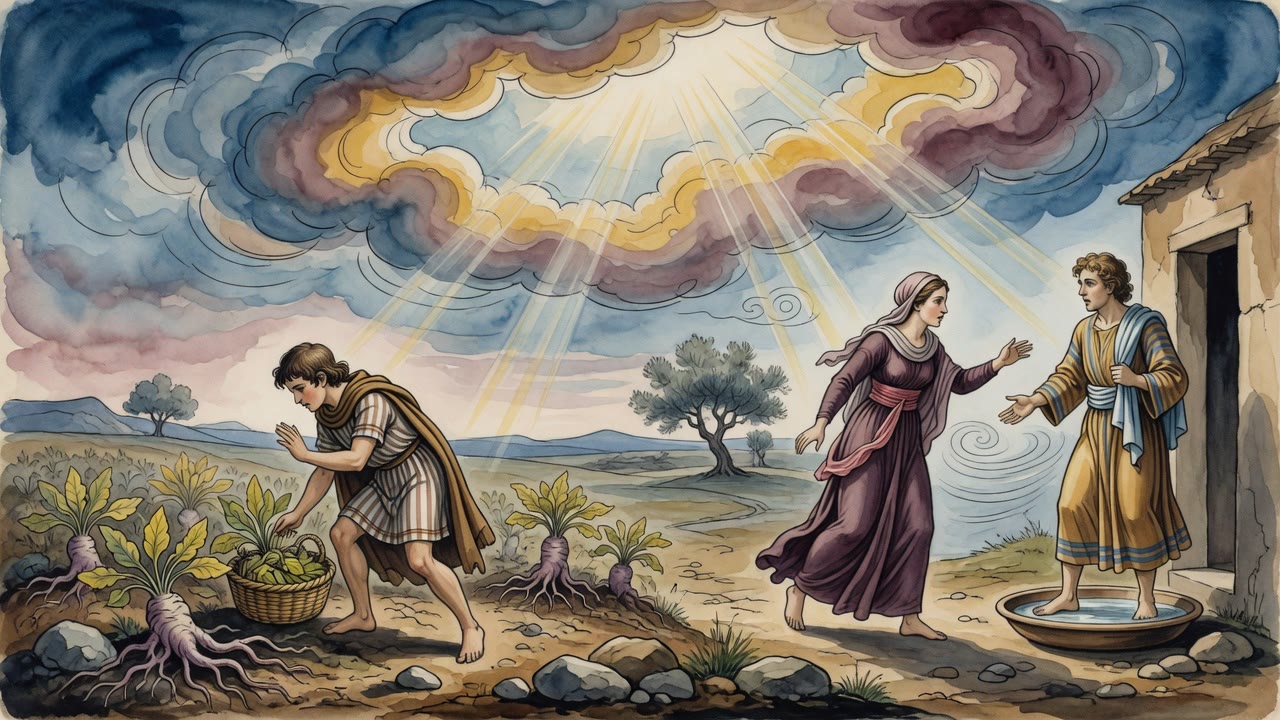
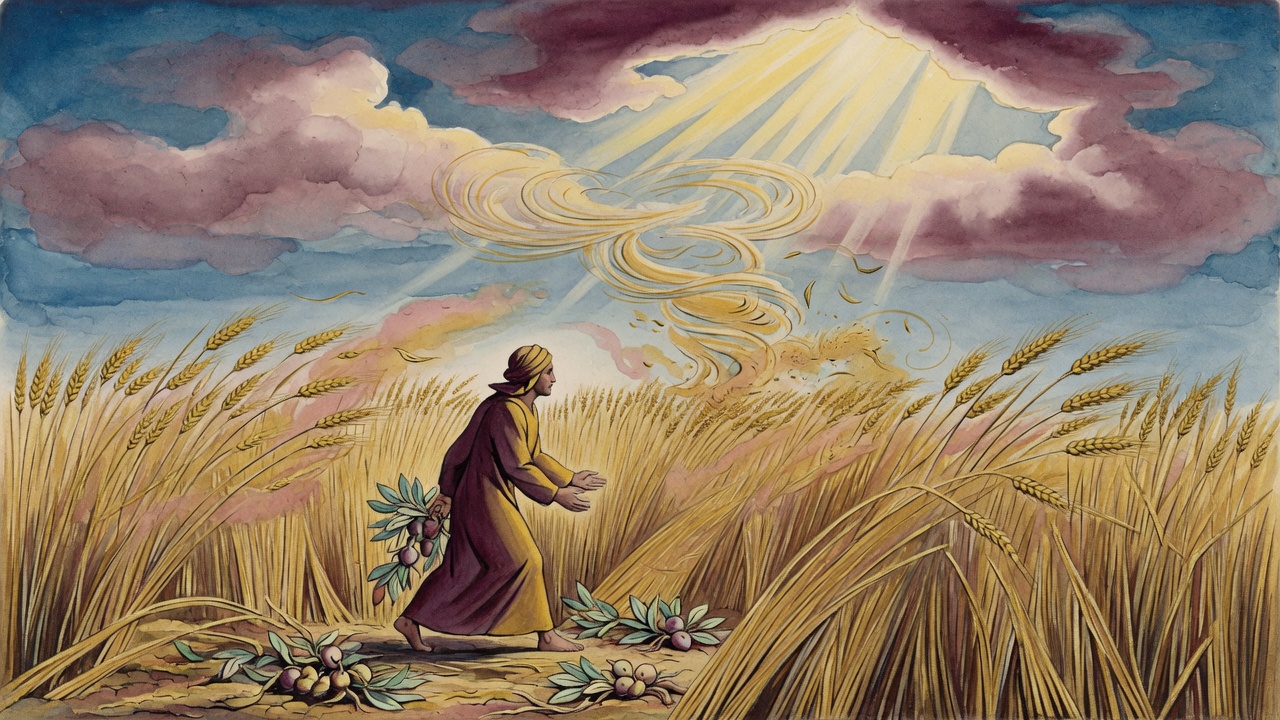
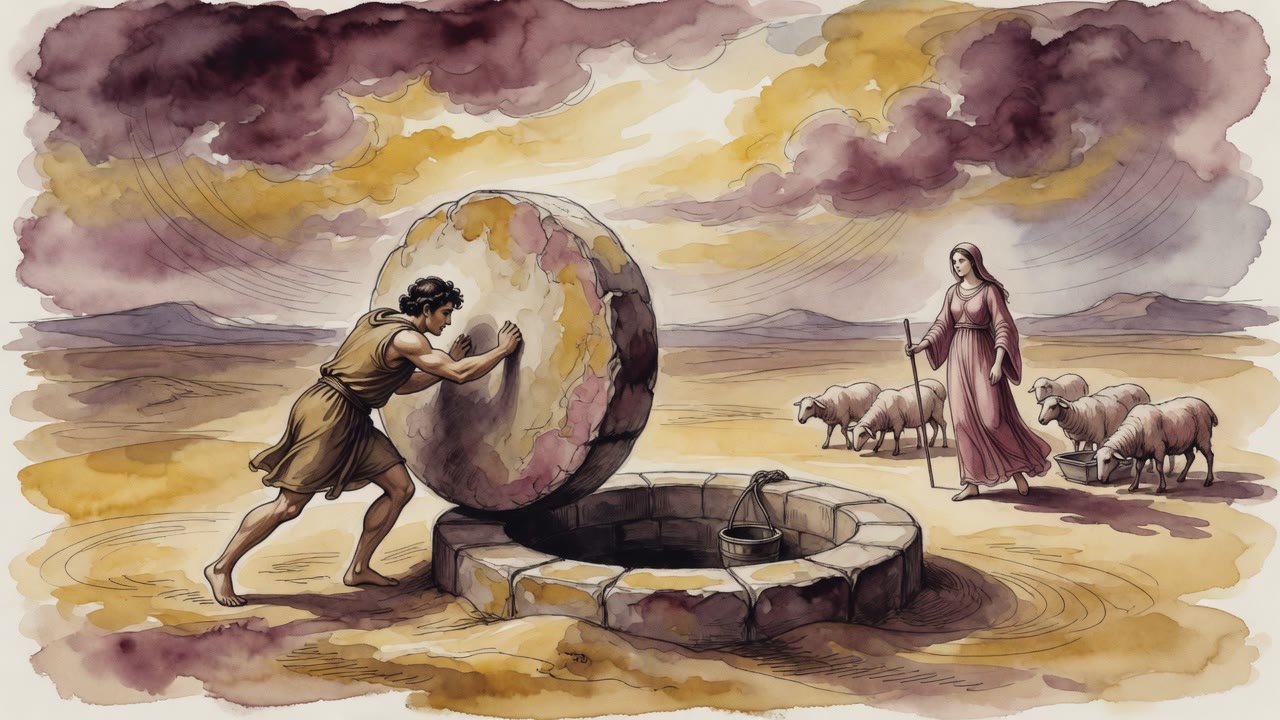
It was wheat harvest, the season when everything in the world is ripe and everything ripe belongs to somebody. Reuben went out into it as a boy and came back with his hands full, and every plant in his hands had been growing on ground no man owned.

He had walked past the standing grain to get them. He had walked past orchards in first fruit. Nobody was watching him do it. Rabbi Hiyya bar Abba said the plants were mandrakes, Rabbi Yitzhak said barley, Rabbi Yehudah bar Simon said violets, and on the one thing that mattered they refused to argue: the boy took nothing that had an owner.

He did not taste a single one either. He carried the whole bundle to Leah with the field smell still on it and put it in her hands first.

The Wife With Sons and No Husband

Leah had four sons already and no evenings left. Rachel had the evenings and an empty cradle. Hannah would sing the arrangement back centuries later, and it came out sounding like an accusation: the woman full of children hired herself out, the woman starving for children gave up, the barren one ended up with seven, and the one who should have mothered the whole house was left to waste.

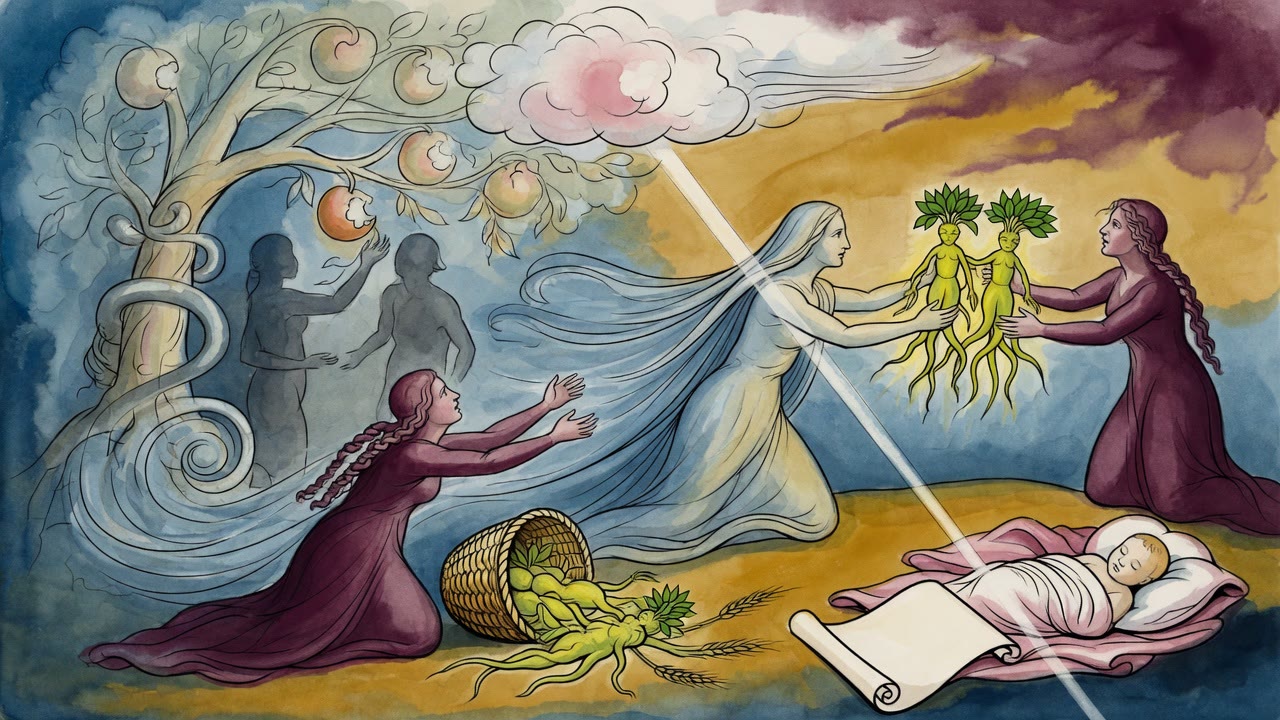
Rachel looked at what the boy had brought in and wanted it. "Give me some of your son's mandrakes."

Leah had an answer ready and it had been ready a long time. Rachel got the flowers. Leah got the night.

She Went Out to Meet Him

She did not wait at the tent. Jacob was coming in from the field at dusk with the dust of the whole day on him, and Leah went out and met him on the road, and she would not let him stop to wash his feet.

"You are coming in to me. I have hired you, and the price was my son's mandrakes."

It is a hard sentence for a wife to say out loud in front of God and everybody, and the verse keeps it word for word. Heaven had already looked at what was behind it and found nothing there but a woman trying to raise tribes.

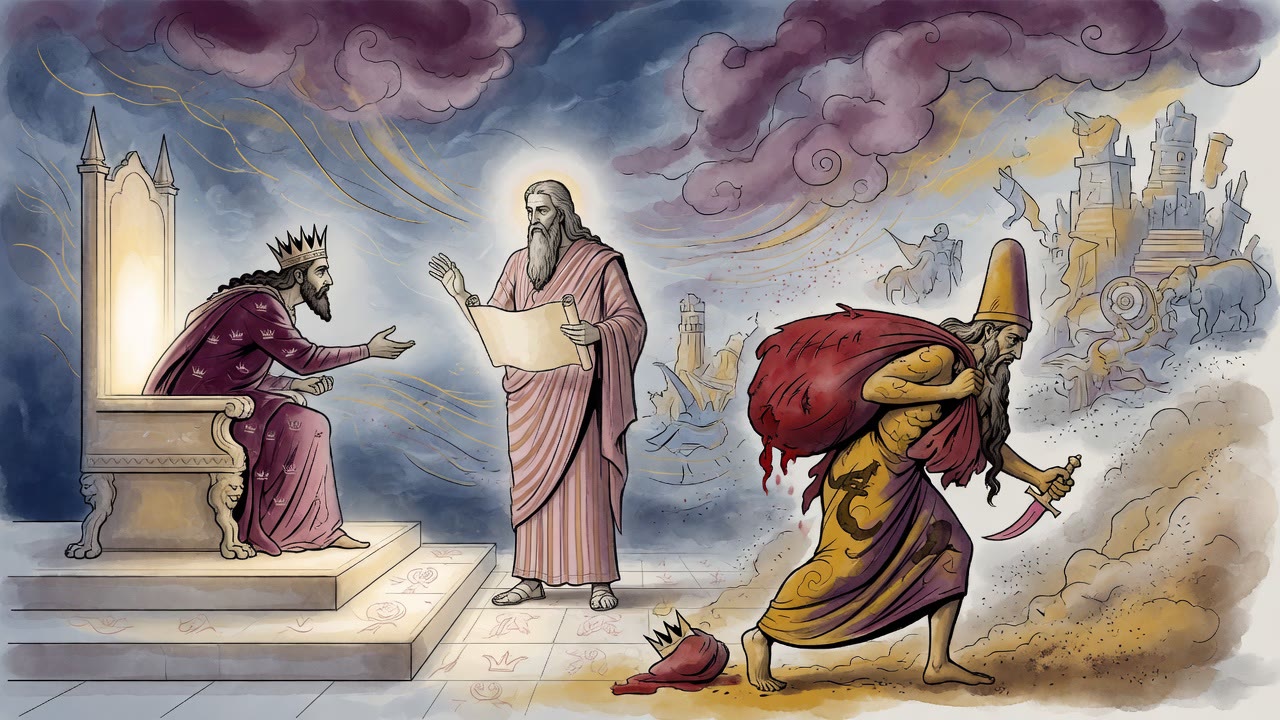
A prophet warned that the rebels would be sifted out of Israel, the children of brazen women among them, and somebody was going to ask whether the son of that night was one of them. Rabbi Yonatan settled it in the other direction. A man whose wife asks him plainly gets children the like of which did not exist even in the generation of Moses. Bring me wise and understanding men, Moses had said when he went looking for judges. Of the sons of Issachar, Scripture says, men who understood the times.

Two Tribes Out of a Bundle of Flowers

The child born from that night was Issachar, and Leah named him for the bargain. God has given me my reward, she said, because I gave my maid to my husband.

Rabbi Levi told people to stop and look at what a handful of weeds had done. Two of the great tribes of Israel stood up out of those mandrakes. Issachar sat down over the Torah and did not get up. Zebulun went out to the sea, sailed, traded, came home, and put the food in his brother's mouth, and because of that arrangement Torah multiplied in Israel. The mandrakes gave forth their fragrance, the Song says, and this is what it smelled like.

Moses Blessed the Sailor First

Issachar was the ninth son born, and at the dedication of the Tabernacle his prince brought his offering second, ahead of seven older brothers, because the tribe carried the learning. They kept the calendar. They knew when to add the month. Two hundred heads of courts came out of Issachar, and the rest of Israel ruled as they ruled, and when they were asked why, they answered that it was a law given to Moses at Sinai.

None of it came from Issachar. It came from Zebulun on the water, from cargo and weather and ports, from a brother who bought the hours.

Moses knew it. At the end of his life, blessing the tribes one by one, he reached these two and put the merchant's name in front of the scholar's. Rejoice, Zebulun, in your going out. And Issachar, in your tents.


← All myths
From the tradition

Sources

3 sources

The texts behind this telling. Some cards carry a translation of the source; others are our own retelling of it, and each card says which. Every card links out to the original.

Yalkut Shimoni on Torah 129:1Yalkut Shimoni on Torah

Translation of the source text.Torat Emet (Yalkut Shimoni) · CC-BY-NC

(Genesis 30:14) "And Reuben went in the days of the wheat harvest." (Proverbs 22:6) "Train up a youth according to his way; even when he grows old he will not depart from it." "Let this land be given to your servants." (1 Samuel 2:5,7) "Those who were full have hired themselves out for bread": Leah, who was full of children, was hired out; "and those who were hungry have ceased": Rachel, who was hungry for children, ceased; "until the barren has borne seven": Leah, who was barren, bore seven; "and she who had many children has languished": Rachel, who was worthy that the majority of the children should arise from her, languished. And who did this? "The Lord kills and makes alive," and so forth. "And he found mandrakes." Rabbi Chiyya the son of Rabbi said: mandrakes. Rabbi Yitzhak said: barley. Rabbi Yehuda bar Simon said: violets. Whether according to the words of these or according to the words of those, all agree that he brought only from ownerless produce. Know this, for he went at the time of the harvest, at the time of the ripening of all kinds of fruits, and he brought only from ownerless produce, to make known to you to what extent they were guarded from robbery. "And he brought them to Leah his mother": to make known to you how great his mother's honor was upon him, that he did not taste them until he had brought them to his mother. Our Rabbis taught: "It is the Lord he blasphemes": this is Manasseh son of Hezekiah, who would expound expositions of fault. He said: Did Moses have nothing to write but (Genesis 36:22) "And the sister of Lotan was Timna" (ibid. 12) "And Timna was a concubine to Eliphaz son of Esau," "And Reuben went in the days of the wheat harvest"? A heavenly voice went forth and said to him, "You sit and speak against your brother; against your own mother's son you cast fault. These things you have done, and I kept silent; you imagined that I would be like you. I will reprove you and set it in order before your eyes." And concerning him it is explained in the tradition (Isaiah 5:18): "Woe to those who draw iniquity with cords of falsehood, and sin as with cart ropes." What is "as with cart ropes"? Rabbi Asi said: At first it resembles a spider's thread; in the end it resembles cart ropes. Since we have come to it, in any case, what is "And the sister of Lotan was Timna"? She was the daughter of distinguished people, as it is written (Genesis 36:40) "the chief of Timna," and every chief is a kingdom without a crown. And Timna was a distinguished woman, and she wished to cleave to the seed of Abraham. She came to Jacob and said to him, "Convert me and let me be a concubine to you," and he did not accept her. She went and became a concubine to Eliphaz son of Esau. She said, "I will be a maidservant to the unworthy portion of this nation, and I will not be a mistress in another nation." She came to Eliphaz and said to him thus; he said to her, "Yes." From her went forth Amalek, who came to afflict Israel, for it was not fitting for Abraham, Isaac, and Jacob to push her away. "And Reuben went in the days of the wheat harvest": from here we learn that the righteous do not stretch out their hands in robbery.

Full source
Yalkut Shimoni on Torah 129:4Yalkut Shimoni on Torah

Translation of the source text.Torat Emet (Yalkut Shimoni) · CC-BY-NC

"And Leah went out to meet him" - this teaches that she did not even let him wash his feet. "And she said, You must come in to me." The Holy One, blessed be He, foresaw that her intention was only to raise up tribes; therefore Scripture had to say "You must come in to me."

"And I will purge out from among you the rebels" (Ezekiel 20:38) - these are the children of nine kinds: children conceived in fear, in compulsion, and so on. But are children of a brazen woman truly excluded? Did not Rav Shmuel bar Nachman say in the name of Rav Yonatan: any man whose wife demands him will have children such that even in the generation of Moses our teacher there were none like them, as it is said, "Get for yourselves men wise and understanding" (Deuteronomy 1:13), and it is written, "And I took the heads of your tribes" (Deuteronomy 1:15), and it is written, "Issachar is a strong-boned donkey" (Genesis 49:14), and it is written, "And of the children of Issachar, men who had understanding of the times" (1 Chronicles 12:33)? That case is where she coaxes him gently.

Rabbi Levi said: come and see the power of the mandrakes, for through the mandrakes two great tribes arose in Israel, Issachar and Zebulun. Issachar sits and occupies himself with Torah, and Zebulun goes out and sails the seas and puts food into the mouth of Issachar, and Torah increases in Israel. This is what is written, "The mandrakes have given forth fragrance" (Song of Songs 7:14). "And she said, You must come in to me." (This is written at remez 31.)

Full source
Yalkut Shimoni on Torah 129:6Yalkut Shimoni on Torah

Translation of the source text.Torat Emet (Yalkut Shimoni) · CC-BY-NC

"And Leah said, God has given me my reward" (Genesis 30:18). Issachar was ninth among the tribes, yet he brought his offering second before the king, as it is said, "On the second day Nethanel son of Zuar offered" (Numbers 7:18). Why? Because he was a man of Torah. This is what is written, "And of the children of Issachar, men who had understanding of the times" (1 Chronicles 12:33) - for the intercalations of the calendar.

"Their heads were two hundred" - two hundred heads of Sanhedrins did the tribe of Issachar produce, "and all their brethren were at their command" - they would settle the law according to their word, and he would answer them with a law given to Moses at Sinai. And from where did all this praise come to him? From Zebulun, who occupied himself with commerce and fed Issachar, who was a man of Torah. This is what is written, "Zebulun shall dwell at the haven of the seas" (Genesis 49:13).

And when Moses came to bless Israel, he placed the blessing of Zebulun before Issachar, as it is written, "Rejoice, Zebulun, in your going out, and Issachar, in your tents" (Deuteronomy 33:18) - meaning that there is reward in your tents. And some say: Issachar studies in the tents of Zebulun.

Full source