Reuben Walked the Wheat and Left It Standing
The owners were gone and the grain stood unwatched. Reuben was hungry enough to take a sheaf. He tied mandrakes to the donkey and left the gold standing.
Table of Contents
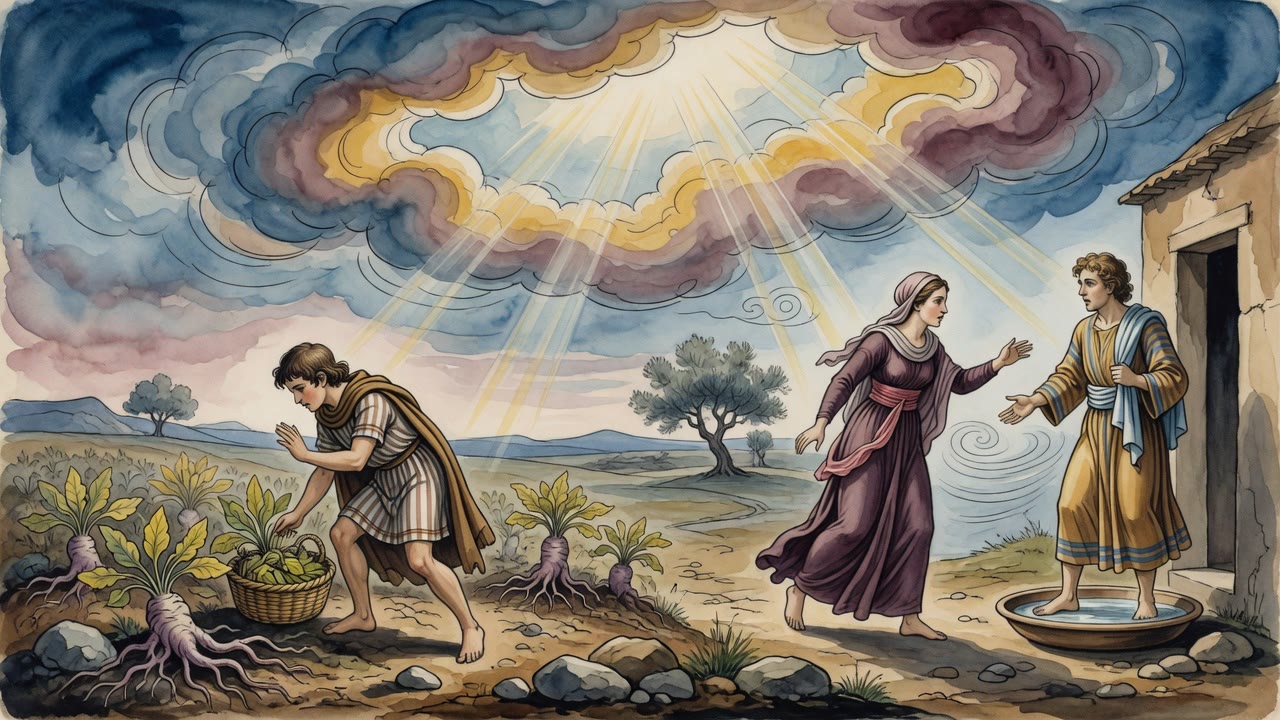
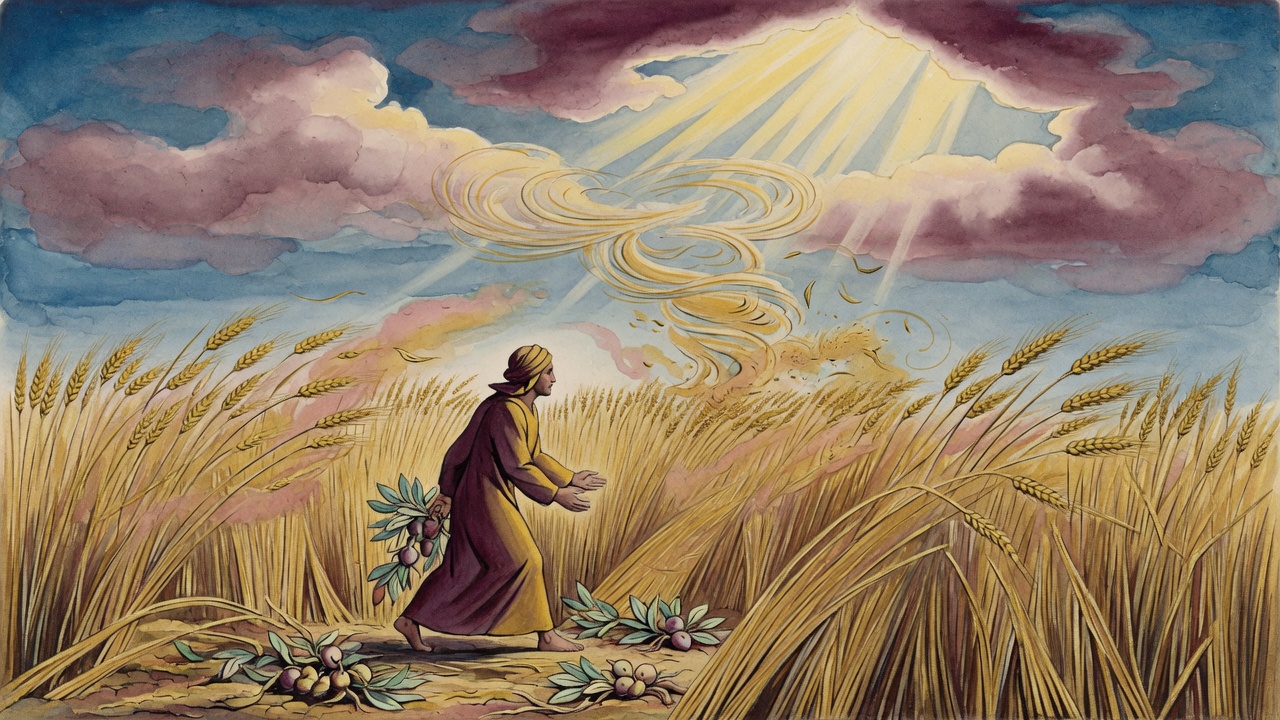
The days of the wheat harvest lay heavy on the fields. Stalks bowed under their own gold. A boy walked alone between them, old enough to know the value of a sheaf, young enough that no one had sent a witness with him.
 Click for full size
His name was Reuben, firstborn of Jacob. The house he came from taught that righteousness is not a speech for the gate. It is what the hand does when the gate is empty and the stomach has opinions.
A Firstborn Between the Stalks
Who would have known if he had filled his arms? The field did not shout. The owners were elsewhere. Hunger is a quiet lawyer. Reuben kept walking, counting his steps the way nervous boys count anything that steadies the mind.
He looked at the wheat and saw someone else's labor standing in the sun. He did not translate absence of watchers into permission. Robbery does not cling to the righteous, not even the small theft an open field seems to offer. His father's fear of heaven sat at the evening meal like another guest who never left early. That guest had come with him into the lane.
His hands stayed at his sides.
Hands That Would Not Steal
Then he found what no man had planted. Mandrakes, wild, claimed by no one's sowing, free for the gatherer. Those he took (Genesis 30:14). He tied them to the donkey. He left the harvest standing as he found it, a gold army he refused to plunder.
On the path home the mandrakes knocked softly against the animal's flank. The wheat behind him kept its gold. A crow landed on a sheaf, and Reuben felt a strange gratitude that the bird, at least, was not his problem.
He could have been a thief by noon and a son with a story by night. The field would not have testified. He walked home with a bundle that belonged to no one, and with palms that were still his.
The Bundle Enters the Tent
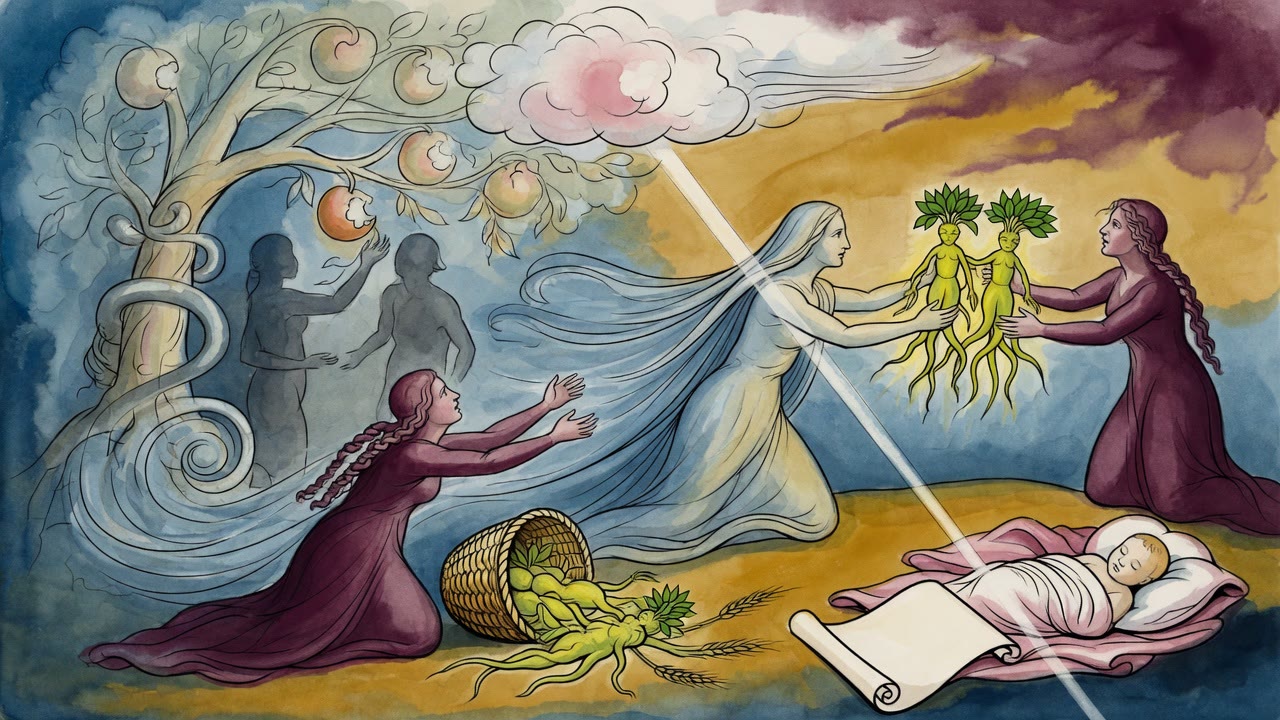
The camp of Jacob was not a quiet place that season. Wives watched one another. Children learned early that love and jealousy can share a single pot of stew. When Reuben came with his strange bundle, he walked into a story larger than a boy's errand. Mandrakes would become bargaining and bitterness and a night that rearranged the family's map.
Leah saw a gift. Rachel saw a price. Jacob, if he heard the full report, would have recognized his own stubborn honesty looking back at him from a son's dusty face. Reuben saw only that his hands were still his.
None of that cancels the field. Before the tent drama, there was the harvest test. Before anyone argued over the plants, a firstborn had already chosen not to steal grain. The later quarrel is famous. The earlier refusal is the quieter miracle, the kind that does not make a festival and still changes a soul's weather.
Words on the Heart, Work in the Hands
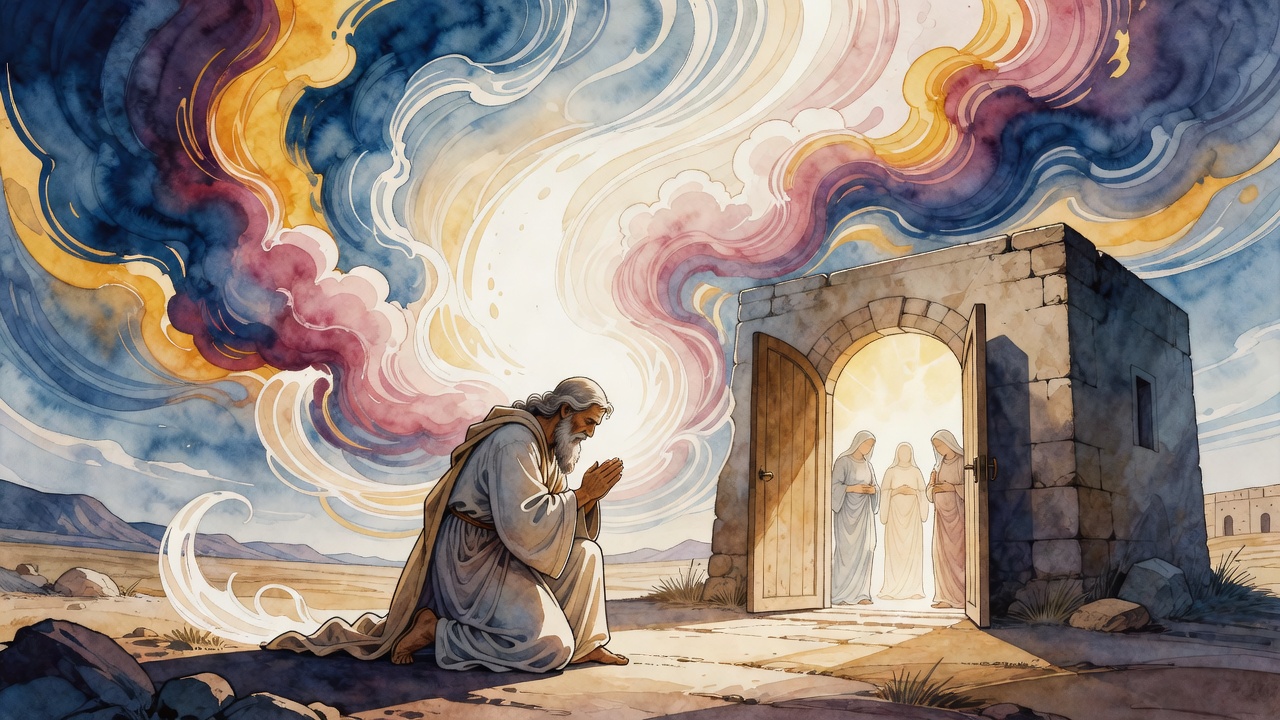
That evening Jacob spoke the old command without raising his voice. Love the Holy One with heart and soul and might. Then he did not soar. He landed. These words shall be upon your heart (Deuteronomy 6:6). Love is not a mood ordered into existence. Love is what grows when commandments sit on the heart long enough to change the hands.
Reuben did not recite a treatise. He had practiced a small prohibition against theft when theft would have been easy. In that practice he was already learning the ways of the One who hates robbery in the inward parts. Cleaving begins as accuracy in private. Public piety that steals in empty fields is only theater.
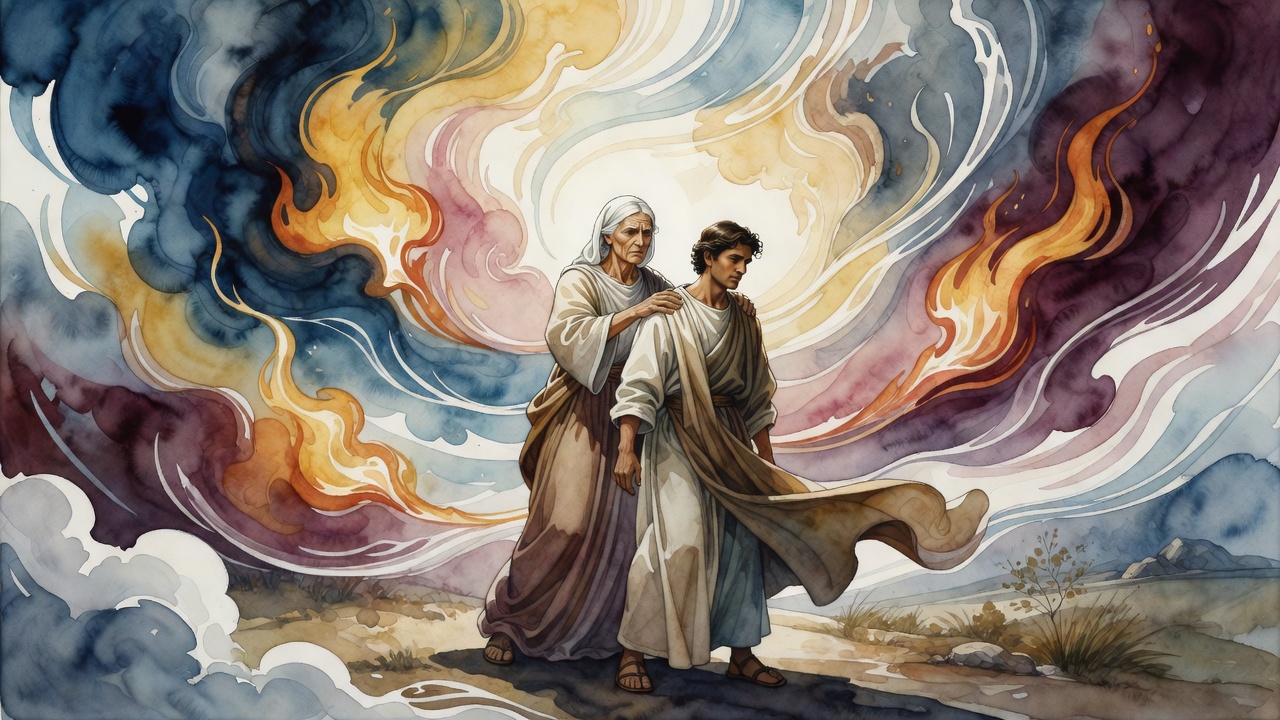
Jacob looked at the boy's palms, still dusty, still clean of sheaves. A boy who will not steal unwatched grain is not yet a finished righteous one. He is already doing the work the command named.
The Empty Place on the Donkey
Years later Reuben would fail in other ways, and Scripture would not hide the failures. That is part of the same honesty. The harvest day remains on the ledger as a mark in his favor. Even where no eye saw and no fence stood, he took only what belonged to no one.
At night, when the camp fires sank, he could smell mandrake on his fingers and wheat on the wind he had not robbed. The two smells told the truth about a firstborn under pressure. Desire for a mother's favor might still twist him. The field had already taught him that heaven's first language is often the word no spoken by a hand that could have said yes.
Somewhere in the dark a donkey shifted, and the empty place where stolen sheaves might have been stayed empty. Reuben slept with clean palms. Love of God, in that hour, was less a feeling than a refusal that left room for something better to grow.
← All myths