5 min read

Reuben Chose Cattle and Lost the Land First

Reuben and Gad counted fat herds east of the Jordan and settled for pasture, then the midrash names them first to exile when wealth is seized without Heaven.

Curated by Arthur · Told by Maggid ·
Table of Contents
  1. Three Gifts That Rot When Stolen
  2. First to Choose Grass, First to Leave
  3. Jars That Smash Themselves
  4. What the East Bank Cost
  5. Moses Hears the Request

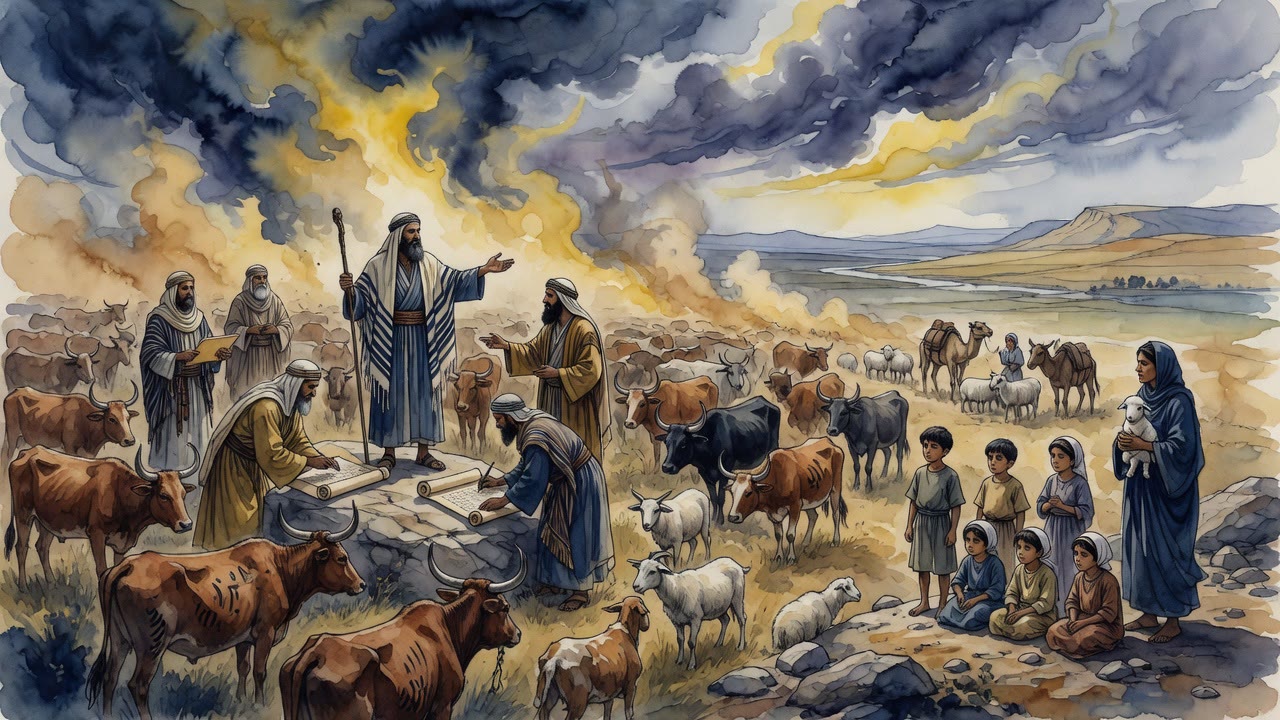
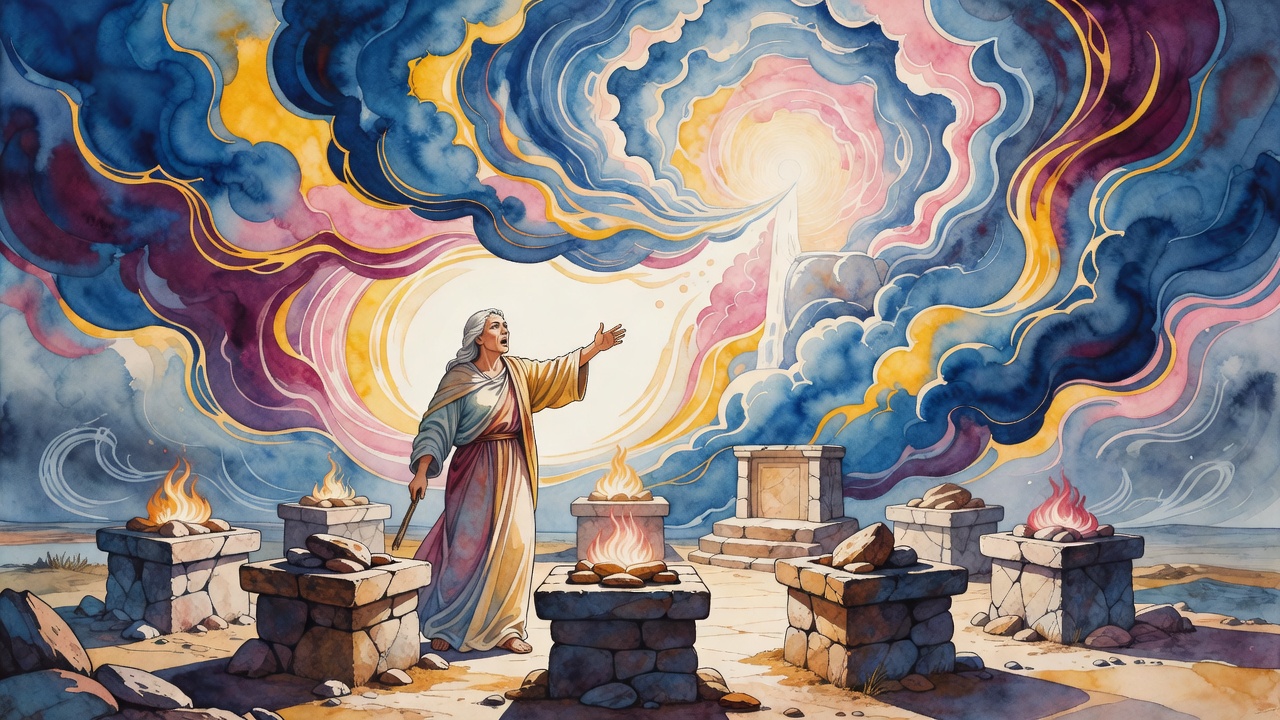
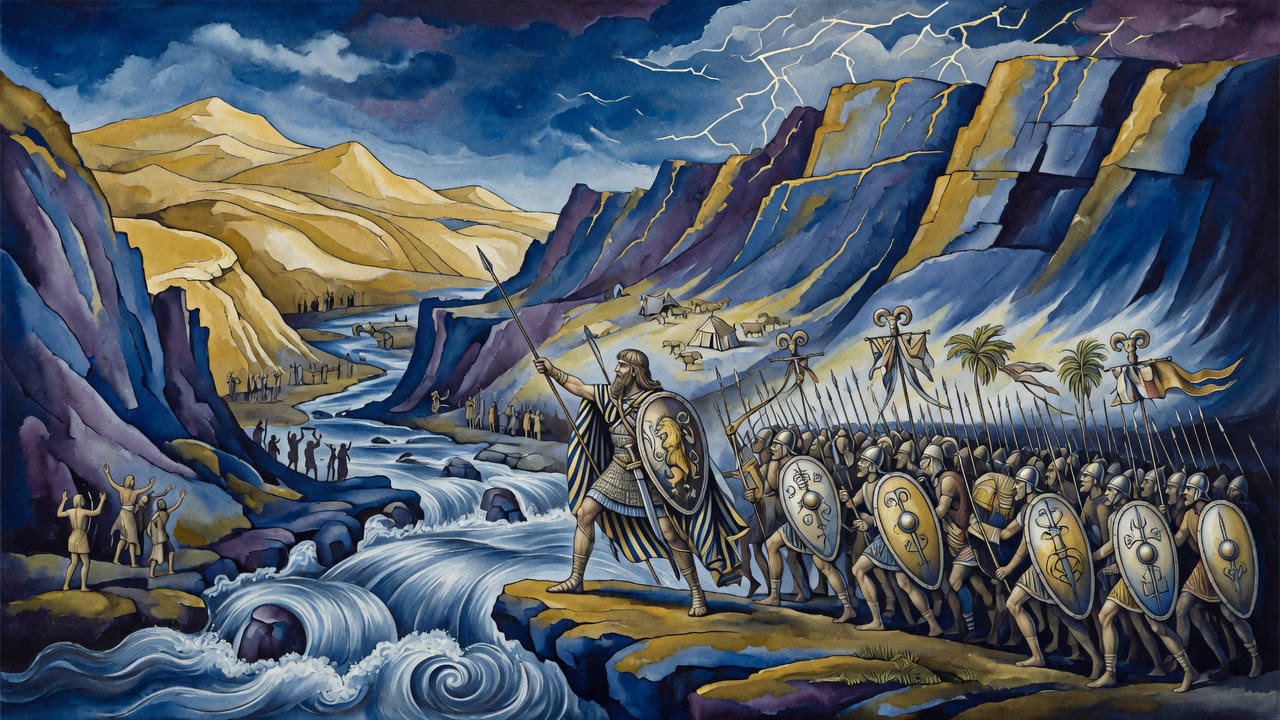
The children of Reuben and the children of Gad stood on the ridges of Yazer and Gilad and saw grass thick enough to hide a calf. Their livestock was very considerable. The place was a place for livestock (Numbers 32:1). They did not look west toward the river with the same hunger.
Reuben Chose Cattle and Lost the Land First Click for full size

They asked Moses for the east bank as home. Pasture first. Inheritance second. The herds would not wait, they said. The land of milk and honey could wait for brothers with fewer animals.

Three Gifts That Rot When Stolen

Bamidbar Rabbah sets their choice inside a larger warning. Three gifts can fill a human life: wisdom, might, and wealth. They delight only when they arrive as gifts of Heaven, earned and held through Torah. Seize them for the self, and their shine fails.

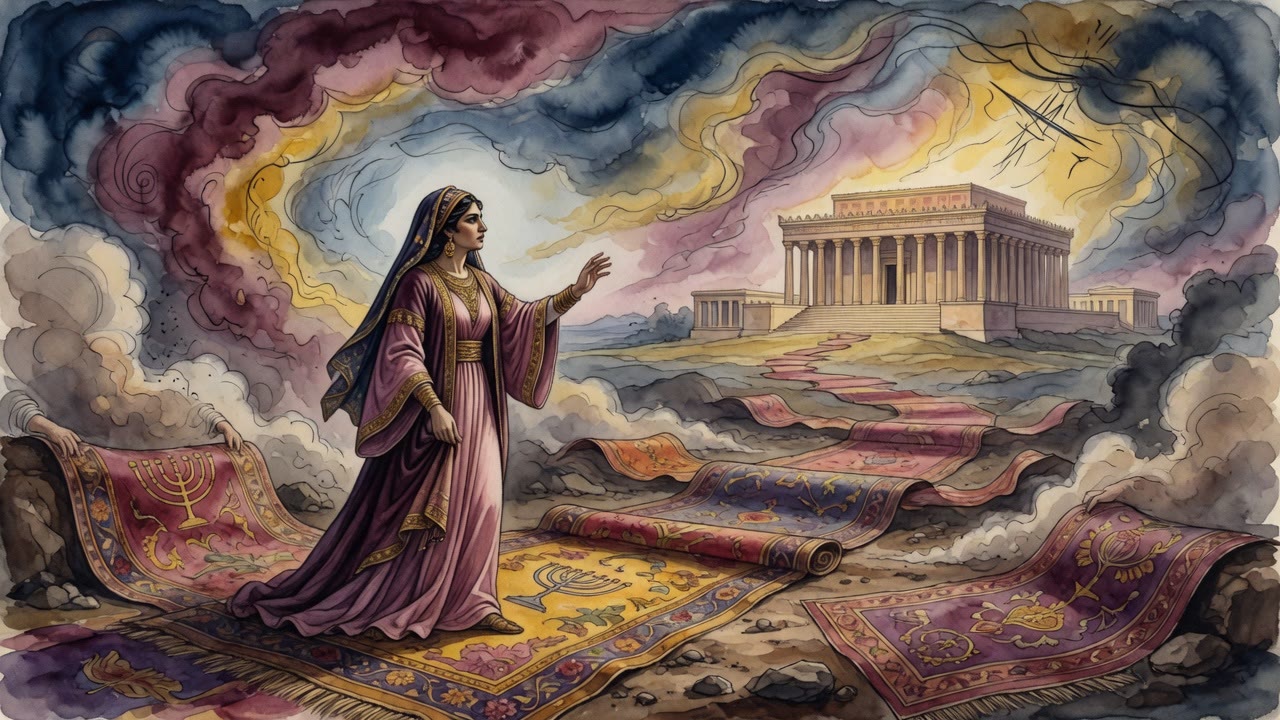
The midrash pairs names like knives. Ahithophel and Balaam for stolen wisdom, both broken. Samson and Goliath for might without Heaven, both fallen. Korah and Haman for riches seized as private glory, both destroyed. The gifts themselves are not cursed. The theft of their source is.

Solomon already knew the race is not to the swift (Ecclesiastes 9:11). Jeremiah forbade boasting in wisdom, strength, or riches, and commanded a different boast: understanding and knowing the Lord (Jeremiah 9:23-24). Herds on the wrong bank cannot answer that verse.

First to Choose Grass, First to Leave

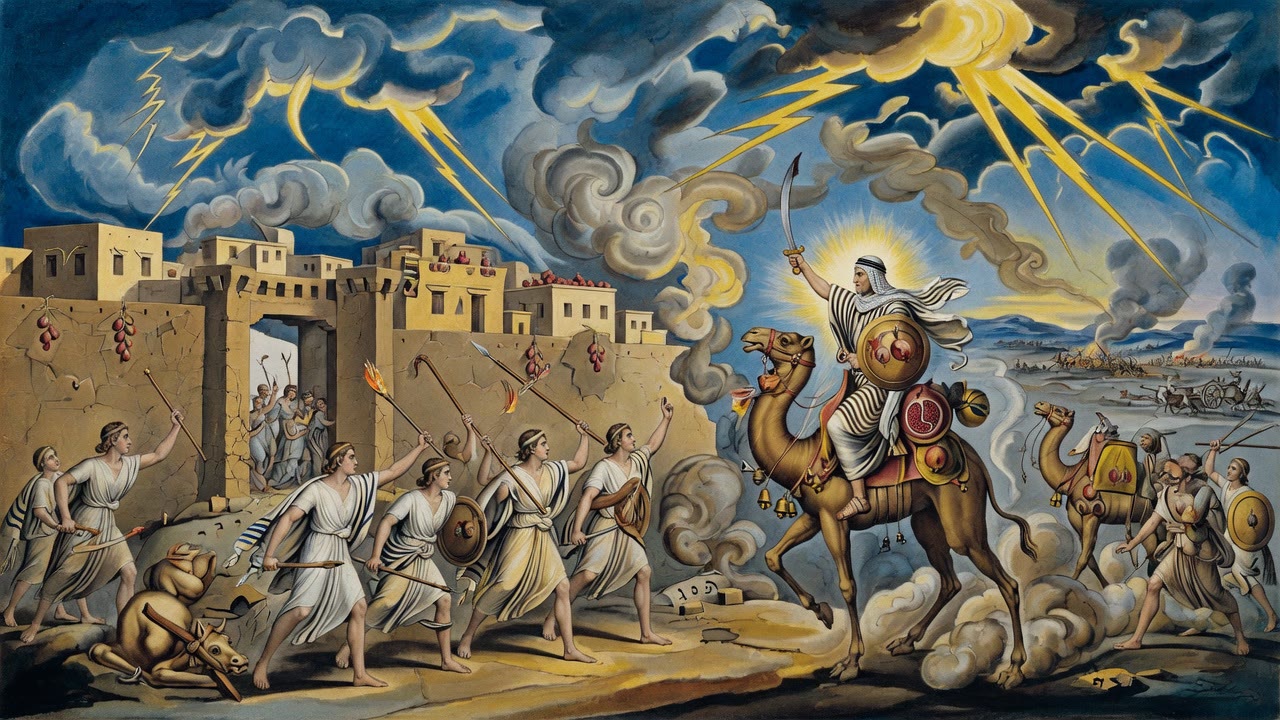
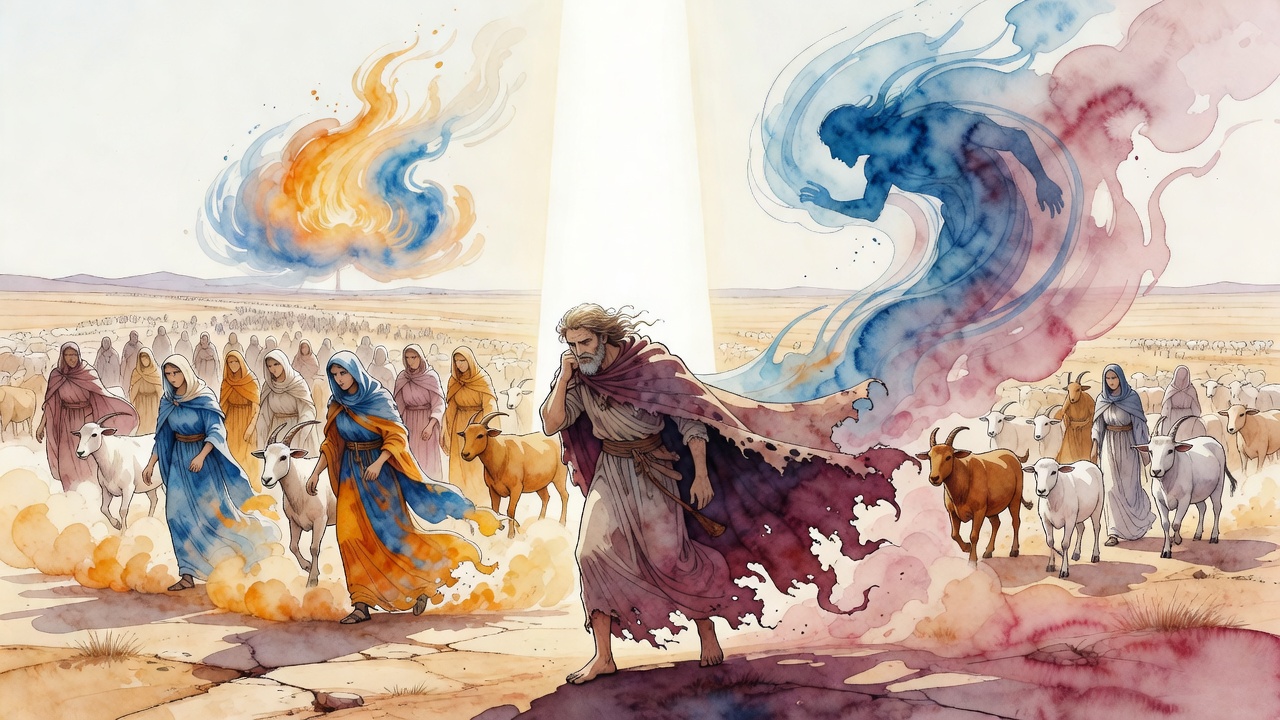
Reuben and Gad loved their acquisitions so hard they separated from their brethren. The midrash will not let the verse of their wealth stand as praise alone. It becomes evidence. Because they clung to cattle outside the Land, they were the first carried away when Assyria's kings stirred, Pul and Tilgath-pilneser dragging Reubenites, Gadites, and half of Manasseh into exile (1 Chronicles 5:26).

The very sentence that catalogs their livestock becomes the midrash's exhibit A. Much cattle. Considerable herds. A place for livestock. Then silence where a people used to camp. Separation driven by attachment is still separation. The first to peel off for comfort are the first empire finds easy to lift.

Jars That Smash Themselves

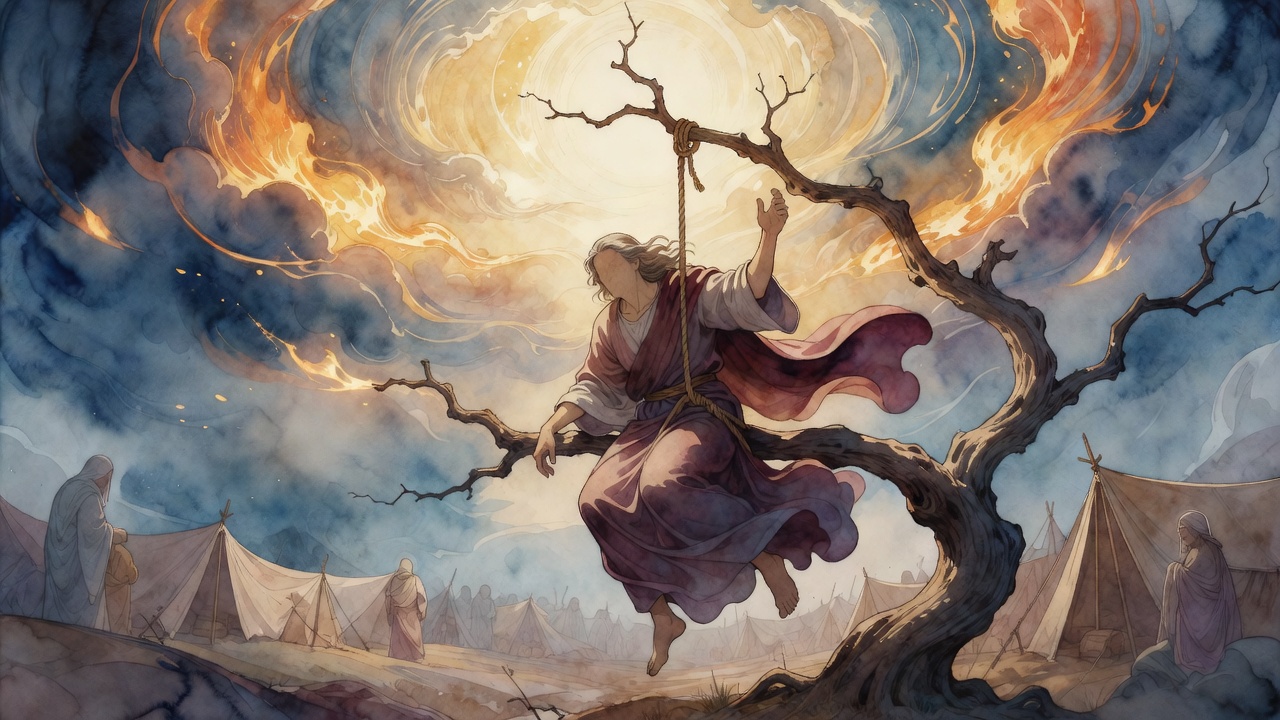
Pesikta de-Rav Kahana tells a smaller, sharper story of wealth that refuses its sacred share. A man hoarded wine and oil and would not tithe. Heaven sent a frenzy on him. He seized a stick and smashed his own jars. When a servant tried to stop him, he cracked the stick on the man's head and then handed it over so the servant could join the ruin. Wealth withheld does not rest. It breaks.

Beside him stands the farmer who tithed faithfully. Drought came. He had turned half a field into a reservoir. Water sold for three measures of grain to one measure of water. He stood in the market and sold abundance while neighbors thirsted. Honor the Lord with your substance, the proverb said, and the midrash hears substance as every gift you were given, beauty of face, beauty of voice, or jars of oil.

Bar Kappara nudged a gifted nephew to use a fine voice for prayer and Shema, not for private display. The principle scales from throat to herd. What you were given is for return, not for a museum of the self.

What the East Bank Cost

Reuben and Gad did not smash jars with a stick. They settled into a slower smash: distance from the center, love of inventory over covenant place, a wealth that measured itself in heads of cattle rather than in shared inheritance. Ahithophel's counsel hung itself. Their pasture hung them first among the exiles.

The herds were real. The grass was good. The midrash's charge is not that animals are evil. It is that a people who choose the gift over the Giver will watch the gift lead them out of the story they thought they owned.

Moses Hears the Request

Moses did not smile when the eastern tribes asked for pasture as home. He heard, behind the reasonable talk of flocks, the old fear that the gift of the Land might cost too much comfort. He bound them with oaths to cross and fight beside their brothers before they returned to the pens they loved. Even that compromise could not erase the midrash's later verdict on what love of inventory does to a tribe's timeline.

Ahithophel's counsel once seemed like pure wisdom until it hung him. Korah's wealth once seemed like proof of favor until the earth answered. Reuben and Gad's herds seemed like blessing you could count at dusk. The count was real. The exile was also real. First to settle for the near grass, first to leave when empire came for the fat land outside the center.

Hold the smashed jars beside the eastern ridges. One man destroys his own wine in a night of frenzy because he would not tithe. Two tribes lose their place in a slower frenzy of attachment. Both stories say the same hard thing: substance is for honoring the Lord, not for building a private kingdom that forgets the Giver.

Wealth is not the villain. Seizure of wealth's meaning is. When the gift is hugged tighter than the brothers, the midrash already hears Assyrian boots. When the gift is opened in tithe and shared inheritance, the market of drought can still find a man selling water at a blessing's price.


← All myths
From the tradition

Sources

2 sources

The texts behind this telling. Some cards carry a translation of the source; others are our own retelling of it, and each card says which. Every card links out to the original.

Bamidbar Rabbah 22:7Bamidbar Rabbah

Retold in our words. Read the original at the link below.The Sefaria Midrash Rabbah, 2022 · CC-BY

The book of Numbers, Bamidbar in Hebrew, recounts the Israelites' journey through the wilderness. In chapter 32, we encounter the tribes of Reuben and Gad. "The children of Reuben and the children of Gad had much livestock; it was very considerable. And they saw the land of Yazer and the land of Gilad, and, behold, the place was a place for livestock" (Numbers 32:1).

Bamidbar Rabbah, a classical Midrashic (rabbinic interpretive commentary) text, unpacks this seemingly simple verse and explores the nature of true wealth, power, and wisdom. It poses a fascinating idea: that there are three gifts in the world that, if acquired, can bring complete fulfillment. These are wisdom, might, and wealth. But there’s a crucial caveat.

These gifts only bring true delight, the Midrash tells us, when they are "gifts of Heaven" – when they come through the Torah. When they are earned and used in a way that is aligned with divine will. Otherwise? Well, then their luster is fleeting. As Solomon wisely observes in (Ecclesiastes 9:11), "the race is not to the swift, nor the battle to the strong, neither yet bread to the wise, nor yet riches to men of understanding, nor yet favor to men of skill; but time and chance happeneth to them all" (Ecclesiastes 9:11).

The prophet Jeremiah echoes this sentiment: "Thus says the Lord: 'Let not the wise man boast of his wisdom, or the strong man boast of his strength, or the rich man boast of his riches, but let him who boasts boast about this: that he understands and knows me..'" (Jeremiah 9:23-24). If these gifts don't come from the Holy One, blessed be He, they will ultimately be taken away.

To illustrate this point, our Rabbis tell of pairs of figures: one from Israel and one from the nations, each possessing one of these gifts. Ahithophel and Balaam, both renowned for their wisdom, yet both met tragic ends. Samson and Goliath, paragons of strength, both ultimately fell. And Korah and Haman, overflowing with riches, both were utterly destroyed. Their downfall? They seized their gifts for themselves, rather than receiving them from the Divine. These figures – legends in their own right – possessed qualities that many of us strive for. Yet, their stories serve as cautionary tales.

And what about the tribes of Reuben and Gad? They, too, were blessed with considerable wealth in the form of livestock. But they loved their possessions so much that they chose to settle outside the Land of Israel. The consequence? They were the first to be exiled, as it is written: "So the God of Israel stirred up the spirit of Pul, king of Assyria, and the spirit of Tilgath-pilneser, king of Assyria, and carried them away, even the Reubenites, and the Gadites, and the half-tribe of Manasseh.." (1 (Chronicles 5:2)6).

The Midrash asks: What caused this? It was their separation from their brethren, driven by their attachment to their acquisitions. The very verse that describes their wealth – "The children of Reuben and the children of Gad had much livestock.." – becomes evidence of their misplaced priorities.

So, what does this all mean for us? Perhaps it's a reminder to examine our own values. What do we truly cherish? Are we pursuing wisdom, strength, and wealth in a way that honors something beyond ourselves? Are we building a life of true, lasting value, or are we chasing fleeting shadows? The story of Reuben and Gad, and the insights of Bamidbar Rabbah, invite us to consider what it truly means to be rich – not just in possessions, but in purpose.

Full source
Pesikta DeRav Kahana 10:3Pesikta de-Rav Kahana

Translation of the source text.Pesikta de Rav Kahana according to an Oxford manuscript, Dov Mandelbaum ed., N.Y. 1987 · CC-BY

[3] "Honor the LORD with your substance and with the first of all your produce" (Proverbs 3:9): that if you were handsome, do not be loose with sexual sin, so that people will not say, "So-and-so is handsome but is not guarded against immorality," on account of "Honor the LORD with your substance" [read as "from what He graced you with"]. Another interpretation: "Honor the LORD with your substance" (ibid.): that if your voice was pleasant, lead the Shema and pass before the ark, on account of "Honor the LORD with your substance" (ibid.). Rabbi Chiyya bar Adda, the son of the sister of Bar Kappara, had a pleasant voice, and Bar Kappara would say to him, "My son, lead the Shema and pass before the ark on account of 'Honor the LORD with your substance' (ibid.), from that with which He graced you." Another interpretation: "Honor the LORD with your substance" (ibid.): act with your substance [be-honkha] before you act without your substance [be-lo honkha]. There was a case of a man who used to store up wine and oil and would not bring out his tithes as is fitting. What did the Holy One, blessed be He, do? He brought into him a spirit of frenzy, and he took a stick and began to smash the jars. A member of his household rebuked him. What did he do to him? He took the stick and split it over his head. He said to him, "Instead of helping me, you rebuke me?" The other said, "Give me the stick and I too will smash." He gave him the stick, and that one was smashing them one at a time while this one was smashing them two at a time. What caused this for him? Because he would not bring out his tithes as is fitting. For Rabbi Levi said: there was a case of a man who used to bring out his tithes properly, and he had one field, and the Holy One put it in his heart, and he made half of it for sowing and half of it a reservoir for water. A year of drought came, and they were announcing and saying, "A se'ah of wheat for a sela, a se'ah of water for three sela'im," and he would announce and say, "Who wants a se'ah of water that produces three se'ah of wheat?" What caused this for him? Because he used to bring out his tithes properly. Therefore Moses warns Israel and says to them, "You shall surely tithe all the produce of your seed" (Deuteronomy 14:22).

Full source