Esau Fled the Land With No One Pursuing Him
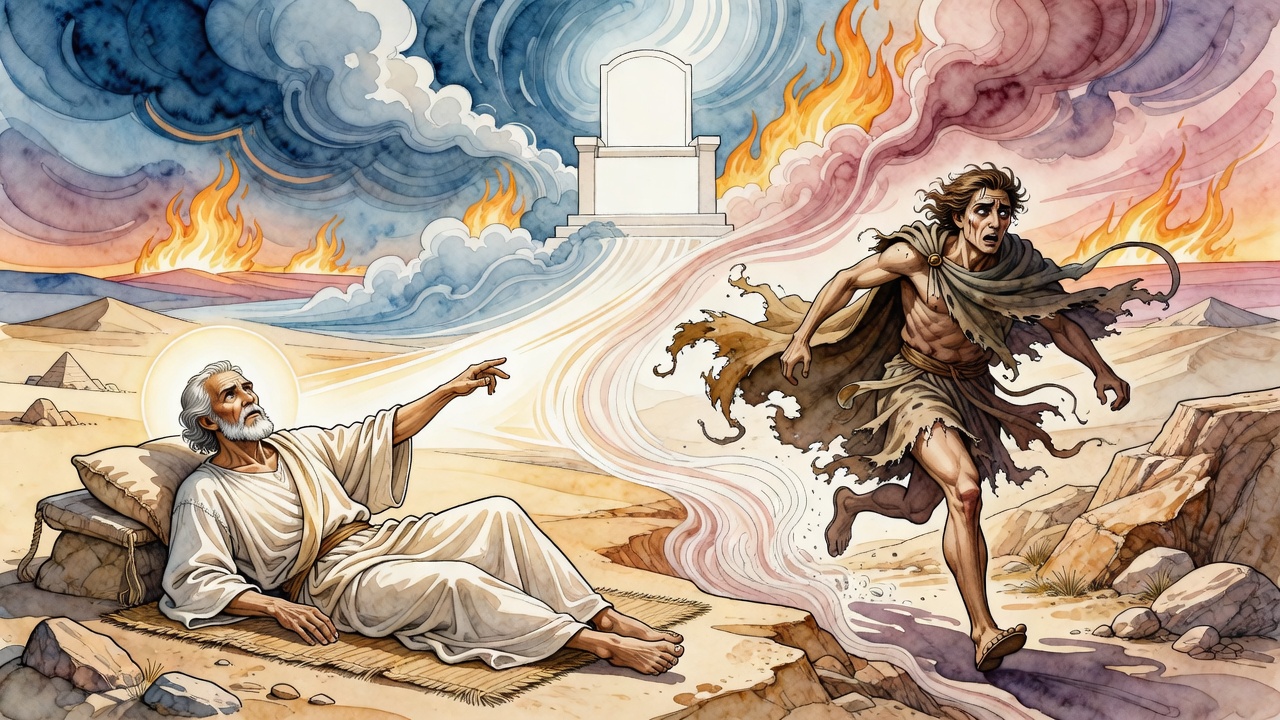
Esau packed wives, herds, and shame and left Canaan though no army chased him. The midrash hears the wicked fleeing a pursuer only they can see.
Table of Contents
 Click for full size
The Loading of the Camp
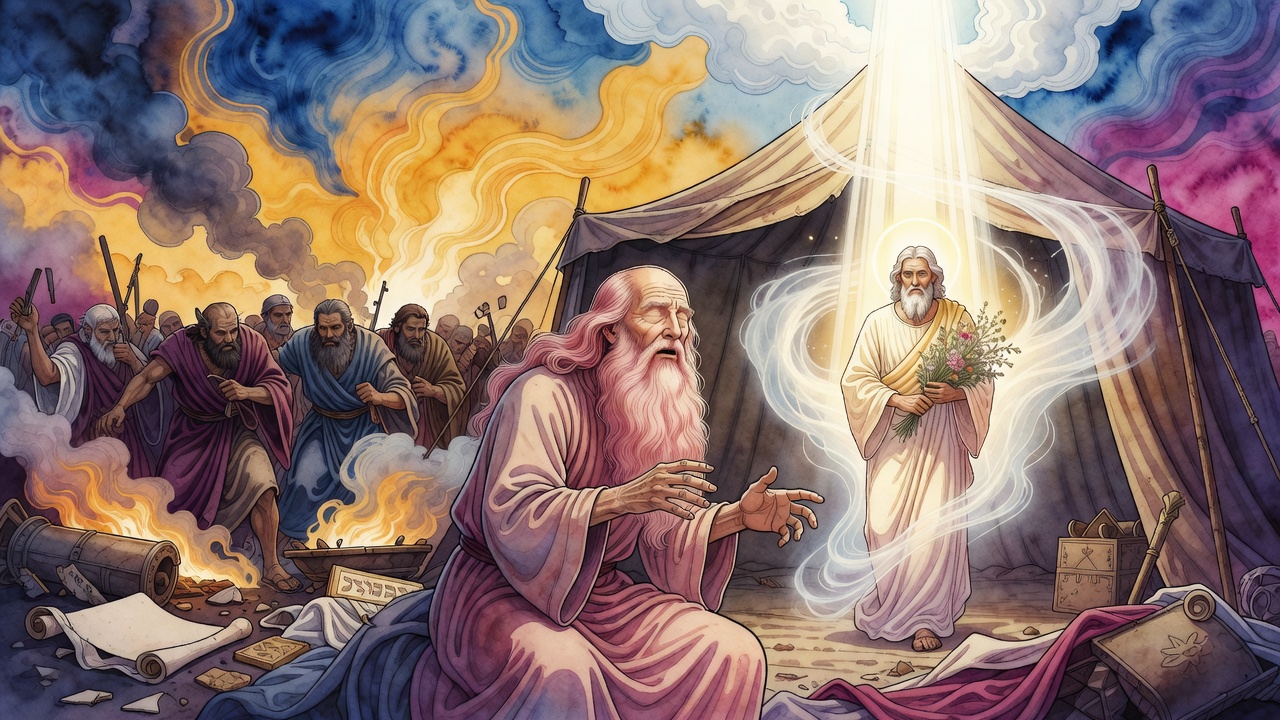
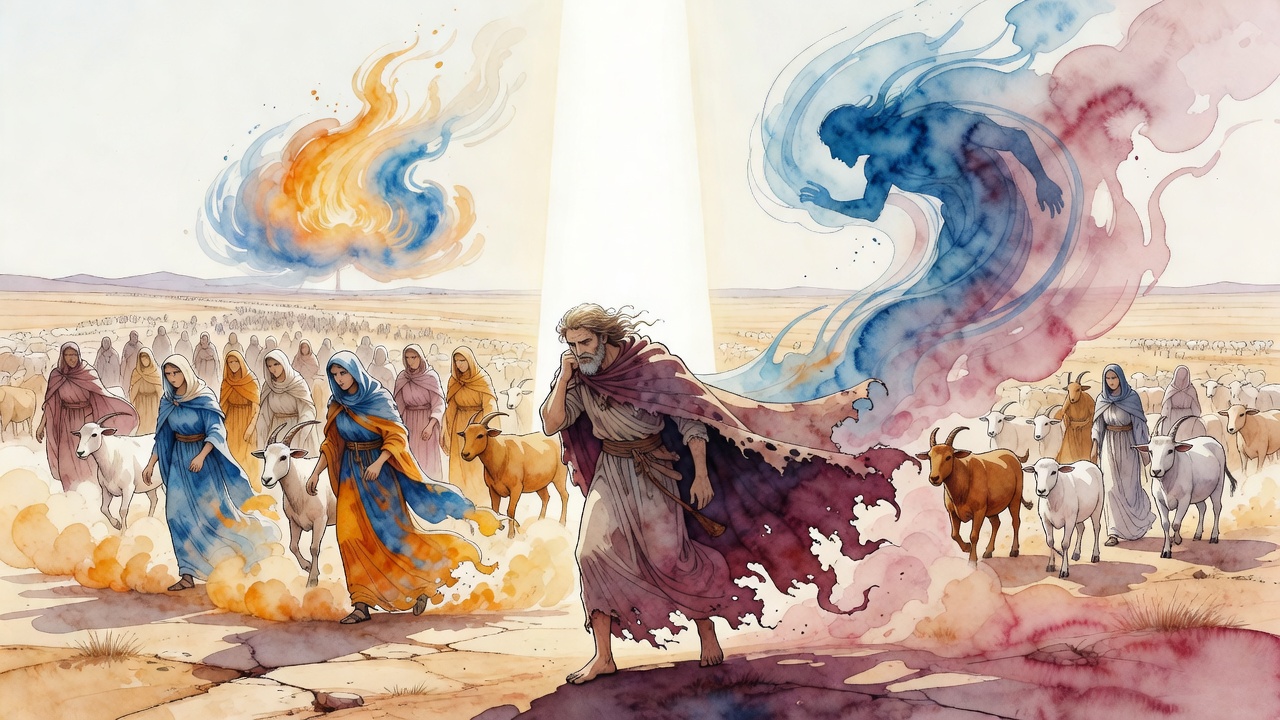
Esau ordered the tents struck while the sun was still kind. Wives, sons, daughters, servants, livestock, every possession scraped from Canaan, all of it moved east as if a war horn had blown. No war horn had blown. No army stood on the ridge (Genesis 36:6).
Jacob had already gone his way. The land did not spit Esau out. He spat himself out. Pack animals shifted under the weight of a decision that looked like travel and felt like flight.
A man can leave a country for trade. Esau left as if the ground itself had become an accusation.
His wives argued over which chests rode first. Children asked why the wells of Canaan were suddenly not theirs. Esau answered with orders, not explanations. The birthright's ghost rode in the last wagon whether he admitted it or not.
Years earlier he had sold a future for stew. Now he sold a landscape for the relief of not having to share it with Jacob's God-haunted story. The midrash does not need him to confess. The packing is the confession.
The Proverb at His Heels
"The wicked flee without a pursuer, but the righteous will be secure as a young lion," says Proverbs, and the midrash set Esau under that first half like a brand (Proverbs 28:1). No pursuer. Still he ran.
Rabbi Elazar heard a promissory note in the flight. When God promised Abraham the land, He also spoke of a long exile and hard years for the seed. Esau, reading the fine print of history, preferred to cash out early. Better another country than a claim that came with chains in its future.
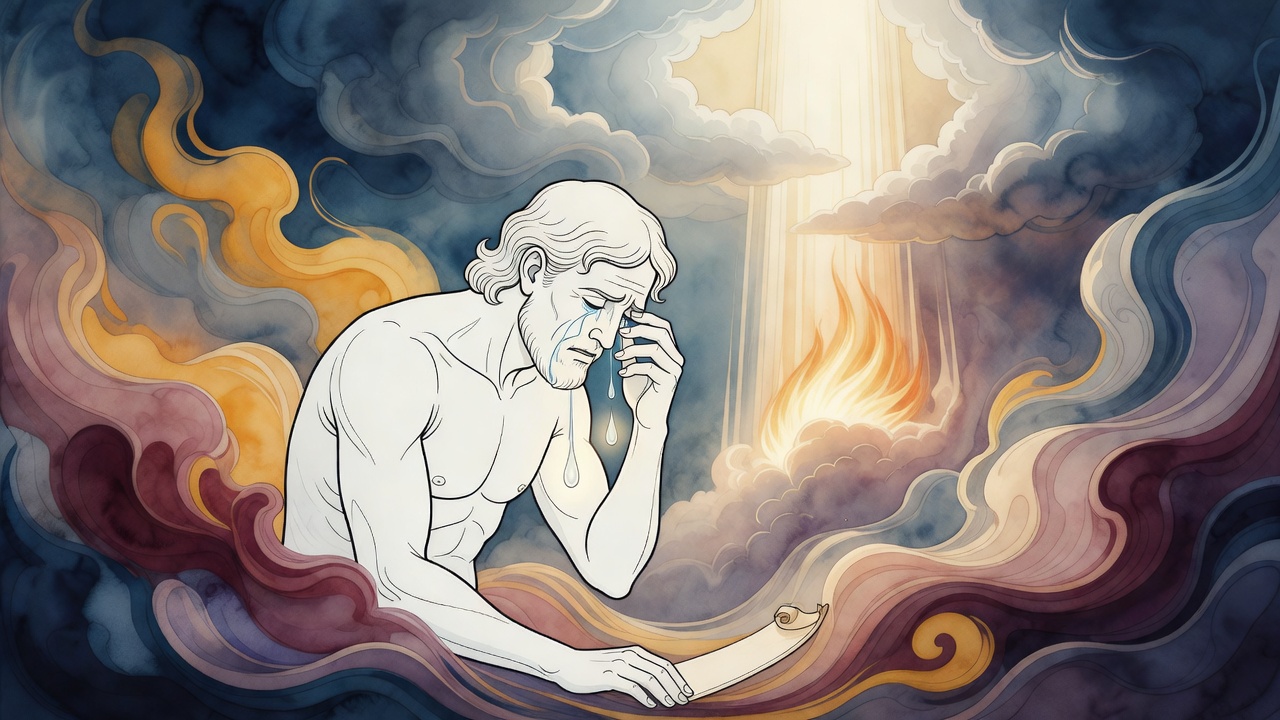
Rabbi Yehoshua ben Levi heard shame instead. The birthright sold for red stew still sat in Esau's mouth like a taste that would not leave. Every hill in Canaan could remind him of a bowl and a laugh and a loss. Shame is a quiet pursuer. It needs no horse.
Jacob Settled
While Esau's line snaked away, the midrash set Jacob down with the other half of the proverb. "Jacob settled." He stayed inside the pressure. Exile would come for him too, but not as a man bolting from his own reflection.
A young lion does not look secure because the forest is gentle. It looks secure because it has decided not to invent enemies out of empty wind. Jacob's security was not comfort. It was refusal to flee the story assigned to him.
Two brothers. One land. One left because no one chased him. One remained because someone greater than a chase had named him.
Wealth That Turns on Its Owner
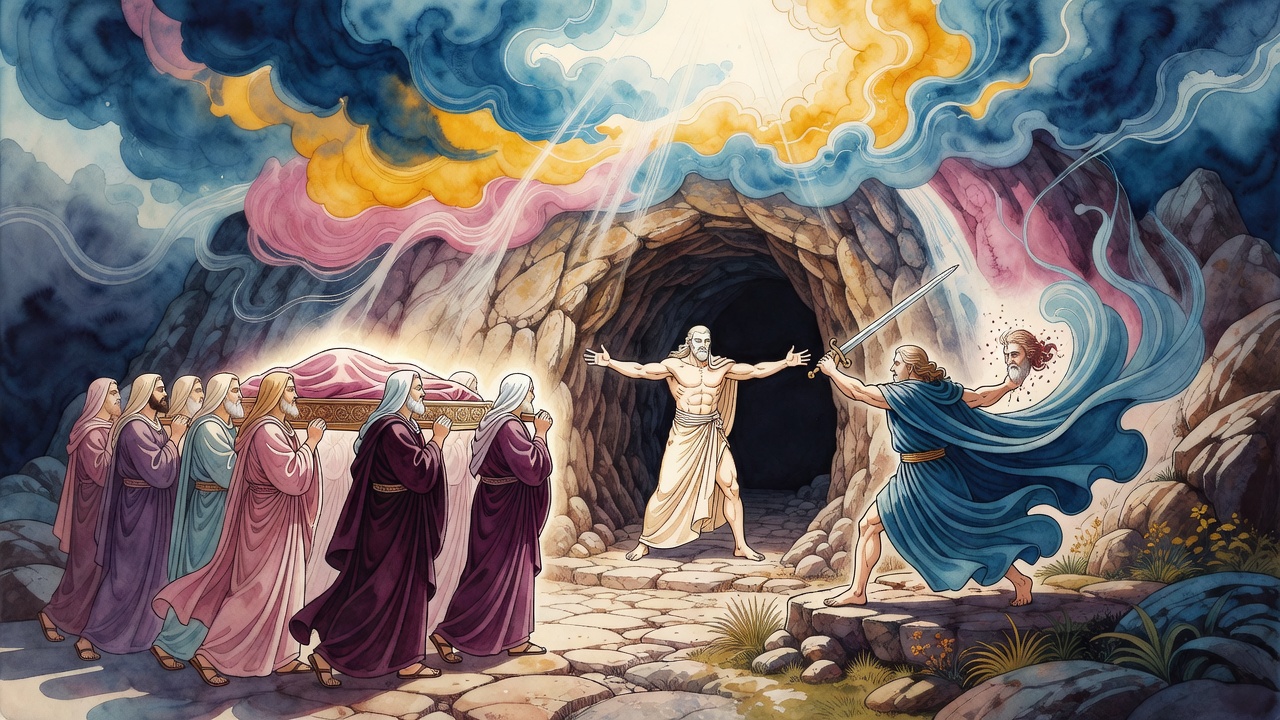
Kohelet names a "grievous evil" under the sun: wealth guarded for its owner to his own hurt (Ecclesiastes 5:12). The sages filled that verse with faces. Rabbi Yehoshua said Korah, rich enough to fund a rebellion, swallowed by earth with his tents of gold still imagined in the dust (Numbers 16).
Others named Navot, killed over a vineyard he would not sell. Others named Haman, whose piles of silver bought only a gallows. Others named the tribes who clung to cattle east of the Jordan and accepted a thinner share of the promise. Job himself was dragged through wealth, ruin, and wealth again until possession became a spiritual weather system.
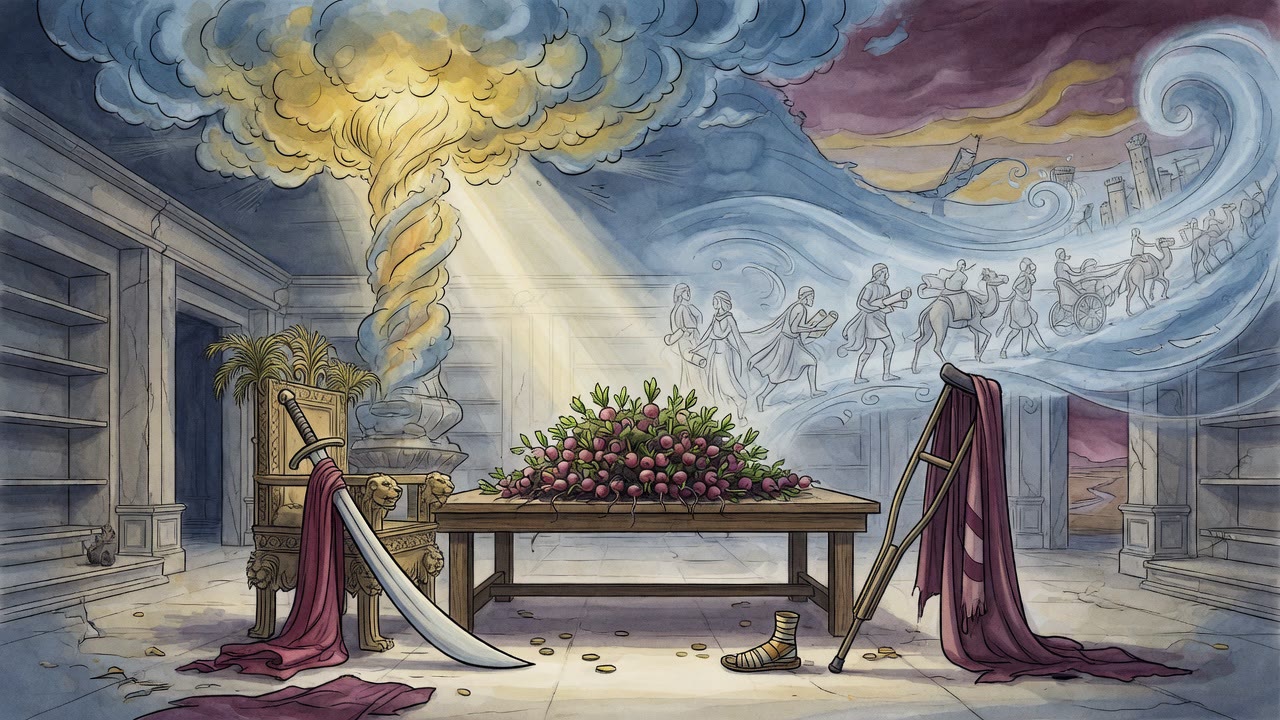
Esau's herds leaving Canaan belong in that gallery. Property can be a wing. It can also be a weight that teaches a man to run from the very ground that could have made him heavy with blessing.
What the Empty Ridge Held
After Esau's dust settled, the ridge was quiet. No pursuer appeared to congratulate the proverb. Jacob's campfires, distant, kept their own counsel.
The wicked, the midrash insists, can be hunted by a future they refuse, by a shame they will not name, by a fortune they clutch until it steers them. The righteous may shake, starve, wrestle an angel, and still not pack the tents in panic.
Esau's last look at Canaan was the look of a man escaping a room that was never locked. That is its own kind of defeat.
On the road east, dust rose like a second flock. Esau did not look back often. Looking back would have meant measuring Jacob's tents against his own, and he had already lost that arithmetic once over a meal.
Korah's later wealth, Haman's silver, Navot's vines, Job's oscillating fortune: the midrashic gallery of grievous riches all share Esau's talent for letting property steer the soul. Guard a fortune hard enough and it will choose your direction for you.
Jacob, settled for the moment, watched stars that Esau also saw from a different angle of the same sky. One brother fled a pursuer made of shame and fine print. The other stayed to wrestle whatever came next, including himself.
The proverb does not say the wicked are always wrong about danger. It says they invent a chase when the real work is to stand. Esau's caravan proved the line without needing a commentator in the last wagon.
← All myths