Rizpah's Sackcloth Vigil on the Hill of the Hanged
To end a three-year famine David hangs seven of Saul's sons, and Rizpah guards their bodies on a rock through summer until the rain returns.
Table of Contents
 Click for full size
Three Years the Rain Withheld
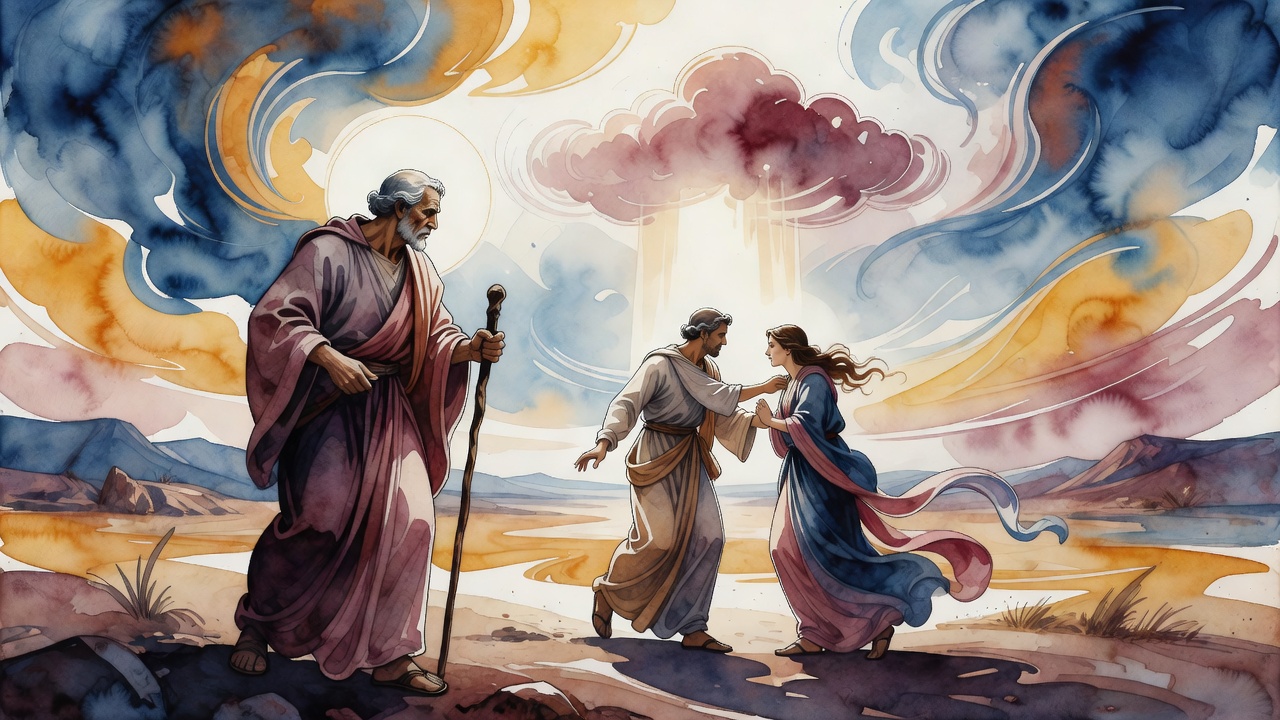
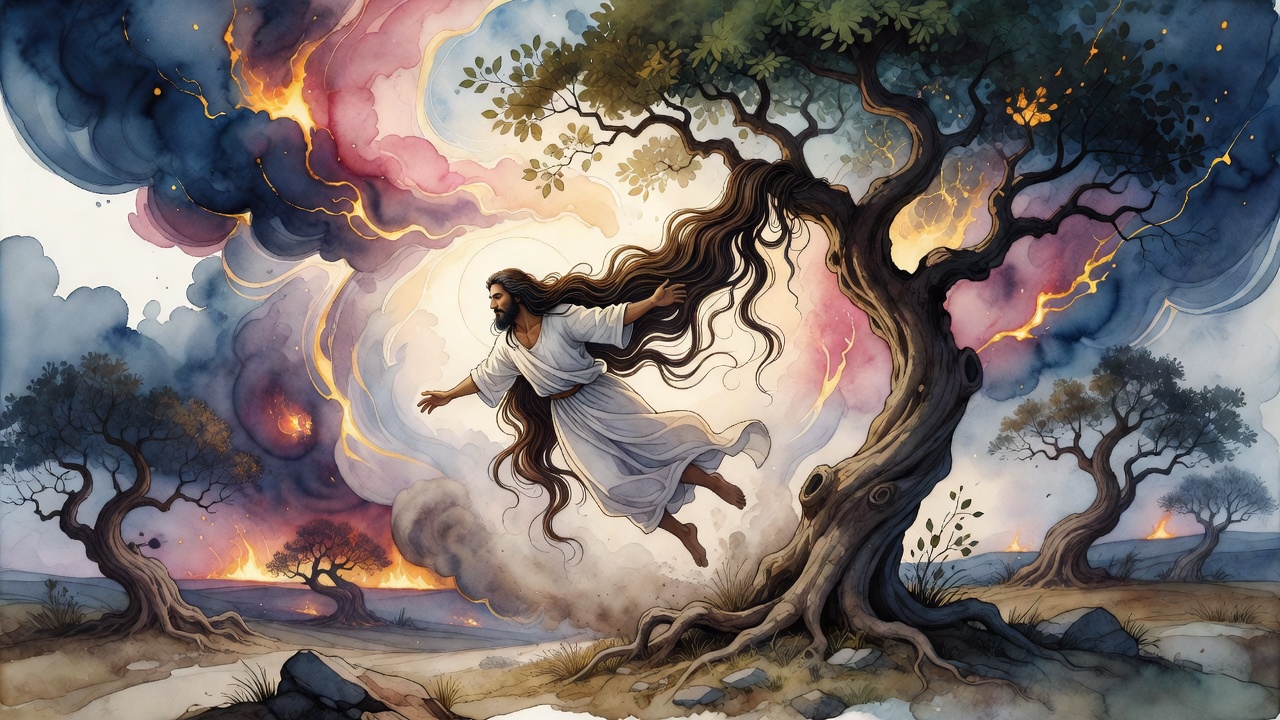
For three years the ground gave nothing. The wells sank. The barley came up thin and yellow and died standing. David could name no sin to explain it, so he went and asked, and the answer came back strange and old. The famine was not for anything he had done. It was for a house already in the grave.
Years before, King Saul had turned on the Gibeonites and put them to the sword. They were the remnant of the men who had once come to Joshua in worn-out sandals, carrying moldy bread and pretending to be travelers from a far country, and had tricked Israel into swearing them a covenant of peace. Their own elders had counseled that lie. Scripture would remember them by a name with a barb hidden in it, elders of shame, the word cut short on the page the way the righteous of Sodom are written short. Cursed, dragged-along converts. And Saul had broken the oath sworn to them and spilled their blood.
The oath did not forget. The land kept the account.
The Blood the Gibeonites Would Not Sell
David went to what was left of the Gibeonites and asked how he could make it right. "We want no silver and no gold from Saul or from his house," they said. They wanted blood for blood. Seven of Saul's sons, handed over to be hung on the hill before the LORD.
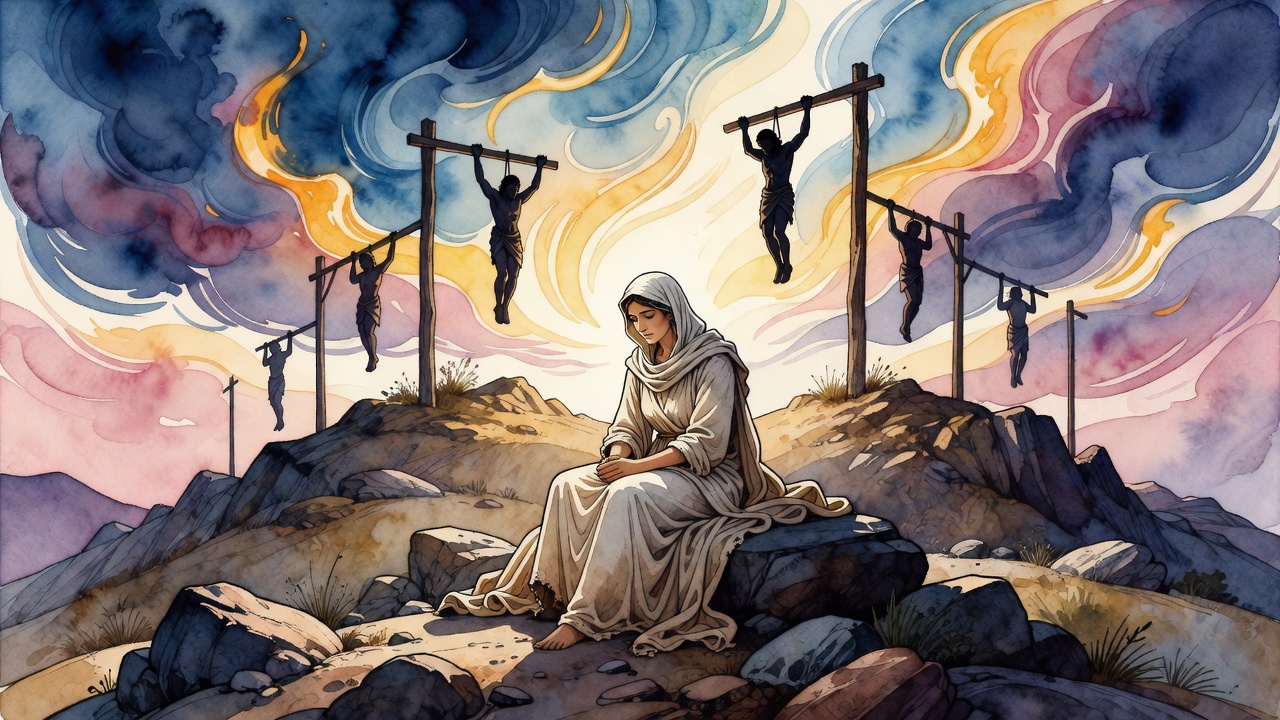
He kept back Jonathan's line for the sake of the oath he had sworn his friend, but he took the two sons Saul had by Rizpah the daughter of Aiah, and five more of Saul's grandsons, and put them in the hands of the Gibeonites. On the hill they impaled all seven together and left them hanging in the sun. It was the day after the first festival of Passover, the sixteenth of Nisan, when the barley harvest begins.
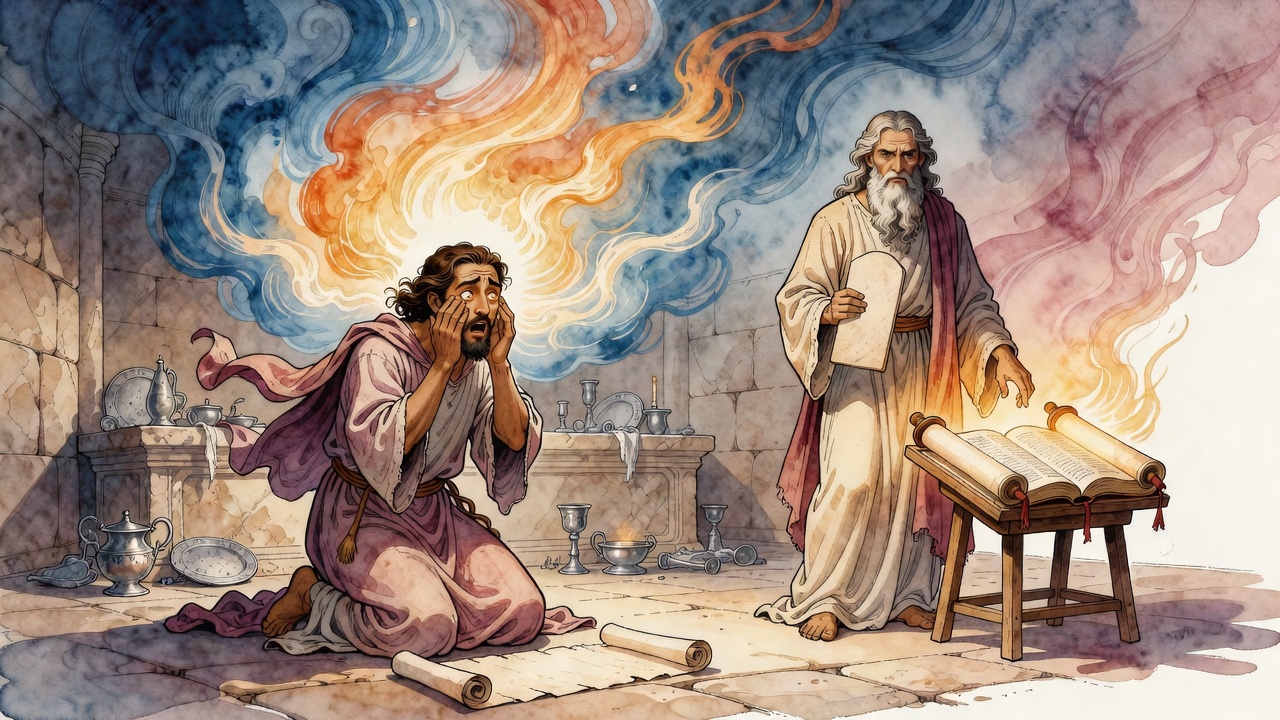
The Torah says plainly that a body hung on a tree must not stay there overnight, that it must be buried the same day. These seven would hang for seven months.
Sackcloth on the Rock
Rizpah did not scream and did not beg the king. She took sackcloth and climbed the hill and spread it for herself on the bare rock beneath her sons, and she stayed.
The vultures came down first, and she drove them off. At night the jackals came for the bodies, and she drove them off too. Day after day, through the heat of Nisan and the long dry months after it, she let neither the birds of the sky settle on the dead by day nor the beasts of the field touch them by night.
Over the rock she said words. "He is the Rock, His work is perfect, for all His ways are justice." She said them over the boys she had borne and over the five who hung beside them, on the stone she had made her seat. Ha-Tzur, the Rock, the stone under her body and the God above her folded into the one word she would not stop speaking.
The summer burned on. Passover passed, then the wheat, then the Feast of Weeks, then the dead heat of Av, then the turn of the year, and still she sat, and still the seven hung, and still she kept the wings and the teeth away.
The Nations Called the Torah a Forgery
Travelers from the nations passed the hill and saw the seven hanging month after month, and they began to talk.
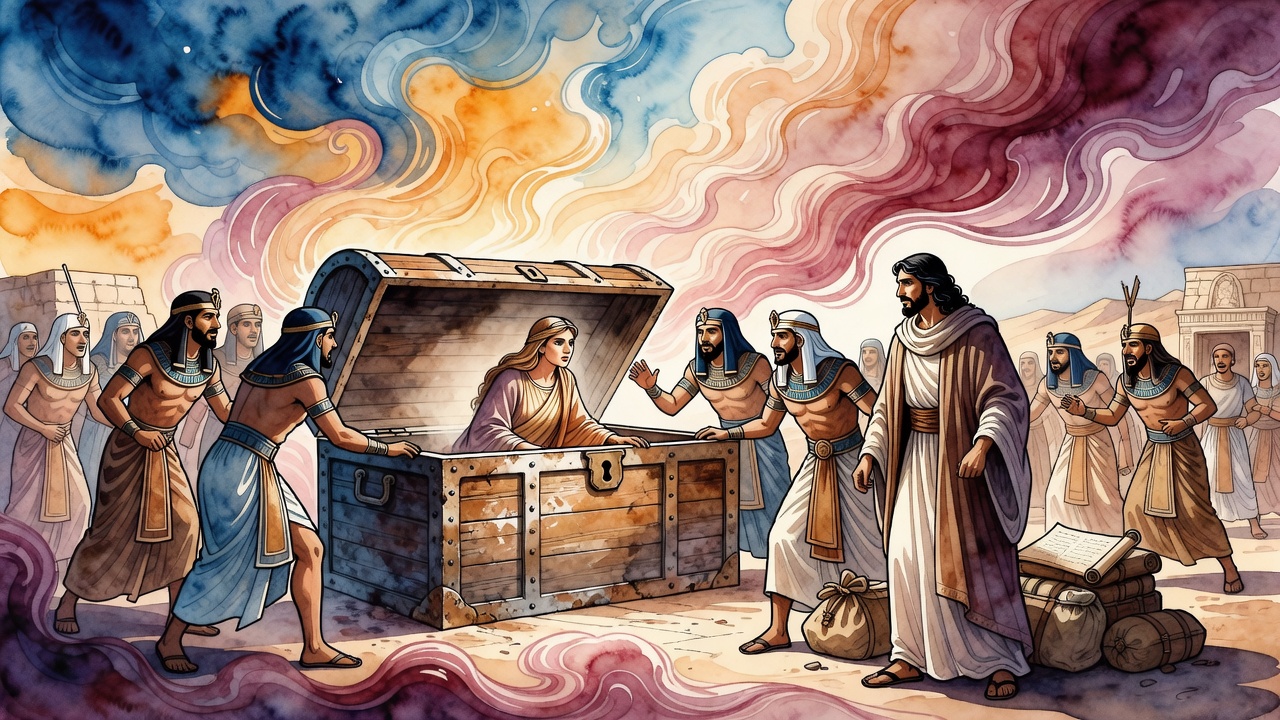
"Their own Torah is a forgery," they said. "It is written there that a hanged body must not stay overnight, and these have hung since spring. It is written there that two are not sentenced on a single day, and here are seven condemned together. It is written there that fathers are not put to death for their sons, and these die for a sin that was their father's. The book they carry says one thing and their king does another."
The Israelites answered them. "The fathers of these dead men killed the Gibeonites, and this is the reckoning for it."
"And who were these Gibeonites," the nations asked, "that a whole royal house should hang for them?"
"Converts," Israel said. "The ones who came over in the days of Joshua."
The nations stared. "For the sake of these cursed, dragged-along converts your God held back the rain three years, and would not give it back until a king handed over his own blood?"
"For their sake," Israel said. "He swore them peace, and He kept it, even against Saul."
Water Fell from Heaven
The nations had come to mock a broken law and found instead a God who would starve a kingdom rather than let one oath to the lowest of strangers go unpaid. "There is no god like their God," they said, "and no nation like this nation. There is nothing to hold onto but this people, for their God is greater than all gods." A hundred and fifty thousand of them crossed over that year and joined Israel, so many that when Solomon later counted the converts in the land he could barely number them.
Then, on the seventeenth of Marcheshvan, after the autumn had turned, the rain came. Water dropped from heaven onto the seven at last, and the long drought broke. Greater is the sanctifying of the Name than the profaning of it, and here the whole earth had watched the Name made holy on a bare hill by a woman on a rock.
David heard that the water had fallen and that Rizpah still sat there. He took the bones of the seven, and the bones of Saul and Jonathan, and gave them all a grave in the land of Benjamin, in their father's tomb. Only then did Rizpah come down off the rock.
The God who had held back the rain had already spoken the ending through the prophet. Peace, peace, to the far off and to the near. He had brought the far ones close and rejoiced over the ones dragged in from the edges as over the ones born inside. On a hill of the hanged, in the summer a mother would not leave, He had proven it.
← All myths