Rome Could Not Feed Even Heaven's Vanguard
For six months Rome set tables along a river. One wind took every loaf. Joshua said those were only scouting angels.
Table of Contents
 Click for full size
The Emperor Ordered Tables for God
The Roman emperor leaned toward Rabbi Joshua ben Chananiah and spoke as if a kitchen could hold God. He wished, he said, to throw a banquet fit for the God of Israel. Tables would stretch. Provinces would send their best. Rome would prove scale the way it proved roads and legions.
Joshua looked at him without smiling. "You will not be able even to feed the vanguard of His hosts."
The emperor laughed the short laugh of men who own maps. He ordered every mill to grind, every herdsman to drive cattle, every province to ship delicacies. For half a year servants set tables along a great river. Banners hung. Tasters went pale with pride.
Wind Took the First Feast
On the day of display a single wind rose and blew the feast into the water. Loaves spun downstream. Platters vanished under brown current. A whole half-year of planning became foam against the banks. Men ran along the mud and grabbed at floating bread that the river would not give back.
The emperor did not take one defeat as an answer. He spent another six months building a second banquet, grander than the first, as if grandeur were a weapon. When that day arrived, the sky opened and rain drowned the tables in mud. The river took what the first wind had left. Men slipped and cursed gods they did not understand.
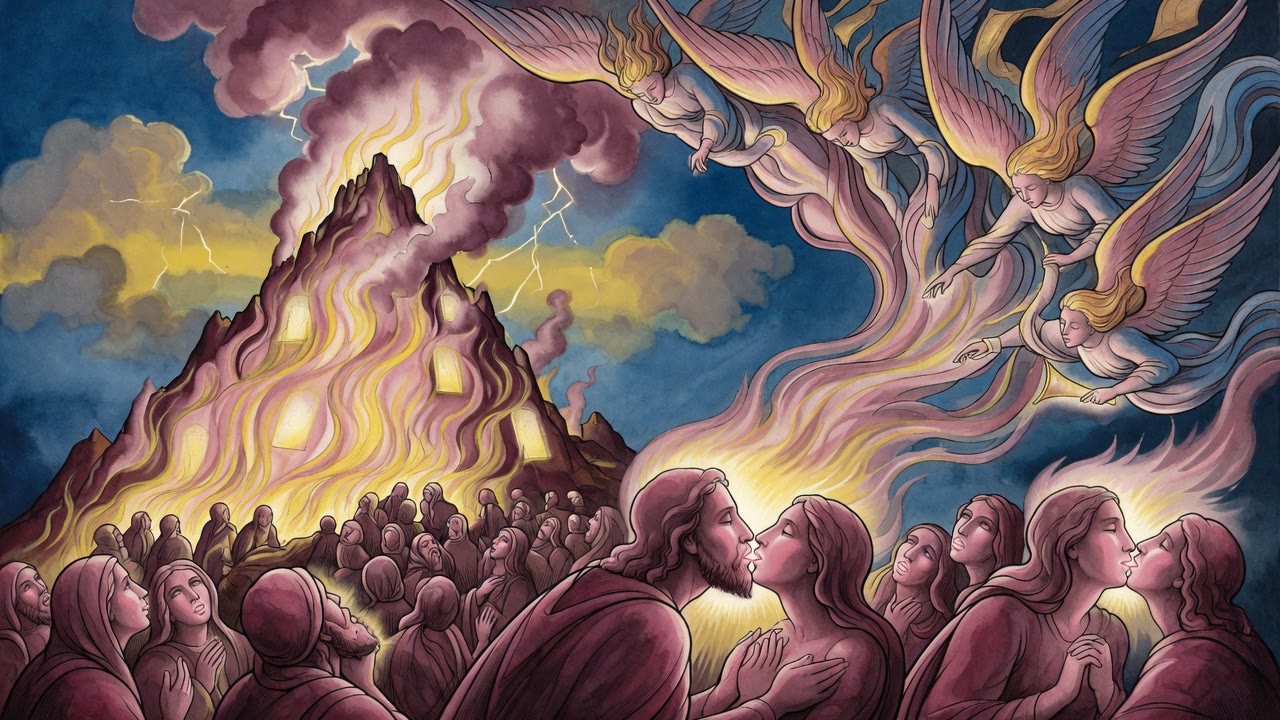
Joshua's explanation was quiet enough to shame a parade. "These were only the vanguards of the hosts of Heaven. The wind is one company of angels. The rain is another. They are not yet the main army. You asked to feast the God of Israel, and you could not get through the scouting parties."
The emperor stopped trying. Rome could measure legions. It could not measure the outer edge of the court above. Joshua walked away from the ruined tables with mud on his hem and no triumph in his mouth. Heaven's scouts do not need invitations.
Joshua Walked the Ash
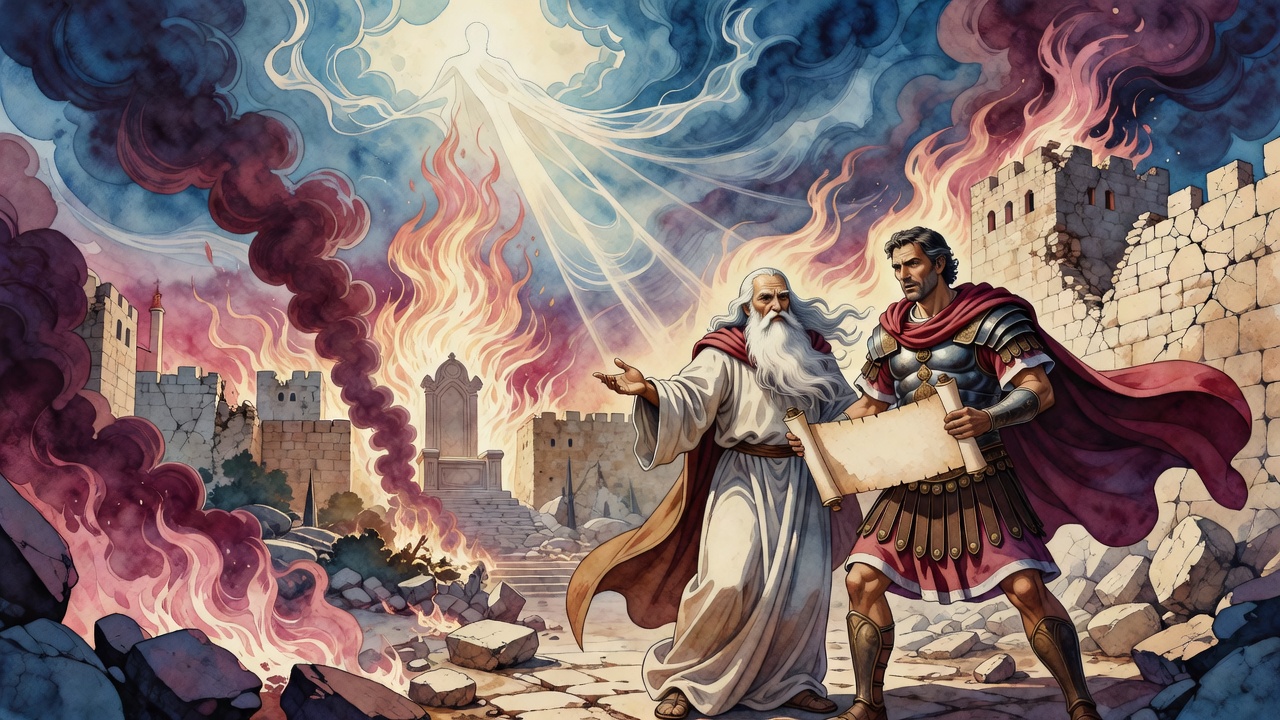
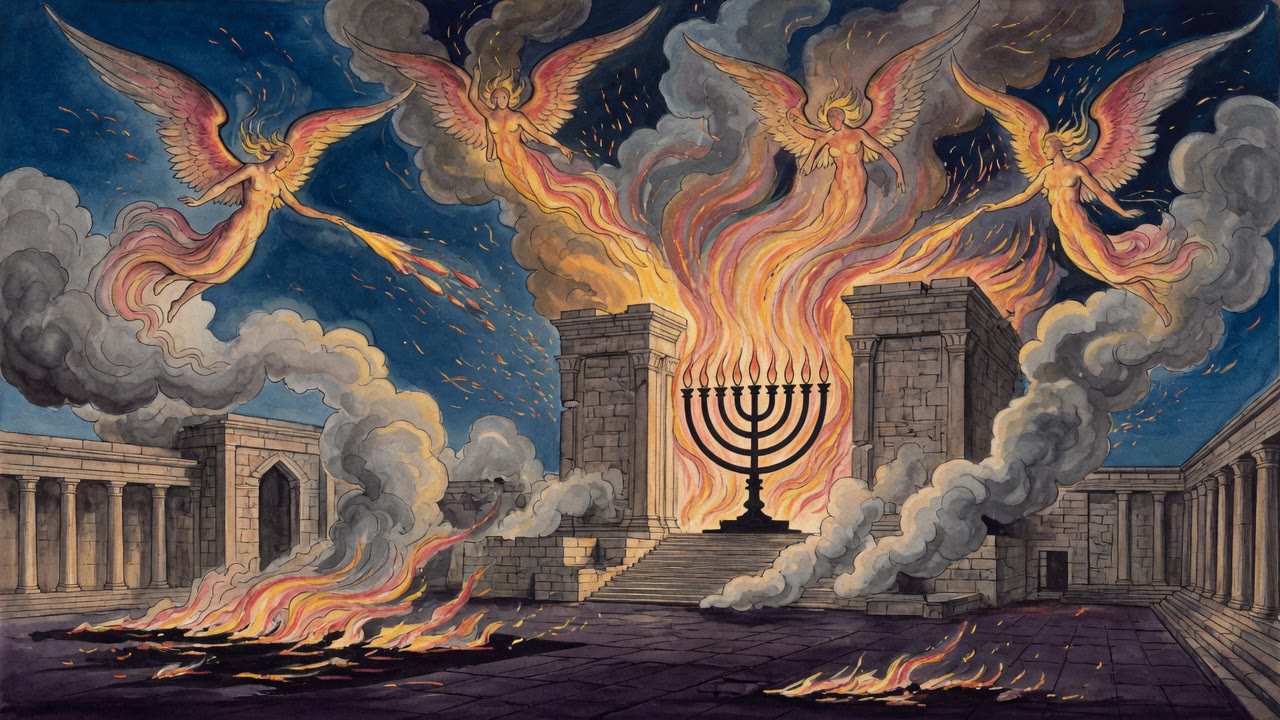
Years later Roman fire finished what Roman pride had never understood. Joshua walked the ash of Jerusalem and said what the ruins forced from him. "Woe to us. The place where Israel atoned is gone. What will become of us now?" Smoke still rose in thin columns. Stones that had held the altar's heat were cold under his sandals.
Rabbi Yochanan ben Zakkai, who had left the siege in a coffin and bargained for a future at Yavneh, set a hand on his shoulder. "My son, do not grieve. We have another atonement as powerful. Deeds of loving-kindness. For the prophet said, I desired chesed, and not sacrifice" (Hosea 6:6).
Bulls and incense had fallen. An open hand still stood. Joshua looked at the shoulder under that hand and did not pull away. The empire that could not feed Heaven's scouts had burned the last marble path of forgiveness. A meal for the hungry, a visit to the sick, a coin given without a trumpet, would have to carry the work the knife once carried.
The Least of Hillel's Eighty
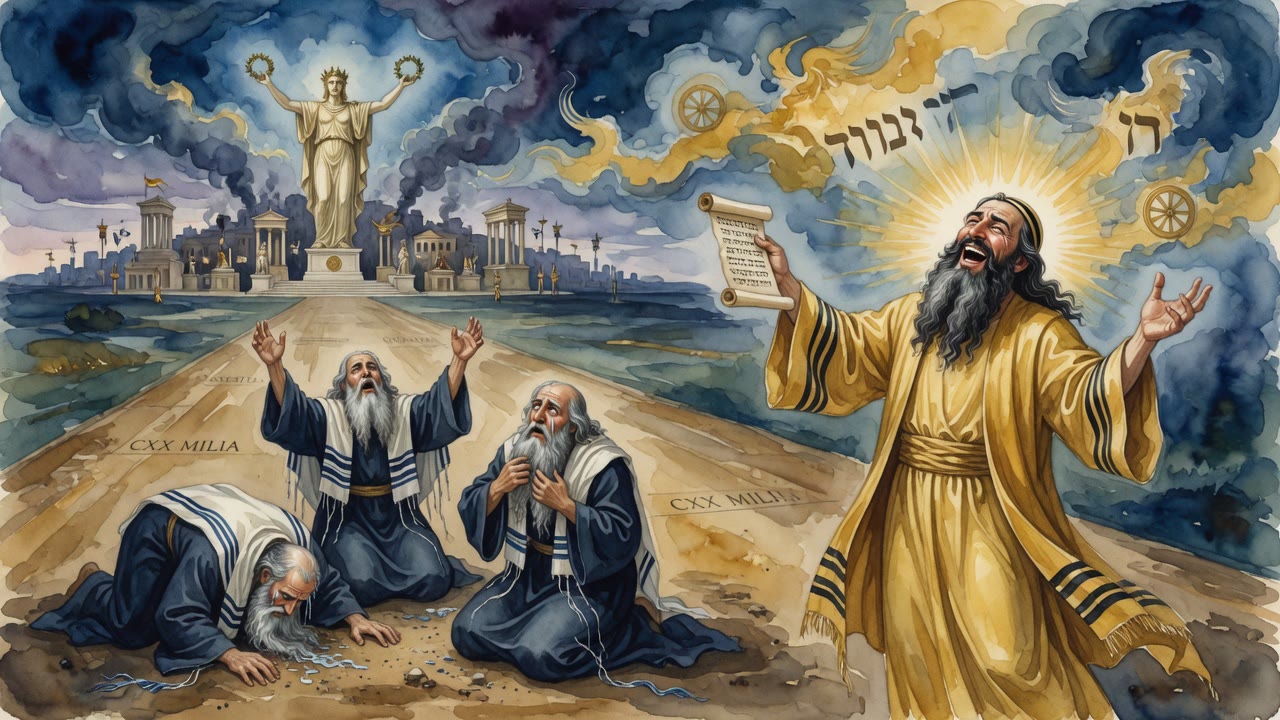
Joshua knew the ranking. Hillel had eighty students. Thirty, Hillel said, were worthy of the Shechinah (שכינה), the Divine Presence, as it had rested on Moses. Thirty more were worthy of the sun standing still as for Joshua the conqueror. Twenty filled the middle. Greatest of all was Yonatan ben Uzziel, over whose study birds burned in the air. Least was Yochanan.
The least stood in the ash with his hand on a grieving shoulder. The man Hillel ranked lowest was carrying the people past the burned altar into houses of study and habits of chesed. Empires throw feasts and light fires. The student no one bet on rebuilds the hours of learning and the daily mercy that outlasts marble.
Along the ruined streets, kindness began to smell faintly of the old smoke, not as a souvenir, but as transfer. What the altar no longer held, a living Israel still could. Rome had tried to banquet God and failed at the scouts. Israel learned to feed neighbors, and Heaven still answered there.
Mud on Roman Boots
In the years after, when a Roman official mocked the smallness of a study house, someone who remembered Joshua's river feast might have smiled without joy. Scouting angels had already answered the boast. Chesed was answering the fire.
Mud dried on Roman boots in ridges that looked almost like writing. Joshua did not stay by the river to gloat then, and he did not stay in the ash to argue now. He walked back among his own people with two proofs already rotting in public: Heaven's scouts do not wait on emperors, and when the kitchen of the Temple is gone, an open hand still does the work the knife did.
Yochanan's hand left his shoulder. The stones stayed cold. The work of mercy had already begun in the next street.
← All myths