Seelah Climbed the Mountain to Argue Her Death With Heaven
A judge swore away whatever met him first, and his daughter danced out the door. So she climbed a mountain to plead her own death before God.
Table of Contents
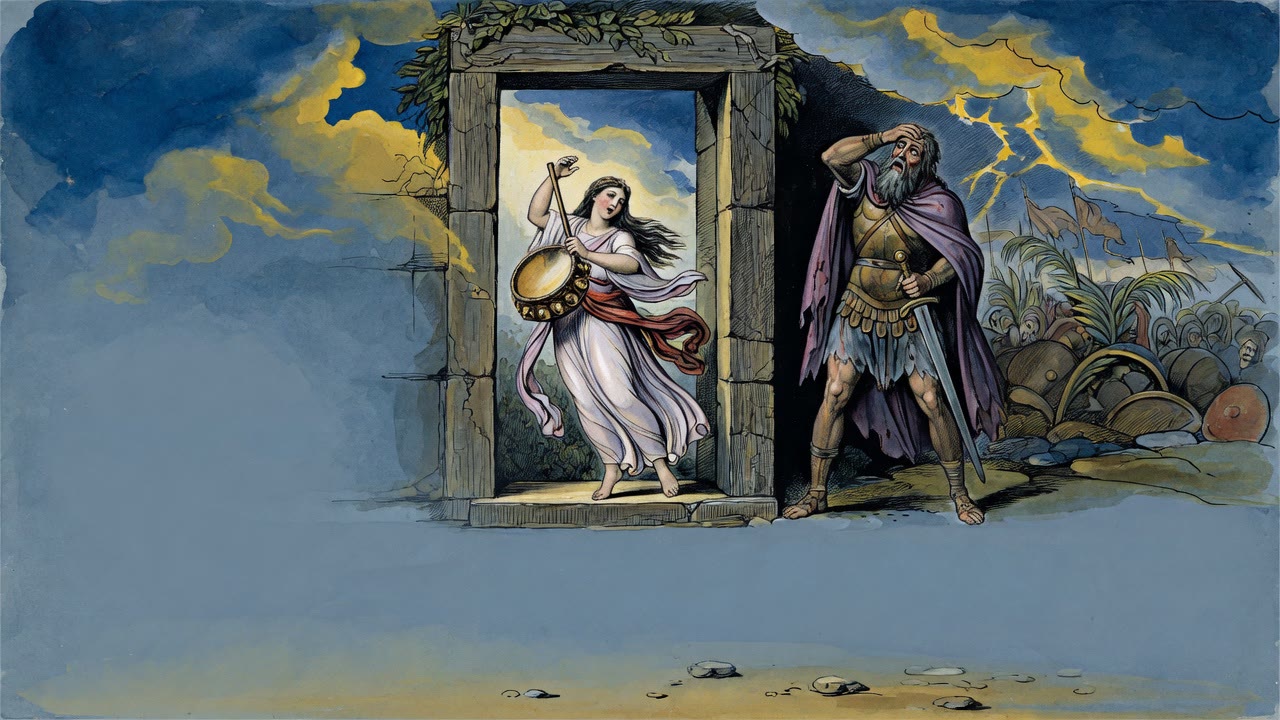
The women of Gilead came out with timbrels, and at the head of them ran a girl who did not yet know what her father had promised heaven. Seelah danced through the door of her own house, drums shaking in her hands, her feet quick on the threshold, to greet Jephthah the conqueror coming home from the slaughter of Ammon.
 Click for full size
Her father saw her and tore his clothes. "Who will put my heart and my flesh on the scale and weigh them?" he cried out. "You have grieved me beyond measure." He had sworn before the battle that whatever first came out of his house to meet him in victory would go up to God as an offering, and now the door had given him his only child.
The Girl Who Made the Case Her Father Could Not
Seelah did not fall at his feet. She did not beg. She stood in front of the man who had broken himself open over her and reminded him of an older father on an older mountain, the patriarch who bound his own son and lifted the knife, and how both the one who offered and the one offered up were taken and held by God. If a father could give a son, a daughter could be given.
"Do to me as you have spoken," she said.
The warriors of Israel had won the war, and here was a girl winning the harder argument, the one against staying alive. She asked her father for one thing only. Two months. Sixty days to walk the high places and mourn that she would die before any man knew her, before any child of hers ran out a door of its own.
The Trees of the Field Will Weep for Me
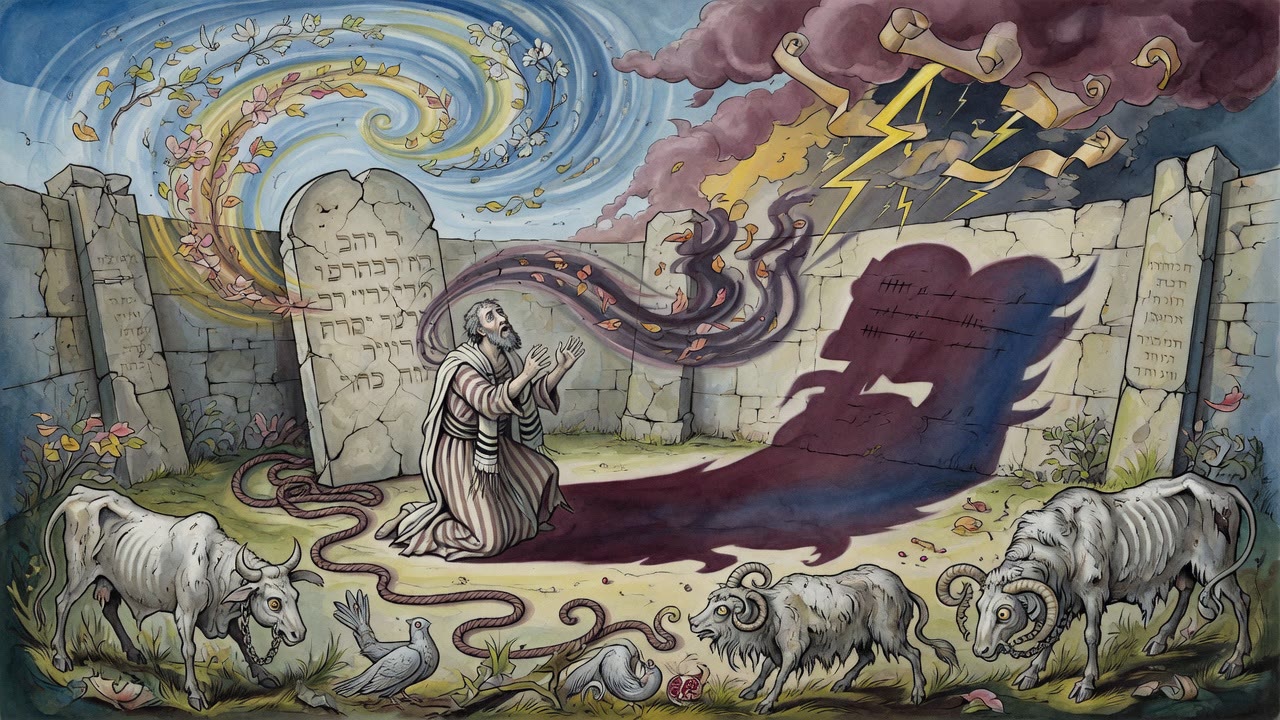
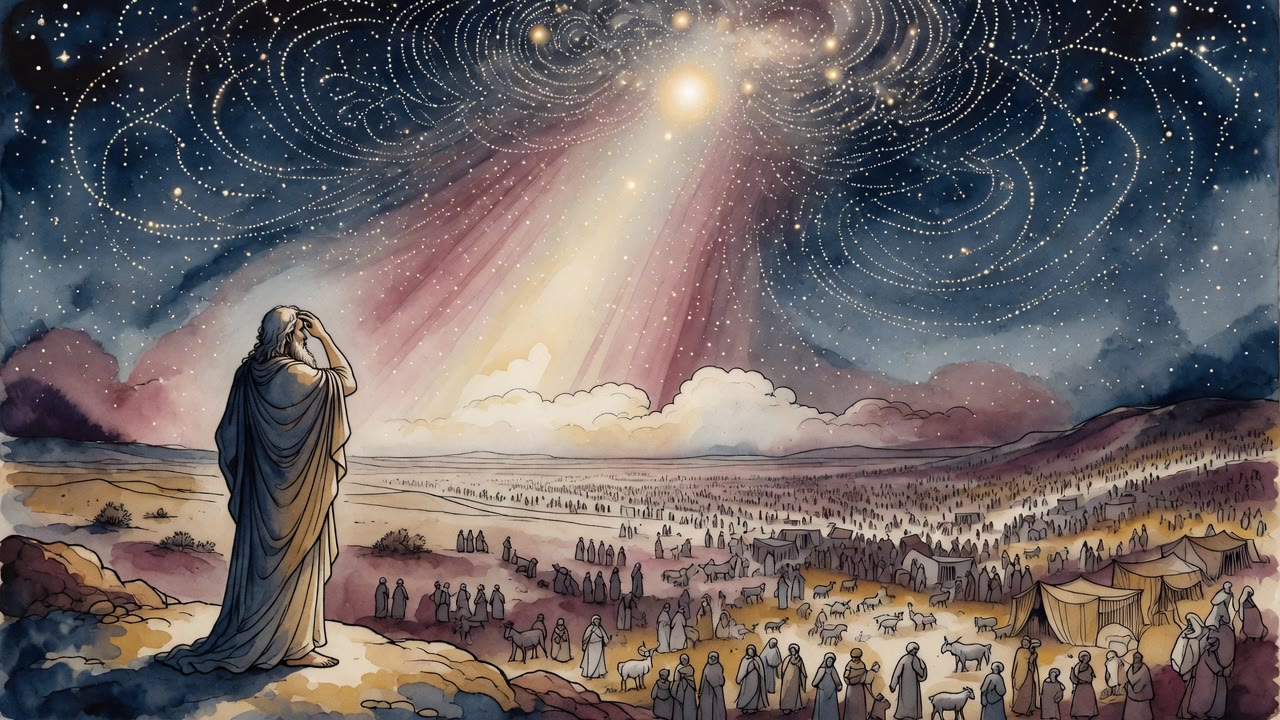
She went up into the mountains, and her grief made the wilderness her congregation. "The trees of the field shall weep for me," she said aloud to the slopes. "The wild beasts shall mourn for me." She was not afraid of the death. She named the only thing that frightened her, and it was not the knife.
"I do not grieve for my dying," Seelah said. "The one thing I fear is that my offering will not be accepted. That my death will have been for nothing."
So she carried that fear down the mountain to the men who were supposed to carry such things for her. She came before the sages of her people and laid the question at their feet. Was a vow like this binding? Could it be loosed? Could a girl be poured out like a lamb because her father had spoken too fast on the eve of a war?
They answered her nothing. Not one of them opened his mouth.
Between the Midwife and the Destroyer
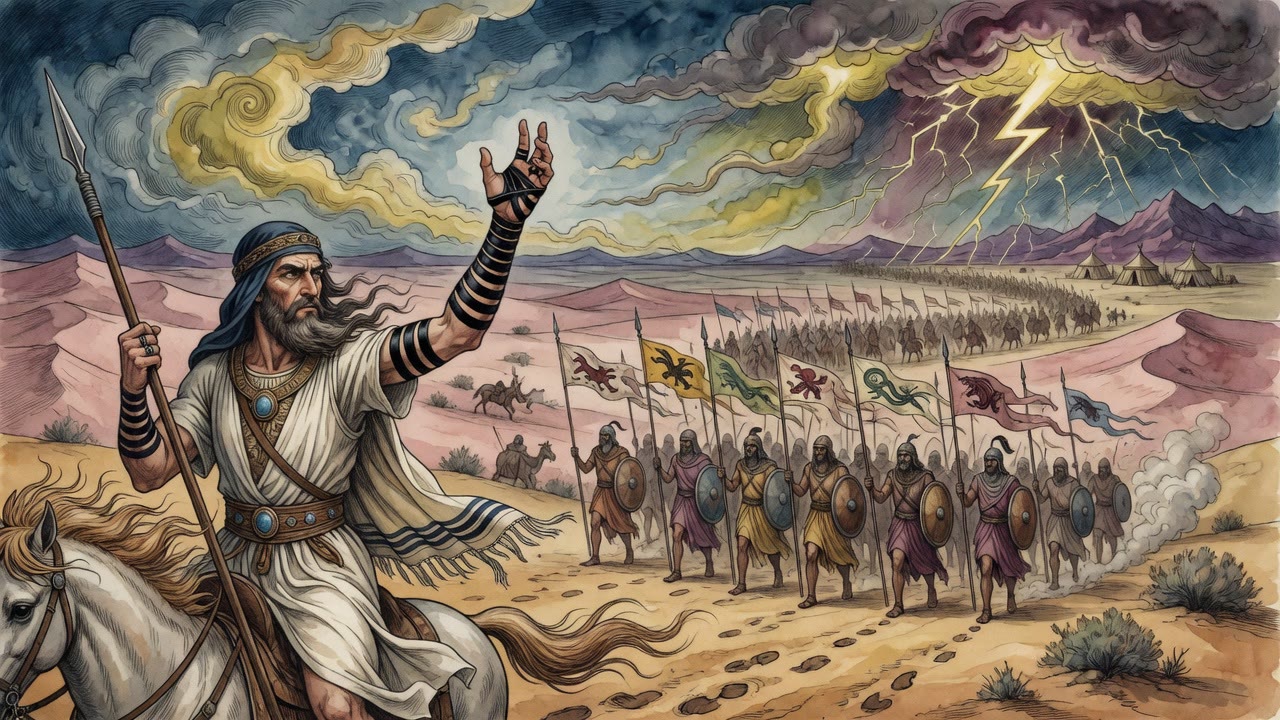
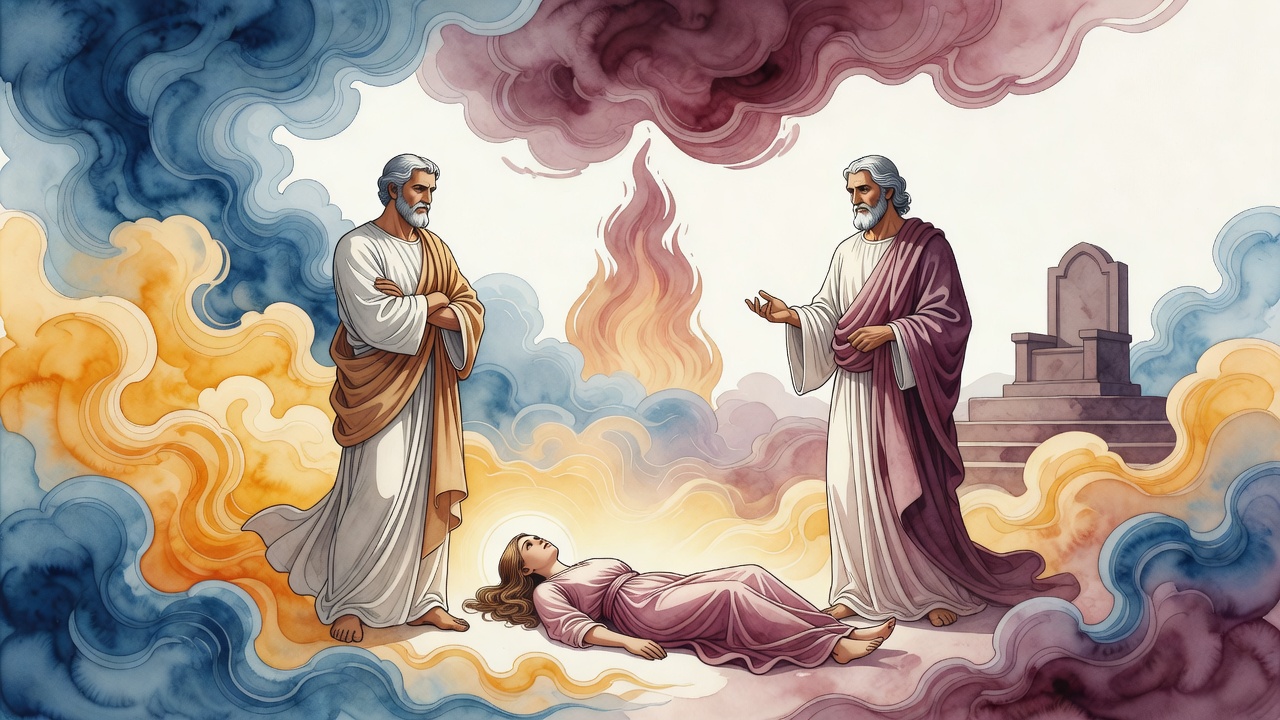
The silence was not an accident of cowardice alone. There was a man who could have cut the vow loose with a word. Phinehas the priest held the authority to release Jephthah, to declare the oath void or its value paid in silver instead of blood. And Jephthah held the rank of a judge of Israel, head over the chiefs of the tribes. Each waited for the other to walk the first step of the road between them.
Phinehas said in his heart, "He needs me. Shall I be the one to go to him?" Jephthah said in his heart, "I am the head of Israel's chiefs. Shall I lower myself and go to him?" Between the priest's dignity and the judge's dignity, the girl ran out of months.
There is a proverb the people kept after this. Between the midwife and the destroying angel, the child of the unlucky mother is lost. Two who could have saved her stood on their pride at opposite ends of a path, and the one with no power at all, the daughter, fell into the gap they left open.
The Night the Mouths of the Sages Were Shut
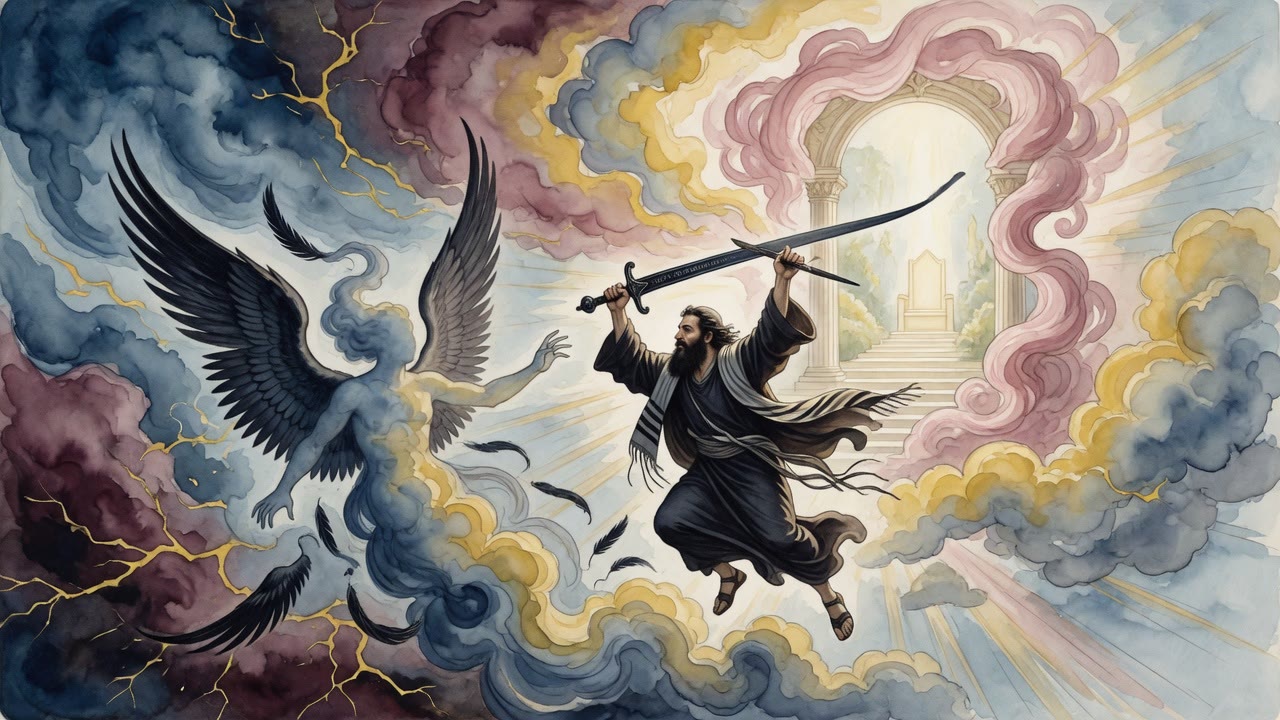
Seelah climbed higher, up Mount Tlag, alone now, the elders mute behind her and her father's vow still hanging over the days she had left. And there, in the dark of the mountain, God answered the girl when the sages would not.
He told her the silence below had been His doing. He had closed the mouths of the wise men of Israel so the vow would stand and run its course. The oath would be fulfilled. The knife would fall. And her soul, the thing she had feared would be spilled for nothing, would be gathered up and accepted. Her death would not be wasted. It would be received.
She came down when the sixty days were spent. Jephthah did to her as he had sworn, and the door of his house was empty of dancing forever after.
Four Days a Year for the Bravest in Gilead
The men who refused to bend did not go unpunished for the blood between them. Jephthah died by pieces. Wherever he walked a limb dropped from his body, and they buried it where it fell, so that he lies scattered across the cities of Gilead and not in any single grave. From Phinehas the holy spirit lifted and departed, the presence that had rested on him gone the way the girl had gone.
And the daughters of Israel made a law of their grief. Four days every year they went out to lament Seelah, the girl who had faced the knife with a steadier face than the soldiers who marched home from war singing. She had argued her own case before her father, before the sages, and at last before God on the mountain, and only God had answered her, and even He had answered to say the silence was sealed.
← All myths