The Outcast Judge Who Rose Among the Heavenly Host
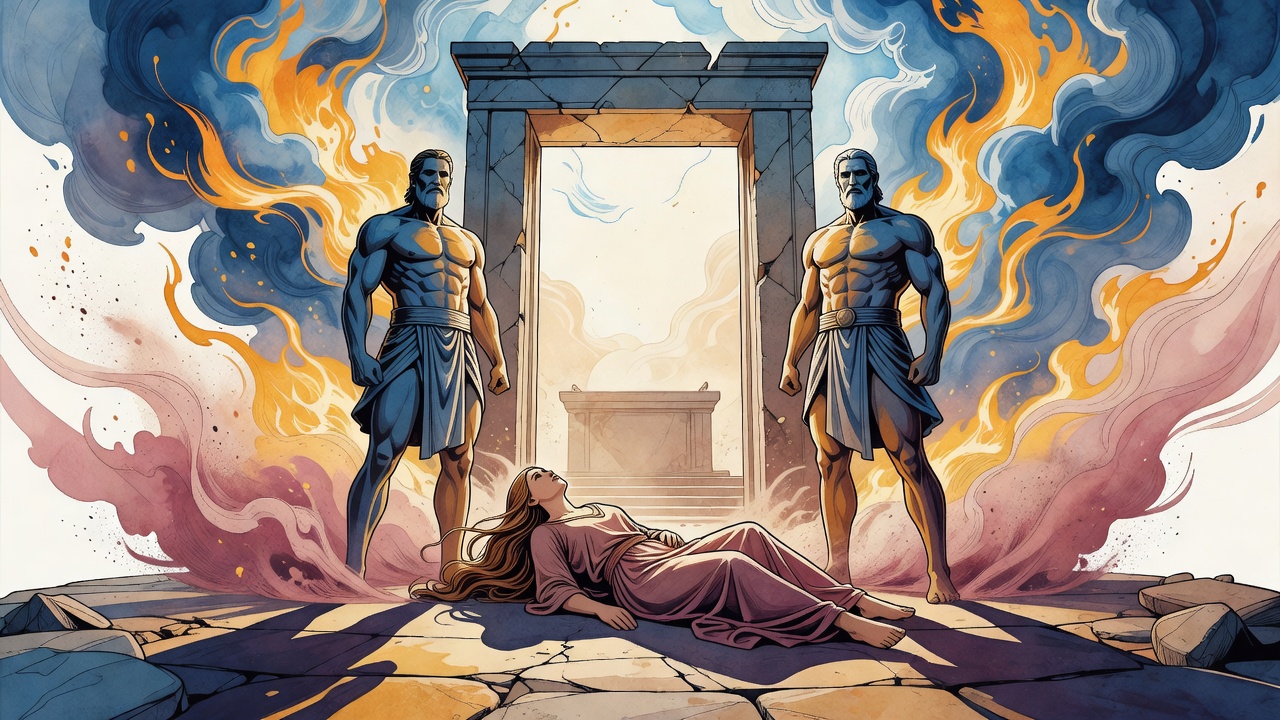
The elders who had thrown him out came back begging for a chief. He went. He died in pieces, a limb dropping as he walked, buried across the cities of Gilead.
Table of Contents
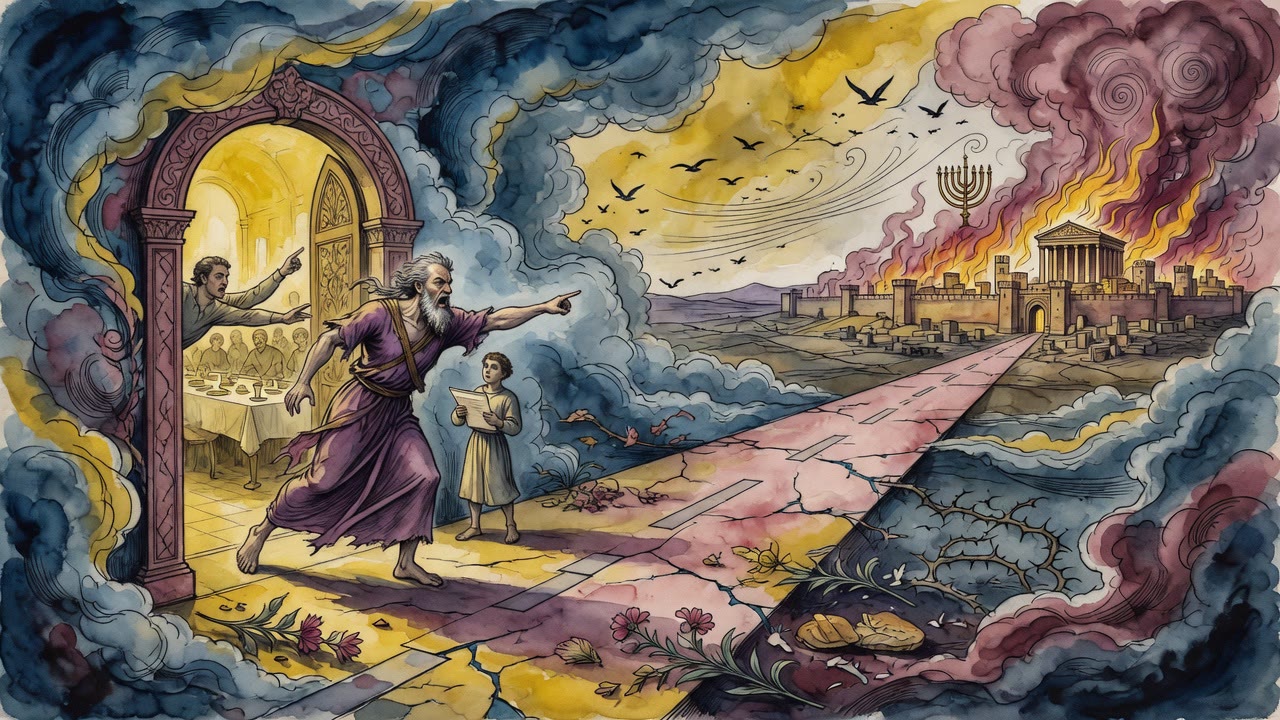
The brothers stood in the doorway and would not move. Jephthah was the son of their father, but his mother came from another tribe, a woman who had crossed a line no one forgot, and so the house was closed to him. "You will not inherit," they told him. "You are the son of a strange woman." He was a boy of the tribe of Gilead, and they sent him out of Gilead with nothing but the name they used to wound him.
 Click for full size
He went where Israel did not go. He settled in a heathen district, among foreign laws and foreign altars, an oddity at the edge of someone else's land. Empty men gathered to him there, the broken and the landless, men with nowhere to be. They learned the sword from him. No one in that place ever opened a scroll of Torah for the boy, and no one taught him the rulings that lived inside it.
The Elders Came Back to the Man They Threw Away
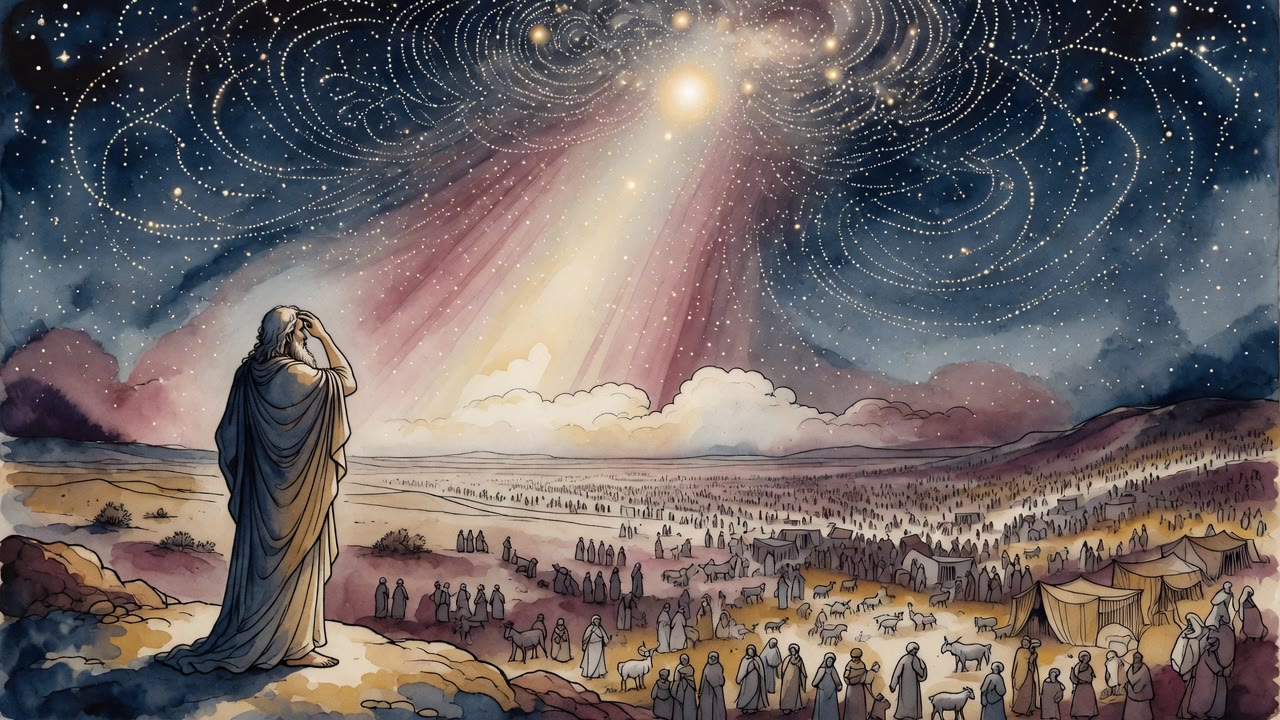
Then the Ammonites pressed Gilead hard, and the elders had no champion. They went out past their own border to the man they had exiled. "Come and be our chief," they said. Jephthah looked at the faces that had once turned from him. "Did you not hate me, and drive me out of my father's house?" Still he went. A judge of Israel does not rise from the seat of the comfortable. He rises from the dust the comfortable shook off their feet.
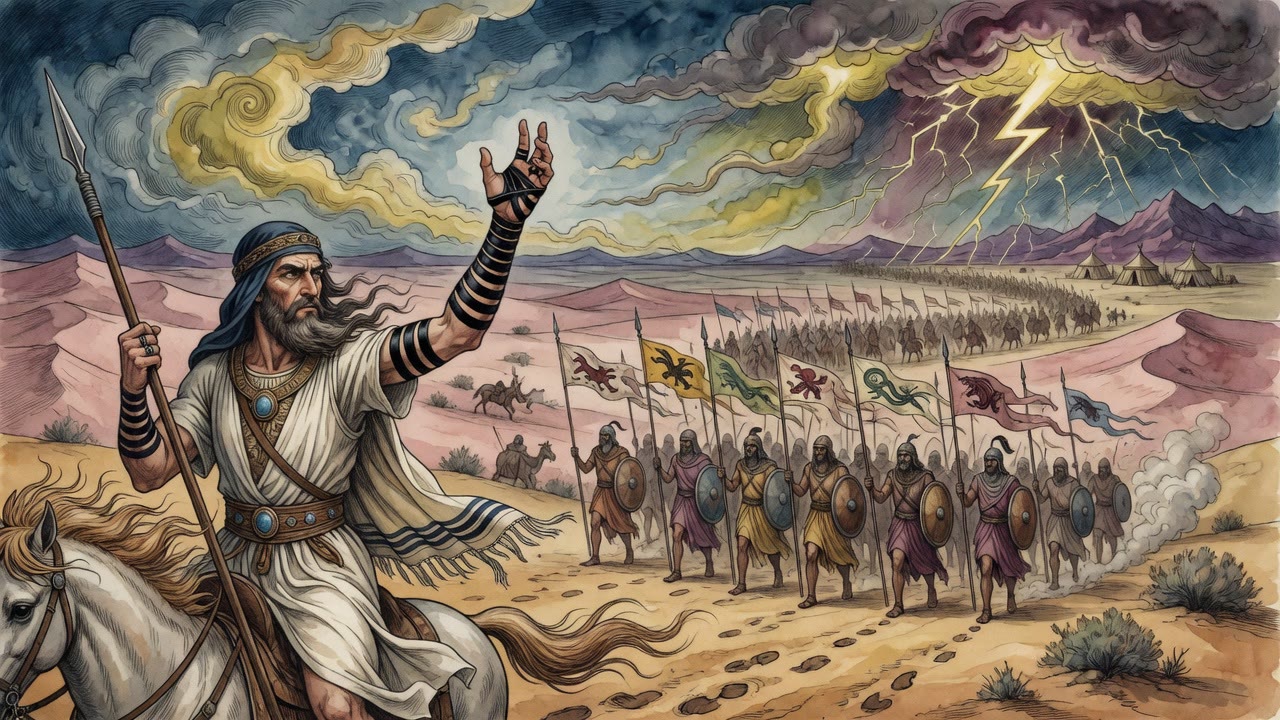
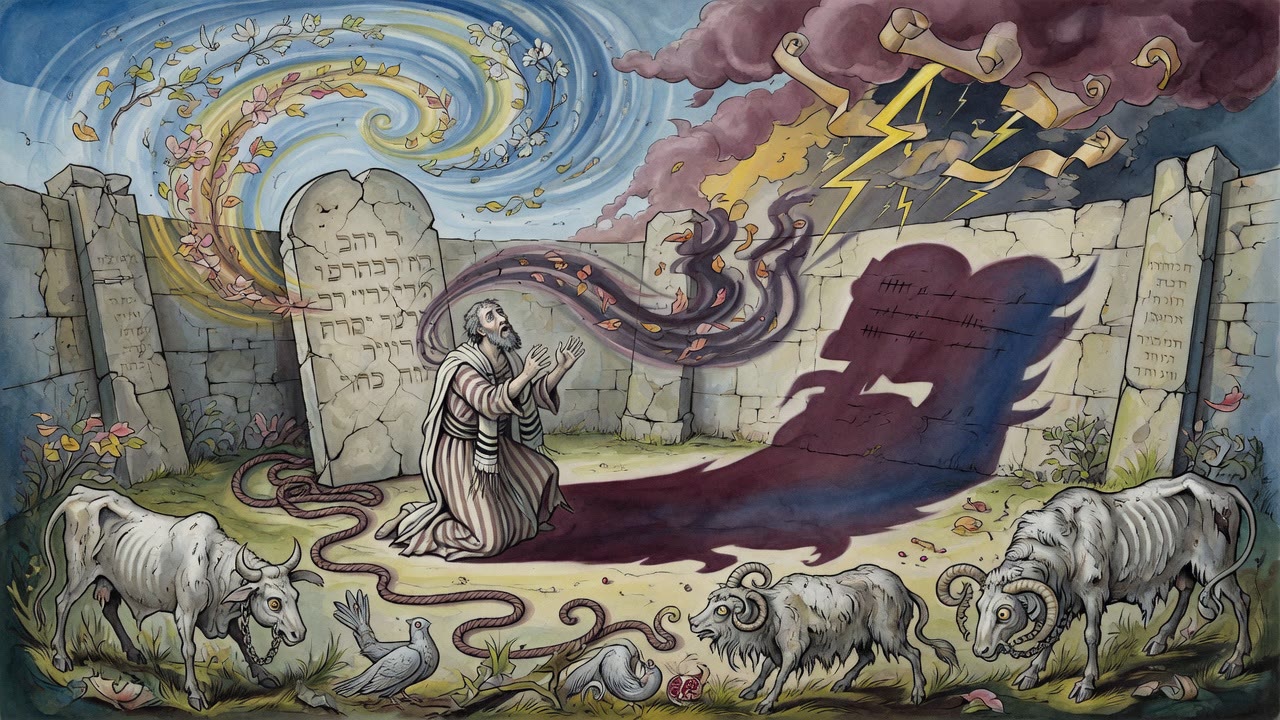
At Mizpah, the watchtower, before the battle, he lifted his hands and bound himself. "Whatever comes out of the doors of my house to meet me, when I return in peace, shall be the LORD's, and I will offer it up." Above him heaven heard the words and was troubled. What if a dog ran out first? What if an unclean thing met him at the gate? The vow was reckless from a man who had never been taught how a life is given and how a life is taken.
The Daughter Who Argued From a Book He Never Read
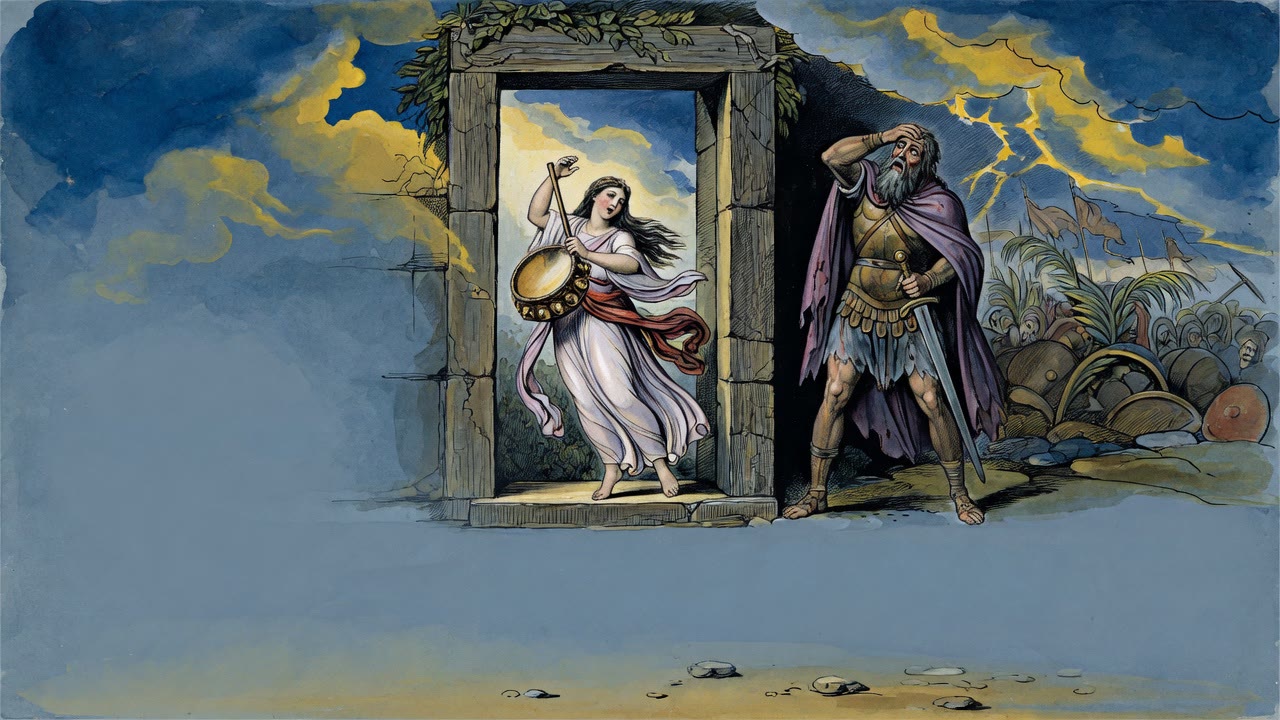
He won. The Ammonites broke, and Gilead was free, and he came home in peace. The doors opened, and his only child came out to meet him with timbrels and dancing.
He tore his clothes. She did not weep yet. She reasoned. "Father, is it written in the Torah that a life should be offered up? Is it not written, of the cattle, of the herd? God asks for animals at the altar, never a child." She reached for the one weapon her father had never been handed. "Jacob our father vowed to give a tenth of all that God gave him, and God gave him twelve tribes. Did Jacob lead one of his sons to the fire?" Jephthah only said, "I have opened my mouth to the LORD, and I cannot take it back." Then let me go, she said. Let me go down to the court, and perhaps they will loose you from the vow. She did not climb the mountains. She went down to the Sanhedrin, where the controversy of the LORD is heard.
Two Proud Men and the Ruling That Vanished
The law was on her side, and the law was forgotten. The scholars who could have freed her had lost the very ruling that would have done it, that a vow over an unfit offering is no vow, that Jephthah owed her life nothing, not even the price of her redemption in silver. The knowledge slipped out of their memory like water through fingers, and the legend says this forgetting came from God, a reckoning for the thousands of Ephraim that Jephthah had cut down.
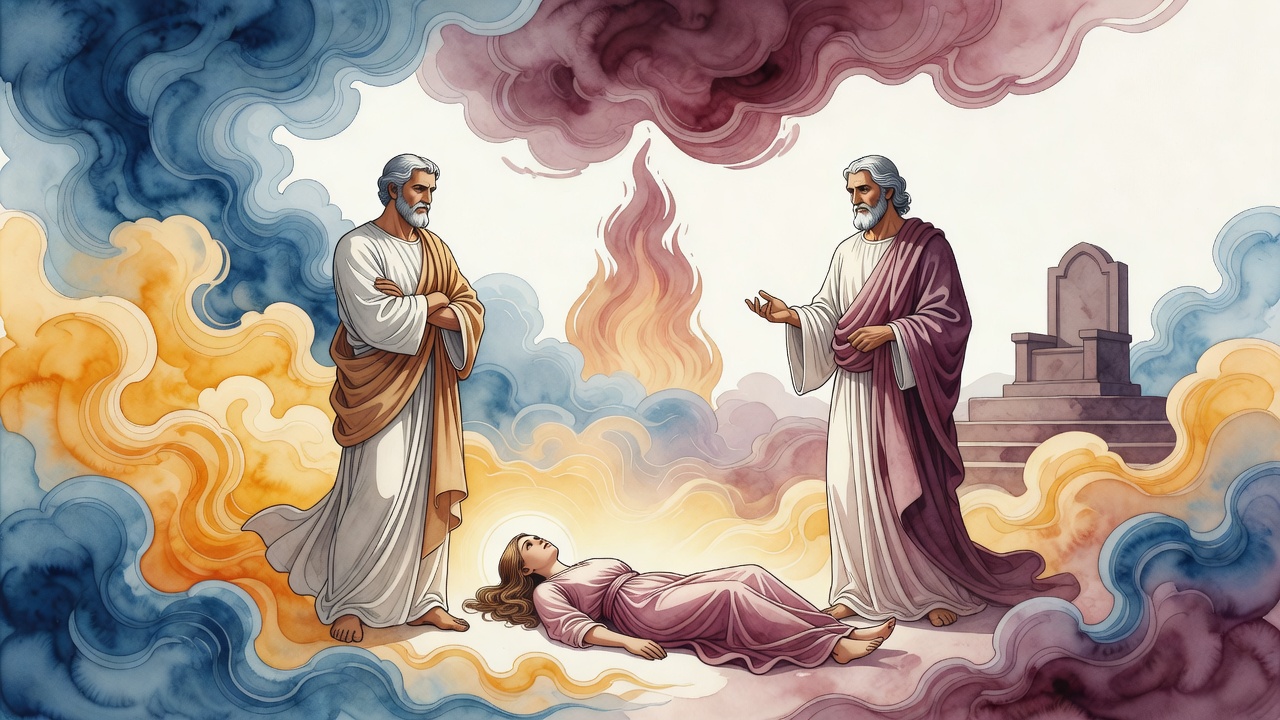
One man could still have ruled clean. Phinehas the high priest, son of a high priest, knew the law and could have released the vow with a word. But Phinehas folded his arms. "He needs me. Shall I, a high priest, the son of a high priest, go down to an ignoramus?" And Jephthah, chief of the tribes, first prince of the land, folded his too. "Shall I, the head of Israel, humble myself before a priest?" Between the midwife and the destroying angel, the people say, the child of the unfortunate woman is lost. Between these two, the girl was lost. She went to the fire of her father's vow, and neither proud man stooped low enough to catch her.
The Judge Who Was Buried in Many Cities
Heaven did not forget either of them. The holy spirit lifted off Phinehas and left him a man like other men, stripped of the priestly dignity he would not bend. And Jephthah began to come apart. He walked, and a limb dropped from his body, and they buried it where it fell. He walked farther, and another loosened and dropped, and that too went into the ground. Scripture says he was buried in the cities of Gilead, not one city but many, because the judge of Israel was laid down a piece at a time across the land he had saved. The same pride that would not bend his neck to Phinehas now scattered his bones from town to town.
What the Host Made Room For
His soul came up untaught into the company of the righteous, an outcast at the last threshold as he had been at the first. The heavenly host had its own kind of inheritance, and here too there was a question of whether the son of a strange woman belonged. He had never sat over a scroll. He had ruled Israel and lost his own daughter for want of a single line of law. Still, he had answered when the elders crawled back to him, had stood in the gate when no one else would, had broken the Ammonite when Israel had no other arm.
So the host opened to him the way Gilead finally had, late and grudging and real. He took his place among the judges, the rejected boy who climbed from the bastard's doorway to the seat of the saved, carrying the daughter he could not save and the law he never learned up with him, where both at last lay quiet.
← All myths