Parshat Vayera5 min read

Serah Traded One Rebel's Head for Her City, and Abraham Argued for Sodom

Abraham sees Serah save a city with one rebel's head, then climbs down from fifty righteous to ten in his plea for Sodom.

Curated by Arthur · Told by Maggid ·
Table of Contents
  1. Far Be It From You
  2. The Siege at Abel
  3. Abraham's Ladder of Numbers
  4. After the Fire, Still Praying
  5. The Woman Who Completes the Count
Serah Traded One Rebel's Head for Her City, and Abraham Argued for Sodom Click for full size

Far Be It From You

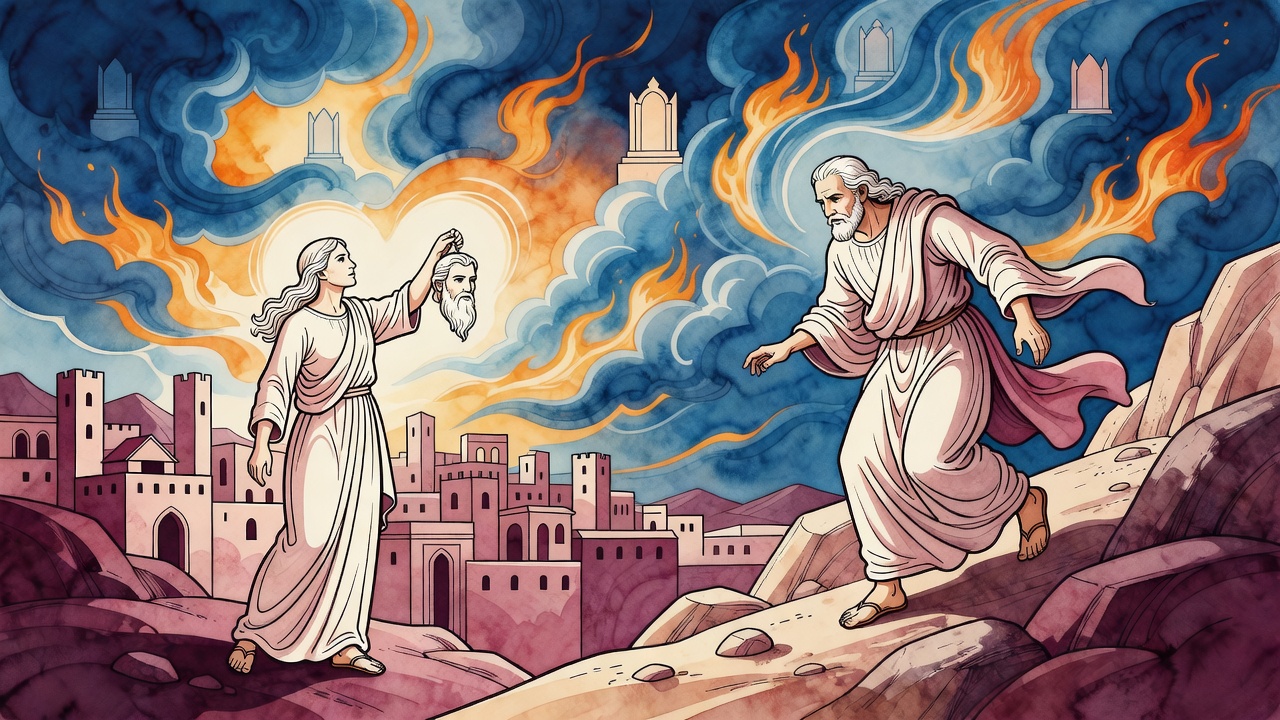
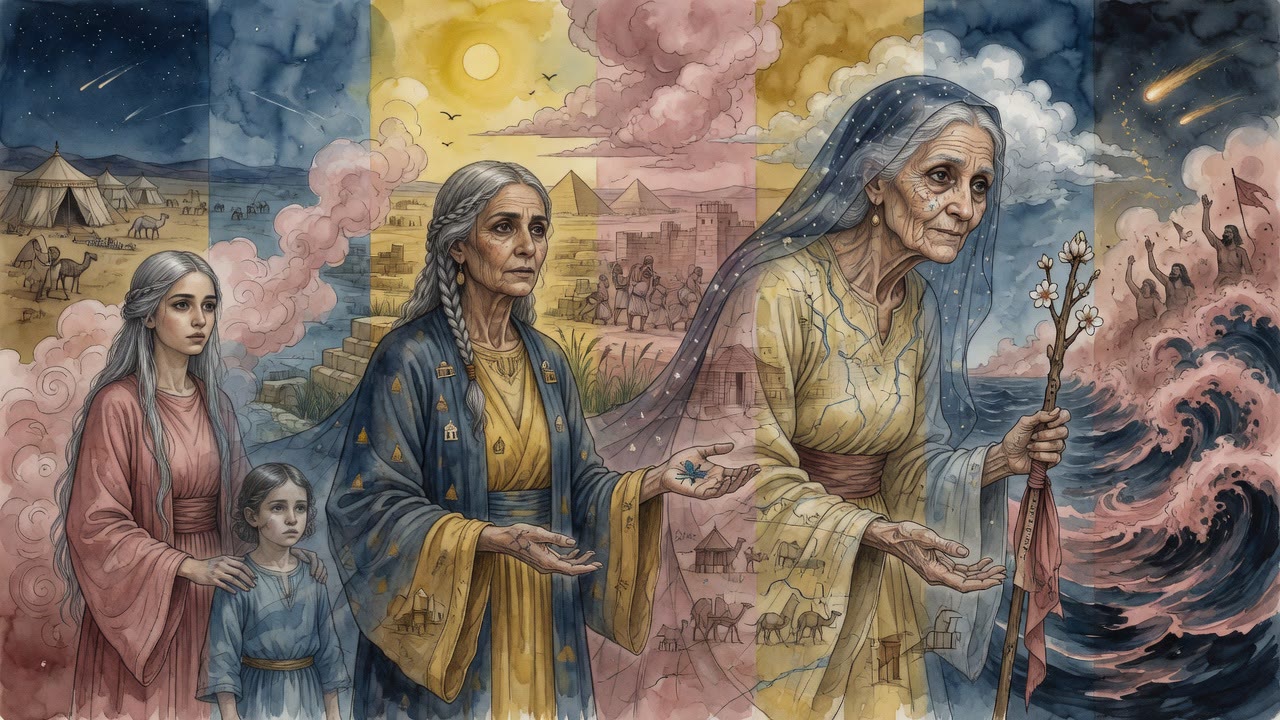
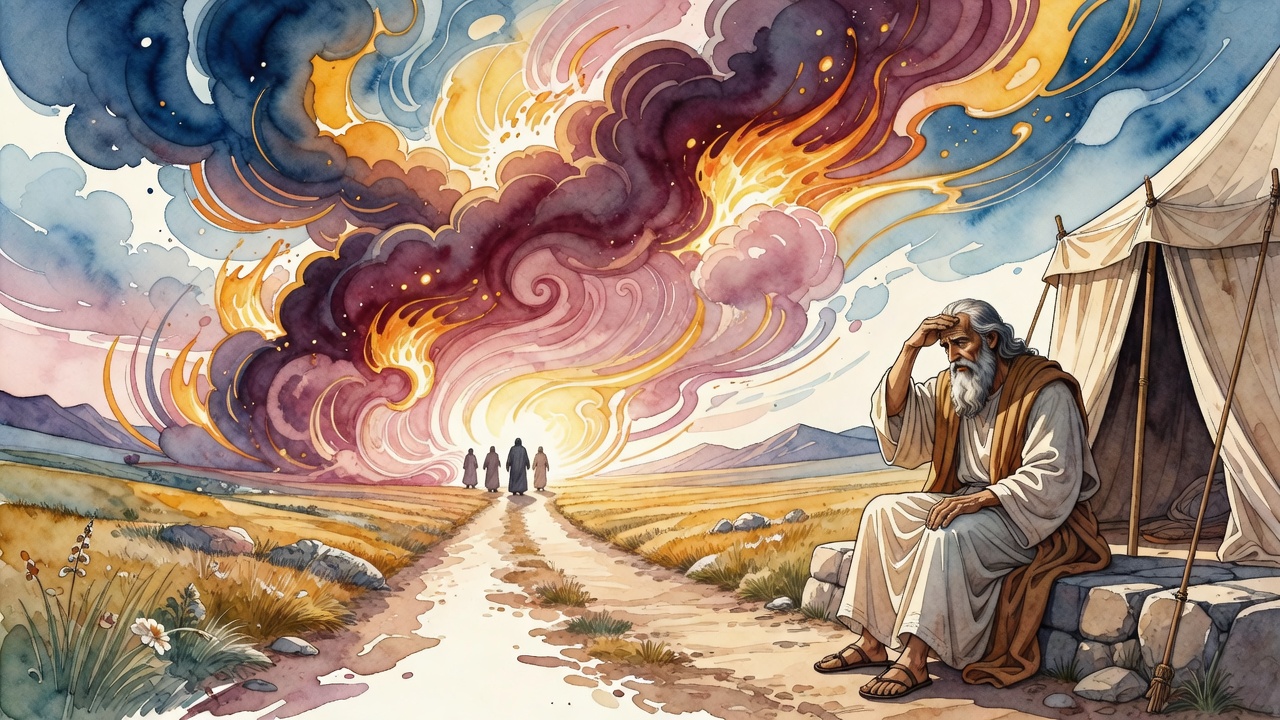
Abraham stood before God with Sodom's smoke not yet in the sky and refused to let judgment pass without a fight. "Far be it from You!" He did not only argue numbers. He reached down the generations for a witness not yet born and saw, by the Holy Spirit, Serah bat Asher.

Her one city rose against his five. If a woman still uncreated could teach heaven how a single guilty head saves a multitude, then the Judge of all the earth must hear the math from a future daughter of Israel before He burns the plain.

The plea for Sodom began as law and became theater across time. Abraham put Serah on the stage first. Dust of Canaan under his feet, future dust of Abel already in his mouth, he argued with a case file heaven had not yet opened in history and had already opened in vision.

Mercy, in this telling, is not soft feeling. It is precedent. Abraham refused to let judgment proceed without citing how Israel herself would one day stop an army with a single guilty head and a woman's nerve.

The Siege at Abel

Picture Joab's men hammering a wall to dust. From inside, an old woman cries, Call Joab to me. He comes. She does not flinch. Are you the wise one Scripture praises? Then you know Torah: first you offer a city peace. Why swallow the inheritance of the Lord?

Joab, afraid, answers in Abraham's own cadence. Far be it from me. He wants only one man, Sheba ben Bichri, a worthless rebel. Stand where you are, Serah says, and I will make peace, for I am the one who completed the count of Israel.

She goes in to her people and bargains them down with pure cunning: a hundred? fifty? five? No. One head, and the city lives. The talk inside is harder than the talk at the wall. Neighbors fear Joab more than they love Sheba. Serah uses that fear toward life. Over the wall the head flies. Joab turns for home. The stones still stand. One guilty life pays for a multitude of neighbors who would have died in a general sack.

Trumpets that might have sounded the final breach stay quiet. Children who would have been counted as spoils stay unnamed in any victory list. That is what Abraham holds up to God: not a fantasy of zero guilt, but a craft of limited guilt.

Abraham's Ladder of Numbers

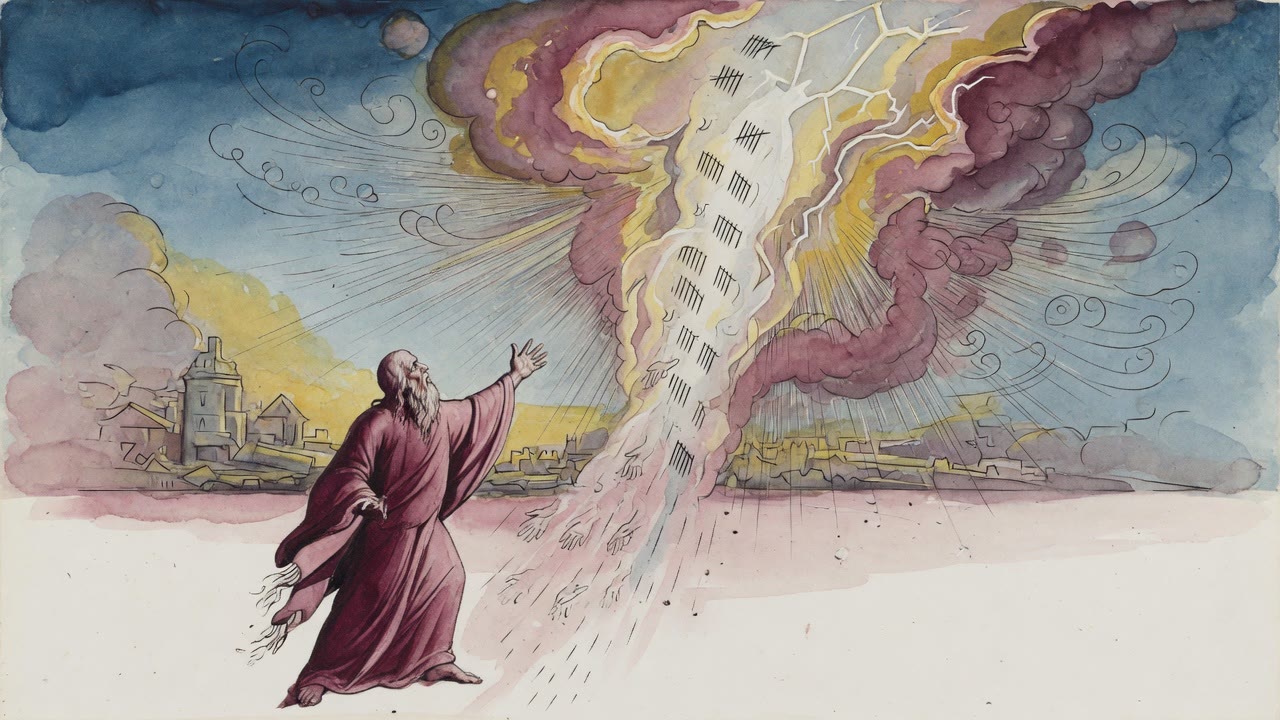
See it, Abraham says to the Holy One. Serah's wisdom outweighed Joab's weapons. One head spared a whole city. So he descends his own ladder: fifty, forty, thirty, twenty, ten, throwing each rung back at Heaven. You who are merciful, would You destroy them all? Far be it from You!

The argument is not abstract philosophy. It is case law from a future siege imported into a present crisis. If Israel will one day honor a woman who stops an army with a single execution of the guilty, then Sodom deserves at least the search for a quorum of the innocent.

God hears. The negotiation becomes Scripture. The plain still burns when the quorum fails, but the plea stands as the pattern of Jewish bargaining with justice: not denial of guilt, but refusal of collective erasure without counting.

After the Fire, Still Praying

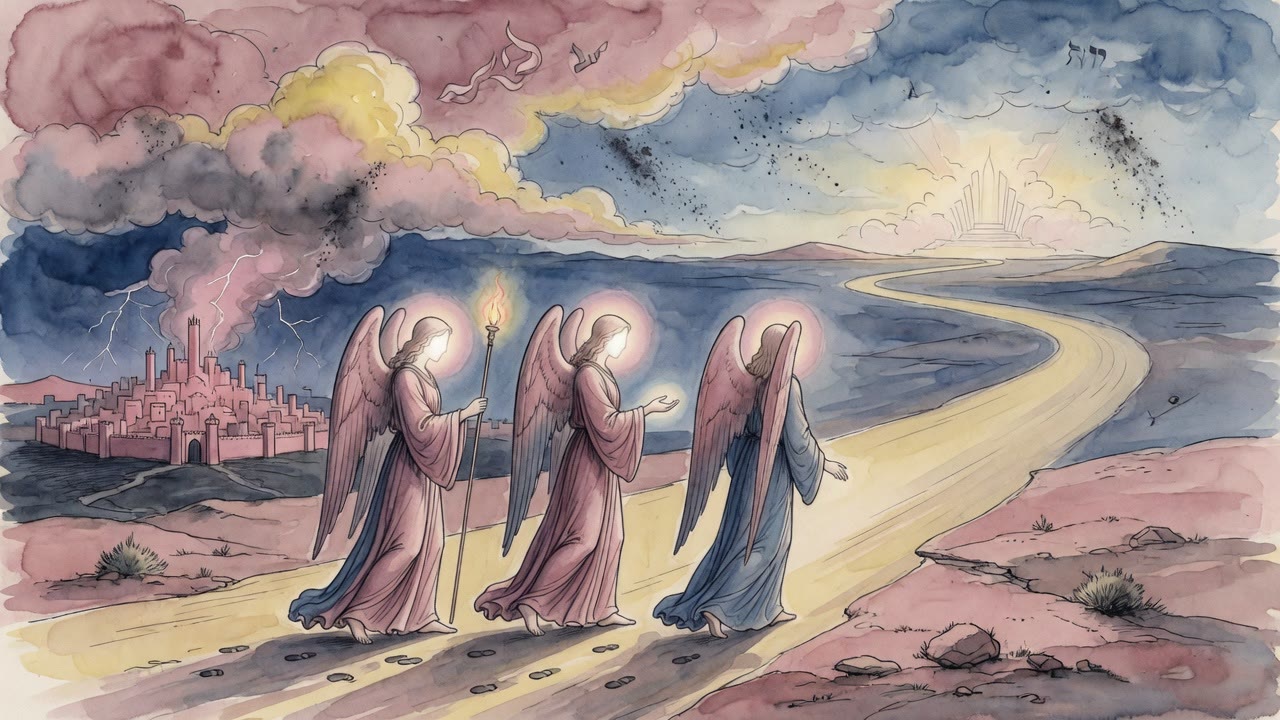
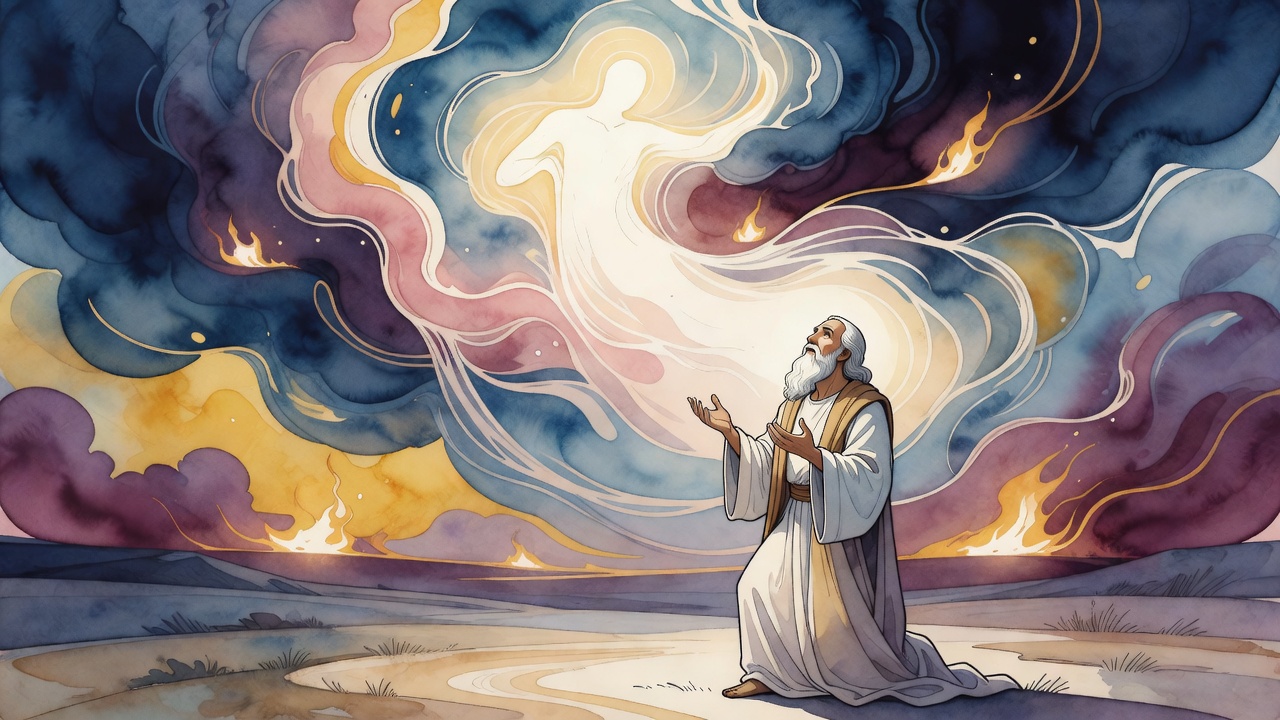
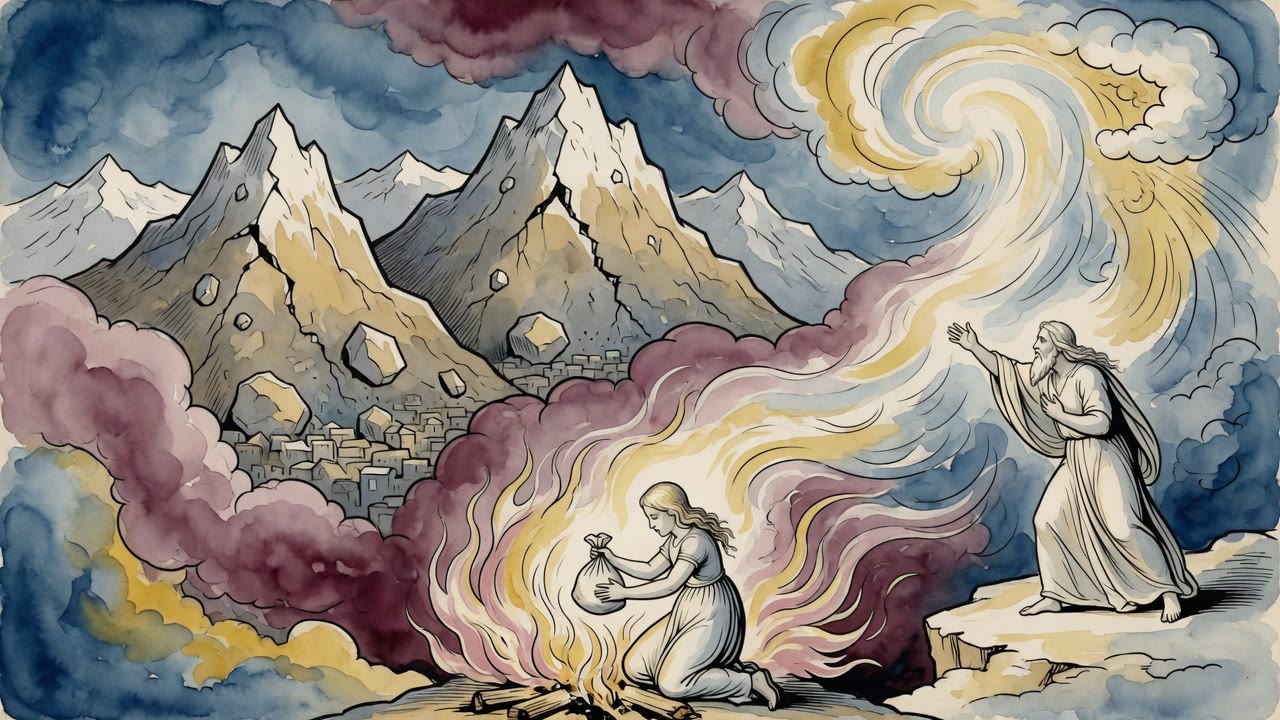
When the cities fell, Abraham was not finished. Tradition says he felt he shared in their destruction, that he had not done enough. He prayed with the archangel Michael. A voice answered, "Abraham, Abraham, I have hearkened to thy voice and thy prayer, and I forgive thee thy sin, and those whom thou thinkest that I destroyed, I have called up and brought them into life by My exceeding kindness, because for a season I have requited them in judgment, and those whom I destroy living upon earth, I will not requite in death."

Judgment had a season. Mercy claimed a further tense. Abraham's compassion did not rewrite the fire, but it opened a word about the dead that the fire alone would not have spoken.

Serah's bargained head and Abraham's post-ruin prayer sit on one line: save whom you can, and when you cannot, still speak.

The Woman Who Completes the Count

Serah calls herself the one who completed the count of Israel. She is the long-lived daughter who can still recognize redeemers and secret signs in other tales, the voice that bridges generations. Here she is pure municipal courage: Torah first, peace first, one guilty head instead of a ruined inheritance.

Abraham borrows her courage before she breathes. That is midrashic time, folding the later into the earlier so that mercy has precedent when Sodom's file opens. The patriarch does not invent compassion from nothing. He cites a granddaughter of the future.

On the plain, smoke eventually rises. In the argument, the wall at Abel still stands. Jewish myth keeps both images: the city that burned for want of ten, and the city that lived for the price of one. Abraham's mouth holds them together so that later mouths, facing other decrees, still know how to say far be it from You without pretending evil is imaginary.


← All myths
From the tradition

Sources

3 sources

The texts behind this telling. Some cards carry a translation of the source; others are our own retelling of it, and each card says which. Every card links out to the original.

Midrash Tanchuma Buber, Vayera 12:1Midrash Tanchuma Buber, Vayera

Translation of the source text.Midrash Tanchuma (Buber), Public Domain, on Sefaria · CC-BY-SA

Another interpretation of "Far be it from You" (Genesis 18:25): Abraham said: Master of the Universe, I foresee by the Holy Spirit that a certain woman is destined to save an entire city; am I then not worthy to save these five cities? And who is that woman? She is Serah bat Asher. At the time when Sheba ben Bichri rebelled against David and came to Abel, as it is said, "[and they came and besieged him in Abel,] and all the people who were with Joab were battering the wall to bring it down" (2 Samuel 20:15). When Serah perceived the matter, she began to cry out: Call Joab to me. When Joab came, she said, "Are you Joab?" And he said, "I am" (2 Samuel 20:17). She said: Are you that wise one whom Scripture praises, "he who sits in the seat of wisdom" (2 Samuel 23:8)? Have you not read in the Torah, "When you draw near to a city [to fight against it, you shall offer it terms of peace]" (Deuteronomy 20:10)? It was not right for you to act thus. "They used to speak in former times, saying, Let them but ask counsel at Abel" (2 Samuel 20:18), "and you shall call out to it for peace" (Deuteronomy 20:10), at Abel; and so they concluded the matter. "Why would you swallow up the inheritance of the LORD?" (2 Samuel 20:19).

When he heard this, he became afraid, and Joab said: There is a need here, as it is said, "[Then Joab answered and said, Far be it,] far be it from me [that I should swallow up or destroy]" (2 Samuel 20:20). And you, who are merciful, is it pleasing to You to destroy these? Far be it from You to do such a thing (Genesis 18:25). And what did Joab say to her? "The matter is not so; but a man of the hill country of Ephraim, Sheba ben Bichri by name, [has lifted up his hand against the king, against David]" (2 Samuel 20:21), a blemished man, a worshipper of idols; and there he is called a worthless man: "and his name was Sheba ben Bichri" (2 Samuel 20:1). She said to him, "I am of the peaceable and faithful in Israel" (2 Samuel 20:19), I am the one who completed the count of Israel, as it is said, "and the name of Asher's daughter was Serah" (Numbers 26:46). Only stand in your place, and I will make peace, as it is said, "Behold, his head shall be thrown to you over the wall" (2 Samuel 20:21). And so she was confident in herself that she would give his head to Joab.

But see what she did: "Then the woman went to all the people in her wisdom" (2 Samuel 20:22). What is "in her wisdom"? She said to them: Know that Joab and all Israel are standing outside to kill us, and our sons, and our daughters. They said to her: Why? She said to them: He seeks to take a hundred men and depart. They said to her: Let him take two hundred. She said to them: He seeks only fifty men. They said to her: Let him take a hundred. She said to them: He seeks only five. They said to her: Let him take ten. She said to them: He seeks only one, Sheba ben Bichri by name. As soon as they heard this, they went and cut off his head, as it is said, "and they cut off the head of Sheba ben Bichri" (2 Samuel 20:22).

See the wisdom of this woman! Just as Abraham came with wisdom before the Holy One, blessed be He, coming down from fifty to forty, and from forty to thirty, and from thirty to twenty, and from twenty to ten, so too did she. "Then the woman went to all the people in her wisdom", concerning her Solomon gives praise: "Wisdom is better than weapons of war" (Ecclesiastes 9:18). The wisdom of Serah was better than the weapons of war that were in Joab's hand. As soon as Joab took the head of Sheba ben Bichri, he immediately turned back and did not touch the city. Abraham said before the Holy One, blessed be He: Master of the Universe, if Joab, who took the head of one man who was guilty, spared the whole city, then You, who are merciful, would You destroy them all? Far be it from You! (Genesis 18:25).

Full source
Legends of the Jews 5:308Legends of the Jews

Retold in our words. Read the original at the link below.The Legends of the Jews by Louis Ginzberg (1909) · Public Domain

Abraham, our ancestor Abraham, did just that.

Think back to the story of Sodom and Gomorrah. A harrowing tale. We read in the Torah about Abraham pleading with God to spare the cities if even a handful of righteous people could be found. But what happened after that famous negotiation?

Well, according to some fascinating threads of Jewish tradition, Abraham wasn't quite done. The Zohar, that foundational text of Jewish mysticism, and Ginzberg's retelling in Legends of the Jews, fill in some fascinating details. After the destruction, Abraham wasn't satisfied. He felt a pang of guilt, a sense that perhaps he hadn't done enough to save the inhabitants. He even felt he shared in their destruction.

So, he prayed. And not just any prayer. He prayed alongside the archangel Michael. Together, they petitioned God. And what happened? A voice from Heaven responded, saying, "Abraham, Abraham, I have hearkened to thy voice and thy prayer, and I forgive thee thy sin, and those whom thou thinkest that I destroyed, I have called up and brought them into life by My exceeding kindness, because for a season I have requited them in judgment, and those whom I destroy living upon earth, I will not requite in death."

A divine acknowledgment of Abraham's compassion and a promise of ultimate justice.

But the story doesn't end there. When Michael brought Abraham back home, a tragic scene awaited him. Sarah, his beloved wife, had died. Not seeing Abraham, consumed with worry about his fate, she simply gave up her soul. What a poignant moment! Michael had fulfilled Abraham's wish of seeing the earth and its judgment, but at what cost?

Even more incredibly, when the time came for Abraham himself to pass on, he refused to surrender his soul to Michael! He wouldn’t go. The archangel, bewildered, ascended back to Heaven and told God, "Thus speaks Abraham, I will not go with thee… he was Thy friend. There is no man like him on earth."

God intervened. Recognizing Abraham's unique relationship with Him, He commanded Michael to adorn Death with great beauty and send him, thus transformed, to Abraham. Only then, faced with a vision of serene beauty rather than terrifying darkness, was Abraham ready to embrace the next stage.

What does this tell us? It tells us that even the most righteous among us confront profound questions of justice, loss, and mortality. It tells us that our relationship with the Divine can be one of passionate engagement, even argument. And it tells us that even in death, there can be beauty, peace, and perhaps, even a touch of divine accommodation for those who have lived a life of unwavering faith and compassion. As we find in Midrash Rabbah, these stories were not just about events, but about the nature of our connection with God.

Full source
Bereshit Rabbah 94:9Bereshit Rabbah

Translation of the source text.Midrash Rabbah -- TE · Public Domain

"All the souls that came, etc." and "the sons of Joseph who were born to him, etc." (Genesis 46:26-27). Rabbi Levi in the name of Rabbi Shmuel bar Nachman said: Have you ever in your days seen a man give his fellow sixty-six cups and then give him three more, and he counts them as seventy? Rather, this is Jochebed, who completed the count of Israel in Egypt.

And some say: Serah daughter of Asher completed the count with them. This is what is written (II Samuel 20:16-17):

"Then cried a wise woman out of the city... and he came near to her, and the woman said: Are you Joab?" She said: Your name is Joab, to say that you are a father (av) to Israel, but you are nothing but a reaper (kotzer), and you do not live up to your name; you and David are not men of Torah. Up to here have the words of Torah been exhausted? Is it not written (Deuteronomy 20:10): "When you draw near to a city to fight against it, then proclaim peace to it"? And he said to her: Who are you? She said to him (II Samuel 20:19): "I am of the peaceful and faithful of Israel." I am the one who completed the count of Israel in Egypt; I am the one who delivered the faithful to the faithful, Joseph to Moses.

Full source