Sodom Shook Twenty-Two Years Before the Fire
Mountains trembled under Sodom for more than two decades. A girl who hid flour for a starving friend burned. Abraham still drew near to plead.
Table of Contents
 Click for full size
The Ground Would Not Stay Still
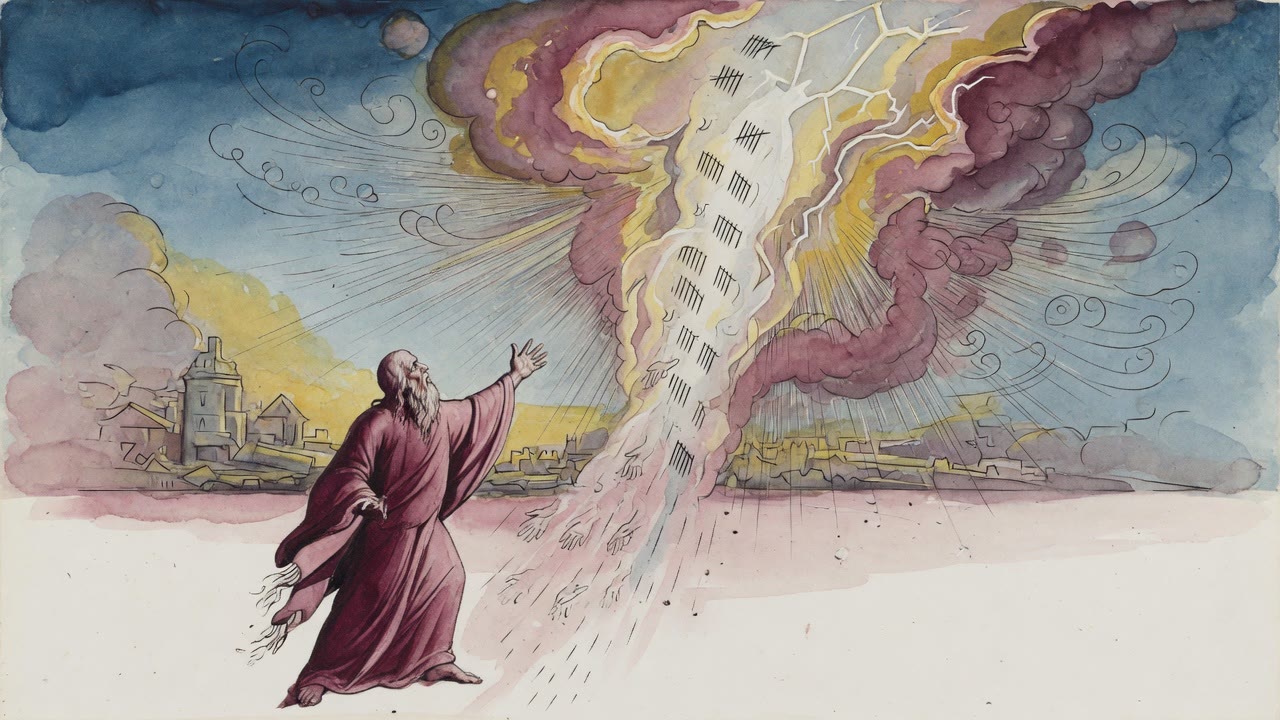
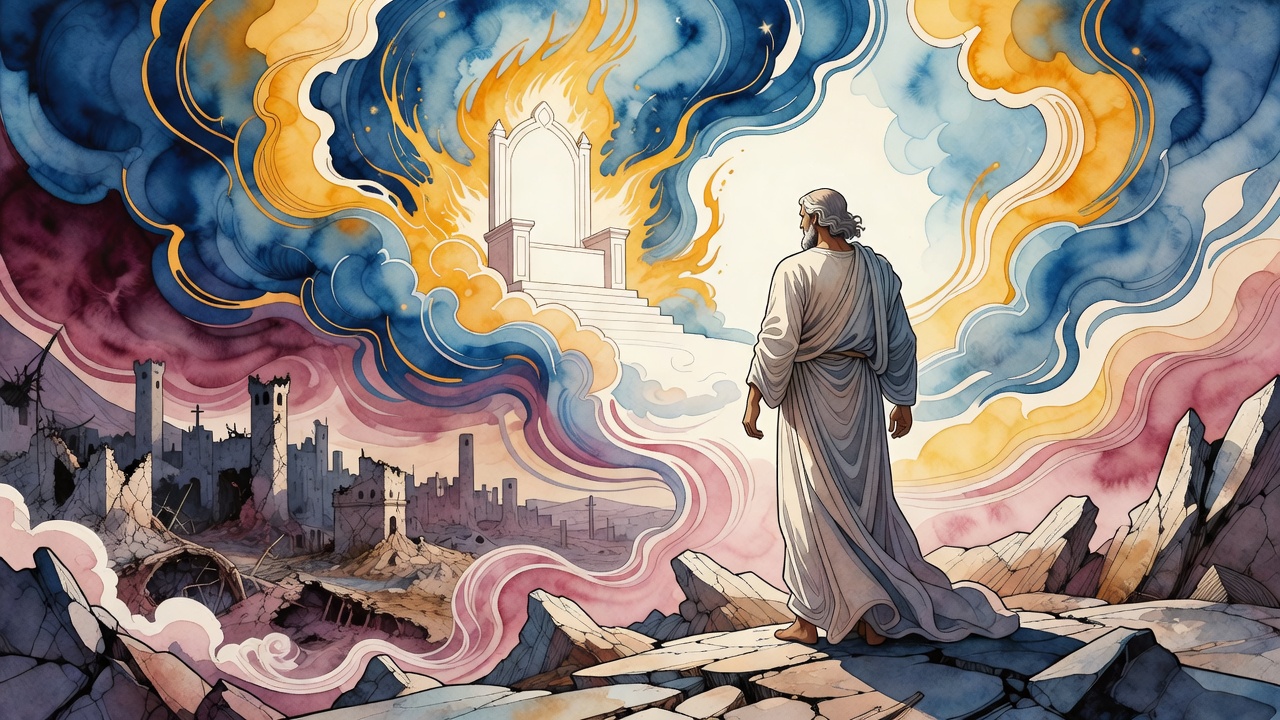
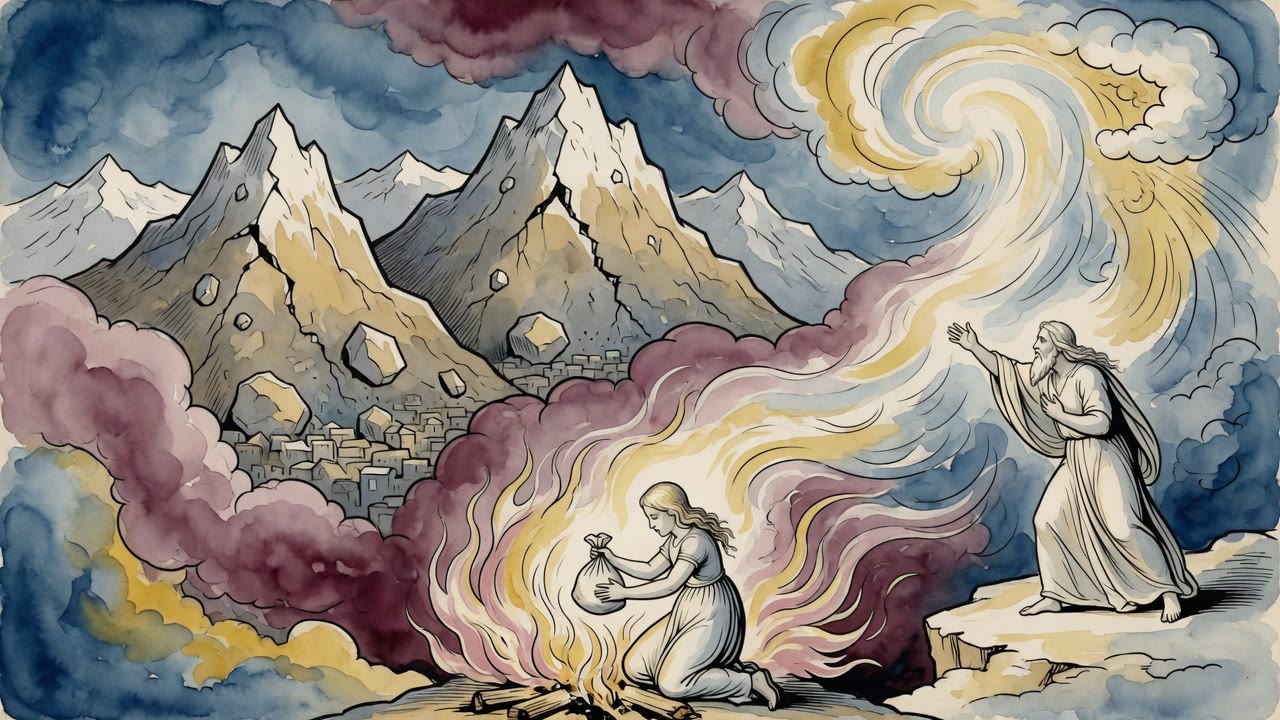
The jugs rattled on the shelves before the screams ever rose. For twenty-two of Sodom's fifty-two easy years, the mountains under the cities shook as if someone large were testing the bolts. Markets reopened after every tremor. Judges returned to their seats. Men who had buried kindness under statutes against charity wiped dust from their beards and went back to starving strangers in the open street.
God did not spring the fire from a clear sky. The earth itself became a long warning, a drum under the feet of a people who refused to hear. They felt the walls lean and changed nothing. Cruelty had become a civic skill.
A Jug of Flour and a Stake
A young woman saw a friend thin as a post. She filled her own jug with flour in the dark and swapped it for the empty one, a secret so small it should have been invisible. Sodom found the kindness the way a hound finds blood. They burned her for the crime of feeding the hungry. Smoke from a girl's body rose over the same squares where travelers were turned away with legal smiles.
Justice, the attribute that keeps accounts, would not let that smoke vanish into weather. The cry of Sodom and Gomorrah climbed until heaven could no longer pretend the cities were merely loud. What looked like prosperity from a distance was a ledger of murders dressed as order.
Abraham Drew Near Three Ways at Once
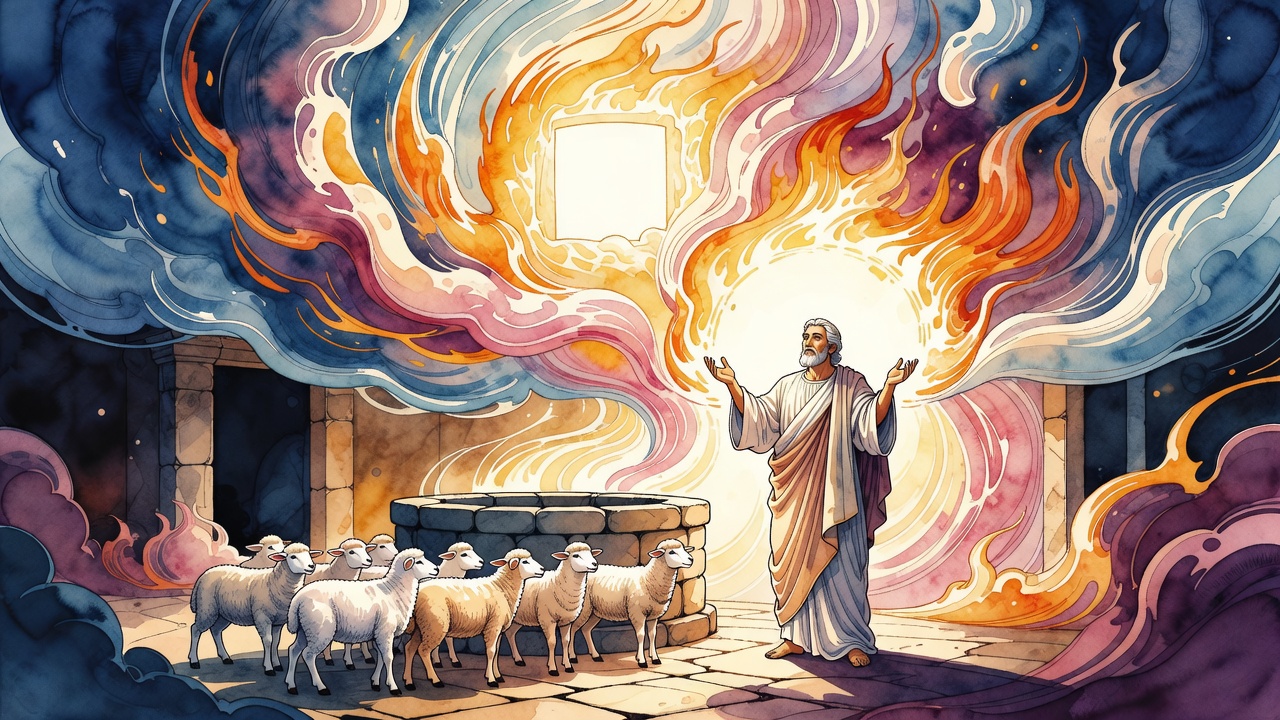
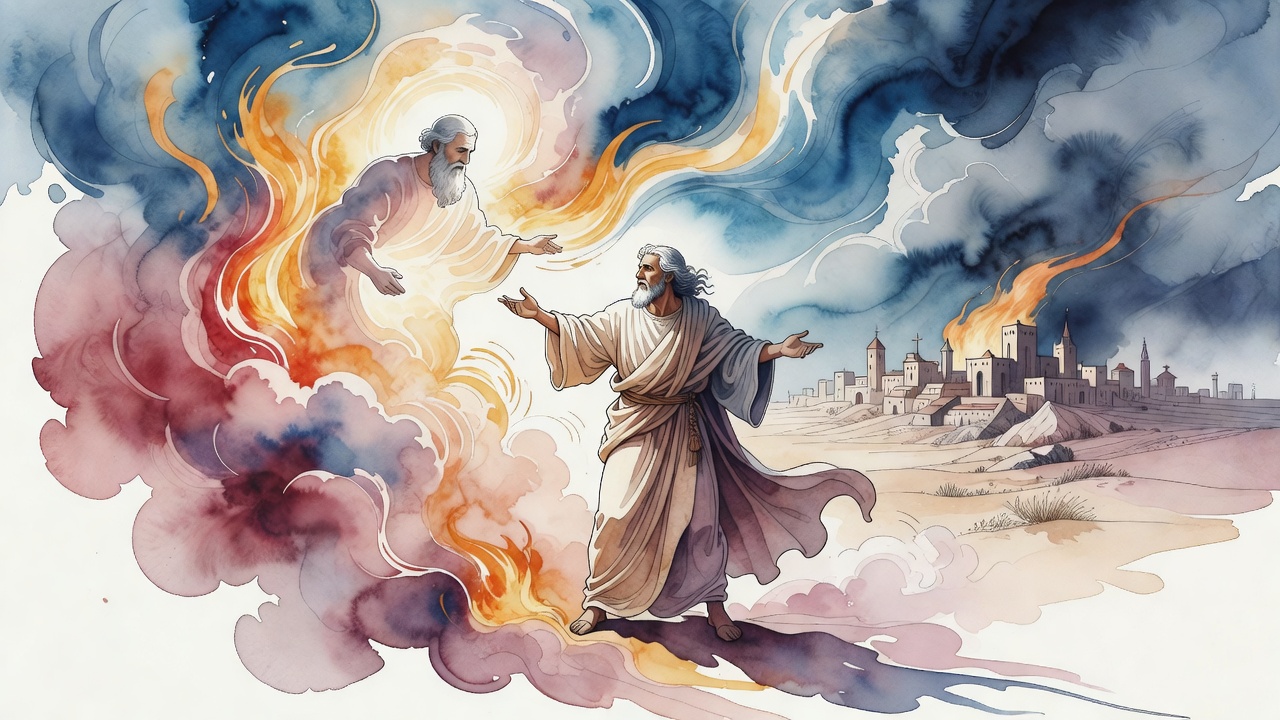
While the messengers turned their faces toward the doomed plain, Abraham remained standing before God. He did not stay behind as a spectator. He drew near. The verb holds war and appeasement and prayer in one posture, the way a man approaches a king when the sentence is already half written and he still intends to fight for one more name.
The verse that praises him for commanding his children sits hard against the cry of the cities. Blessing and doom share a page so the righteous household and the wicked street can be weighed in the same breath. Abraham had once learned how judgment falls when he walked the path of the flood generation's ruins in older memory. He would not let Sodom burn without a hearing if a hearing could still be bought with argument.
Dust and Ashes at the Bargaining Table
"I am but dust and ashes," he said, measuring himself before he measured the cities. The words were not theater. A man who negotiates the number of the righteous down from fifty toward ten has to know what he is in the face of the One who made the mountains that had been shaking for decades. He pressed anyway. Dust spoke. Ashes bargained.
Heaven stored those two words like seed. Because Abraham named himself dust and ashes while pleading for strangers, his children would later receive commandments built from dust of the sanctuary floor and ash of the red heifer, materials of humility turned into law. The plea was for Sodom. The reward reached generations who had not yet been born.
When the Warning Ends
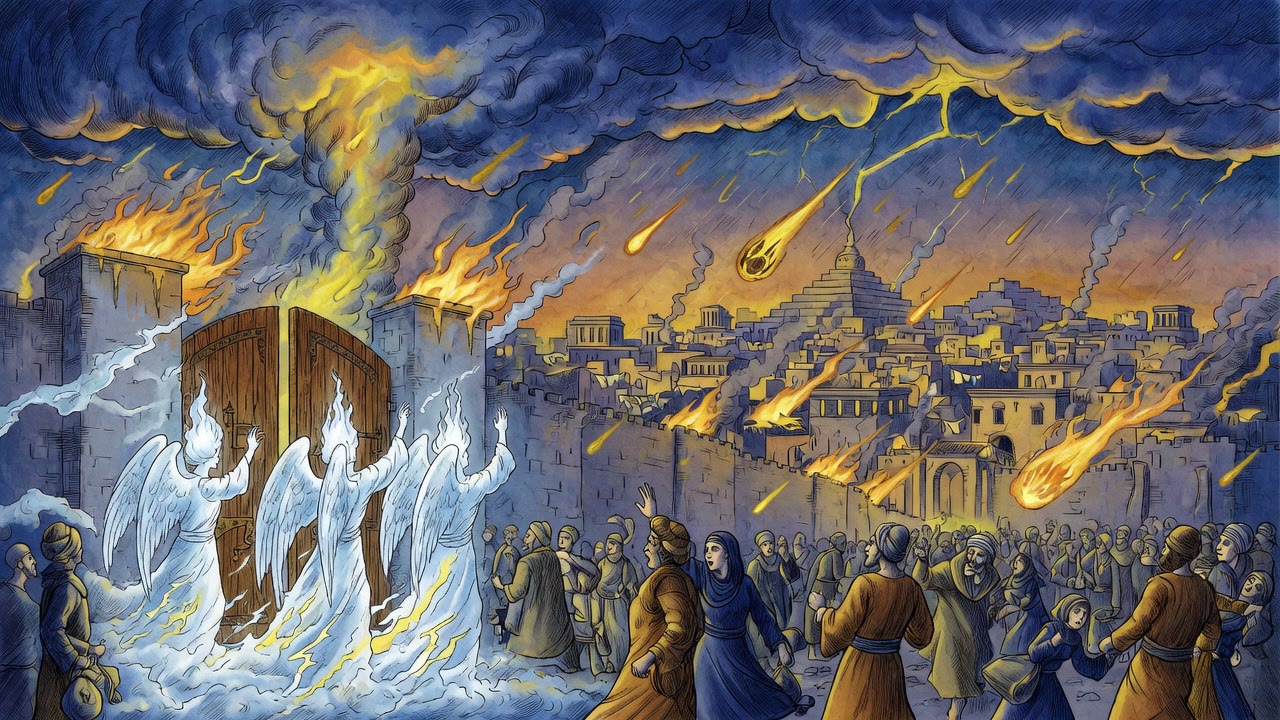
The tremors stopped being mercy the day no one left in the cities would open a door for an angel without threat. Abraham's nearness could delay the arithmetic of justice only as far as the last honest count of ten. When even that failed, fire did what earthquakes had failed to teach. The girl who burned for flour was not forgotten in the ash of the plain. Her jug had already told the truth the mountains tried to say for twenty-two years.
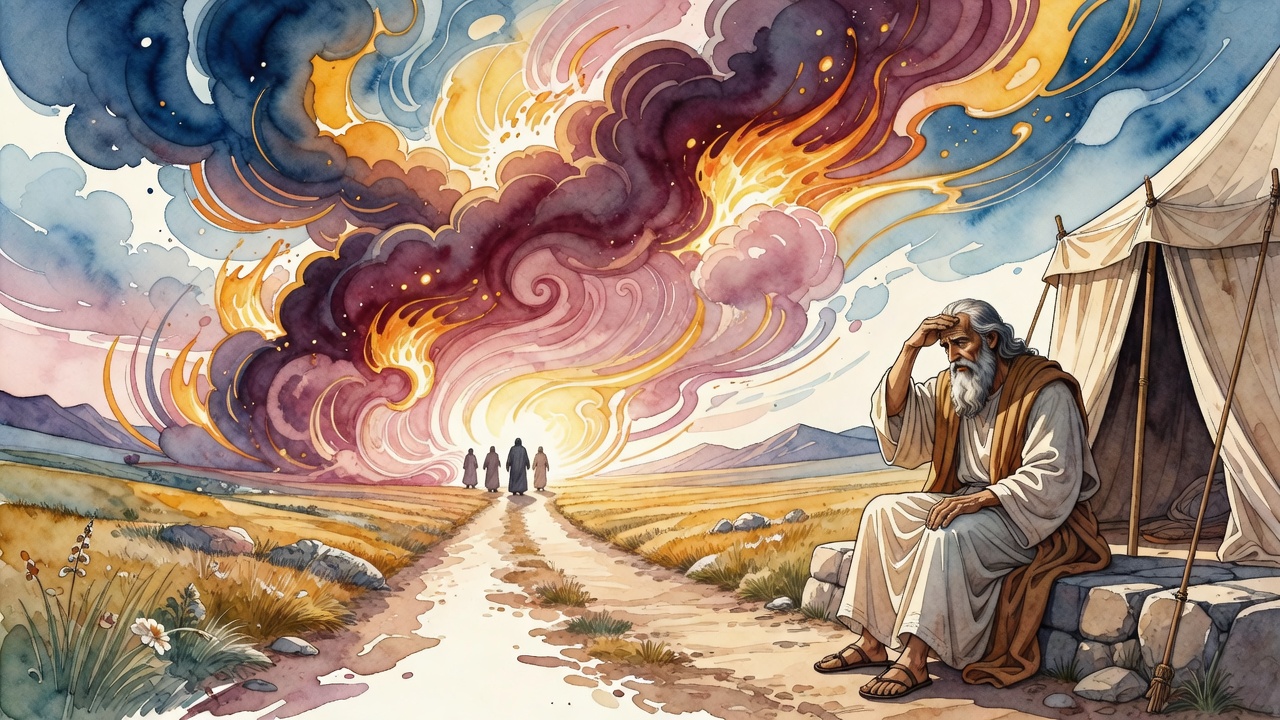
Abraham walked home under a sky that had finished listening. Behind him the smoke of judgment rose where the ground had once only shaken. Ahead of him waited a household still learning how far dust can speak when it refuses to leave the presence of God.
Travelers who survived the outskirts told of inns that charged for air and courts that fined a man for giving bread. The shaking years did not make the statutes kinder. Each tremor became a joke in the taverns, a story for children who learned early that mercy was a foreign dialect. When the girl's smoke rose, some looked away and called it law. Others felt their stomachs turn and still did not open their doors. Fear of the crowd outranked fear of the ground.
Abraham's bargaining voice carried numbers like stones in a pouch. Fifty. Forty-five. Forty. He walked the count down because he knew how few righteous bodies a city needs to stay standing, and how often even those few go missing when cruelty becomes fashion. He was not naive about Sodom. He had housed messengers of heaven while the plain practiced the opposite hospitality. Drawing near meant risking the appearance of arguing with the Judge of all the earth, and he risked it with dust still on his tongue.
After the fire, the silence of the plain taught what the quakes had failed to teach. Warning is a gift only while ears still work. Twenty-two years of moving mountains are a long patience. The day patience ends, ash becomes the last midrash the wicked ever read.
← All myths