6 min read

The Serpent in the Nile and the Blessing Jethro Spoke First

Six hundred thousand saw the sea split, yet the first blessing came from Jethro, an outsider, naming a serpent coiled in the Nile.

Curated by Arthur · Told by Maggid ·
Table of Contents
  1. A Priest of Midian Crosses the Desert
  2. The Serpent That Claimed the River
  3. The Other Hand
  4. Six Hundred Thousand Silent
  5. The Words No One Had Said

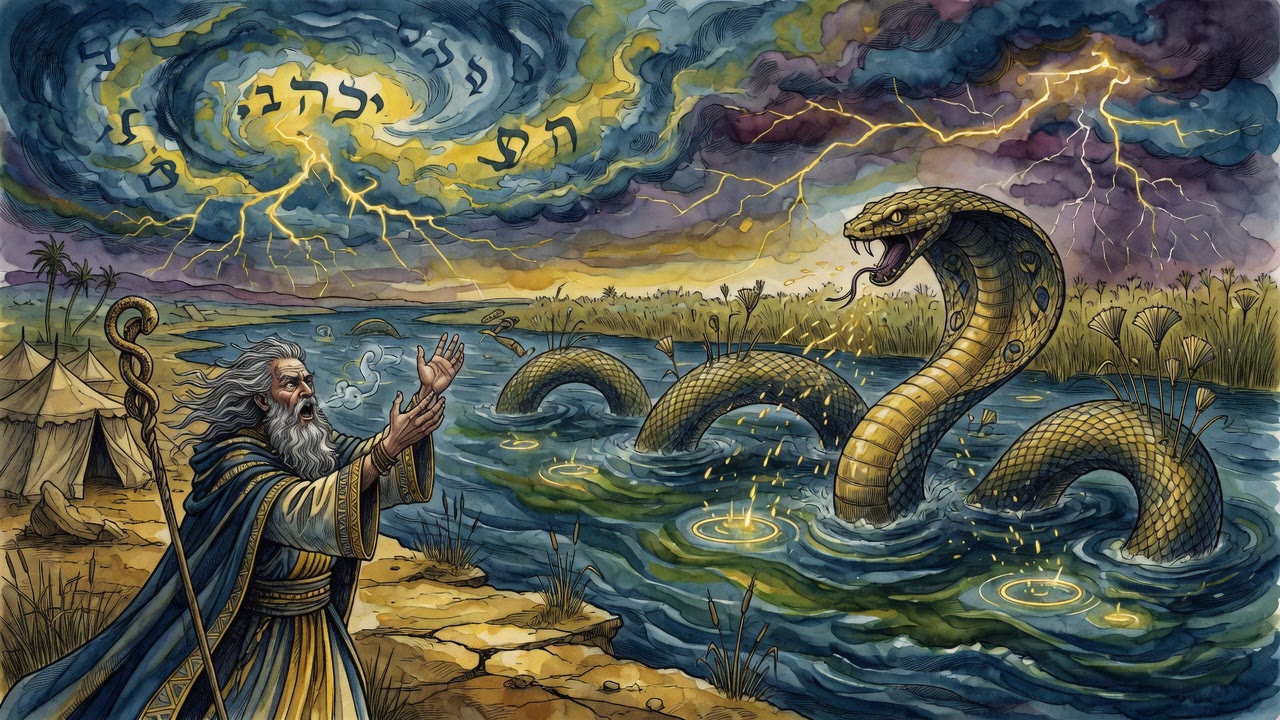
The old man came in from the wilderness with desert dust in the folds of his robe and a lifetime of idols behind him. Jethro, priest of Midian, had served every god his country kept, had burned the incense and poured out the offerings, year after year, altar after altar. Then the news out of Egypt reached his tents. A nation of slaves had walked free. A sea had opened. So he saddled his animals, gathered his daughter Zipporah and her two sons, and set out for the camp of Israel at the mountain of God.
A Priest of Midian Crosses the Desert

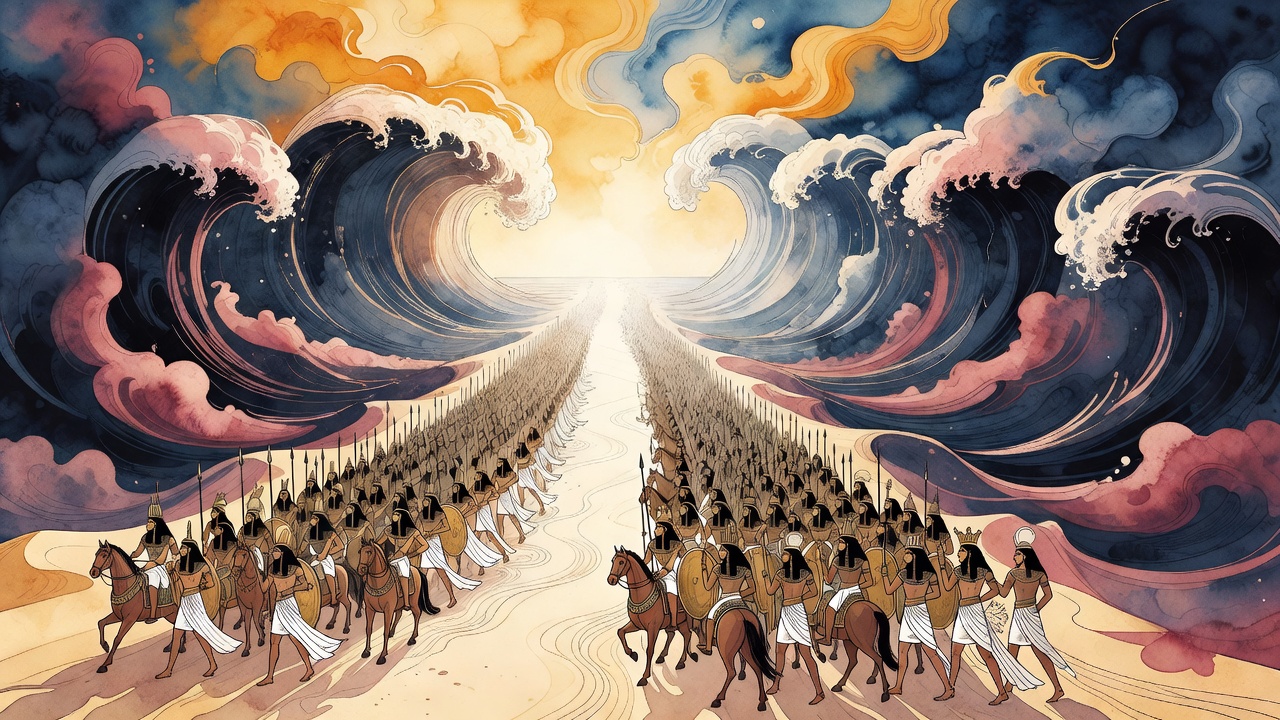
Moses came out to meet his father-in-law, bowed to him, kissed him, and brought him into the tent. There he told him everything (Exodus 18:8), the river turned to blood, the darkness thick enough to touch, the night of the firstborn, the sea standing in two walls while six hundred thousand men crossed on dry ground, the chariots of Egypt rolling in behind them and the water closing over the army like a fist. Jethro sat and listened, and the skin on his arms prickled at the telling.

The Serpent That Claimed the River

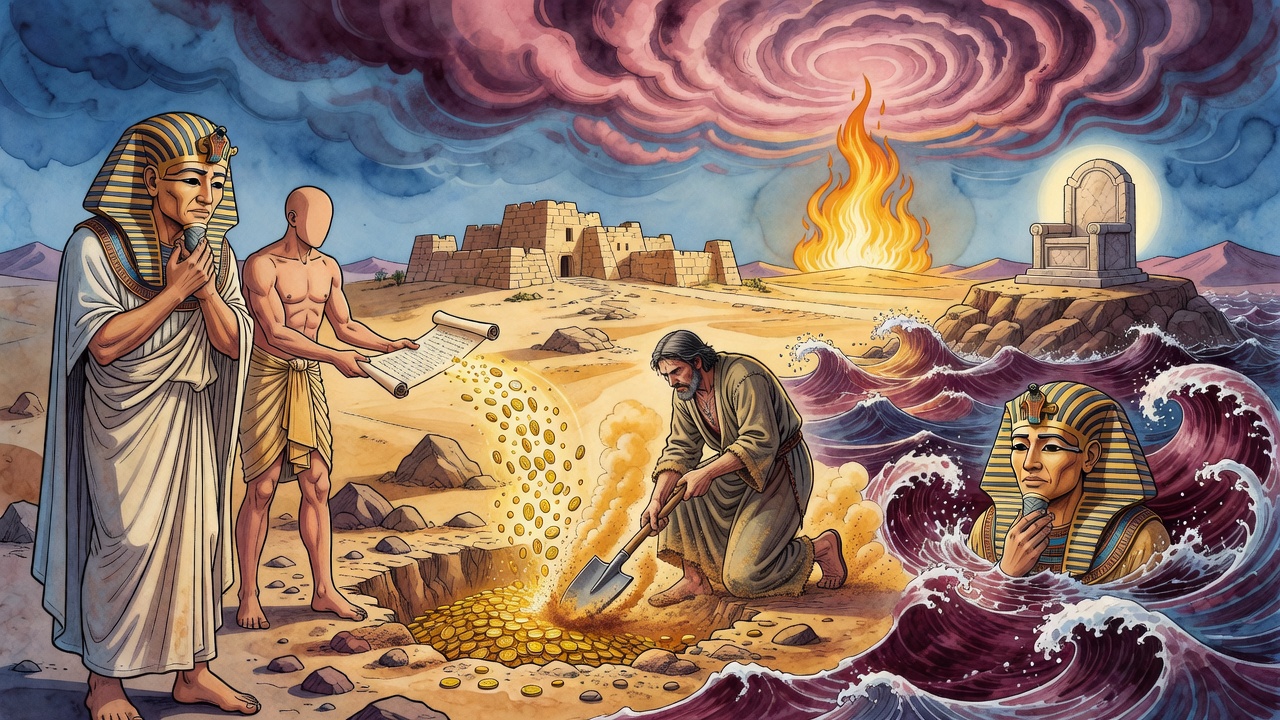
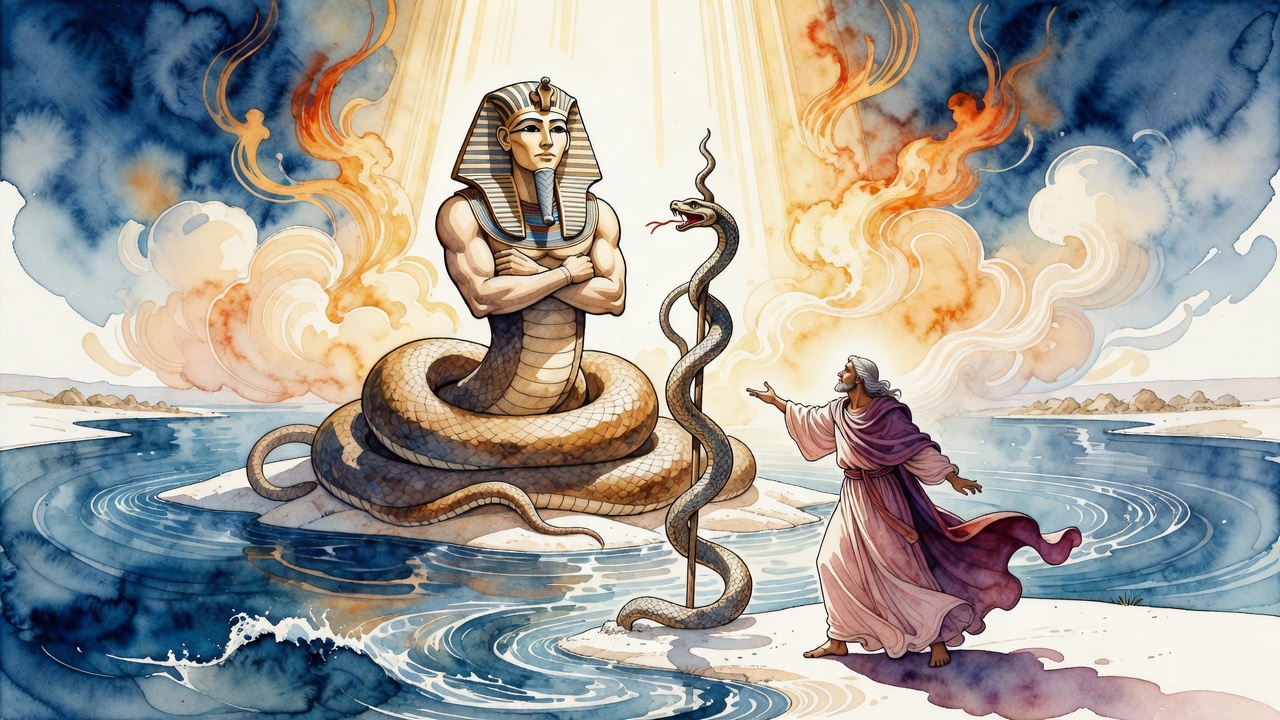
Jethro heard the story differently than the men who had lived it, because he had spent his whole life inside the business of gods. The king Moses described was not merely a tyrant with an army. Generations later a prophet would name him in words no court scribe would have dared to carve: the great serpent sprawling in its Nile, who said, "Mine is the Nile, and I have made it for myself" (Ezekiel 29:3).

The claim mattered more than the cruelty. The Nile was Egypt's whole life. When it rose, the land ate. When it failed, the land starved and the kingdom began to die. And Pharaoh did not say he ruled that river. He said he had made it. He lay in its waters like a tannin, a great serpent, coiled around the one source of bread in a country of sand, hissing that the water itself flowed from him. A king who creates the river owes nothing to anyone who drinks from it. In his own accounting, Israel was not a wronged people. They were his creatures, drinking his water, owing him their backs and their breath in return.

The Other Hand

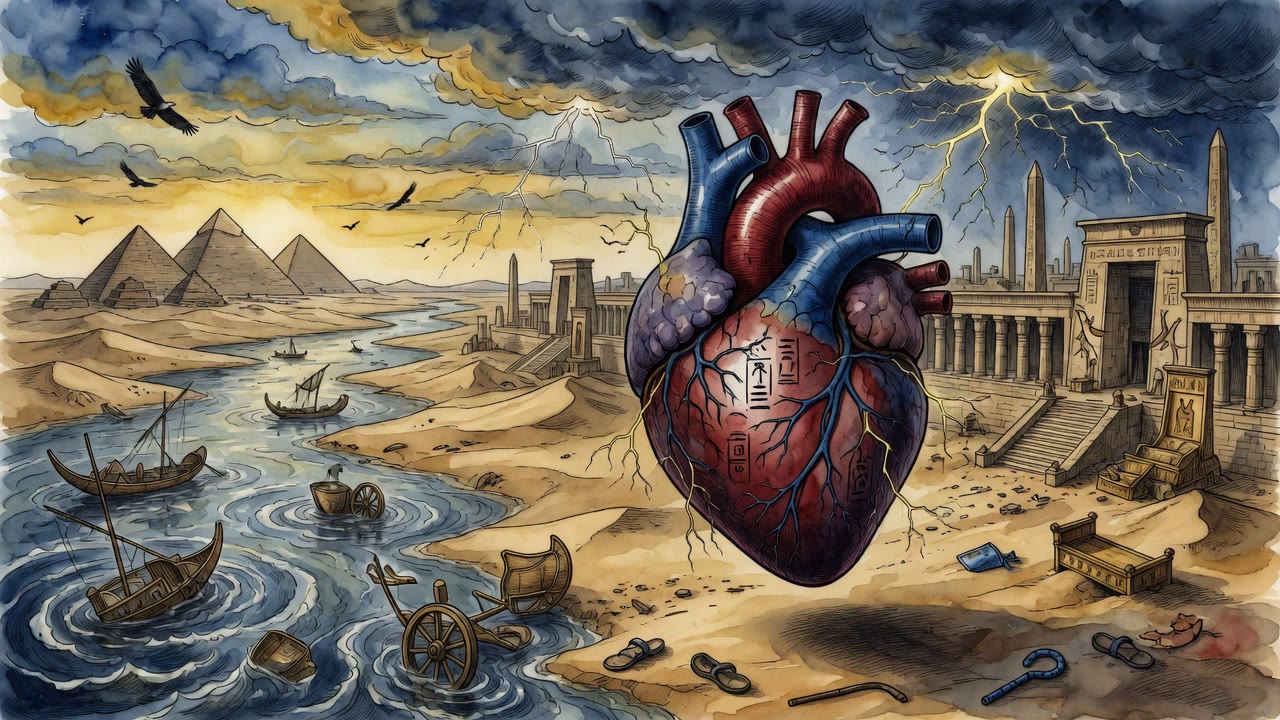
But a serpent, however vast, has only one mouth, and Pharaoh alone never laid a brick quota on a single slave. For that there was Egypt itself, the other hand. The taskmasters walking the pits at dawn. The quotas of bricks counted at dusk. The whole grinding machinery of subjugation that turned day after day whether the king was watching or not, that would have kept turning even if the king had slept for a year. A slave in Goshen might live and die without once seeing the serpent in his river, but he felt Egypt's hand on the back of his neck every single morning.

Two enemies, then. Two grips on the same people. Escape the king and the machinery still grinds. Break the machinery and the serpent is still coiled in the river, patient, claiming everything. Israel had needed to be torn from both hands at once, and that is what had happened.

Six Hundred Thousand Silent

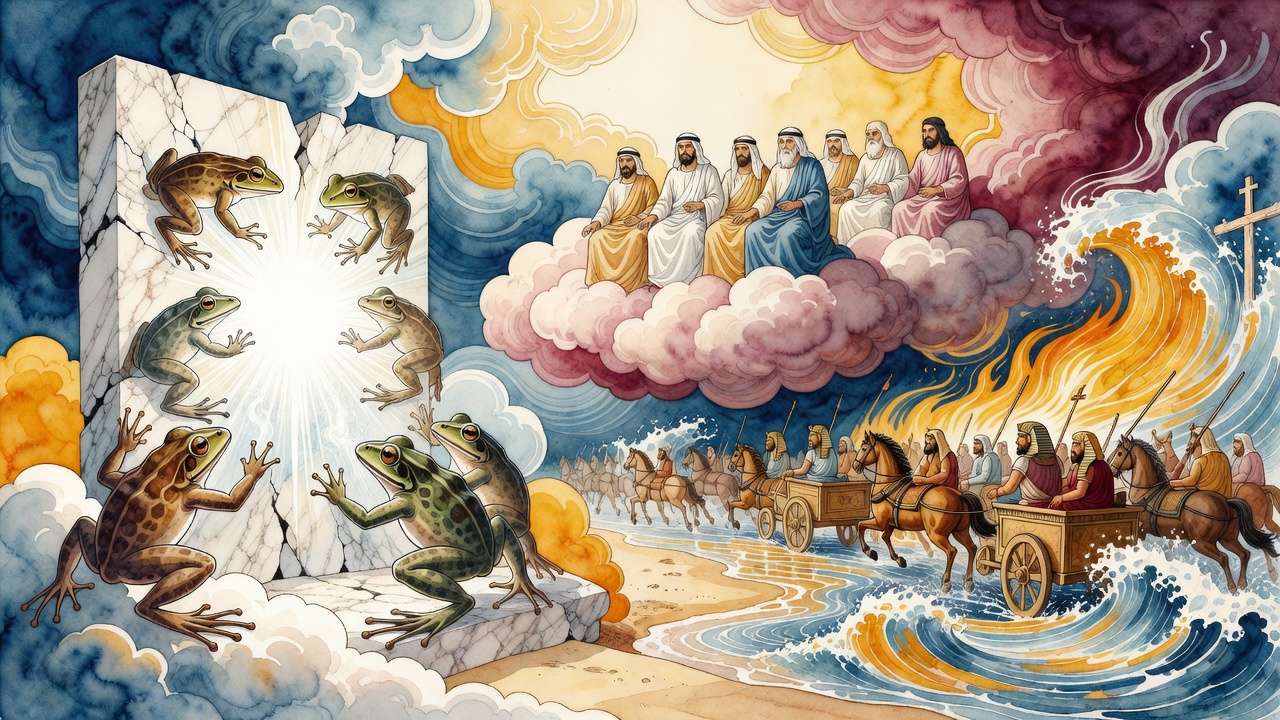
Which makes what happened next, or rather what failed to happen, very hard to explain. Six hundred thousand men had watched the ten plagues with their own eyes. They had walked the seabed between standing walls of water. They had stood on the far shore and watched Pharaoh's army swallowed whole. Since then they had eaten manna that came down with the dew and drunk from a miraculous well in a wilderness without rivers. And not one of them, not a single man out of six hundred thousand, had stood up before the camp to bless the God who had done it. The deliverance was total. The thanks for it stayed in their throats, unspoken.

The Words No One Had Said

The outsider said them. Jethro rejoiced over all the good the Lord had done for Israel (Exodus 18:9), and then the priest of Midian, the man who had spent his years serving idols that never once answered him, opened his mouth and spoke first. "Blessed is the Lord," he said, "who delivered you from the hand of Egypt and from the hand of Pharaoh" (Exodus 18:10).

He did not bless in one broad stroke. He named two hands, separately and deliberately. From the hand of Egypt: from the taskmasters, the quotas, the machinery of bondage that ground a people down by schedule and count. And from the hand of Pharaoh: from the serpent coiled in the Nile, the king who claimed he had made the river and owned every life that drank from it. Jethro, who had served false gods long enough to know exactly how their power worked, saw that these were two different rescues, and he blessed God for each one.

Six hundred thousand had been delivered. The latest arrival in the camp, a foreigner with idol smoke still in his memory, was the one who found the words. The first blessing spoken over the Exodus came from a man who had not been there.


← All myths
From the tradition

Sources

4 sources

The texts this telling draws on, in full. Open a card to read inline, or expand it for a wider, quieter read.

Mekhilta Tractate Amalek 3:40Mekhilta DeRabbi Yishmael

The Mekhilta offers a striking interpretation of the phrase "from the hand of Egypt and from the hand of Pharaoh" (Exodus 18:10). Why does the verse mention both Egypt and Pharaoh separately? Are they not the same thing? Not according to the rabbis.

"From the hand of Pharaoh" refers to the king himself, who is compared to a great serpent. The proof comes from the prophet Ezekiel, who described Pharaoh in exactly these terms (Ezekiel 29:3): "the great serpent sprawling in its Nile, who said 'Mine is the Nile and I have made it for myself.'" Pharaoh was not merely a tyrant. He was a creature of mythic proportions, a serpent coiled in the waters of Egypt, claiming to have created the very river that sustained his kingdom.

"From the hand of Egypt," by contrast, refers to something different: the system of subjugation itself. "From under the hand of Egypt" means liberation from the grinding machinery of slavery, the taskmasters, the quotas of bricks, the infrastructure of oppression that existed independently of any single ruler.

God delivered Israel from both. He defeated the serpent-king who claimed divine power over the Nile, and He broke the institutional bondage that had held an entire people in chains. The verse distinguishes between the two because they were two distinct forms of captivity, one personal and mythic, the other systemic and crushing. And both had to be overcome.

Full source
Mekhilta Tractate Amalek 3:39Mekhilta DeRabbi Yishmael

R. Pappis made a statement about Yithro's blessing that was, in his reading, deeply unflattering to Israel. When Yithro arrived at the Israelite camp and heard what God had done, he declared (Exodus 18:10): "Blessed is the Lord, who rescued you from the hand of Egypt and from the hand of Pharaoh."

Think about what this means, R. Pappis argued. Six hundred thousand Israelite men had witnessed the ten plagues. They had walked through the Red Sea on dry ground. They had seen Pharaoh's army swallowed by the waters. They had eaten manna from heaven and drunk from a miraculous well. And not one of them, not a single person among six hundred thousand, had stood up to formally bless and thank God for these miracles.

It took Yithro, a recent arrival, a former priest of Midian who had spent his life worshipping idols, to say the words that needed saying. "Blessed is the Lord." The Israelites had experienced the miracles firsthand, yet they had failed to articulate the gratitude that the occasion demanded. The outsider had to teach the insiders how to praise their own God.

Scripture speaks to the discredit of Israel here, R. Pappis concluded. The people who had been saved were so caught up in their salvation that they forgot the most basic response: to open their mouths and bless the One who saved them.

Full source
Targum Pseudo-Jonathan on Exodus 18:10Targum Pseudo-Jonathan on Exodus

A former priest of seven gods gives the first blessing-of-the-Name uttered by a convert. The Targum Pseudo-Jonathan records Jethro's words: "Blessed be the Name of the Lord who hath saved you from the hand of the Mizraee, and from the hand of Pharaoh, and hath saved the people from under the tyranny of the Mizraee" (Exodus 18:10).

The Aramaic is careful. Jethro blesses the Name, in Hebrew HaShem, rather than pronouncing the Tetragrammaton. Even his first blessing shows reverence for the sanctity of the Name he is only now beginning to know.

He also parses the deliverance into three layers. First, rescue from the hand of the Mizraee, the Egyptian people. Second, from the hand of Pharaoh himself, the king whose personal obstinacy extended the suffering. Third, from the tyranny, the systemic oppression, the slave-labor machinery that had ground Israel down for generations.

The rabbis note in Sanhedrin 94a that the Israelites themselves had not yet composed a blessing like this. The Song at the Sea praised God's power; Jethro's blessing names the structure of the rescue. He sees it, perhaps, with the clarity of an outsider who has just walked in.

The takeaway: sometimes a newcomer can articulate the meaning of a rescue the insiders are still too close to the trauma to name.

Full source
Midrash Tanchuma, Yitro 7Midrash Tanchuma

And Jethro rejoiced (Exod. 18:9). Do not read this word as vayihad (“and he rejoiced”) but rather vayihed (“and he became a yehudi [a Jew]”). Why did Jethro say: Blessed be the Lord (Exod. 18:10)? Jethro said: I have not neglected to worship any idol in this world, but I have found no god like the God of Israel. Now I know that the Lord is greater than all the gods (ibid. 11).

Four men said four things which, had they been uttered by other men, would have been scoffed at with the comment: “How does he know about the ways of the Holy One, blessed be He?” These four were Moses, Nebuchadnezzar, Jethro, and Solomon. Moses said: The Rock, His work is perfect; for all His ways are justice (Deut. 32:4), but if any other man had said this, they would have said about him: “How does he know that?” It was proper, however, for Moses to make this statement, since it is written about him: He made known His ways unto Moses (Ps. 103:7). Thus Scripture says: Show me Thy ways (Exod. 33:13).

Solomon said: He hath made everything beautiful in its time (Eccles. 3:11). If any other man had made this statement, they would have laughed at him, saying: “Who told him what is beautiful in its time and what is not beautiful?” Solomon, however, could properly make such a remark since nothing was lacking from his table.

R. Hama the son of Hanina declared: Even ice in the (hot summer) month of Tammuz and melons in the (cool spring) month of Nisan were not lacking from Solomon’s table. Why did he say: He hath made everything beautiful in its time? He said in its time because the taste of growing things changes from season to season.

Nebuchadnezzar said: And all the inhabitants of the earth are reputed as nothing; and He doeth according to His will in the hosts of heaven, and among the inhabitants of the earth; and none can stay His hand, nor say unto Him: What doest thou? (Dan. 4:32). If anyone else had said this, they would have ridiculed him, saying: “How does this wicked one know this?” But it was fitting for him to say it, since it is written about him: And wheresoever the children of men, the beasts of the field, and the fowls of heaven dwell, hath He given them into thy hand, and hath made thee to rule over them all (ibid. 2:38). Jethro said: Now I know that the Lord is greater than all gods; yea, for by the things they planned to do evil (they were destroyed) against them (Exod. 18:11). This may be compared to the man who loaded his ass, only to have the load fall upon him. This happened to the Egyptians. They intended to destroy the Israelites in the water, and they themselves were drowned in the water. Thus it is written: For by the thing they planned to do evil against them.

Full source