5 min read

Seven Blessings That Flow From Zion to Israel

Rabbi Levi counts seven blessings that flow from Zion, from Torah and life to beauty and salvation, while a sword waits beside the book.

Curated by Arthur · Told by Maggid ·
Table of Contents
  1. The Hill Became a Spring
  2. Seven Gates Opened
  3. The Book Came Wrapped in a Sword
  4. The Remnant Held the Tree
  5. Salvation Returned by the Same Road

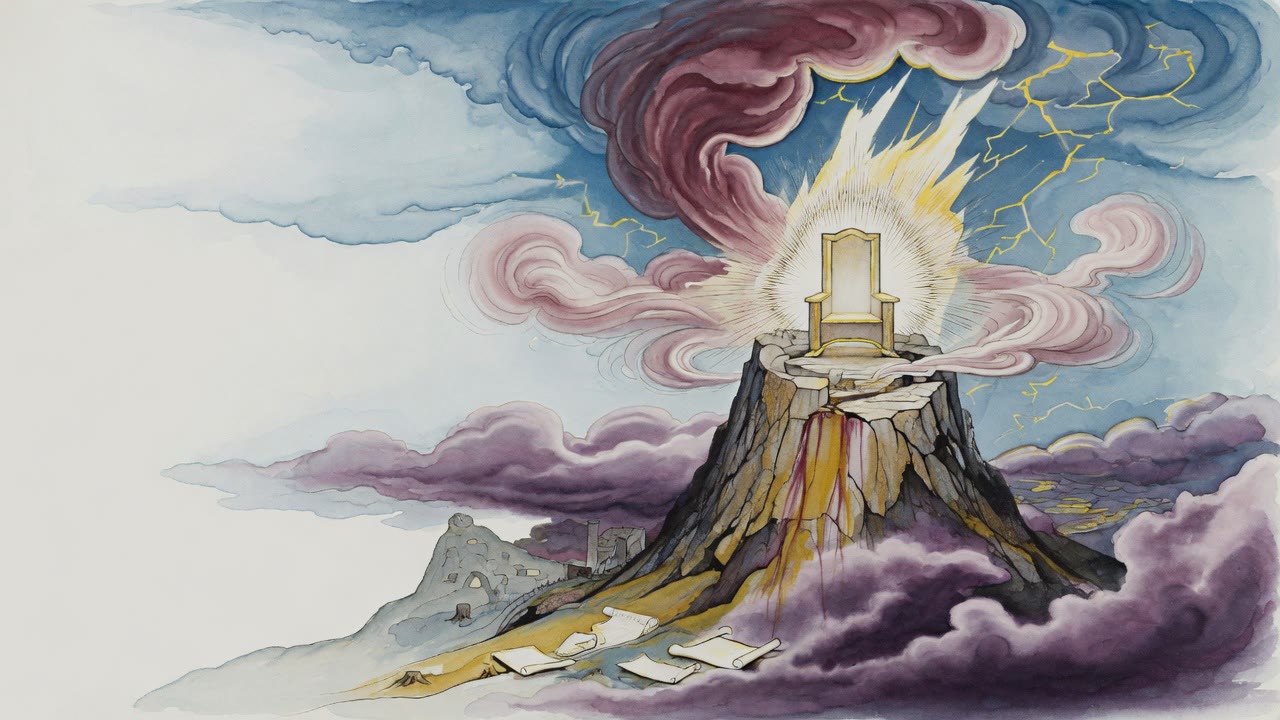
The hill did not move. Everything else did.

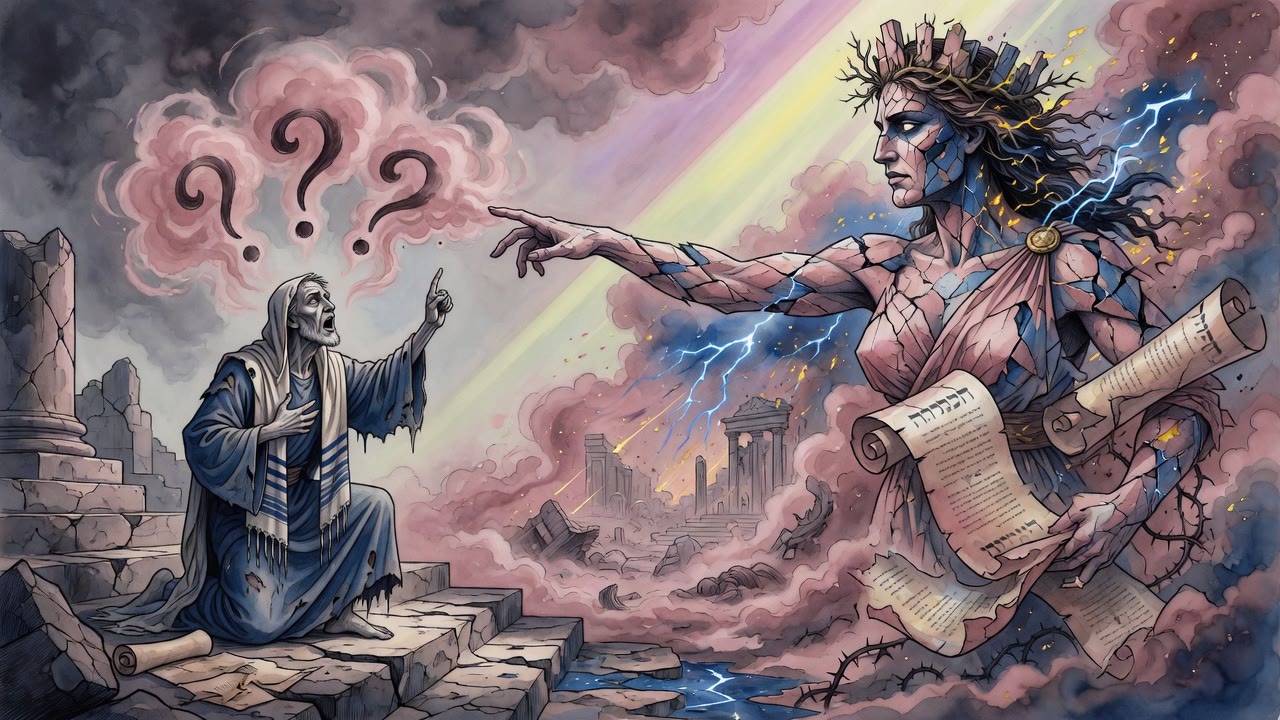
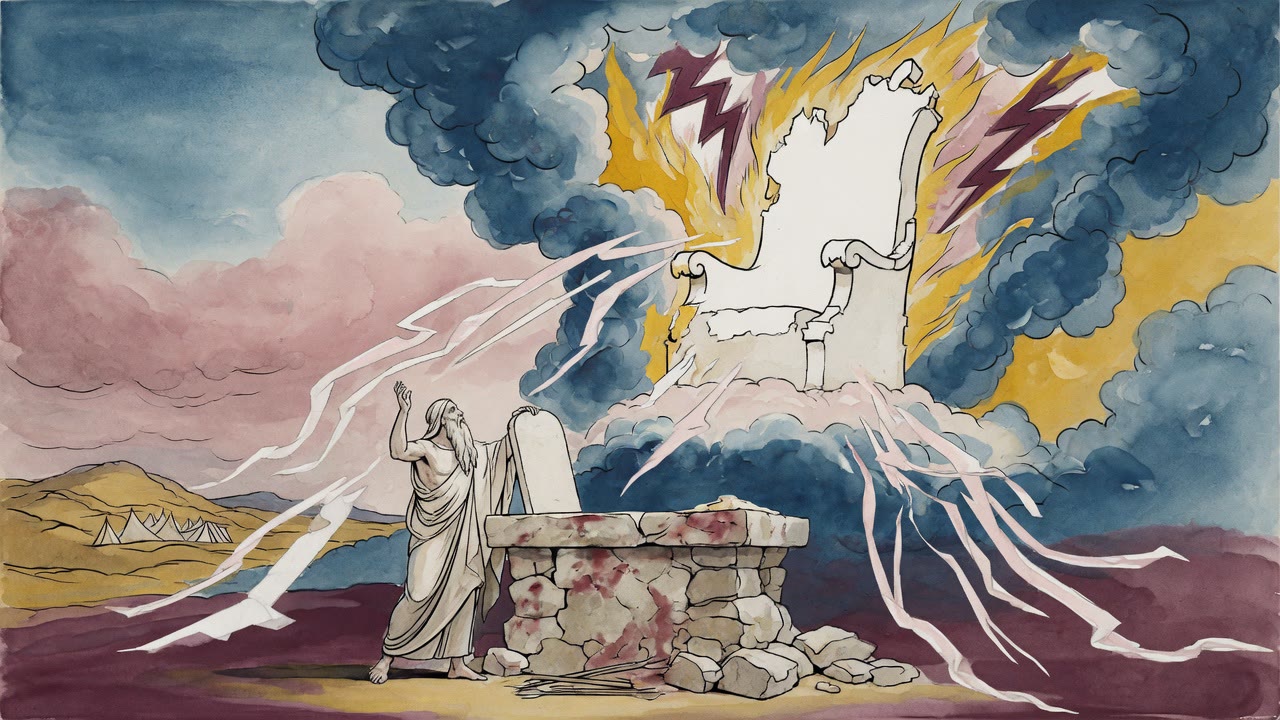
Rabbi Levi placed Zion at the center of the world and watched every good thing run outward from it. Not like a king tossing coins from a balcony. More like water under stone, hidden until it breaks open in seven places at once.

The Hill Became a Spring

Zion, in his mouth, was not only a mountain. It was a mouth, a gate, a spring, a place where God let blessing take shape before it traveled. The nations could count roads and walls. Israel counted what came through them.

Torah came first. Instruction did not drift down like mist over every hill. It went out from Zion, sharp enough to command, tender enough to guide. Then blessing followed, the kind placed on weary shoulders at night when hands are lifted and voices grow low. Beauty came next, not painted beauty, not palace beauty, but the radiance that makes a place look suddenly alive because the divine presence has turned toward it.

Seven Gates Opened

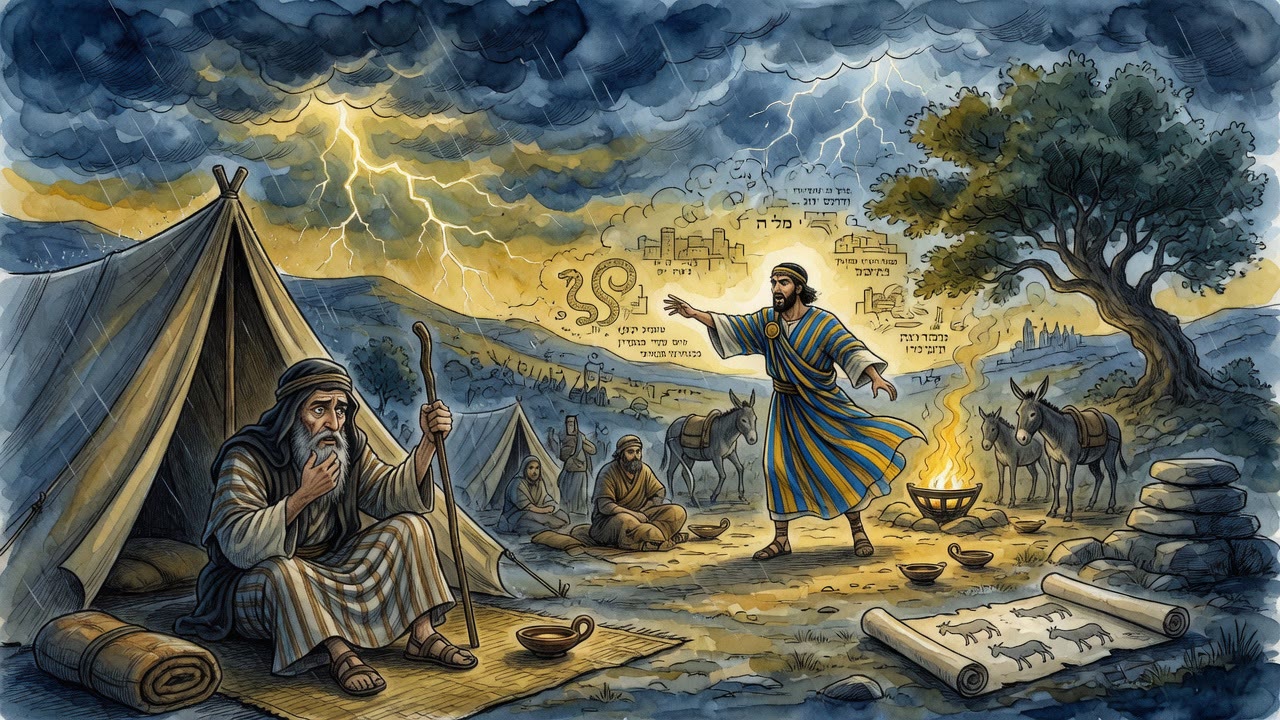
Rabbi Levi did not stop at three. Support came from Zion too. A man staggering under fear could lean there. A king going to war could send his prayer there. A child born into famine could inherit strength from a place he had never seen.

The teaching moved like men carrying vessels toward the Temple. Each vessel had its own weight, but all were lifted from the same treasury. If one stream failed, Israel would limp. If all seven ran, the people could stand upright again, crowned not by power but by nearness.

Life came from there, life with no sourness at the edge, life that did not feel borrowed from the grave. Greatness came from there, the kind that did not need an army shouting around it. Salvation came last, and by then the list had begun to sound like footsteps. Torah. Blessing. Beauty. Support. Life. Greatness. Salvation. Seven gates, and all of them opened in the same wall.

The Book Came Wrapped in a Sword

But blessing did not arrive harmless.

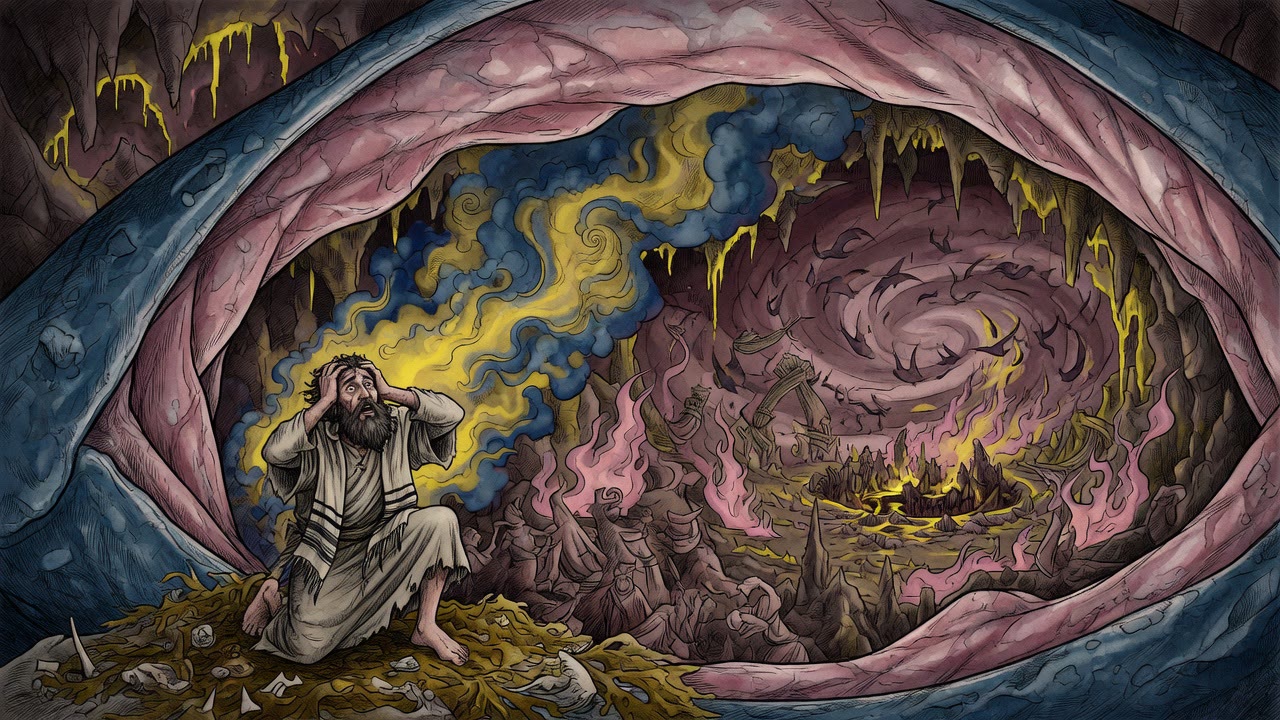
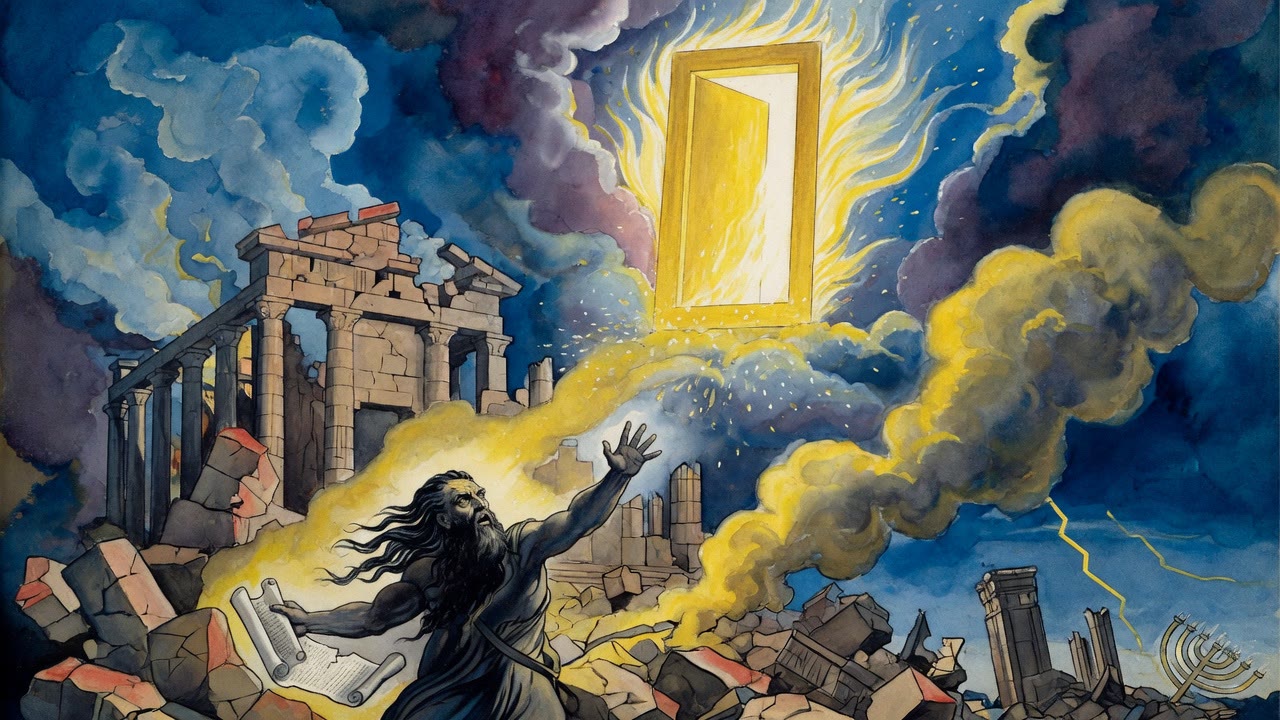
From heaven came a book and a sword, intertwined so tightly that no hand could take one without feeling the other. The book carried the path of life. The sword guarded it. If Israel held the words, the blade would remain sheathed. If Israel dropped them, the same blade that guarded the way could turn against the hand that had let go.

The image was older than any city wall. East of Eden, the turning sword had flashed before the tree of life. It did not hate the living. It guarded the way back. The path had to be walked rightly, with deeds as well as words, or the flame would answer.

The Remnant Held the Tree

So Zion became more than a source of gifts. It became the place where the remnant was counted. Whoever remained in Jerusalem, whoever kept hold of Torah when pressure bent the back and thinned the crowd, was called holy because he clung to the tree while the sword moved beside it.

The tree did not grow in soft soil. Its roots drank from discipline, study, hunger, fear, return. Leaves of life spread above those who would not abandon it. A man could stand beneath that shade and still hear metal in the air. That was the reason. Life was not offered instead of judgment. Life was offered through a path that judgment guarded.

Salvation Returned by the Same Road

Twice the cry rose for salvation from Zion, once like the voice of a master and once like the voice of a disciple. One longed for a heart in Israel that would not break faith. The other longed for a people filled with prophecy. Both desires waited beyond ordinary days, beyond half-kept vows and mornings that began with fear.

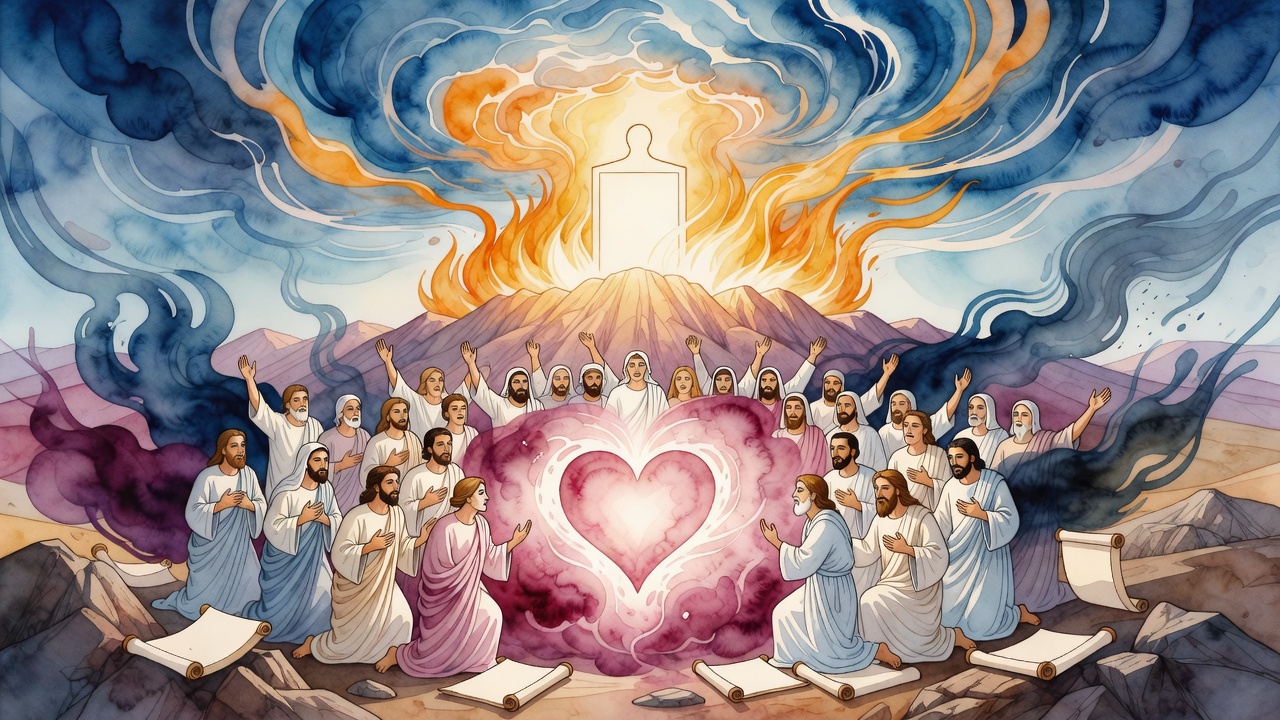
When the world to come opens, the hard heart softens and prophecy pours over flesh. The seven streams run backward to their spring. Torah is no longer far. Blessing is no longer scarce. Beauty no longer hides. Support no longer arrives late. Life no longer leaks away. Greatness no longer corrodes. Salvation no longer has to be begged from the edge of exile.

The city does not chase the exiles. It waits like a heart waits for blood to return. Morning and evening, the old cry rises again, asking for rescue from the same place that gave the first gifts.

Zion stands still, and everything that left it comes home full.


← All myths

From the tradition

Sources

2 sources

The texts this telling draws on, in full. Open a card to read inline, or expand it for a wider, quieter read.

Midrash Tehillim 14:7Midrash Tehillim

Maybe the answer lies in a place readers often overlook: Zion.

Midrash Tehillim, a fascinating exploration of the Book of Psalms, asks a powerful question: “Who will give from Zion the salvation of Israel?” It’s a verse that appears twice in Psalms, and the rabbis unpack why Zion is so central to our well-being.

Rabbi Levi paints a vivid picture: all blessings, comforts, and goodness flow from Zion. Torah itself originates from Zion, as (Isaiah 2:3) proclaims: "For out of Zion shall go forth the law." Blessing? (Psalm 134:3) tells us: "May the Lord bless you out of Zion." Even God’s very appearance, His beauty and perfection, emanates from there: "Out of Zion, the perfection of beauty, God appears" (Psalm 50:2).

It doesn't stop there. Support in times of need? "May the Lord support you from Zion" (Psalm 20:3). Life itself? "For there the Lord commanded the blessing, life forevermore" (Psalm 133:3). Greatness? "The Lord is great in Zion" (Psalm 99:2). And of course, salvation, that ultimate yearning, also comes "from Zion" (Psalm 14:7).

But why does this verse, "Who will give from Zion the salvation of Israel?" appear twice in the Book of Psalms? That's where things get even more interesting. Rabbi Levi explains that it reflects two unfulfilled desires. The Master longed, "Would that this heart of theirs were in them" (Deuteronomy 5:26), expressing a wish for genuine inner transformation. The disciple, in turn, yearned, "Would that all the Lord's people were prophets" (Numbers 11:29), hoping for universal spiritual insight.

Neither wish is fully realized in this world, but both, according to the Midrash (rabbinic interpretive commentary), will find fulfillment in the world to come. The Master's wish will be granted, as (Ezekiel 36:26) promises: "And I will give you a new heart." And the disciple's dream? It echoes in (Joel 2:28): "And it shall come to pass afterward, that I will pour out my spirit upon all flesh."

Another explanation, offered by Rabbi Yudan in the name of Rabbi Joshua ben Levi, connects the repetition to our daily prayers. Children, twice a day, morning and evening, plead, "Save us, O God, who saves us" (I (Chronicles 16:3)5). This constant call for salvation mirrors the twice-stated plea from Zion.

Rabbi Tanchuma shared this idea with Rabbi Nechuniah, but the latter offered a different perspective. He argued that the repetition stems from the fact that "Save us, O God, who saves us" appears once in the Book of Psalms and once in the Book of Chronicles.

The Midrash then uses a beautiful analogy. It's like a king's son betrothing another king's daughter. Both sides are preparing, eagerly awaiting the big day. What's the delay? The "preliminaries," the preparation for the final redemption, as (Isaiah 63:4) puts it: "For the day of vengeance is in my heart."

So, what does this all mean for us? It's an invitation to look towards Zion, not just as a physical place, but as a symbol of hope, redemption, and the source of all that is good. It reminds us that our yearning for a better world, a more complete self, is deeply connected to this idea of Zion. It’s a reminder that the blessings, support, and even salvation we seek might just be waiting for us, flowing from that very special place within our hearts and within the world. Are we ready to receive it?

Full source
Vayikra Rabbah 35:6Vayikra Rabbah

Rabbi Aḥa ben Elyashiv, in Vayikra Rabbah 35, offers a powerful answer, drawing on the words of Isaiah: "It will be that he that is left in Zion and he that remains in Jerusalem shall be called holy, everyone that is written for life in Jerusalem" (Isaiah 4:3). According to Rabbi Aḥa, this refers to those who engage with Torah, which, as Proverbs tells us (3:18), "is a tree of life."

The connection between Torah and life runs deeper. Rabbi Elazar, as quoted in the same passage, teaches a striking image: a sword and a book, given intertwined from Heaven. God, blessed be He, declares: "If you observe what is written in this book, you will be saved from the sword, and if not, ultimately, it will kill you."

Where do we see this foreshadowed? In Genesis (3:24), after the banishment from Eden: "He banished the man; [He stationed the cherubs east of the Garden of Eden, and the blade of the ever-turning sword], to guard the path of the tree of life." The "path," Rabbi Elazar explains, represents proper conduct. And the "tree of life"? That’s Torah. The ever-turning sword guards the path, implying that straying from that path, from Torah, leaves us vulnerable. Initially, proper conduct alone was sufficient, but after the giving of the Torah, acting in accordance with it became paramount.

Rabbi Shimon ben Yoḥai paints a similar picture, this time with a loaf and a rod intertwined from Heaven. "If you observe the Torah," he says, "here is a loaf to eat, and if not, here is a rod to be stricken with." We find echoes of this in Isaiah (1:19-20): "If you are willing and heed, you will eat the goodness of the land. But if you refuse and are defiant, you will be devoured by the sword [ḥerev te’ukelu]". Instead of plenty, there will be famine. The Rabbis expound that this means we will eat carobs [ḥaruvin tokhelu], typically used as animal feed. A far cry from the "goodness of the land," wouldn't you agree?

Rabbi Aḥa adds a poignant observation: when Israel is reduced to needing carobs, they repent. It's a stark reminder that hardship can be a powerful catalyst for turning back to the path of righteousness.

And Rabbi Akiva? He offers a surprising perspective: "Poverty is as becoming for the daughter of Jacob as a red strap on the head of a white horse." Poverty, he suggests, can be a good thing for the Jewish people, because it motivates them to repent. It's a challenging idea, but it speaks to the transformative power of adversity.

So, what does it all mean? It seems that living a life "written for life" isn't just about passively existing. It's about actively engaging with Torah, striving for proper conduct, and recognizing that even in times of hardship, there's an opportunity for growth and repentance. It's about choosing the loaf over the rod, the tree of life over the ever-turning sword. It’s about choosing life, in its fullest and most meaningful sense.

Full source