The Seven Things Adam Lost When He Left the Garden
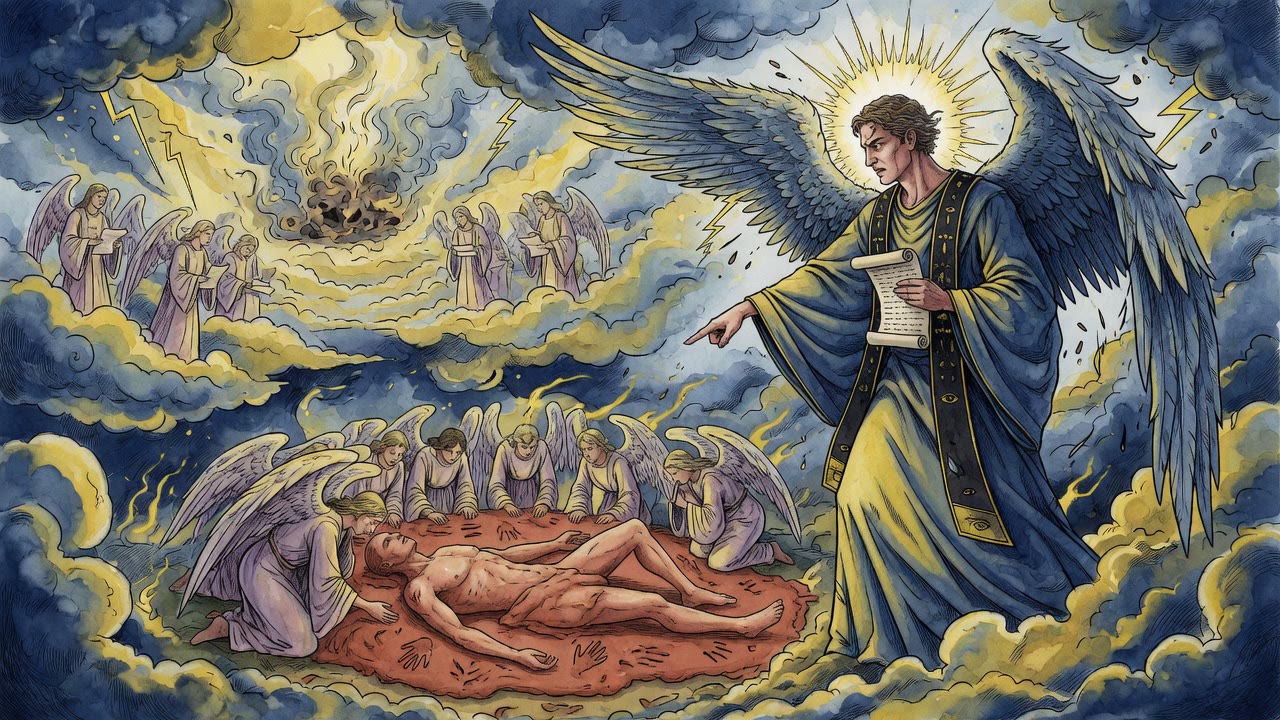
The angels nearly bowed to Adam, mistaking him for God. He was formed in the first hour and driven out by the twelfth. Then his skin stopped glowing.
Table of Contents
 Click for full size
Four Hours in Paradise
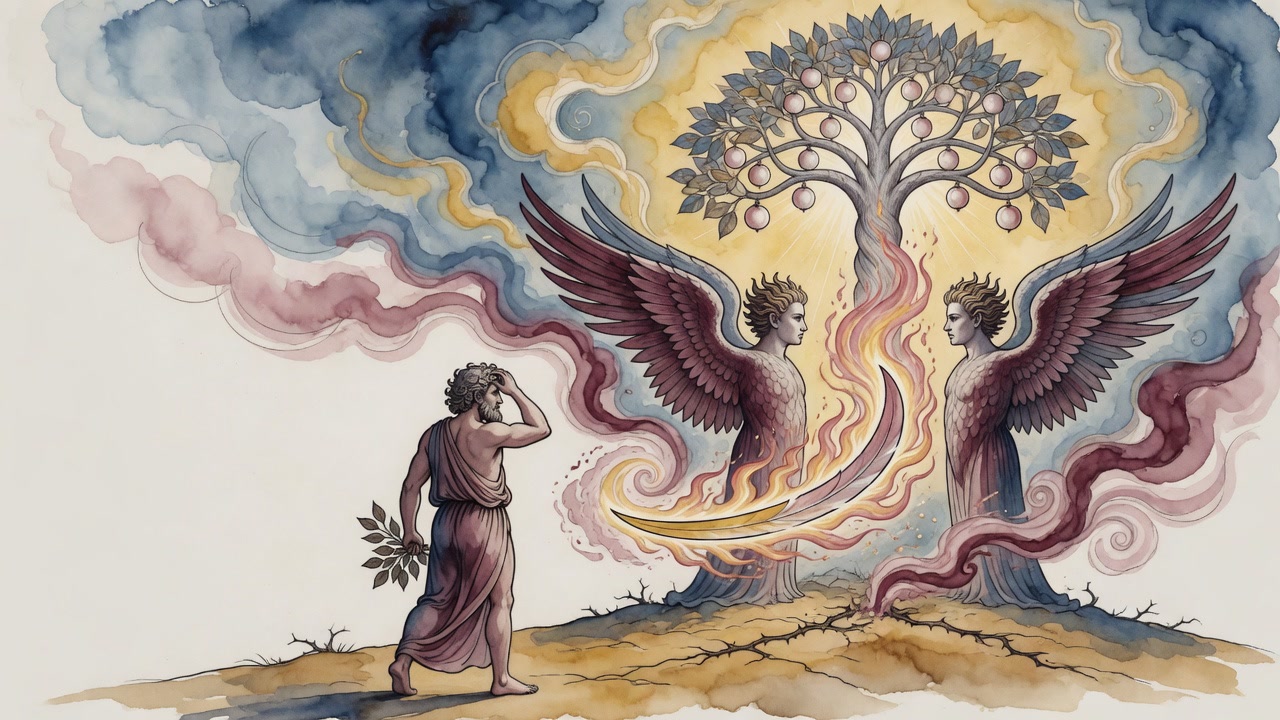
Adam was formed in the first hour of the sixth day of creation. By the eighth hour he had been placed in the Garden. By the twelfth he had been driven out. The timetable, laid out with the precision of a court record in the rabbinic tradition, gives him four hours inside paradise before the sentence fell. Four hours to go from the pinnacle of creation to exile, from a being whose radiance extended from one end of the world to the other to a man shivering at the garden's eastern gate.
The original Adam, as the tradition imagined him, was not a creature of ordinary human scale. His height reached from earth to heaven. His brightness lit the world. When he first rose to his feet and opened his eyes in the Garden, the angels mistook him for God and nearly bowed to him. They circled him and asked one another: who is this? He was so new, so radiant, so much more than what came after, that even the ministering angels were confused.
What the Sin Cost
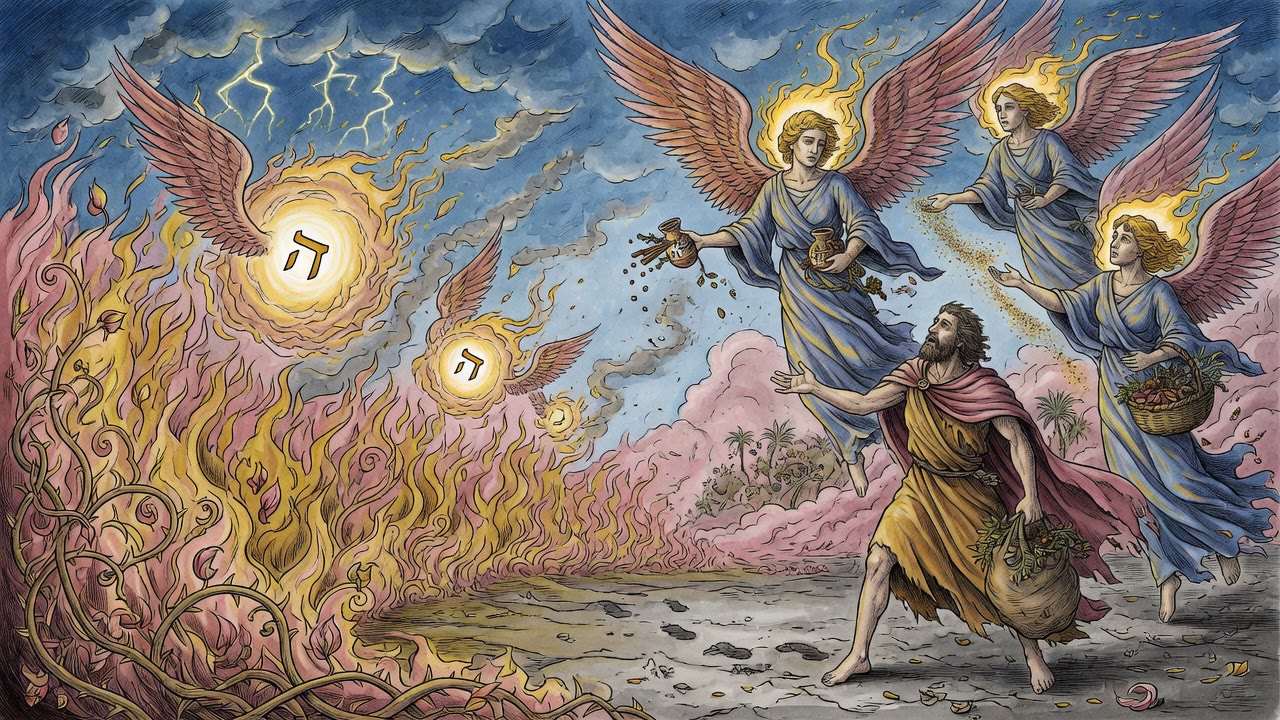
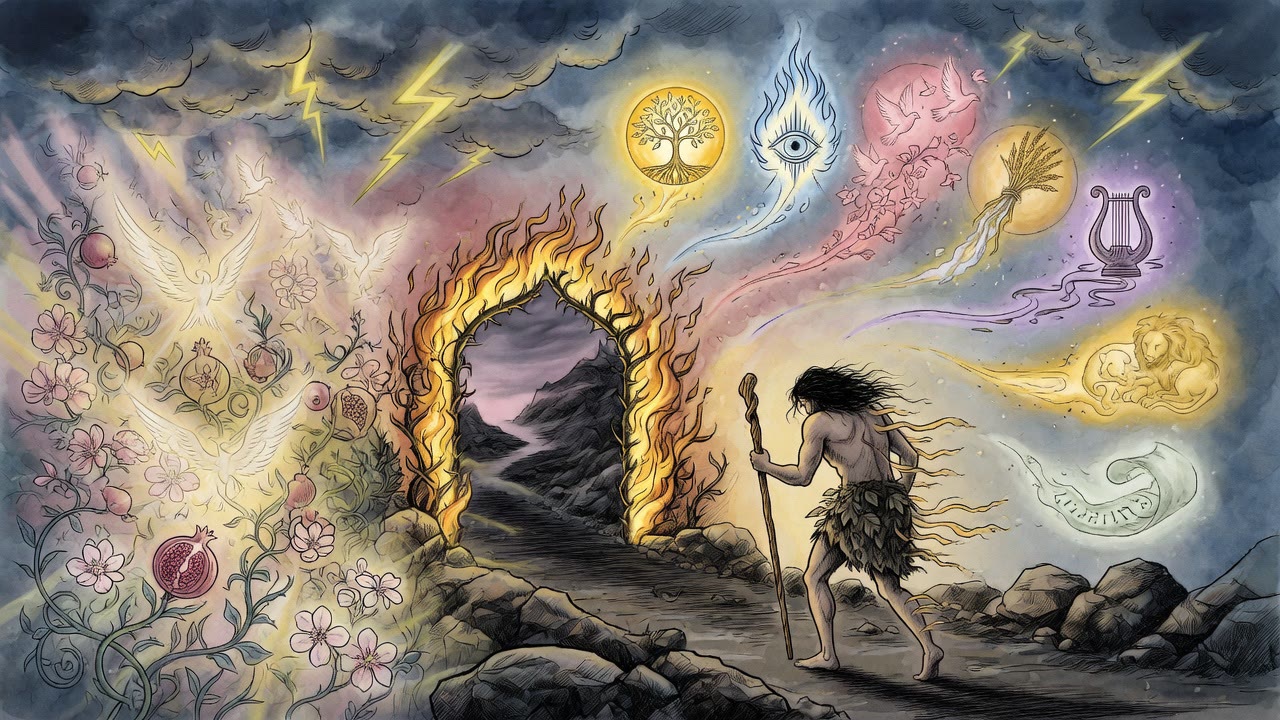
The expulsion did not only end the walk in the garden. It stripped Adam of seven specific endowments that the tradition catalogued one by one. The first was the celestial light, not sunlight, but the primordial illumination that had suffused the world before God quarantined it on the fourth day for the use of the righteous in the world to come. Adam had lived inside that light for four hours. After the expulsion he lived in ordinary darkness like everyone else.
The second loss was his stature. He shrank from a being who touched both heaven and earth to a man of ordinary human dimensions. The third was the radiance of his skin, his original body had glowed, the mystics said, with a kind of luminous covering that marked him as something not quite like what came after. After the sin, that glow went out. He needed actual clothing.
The Gifts That Would Not Come Back Without the Messiah
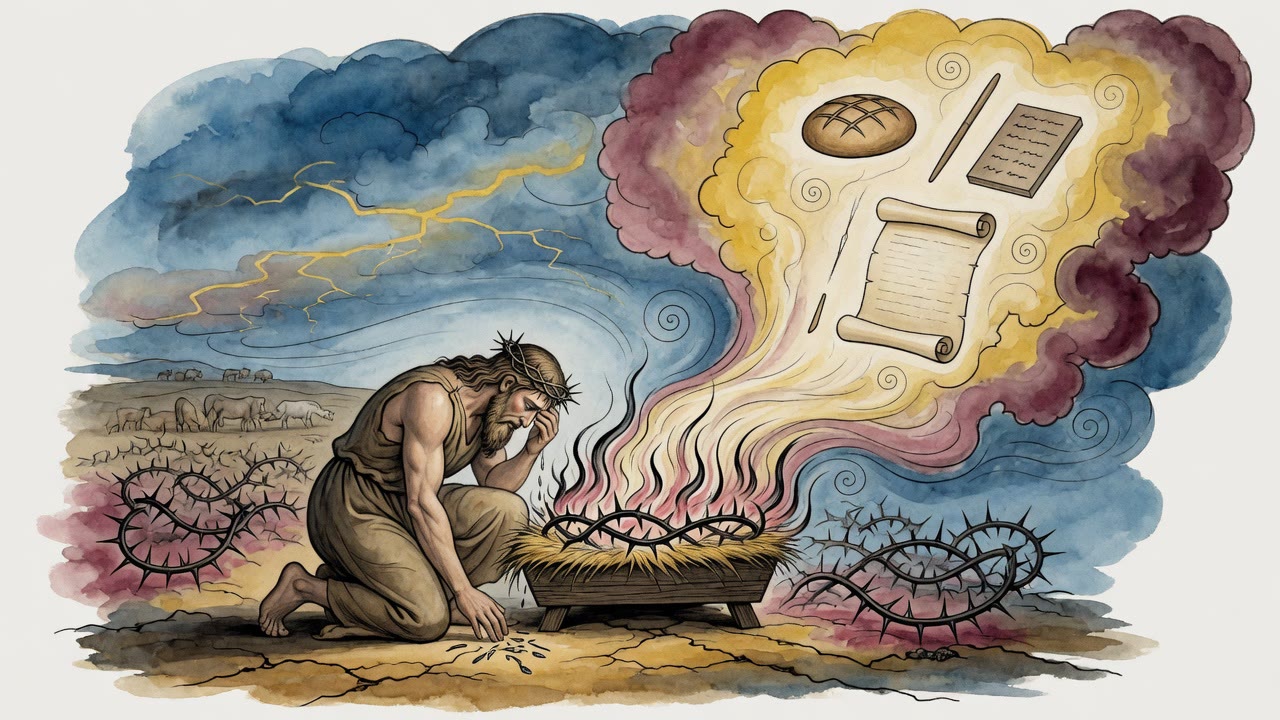
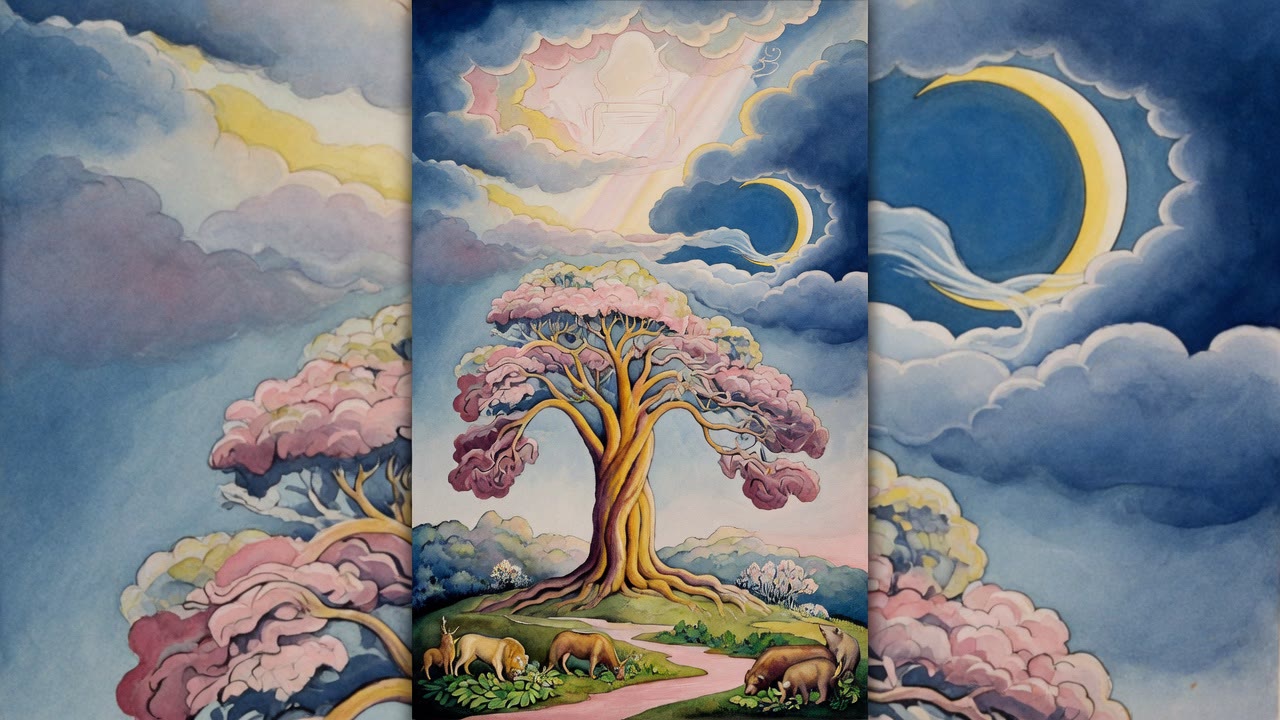
The other four losses ran through the structure of the world itself: the fruit of the earth, which had grown without labor and in miraculous abundance; the clarity of the sun and moon, which had shone at their original full intensity before being dimmed; the length of life, which had been without appointed end; and the direct proximity of the Shekhinah, the divine presence, which had dwelt in the Garden with Adam as a neighbor before withdrawing to the first heaven after the sin.
The kabbalistic tradition, working with the concept of Adam Kadmon, the primordial human whose structure preceded and encompassed the world, understood Adam's original form as a template for cosmic reality. What he carried before the fall was not just personal endowment but something structural, a set of capacities that the world was designed to host. Their removal was not punishment only. It was a reorganization of what the world could bear in its current condition.
The Messianic Restoration
All seven gifts, the tradition promised, would return. Not gradually and not partially, they would be restored together, in the days of the Messiah, when the world recovered its original capacity. The celestial light would become visible again. The earth would produce without toil. Human beings would live without appointed death. The Shekhinah (the Divine Presence) would descend from the heights it had withdrawn to and dwell among the people as it once dwelt in the Garden with the man who had been given four hours to ruin everything.
The rabbis did not treat this as metaphor. They meant each item on the list. Adam had possessed seven distinct divine gifts, each with a name and a function, and each had been lost, and each was recoverable, and the person who would recover them had not yet come. In the meantime, the world ran on a diminished version of itself, knowing what had once been there.
← All myths