5 min read

She Returned Two Sons as Heaven's Deposit

Rabbi Meir taught through Shabbat while his wife hid their dead sons, then asked if a deposit must go back to its Owner.

Curated by Arthur · Told by Maggid ·
Table of Contents
  1. Questions at the Door
  2. The Sheet Drawn Back
  3. Small Signs, Strict Eyes
  4. What the House Kept

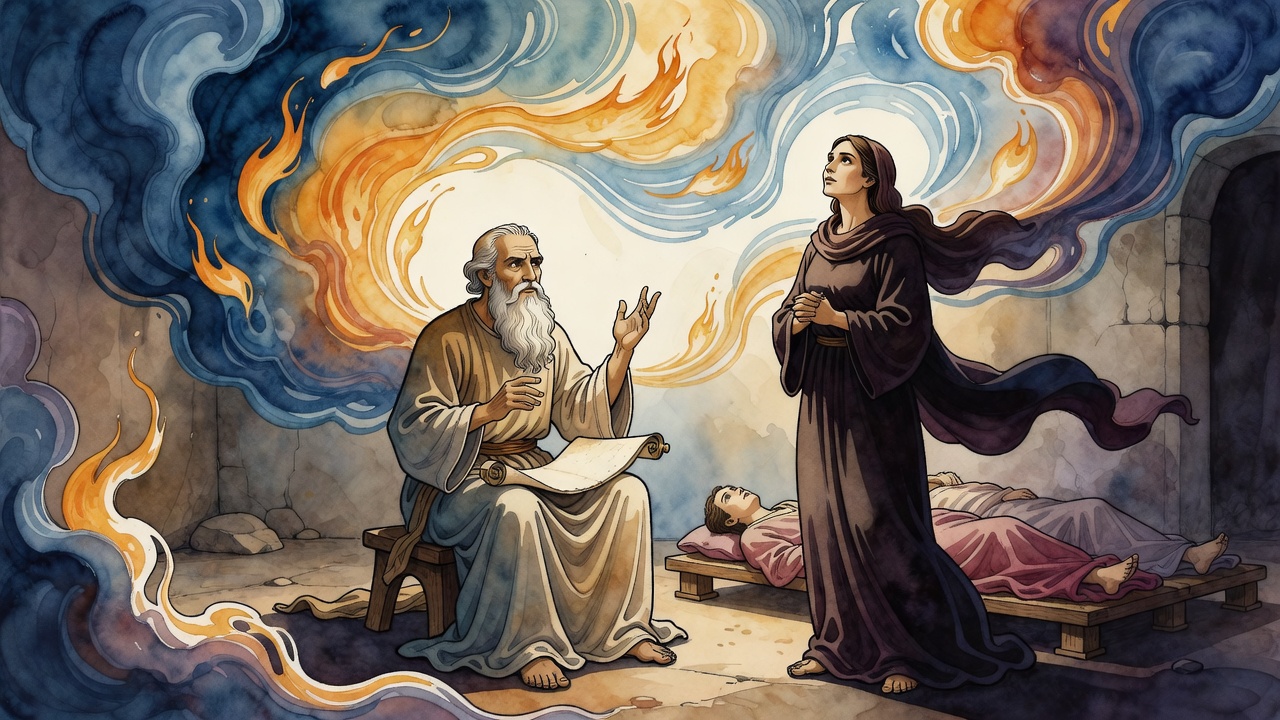
Rabbi Meir sat in the study hall on Shabbat afternoon with the air thick from lamps and argument. Outside his house, while he expounded, both of his sons died. His wife placed them on the bed, drew a sheet to their chins, and waited for the holy day to end.
She Returned Two Sons as Heaven's Deposit Click for full size

Questions at the Door

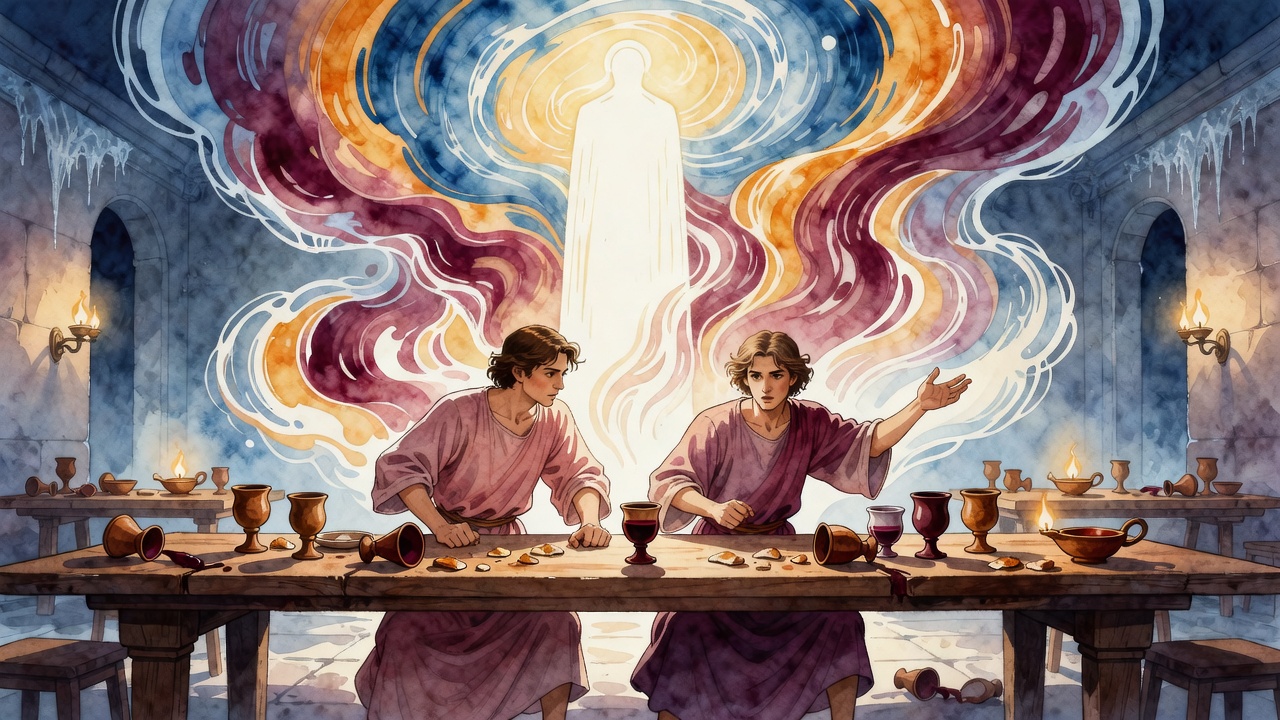
When Shabbat departed he came home tired and full of teaching. "Where are my two sons?" he asked. She said they had gone to the study hall. He answered that he had not seen them there. They handed him the cup of Havdalah (the ritual that ends the Sabbath). He asked again. "They went elsewhere," she said. "They are coming now." She set food before him. He ate and blessed God.

Only then did she speak as a student speaks to a teacher. "Rabbi, I have a question. A man deposited something with me, and now he comes to take it. Should we return it or not?"

"My daughter," he said without pause, "one who holds a deposit must return it to its owner."

The Sheet Drawn Back

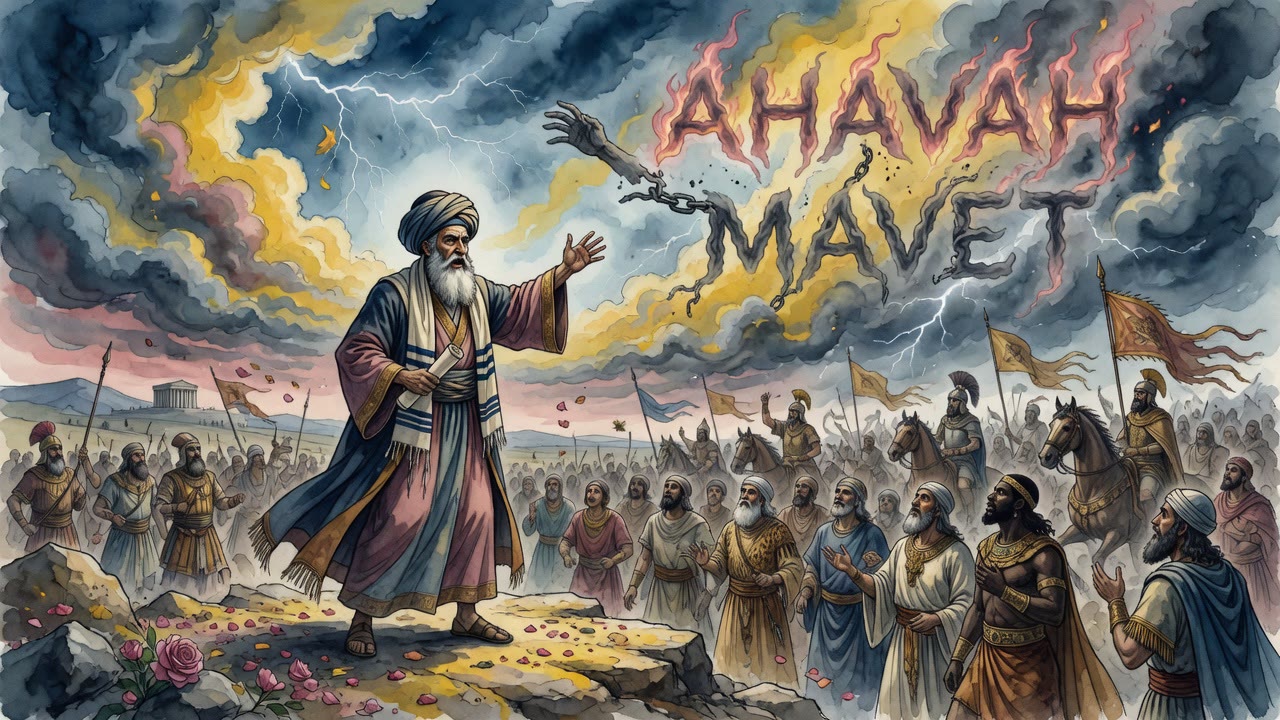
She took his hand, led him to the room, and pulled back the sheet. The two boys lay still. Meir broke. "My sons, my sons, my teachers, my teachers," he cried. "My sons in the way of the world, my teachers in that they enlightened my eyes with their Torah."

She held the ruling he had just given. "Rabbi, is this not what I told you? Must I not return the deposit to its Owner?" He answered with Job: "The Lord has given, and the Lord has taken away; may the name of the Lord be blessed" (Job 1:21).

With that question she steadied his mind. The sages say this is why Scripture asks who can find a woman of valor. She was not only grief. She was the form that let grief stand inside Torah without tearing it.

Small Signs, Strict Eyes

In another generation and another land, Rav at Sura refused meat that had traveled by boat even though he had watched the package the whole way. His colleagues were puzzled. He had kept his eye on it. What could be wrong? Rav built fences thinner than law requires. Watching is not always enough. You also watch for what the eye cannot guarantee.

Rabbi Yochanan, in the Land of Israel, heard a schoolboy chant a verse in the street and took it as an omen. He canceled a planned journey to Babylonia on the strength of a child's mouth. Wisdom, in both stories, is the art of noticing. A stray verse, a moment of doubt over meat, a deposit returned after Havdalah: none of them are trivia to a sage.

What the House Kept

Meir's wife noticed first that the boys were gone, then that the day was still holy, then that her husband would need a path into the loss that did not begin with a scream in the doorway. She chose law as the door. He walked through it because he had spent his life teaching that door's shape.

Later voices wondered why the sons died together, some blaming small absences from the study hall. The household story itself does not end on blame. It ends on a bed, a sheet, a question, and a blessing forced through a broken throat.

The deposit went back. The Name was blessed. The lamps in the study hall burned on other nights without those two young faces in the circle, and the teaching continued because a woman of valor had refused to let Torah and mourning become strangers in the same house.

Havdalah's flame and spice usually mark a soft border between holy time and ordinary time. In that house the border cut harder. On one side of the cup the boys were still "coming soon." On the other side they were a legal question. She did not lie to harm him. She delayed the wound until the day could end without being torn open in its last hour.

Some will argue with her method. The story does not ask permission. It shows a mind that refused to let Shabbat become the stage for the first scream. Then it shows a mind that refused to let mourning become lawless. Deposit. Owner. Return. The categories held when the floor did not.

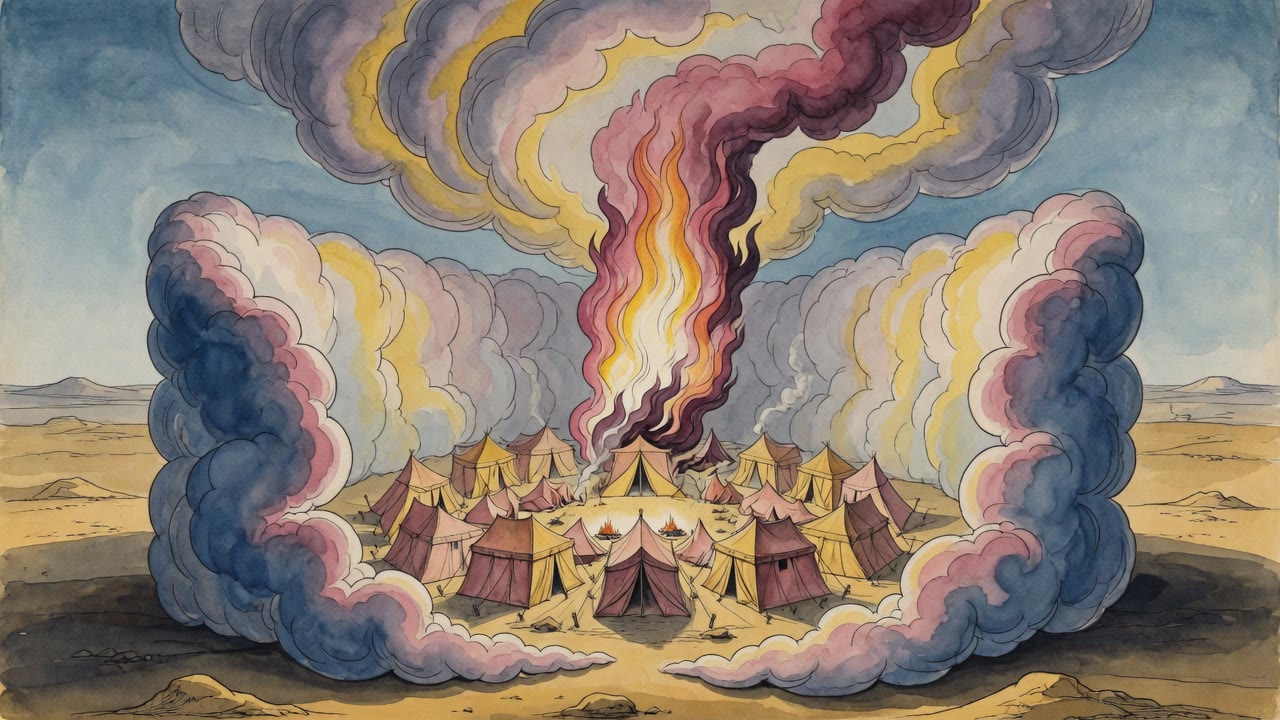
Rav's refused meat and Yochanan's canceled road belong beside her because all three refuse casualness. The sacred is not only in large tragedies. It is in the habit of treating small signals as binding. A package on a boat. A verse from a child. Two sons under a sheet. Each demands a person who is awake.

Meir's cry names the boys as sons and teachers in one breath. The house loses its future readers of Torah and its future comforters at once. Her answer does not erase that. It places the loss inside the largest ownership the tradition knows: children are not property of parents alone. They are held, for a time, and then the Owner may call the deposit home.


← All myths

From the tradition

Sources

2 sources

The texts behind this telling. Some cards carry a translation of the source; others are our own retelling of it, and each card says which. Every card links out to the original.

Midrash Mishlei 31:2Midrash Mishlei

Translation of the source text.Midrash Mishlei (Buber, Hebrew Wikisource) + Sefaria Community Translation · CC-BY-SA

"A valiant woman, who can find" (Proverbs 31:10): That is the Torah; "and further than pearls (peninim) is her price" - as it was 'in front of Me and inside (lefanim)' and Moshe merited to bring it down to earth. "Her husband puts his confidence in her, and lacks no 'booty'" - that there is nothing lacking in it. Another explanation: "A valiant woman, who can find" - They said, "There was a story about Rabbi Meir who was sitting and expounding in the study hall on Shabbat afternoon, when two of his sons died. What did his mother do? She placed both of them on the bed and spread a sheet over them. At the end of Shabbat, Rabbi Meir came home from the study hall. He said to her, 'Where are my two sons?' She said [back], 'They went to the study hall.' He said to her, 'I scanned the study hall and I did not see them.' They gave him the cup of Havdalah and he separated [the days of the week with the closure of Shabbat]. He repeated and said, 'Where are my two sons?' She said, 'They went elsewhere and they are coming now.' She placed food in front of him and he ate and blessed. After he blessed, she said to him, 'I have a question to ask you.' He said to her, 'Say your question.' She said to him, 'Rabbi, before today, a man came and deposited something with me, and now he is coming to take it. Should we return it to him or not?' He said, 'My daughter, one who has a deposit with him must return it to its owner.' She said to him, 'Were it not for your consent, I would not have given it to him.' What did she do? She grabbed his hand, brought him up to that room, had him approach the bed and took off the sheet from upon them. When he saw both of them dead and laying upon the bed, he began to cry and say, 'My sons, my sons, my teachers, my teachers - my sons in the way of the world, my teachers in that they would enlighten my eyes with their Torah.' At that time, she said to Rabbi Meir, 'Rabbi, is this not what I told you - do I not need to return the deposit to its Owner?' He said, '"The Lord has given and the Lord has taken; may the name of the Lord be blessed"' (Job 1:21)." Rabbi Chanina said, "With this thing, she consoled him and his mind became composed - that is why it states, 'A valiant woman, who can find.'" Rabbi Chama bar Chanina said, "On account of what did the sons of Rabbi Meir become liable and die at one time? Because they were accustomed to leaving the study hall to sit with food and drink." Rabbi Yochanan said, "Even with trifling matters - as when the Torah was given to Israel, he only warned them about the words of Torah, as it is stated (Deuteronomy 26:16), 'This day the Lord, your God, commands you to do.'"

Full source
Gaster, Exempla of the Rabbis No. 273The Exempla of the Rabbis (1924)

Retold in our words. Read the original at the link below.The Exempla of the Rabbis, Moses Gaster (1924) · PD-US-pre-1929

Gaster's exemplum No. 273 preserves two short Talmudic stories about how seriously the sages took small signs.

In the first, Rav, the third-century Babylonian sage who founded the academy at Sura, refused to eat meat that had been brought to him on a boat, even though he had personally kept his eye on the package the whole time and there had been no moment in which it could have been substituted. His colleagues were puzzled. He had watched it. What was the problem?

Rav's reasoning was stricter than the letter of the law. Meat that leaves the Jewish community's sight, even for a moment, raises a question that should not be answered by the eye alone. The Torah's system of kashrut, Rav believed, is not a background of vague confidence; it is a forest of small fences, and the pious Jew builds more fences than the law strictly requires. Watching with your own eyes is not always enough; you also have to watch for what you cannot see.

In the second story, Rabbi Yochanan, the towering Land-of-Israel sage of the same era, heard a child reciting a verse of Scripture. It was the casual chant of a schoolboy, not a message meant for him. But Yochanan stopped and listened. He took the verse as an omen, a small word from Heaven dropped into a small mouth. And he changed his plans. He had intended to travel to Babylonia to visit Shmuel after Rav's death. On the strength of the child's verse, he canceled the trip.

The rabbis preserved both stories in one cluster to teach the same lesson: wisdom is the art of noticing. A stray verse from a child, a moment of meat out of sight, these are not trivia to a sage. They are signals. The world is full of small messages; it is the Jew's job to be the one listening.

Full source