Parshat Vayera6 min read

Sodom Stole a Man's Carpet and Billed Him for the Dream

A weary traveler from Elam reached the gate of Sodom with a bright carpet, and a smiling host showed him how the city turned theft into a service.

Curated by Arthur · Told by Maggid ·
Table of Contents
  1. The Soil That Sparkled Like Gold
  2. A Weary Man Came to the Gate
  3. The Sly Fox Opened His Door
  4. The Carpet Became a Dream
  5. The Cry That Rose From the Road
Sodom Stole a Man's Carpet and Billed Him for the Dream Click for full size

The Soil That Sparkled Like Gold

The ground of Sodom glittered. Turn a spade in that valley and the dirt threw back light, veins of gold running so close to the surface that a child could gather a fortune before breakfast. Sapphires sat in the furrows. The people who lived there had more than any city in the world, and it had made them terrible.

Wealth like that should have loosened their hands. Instead it closed them into fists. They could not stand the thought of a stranger walking their streets and carrying away so much as a crumb, so they went to work on the roads. They tore up the highways that led into the valley. They flooded the paths until the landmarks drowned and no traveler could find the way in or the way out. A city rich enough to feed the world hid itself so the world could not reach it.

Even the birds offended them. Flocks came down to glean the fields, and the men of Sodom counted every seed a bird carried off as robbery. They drove the flocks from the sky until nothing with wings would cross the valley. A place where the soil was gold, and no sparrow would land.

A Weary Man Came to the Gate

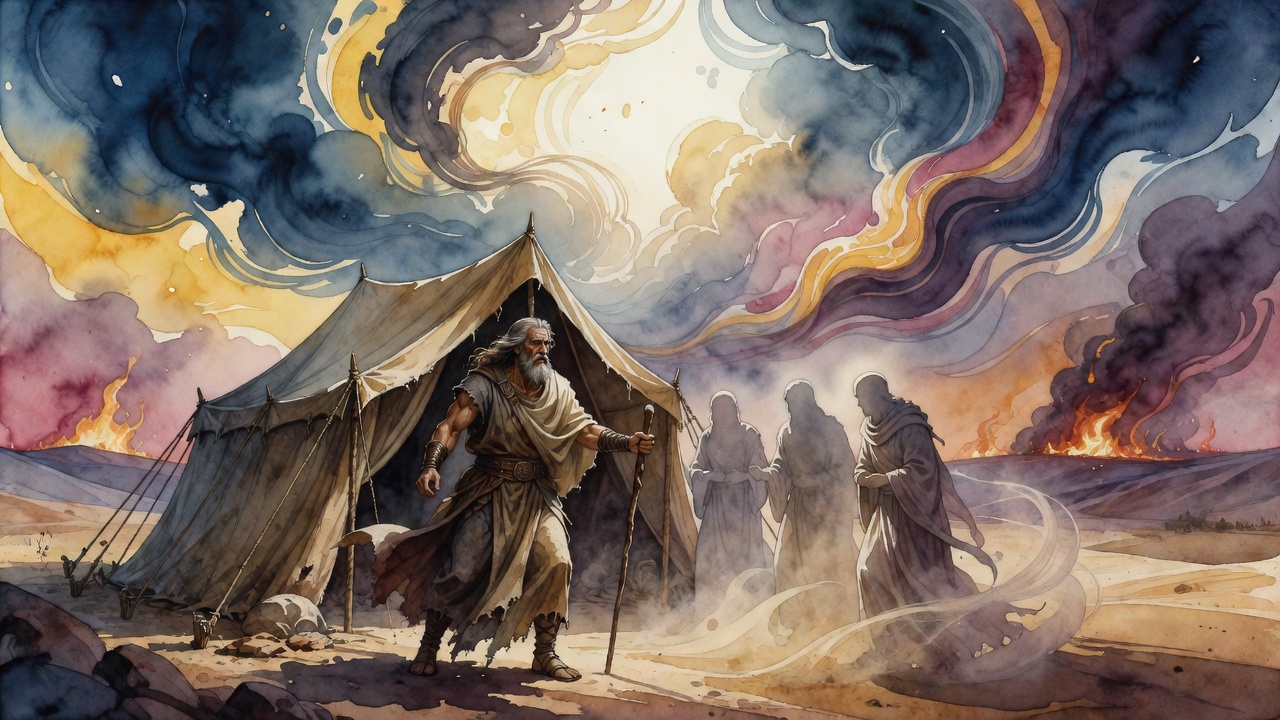
A traveler came anyway. He had come from Elam, far to the east, and the road had worn him down to dust and thirst. Across the back of his donkey lay a carpet, a bright and heavy thing woven in many colors, the one treasure he carried. He reached the gate looking for nothing more than a wall to sleep against and a little water.

No door opened. In Sodom hospitality was not merely missing, it was against the grain of the place, a thing the city had trained itself out of. He stood in the street while people passed him the way they would pass a stray dog.

Then a man stopped. He looked the traveler over, and his glance caught on the carpet and its colors, and something moved behind his eyes.

The Sly Fox Opened His Door

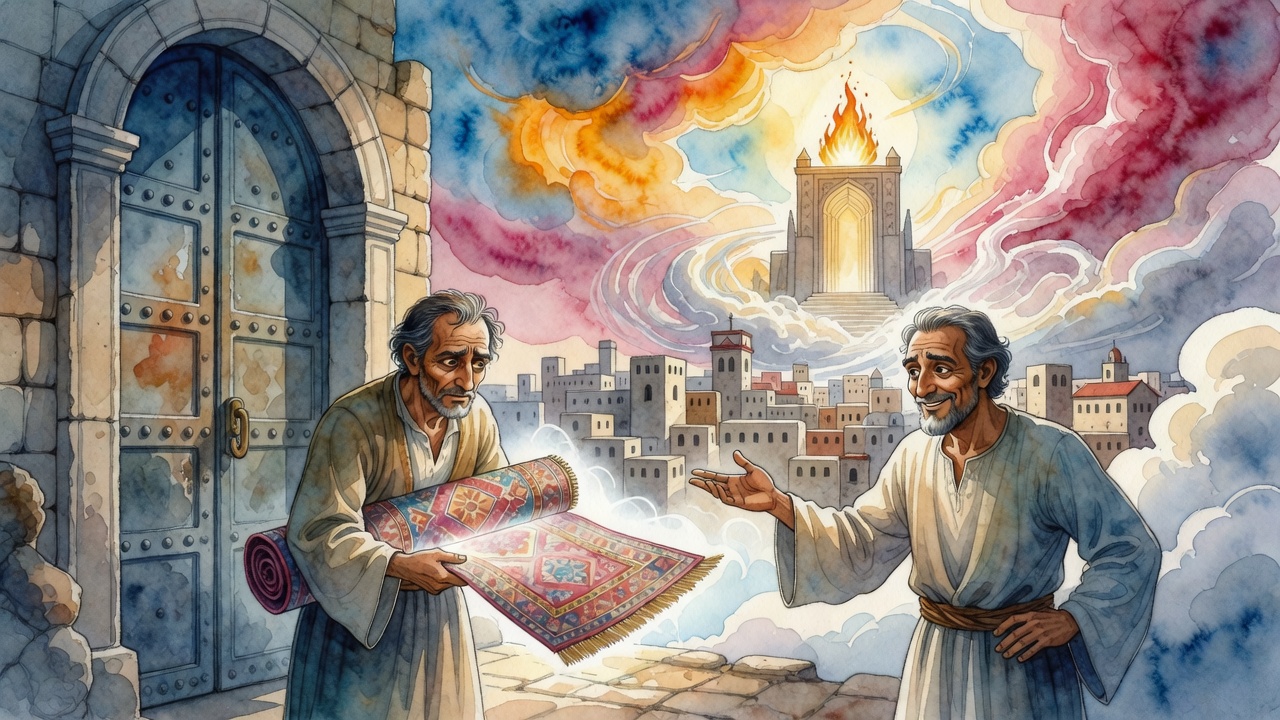
Hedor was his name, and he had the cunning of a fox. He smiled the way a generous man smiles. "Come," he said. "You will not sleep in the street tonight. Bring your beast, bring your goods, and be my guest." The traveler, who had met nothing but stone faces since the gate, could have wept with gratitude.

Hedor gave him bread. Hedor gave him a corner to lie in. Hedor pressed him to stay a second night, and the weary man, disarmed, agreed. The carpet lay rolled in the corner the whole time, and every hour Hedor's eyes went back to it.

On the third morning the traveler rose, loaded his donkey, and reached for his carpet to strap it down for the road.

It was gone.

The Carpet Became a Dream

"My carpet," the traveler said. "Where is my carpet?"

Hedor's face was a picture of gentle confusion. "What carpet?" he asked. "You carried no carpet. You dreamed it, friend. You have had a dream, and a rich one, and you are fortunate, because I know how to read such things."

The man stared. Hedor went on, warming to the work. "The rope you used to bind this carpet you imagine? That is a long life, stretched out before you, year upon year. And the carpet itself, all those colors? An orchard. Fruit trees of every kind, a garden that will be yours." He spread his hands as though he had just handed the traveler a kingdom. By his account the stranger owed him thanks, not an argument.

"It is not a dream," the traveler said, and his voice climbed. "It is my carpet. You took it. Give it back."

Hedor did not flinch. He did not return the carpet. He had one thing left to do.

The Cry That Rose From the Road

"Now," Hedor said, "there is the matter of my fee. Dream reading is my trade, and a reading such as that one does not come cheap. My usual price is four pieces of silver." He paused, and let a little warmth back into his face. "But you were my guest. For you, three."

He had taken the man's only possession, called the theft a dream, and then presented a bill for the insult. In Sodom there was nowhere to carry a complaint, because the theft was not a crime there. It was the ordinary business of the town, dressed in the manners of law.

The same manners governed how Sodom killed. When the men of the city marked a wealthy visitor, two of them would go to him as friends, walk him toward a half-fallen ruin, and hold him in pleasant talk. One kept him listening. The other worked loose the base of a leaning wall until the stones came down on the guest's head. Then the two of them split what he had carried, and went home, and this too was simply how things were done.

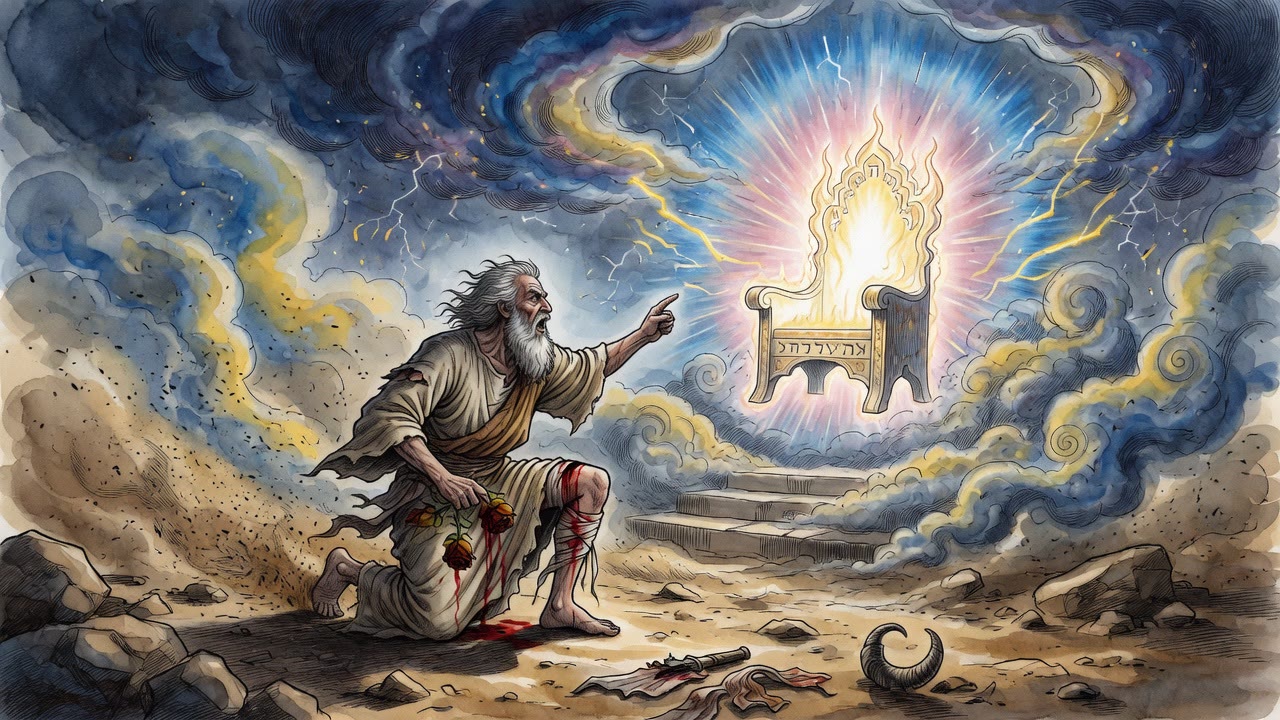
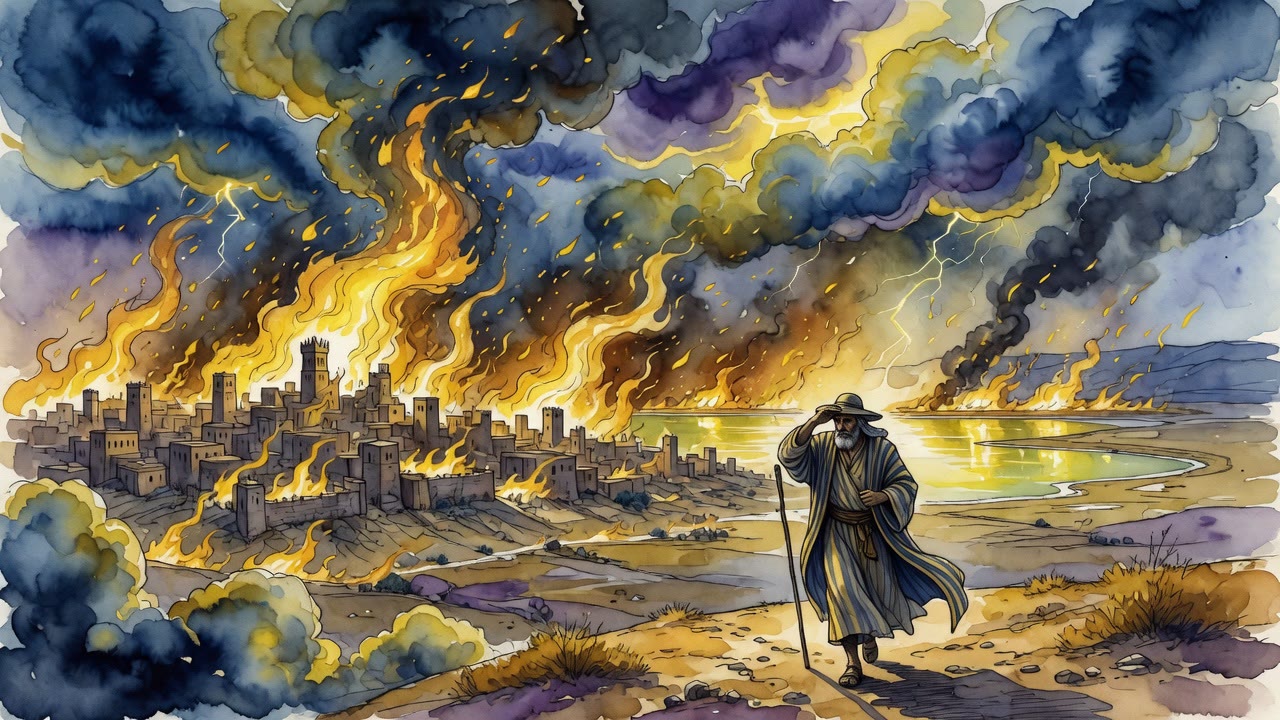
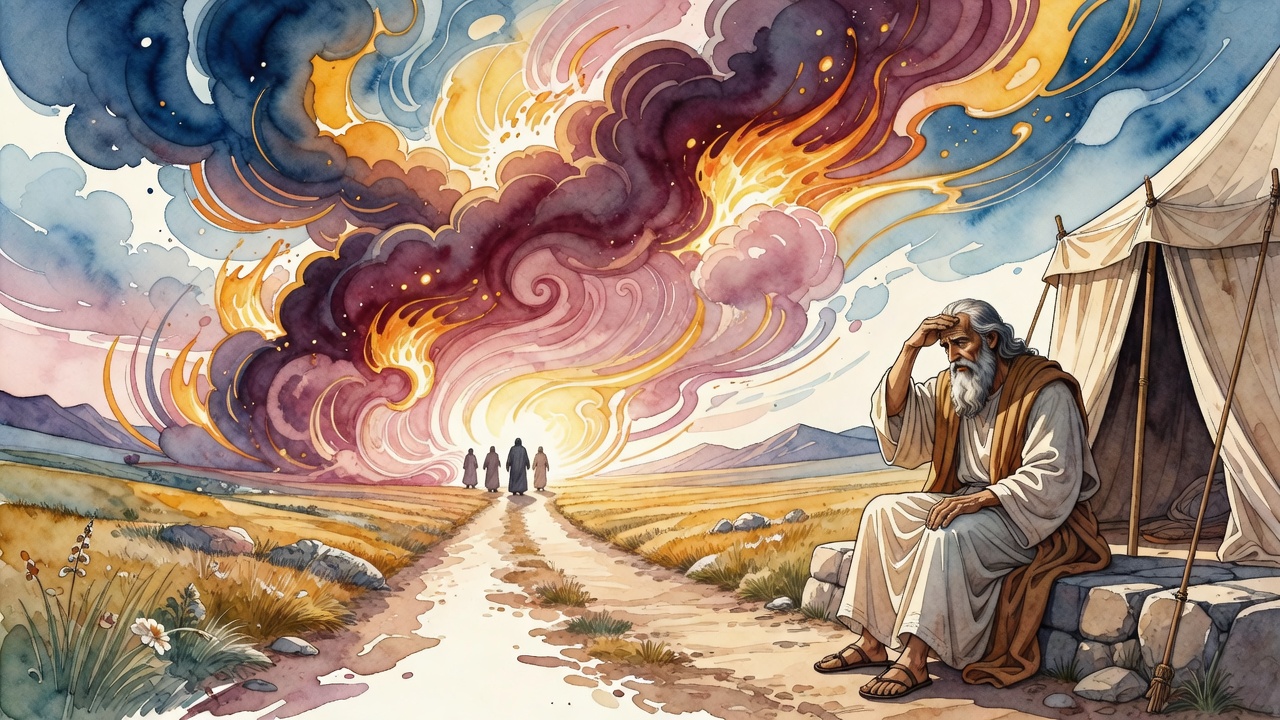
The traveler from Elam went out through the gate the way he had come, poorer than when he arrived, while behind him the city glittered on, gold in its very dirt, deaf to every voice it had ever robbed. The cries of the wronged did not stop at the walls. They went up. And one morning, out of the same sky the birds had been driven from, the answer came down as fire.


← All myths
From the tradition

Sources

2 sources

The texts behind this telling. Some cards carry a translation of the source; others are our own retelling of it, and each card says which. Every card links out to the original.

Legends of the Jews 5:152Legends of the Jews

Retold in our words. Read the original at the link below.The Legends of the Jews by Louis Ginzberg (1909) · Public Domain

Not just a little, but so much that the very soil sparkled. Sounds like paradise. But what if that abundance bred not generosity, but an insatiable greed? That's the story of a nameless, ancient people, as recounted in Ginzberg's Legends of the Jews.

Their cruelty, we are told, stemmed directly from their immense wealth. They were consumed by miserliness, an unrelenting desire for more and more gold. They couldn't bear the thought of sharing their riches with outsiders. So, they devised a sinister plan: they flooded the highways leading to their city, erasing the roads and making it impossible for anyone to find them. – actively preventing others from even accessing their community.

It wasn't just strangers who suffered. Their heartlessness extended to the animal kingdom. They resented even the birds their food, driving them away until they were gone. A stark reminder of how far greed can push us to disrupt the natural order.

Perhaps the most disturbing aspect of this tale is their treatment of each other. They descended into a state of moral decay, where murder became a means to acquire more gold. Ginzberg tells us that when they saw a wealthy man, two of them would conspire to kill him. They'd lure him to a ruin, distract him with conversation, while the other undermined a wall. The wall would collapse, killing the victim, and the two plotters would divide his wealth between them.

A society poisoned by its own prosperity, turning on itself and the world around it.

This story, though fantastical, serves as a powerful cautionary tale. What happens when we prioritize material wealth over compassion, community, and basic decency? The legends suggest that we risk losing our humanity, brick by brick, until we're left with nothing but a hollow shell of greed. It forces us to ask: what truly makes a society rich? Is it overflowing coffers, or is it something far more valuable?

Full source
Legends of the Jews 5:147Legends of the Jews

Retold in our words. Read the original at the link below.The Legends of the Jews by Louis Ginzberg (1909) · Public Domain

Let me tell you a story that'll make your blood boil – a classic Sodom tale of deception, greed, and just plain audaciousness.

You're traveling through the ancient world, weary from your journey, and you arrive at the infamous city of Sodom. You're looking for a place to rest, but, unsurprisingly, hospitality is nowhere to be found. That is, until you meet a character named Hedor. A sly fox, the story calls him.

This traveler, coming from Elam, has a beautiful carpet strapped to his donkey – a real treasure. Hedor, of course, sees it and his eyes light up with avarice. He invites the stranger to his home, seemingly out of kindness, but really, he just wants to get his hands on that carpet.

Hedor convinces the traveler to stay not just one night, but two! He probably laid on the charm, offered the best food he had (which, admittedly, probably wasn't much in Sodom). But when the time comes for the stranger to leave, and he asks for his carpet back… that’s when the real chutzpah begins.

"Carpet? What carpet?" Hedor acts all innocent. "You must have dreamed it! And I can even interpret your dream for you!"

He goes on to say, "The rope you used to tie the carpet? That means you’ll have a long life! And the carpet itself, with all its colors? That represents an orchard filled with all kinds of fruit trees that you will own!" According to this interpretation, the traveler should be thanking Hedor, not asking for his possessions back!

The stranger, understandably, is furious. "It's not a dream, it's my carpet! Give it back!" But Hedor doubles down. He not only denies taking anything but then demands payment for interpreting the stranger's "dream"!

“My usual fee is four silver pieces," Hedor declares, "but because you were my guest, I’ll only charge you three!”

To steal someone's property and then demand payment for insulting their intelligence!

This story, found in Legends of the Jews, perfectly encapsulates the depravity associated with Sodom. It’s not just about wickedness; it’s about a complete lack of shame, a twisted sense of morality where up is down and right is wrong. What does it say about a society where such behavior is not only tolerated but seemingly commonplace? It's a chilling glimpse into a world where basic human decency has completely eroded. The Talmud (Sanhedrin 109a) recounts many such stories about the people of Sodom, emphasizing their extreme selfishness and cruelty.

Full source