6 min read

Solomon Begged Heaven to Remember David

David prepared Temple stone for forty years. Nebuchadnezzar burned that house in the same span. Solomon stood inside and begged God to remember his father.

Curated by Arthur · Told by Maggid ·
Table of Contents
  1. Forty Years Against Forty Years
  2. The Prayer No Babylonian Son Will Speak
  3. A Good Name Climbs While Oil Runs Down
  4. The House That Held a Father's Ledger

Solomon stood in the finished house and felt the weight of cedar and gold settle on his shoulders like a second crown.

Solomon Begged Heaven to Remember David Click for full size

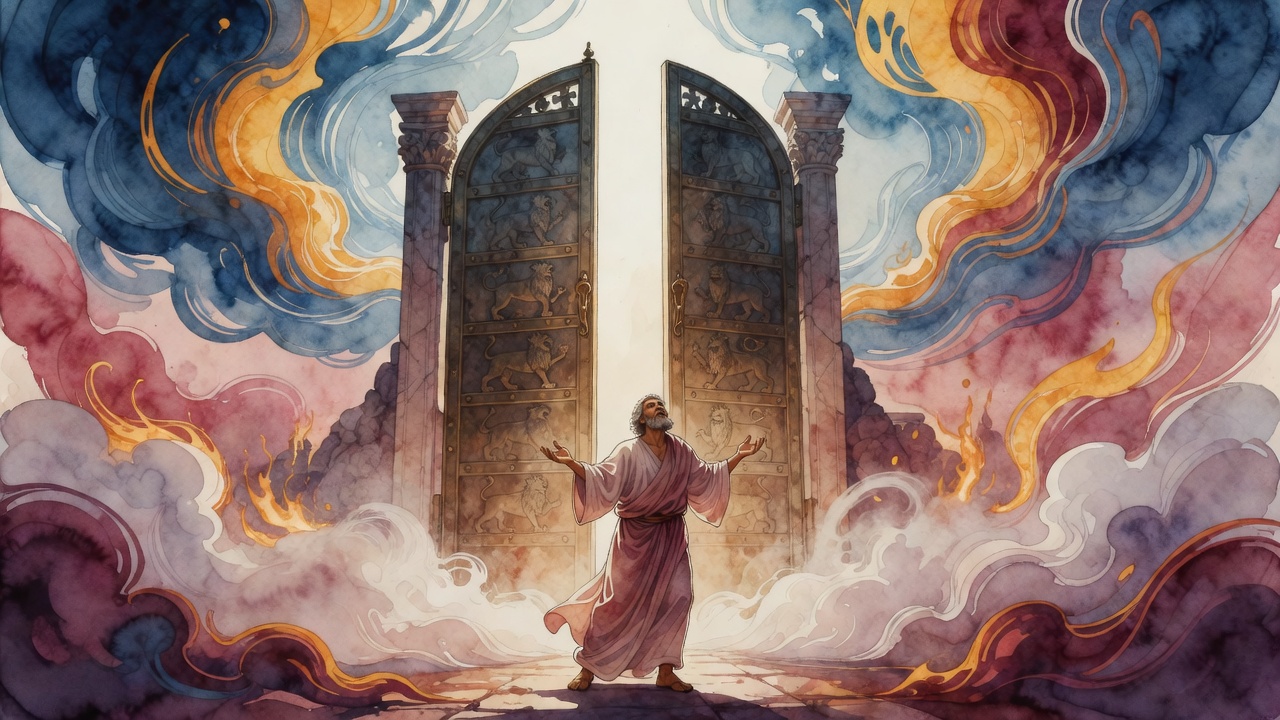
The beams still smelled of cut wood. Priests moved along the courts with careful feet. Outside, Jerusalem's dust rose under carts that had hauled stone for years. A driver cursed a mule and then fell quiet when he saw the king's train. Inside, Solomon opened his mouth toward heaven and did not ask first for his own wisdom or his own long life.

"Remember the kindnesses of David, Your servant" (2 Chronicles 6:42).

He said the name of a man already in the ground. He tied the new sanctuary to a dead father's labor while the people listened for a sign that the house would hold. Incense climbed. His hands stayed open.

Forty Years Against Forty Years

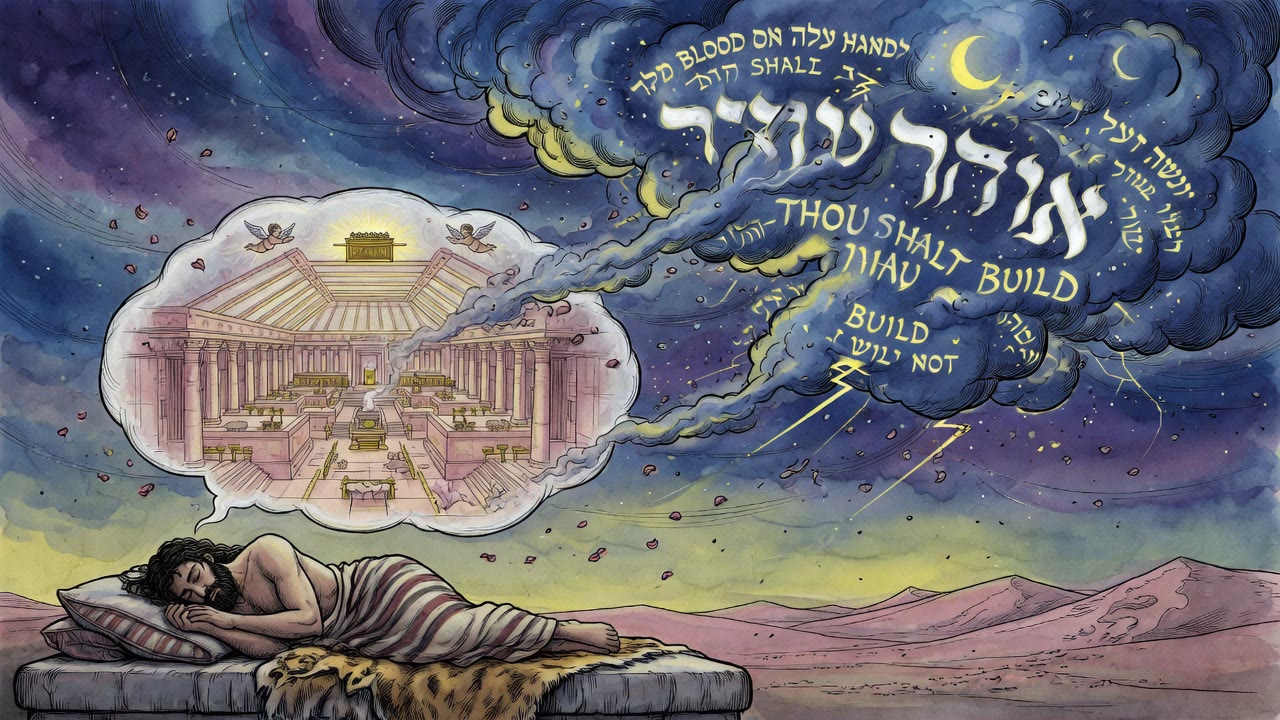
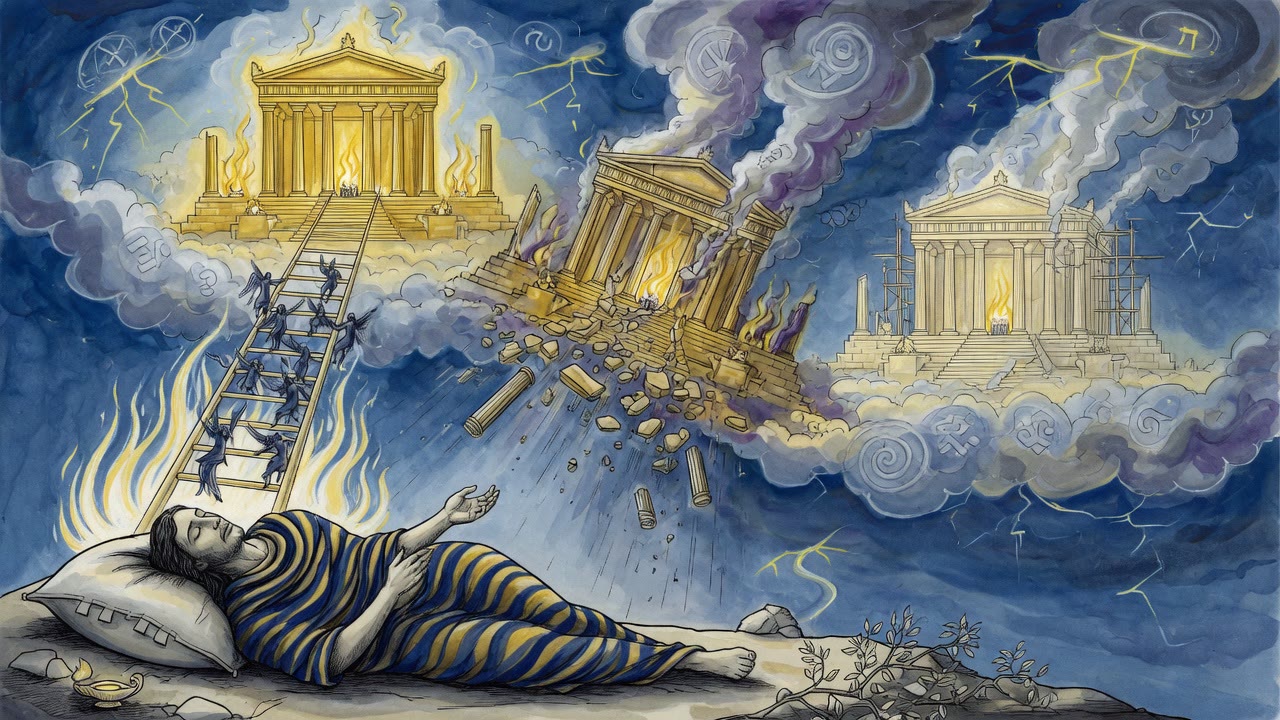
David had ruled forty years with his eyes in his head, foresight that plans past a single night's sleep. He gathered materials for the Temple before he ever saw its roof. Iron. Bronze. Cedar. Stones shaped and stacked for a building his hands would not finish. He walked storehouses at dusk and ran a palm along cool metal as if the touch could hurry a house into being. He weighed loads, counted beams, and argued with stewards who wanted the stock for other wars. He reigned, fought, sinned, sang, and still left a stockpile that said the house mattered more than his own last breath.

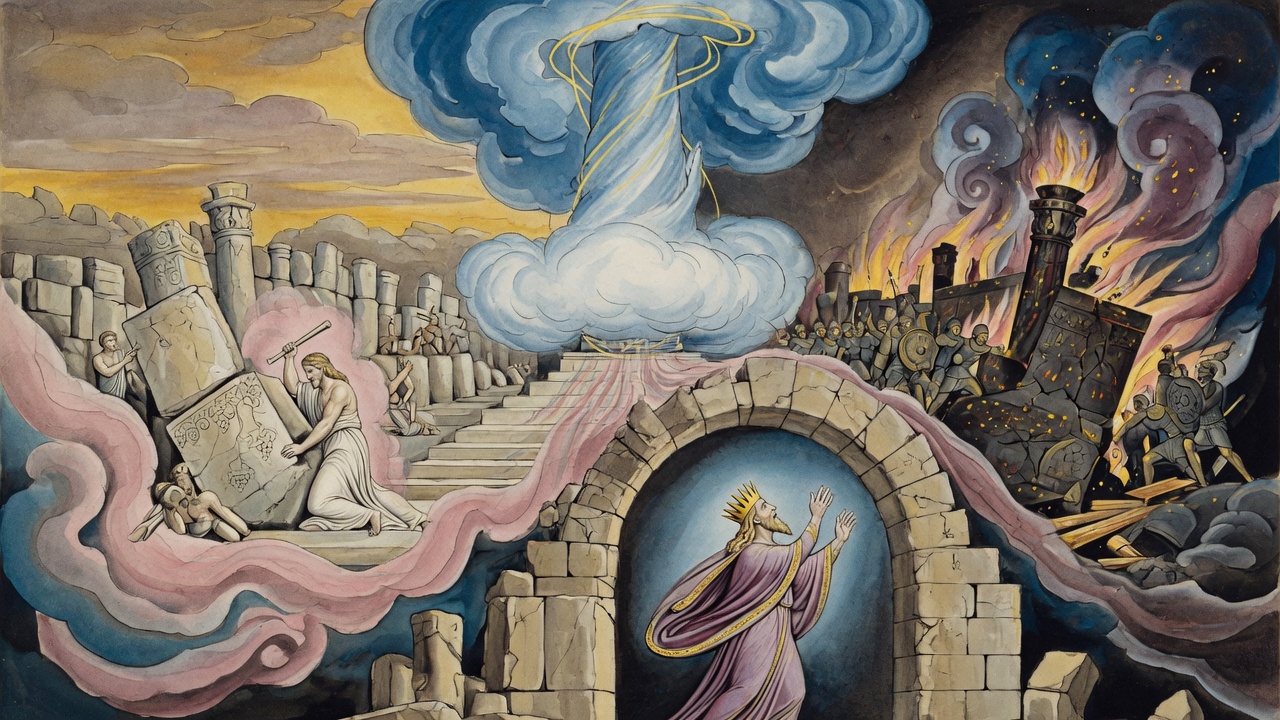
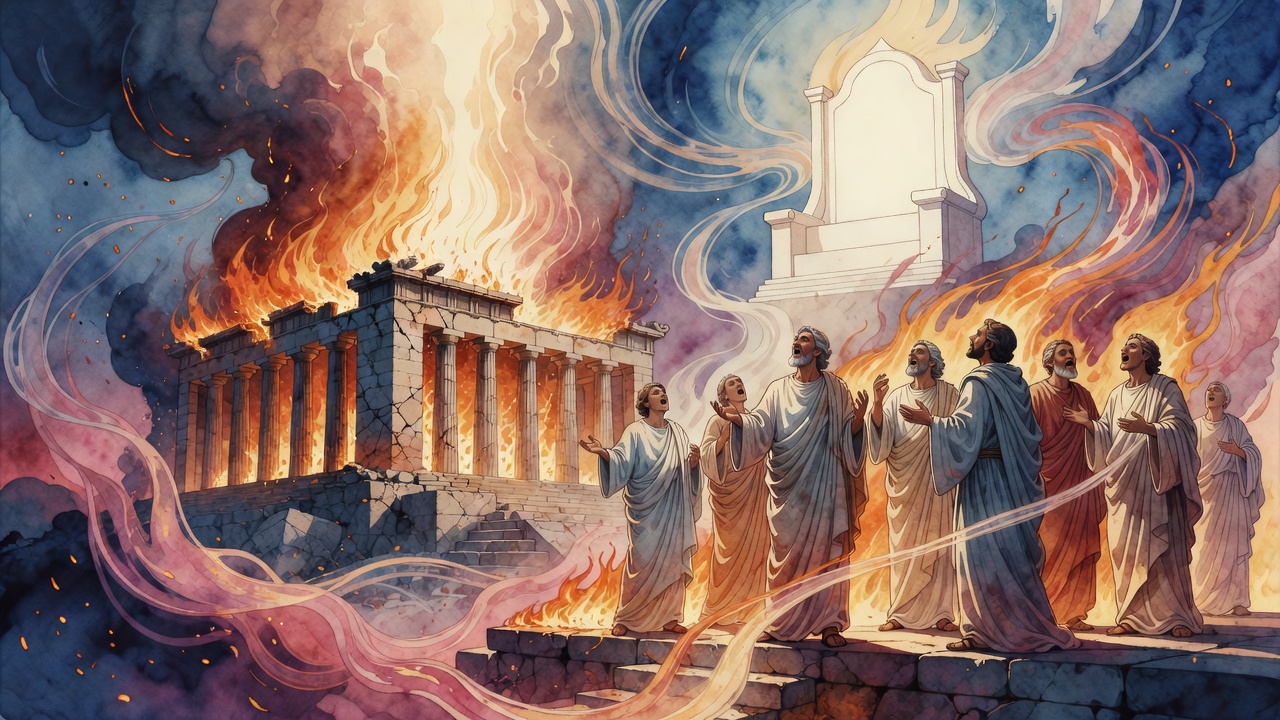
Nebuchadnezzar also reigned forty years. The fool who walks in darkness took the same span of seasons and spent them on the opposite work. He burned the house David had stocked and Solomon had raised. Flames climbed the cedar. Gold ran in bright lines down steps that had held priests. Smoke wrote a black line over the city while captives stumbled east. Same length of rule. Same city under pressure. One set of hands prepared sanctity. One set of hands pulled it down (Ecclesiastes 2:14).

On the surface the ledger looks cruel. One event happens to wise and fool. Memory seems to bleach both names. Why grow wise. Why haul cedar. Why teach a son to pray inside walls that fire can still eat.

The Prayer No Babylonian Son Will Speak

Solomon knew the fear under that verse. He answered it with a plea that put David's kindness into God's ear while the incense still climbed. The son of the wise man stood in the house and asked heaven to keep a father's name warm. Sweat ran under the crown. He did not look at the crowd. He looked at the place where the ark would rest and spoke as if the dead man could still hear through wood and gold.

Will Evil-Merodach, son of Nebuchadnezzar, ever stand in any sanctuary and say, "Remember the kindnesses of Nebuchadnezzar, Your servant"? No such speech rises. Conquest does not purchase a son's prayer. A throne built on burned courts does not train a mouth to beg for a father's memory before God. Evil-Merodach may lift a captive's head from prison in Babylon and set a seat above other seats, but he does not carry his father's name into a house of the God of Israel as a kindness to be remembered.

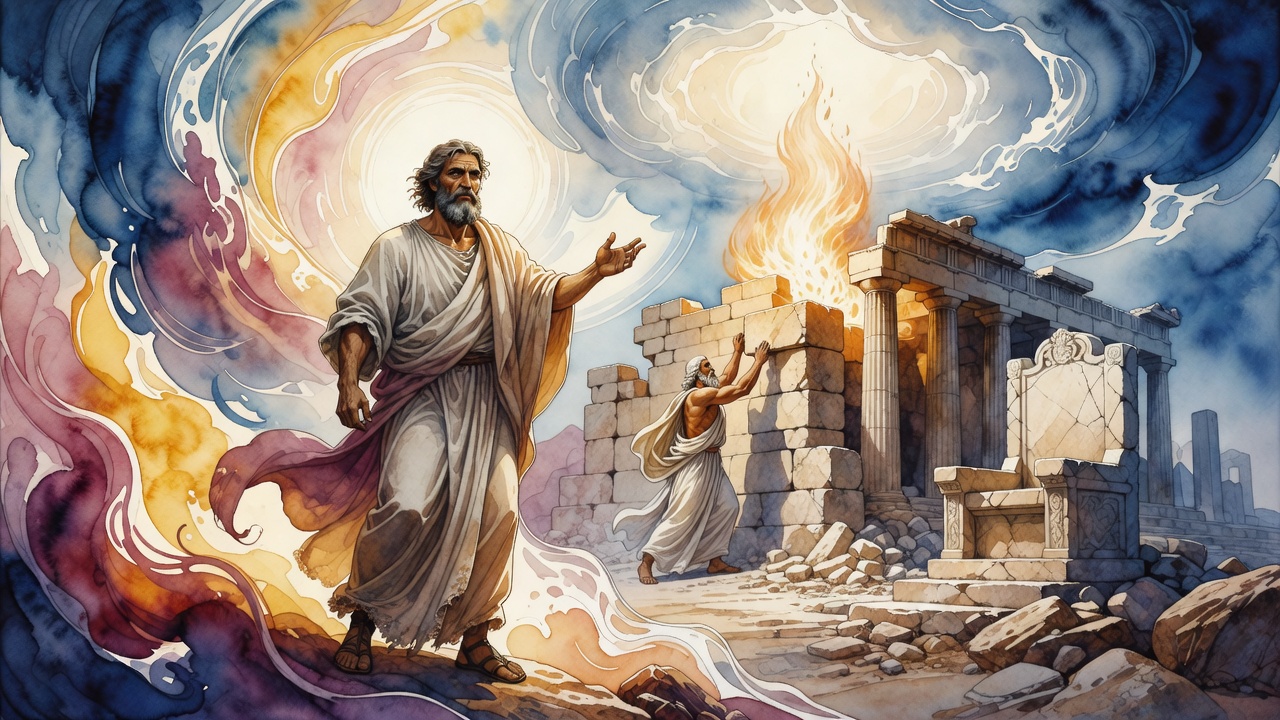
David's forty years end in a son's petition. Nebuchadnezzar's forty years end in ash and a lineage that does not plead for him in holy speech. The same event of death and forgetting splits at the quality of what remains. One name is carried upward in a Temple dedication. One name is left with the rubble where jackals later walk.

A Good Name Climbs While Oil Runs Down

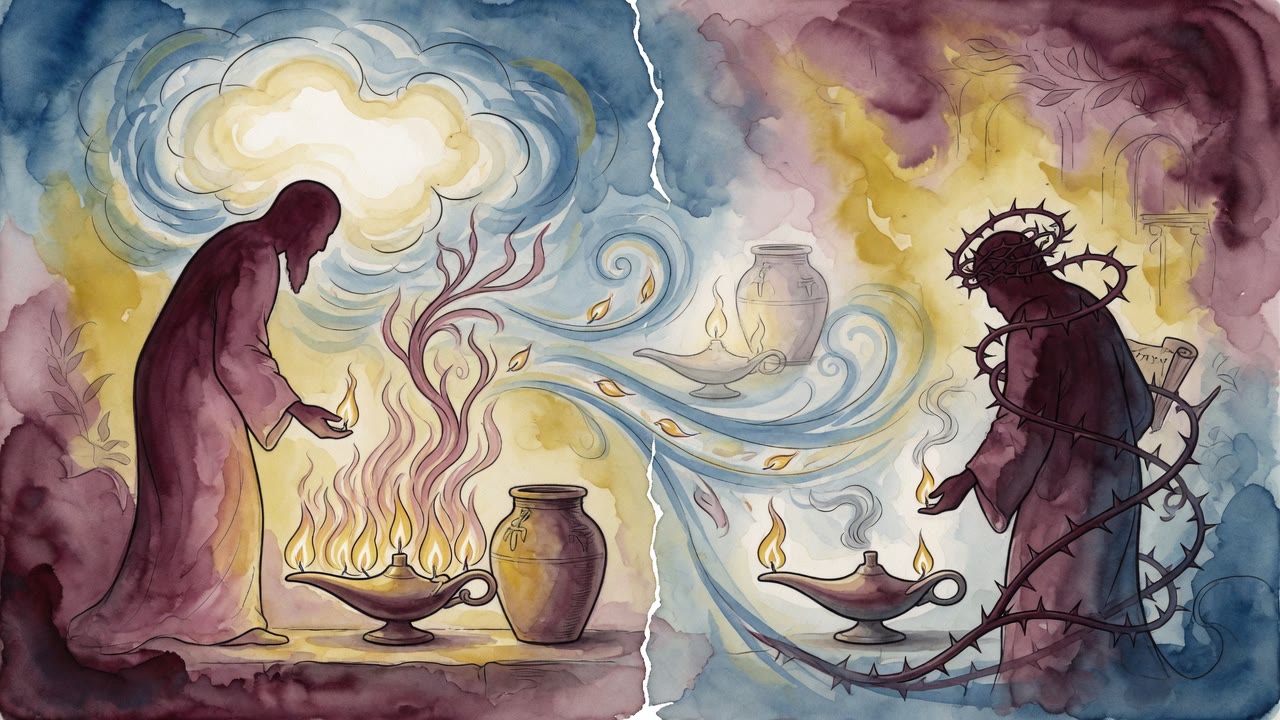
Long before Solomon's prayer, another measure stood beside fine oil. Oil descends. It runs Aaron's beard in the psalm and then is gone, soaking into cloth and skin until the scent thins. A good name ascends. God told Abraham He would make his name great, and the promise still moves through generations who never smelled the first vial of oil poured in a tent (Genesis 12:2; Psalms 133:2).

Fine oil costs coin and ends when the flask empties. A good name costs conduct and does not thin with use. Oil serves the living body in a room. A good name serves the living and the dead, the poor and the rich, the near chamber and the far road. Oil that falls on a corpse turns foul. A good name over a grave still travels from one end of the earth to the other, the way the names of Moses and Ruth still move mouths that never met them (Ecclesiastes 7:1; Ecclesiastes 10:1).

David's kindnesses, named in Solomon's mouth, behave like that ascending name. Nebuchadnezzar's reign behaves like oil poured on ruin: sharp for a season, then stench and silence. Solomon knew which inheritance he wanted to claim while the roof still held and the gold still caught the light.

The House That Held a Father's Ledger

Solomon finished the prayer and the dedication pressed on. Sacrifices smoked until the air thickened. Songs rose from ranks of singers who had rehearsed for months. The cloud of glory made priests step back until their heels found the court edge and someone caught a stumbling man by the sleeve. Under the ritual the king still carried the private math of forty against forty. Wisdom had not bought David an escape from the grave. Folly had not bought Nebuchadnezzar an eternal palace. Both men left the stage.

What differed was the sentence a son was willing to speak under a roof one father prepared and another father burned. Solomon put David's kindness on the record of heaven while the beams were still new. That act does not rebuild every fallen stone in later centuries. It does mark which life trained a child to remember service instead of plunder.

Outside, carts emptied their last loads and drivers wiped dust from their eyes. A boy ran a hand along a cut stone and left a dark print of sweat. Inside, the name of a shepherd-king rode a son's voice past the fear that wise and fool sink into one blank forgetfulness. The oil of empire would keep running down other beards in other courts. The name Solomon lifted kept climbing, carried on breath that had chosen a father over a boast.


← All myths
From the tradition

Sources

2 sources

The texts behind this telling. Some cards carry a translation of the source; others are our own retelling of it, and each card says which. Every card links out to the original.

Kohelet Rabbah 2:15Kohelet Rabbah

Retold in our words. Read the original at the link below.The Sefaria Midrash Rabbah, 2022 · CC-BY

That fear, that nagging doubt, echoes in the ancient words of Kohelet Rabbah, a rabbinic commentary on the Book of Ecclesiastes. It grapples with the seeming unfairness of life, the way good and evil appear to meet the same end.

The text homes in on the verse from (Ecclesiastes 2:14): “The wise man, his eyes are in his head, but the fool walks in darkness. And I also know that one event will happen to them all.” Kohelet Rabbah interprets this through a powerful comparison: David, King of Israel, the wise man, versus Nebuchadnezzar, the wicked Babylonian king. David, "his eyes are in his head," meaning he acted with foresight and wisdom, laying the very groundwork for the Beit Hamikdash, the Temple in Jerusalem. According to Etz Yosef's commentary, David even prepared the materials for its construction! He reigned for forty years. Then there’s Nebuchadnezzar, “the fool” who “walks in darkness,” who destroyed that very Temple and also reigned for forty years.

So, what's the point. "Why did I become wiser?" the text asks. "Why did I devote my life to the construction of the Temple?" Because, ultimately, "there is no remembrance of the wise man with the fool forever…everything is forgotten." It’s a stark and unsettling thought.

The commentary doesn't leave us in despair. It pushes further. The text imagines Solomon, David’s son, standing and building the Temple, pleading with God: “Remember the kindnesses of David, Your servant" (II (Chronicles 6:4)2). Solomon knew the importance of remembering his father’s legacy. But, the text asks, will Evil Merodach, Nebuchadnezzar's son (mentioned in II (Kings 25:2)7), ever stand and say, "Remember the kindnesses of Nebuchadnezzar, Your servant?"

The implied answer is a resounding no.

And that's the key. While on the surface it may seem like both the wise and the foolish meet the same fate, oblivion, the text subtly suggests that the quality of remembrance matters. David's legacy lives on through his son's prayers and the rebuilt Temple. Nebuchadnezzar's.. well, not so much.

The passage concludes with a question, "How can the wise man die like the fool?" It's not a statement of fact, but a challenge. A challenge to us. How can we ensure that wisdom and goodness aren't forgotten? How can we make sure that the actions of the righteous resonate through generations, while the deeds of the wicked fade into the darkness they created?

Perhaps the answer lies not in avoiding death itself, but in shaping the narrative that follows. In choosing to remember, to learn, and to build upon the foundations laid by those who came before us, the wise and the just. And in actively refusing to grant the same enduring power to those who chose darkness.

Full source
Kohelet Rabbah 1:1Kohelet Rabbah

Retold in our words. Read the original at the link below.The Sefaria Midrash Rabbah, 2022 · CC-BY

Kohelet, Ecclesiastes, throws us a curveball right from the start: "A good name is better than fine oil, and the day of death than the day of one's birth" (Ecclesiastes 7:1). Whoa. first part: "A good name is better than fine oil." What could that possibly mean?

Kohelet Rabbah, a rabbinic commentary on Ecclesiastes, dives deep into this seemingly simple statement. It's not just about smelling nice, is it?

The Rabbis begin by pointing out the obvious, and yet profound, differences between them. "Fine oil descends," they say, referencing (Psalms 133:2), likely alluding to the oil poured down Aaron's beard. "A good name ascends," echoing (Genesis 12:2), where God promises to make Abraham’s name great. It's a matter of direction, of aspiration. One drips down, the other soars upwards.

Then comes the question of time. Fine oil is temporary. We use it, it's gone. But a good name? That’s eternal. Fine oil is finite. There's only so much of it. A good name? Infinite. It lives on in stories, in memories, in the impact we have on the world. It's a gift that keeps on giving, long after we're gone. practically. Fine oil costs money. You have to buy it. A good name? It's free. You earn it through your actions, your character, the way you treat others. No price tag can be put on integrity.

And who benefits? Fine oil is for the living. We use it to anoint, to heal, to beautify ourselves. A good name, though, is for both the living and the dead. It's the legacy we leave behind, the way we are remembered. Fine oil is for the wealthy, those who can afford the luxury. A good name? It’s for everyone, rich or poor.

The Rabbis continue, painting a vivid picture: fine oil’s scent travels from the inner chamber to the banquet hall. Pleasant, but limited. A good name? It carries from one end of the world to the other. Think of Moses, of Ruth, of any figure whose acts of kindness or courage still inspire us today.

Here's where it gets really interesting. Fine oil, when it falls on a corpse, putrefies. As (Ecclesiastes 10:1) so starkly puts it, "Flies of death putrefy and ferment blended oil." Harsh. But a good name? It falls on the dead and does not putrefy. It has the power to transcend even death. The Rabbis illustrate this with the story of Elisha in II (Kings 4:35). Elisha’s righteousness, which earned him a good name, allowed him to revive the dead.

And the analogies keep coming. Fine oil falls on water and disperses, vanishing without a trace. A good name falls on water and does not disperse. Think of Jonah. Despite his initial disobedience, his story, his repentance, endures – symbolized in the commentary by the verse from (Jonah 2:11): "The Lord said to Jonah and it spewed Jonah out." He couldn't be washed away.

Fine oil falls onto fire and burns. A good name falls on fire and does not burn. This brings us to the story of Ḥananya, Mishael, and Azarya (often known by their Babylonian names, Shadrach, Meshach, and Abednego) in (Daniel 3:26). They were thrown into a fiery furnace for refusing to worship a false idol, and yet, they emerged unharmed. Their faith, their integrity, protected them.

Rabbi Yehuda ben Rabbi Simon sums it up beautifully: “We have found those with fine oil who entered a place of life and emerged burned, and those with a good name who entered a place of death and emerged alive.” He points to Nadav and Avihu, sons of Aaron, who were anointed to the priesthood with the anointing oil. They entered the Tabernacle and were killed (Leviticus 10:1–2), a place of life becoming their place of death. In contrast, Ḥananya, Mishael, and Azarya entered a fiery furnace, a place of death, and emerged alive.

So, what's the takeaway? Is it about avoiding oil altogether? Of course not. It's about perspective. It's about recognizing what truly matters. It's about understanding that while external adornments and fleeting pleasures have their place, it's the character we build, the kindness we show, the impact we have on the world that will ultimately define us. It's about striving for a good name, a legacy of righteousness, that echoes long after we are gone. Because, as Kohelet reminds us, a good name truly is better than fine oil. What kind of name are we building?

Full source