Parshat Kedoshim7 min read

Solomon Planted Peppers on the Vein That Runs to Cush

Hadrian stopped on the road to mock an old man planting fig saplings. Three years later the old man walked into camp with a basket.

Curated by Arthur · Told by Maggid ·
Table of Contents
  1. The King Who Knew Which Vein Ran to Cush
  2. The Land Was Already Full and God Said Plant
  3. Hadrian Stops to Mock an Old Man
  4. The Basket of First Figs
  5. The Neighbor Who Wanted the Gold Without the Three Years
  6. The Garden God Did Not Need
Solomon Planted Peppers on the Vein That Runs to Cush Click for full size

The King Who Knew Which Vein Ran to Cush

Push a seed into the ground and something comes up. Peppers, figs, anything at all. Any farmer in Judea could manage that much. What no farmer could manage was the second question, the one nobody thinks to ask. Not what to plant. Where.

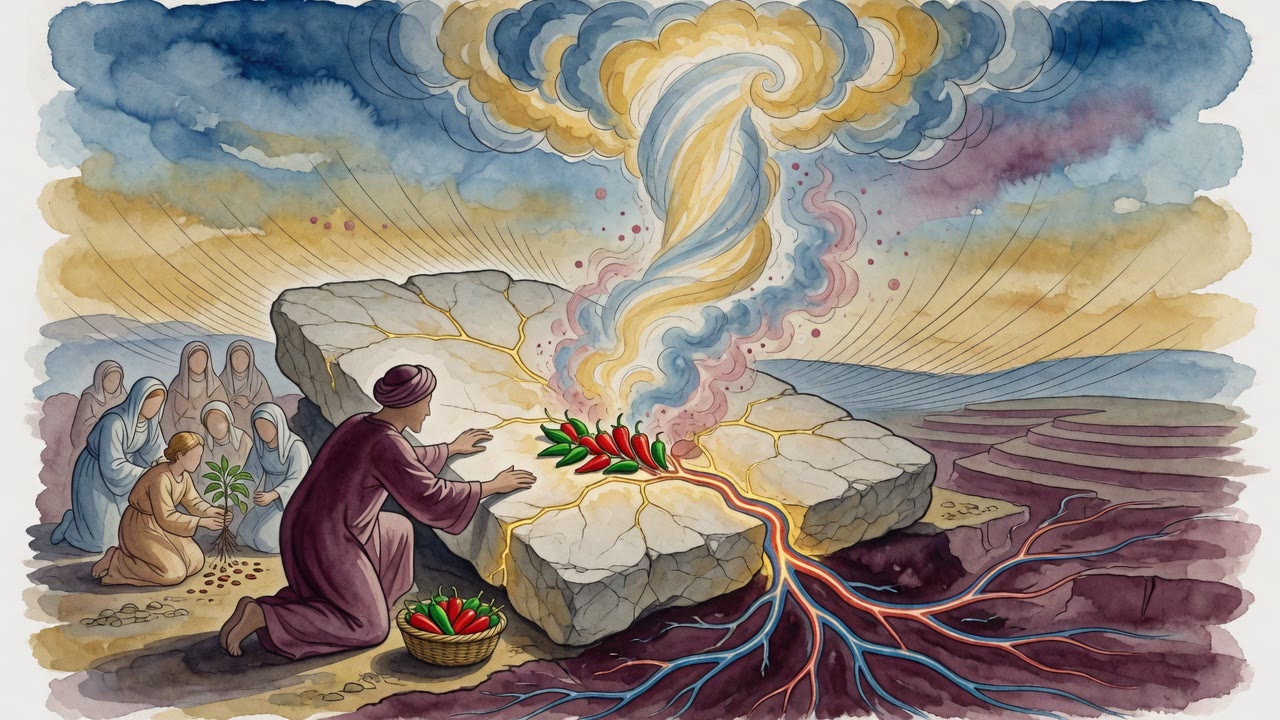
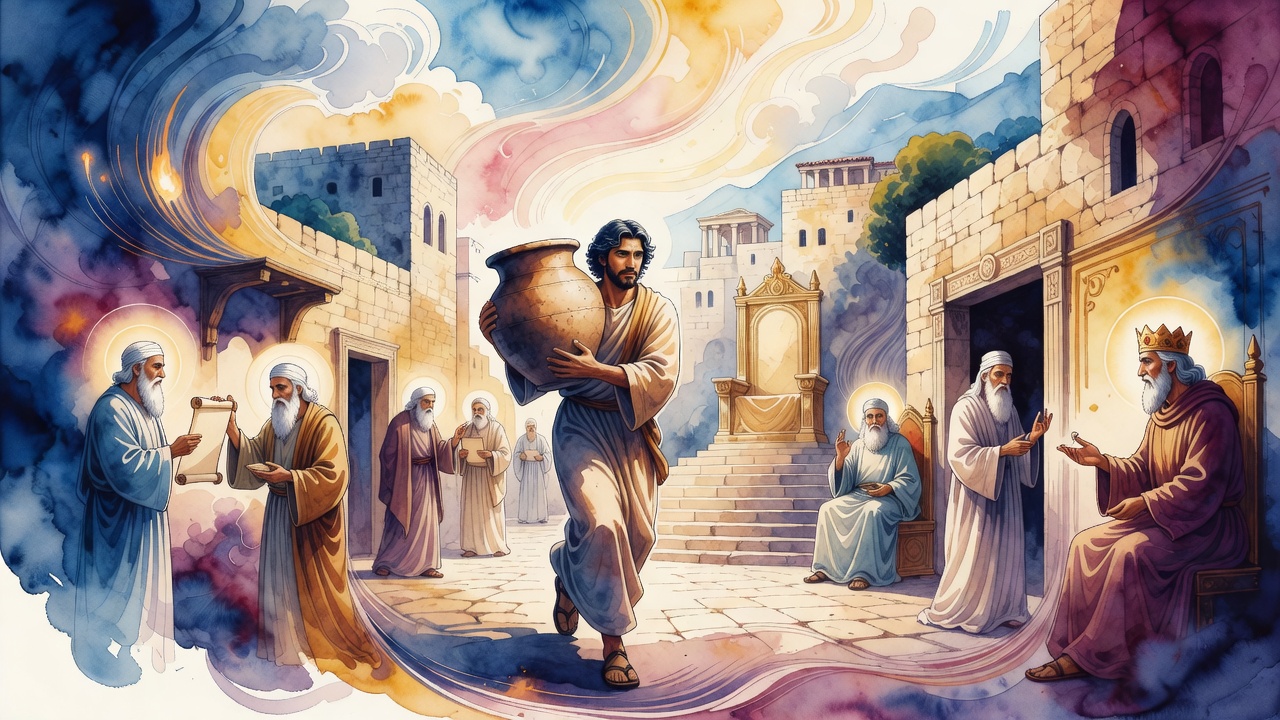
Solomon knew where. He had followed the world down to the place it was fastened. Out of Zion the whole world had been finished, and under Zion lay the stone the sages call the Foundation Stone, so named because the world was founded from it. From that anchor the veins of the earth ran out in every direction, the way sinews run under a man's skin, and Solomon had traced them in his head until he knew which one carried the heat of Cush.

He set his peppers over that vein. They fruited at once.

Judean soil, African heat, and a king on his knees in a garden with dirt under his nails because he had read the planet like a body and found the warm artery in it.

The Land Was Already Full and God Said Plant

The command carries its own argument. When you come into the land and plant. Israel was walking into orchards it had not dug, vines it had not staked, presses still greasy from somebody else's harvest, and the Holy One knew exactly what a full land does to a people.

You will want to sit down. You will say, we have enough, let us settle here and not plant.

Do not say it. You came in and found trees that other men put in the ground for you. Now put trees in the ground for your children.

Then comes the second excuse, the one that sounds almost like modesty. I am old. Tomorrow I die. Why should I break my back for someone else's mouth?

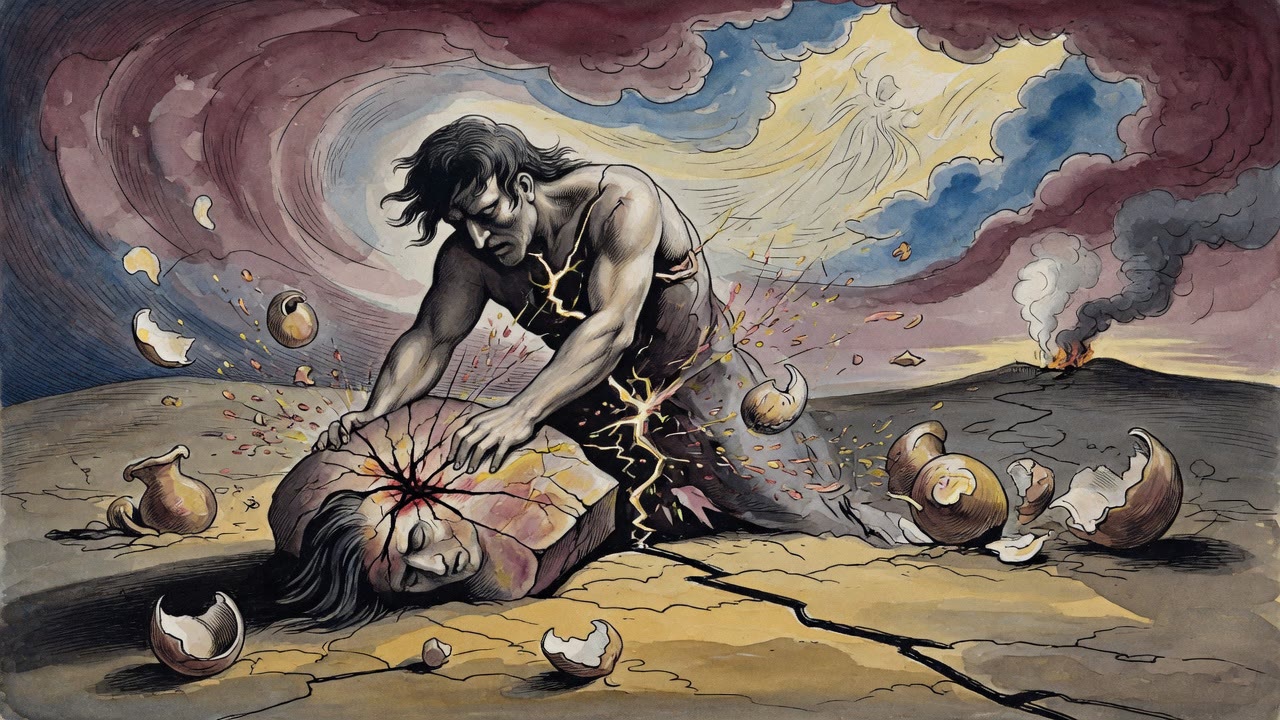
So God hid the day of death. Solomon wrote that God made everything beautiful in its time and set eternity inside the human heart, and the sages caught the word sitting there with a letter missing, so that eternity can be read as hidden. If a man knew his date, he would never build and never plant. He would say tomorrow and put the spade down. The blank space on the calendar is what keeps a shovel moving. If he turns out worthy, he eats his own figs. If not, someone else eats them.

Hadrian Stops to Mock an Old Man

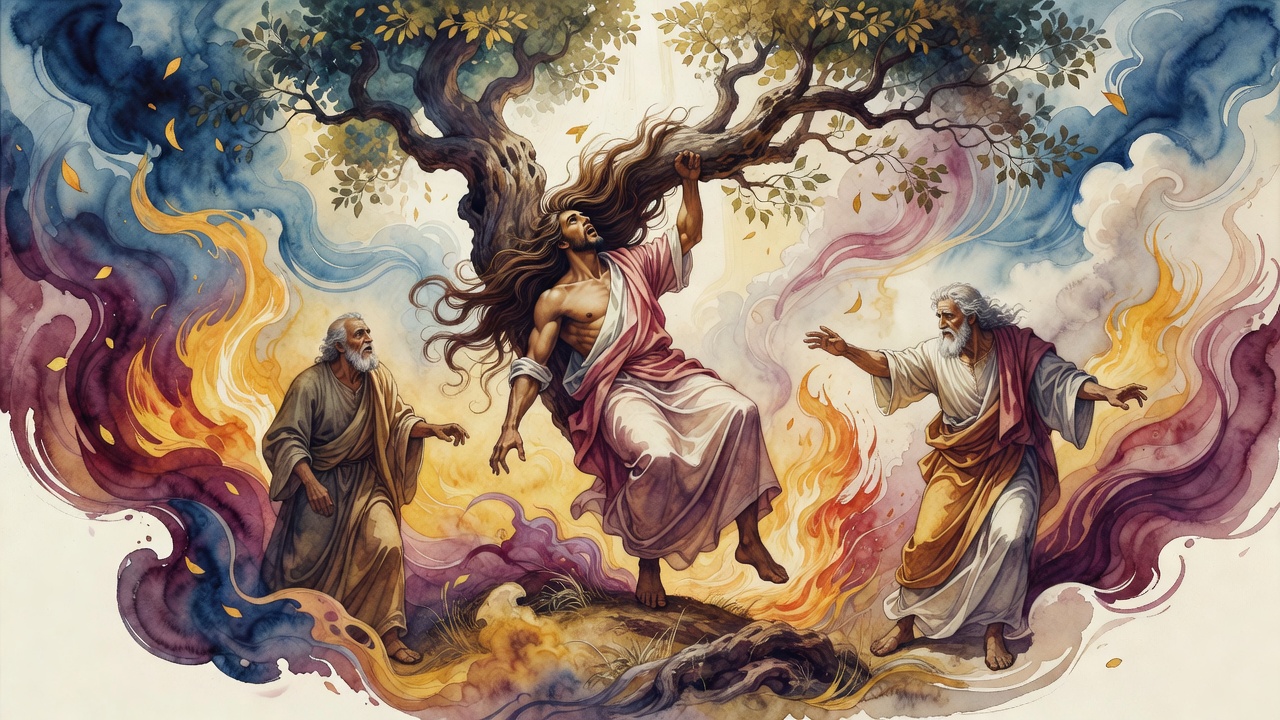
The emperor was on the road with his troops, marching to put down a country that had rebelled against him, when he passed a field where an old man knelt in the dirt setting fig saplings.

Hadrian reined in. Soldiers waited behind him in the dust while their emperor looked at a bent back and a row of sticks that would not be trees for years.

"You are an old man," Hadrian said. "Why are you taking the trouble to toil for others?"

The old man did not stand up. "My lord king, here I am planting. If I am worthy, I shall eat of the fruit of my saplings. And if not, my children will eat."

Hadrian rode on to his war. It took him three years.

The Basket of First Figs

Three years is long enough to bury an old man and long enough to ripen a fig tree. When the emperor came back along that road, the old man was still breathing and the saplings were carrying fruit.

He filled a basket with the first of them, the best ones, and carried it to the emperor himself.

"My lord king, take these figs. I am the same old man you found here on your way out, the one you asked why he was taking the trouble to toil for others. Look. The Holy One has already found me worthy to eat fruit from my own saplings. What is in this basket is your share of them."

Hadrian turned to his servants. "Take it from him and fill it with gold coins."

They did. The old man walked home with a fruit basket heavy in a way fruit is not heavy, and went through his house telling his wife and his children what had happened on the road, and told it again.

The Neighbor Who Wanted the Gold Without the Three Years

A woman next door heard all of it through the wall.

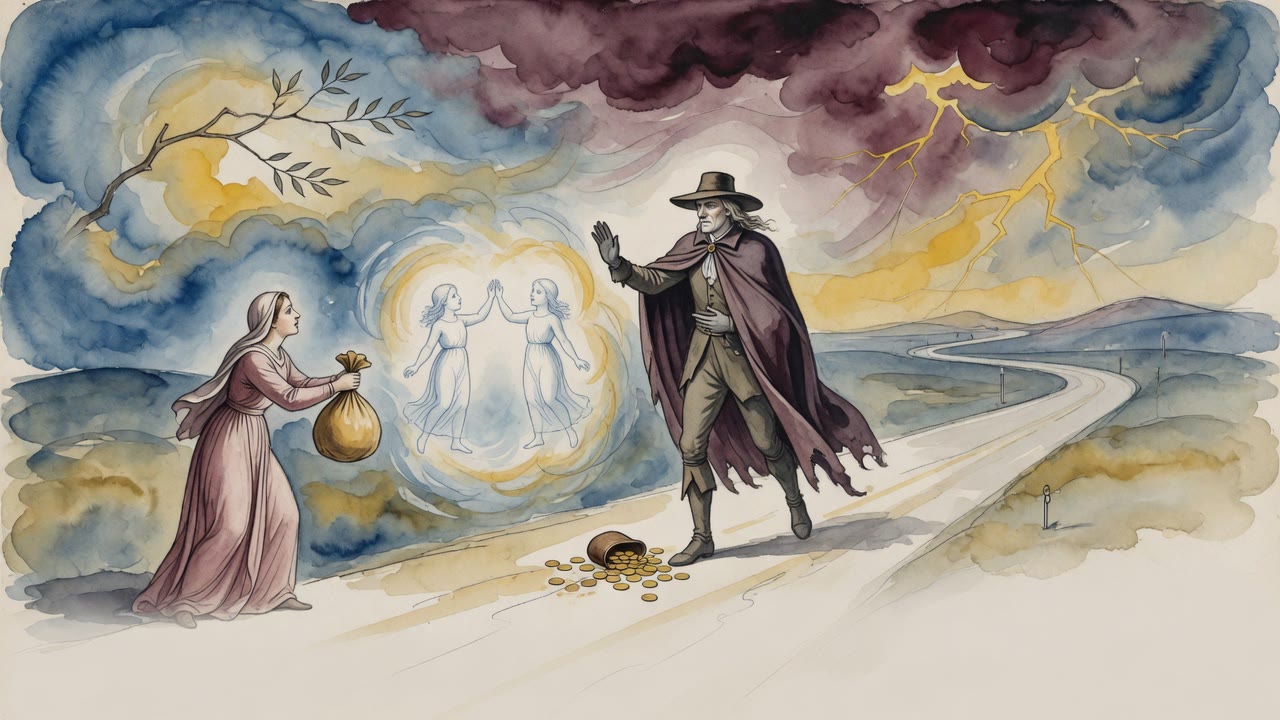
She turned on her husband. "When people go out in the world the Holy One gives to them and lays out bounty for them. You sit in your dark house in the gloom. Our neighbor honored the emperor with a basket of figs and the man filled it with gold for him. Get up. Take a large basket. Fill it with apples and figs and every fine fruit you can find, because he loves them. Go and honor him."

Her husband loaded the basket on his shoulder and cut down a side road to meet the emperor coming through.

"My lord king, I heard that you love fruit. I have come to honor you with figs and apples."

Hadrian looked at him and spoke to his soldiers. "Take the basket, and hit him in the face with it."

They threw fruit at him until his face swelled shut. They stripped him, ruined his eyes, and left him standing there as an example for anyone watching. He walked home crying, and his wife came out expecting gold.

"What is the matter with you?"

"When I listened to you and went to honor him with a gift, they hit me in the face. If I had listened to you all the way and packed the basket with hard fruit, they would have pelted my whole body with it too."

The Garden God Did Not Need

Two men carried fruit up the same road. One had waited three years in the dirt for it and came back with gold. One wanted the gold and came back with a face he could not open.

The old man went out again the next season and kept planting, because that is the whole of it. Do not stop. However full the land looks, however old the hands are, keep putting trees in the ground.

Learn it from Me, the Holy One said. Do I need fruit? And yet the first thing done in the world's first week, before there was any mouth to feed, was this: the Lord God planted a garden in Eden.


← All myths
From the tradition

Sources

2 sources

The texts behind this telling. Some cards carry a translation of the source; others are our own retelling of it, and each card says which. Every card links out to the original.

Midrash Tanchuma Buber, Kedoshim 10:1Midrash Tanchuma Buber, Kedoshim

Translation of the source text.Midrash Tanchuma (Buber), Public Domain, on Sefaria · CC-BY-SA

(Leviticus 19:23:) "WHEN YOU COME INTO THE LAND AND PLANT." This is what Scripture said (Ecclesiastes 2:5): "I MADE FOR MYSELF GARDENS AND ORCHARDS, [AND I PLANTED IN THEM EVERY KIND OF FRUIT TREE]." Now not all the children of man plant whatever they seek. Whatever a person plants in the earth, it produces, whether peppers or anything else; if a person plants, they produce. But a person does not know the place of each and every planting, where he should plant it. Solomon, however, who was wise, planted all kinds of trees, [as it is said (ibid.): "I MADE FOR MYSELF GARDENS AND ORCHARDS, AND I PLANTED IN THEM EVERY KIND OF FRUIT TREE."] Rabbi Yannai said: Solomon even planted peppers. And how did he plant them? Rather, Solomon was wise, and he knew the essential foundation upon which the world is set. From where? (Psalms 50:2:) "OUT OF ZION, THE PERFECTION OF BEAUTY, GOD HAS SHINED FORTH." Out of Zion the whole world was perfected. Why is it called the Foundation Stone? Because from it the world was founded. And Solomon knew which vein went to Cush, and he planted peppers upon it, and immediately they would produce. Thus what he says (Ecclesiastes 2:5): "I PLANTED IN THEM EVERY KIND OF FRUIT TREE."

Full source
Midrash Tanchuma, Kedoshim 8Midrash Tanchuma

Retold in our words. Read the original at the link below.Townsend 1989 translation of Midrash Tanhuma, S. Buber Recension · CC-BY

(Lev. 19:23:) “When you come into the land and plant.” The Holy One, blessed be He, said to Israel, Even though you find it (i.e., the land) full of all bounty, you shall not say, ‘Let us settle down and not plant.’ Rather, be careful in planting, as stated (ibid., cont.), ‘and plant any tree for food.’ Just as you came in and found plantings which others had planted, so you shall plant for your children, lest someone say, ‘Since I am old and tomorrow I shall die, why should I toil for others.’” Solomon said (in Eccl. 3:11), “He has made everything beautiful in its time; He also has put eternity into their heart.” “Hidden ('lm)” is what is written (without the w of the normal spelling, i.e., 'wlm, eternity). Why? If the Holy One, blessed be He, had not hidden (rt. 'lm) the day of [one's] death from people, a person would neither build nor plant; for he would have said, “Tomorrow I shall die. Why should I persist in toiling for the sake of others?” The Holy One, blessed be He, therefore, hid death from (rt. 'lm) human hearts, so that one would build and plant. [If] he is worthy, [it will be] for himself; [if] unworthy, [it will be] for others. There is a story about the emperor Hadrian; that he was going to war and traveling with his troops to fight with a certain country for having rebelled against him. Now he found a certain old man who was planting fig saplings. Hadrian said to him, “You are an old man. [Why are you] persisting in taking the trouble to toil for others?” He said to Hadrian, “My lord king, here I am planting. If I am worthy, I shall eat of the fruit of my saplings; but if not, my children will eat.” [Hadrian] spent three years at war, and after three years he returned. What did that old man do? He took a fruit basket, filled it with the firstfruits of beautiful figs, and drew near to Hadrian. He said to him, “My lord king, take these figs, for I am the same old man whom you found when you were on your way [to the war] when you said, ‘You are an old man; why are you taking the trouble to toil for others?’ See, the Holy One, blessed be He, has already found me worthy to eat some fruit from my saplings. Now this [fruit] in my fruit basket is your portion from those [saplings].” Hadrian said to his servants, “Take it from him and fill it with gold coins.” And so they did. The old man took the fruit basket full of gold coins and began to go about his house, boasting to his wife and children. So he told them the story. Now a woman neighbor of his was there. She heard what the old man had said. She said to her husband, “When all the people go [through life], the Holy One, blessed be He, gives to them and prepares bounty for them. But you dwell in your dark house in the gloom. See, our [neighbor] honored the emperor with a fruit basket of figs; and he filled it with gold coins for him. Now you get up, take a large basket, and fill it with varieties of choice fruit, with apples, figs, and the other varieties of beautiful fruit, since he loves them a lot. Go and honor him with them. Perhaps he will fill it with gold for you, as he did for our old neighbor.” He went and heeded his wife. So he took a large basket, filled it with apples and figs, and loaded it on his shoulder. Then he approached the emperor on a side road and said to him, “My lord king, I heard that you love fruit, I have come to honor you with figs and apples.” The emperor said to his officers, “Take the basket and hit him on his face.” And so they did. They hit him on his face until his face swelled up; stripped him naked; smashed his eyes; and made an example of him. So he went home, as one of whom an example had been made, and crying. Now she (i.e., his wife) thought that he was coming with a basket full of gold coins. So when she saw him with his face swollen and with his body shattered and beaten, she said to him, “What is the matter with you?” He said to her, “When I heeded you and went to honor him with this gift, they hit me on my face. If I had listened to you and put varieties of hard fruit in the basket, they would already have pelted my face and my whole body with them.” And why all this? In order to teach you that evil women destroy their husbands with evil [counsel]. Therefore one should not cease from planting. Rather, just as he found, one should still continue to plant even though he is old. The Holy One, blessed be He, said to Israel, “Learn from Me. Do I need [fruits], as it were?” [And yet] it states (Gen. 2:8), “And the Lord God planted a garden in Eden, in the east.”

Full source