7 min read

Solomon Wandered as a Beggar and Wrote It Down

Stripped of his throne, Solomon begged from strangers who thought him mad. Then someone recognized him, and the pain of that became scripture.

Curated by Arthur · Told by Maggid ·
Table of Contents
  1. The Man Who Said He Was King
  2. The Moment That Broke Him
  3. Seven Levels of Emptiness
  4. Malchut at the Bottom
  5. What Kohelet Knew Without Knowing

The Man Who Said He Was King

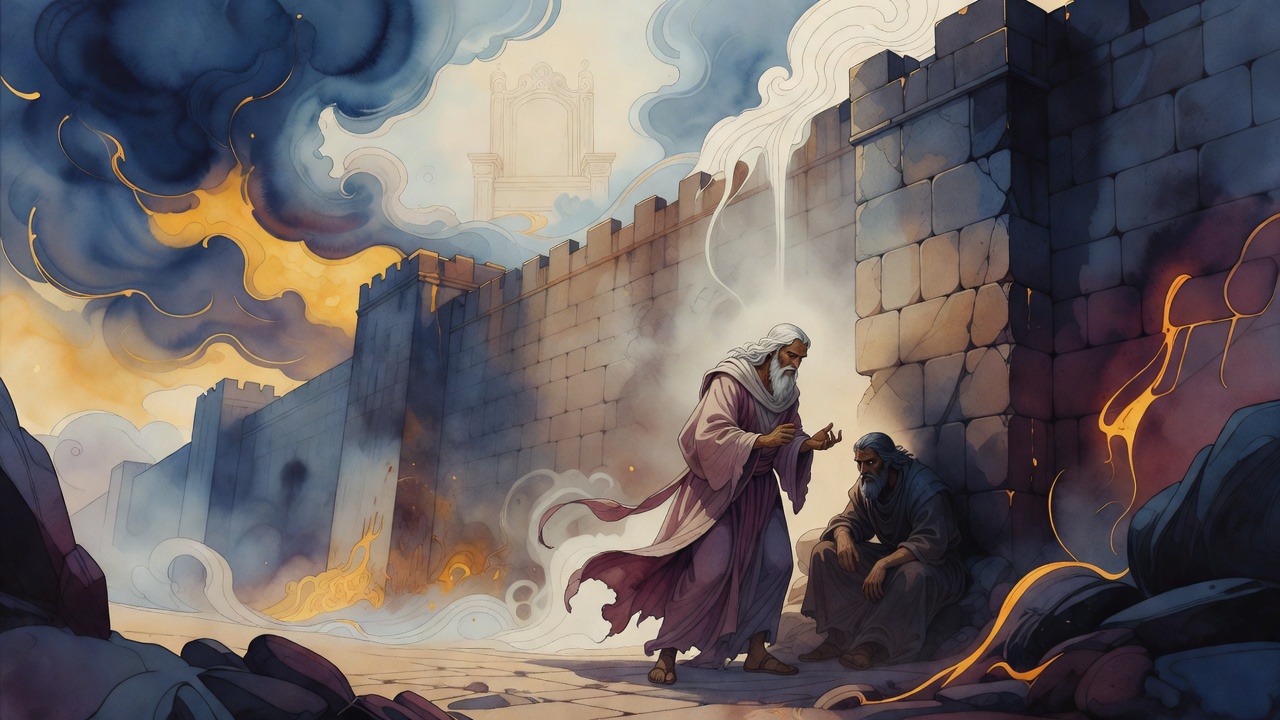
He stood at the edge of a market in a city he did not know, holding out his hand. Solomon had been saying it for weeks: he was the king of Judah, the builder of the Temple, the man who had spoken with demons and commanded the wind. The merchants looked past him. Children ran. A woman offered him bread from pity and moved quickly away.
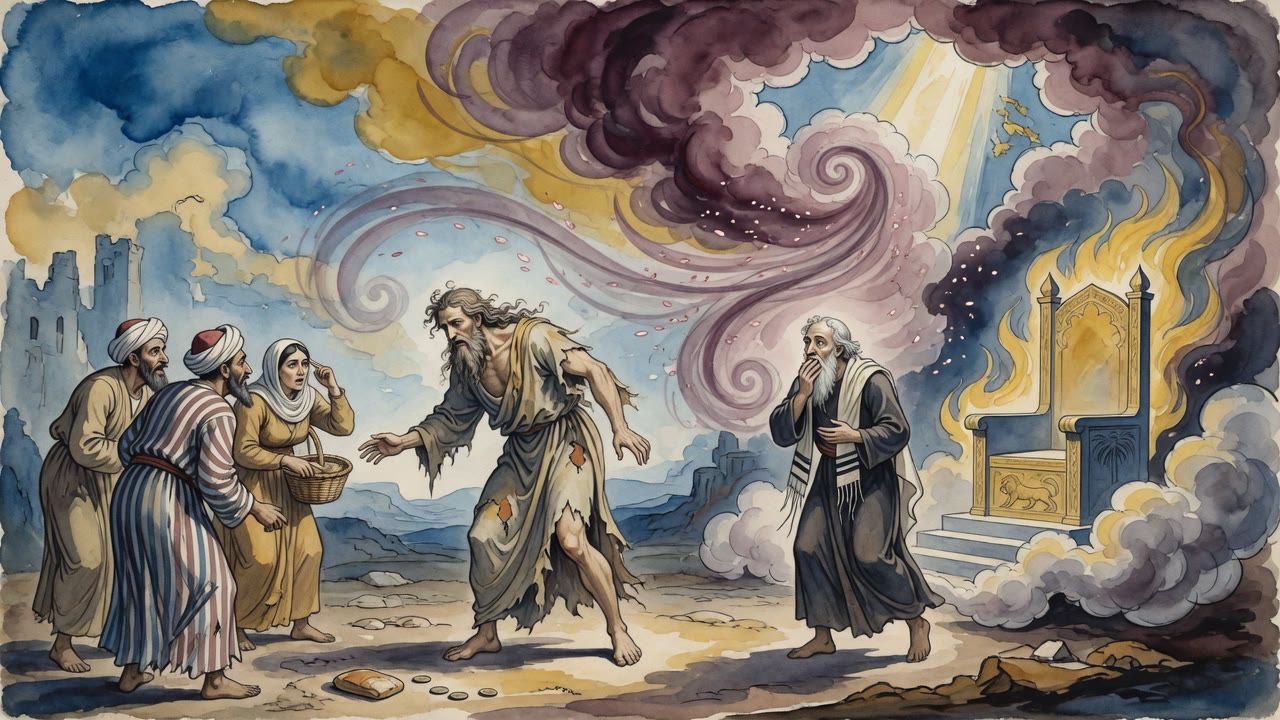
He was not believed. That was the constant condition of those years, the background noise of every day. He had been stripped of everything, driven from his palace, sent into foreign lands without a coin or a companion, and the story he told about himself was too enormous to fit into a beggar's face. He was easier to dismiss as a lunatic than to hear.

He ate what strangers left. He slept in doorways. The man who had once opened his mouth and had every wise thing he needed pour out now opened his mouth and had nothing come out but a claim no one would accept. He learned to stop saying it in some cities and say it anyway in others, half out of pride, half out of compulsion, the way a wound keeps asserting itself.

The Moment That Broke Him

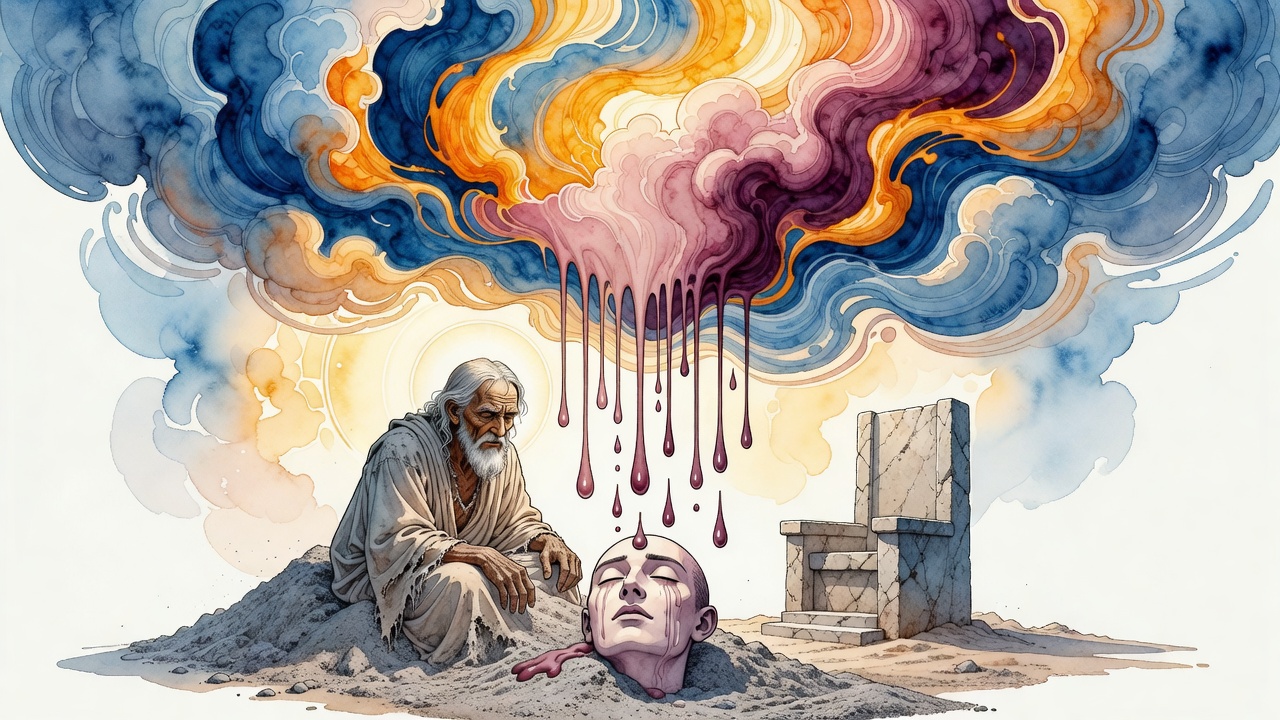
The lowest point was not the disbelief. The lowest point was the day someone recognized him.

He had perhaps grown used to the blank stares, the shrugging off, the easy charity of people who gave him something small so they could stop thinking about him. What he was not prepared for was the face that stopped, that looked at him fully, that went pale. The person who had known him in his greatness, who could see precisely what the distance was between what Solomon had been and what he was now, standing in the same body, in rags, holding out his hand.

There is a kind of pain that only recognition can cause. To be seen in your full degradation by someone who knows what you were is not the same as being invisible. It is worse. The stranger's pity is abstract. This person's pity was specific, and Solomon had to stand inside it.

He wrote it down later, all of it. The book is called Kohelet, what we call Ecclesiastes. The first verse announces the whole program: hevel havalim, vanity of vanities, all is vanity (Ecclesiastes 1:2). The word hevel means breath, vapor, something that dissipates the moment you close your hand around it. He used it thirty-eight times. He had earned it.

Seven Levels of Emptiness

He counted the vanities. Seven of them. He had lived across all of them, wisdom and pleasure and wealth and power and achievement and love and building, and he called each one vapor. Not because they were false, but because he had reached the end of each and found it gave way to the next without resolving into anything solid. He had gone all the way through and come out the other side with nothing in his hands (Ecclesiastes 2:11).

The number seven is not accidental. Seven is the shape of completeness in the Hebrew imagination: seven days of creation, seven branches on the menorah, seven notes before the octave returns. Solomon had not described seven random disappointments. He had described a structure.

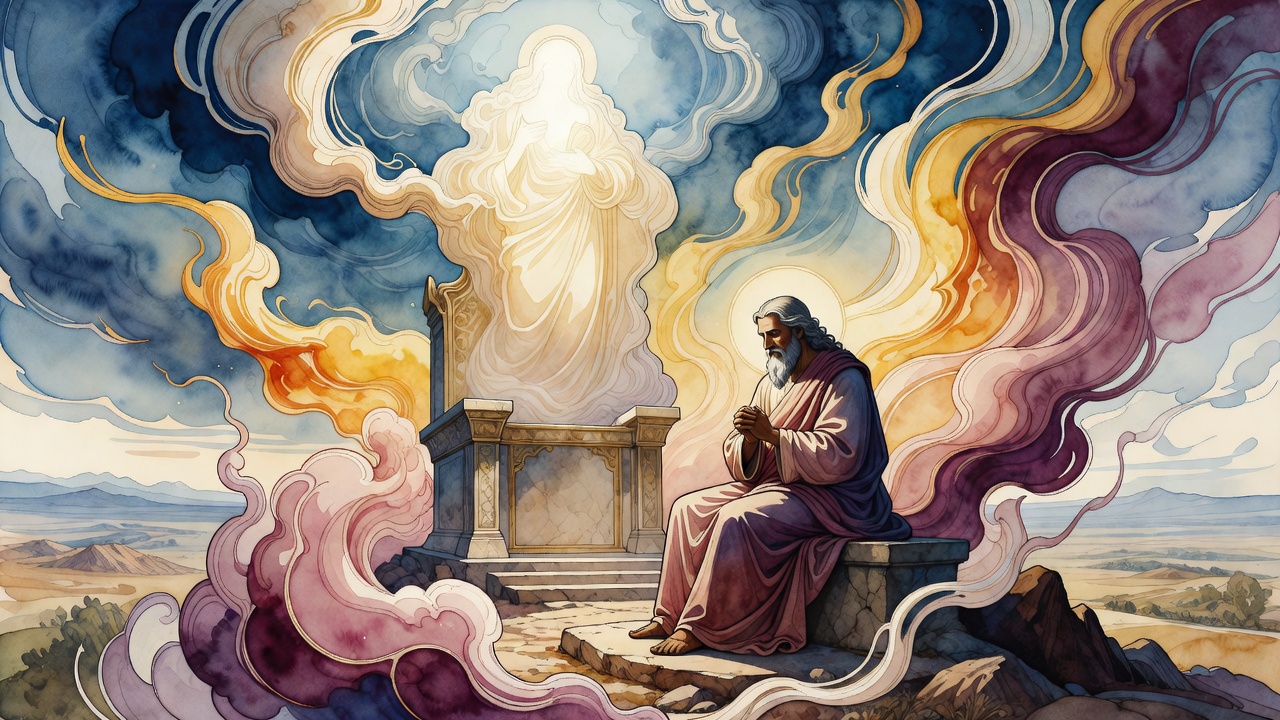
What he described, without knowing he was doing it, was the sefirot, the seven lower divine attributes through which God's infinite light moves into the world: Chesed, the loving-kindness that opens; Gevurah, the judgment that contracts; Tiferet, the beauty that balances them; Netzach, endurance; Hod, splendor; Yesod, the foundation that channels; and Malchut, the sovereignty that receives everything and expresses it into the world below.

He had lived each one. He had traveled through all seven registers of divine reality as a human being, from inside, from ground level, the way rain travels through soil. And at the end of each one, he had felt it thin out beneath him. Not because it was nothing. Because it was not the ground.

Malchut at the Bottom

The last sefirah is Malchut, kingship. It is the attribute that corresponds most directly to the world as we experience it: the realm of consequence, of embodied power, of the heart of it where the divine flow meets the ground it has been falling toward. Malchut receives. It does not originate. Every blessing that flows through the six attributes above it passes through Malchut last, and Malchut gives it form in the world.

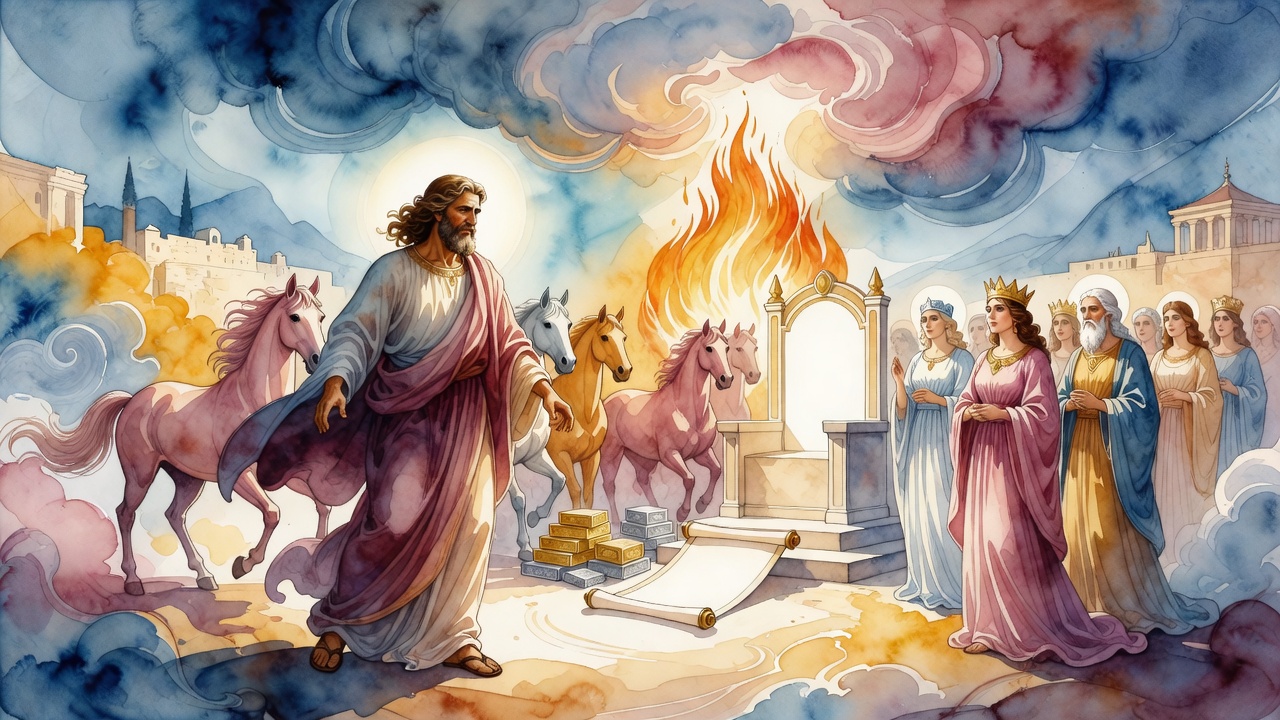
Solomon had been its human vessel. He had sat at the bottom of the entire divine structure and received what flowed down through it, wealth and wisdom and love and command, and he had shaped all of it into a kingdom and a Temple and a reign that the whole world came to witness (1 Kings 10:24). He was not only a king. He was the living expression of what Malchut does.

When he was stripped of that, something in the divine structure itself was felt to tremble. Malchut stirred with its judgments, and what Solomon experienced as exile and humiliation was also, in a register he could not yet read, the sefirah moving through its own correction. The vanity he felt was not emptiness. It was the sensation of a divine attribute cycling through its own nature, purging what did not belong to it, returning to what it was before the accumulation.

He stood in the market with his hand out and said he was king of Judah and was not believed, and the entire lower architecture of the divine was expressed in that scene, if anyone had known how to read it.

What Kohelet Knew Without Knowing

He wrote the book after he was restored. The tradition holds that he eventually returned, that the demon Ashmedai who had taken his place was cast out, that Solomon sat on his throne again and remembered everything that had happened to him in the dark years. He did not suppress the memory. He made it scripture.

Hevel havalim. Breath of breaths, vapor of vapors. He said it not as defeat but as testimony. He had been to the bottom of each divine attribute and come back, and what he found at the bottom of all of them was not nothing. It was the structure itself, the way the lowest note of a chord contains all the overtones above it without being able to hear them.

The book ends where it should end, not with a solution but with a position: fear God and keep the commandments, for this is the whole of humanity (Ecclesiastes 12:13). After all seven vanities, after the exile and the recognition and the rags and the hand held out in foreign markets, the conclusion is not cosmic but plain. Stand in the right relation to what is above you. That is all. That is enough.

A man who had traversed the entire structure of divine reality from the inside wrote that down, and it fits on one line.


← All myths
From the tradition

Sources

3 sources

The texts this telling draws on, in full. Open a card to read inline, or expand it for a wider, quieter read.

Legends of the Jews 5:137Legends of the Jews

Solomon is familiar. The wisest of men, builder of the Temple, ruler of a glorious kingdom. But what happens when that power is stripped away? What happens when the mighty fall?

Banished from his home, deprived of his realm, he wandered far-off lands. The man who commanded armies, who spoke with animals, reduced to begging for his daily bread among strangers.

It gets worse. Not only was he destitute, but he was also disbelieved. He couldn't just blend in, could he? He kept insisting he was Solomon, the great and mighty king of Judah. Can you imagine the reactions? People must have thought he was completely mad, a lunatic ranting about a past that seemed utterly impossible.

We can almost hear the whispers: "Poor man, lost his mind." The King who once held court now mistaken for a madman on the street. It's a crushing image, isn't it?

But the lowest depth of despair, the point where the pain became almost unbearable? That came when someone did recognize him.

Pause and consider that. To be utterly alone, disbelieved, might be one thing. But to be seen, to be recognized for who you once were, while in such a state of degradation? The Zohar tells us that even the memory of past glory can be a source of intense pain in times of suffering.

The recollections, the associations that stirred within him at that moment… Ginzberg, in Legends of the Jews, describes it as almost unendurable. We can only imagine the flood of memories, the stark contrast between his former glory and his present misery. Think of the weight of everything he had lost, now amplified by the pity, or perhaps the scorn, in the eyes of the one who remembered.

What does this story, this glimpse into the humbled life of Solomon, teach us? Perhaps it's a reminder that even the mightiest can fall. Perhaps it's a meditation on the fleeting nature of earthly power and glory. Or maybe, just maybe, it's a lesson in empathy. To look beyond the surface, to see the humanity, even the former greatness, in those who are down on their luck. It is a stark warning of how far one can fall, and to treat everyone with respect as each human is made in God's image. As we find in Midrash Rabbah, the world is supported by three things: by justice, by truth, and by peace.

Full source
Idra Zuta 1:82Idra Zuta

King Solomon certainly did. He grappled with this very question in Kohelet (Ecclesiastes) 7:15, saying, "All things have I seen in the days of my vanity; there is a just man who perishes in his righteousness…"

What did he mean by "vanity"?

The Idra Zuta, a profound section of the Zohar – that foundational text of Jewish mysticism – offers a fascinating answer. It connects Solomon's lament to the very structure of the Divine.

In Idra Zuta, this "vanity" isn't just about fleeting earthly pleasures. It speaks to seven higher vanities, aspects of what's called the king's face. These are actually the seven Sfirot – divine emanations or attributes –: Chesed (loving-kindness), Gvurah (strength or judgment), Tiferet (beauty or balance), Netzach (endurance), Hod (splendor), Yesod (foundation), and Malchut (kingship or sovereignty).

It's Malchut, the last of these seven, that's particularly relevant here. This is holy Malchut. When Malchut is stirred up, especially with her judgments, that verse from Kohelet – "there is a just man who perishes in his righteousness" – comes into play. Why? Because, according to the Idra Zuta, at these times, justice becomes separated from righteousness.

Think of it like this: righteousness, Tzedek, needs justice, Din, to be fully realized. When they're disconnected, Malchut – the divine attribute that manifests in the world – is left without the support of the "right side," so to speak. This imbalance can lead to suffering and injustice.

The text even offers an alternative reading of a verse to emphasize this point. Instead of reading about a lack of judgment, it suggests we read about ruin coming because of this lack.

So, what’s the takeaway? The Idra Zuta isn't just offering a theological explanation for suffering. It's suggesting that the challenges we see in the world are reflections of a deeper, cosmic reality. When balance is disrupted in the divine realm – when justice and righteousness are separated – it manifests in the world around us.

Does that mean we're powerless? Absolutely not! If anything, it gives us a powerful call to action. By striving for justice and righteousness in our own lives, by seeking balance and harmony in our own actions, we can, in some small way, help to restore balance to the world above, and the world below. It reminds us that even when things seem chaotic and unfair, we each have a role to play in bringing about a more just and compassionate world. A world where righteousness and justice walk hand in hand.

Full source
Legends of the Jews 5:13Legends of the Jews

Legends of the Jews turns to Solomon Gives Joab a Chance to Defend Abner's Murder.

Solomon, wise as he was, suspected Joab of some pretty dark deeds, specifically the murder of Abner. But even with suspicions running high, Solomon, being the just ruler he strived to be, gave Joab the chance to defend himself. It's like a scene straight out of a courtroom drama, only with kings and ancient lore instead of lawyers and paperwork.

"Why didst thou kill Abner?" Solomon asked, cutting straight to the heart of the matter.

Joab's response was immediate: "I was the avenger of my brother Asahel, whom Abner had slain." A seemingly justifiable act of revenge. A life for a life, the ancient code. But Solomon, ever the shrewd judge, wasn't buying it.

"Why, it was Asahel who sought to kill Abner," Solomon countered, "and Abner acted in self-defense." Ouch. The narrative starts to crumble. It wasn't a cold-blooded murder, but self-preservation. Or was it?

Joab wasn't giving up that easily. "Abner might have disabled Asahel without going to extremes." He argued that Abner could have simply wounded Asahel, not killed him.

Then comes the zinger, dripping with sarcasm, "What! Abner aimed directly at Asahel's fifth rib, and thou wouldst say he could not have managed to wound him lightly?"

It's this moment that truly sticks with you. Joab isn't denying the act, but arguing the degree of force used. He’s saying Abner went for the kill shot – a clear indication, in Joab's mind, of malicious intent.

But what does it all mean? Is Joab justified in his actions, driven by familial duty and a sense of justice, however twisted? Or is he simply a murderer hiding behind a veil of righteous indignation? Solomon certainly seems to believe the latter. This brief exchange encapsulates the complexities of justice, revenge, and the shades of gray that exist even in the most black-and-white situations. It makes you wonder: how do we justify our own actions, especially when driven by emotion? And how easily can we convince ourselves that we're in the right, even when the truth is far more complicated?

Full source