The Son Led to Die Says the Woe Is His Alone
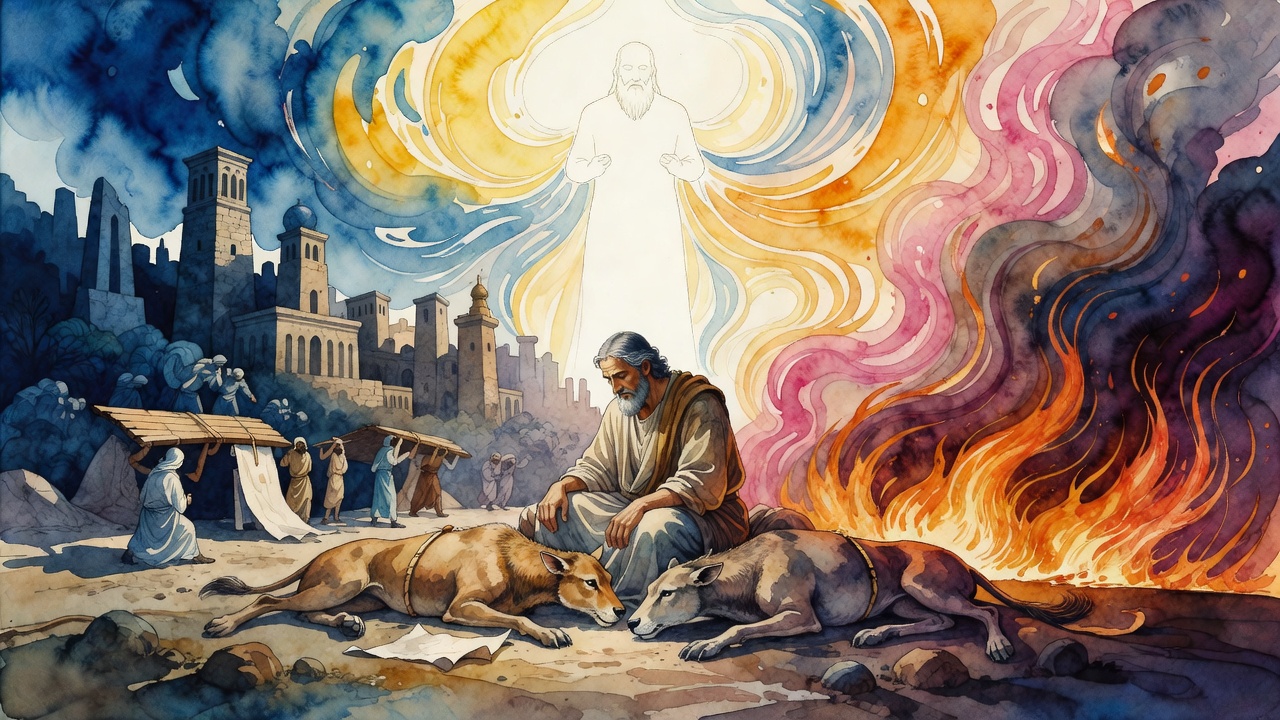
His mother fell once on the road and rose. His father held her elbow and kept walking. They followed him to the place of death and could not die in his place.
Table of Contents
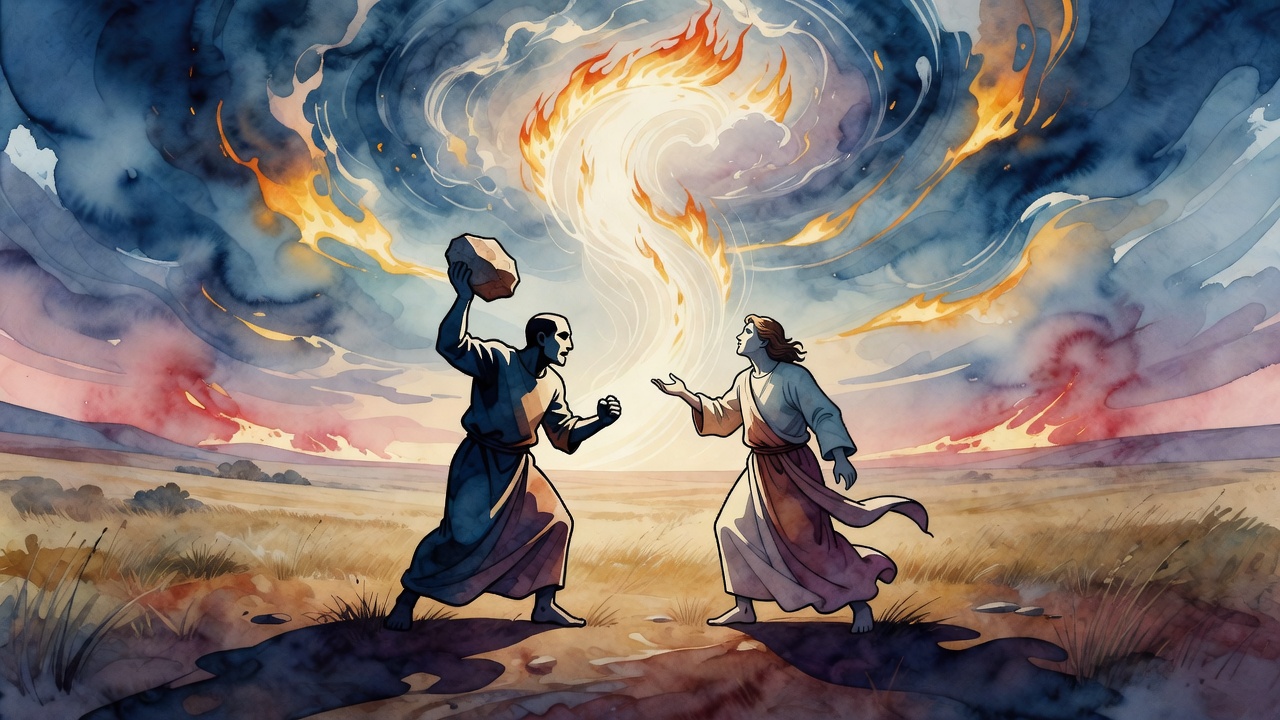
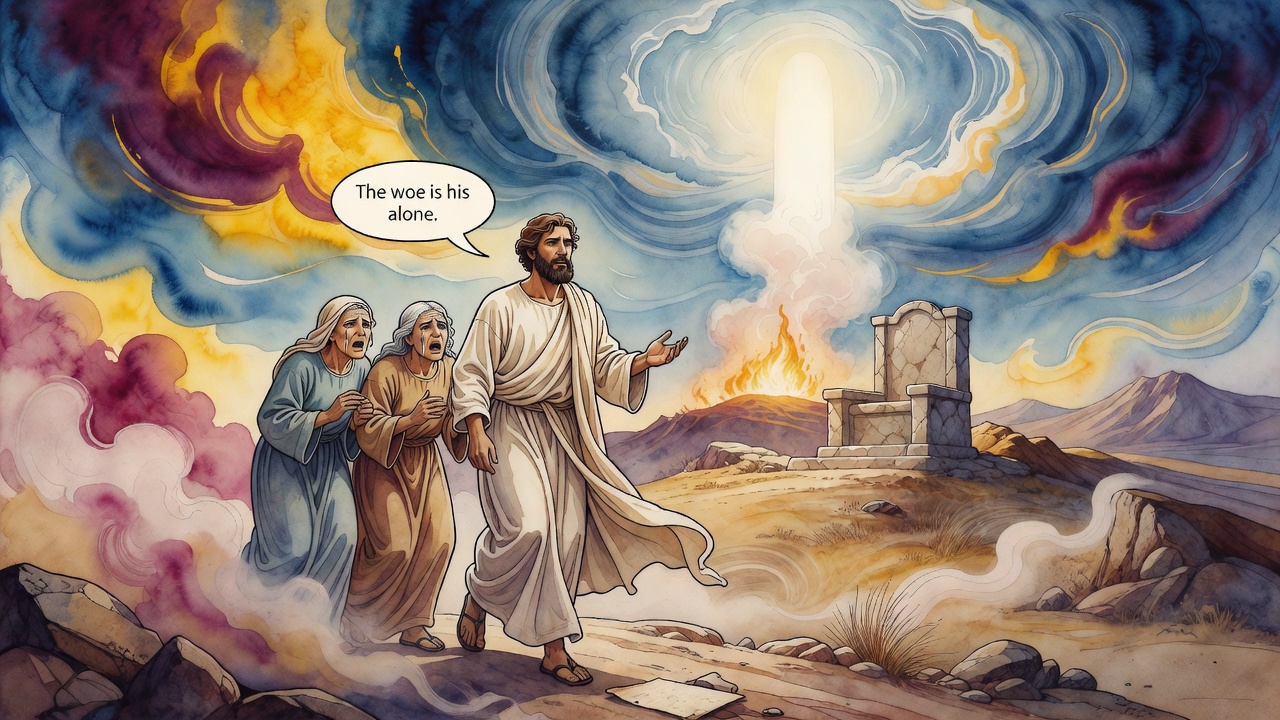
They led him out of the city to die. He walked between soldiers with dust on his tongue. His father cried. His mother cried and beat her breast. The noise of their grief tried to share the sentence.
 Click for full size
He turned his head as far as the ropes allowed and said, "Woe unto me." They answered, "Woe unto us." He forced the truth through a dry mouth. There is woe only unto him who is taken out to die.
The Road Out of the City
The road was dusty. The crowd was curious. A child pointed and was pulled back. He kept walking. Love wanted to steal a sentence. He would not let their grief take the ownership of his end.
Isaiah had already put a sharper edge on the same honesty: woe unto their souls, for they have brought evil upon themselves (Isaiah 3:9). The parents' tears were real. They were not the sentence. The sentence was his, even while love screamed beside him.
Israel Corrupted Itself
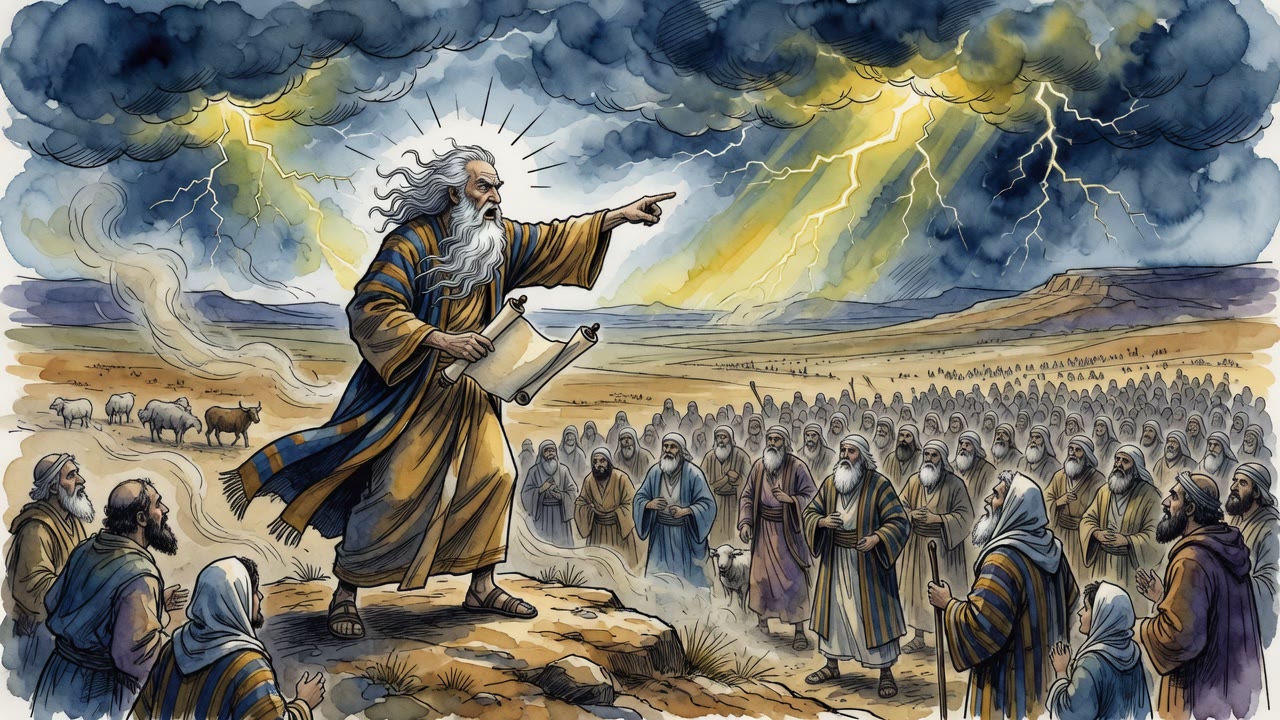
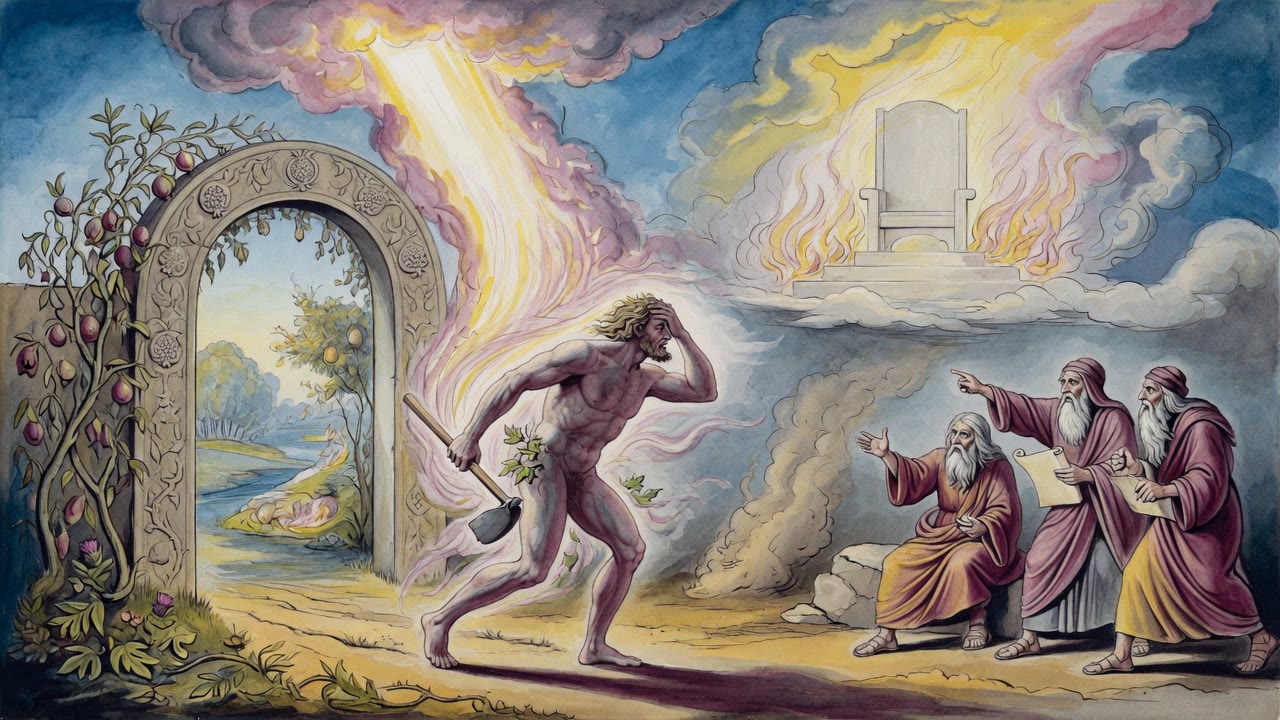
Abba the expounder read a hard phrase in the study house after the crowd had thinned. Israel has corrupted itself, shicheth lo (שחת לו), not its Father in heaven. Why say it this way? So the wicked will not claim, "If we sin against Him, we distress Him," as if God were a fragile partner who must be protected by human goodness. The Father is not damaged goods when children rebel. The children are.
The man on the road was not a nation. He still wore the nation's sentence in miniature. His parents' tears were real. They were not the crime. He walked on and did not let their grief steal the ownership of his end.
A Wasteland of Four Exiles
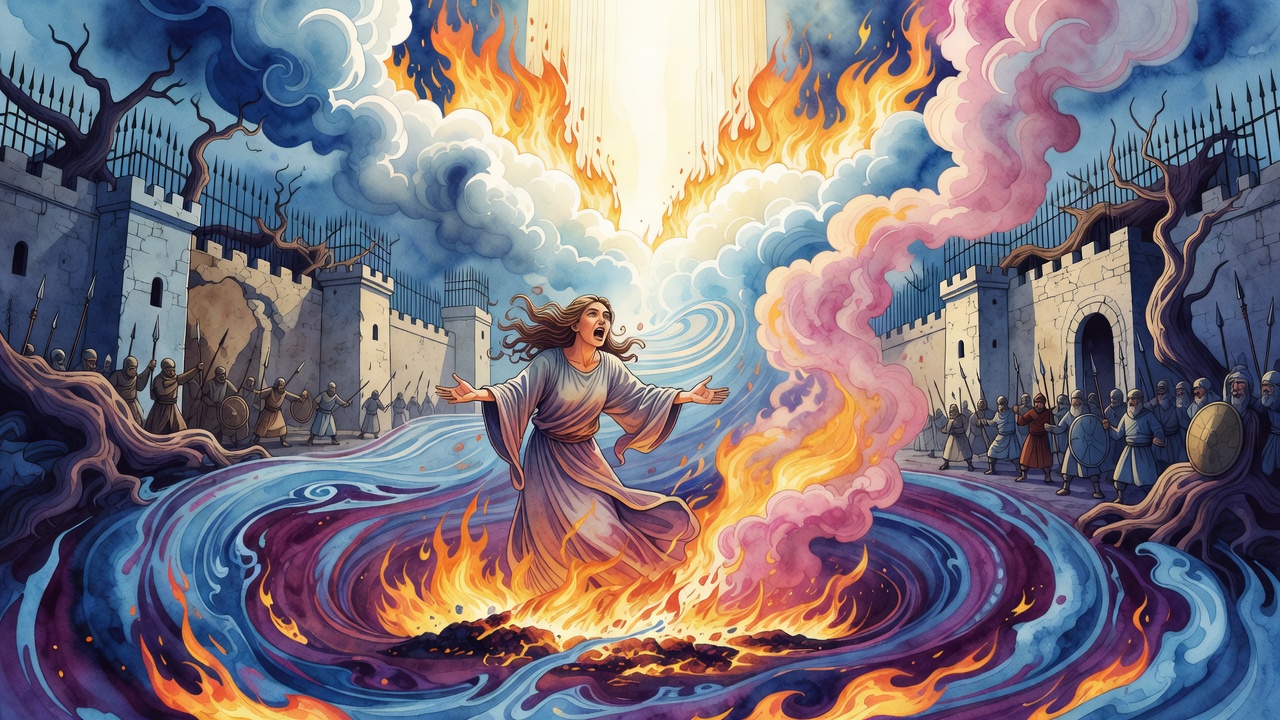
The road out of a city can run into a howling waste. Another teaching names that waste as four exiles, a desert of snake, serpent, scorpion, and waterless drought (Deuteronomy 8:15). God surrounded Israel with elders. He guarded them like the pupil of His eye. Whoever touches them touches that pupil (Zechariah 2:12). Protection is not the same as pretending sin has no author.
An eagle does not crash into its nest. It flutters from tree to tree, from booth to booth, until the young wake and find strength to mount (Deuteronomy 32:11). When the Lord gave Torah, He did not smash the people from one side alone. He appeared from Sinai, Seir, Paran, Teman, four directions of approach so the young could bear the weight. Revelation itself practiced patience. Judgment also knows patience, and then it knows an end.
The Parents Keep Walking
They walked behind him until the place of death. The mother fell once and rose. The father held her elbow and kept moving. They could not take the rope. They could not move the woe from his chest into theirs, no matter how hard they beat their breasts.
He died. The crowd thinned. Someone cut the ropes. The parents sat in a grief that was clean of the lie that God was the one corrupted by their son's choices. They might still ask why the world is built this way. They might not pretend the Father's perfection cracked because a child chose badly.
What the Living Carry Home
That night someone repeated Abba's line in a study house: corrupted itself, not its Father. The line is not cold. It is a fence against a blasphemy that flatters the sinner by making God the wounded party who needs our restraint. God forbids sin because sin destroys the sinner and the camp, not because heaven's essence can be stained like cloth.
Exile still howls. Snakes still wait in dry places. The pupil of the eye still flinches when Israel is touched. Through all of it the Father remains the Father. The woe that can be owned must be owned. The woe that cannot be transferred must not be transferred by pretty theology.
The parents walked home under a sky that did not apologize and did not gloat. They carried a sentence that finally belonged to the right mouth.
← All myths