Honey From the Rock Until the Wine Turned to Serpent Venom
The rock had no seam. Israel put its mouth to the stone and drank honey. Then oil ran from flint, and the nations would not give one coin.
Table of Contents
 Click for full size
Honey Out of Bare Rock
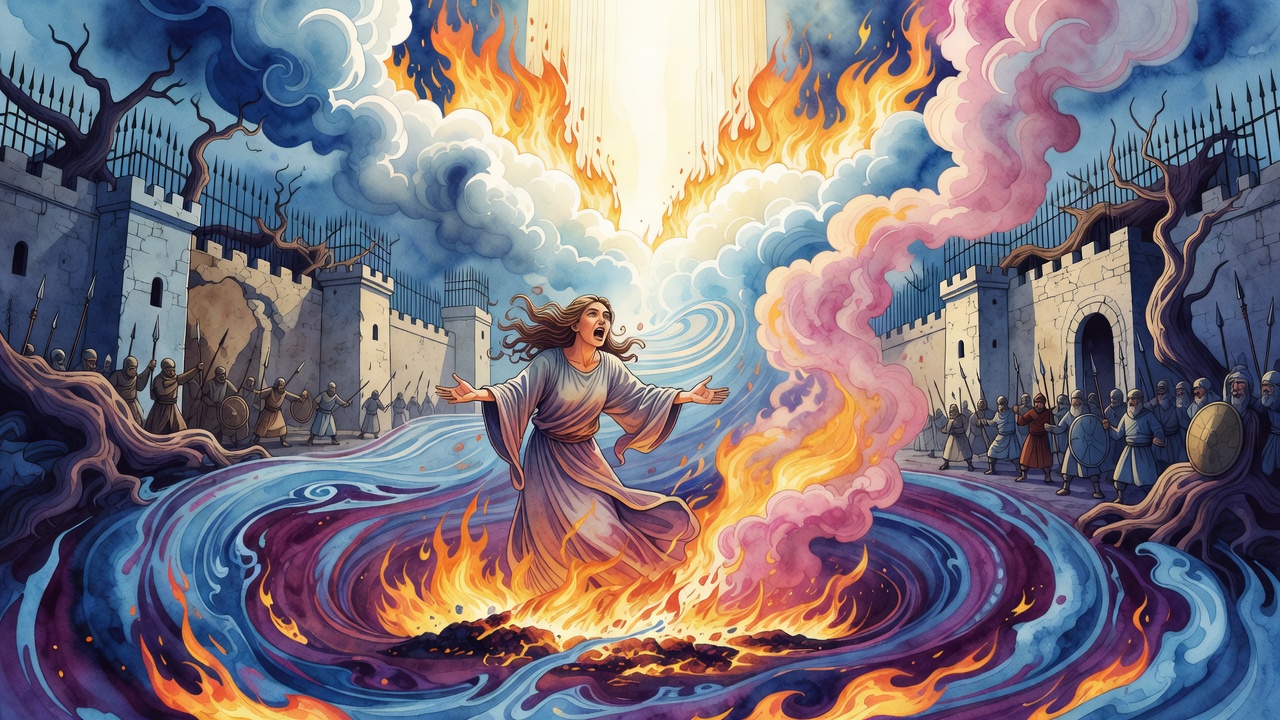
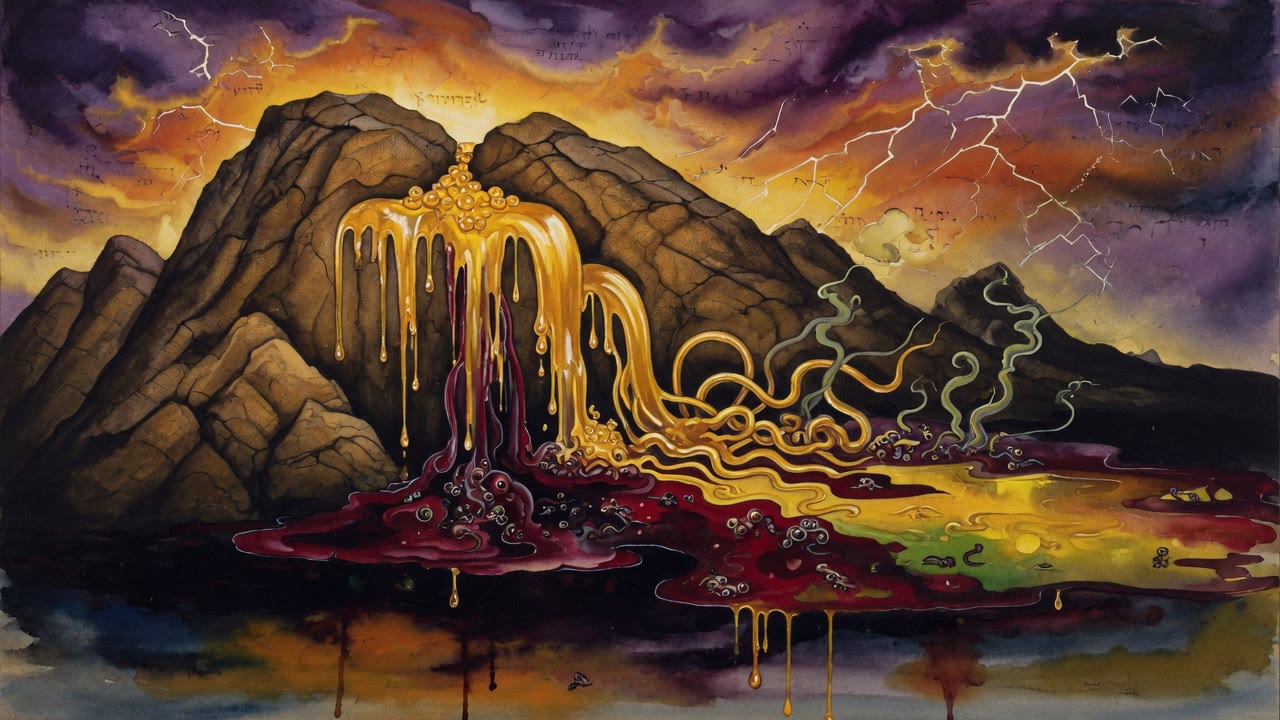
Israel set its mouth against a rock that had no seam and no green on its side, and drank honey.
The high places ran on above them, ridge after ridge. They rode the crests and ate the shoots of the field as they went. Four shoots. Four exiles. Each one chewed because it was put in front of them, and the sweetness did not ask who had planted it.
Then oil came out of flint and ran down their chins.
They were still eating when the boar came up out of the forest.
One Coin From a Rock
The boar went through the vineyard shoulder first and tore the vines out by the root. The crawling thing of the field came behind it and fed on what was left standing. Israel stayed on the heights with honey still on its mouth, as if height were a wall.
After the boar came men. They took Eretz Yisrael field by field and held it. When Israel went and asked them for one perutah (פרוטה), the smallest coin there is, it was like clamping a press onto flint and waiting for oil.
The men kept the storehouses shut. The rock had given. The occupiers would not. A press can lean until the frame creaks and still get nothing from a stone that has decided to stay a stone.
The Cup From Sodom
The strangers had wine, and they poured it generously.
The vines were out of Sodom and the planting was out of Gomorrah. The clusters hung bitter. A man who drank went warm on the first swallow. On the second the wine moved in him, low and unhurried, the way a thing moves under dry leaves when you have already stepped past it.
Their great ones had learned the craft from the first serpent, the one that stood in the garden and talked Adam and Eve out of the single tree they had been told to leave. Nothing had been lost on the way down. When those great ones came out to be seen, the dread of them went ahead like a shadow crossing a nest.
The cup was not only in a stranger's hand. Among Israel the careful men carried venom too, the moderate ones, the fearers of sin. The heads of the people, the men who took the front seats in the assembly, would turn on those who trusted them and strike like cruel asps.
Moses Holds the Bent Staff
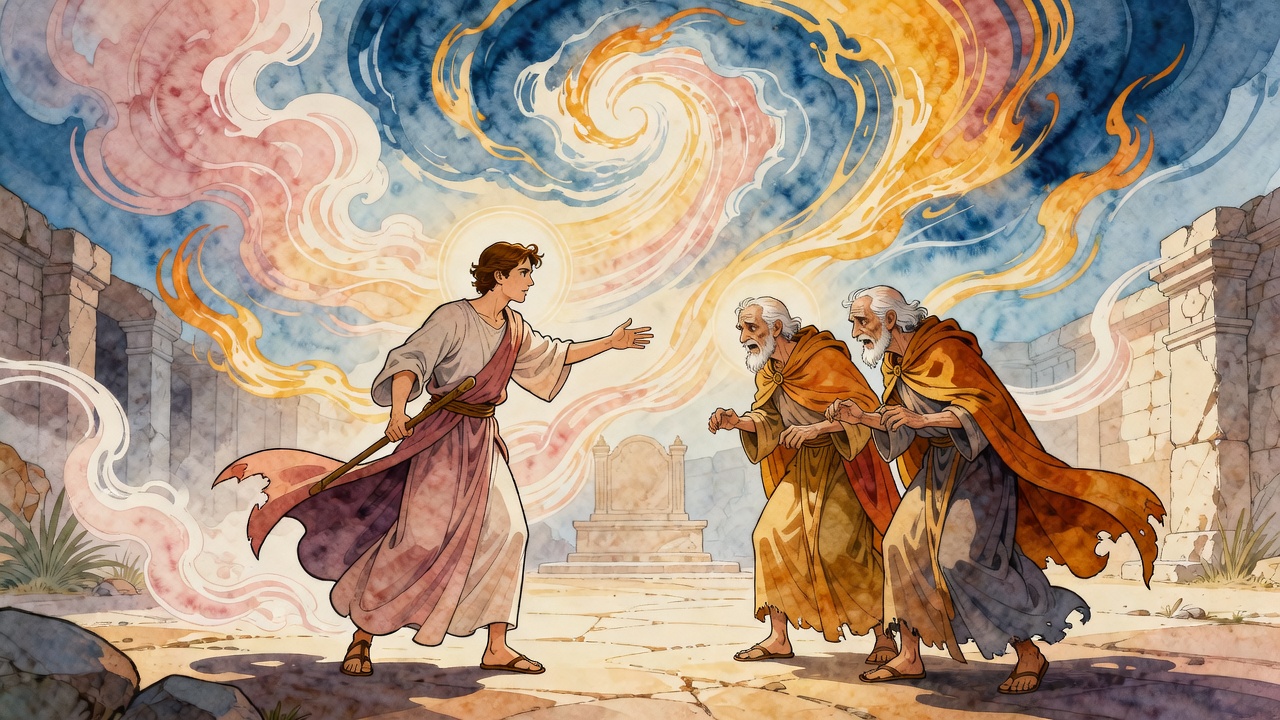
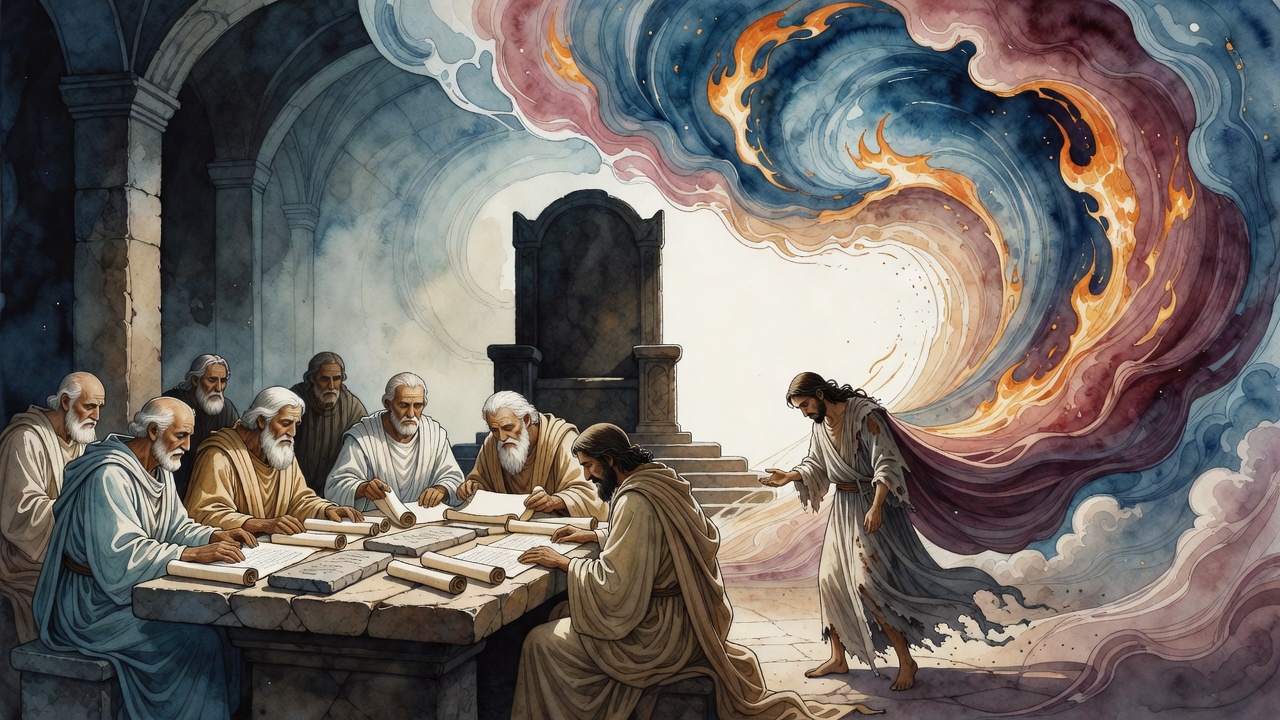
Moses stood in front of them and called them a crooked and twisted generation.
He gave them the staff to look at. A man carries a bent cane into a workshop and lays it on the bench. The craftsman warms it and works the crookedness with his hands. Sometimes the wood comes. Sometimes it will not, and he sets it in the press and leans his weight in until the frame creaks. If the press fails he takes up the adze and cuts the bend out in chips.
If the adze fails, he does not argue with the wood. He carries it to the fire.
Generations later the sentence came out of Ezekiel's mouth in the order the craftsman had used his tools. "I will place you in the hands of brutish men, artisans of destruction," he said. "You will be consigned to the flames."
The Sword and the Bolted Door
The sword came into the marketplace at the hour when the stalls were fullest.
Tables went over. Oil jars broke and ran between the stones. People got out through the alleys. One man stood in the open with the road clear in front of him. He could have gone. He stayed where he was, hands hanging at his sides, and the fright got into him and finished him standing up. No blade came near him.
The altars had gone up in the thoroughfares where anybody walking to the well could count them, and Jeremiah counted them. "For as the number of your cities was the number of your gods, O Judah," he said, "and as the number of the streets of Jerusalem have you made altars to the shame, altars to sacrifice to the ba'al (בעל)."
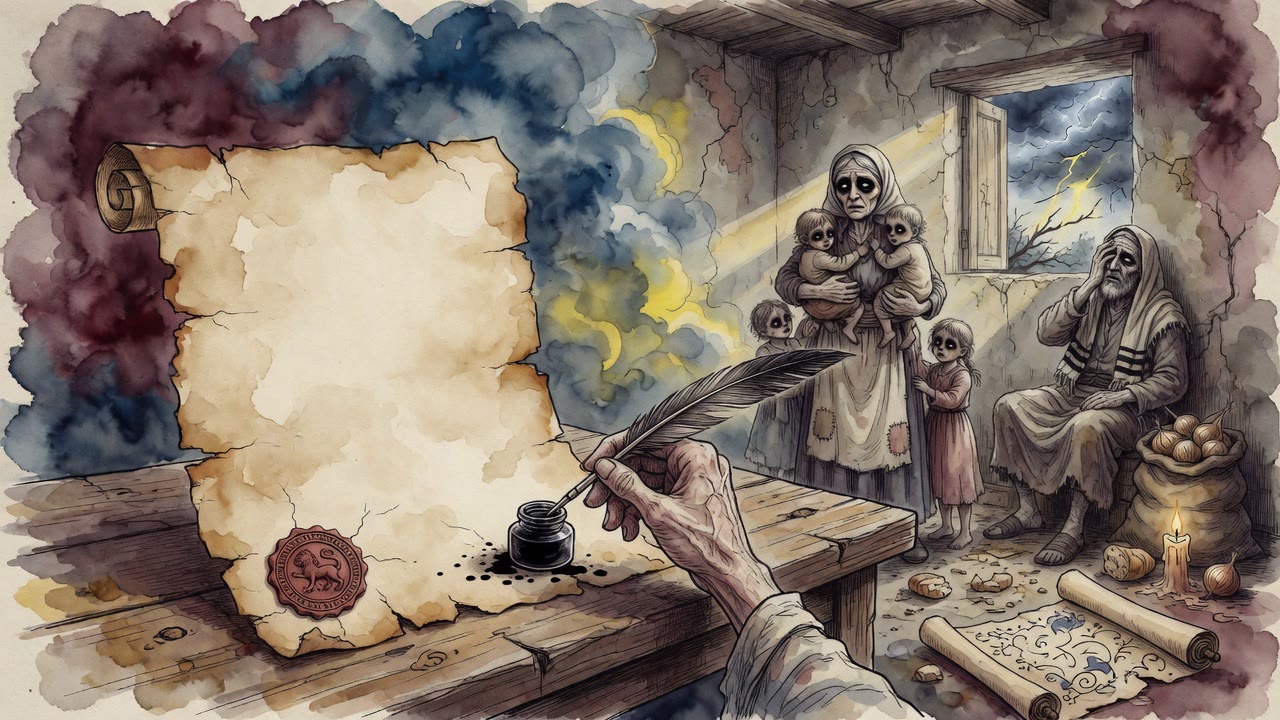
Behind bolted doors, in rooms with no window onto the street, each elder of the house of Israel sat in his own chamber of pictures and did in the dark what he would not do in the road. They said it to one another and believed it. "The Lord does not see us. The Lord has left the land."
The doors held. The fright came in anyway and did to them sitting there what it had done to the man in the market.
The King Turned His Horse
A king came into his province with a list of names.
He had been wronged there years before and had come to collect. He went house to house with the list, and at the third door they told him what he had not planned for. The men were dead, and the third of them had been dead the longest.
He sat his horse in the road. Dust settled on the animal's neck. He looked at the closed doors and at the graves beyond them. Then he turned the horse around and rode home, because a king's arm reaches exactly as far as a man's life and not one hour past it.
"I live forever," God said.
The measure of the Holy One is not the measure of man. What is not taken from the living is taken from the dead. What is not taken in this world is taken in the world to come. Dying carries a man out of the province. It does not carry him out of reach.
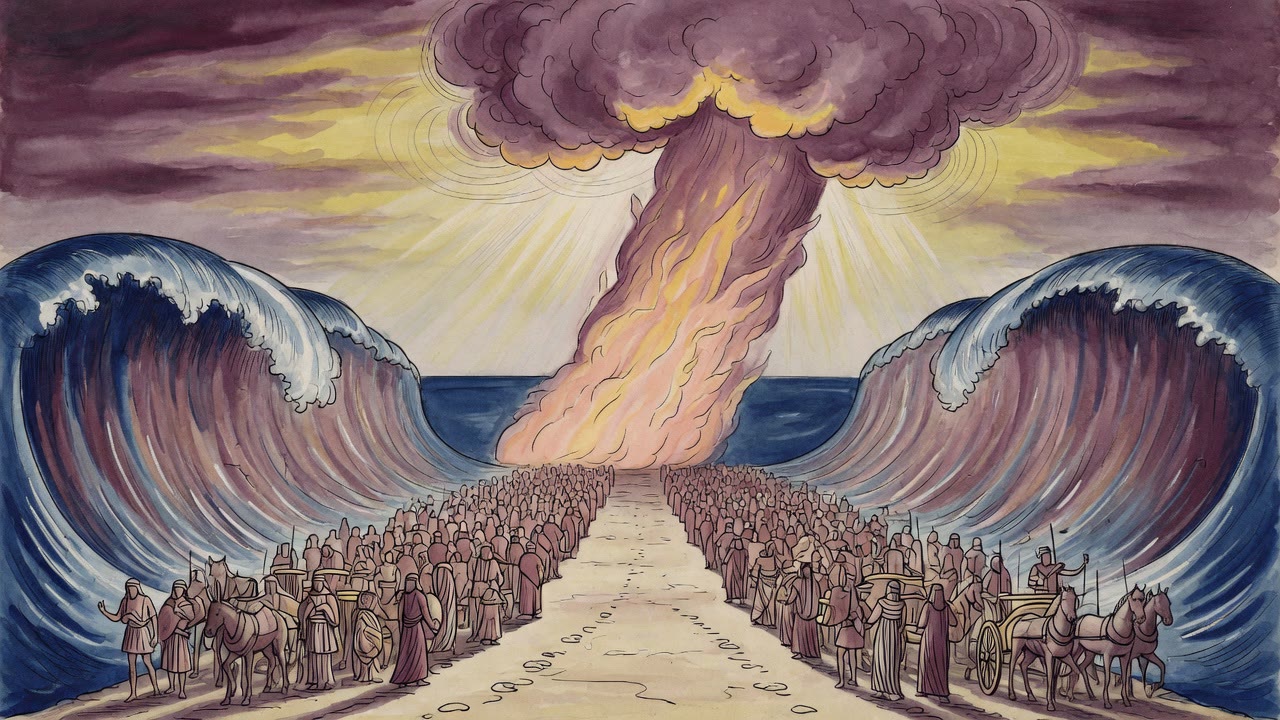
"When I whet the flash of My sword," He said, "My hand takes hold of justice."
The stroke goes out quick as light off a turned blade, and for all its speed it lands where it was aimed and nowhere beside it. The men who held the land and would not give up one perutah will have their storehouses opened, and what comes out will go down sweet, like honey and like oil out of the rock.
← All myths