Israel Calculated Which Sin Would Wound Heaven the Most
They sat with the death penalties written out and picked the heaviest one on purpose, and then the injured party asked to be charged first.
Table of Contents
 Click for full size
The Arithmetic at the Table
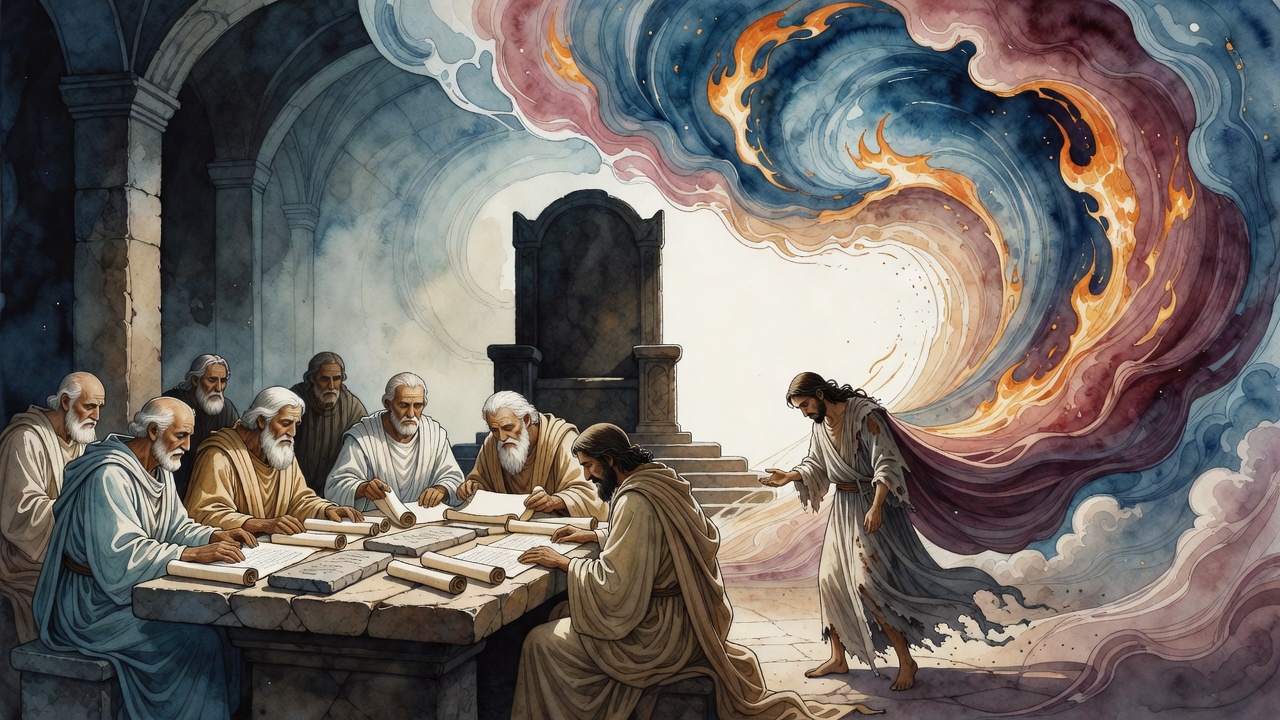
Men sat down with the death penalties written out in front of them and began doing sums.
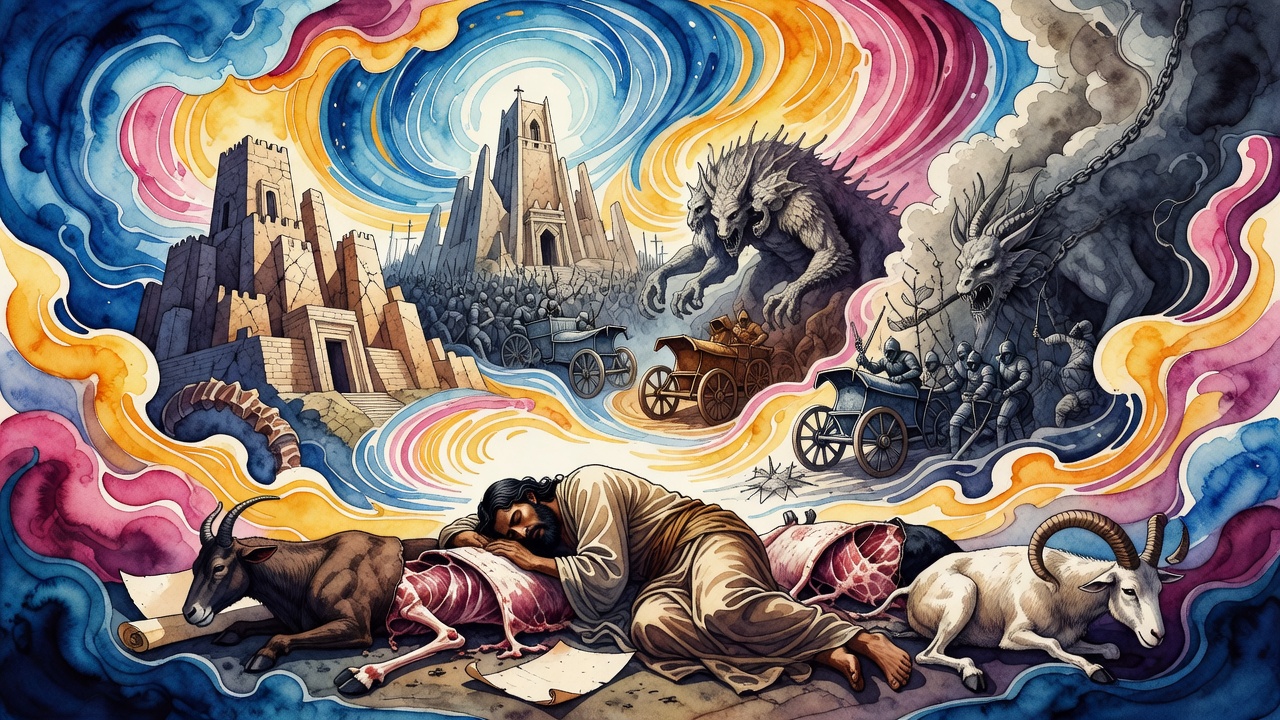
Strangulation for a neighbor's wife. Stoning for a daughter-in-law. Stoning was the heavier death, so the daughter-in-law was the heavier crime, and the heavier crime was the one worth committing. The sin was calculated item by item, the way a merchant totals a column. Not hunger, not a night that got away from anybody, but a table of penalties compared until they knew which act would wound heaven the most, and then that act chosen on purpose.
Rabbi Elazar put his finger on the word the prophet had used. Ezekiel wrote that one man committed an abomination with his neighbor's wife and another defiled his daughter-in-law "with lewdness" (Ezekiel 22:11), and lewdness in that verse meant forethought. The men at that table were not overtaken by anything. They had planned.
Rabbi Yishmael brought a second exhibit. A man and his father go to the same young woman, Amos says, and the verse itself supplies the motive, "in order to profane My holy name" (Amos 2:7). A man could ruin himself in a dozen ordinary ways. Ruining himself in the way that carried furthest took study.
Rabbi Levi counted the houses. Israel was not sent into exile over one generation of this, or two. Seven patrilineal houses had to go rotten first, children and children's children acting corruptly and craftily, until the throne itself ran on it: Yerovam ben Nevat, Baasha ben Ahiya, Omri, Yehu, Menahem, Pekah, Hoshea. Seven dynasties of it. Then the gates opened outward and the people walked through.
The Mountains Were Called Up to Hear It
The case was brought, and the venue was the whole earth. Micah called the mountains up to hear the controversy and told the enduring foundations to listen, and the nations of the world came and stood along the edges of that open court with the ledger in plain view. They had read the sums. A people who calculate their way toward the worst available offense do not usually walk out of a courtroom on their own feet, and the nations settled in to watch.
The Injured Party Asked to Be Charged First
God did not read the charge. He crossed to the other side of the case.
"My people, what have I done to you, and how have I wearied you? Testify against Me" (Micah 6:3).
The wronged party stood where a defendant stands and invited the accused to open the prosecution. Rav Aḥa spelled out the terms, because the offer was not decoration. Testify against Me, and there is a reward waiting for the testimony. Bear false witness against your neighbor, and there is a reckoning waiting in the future for that. Honest accusation would be paid out. Invented accusation would be collected on. The stand was open and the record was running.
Nobody moved toward it.
The Widow Who Complained Only About a Kick
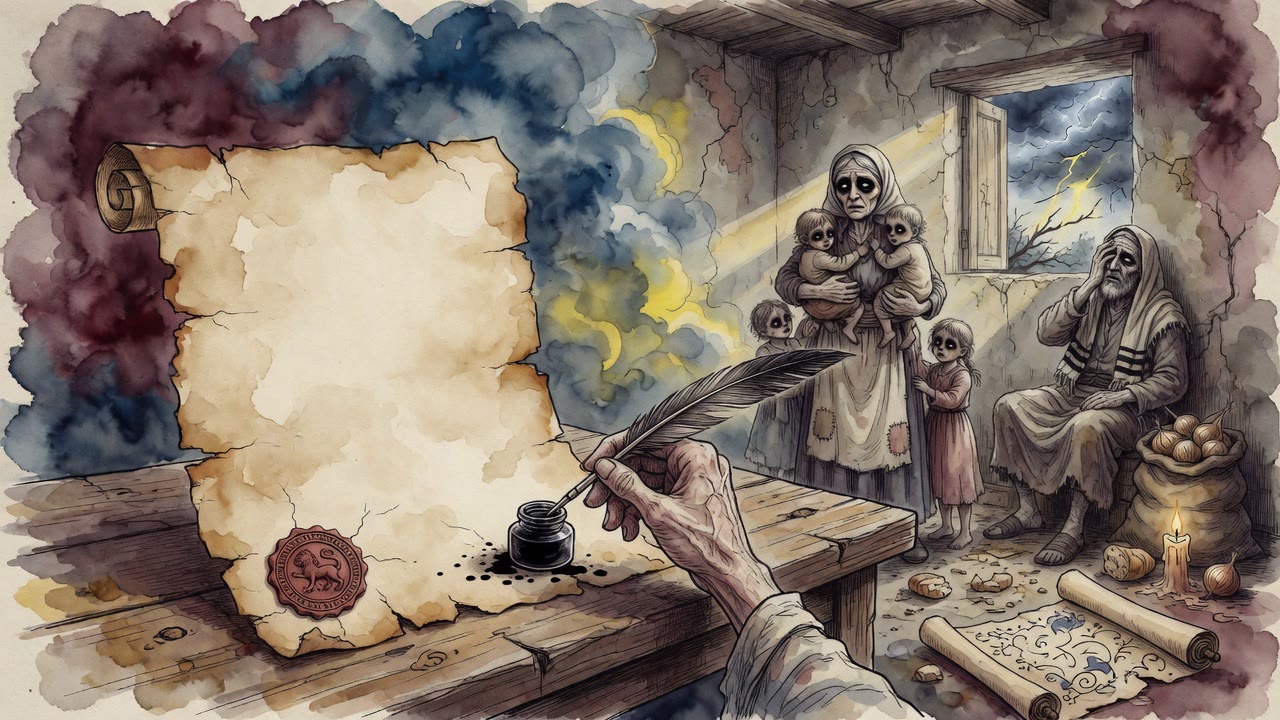
Rabbi Yudan ben Rabbi Shimon knew the shape of that silence. There was a widow who wanted to bring a complaint against her son, and the judge she had to bring it to was famous for the weight of his sentences. She stood there a long time. When she finally spoke she said only that the boy had kicked her while she was carrying him, and the judge waved the whole matter off.
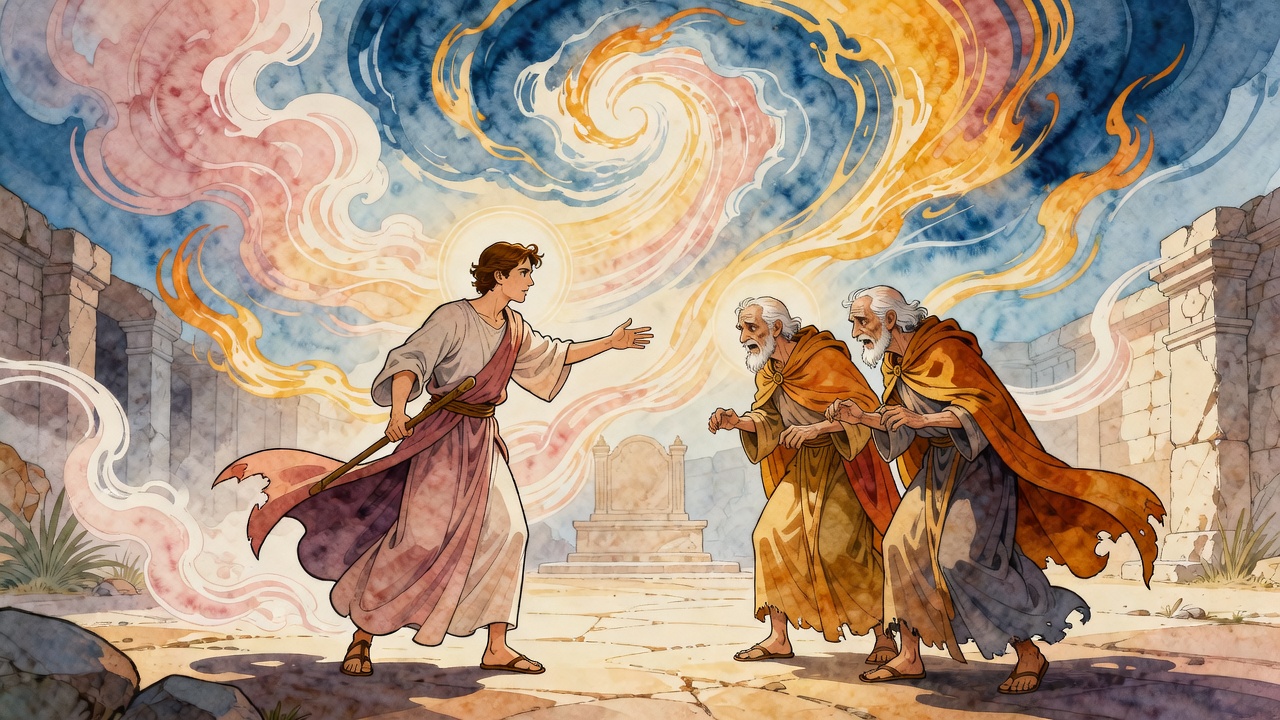
The plaintiff in Micah's court had a ledger and produced a kick. Rabbi Berekhya heard the questions that followed and they were all small ones. Have Moses, Aaron, and Miriam eaten anything of yours? Have they drunk anything of yours? Have they ever imposed on you? Moses came, and bread lay on the ground outside the tents every morning for forty years. Miriam came, and a well went with the camp through country that had no water in it. Aaron came, and clouds stood over the people so the sun never touched them.
Rabbi Yitzhak measured the demands. A king issues an edict and expects it performed standing at attention, heads bared, in whatever posture the throne prefers. The commandment about the Shema (Hear O Israel) carried no posture at all: "while you are sitting in your house, and while you are walking on the way, and while you are lying down, and while you are rising" (Deuteronomy 6:7). Rabbi Yehuda bar Rabbi Simon measured the offerings. Ten kinds of animals were permitted, and not one of them had to be run down on a mountainside. What stood in the yard would do. What ate from the trough would do.
Then the reminder that had nothing to do with law at all. "My people, remember what Balak king of Moab devised" (Micah 6:5). The curse that never landed. They had been carried past that one without ever learning how close it came.
The Sentence and the Mercy Came Out Together
The verdict was one line long and it ran in both directions. I crushed, and I will heal.
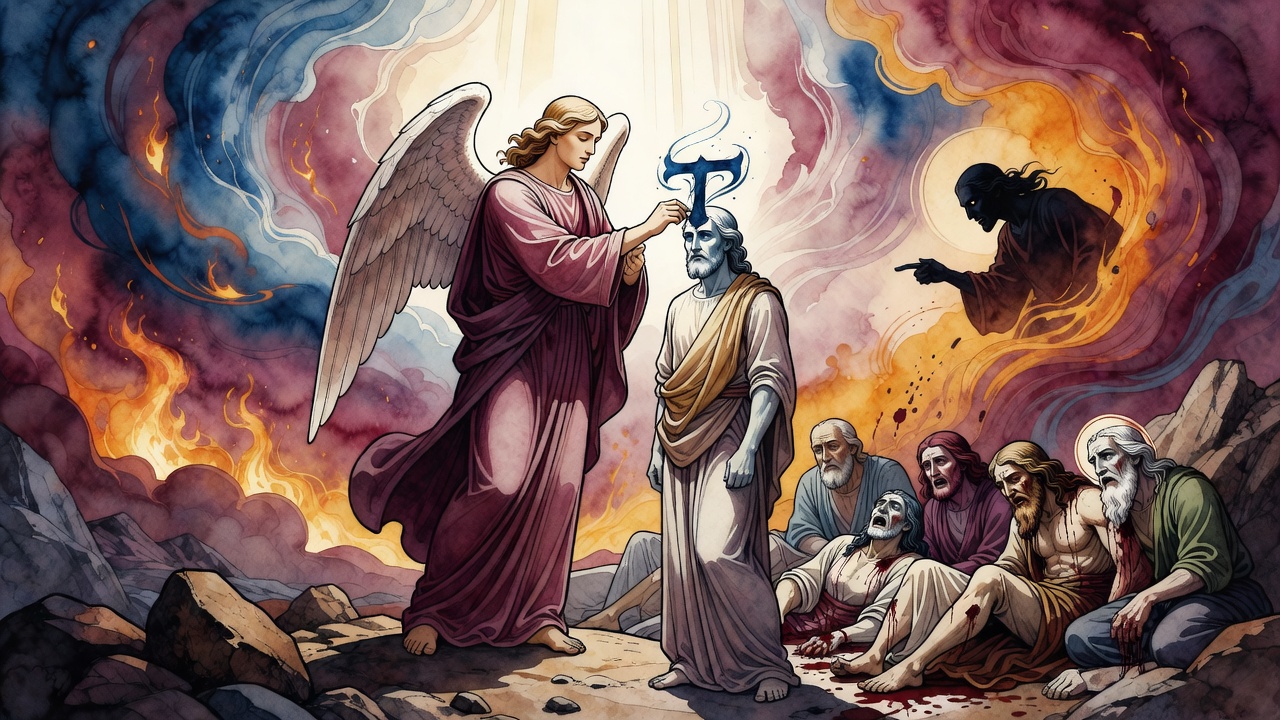
Rabbi Ḥanina had it from Rabbi Shimon ben Lakish, Rabbi Yehoshua of Sikhnin had it from Rabbi Yoḥanan, and Rabbi Levi had it from Rabbi Yoḥanan as well, and every one of them heard the same thing inside the crushing. Maḥatzti was no blow struck at a body. It was a wall. The meḥitza (מחיצה), the partition raised in the first days between the ones above who do not die and the ones below who do, and everything buried since lies on the near side of it.
Rabbi Abba pushed the word one turn further. Read it again and it stops saying "I crushed" and starts saying "My partition," meḥitzati, the thing God built and the thing God has undertaken to mend. The healing named in the verdict is the healing of that wall. Isaiah had already announced the result: "He will eliminate death forever" (Isaiah 25:8).
The mountains stood where they had been summoned. The nations at the edges had come for an execution and were watching a wall get promised repairs.
← All myths