5 min read

The Son Who Tracked His Father by Firewood

Strangers hid a dead merchant house. His son bought a cart of wood, followed the carman, and carved a fowl into a map of justice.

Curated by Arthur · Told by Maggid ·
Table of Contents
  1. The Will That Wanted Cleverness
  2. Wood That Knew the Streets
  3. The Fowl on the Table
  4. Why Two Lift What One Cannot
  5. Craft Beside Torah
The Son Who Tracked His Father by Firewood Click for full size

The Will That Wanted Cleverness

A wealthy Jewish merchant died far from home and left a will that made lawyers blink. His only son would receive everything, but only after three wise deeds in succession. Wisdom first. Silver second. The father had lived long enough to know that an untested heir can lose a house faster than a thief can find it.

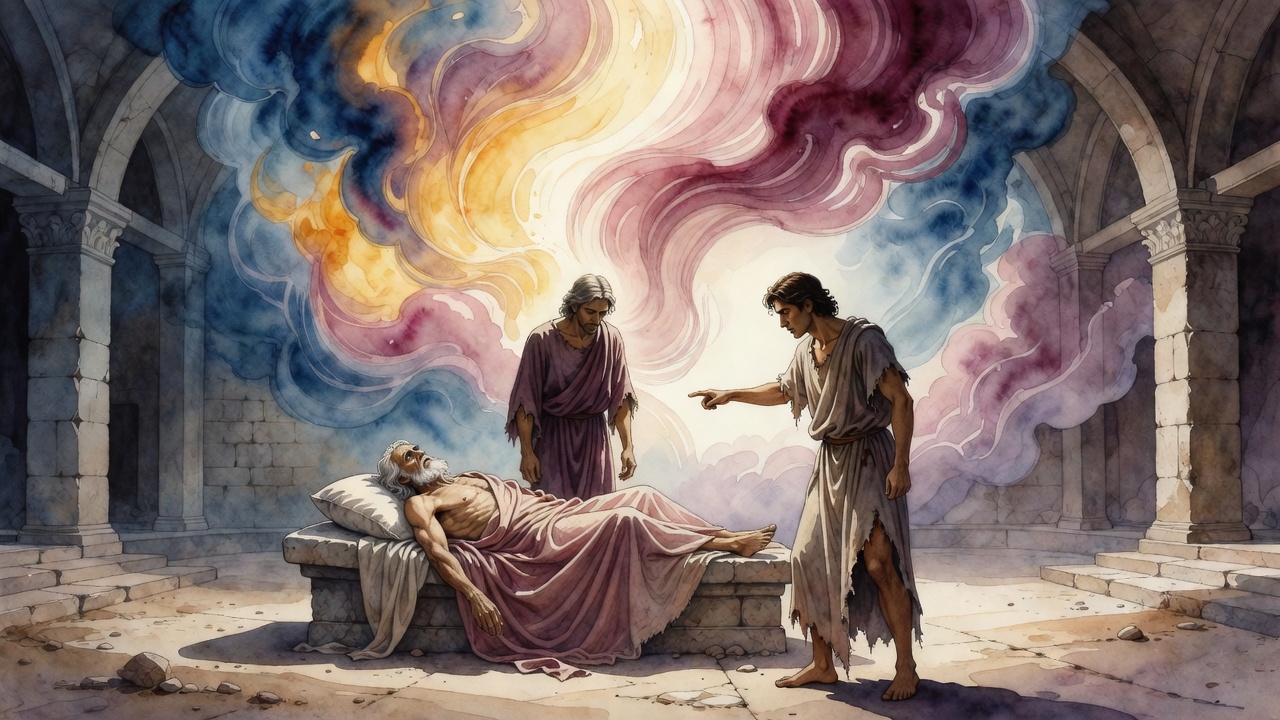
Word reached the young man. He traveled to the strange city and met a wall of faces. No one would tell him where his father had lived or died. Perhaps the townspeople hoped the inheritance would stay among them like abandoned cargo. Without an address, the will was a locked chest with no key.

Wood That Knew the Streets

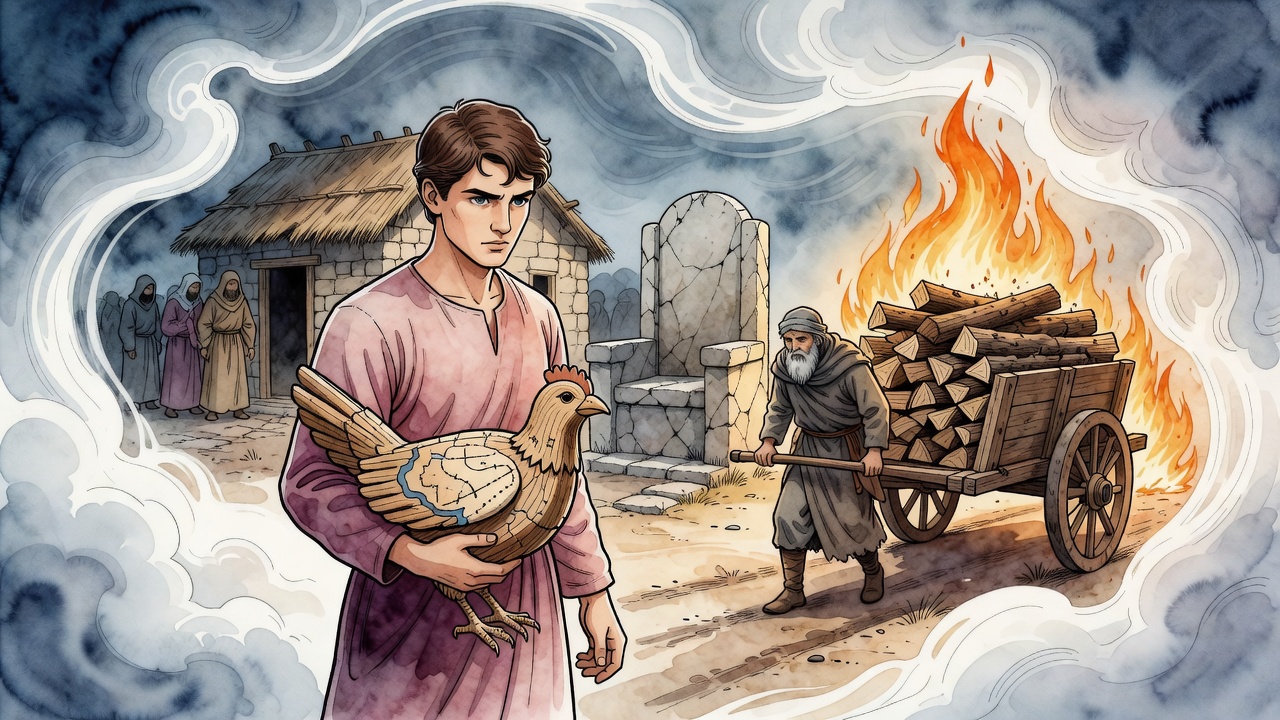
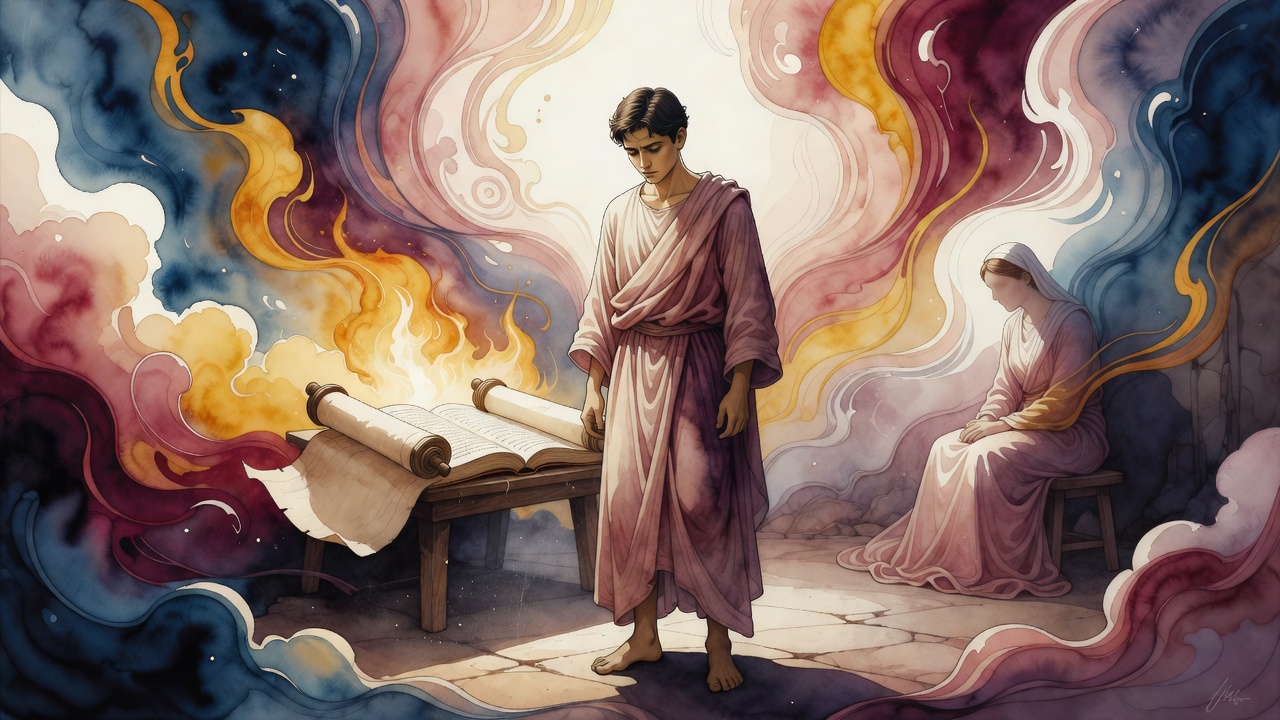
The son bought a cartload of firewood and told the carman, "Deliver this to the house of So-and-So," naming his father. The carman, hearing an ordinary order, hauled the load through winding streets. The son followed at a distance, not as a prince, as a shadow. When the wood stopped, the house announced itself. That was the first clever deed: using someone else's certainty to map a city that refused him.

Doors that would not open for a grieving heir opened for a delivery. Firewood has no pride. It goes where it is sent. The son learned the route by trusting the weight of ordinary work.

The Fowl on the Table

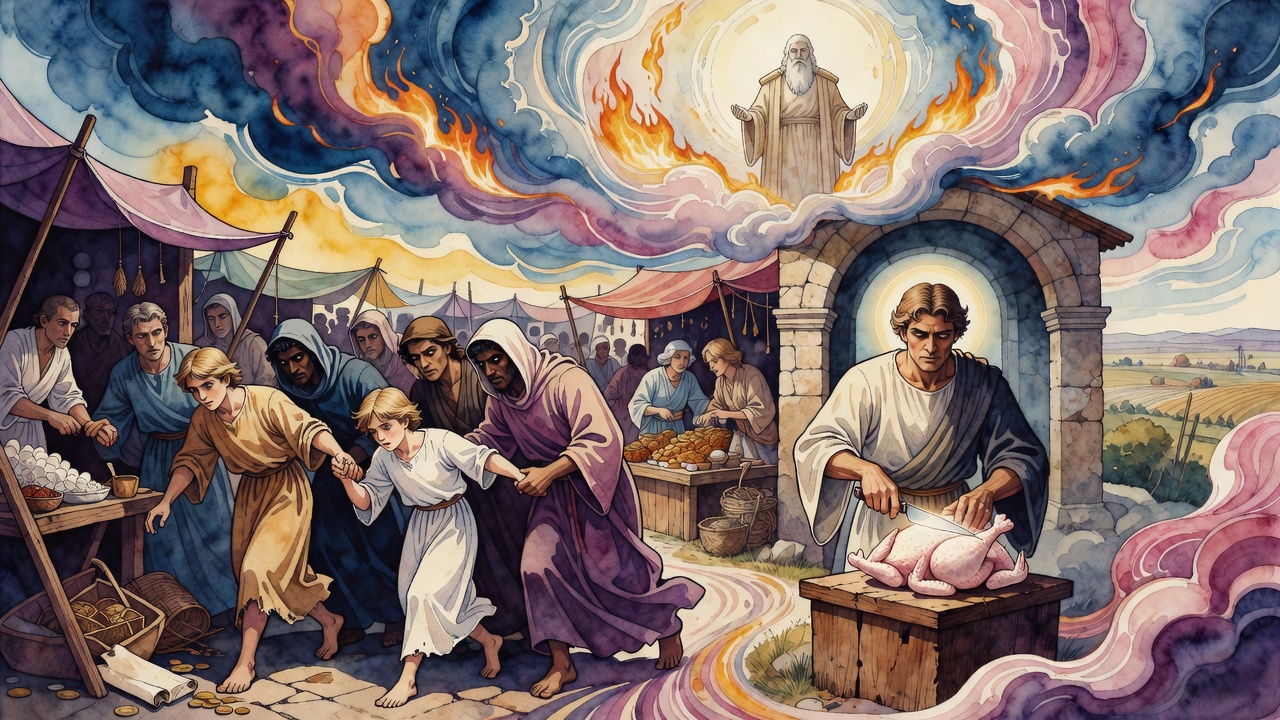
At dinner a whole fowl was placed before him to carve. He divided it with deliberate hands. The head he gave to the father of the house. The legs he gave to the sons. The wings he gave to the daughters. The innards, liver and giblets, he gave to the mother. The remainder he kept for himself.

When they asked him why, he answered without flourish. The head to the head of the house. The legs to those who must go out and work. The wings to those who will fly to other houses as brides. The innards to the one who bore children, for childbearing is inward labor. The remainder to himself, the heir, who is the rest of the father's estate. The rabbi hearing the case recognized the map of justice on a dinner plate and awarded him the full inheritance.

Property alone is not the bequest. The bequest is the mind that can find what strangers hide and divide what fortune sets on the table.

Why Two Lift What One Cannot

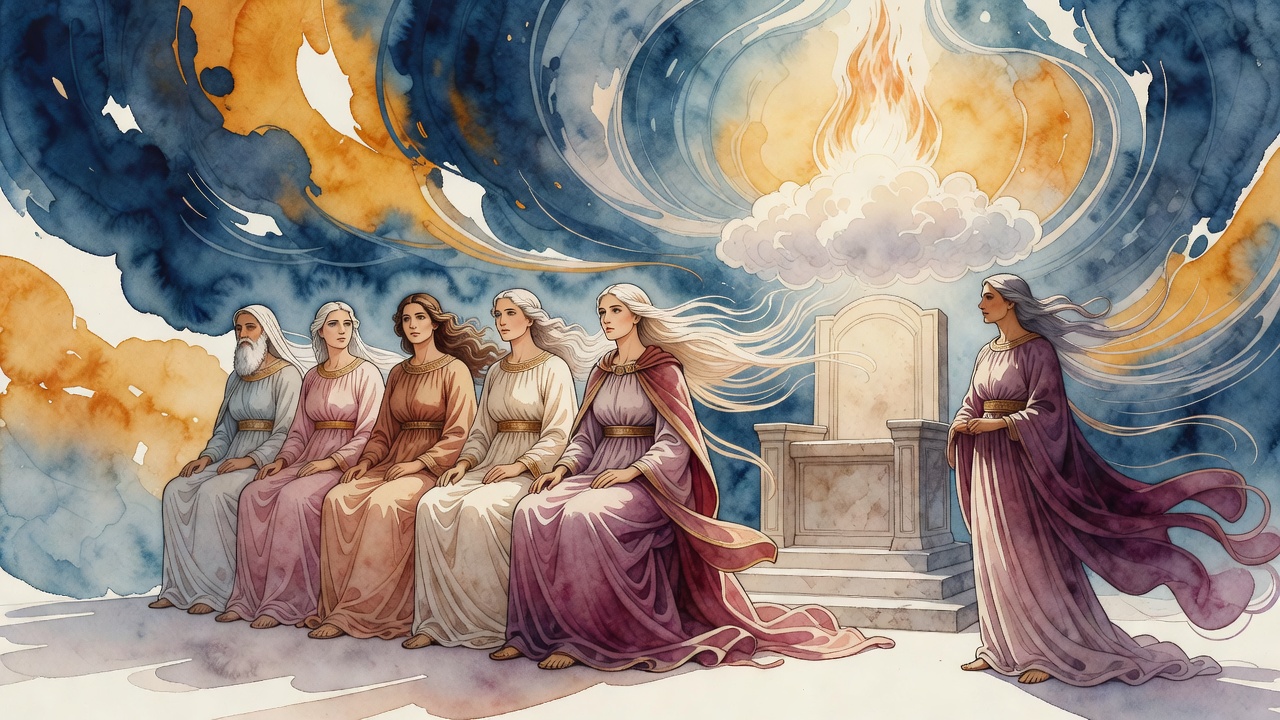
Kohelet says two are better than one, because if they fall, one will lift the other. The midrash hears study partners who catch a forgotten law, business partners who catch a failing house, a husband and wife whom God joins as a threefold cord, Amram and Yokheved rewarded with Moses, David and Batsheva steadied by Nathan. A lone traveler on the road, Rabbi Meir jokes, is greeted like a dead man. A pair is greeted as disputants. Three are greeted as peaceful ones.

The son in the foreign city begins alone and almost fails. His first move secretly invents a partner: the carman who knows the streets. His second move invents a court of meaning around a shared meal. Inheritance, the sources insist, is rarely a solo sport. Even cleverness needs a road someone else can walk and a table someone else can sit at.

Craft Beside Torah

Another midrash on enjoying life with a beloved companion reads life as Torah and the companion as a craft. Acquire a craft with Torah, the teachers say. The holy congregation divides the day into study, prayer, and labor, or winter for books and summer for work. A father owes a son circumcision, redemption of the firstborn, Torah, a trade, a wife, and some add swimming. A man without a wife, the same teachers say, lacks goodness, help, joy, blessing, and even atonement.

The merchant's will that demanded wise deeds was not a riddle for sport. It was a father's last attempt to make sure the silver would not outrun the skill. Firewood, fowl, partners, craft: all of them refuse the fantasy that wealth walks alone.

The carman wipes sweat and accepts a coin, never knowing he has just drawn a map for an heir. The household watches a stranger divide a bird and slowly realizes the plate has become a court. The rabbi leans forward when the explanation lands, because cleverness without cruelty is rare enough to reward. The townspeople who hid the address lose more than gossip rights. They lose the chance to pretend inheritance is only local appetite.

Two are better than one because falling is normal. The son falls into a city of closed mouths and invents a second pair of feet. He falls into a dinner of testing eyes and invents a language of parts. Kohelet's threefold cord is not abstract comfort here. It is the difference between a will that stays paper and a house that returns to the bloodline that earned it by wit. The father, already dead, still partners with the son through the test he left behind.


← All myths

From the tradition

Sources

3 sources

The texts behind this telling. Some cards carry a translation of the source; others are our own retelling of it, and each card says which. Every card links out to the original.

Gaster, Exempla of the Rabbis No. 303The Exempla of the Rabbis (1924)

Retold in our words. Read the original at the link below.The Exempla of the Rabbis, Moses Gaster (1924) · PD-US-pre-1929

Gaster's exemplum No. 303 preserves a Jewish folktale about a father's last clever gift to his son.

A wealthy Jewish merchant lay dying in a distant city far from home. He drew up a will that surprised his lawyers. His only son, he ordered, would receive the entire inheritance. But only if the son could first pass a test of cleverness, performing three wise deeds in succession.

The father died. Word traveled back to the son. But when the young man arrived in the strange city, he found that none of the townspeople would tell him where his father had lived or died. Perhaps they hoped to keep the inheritance for themselves. He needed the address to claim anything.

So he bought a cartload of firewood and told the carman, "Deliver this to the house of So-and-So," naming his father. The carman, assuming the order came from a legitimate customer, hauled the wood off through the winding streets. The son followed at a distance and found his father's house.

That was the first clever deed. The second came at dinner. The household sat down to eat, and a whole fowl was placed before the son to carve. He divided it deliberately. The head he gave to the father of the house; the legs to the sons; the wings to the daughters; the innards, liver and giblets, to the mother; the remainder he kept for himself.

When asked to explain, he said: the head to the head of the house; the legs to those who must go out and work; the wings to those who will fly to other houses as brides; the innards to the one who bore children, for childbearing is an inward labor; and the remainder to himself, the heir, who is the rest of the father's estate.

The rabbi hearing the case recognized the son's cleverness and awarded him the full inheritance.

The moral the exemplum carries is this: a true inheritance is not only the property. It is the wisdom to find the property when strangers hide it, and to divide what you receive justly when it sits on your table.

Full source
Kohelet Rabbah 9:1Kohelet Rabbah

Retold in our words. Read the original at the link below.The Sefaria Midrash Rabbah, 2022 · CC-BY

It turns out, that feeling has deep roots in Jewish thought. We find it beautifully expressed in (Ecclesiastes 4:9-12): “Two are better than one; because they have a good reward for their toil. For if they fall, the one will lift the other; but if one who is alone falls, there is no other to lift him.… And if one attacks, two will stand against him, and the threefold thread will not be quickly severed.”

What does it really mean to be "better together?" Kohelet Rabbah, the classic Rabbinic commentary on Ecclesiastes, dives deep into this verse, exploring its multiple layers of meaning. And the interpretations? They're surprisingly relevant to our lives today.

The Rabbis first suggest that "two are better than one" refers to two people learning Torah together. when you study with a partner, you can challenge each other, clarify confusing points, and remember what the other forgets. "For if they fall, the one will lift the other", if one forgets a halakha, a point of Jewish law, the other will bring it back. And that "threefold thread that is not quickly severed"? That, they say, is the rabbi who guides and corrects their understanding.

The commentary doesn't stop there. What about business? Surely, two partners are better than one in commerce as well. If one stumbles and faces financial hardship, the other can help them up. And when there are three partners, the bond is even stronger! Rabbi Meir even had a quirky way of illustrating this. He’d see people on the road and greet them accordingly: "Peace be upon you, dead man" to a lone traveler, "Peace be with you, disputants" to a pair, and "Peace be with you, peaceful ones" to a group of three. It's a bit… colorful, but you get the point!

Then Rabbi Yoḥanan brings in a completely different perspective. "Two are better," he says, referring to husband and wife, "than one", each of them alone. And the "threefold thread"? That's the Holy One, Barukh Hu, blessed be He, who remembers them and grants them children. Marriage isn't just a partnership; it's a sacred union blessed by God.

Rabbi Yoḥanan offers another powerful interpretation. "Two are better" – this is Amram and Yokheved, Moses's parents! They "have a good reward for their toil," which is Moses himself. Why? Because he was born already circumcised, a sign of his inherent goodness.

And the interpretations keep coming! Rabbi Yehuda suggests it's David and Batsheva, with Nathan the Prophet as the "threefold thread" who helped them navigate a complex and difficult situation. Rabbi Neḥemya sees it as Yehoyada and Yehosheva, who saved the young Yoash and overthrew the wicked Atalya, with the Sanhedrin (the high court) as the crucial third strand. And still others say it's Mordechai and Esther, with Ahasuerus, the king, as the crucial third part of the braid that saved the Jewish people from annihilation.

Rabbi Levi bar Ḥama, quoting Rabbi Ḥanina, even makes a surprising comparison: the "two" whom Mordechai and Esther hanged (Bigtan and Teresh) are better than the "one" whom Joseph hanged (the baker from Pharaoh's court!). Why? Because through Mordechai and Esther, miracles were performed for the entire Jewish people, while Joseph's act, while just, didn't have the same widespread impact. And the “threefold thread” in this case? It is the Holy One, blessed be He, who toppled Haman and saved the Jews.

Rabbi Yitzḥak takes it in yet another direction. He says that a teaching or command given by God to two people is more powerful than one given to a single individual. He uses examples from the book of Exodus where God speaks to both Moses and Aaron versus just Moses. And that "threefold thread" in this instance is Moses, Aaron, Elazar, and Itamar, passing the teachings down through the generations.

Finally, Rabbi Ze’eira touches on the dynamics of family and legacy. Families tend to pass down certain traits – teachers beget teachers, scholars beget scholars, the wealthy beget the wealthy. But, wealth isn't guaranteed to last. "It will not be quickly severed," the verse says, not that it will never be severed. Bar Kappara adds that eventually, whether it's the person themselves, their children, or their grandchildren, someone will either give charity and maintain the wealth or fail to do so and lose it.

So, what's the takeaway? Kohelet Rabbah uses this single verse to explore the power of partnership in Torah study, business, marriage, leadership, and even in divine communication. It's a reminder that we are often stronger, wiser, and more effective when we work together, and that even seemingly simple connections can be blessed by the Divine. It also reminds us that blessings and legacies require constant attention and care to ensure they endure.

What partnerships in your life make you stronger? And how can you nurture those bonds to create something truly lasting?

Full source
Kohelet Rabbah 9:1Kohelet Rabbah

Retold in our words. Read the original at the link below.The Sefaria Midrash Rabbah, 2022 · CC-BY

Kohelet Rabbah turns to Enjoy Life With the One You Love Says Ecclesiastes.

The sages of the Midrash (rabbinic interpretive commentary), in Kohelet Rabbah 9, explore this verse, and their interpretation might surprise you. Rabbi [Yehuda HaNasi] said, in the name of the holy congregation, that we should "acquire for yourself a craft with Torah." What does that mean? The Midrash cleverly interprets "life" as Torah and "woman" as a craft or trade. The idea is that to truly enjoy life, you need both spiritual nourishment (Torah) and a means to support yourself (a craft).

Why call them the "holy congregation"? Well, some say it's because of Rabbi Yosei ben Meshulam and Rabbi Shimon ben Menaseya. These guys were seriously committed – they divided their day into thirds: Torah, prayer, and labor. Others say they dedicated the winter to Torah and the summer to labor. Rabbi Yitzḥak ben Elazar even applied the title of "holy congregation" to Rabbi Yehoshua son of Rabbi Timi and Rabbi Burki, who also followed this balanced approach. It seems that finding harmony between the spiritual and the practical was a highly valued ideal.

The text then veers into some interesting, seemingly unrelated, laws around marriage and mourning. For example, it's taught that a mourner shouldn't marry until thirty days have passed. Rabbi Yehuda even extends that to three pilgrimage festivals, connecting it to the three times the word "life" appears in a related verse. However, there are exceptions, particularly if the mourner has young children or needs to fulfill the mitzvah, the commandment, of procreation. There's even a story about Rabbi Tarfon, whose wife passed away. Before the grave was even covered, he asked her sister to marry him and raise his children. Even though he remarried quickly, he still waited thirty days before engaging in conjugal relations.

And speaking of family, the Midrash outlines the mitzvot (commandments) incumbent upon a father regarding his son: circumcision, redemption of the firstborn, teaching Torah, teaching a trade, and finding him a wife. Some even add teaching him to swim! The proof-texts provided for each of these are derived from verses throughout the Tanakh, or Hebrew Bible.

But perhaps the most powerful part of this passage is its exploration of what it means to be without a wife. A man without a wife is without goodness, help, joy, blessing, and even atonement! Each of these lacks is supported by biblical verses. Rabbi Yehoshua ben Levi goes even further, adding that he is without life and peace. Rabbi Ḥiyya bar Gamda declares that such a man is not even a complete person, referencing (Genesis 5:2), where God calls them "Adam" only when they are together. Some even say that being unmarried diminishes the Divine Image, as humans are created in God's image (Genesis 9:6).

So, what's the takeaway? Is it simply about finding a partner? Perhaps. But it feels like there's something deeper here. The Midrash seems to be suggesting that a complete and fulfilling life requires balance: a balance between the spiritual and the practical, between personal growth and connection with others. It’s about finding that “craft” to sustain you, while also nurturing your soul with Torah – with wisdom, learning, and connection to something larger than yourself. And maybe, just maybe, finding that connection with another person is a key piece of that puzzle. A partner to share the journey, to help us become more complete versions of ourselves.

Full source