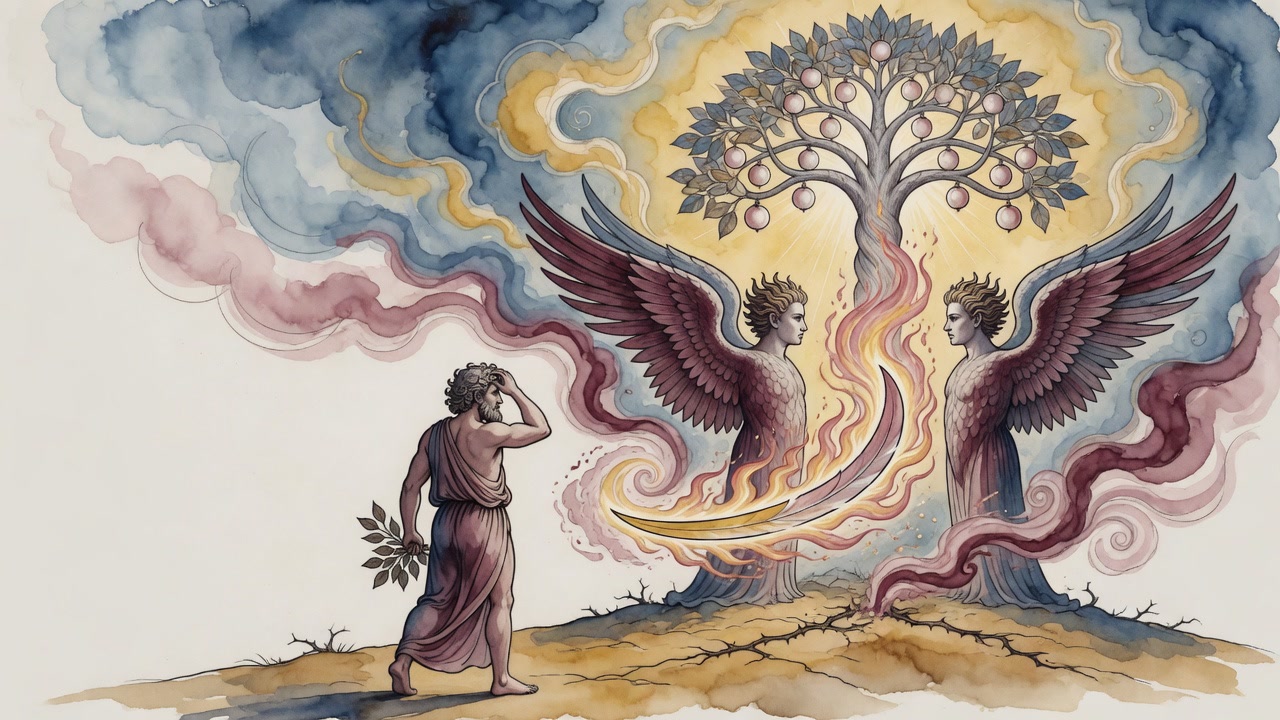
Ten Crowns Burn on the Throne and the Name Fills the Empty Space
God pulls back, speaks four letters into the hollow, and the light falls to a throne where ten crowns burn and no locked room stays hidden.
Table of Contents
 Click for full size
The Hollow He Left Behind
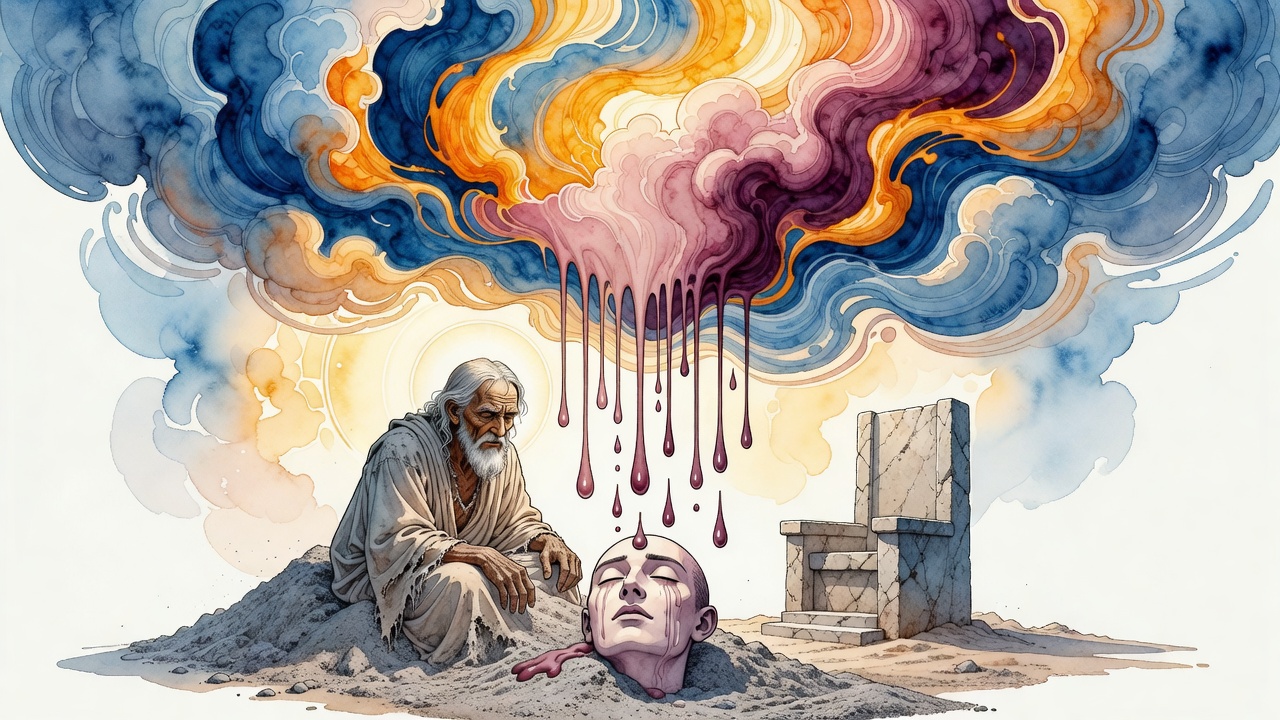
Before anything stood anywhere, God pulled back from a space in the middle of Himself.
The space was empty because He had emptied it, and the first thing put into it was not light. It was a name. Four letters went into that hollow, yod heh vav heh, sounded where there was nobody to hear them, and only after the Name was in the empty place did the first spark go out from it and start falling. Since nothing at the bottom could have survived that light undimmed, it came down world by world, losing strength at every stage.
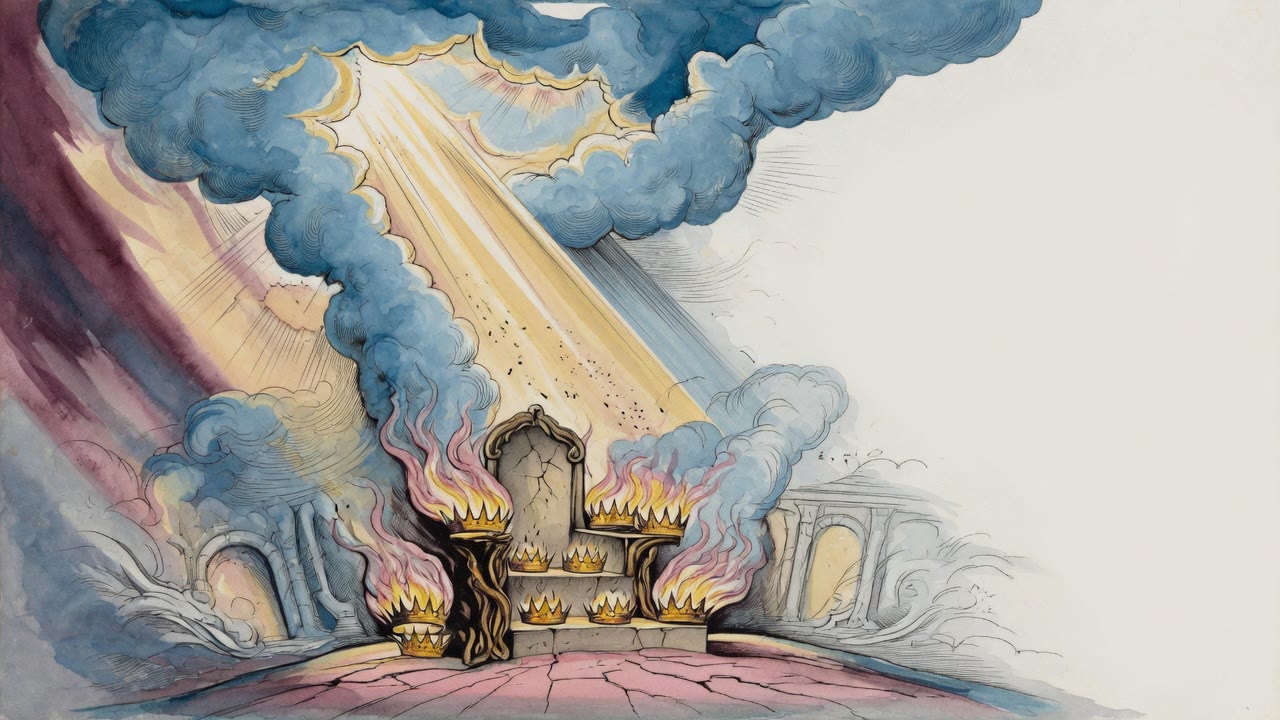
At the bottom stood the Throne of Glory, and ten crowns burned on the head of the King who sat there. Keter, Chochmah, Binah, Chesed, Gevurah, Tiferet, Netzach, Hod, Yesod, Malchut. "They are He, and He is they," says the Zohar, and if that sounds like two things being called one thing, the Zohar answers with a coal: the flame stands up off it in bands of color, but no knife anywhere can get in between and lift the flame away.
The List Kept in the Palace
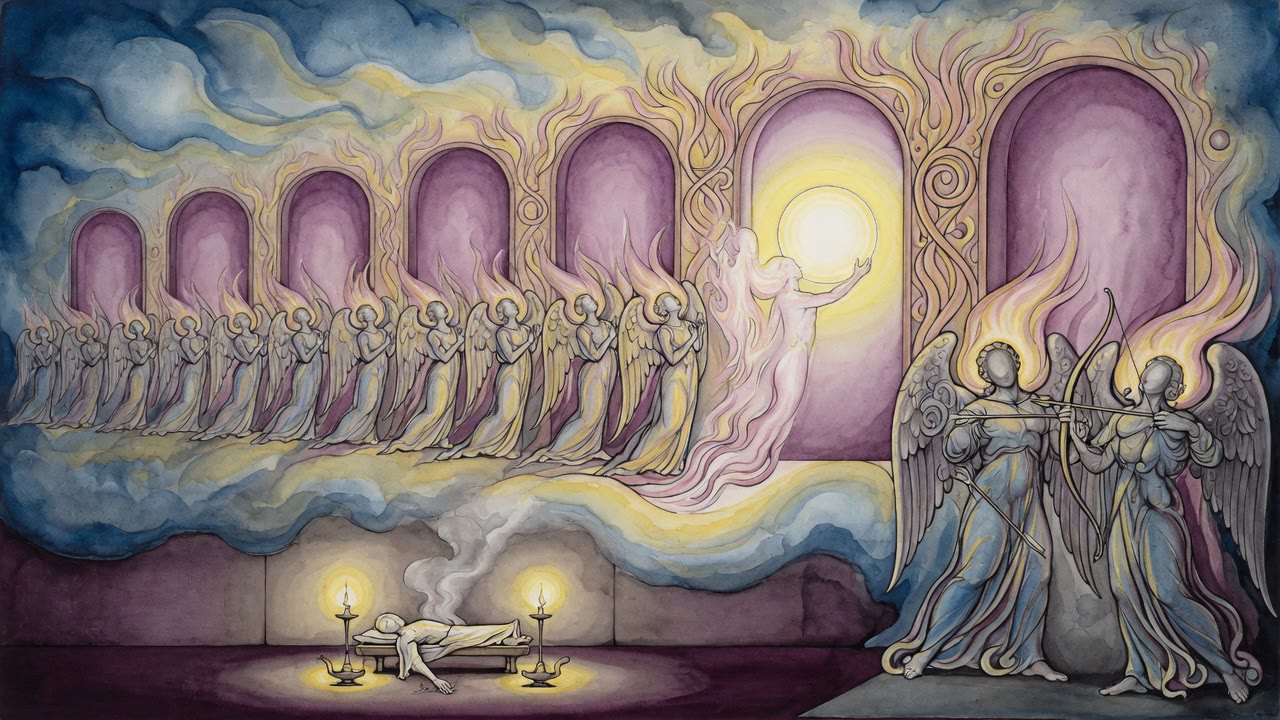
From that Throne, the thing worth saying about the King is not that He is large. It is that He watches what men do in their locked rooms.
A man works a bolt in the dark and carries out a sack, and He knoweth and recognizeth it. A man goes in to another man's wife behind a barred door with the lamp out, and He knoweth and recognizeth it. A man kills where the ground will take the blood. A man is only suspected of lying with a woman in her uncleanness, the sort of thing a court can never touch and the neighbors mutter about while the buckets fill, and that lies open too. A man spreads a story in a low voice and walks away certain nothing can be traced to him, and He knoweth and recognizeth it.
The list runs through theft, adultery, murder, and slander, and a list like that ought to end on the murder.
The end says something else. Greatest of all, the palace text says, is that He recognizes every one of those who know sorcery. So the knife is not the top of the list. The top of the list is the hand that has found out where heaven's levers are and pulls one without being told to.
One Mouth, One Day a Year
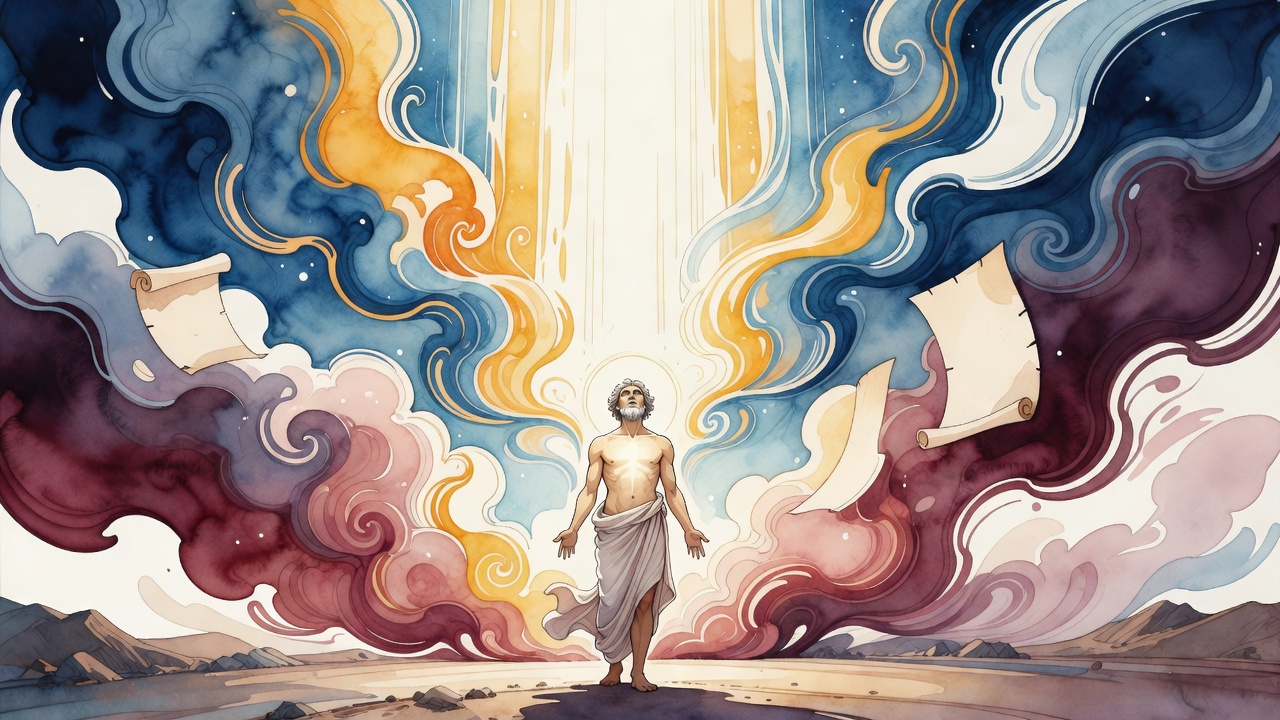
On earth the Name had exactly one licensed mouth, and it opened once in the year.
The High Priest went in past the curtain on Yom Kippur, alone, into a room nobody else could enter, and said the four letters correctly. Outside, a whole nation stood in the courts listening for a sound that was not meant to reach them. Then he came back out into the daylight and did not say it again for twelve months.
Rome burned the Temple, so there was no room to go into and no day that carried the license. The rabbis said afterward that the true pronunciation was lost, which is not the same as destroyed. Lost things are still somewhere.
What survived was one man in a generation who had it, the tzaddik (a righteous person) ha-dor, and Jewish memory has kept a short list of names: Rabbi Adam, Rabbi Judah Loew of Prague known as the Maharal, and the Ba'al Shem Tov. None of them wrote it down, since a man who writes it down has handed it to whoever picks up the paper next.
The Ship on the Cell Wall
Rabbi Shimon ben Duran was one of the men who had it, and he was locked in a cell.
The Balkan tradition that carries him does not say what the charge was. It says what was in the room: a wall, a man who knew how the letters were sounded, and no other way out.
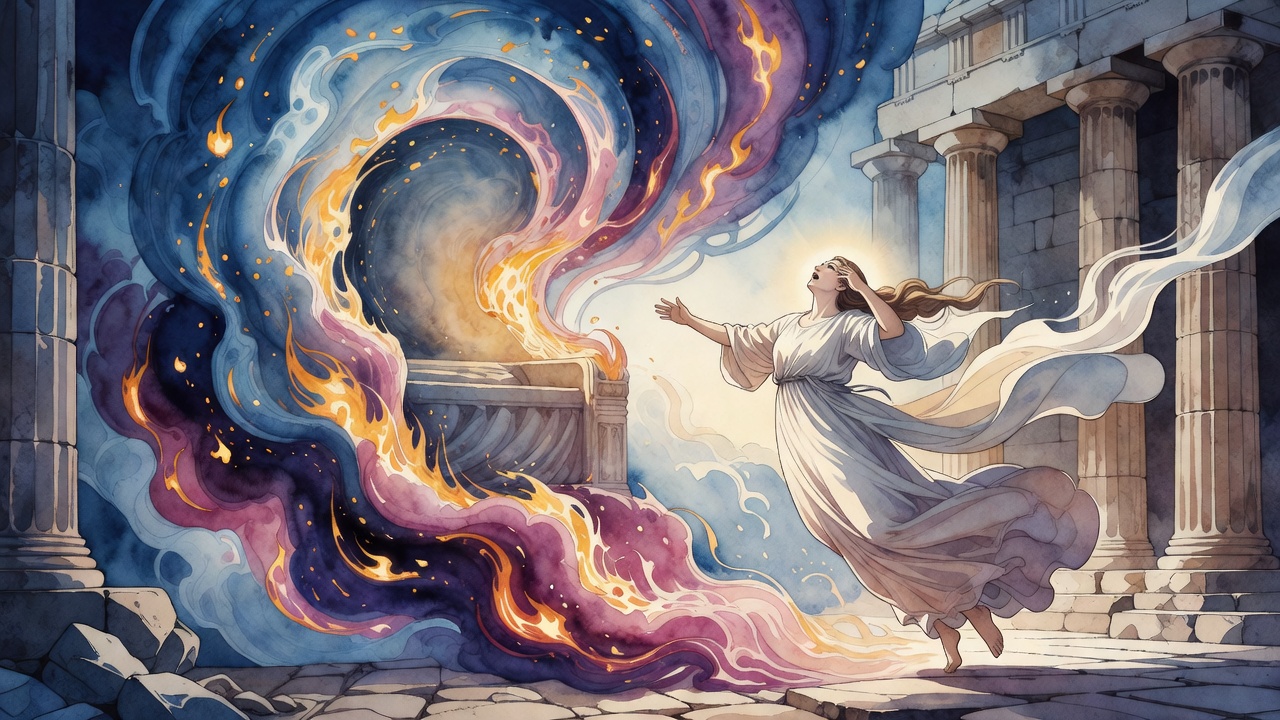
He drew a ship on the stone. He took his time over the hull and the mast and the lines of the rigging, and when it was finished he stood in front of it with the pronunciation in his mouth. He had held that sound his whole life on the understanding that it was not for getting things, but he was in a cell, so he was about to spend it on a door. He said it.
The ship came off the wall with its rigging strung and its timbers wet, water climbed under the keel where there had been floor, and he sailed out of the prison in a thing he had drawn himself. Far above him ten crowns went on burning, and the one list the King keeps above theft and murder and slander is the list of men who can do exactly that.
Four Letters Under the Skin
Other men worked out the same arithmetic and used it on the dead.
The Ma'aseh Buch keeps the case of a rabbi who stood over a corpse and used the Name to bring it back as far as speech. The mouth opened and confessed a crime that had no witnesses, so a thing done in a secret chamber came out of a dead throat in front of a room of living people.
In the family chronicle Megillat Ahimaaz, a young man died and was not allowed to stay dead. Someone wrote the four letters on a scrap of parchment, opened the skin of the boy's arm, laid the Name inside the wound, and sewed the arm shut over it. The body stood up. It walked and it worked and it never said anything, because the mouth that could have spoken was not the one holding the letters.
The Name that had been spoken into an empty space before there was anything anywhere to hear it was now stitched under a boy's forearm, holding a corpse upright in a village street, and every crown on the Throne saw the seam and the hand that had made it.
← All myths