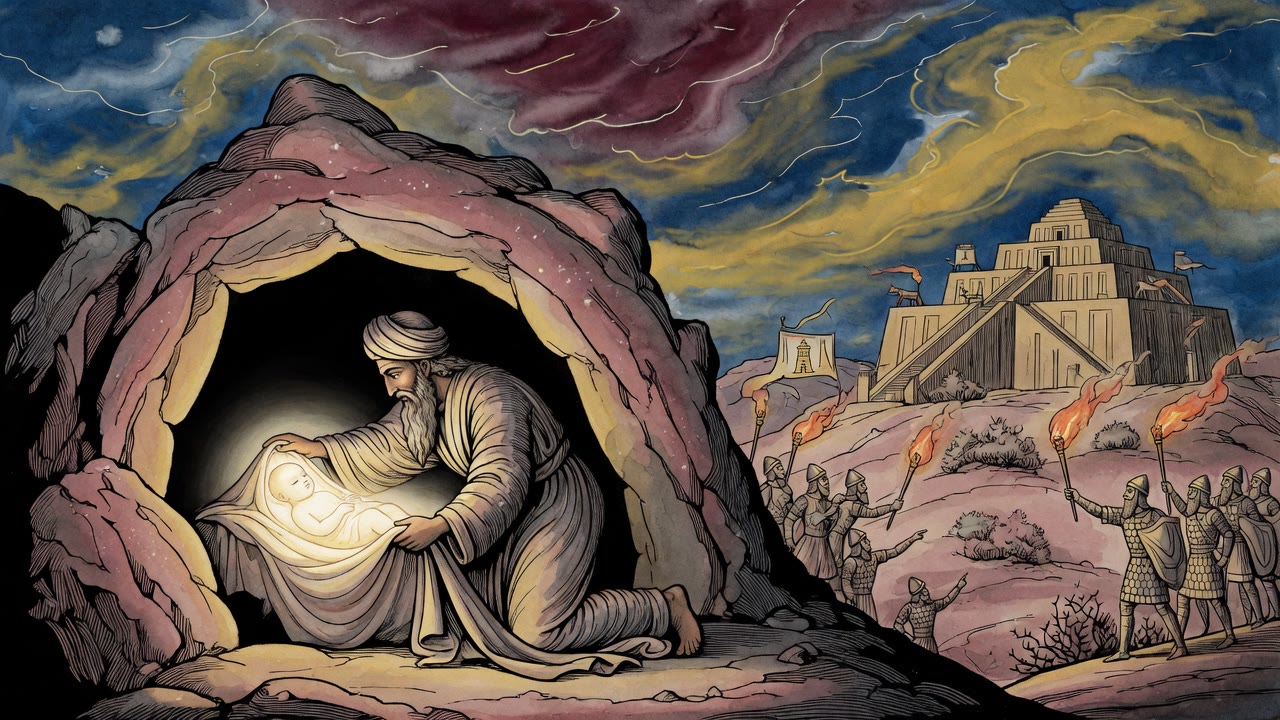
Terah Repented Before Abraham Could Rest
God had promised he would go to his fathers in peace. Abraham heard the clause and asked which house that was, the one that still sold stone gods.
Table of Contents
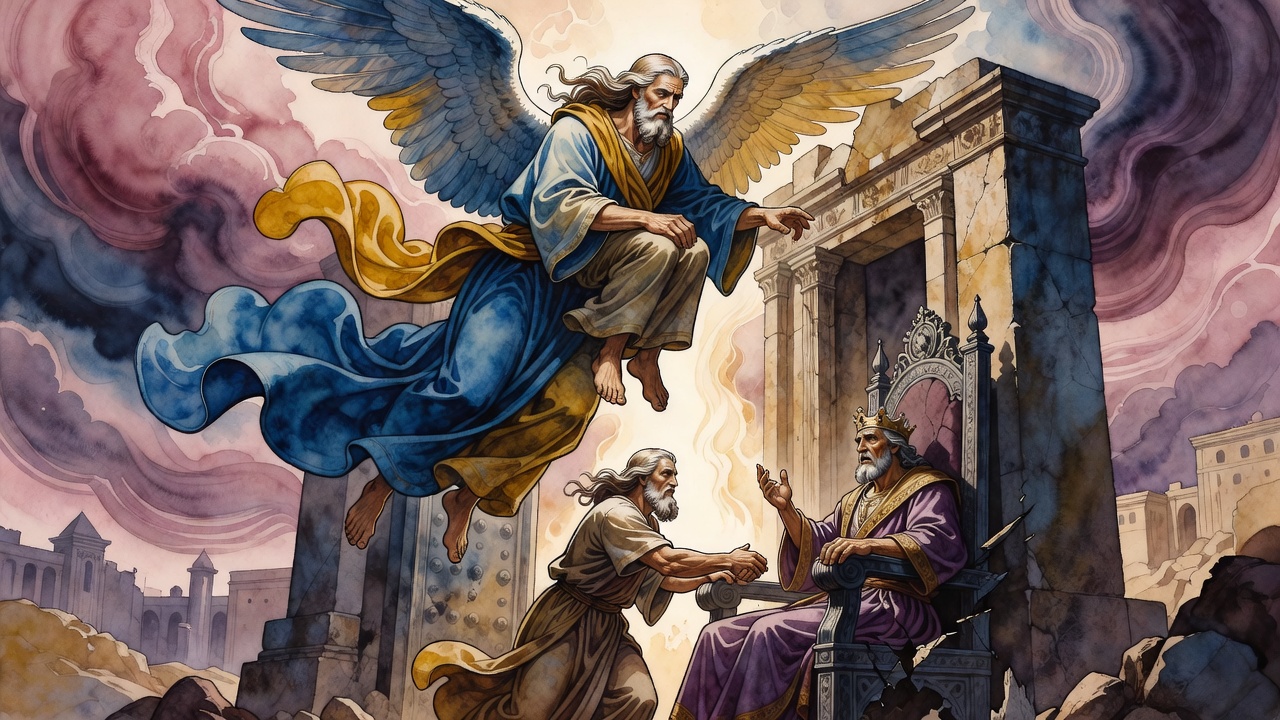
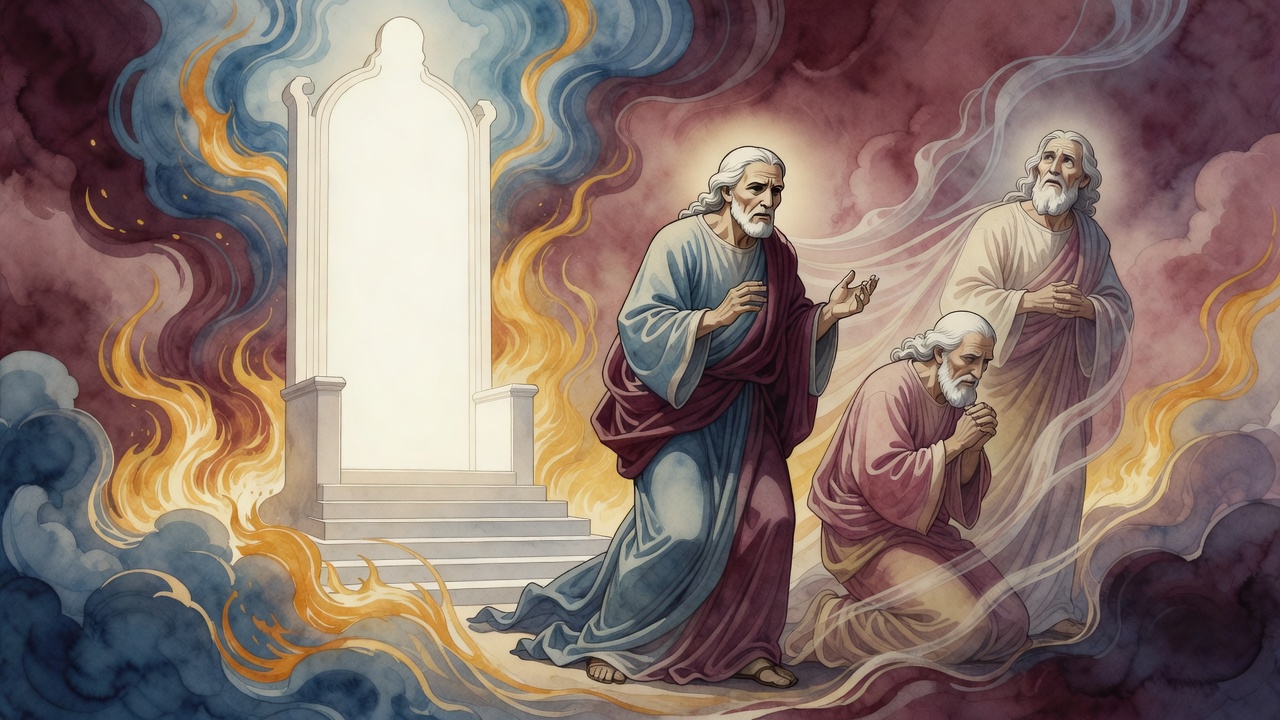
Abraham neared the end of his years with a fear that had nothing to do with Philistines or famine. God had promised, "You shall come to your fathers in peace" (Genesis 15:15). Abraham heard the clause and trembled.
 Click for full size
"All the good deeds I have heaped up across my years," he said, "and I am to go down to my fathers, into the house of idols, to Terah who carved gods from stone?"
Then heaven spoke a comfort sweeter than land or sons. "By your life, your father has repented."
The Doubled Name at the Last Gate
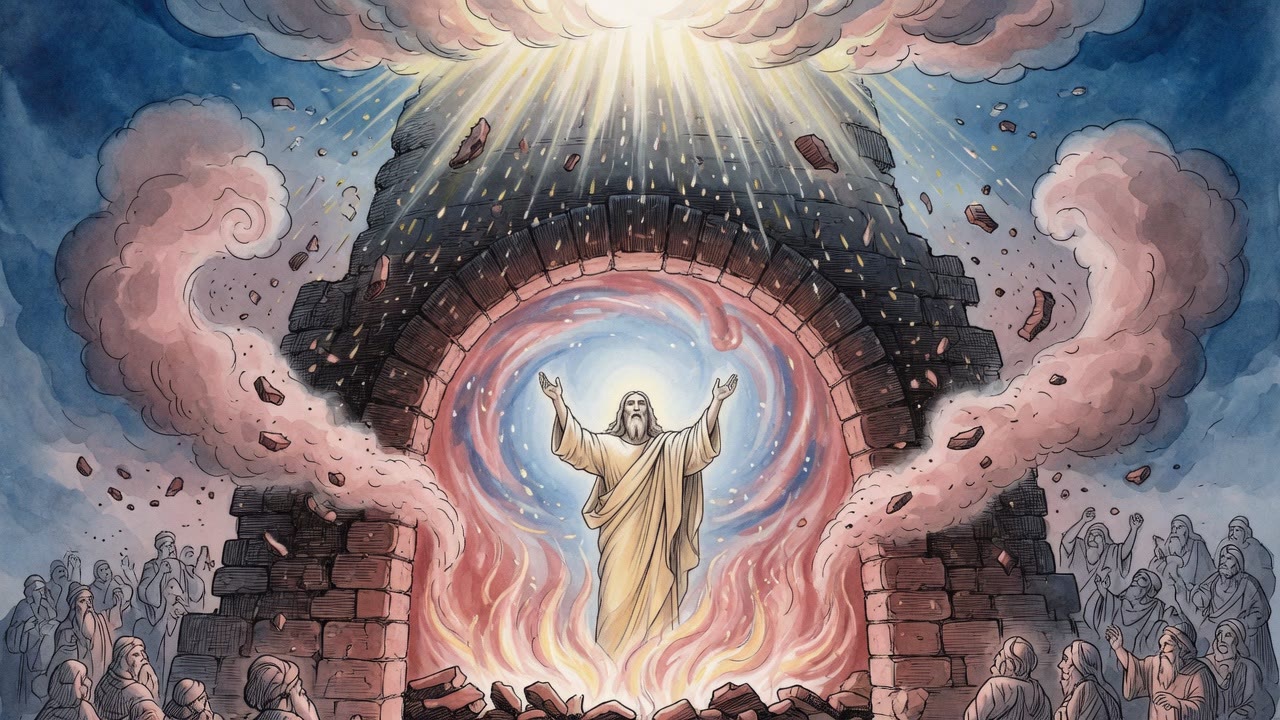
When the bush burned and the voice called "Moses, Moses," Rabbi Abba bar Kahana taught that a doubled name marks a share in this world and in the World to Come. The same stamp falls on Terah, Terah. The repetition is not a scribe's slip. It is a verdict written twice so no one can miss it. The idol-maker who turned receives the double seal.
Abraham could lie down. The road to his fathers no longer ended in a workshop of stone gods that cannot walk. The man who once sold figures that could not save themselves had changed sides while his son still breathed. Peace in the promise finally fit the family tree without a gag of shame at the last gate.
A patriarch's last anxiety was not for his own crown or his herds. It was for the company he would keep in death. Heaven answered that anxiety with news, not with a scolding.
Stranger Even in the Promise
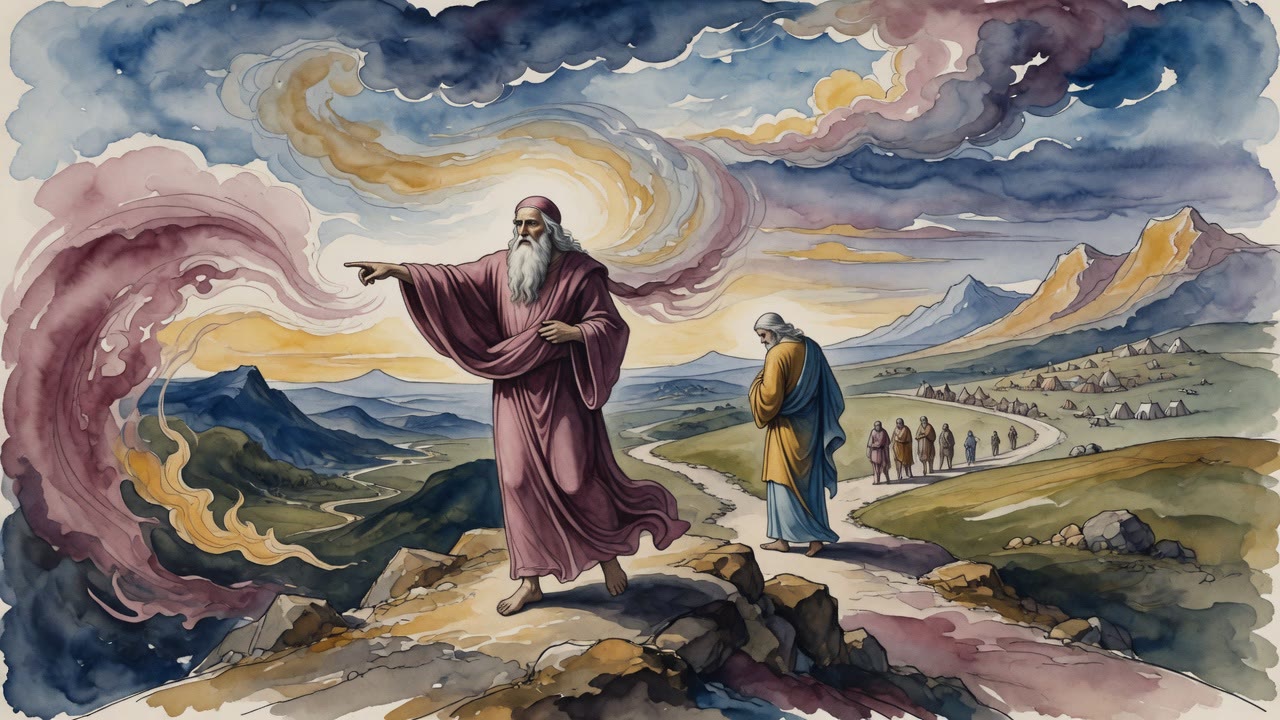
Years earlier Abraham had stood among Hittites and said, "I am a stranger and a sojourner with you" (Genesis 23:4), bargaining for Sarah's grave at full price. David would later say the same of all flesh before God, days like a shadow, ancestors as temporary as the living.
If Abraham and David call themselves strangers, no one owns the earth as a permanent throne. The man who waited for news of his father's repentance was the same man who refused to talk like a landlord of eternity. He bought a cave. He did not claim the continent. Sojourning was the honest speech of people who know they pass through, even when the land is promised to their seed.
Terah's turn did not make Abraham a king of permanence. It made the next world a place he could enter without choking on the phrase "your fathers." Bloodline repaired is not the same as empire seized.
The Calf That Opened Machpelah
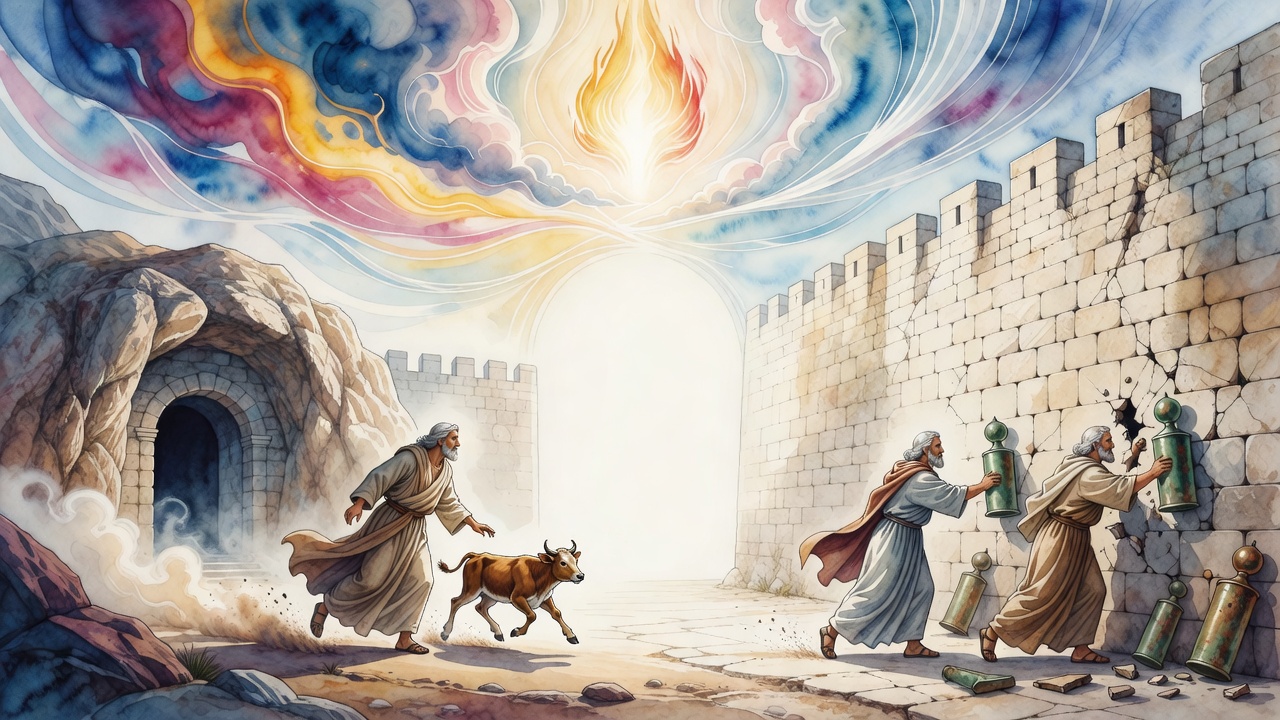
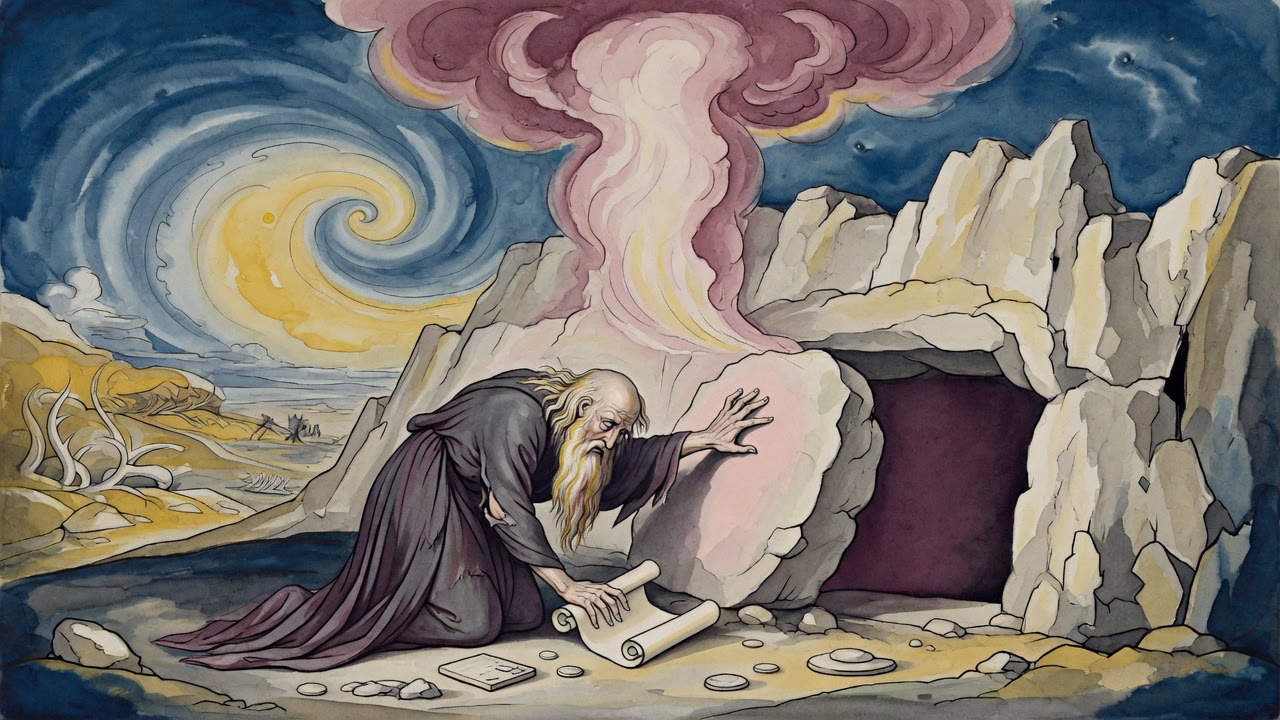
Related legend walks Abraham toward the Cave of Machpelah on the track of a calf. He had run to the herd to feed three travelers. The cakes never reached the table. He chose a tender calf, and the animal broke loose as if it knew the knife. Abraham chased it. The calf ran straight into the mouth of a cave.
Inside waited the first sleepers of the human story. Adam and Eve lay on their couches, lamps burning steady above their heads, the air thick with a sweet fragrance that did not belong to this world. Abraham learned the field was not ordinary ground. He would later pay Ephron's price with silver weighed out in the hearing of the city. The cave became the family mouth into the earth, a foothold for strangers who still needed a place to lay their dead.
Burial planning and repentance news belonged to the same late chapter of a life. The stranger bought a foothold among the Hittites. The father turned from idols in a report from heaven. The son could come to his fathers without the last flinch that had spoiled the promise's wording in his ears.
What Repentance Buys a Son
Abraham smashed idols in the old stories of his youth, fire and hammer and argument. The end of his life was not another hammer blow. It was a report. Terah repented. The war with the father's workshop ended not only in the son's rebellion but in the father's own turning. Scripture's double "Terah" keeps the door open. An idol-carver is not finished forever the moment the son walks away.
Abraham's peace was specific. Not generic calm. The calm of a man told his origin has been repaired enough to share eternity. He could gather his breath, settle Keturah's sons eastward, place Isaac at the center, weigh the silver for the cave, and go the way of all earth without that last private terror.
The stranger who bought a grave died less strange to his own blood. The Name that doubles a name had written Terah into both worlds, and Abraham's fear finally had nowhere left to stand. Terah did not become Abraham. He turned enough for the doubled name and for a son's peace. That smaller claim was still large enough to rearrange a deathbed. Abraham could sleep. The workshop no longer owned the end of the road.
← All myths