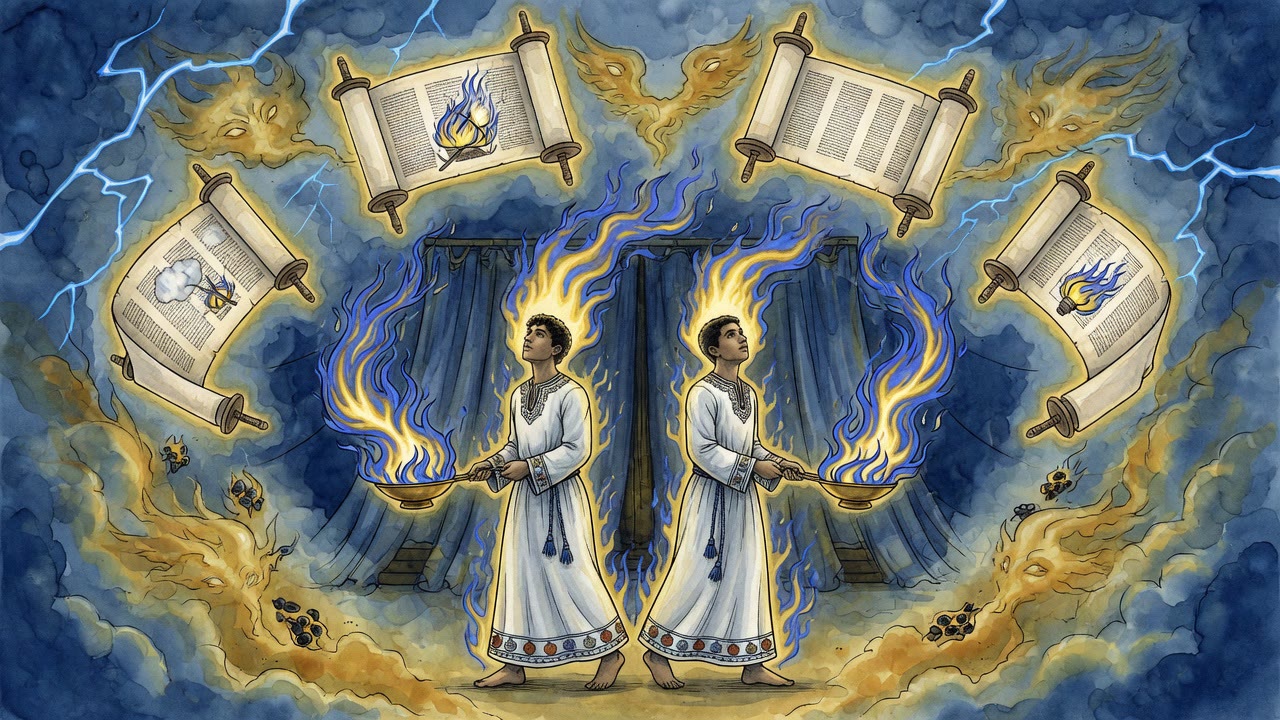
The Altar Fire That Traveled Under a Pot
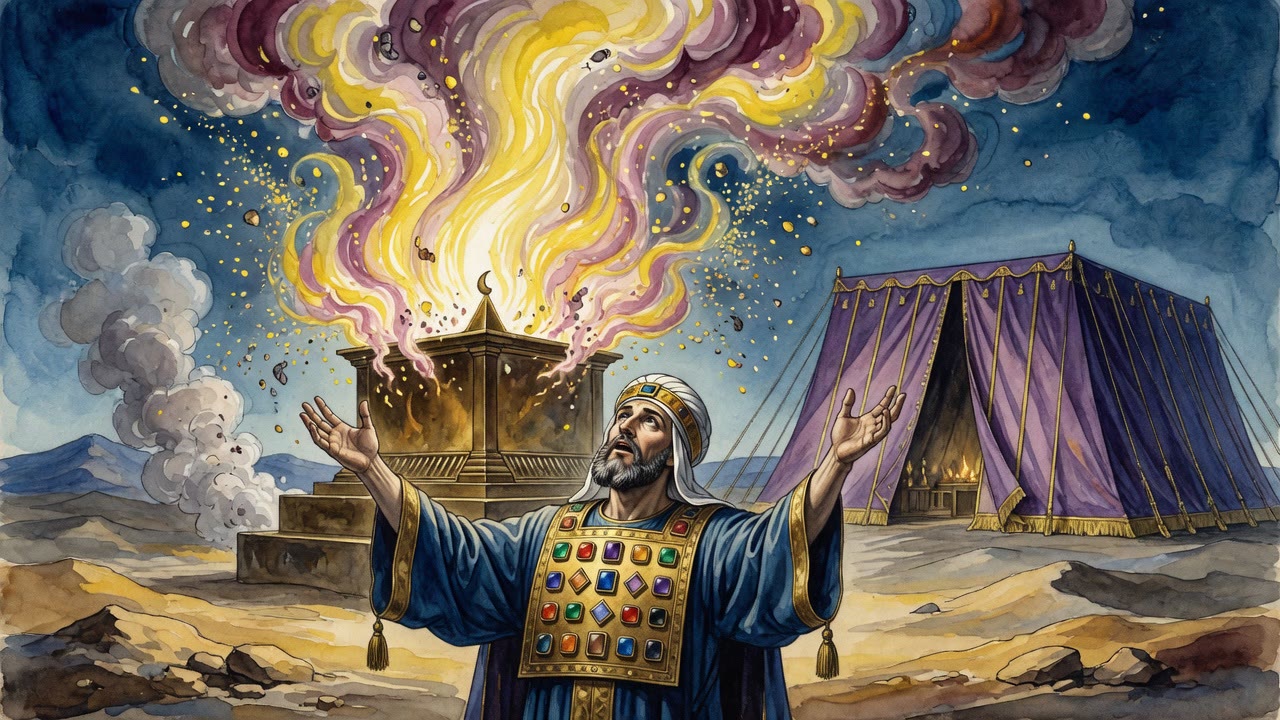
Ash still clung to the bronze when they lifted the poles. Someone overturned a pot over the last coal and hoped the desert would not win.
Table of Contents
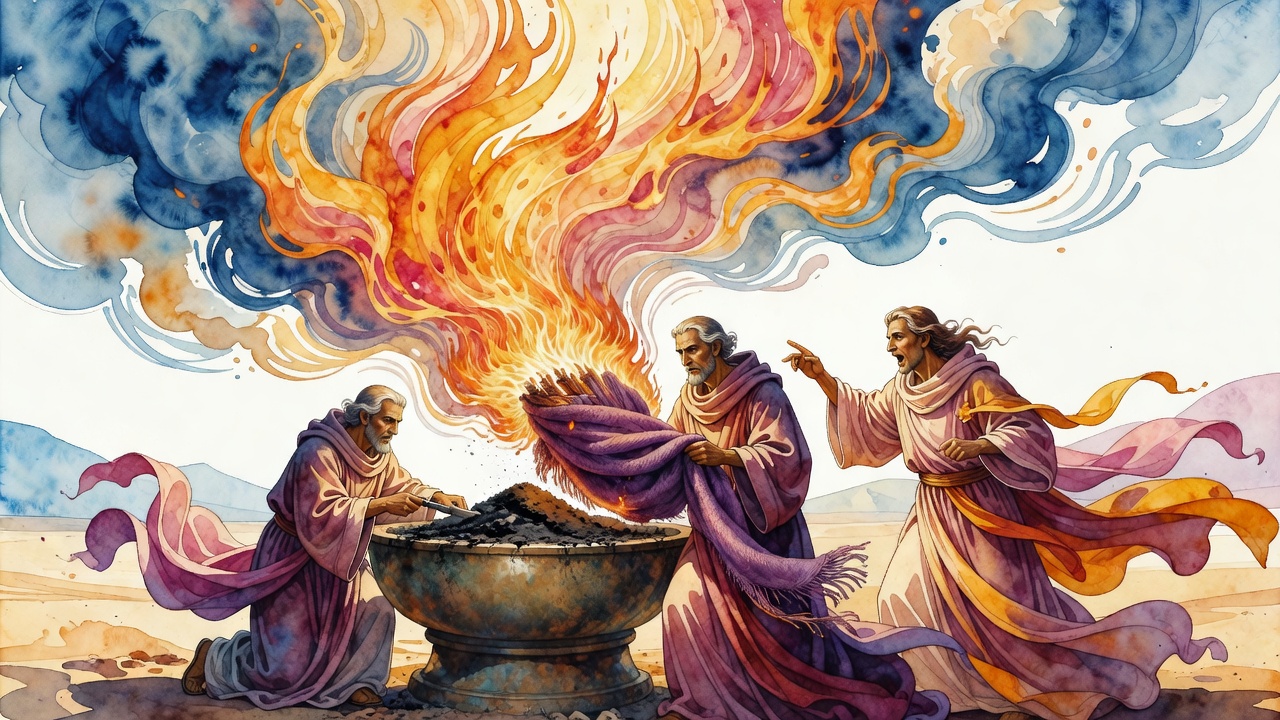
Ash came off the bronze first. Hot gray dust, the leftover of rams and flour and the daily insistence that Israel still stood under mercy. Priests worked with covered hands and the smell of old smoke in their beards. The camp poles were already lifting.
 Click for full size
Then purple wool, not the sky-blue of the inner vessels. Fire-pans, forks, shovels, basins settled on top. Over all of it the hide of the tahash (תחש), then the staves.
Ash Came Off the Bronze
The bronze altar stood in the courtyard, outside, so it did not take sky-blue. Purple was the color of its work. Upon that bronze they had offered daily offerings, sin offerings, guilt offerings, burnt offerings, and peace offerings. A priest pulled the cloth tight and muttered that this metal had been weaving Israel from sin all year, and protection has a color even when the camp is only dust and goats and staves.
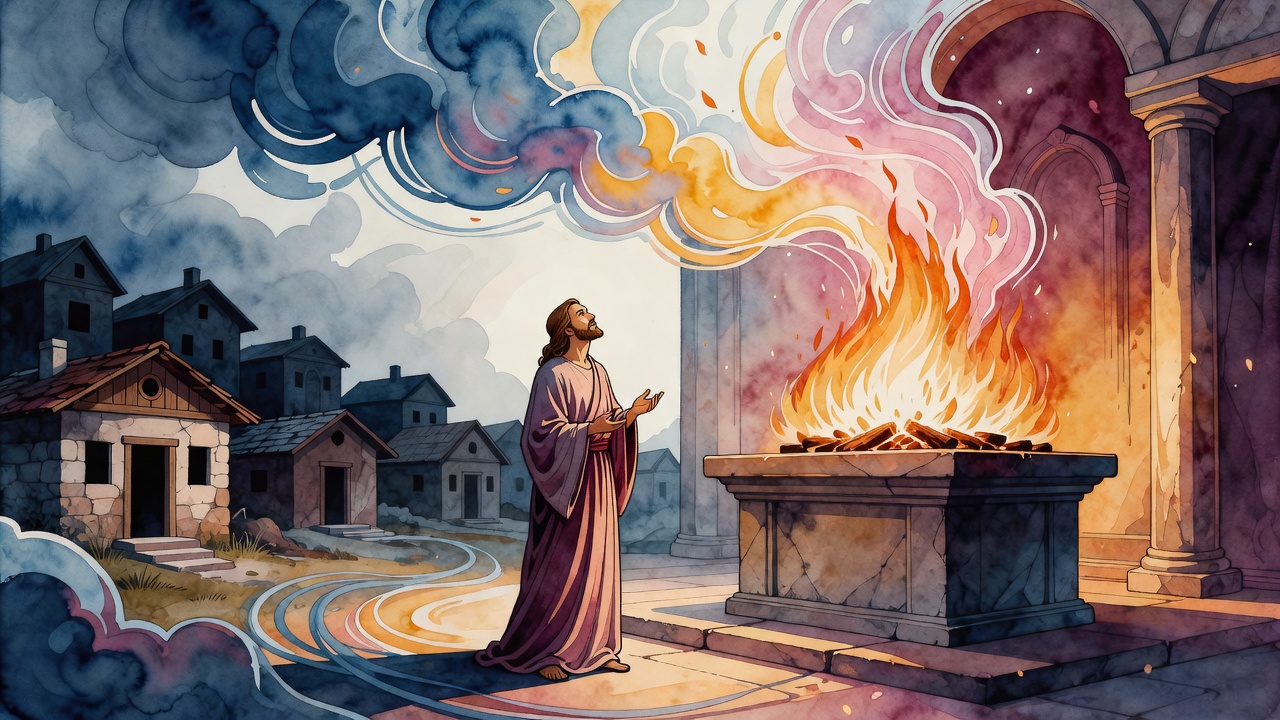
The coals underneath still breathed. Leviticus had said a perpetual fire. Even on Shabbat. Even in impurity. It shall not be extinguished (Leviticus 6:6). The road did not care. Dust and thorn do not keep a commandment. Hands had to.
One priest reached to strip more ash. Another caught his wrist. The flame had a will to continue, and the journey had already started in the ropes.
They Overturned a Pot
Rabbi Yehuda would later show the motion with his own hands. They placed fire there after the ash came off, then overturned a pot over the coal so the flame would travel under metal. Simple. Practical. The pot was not listed with the fire-pans and forks and shovels because it was busy being a lid.
Rabbi Shimon heard the verse about removing ashes even on journeys and pictured a different road. Strip the ash. Tend the fire in the open. Rekindle as needed. Do not trap it. Let the priests manage it mile after mile with their faces in the heat.
On this march the pot won. A priest inverted the vessel. The coal went dark to the eye and stayed alive to the hand that hovered too close. They spread the tahash hide, set the staves, and lifted. The altar left the ground as a wrapped shape. Children saw hide. Adults knew there was a coal under iron, walking with them.
Purple Wool on the Poles
When the column moved, the purple-wrapped altar was the portable fact of atonement. Sin still needed a place. Mercy still needed heat. A nation that lets the perpetual fire die has already decided the desert is only sand. A nation that carries a living spark under iron has decided the desert is still a courtyard in motion.
The priest who had wanted the ash stripped walked beside the one who had set the pot. Neither spoke for a long stretch. Wind pushed at the hide. The staves cut into shoulders. Somewhere behind them a goat complained. The coal made no sound.
At noon a child asked why the altar wore purple on the road. The priest with the burned beard said, "Because this bronze has been taking sin off us all year, and that work keeps its color even out here." The child looked at the hide and did not see the pot. That was the point of the pot.
Meat Burned by the Third Watch
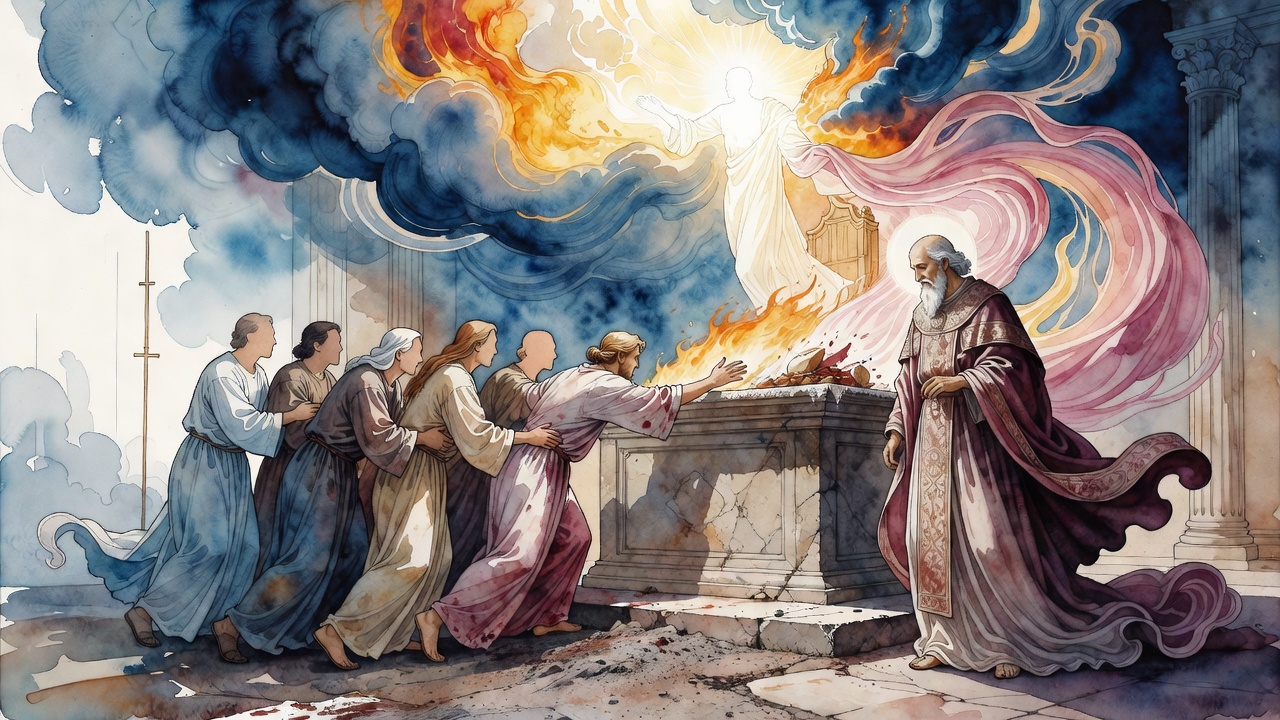
Another fire waited for them when the calendar turned. Passover does not permit slaughter in the light. The knife waits for the border of evening. Meat is eaten from evening into the third part of the night. Nothing left after that hour may remain. It is burned. No boiling. No raw flesh. Roast on the fire. Head, inwards, feet. No bone broken.
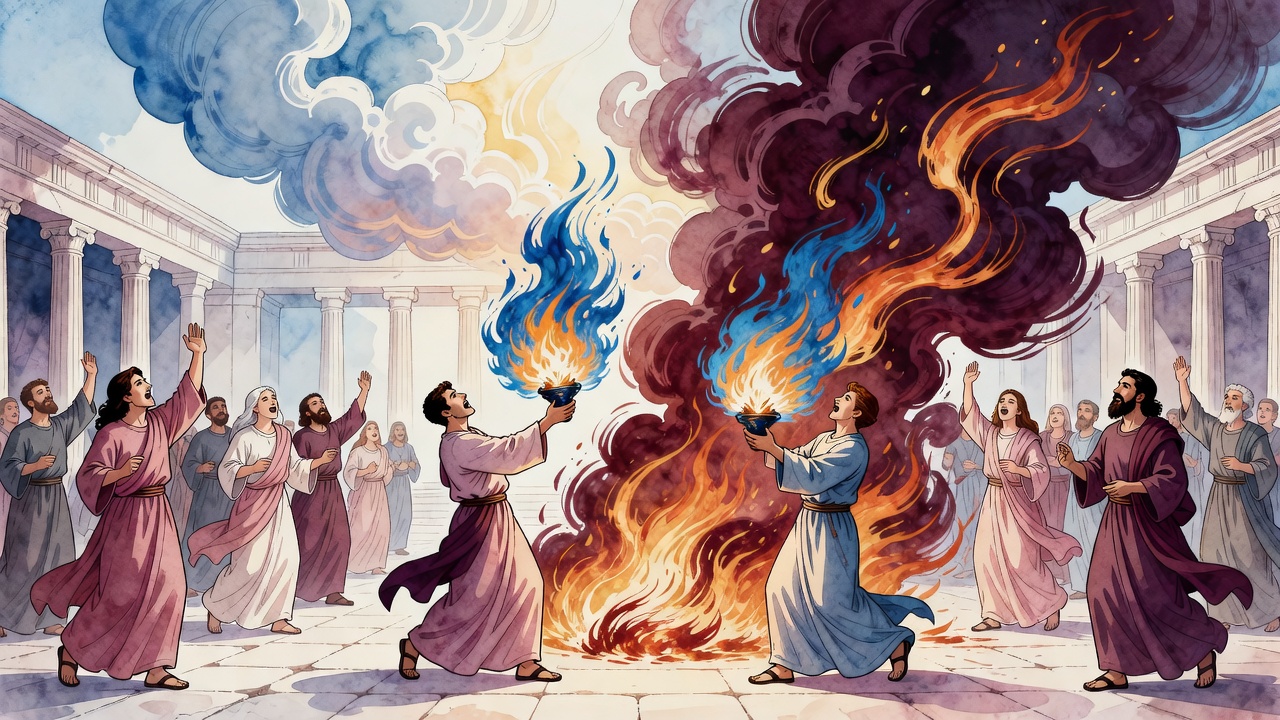
The same hands that had sheltered a coal under a pot now turned a lamb over flame. One fire is continuity. One fire is total consumption. The altar coal must survive the march. The Passover roast must be finished, then finished again by flame, so that nothing lingers as leftover holiness past its hour.
A woman watched the sky for the third part of the night and shoved the last scraps into the heat. Fat popped. The bone held. The fire that ended the meat was cousin to the fire that never ended on the altar. Both refused the half-measure.
The Coal Stood Up Again
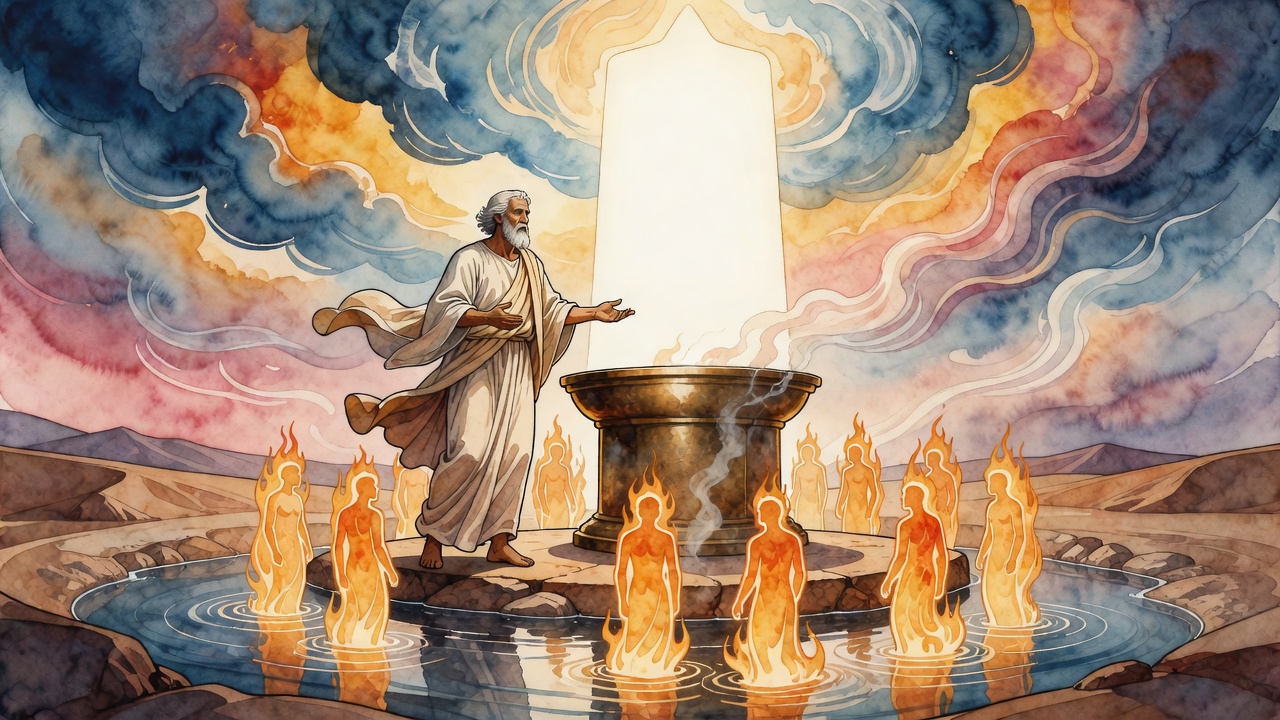
At the next station the poles came down. Someone lifted the pot. Air found the coal. Flame stood up as if it had only been holding its breath. What must not die can be sheltered without being smothered if hands know their work.
Rabbi Yehuda's pot looked almost comic until the flame stood. Then it did not. Rabbi Shimon's open tending would have been another kind of labor, faces in the heat all day. This time the lid had been enough. The bronze took its purple off. The utensils came down. Ash would gather again by evening.
Far down the road the child asked what had been under the hide. The priest set the pot beside the altar, still warm, and did not give a slogan. He pointed at the flame. It leaned in the wind and held.
← All myths