Parshat Shemini5 min read

Nadab and Abihu Died Drawing Near with Alien Fire

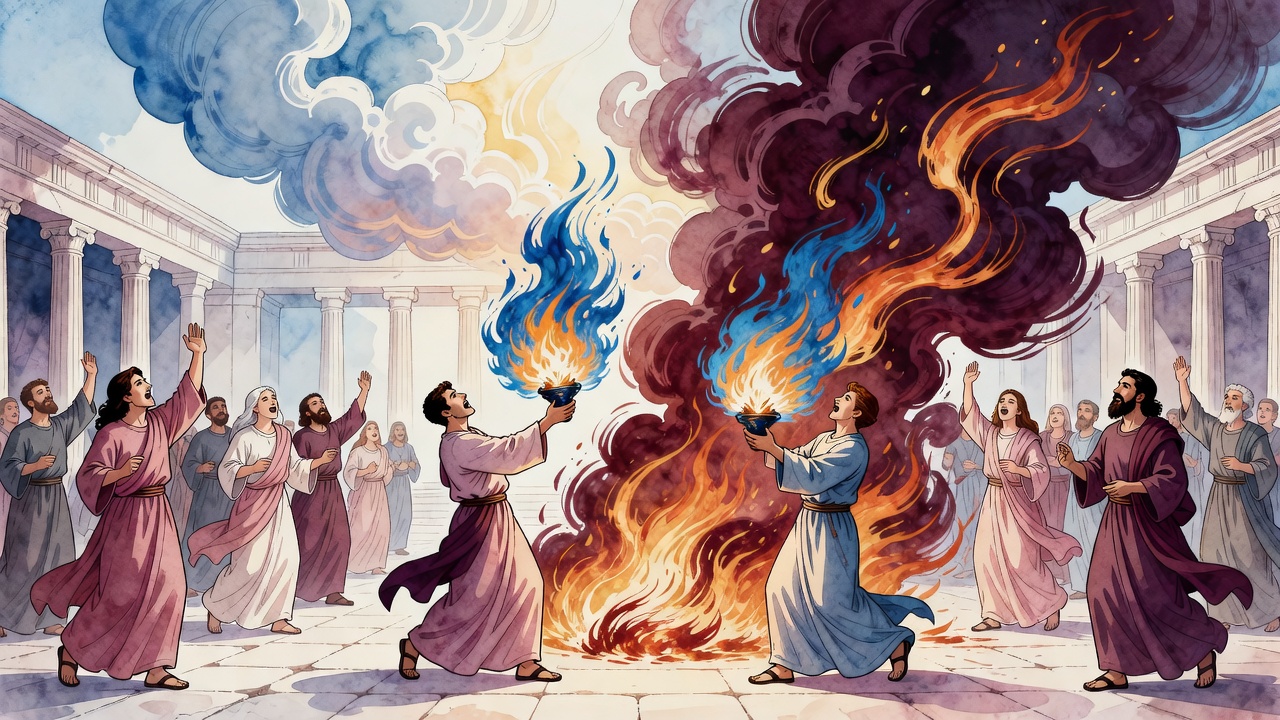
On the eighth day joy filled the courtyard. Aaron's sons brought fire God had not commanded, and holiness answered by taking the ones closest to the flame.

Curated by Arthur · Told by Maggid ·
Table of Contents
  1. The Eighth Day's Joy
  2. Alien Fire
  3. Sanctified Through Those Near
  4. Why the Levites Stand Where Firstborns Stood
  5. Joy That Would Not Stay
Nadab and Abihu Died Drawing Near with Alien Fire Click for full size

The Eighth Day's Joy

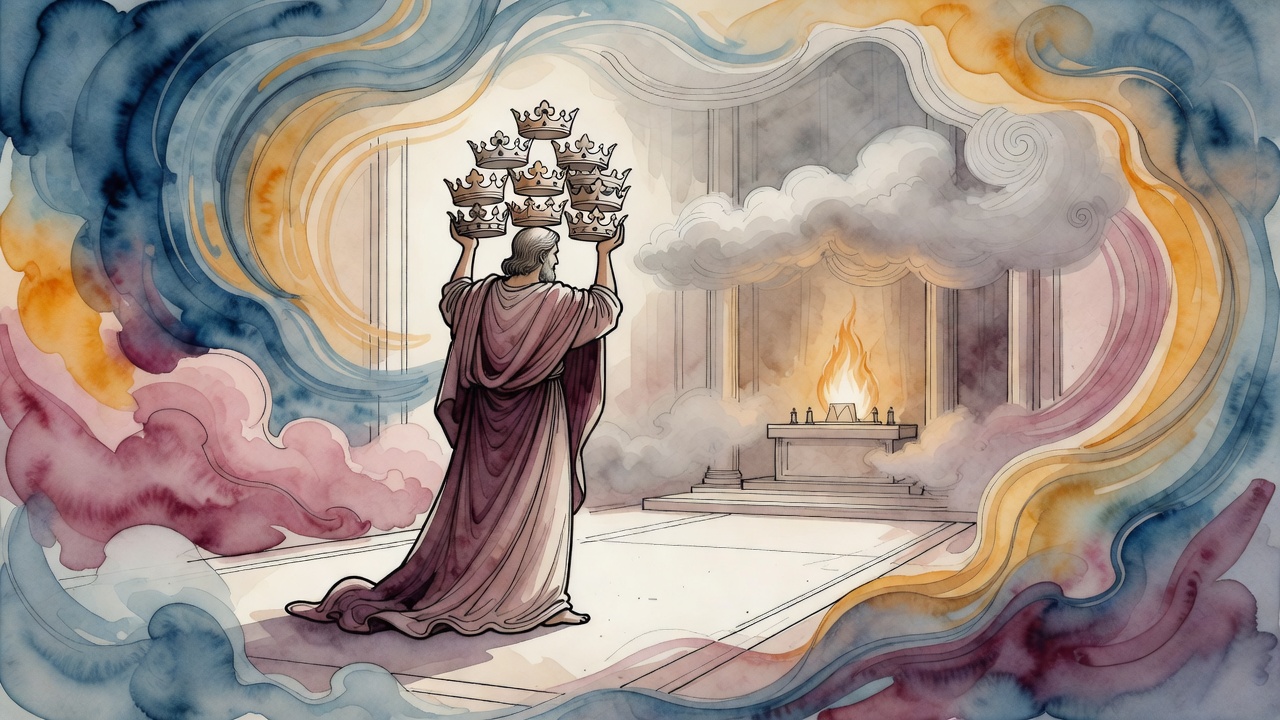
Seven days of inauguration had already passed in smoke, blood, and precise obedience. On the eighth day the courtyard of the Tent of Meeting held a happiness that felt, for a dangerous hour, permanent. Moses and Aaron had done all that was commanded. Fire from heaven had shown that the service was accepted. Israel watched its priests step into a new world of order, scent, and blood correctly placed on altars that would define the nation's nearness to God.

The midrash warns merrymakers even in such hours. Happiness today is not happiness tomorrow. The one who is glad now may not be glad at the next sundown. Even the Holy One's joy in creation bent when Adam failed a single easy command and death entered the human contract. The eighth day would teach the same lesson in priestly clothing, with better incense and a worse ending.

Alien Fire

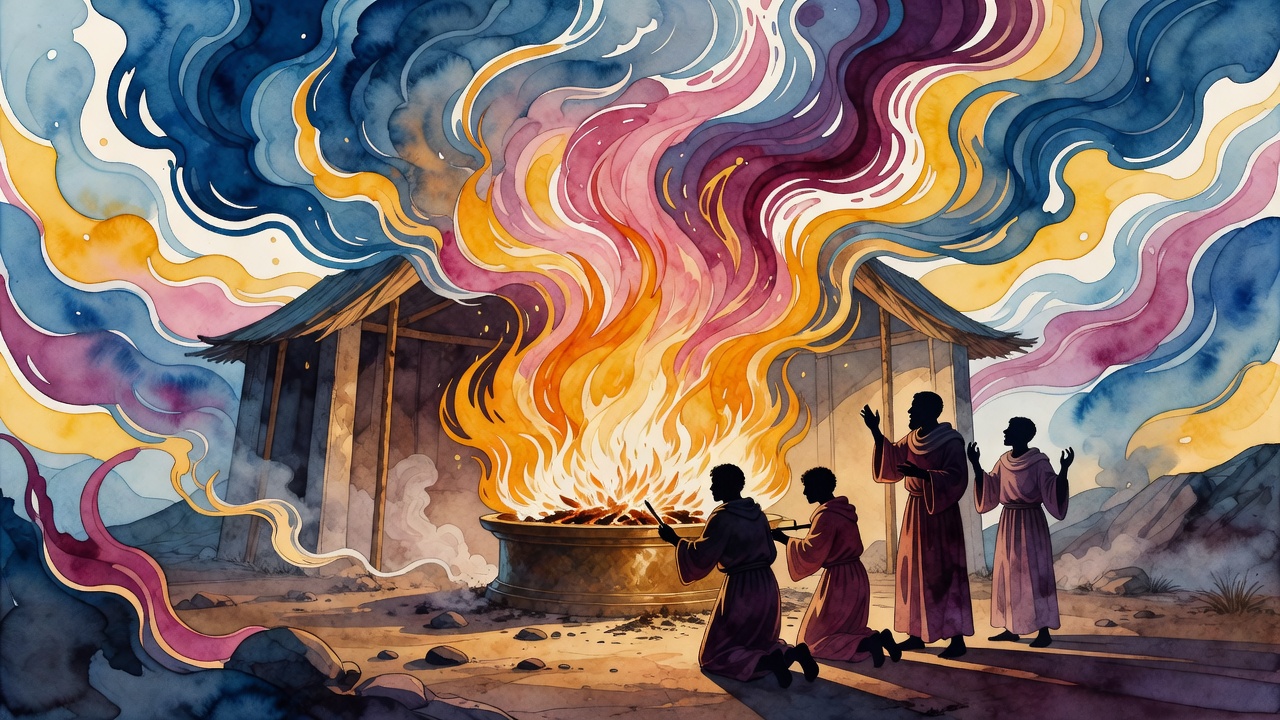
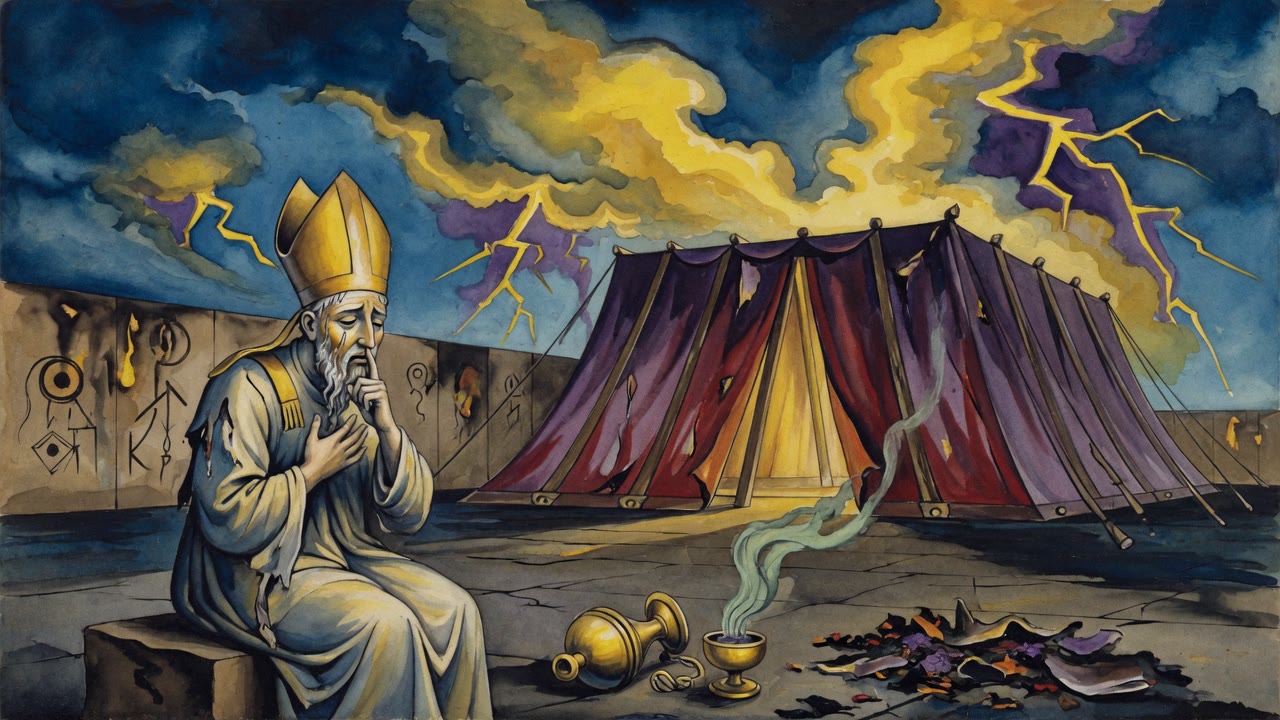
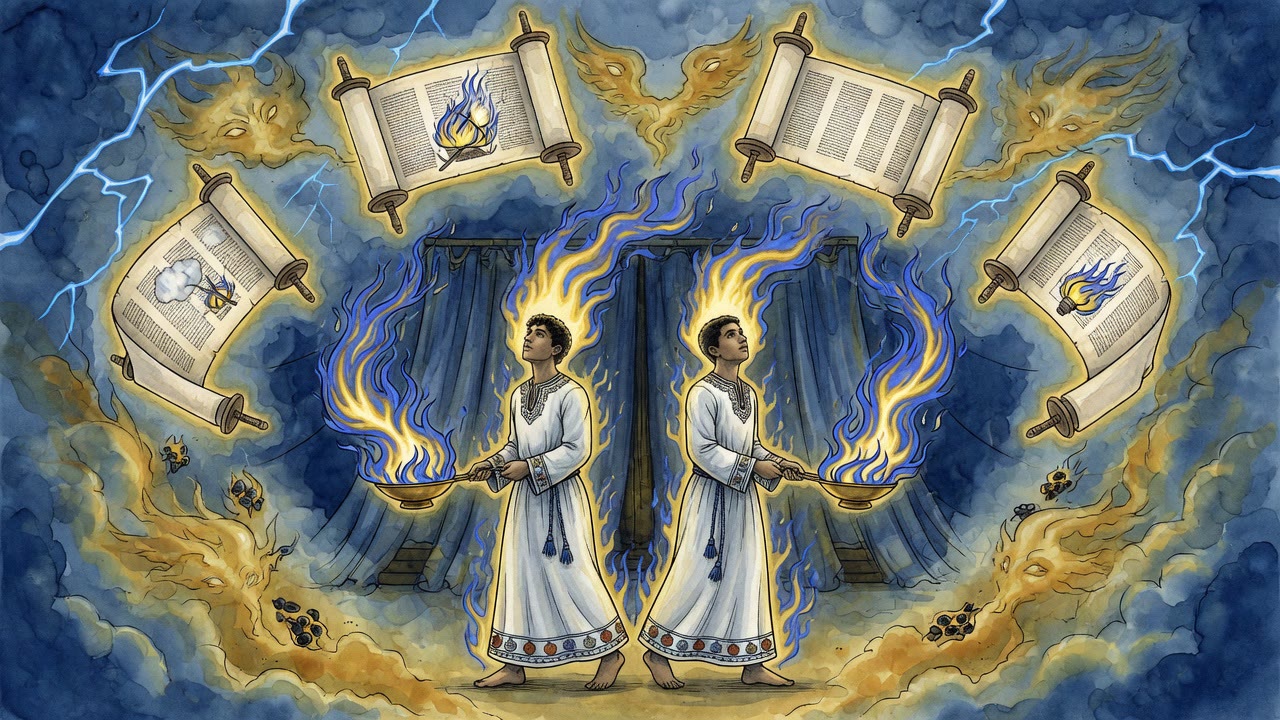
Nadab and Abihu, sons of Aaron, took pans, put fire in them, laid incense, and offered before the Lord a fire He had not commanded. The gesture looked like devotion. It smelled like worship. It was neither. Rabbi Akiva reads the death in the offering itself, the act of bringing what was not asked. Rabbi Yosei reads it in the drawing near; they entered a closeness reserved for another hour, a step toward the Holy of Holies that was not theirs that day. Bar Kappara, citing Rabbi Yirmeya, names strands braided into the disaster: drawing near, the offering, alien fire, and the rest of the tradition's hard list that refuses a single thin cause.

The fire that came out from before the Lord was not the fire of acceptance that had just gladdened the people. It was the fire of consumption. They died before their father and their uncle while celebration still hung in the air like leftover music. Bodies that had worn holy garments lay still. The pans told the only story that mattered: unauthorized flame meets true flame and loses.

Sanctified Through Those Near

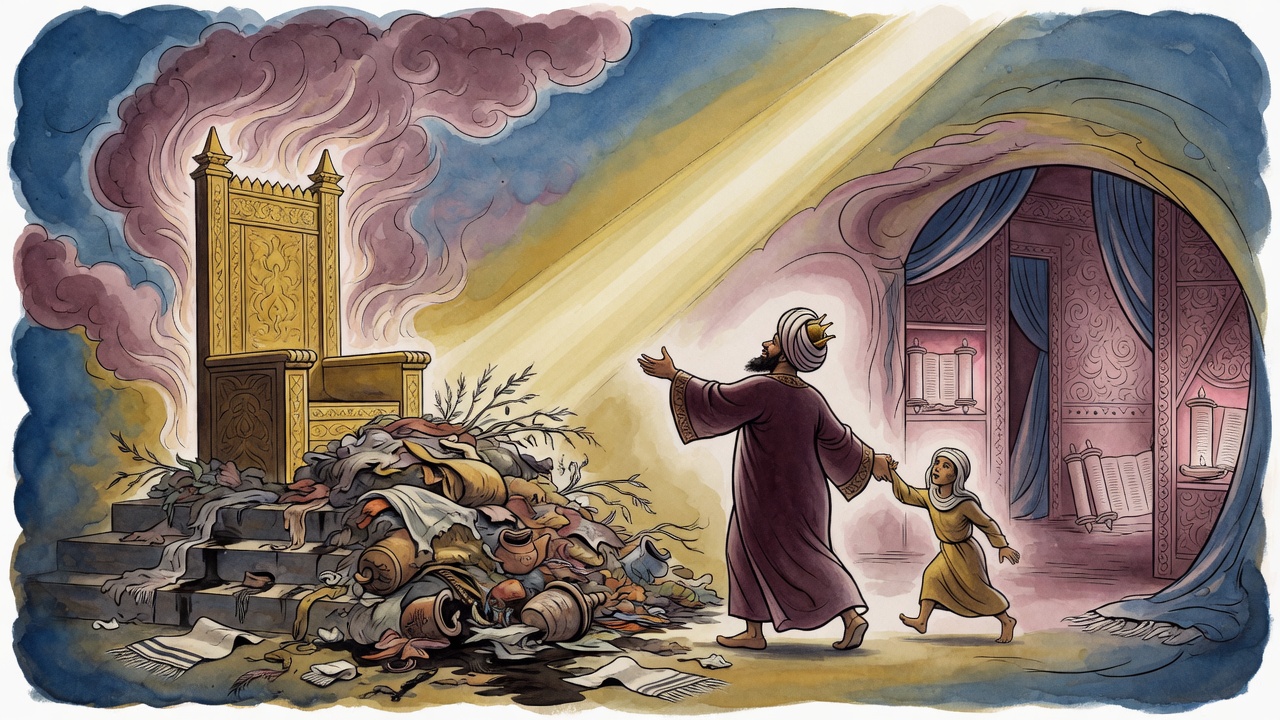
"I will be sanctified through those who are near to Me," God said through Moses to Aaron. The sentence is a wound shaped like theology. Nearness raises the standard. The beloved are not exempt; they are more exposed. Distance can hide a mistake for a while. Proximity turns a mistake into a public sanctification paid in the lives of those who stood closest to the Presence.

Bamidbar Rabbah hears divine sadness in the repeated tellings of their death across the Torah's books. The scroll returns to the story because heaven itself does not shrug. Aaron was silent. Moses spoke words meant to hold a brother upright. The bodies were carried out by cousins in their tunics. The oil of anointing still shone on skin that would never again lift a pan in service.

Why the Levites Stand Where Firstborns Stood

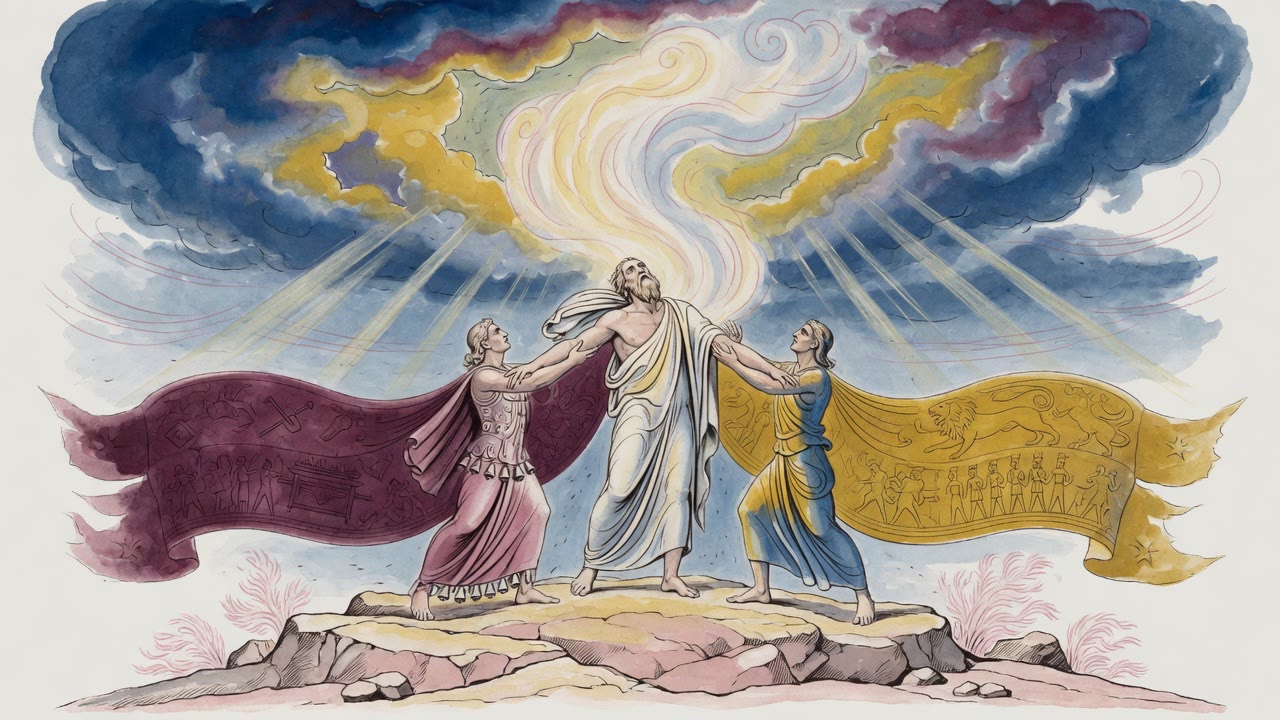
The priesthood itself was already a story of substitution written across generations. Once firstborn sons served at private altars; even Adam offered in garments of skin that tradition says passed from hand to hand, Seth to Methuselah to Noah to Shem, until Abraham's line and the formal house of Aaron. After the calf and the census of loyalty, the Levites were taken in place of the firstborn of Israel. "The Levites shall be Mine," the Lord said, and the exchange remade the spiritual map of the camp.

Aaron's house stood at the peak of that exchange. Nadab and Abihu died inside the very nearness their tribe had been chosen to bear. The swap that made Levi sacred did not make Levi safe. Holiness is not a charm worn against consequence. It is a proximity that burns unauthorized fire faster than distance ever could, and that is why the Torah insists on commanded fire, commanded times, commanded steps.

Joy That Would Not Stay

Tanchuma strings Abraham, Isaac, and Jacob into a chain of joys that broke under later weight: kings and a late son, then Moriah and a burial cave; escape and blessing, then dim eyes; a ladder and angels, then exile and fear. The eighth day joins that chain without apology. Dedication and disaster shared a date on the calendar of the sanctuary. Israel learned that the Tabernacle was not a theater for improvisation, even improvisation that smelled like love of God.

Eleazar and Ithamar stepped into the gap with garments and duties still waiting. The service continued because the covenant is larger than two young men who loved the flame too freely. The ash of their pans remained a warning written beside the altar, renewed every time the story is read on Shemini, when joy and fear sit in the same pew.


← All myths

From the tradition

Sources

3 sources

The texts behind this telling. Some cards carry a translation of the source; others are our own retelling of it, and each card says which. Every card links out to the original.

Bamidbar Rabbah 2:23Bamidbar Rabbah

Retold in our words. Read the original at the link below.The Sefaria Midrash Rabbah, 2022 · CC-BY

Bamidbar Rabbah turns to Aaron and Moses of Elazar.

What exactly happened to these two sons of Aaron, the High Priest? Why does the Torah repeat their fate in several places? Bamidbar Rabbah, the rabbinic commentary on the Book of Numbers, suggests that God Himself felt sadness at their passing, such was the esteem in which Aaron’s sons were held. They were beloved.

"I will be sanctified through those who are near to Me," (Leviticus 10:3) God proclaims. What does it mean to be sanctified through someone's death?

The rabbis of the Talmud grappled with this too. What was the cause of their demise? Bamidbar Rabbah, drawing on different interpretations, offers several possibilities.

Rabbi Akiva believed they died because of the offering itself. "When they offered alien fire," the verse states, implying the act of offering was the fatal flaw.

But Rabbi Yosei saw it differently. He argued that their downfall was "due to drawing near." He suggests that they entered the Kodesh Hakodashim, the Holy of Holies, an act forbidden to them. (Leviticus 16:1) speaks of "when they drew near before the Lord," lending credence to this interpretation. Did they overstep, driven by zeal or perhaps hubris?

Rabbi Elazar agreed that drawing near was a factor. And then there's the "alien fire" – the esh zarah. What does that mean? It wasn't from the regular daily offerings, neither the morning nor the afternoon. It was, "lay fire," not a holy fire.

Bar Kappara, quoting Rabbi Yirmeya bar Rabbi Elazar, sums it up succinctly: Aaron's sons died due to four things: drawing near, the offering, alien fire… The text then references VaYikra Rabbah (Leviticus Rabbah) and a rather cryptic ending: "Many young donkeys have died and their hides have been spread over their mothers." (VaYikra Rabba 20:8–10). This obscure reference, seemingly unrelated, perhaps hints at the devastating consequences and the profound loss experienced by those left behind.

So, what are we left with? A single verse, expanded into a many-sided tragedy. Was it unauthorized ritual? Overzealousness? Forbidden access? Perhaps it was a combination of all these things.

The story of Nadav and Avihu remains a powerful reminder. It's a cautionary tale about boundaries, about the delicate balance between devotion and transgression, and about the profound cost of sacred service. It invites us to reflect on our own motivations, our own intentions when we approach the Divine.

Full source
Midrash Tanchuma, Shmini 2Midrash Tanchuma

Retold in our words. Read the original at the link below.Townsend 1989 translation of Midrash Tanhuma, S. Buber Recension · CC-BY

(Lev. 9:1) “And it came to pass on the eighth day….” This text is related (to Ps. 75:5), “I say to the merrymakers, ‘Do not make merry….’” What is the meaning of [the words], “I say to the merrymakers (rt. hll), ‘do not make merry (rt. hll)?’” [The verse refers] to whoever sings in a mahanaim dance (mahol), and so it says (in Jud. 21:21), “to dance (lehol) in the dances.” [Because no happiness endures for a mortal] (Ps. 75:5), “I say to the merrymakers, ‘Do not make merry (rt. hll).’” Why? The one who is happy today shall not be happy tomorrow; and the one who is depressed today shall not be depressed tomorrow. And so it says (in Eccl. 2:2), “Of laughter I said, ‘It is mad (rt. hll)….’” Are you willing to understand? As behold, even the happiness of the Holy One, blessed be He, did not endure. When? When the Holy One, blessed be He, created His world. He was very happy, as stated (in Ps. 104:31), “the Lord shall be happy in His works.” It also says (in Gen. 1:31), “Then God saw everything which He had made; and behold, it was very good.” [These verses are] to teach you that the Holy One, blessed be He, found pleasure in and took pride in His works. Then He gave the first Adam an easy commandment, but he did not fulfill it. Immediately He rendered him a verdict [of death], as stated (in Gen. 3:19), “for dust you are, and unto dust you shall return.” So He, as it were, did not remain in His happiness but said, “I created everything only for the human, and now he dies. What pleasure is there for Me? [Now surely if the Holy One, blessed be He,] did not remain [happy], how much the less shall people [remain happy! It is therefore stated (in Ps. 75:5), “I say to the merrymakers, ‘do not make merry.’”] How happy Abraham was! He was blessed in the world, magnified, slew some kings and handed over heaven and earth to the Holy One, blessed be He. Also when the Holy One, blessed be He, gave him a son at age one hundred, he circumcised him and reared him. Then finally he was told (in Gen. 22:2), “Please take your son, your only son…, [and go unto the land of Moriah,] and offer him there as a burnt offering.” So he made a three-day journey, as stated (in Gen. 22:4), “On the third day….” When he returned from Mount Moriah, he buried Sarah. He did not find a place to bury her until he bought one for four hundred silver shekels. Then after that, old age came upon him. Now surely if such was the case with Abraham the righteous, how much the more is it the case with the wicked! Isaac did not remain in his happiness: He escaped from the sword and from the men of Gerar. And [God] informed them about who he was, so that they came to him. Thus it is stated (in Gen. 26:26, 28), “Then Abimelech came unto him from Gerar […. And they said, ‘We have clearly seen that the Lord is with you.’]” But he did not remain in his happiness. Rather (according to Gen. 27:1), “Now it came to pass, that when Isaac was old and his eyes were too weak to see.” So just as [this loss of happiness] happened in the case of Isaac the burnt offering of the Holy One, blessed be He, (according to Gen. 22:2), how much the more does it happen in the case of the wicked! Jacob was the first-born of the Holy One, blessed be He, as stated (in Exod. 4:22), “Israel is My first-born son.” How happy he was! He saw a ladder, and (according to Gen. 28:12-13) “the angels of god were ascending and descending [….] And behold, the Lord stood upon it and said, I am the Lord….” Then he went to Laban, fled from Esau, became Laban's servant for twenty years and in the end became wealthy, sired children and returned in peace. He also met Esau and was saved from him, and paid his vow. But in the end he did not remain in his happiness. Instead (according to Gen. 34:1), “Now Dinah [the daughter whom Leah had borne to Jacob] went out…,” and was raped]. There also came upon him the trouble over Joseph. Now surely if Jacob the righteous – one to whom the Holy One, blessed be He, had said, “In whom I will be glorified,” as stated (in Is. 49:3), “Israel, in whom I will be glorified” – did not remain in his happiness, how much the less will the wicked [so remain! It is therefore stated (in Ps. 75:5), “I say to the merrymakers, ‘Do not make merry.’”] How happy Joshua was! He slew thirty-one kings, gave Israel the land to possess, and distributed it. In addition all Israel gave him a [helping] hand and said (in Josh. 1:18), “Anyone who disobeys your command… [shall be put to death.” Such an honor was] something of which [even] Moses our master did not merit. Still he (i.e. Joshua) did not remain in his happiness, but rather died childless. It is therefore stated (in Ps. 75:5), “I say to the merrymakers, ‘Do not make merry.’” How happy Eli was, when he was king, chief justice, and high priest! It is so stated (in I Sam. 1:9), “now Eli [the priest] was sitting on the throne by the doorpost of the Temple of the Lord.” “Now Eli the priest was sitting on the throne,” because he was king. [He was] “by the doorpost of the Temple of the Lord,” because he was chief justice. Still he did not remain in his happiness. Instead (according to I Sam. 4:18), “And it came to pass that when he (i.e. a messenger) mentioned the ark of God, he (i.e. Eli) fell backward from off the throne….” Moreover, his two sons, Hophni and Phinehas died. So just as this [shift in fortune] happened with Eli the righteous, how much the more [does it happen with] the wicked! You find neither man nor woman who saw joys like Elisheba bat Amminadab, [the wife of Aaron, as stated (in Exod. 6:23), “And Aaron took for a wife Elisheba bat Amminadab”]. She saw her husband become high priest serving in the high priesthood and [as a] prophet. In addition, Moses, her husband's brother, was king and prophet. Her sons were deputies [to the high priest] in the priesthood, and her brother Nahshon was head of all of the princes of Israel. Still she did not remain in her happiness. Rather, when two of her sons went in to offer a sacrifice, (according to Lev. 10:2,) “Fire came forth from before the Lord and consumed them, so that they died before the Lord.” It is therefore stated (in Ps. 75:5), “I say to the merrymakers, ‘Do not make merry.’” And so Solomon said (in Eccl. 2:2), “Of laughter I said, ‘It is mad.’” There is a story about one of the great Babylonian [scholars], who married off his son, and made a great banquet for the sages. He said to his son, “Go up and bring us a jar of such and such a wine from the attic.” He went up to the attic. [There] a snake [from] among the jars bit him, and he died. His father remained with those who were reclining [at his table]. So he delayed and did not come. [Finally,] his father said, “Let me go up and see what my son is doing.” His father went up [and] found him cast down dead among the jars. What did that righteous one do? He waited by himself until the guests had eaten and drunk sufficiently. When they had finished, he said, “You came to say a bridegrooms' blessing over my son. [But instead] say a mourners' blessing over him. You came to bring my son to the wedding canopy. [Instead] bring him to [his] grave.” They said about R. Zakkay of Kabul and they opened about him (in the words of Eccl. 2:2), “Of laughter I said, ‘It is mad; and what does joy do?’”

Full source
Bamidbar Rabbah 4:8Bamidbar Rabbah

Retold in our words. Read the original at the link below.The Sefaria Midrash Rabbah, 2022 · CC-BY

It all goes back to a fascinating swap, a divine exchange, that re-shaped the spiritual landscape of ancient Israel. We find the seeds of this story in Bamidbar Rabbah, specifically in its exploration of (Numbers 3:45), where God says, "Take the Levites in place of all the firstborn among the children of Israel…the Levites shall be Mine, I am the Lord."

Why this exchange? Why the Levites instead of the firstborn? Our Rabbis pondered this very question. According to them, in the beginning, the firstborn sons held a unique position. They were the original priests, the ones who performed the sacrificial service. As Zevachim 112b tells us, before the Tabernacle was built, people could build their own altars and the firstborn would officiate. It was a birthright, a sacred duty passed down through generations. even Adam, the first man, was considered the firstborn of the world! Bamidbar Rabbah connects this to (Psalms 69:32), "May it please the Lord more than a bull with horns and hooves." When Adam offered sacrifices, he even wore special garments, "hide tunics" made by God himself (Genesis 3:21). These weren't just any clothes; they were "praiseworthy garments" passed down through the generations, from Adam to Seth, then to Methuselah, and finally to Noah.

Noah, of course, offered sacrifices after the flood (Genesis 8:20). And these garments? He bequeathed them to Shem. Now, wait a minute. Wasn't Yefet the eldest? (Genesis 10:21). Why Shem? Because Noah foresaw that the line of the patriarchs, the very foundation of the Jewish people, would come through Shem. As Rashi, commenting on (Genesis 14:18), suggests based on a midrash (perhaps from Bereshit Rabba 56), Shem may even be identified with Malkitzedek, the king of Shalem and "a priest of God the Most High." Even though the priesthood wasn't formally established until Aaron, Shem was already sacrificing in a priestly manner.

The story continues: Shem passed the garments to Abraham. But Abraham wasn’t a firstborn either! So why him? Because, our tradition teaches, his righteousness earned him the birthright. He even offered a ram as a burnt offering in place of his son Isaac (Genesis 22:13). Abraham then passed it to Isaac, and Isaac to Jacob.

Jacob, as we know, acquired the birthright from Esau in a rather cunning way (Genesis 25:31). But it wasn't just about trickery. Jacob yearned to perform sacrifices, but he couldn't because he wasn't a firstborn. Esau, on the other hand, famously declared, "Behold, I am going to die, and why do I need a birthright?" (Genesis 25:32). In this moment, the Rabbis see a fulfillment of Ezekiel's prophecy: "Surely, you hated blood, and blood will pursue you" (Ezekiel 35:6). It wasn't just about hating physical blood, but about hating the "blood of an offering," the very essence of the firstborn's sacred duty.

And so, when Jacob acquired the birthright, he began sacrificing (Genesis 35:1). Even when Moses sacrificed at Sinai, it was the firstborn who officiated (Exodus 24:5). These weren’t just any lads; they were the elite of the firstborn.

So, what changed? The sin of the Golden Calf.

When the Israelites built and worshiped the Golden Calf (Exodus 32:6), they asked the firstborn to offer sacrifices before it. This was the turning point. God declared, "I promoted the firstborn…but they rejected Me and arose and sacrificed before the calf. I will remove the firstborn and bring in the children of Levi."

This is why God commanded Moses to count the Levites (Numbers 3:15) and to take them in place of the firstborn. Rabbi Yehuda HaLevi puts it plainly: God removed the firstborn from their sacrificial roles and appointed the children of Levi instead (Numbers 3:45).

The Bamidbar Rabbah uses a powerful analogy: a corrupt money changer. The king removes the corrupt official and appoints a new one. But the old official still owes a debt. The king decrees that the new official, the one who inherited the position, must repay the debt. So too, the firstborn were prominent but sinned with the Golden Calf. God replaced them with the Levites. But the firstborn still had a "debt" – a liability to be eliminated. Therefore, God commanded that the Levites redeem them.

And what about the animals? "And the animals of the Levites in place of their animals" (Numbers 3:45). Because priests and Levites are exempt from redeeming their own firstborn sons and the firstborn of a donkey (which the Torah equates to the firstborn of man in (Numbers 18:1)5), but not from redeeming the firstborn of a pure animal, which is considered sacred.

The final words of this passage are powerful: "The Levites shall be Mine, I am the Lord." God promises to reward them handsomely because they sanctified His name at the time of the calf.

So, the next time you hear about the Levites, remember this story. It's a story of shifting roles, of responsibility and failure, and ultimately, of divine grace and redemption. It’s a reminder that even when we stumble, there's always an opportunity for renewal, for a fresh start, and for a deeper connection to the Divine.

Full source