The Basket Wept and Moses Lost His Secret
Pharaoh's daughter heard a Hebrew cry in the reeds. Years later Dathan told Moses the buried Egyptian was already public knowledge.
Table of Contents
 Click for full size
A Cry in the Reeds
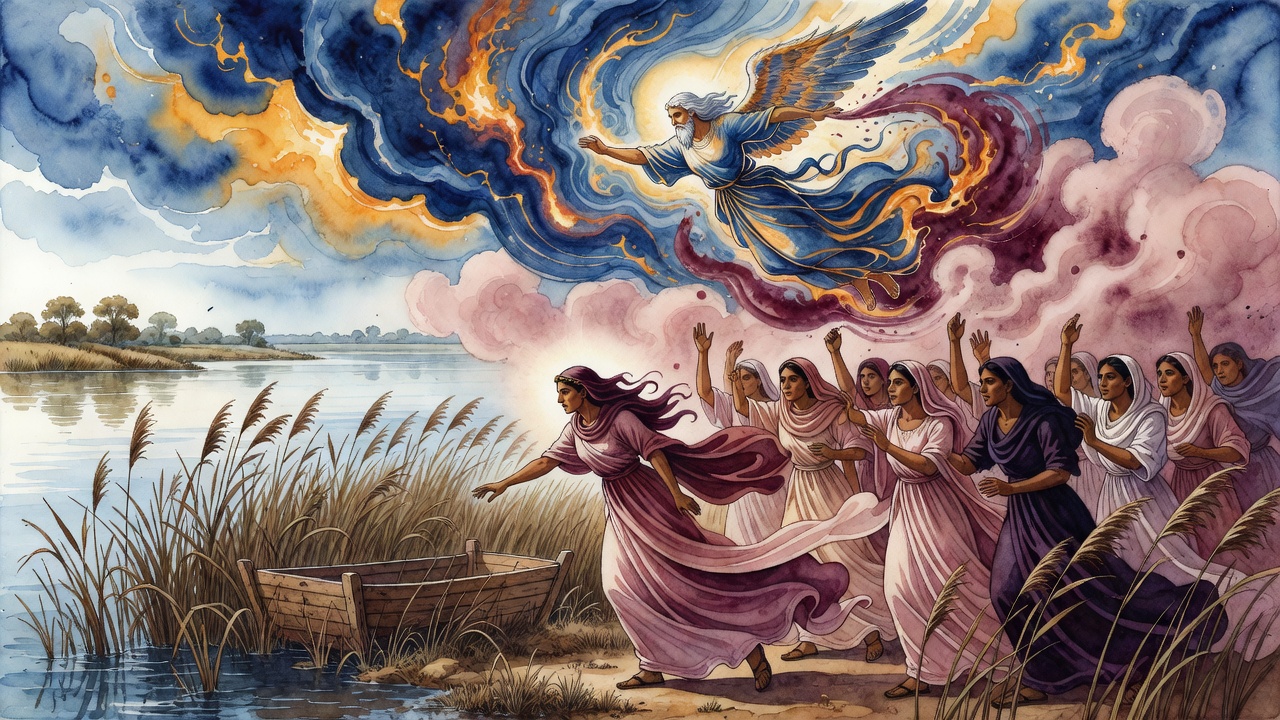
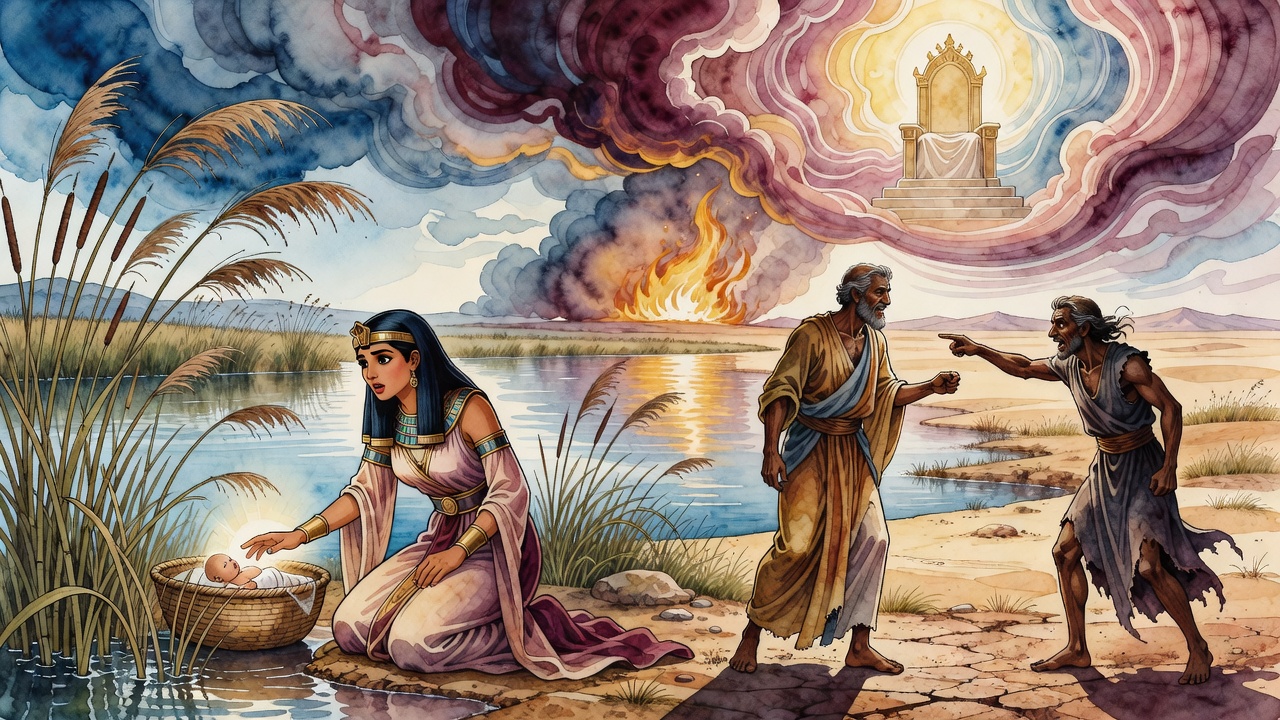
The princess opened the basket and did not find a quiet infant. She found a cry. Water rocked the little ark among the reeds, and the sound that rose from it cut through palace training and royal decree alike. Her attendants shifted. Someone started to speak of the law of the river. She was already leaning in.
"This is one of the children of the Hebrews," she said, compassion already ahead of policy (Exodus 2:6).
No mark had to be inspected. No nurse had yet spoken. A single sob told her what the house of Pharaoh had ordered hidden or drowned. Some said a hunted child's cry differs from a safe child's cry. Some said the Holy One set a voice on the baby that could not be mistaken. What moved her was not a ledger of bloodlines. It was pity. A daughter of the man who decreed death wept over the child the decree had aimed to erase.
The Chain Breaks in One Heart
She lifted him. Nile water ran off the basket's weave onto her wrists. She named him. She raised him inside the machine built to crush his people. Tyranny ends in many ways. One of them is a private refusal inside the palace, a woman who will not carry the king's order one more step when a baby will not stop crying.
Moses grew between two worlds: nursed by his mother under a princess's roof, schooled in Egypt, marked by a story he could not fully hear yet. The river that should have been a grave became a road into the court. He learned the language of power and the memory of bricks. Both would matter. Neither would protect him from the next recognition waiting in the sand.
In the gardens he played under eyes that would have drowned him. In the night he sometimes heard Hebrew words his nurses should not have taught. The two educations did not shake hands. They waited.
Sand Is a Poor Confidant
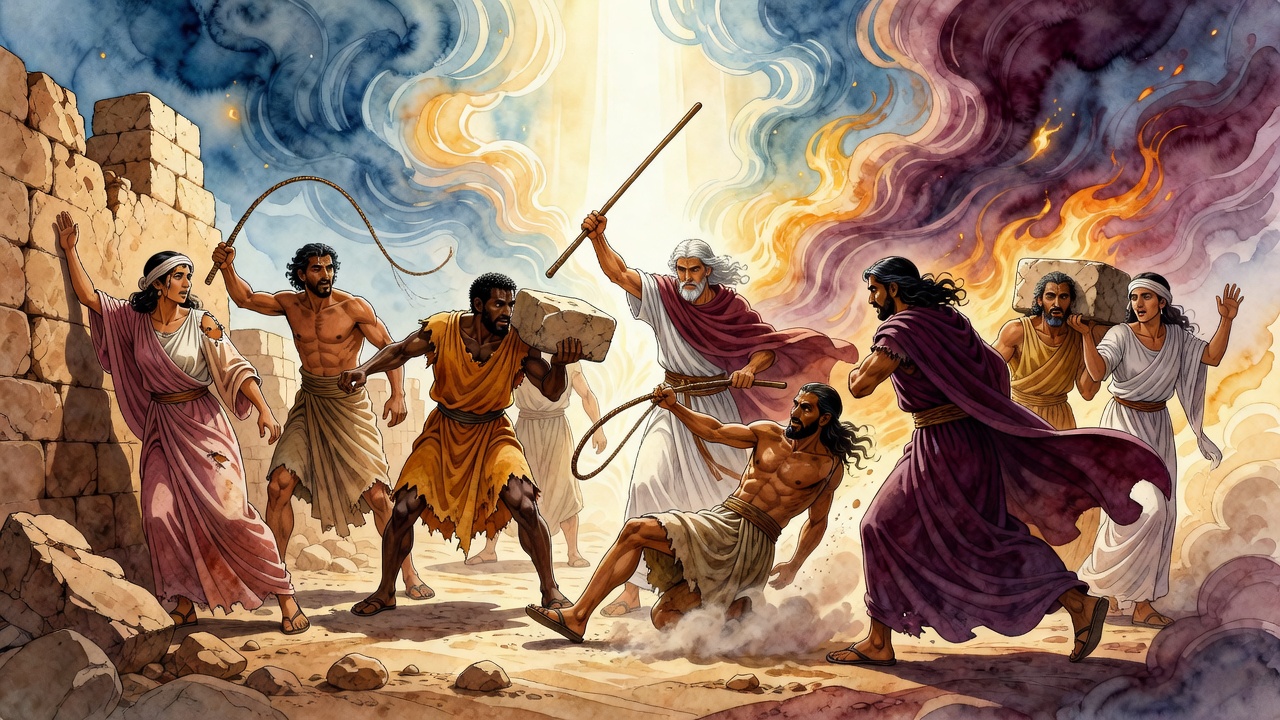
When he was grown he went out and saw an Egyptian beating a Hebrew. The blow landed on a back that could have been his uncle's, his cousin's, his own if the basket had failed. He struck the Egyptian and buried the body in sand, as if sand could keep a secret. The desert is full of such hopes. They last until a mouth opens.
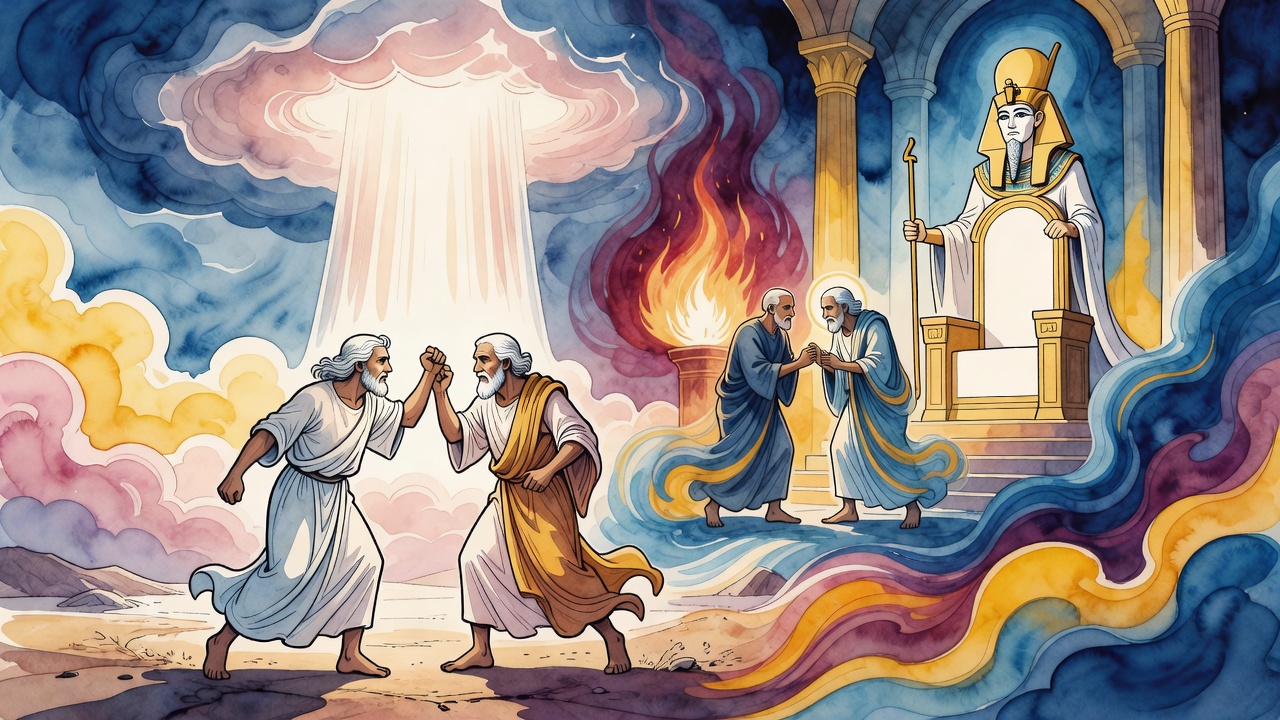
The next day, when he tried to stop two Hebrews from fighting, the answer came like a knife from Dathan's mouth.
"Who made you a chief and a judge over us? Will you kill me as you killed the Egyptian?"
Moses was afraid. "Verily, the thing has become known" (Exodus 2:14).
The prophet who could later see nations in a glance could not, that day, see who among his own people was watching. Prophecy is not a private shield. The man he saved was already talking. The burial was public. Flight to Midian opened under his feet like a second Nile, dry and long.
He left with a secret that had failed and a name that still meant "drawn out," though now it was he who was being drawn out of Egypt, not into it.
Why Redemption Waited
In that fear the sages heard more than panic. Moses understood that slander among the oppressed can delay a rescue as surely as a tyrant's whip. Israelites willing to hand other Israelites to Pharaoh are not yet a people a redeemer can lead out in a night. Forty years in Midian would sand him down. Decades more would test whether the nation could stop devouring its own.
The basket's cry had pulled him into life. Dathan's sentence pushed him into exile. Between a woman's compassion and a man's loose tongue the whole road of the Exodus took its first bends. One Hebrew baby was recognized by sound. One Hebrew adult learned that secrets buried in sand still speak.
Two Recognitions
In the reeds, mercy named him. In the quarrel, gossip unmasked him. He would return years later with a staff and a Name, still carrying both lessons: that one heart inside a palace can break a decree, and that a people must learn not to sell its rescuers to the throne. Midian's flocks heard him long before Pharaoh did. When he finally stood again by water, it would not be a basket but a sea, and the cry would be a nation's.
On the far side of that sea, no one would care what the sand had failed to hide. They would care whether the man drawn from water could still hear a cry and answer it without burying the evidence of his own hand.
Midian heat replaced Nile damp on Moses' skin. He sat by a well and watched foreign flocks the way he had once watched Egyptian overseers, counting blows he could no longer stop with a buried body. The secret had become a road, and the road had no sand left to hide in.
← All myths