The Boy Who Heard Crows Foretell a New King
A youth who understood bird speech told a king his throne would fall, then learned that one lie can crack a city built on truth.
Table of Contents
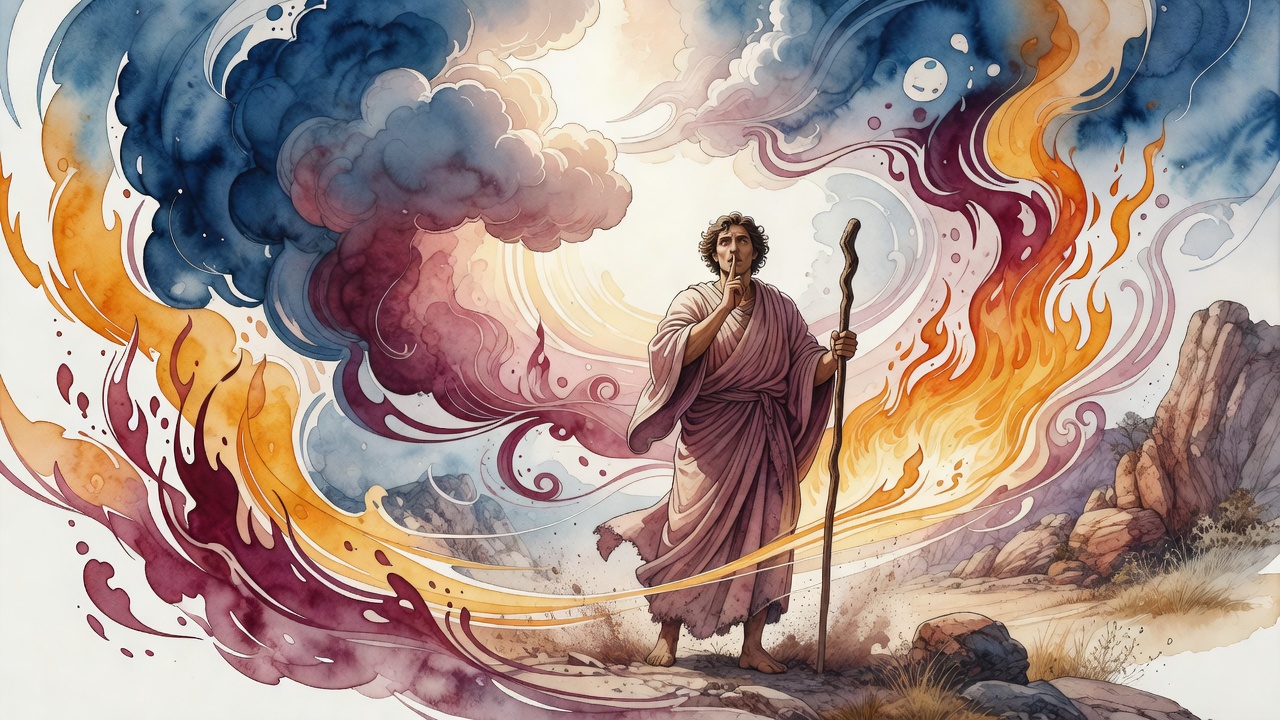
Sparrows on the roof talked like market women. The boy heard gossip in their chatter before anyone believed him. Ravens in the high branches gave warnings. An eagle overhead spoke like a court scribe reading a decree. At first his parents waved him off. Then the birds named a rainstorm a day early, a caravan from the east, a neighbor's cow already sick in the shed. He said each thing aloud. Each thing arrived on time, and the courtyard stopped laughing.
 Click for full size
Word moved faster than the birds. Merchants came with coins. One asked about a voyage. The boy listened to two doves on the sill and said, "They warn of a storm. Wait three days." The merchant waited. Every other ship that left that harbor went under. He pressed silver into the boy's hand. The boy kept only enough for bread.
The Crows in the Palace Yard
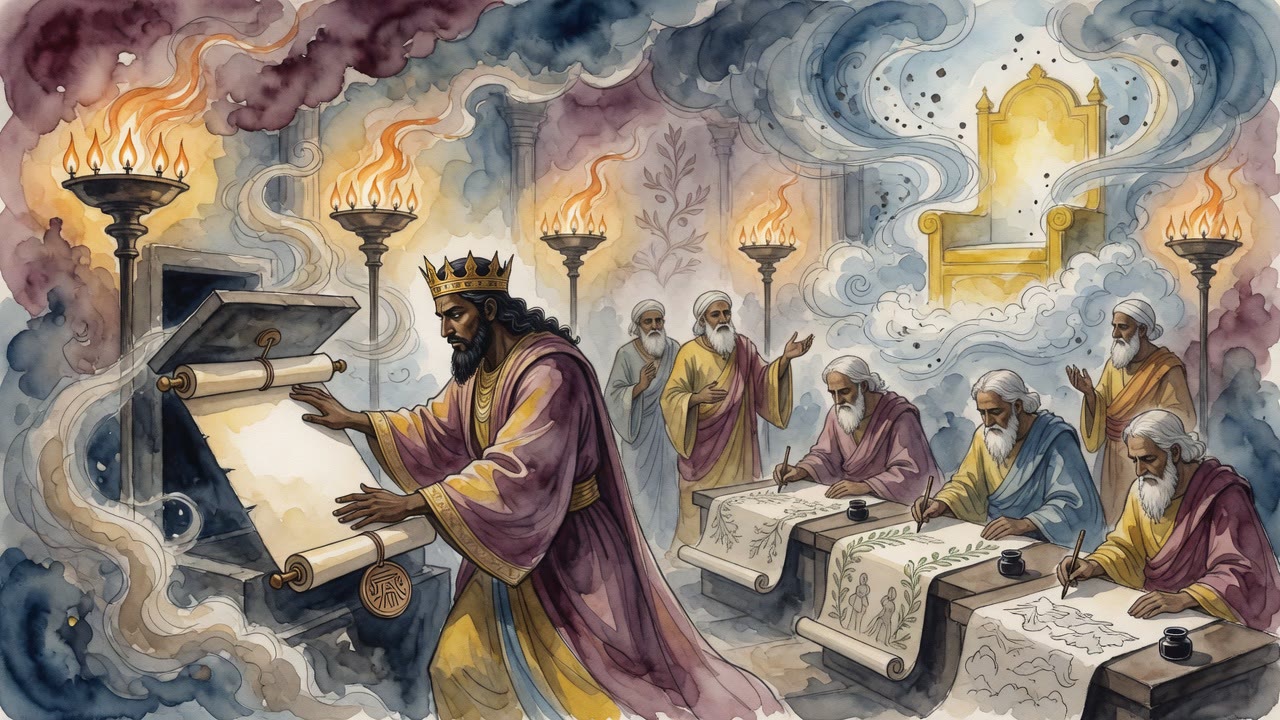
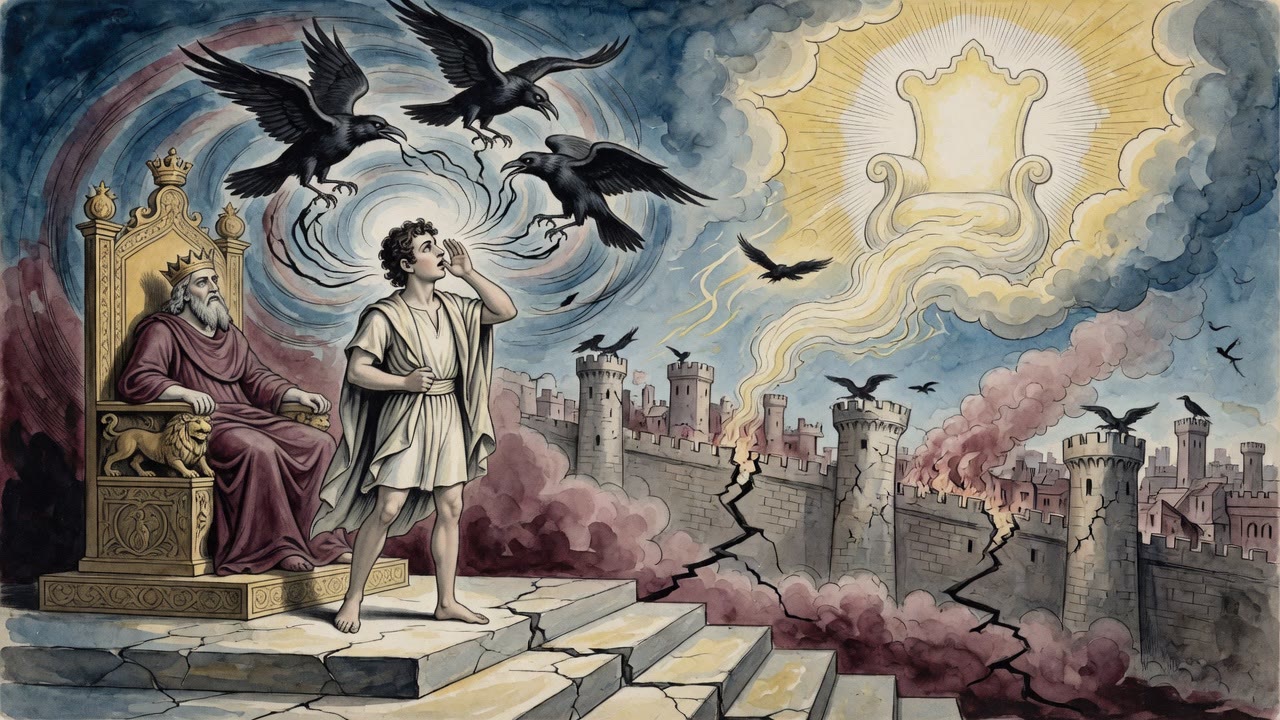
A king heard the stories and sent for the youth. Guards brought him into a hall that smelled of iron and wine. "What do the birds say about my reign?" the king asked. That morning the crows in the palace yard had already answered, and the answer sat heavy on the boy's tongue. He could have lied. He could have flattered. He chose the truth.
"The birds say your throne will pass to another within the year."
The king's face closed like a fist. He ordered the boy locked away. The year ran its course. The king fell ill and died. The new ruler, who had heard the prophecy, opened the cell and set the boy at his side as an advisor. In older Jewish memory the gift was not strange. Solomon himself was said to understand the speech of birds and beasts. This unnamed youth walked a little in that shadow, not with a throne, only with ears that refused to flatter.
A Traveler Enters the City of Truth
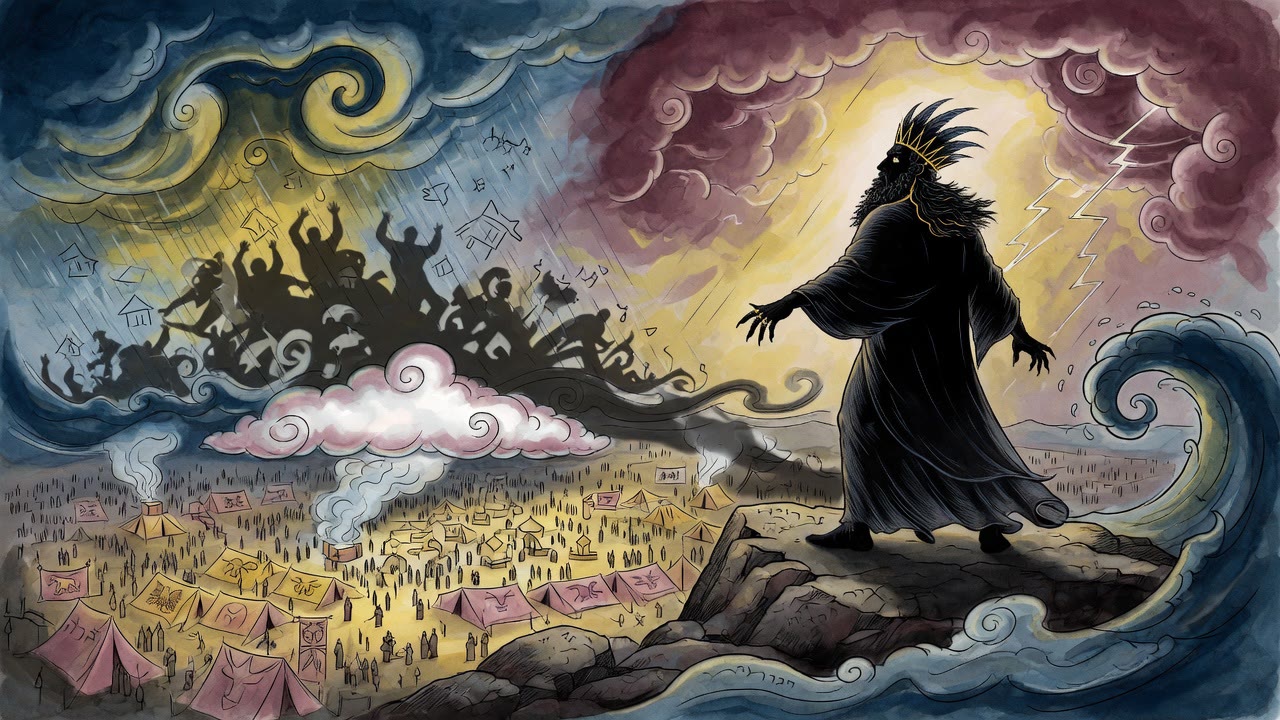
Far from that court stood another kind of kingdom: a settlement the sages called the City of Truth, where no one had ever spoken a lie. Doors stayed unbolted. Markets ran without guards. Promises held because the ground itself seemed to hold them. A traveler came to see if the stories were real. For a while he lived clean among them, and the streets stayed straight under his feet. He bought bread without weighing the change twice. He slept without a bar on the door.
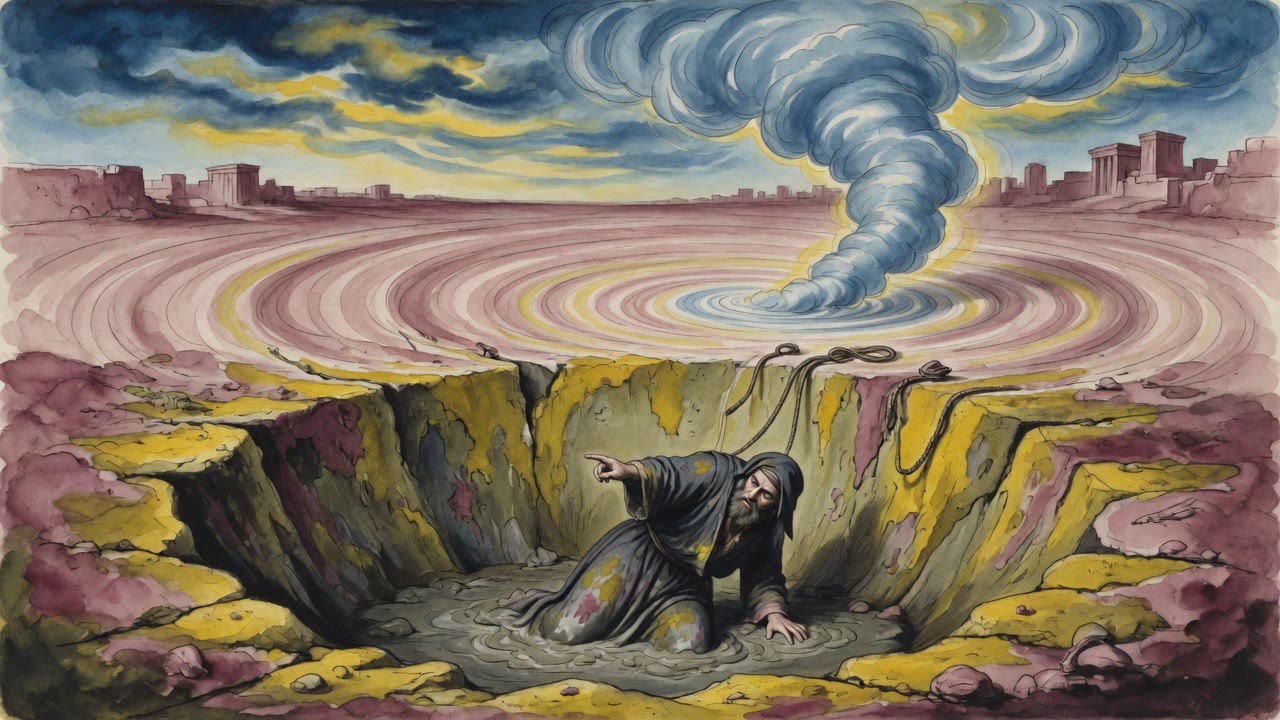
Then he told a small lie, a nothing of a falsehood, the kind people shrug at when they want a cheaper price. The earth under him trembled. The next day he lied again to cover the first. A crack opened in the wall of his house. With each deception the damage widened. Buildings leaned. Streets buckled. Citizens crowded him and demanded what he had done. He confessed. Confession could not put the mortar back.
The City of Truth, which had stood for generations on honesty, began to collapse in plain sight. The rabbis kept the tale as a hard warning: one liar can undo what a whole community of truthful people spent centuries building. Truth is not a decoration on the world. It is part of the foundation, and foundations do not argue. They either hold or they do not.
What a Friend Is Worth When the Ground Shakes
Ben Sira, writing wisdom for a people who knew both gold and exile, set a different weight on the scales. "A faithful friend is a firm friend; and he that findeth him hath found a treasure." No price can be weighed for that goodness. A faithful friend is a balm of life, a medicine, not a pastime. "He that feareth God shall obtain it," he wrote, because character draws character. As a person is, so is the neighbor who stays when the market turns.
The boy who spoke the crows' verdict needed that kind of friend more than he needed a throne. A friend would have sat outside the cell and counted the days with him. The traveler who cracked the City of Truth needed one who would stop his mouth before the second lie left it. Gold buys ships and cell doors. It does not buy someone who will tell you the crow is right when flattery would keep you free for one more night.
Learning Until the Hair Goes Gray
Ben Sira refused to leave the matter at friendship alone. "Child, from your youth acquire learning, and until gray hairs reach for wisdom." He likened the work to plowing and reaping: a little toil in the tillage, fruit on the morrow. Wisdom is not a storm you wait out. It is a field you return to when your back already aches. The boy who heard birds had a gift. The traveler had a city. Neither gift nor city survives without the daily labor of listening well and speaking straight.
In the court that freed the boy, the new king did not ask for prettier prophecies. He asked for ears that would not flatter, even when the crows named losses. In the ruins of the City of Truth, the citizens learned what they already knew: a marketplace without locks only works when tongues refuse the easy lie. The boy grew older among ledgers and birdcalls. The traveler learned, if the midrash allows him a later hour, to pay full price and keep the ground still.
← All myths