The Brothers Who Denied a Roman His Furnace Miracle
Trayanos told the two bound brothers to beg God for a rescue like the one in Nebuchadnezzar's furnace. They said no. They were not that righteous.
Table of Contents
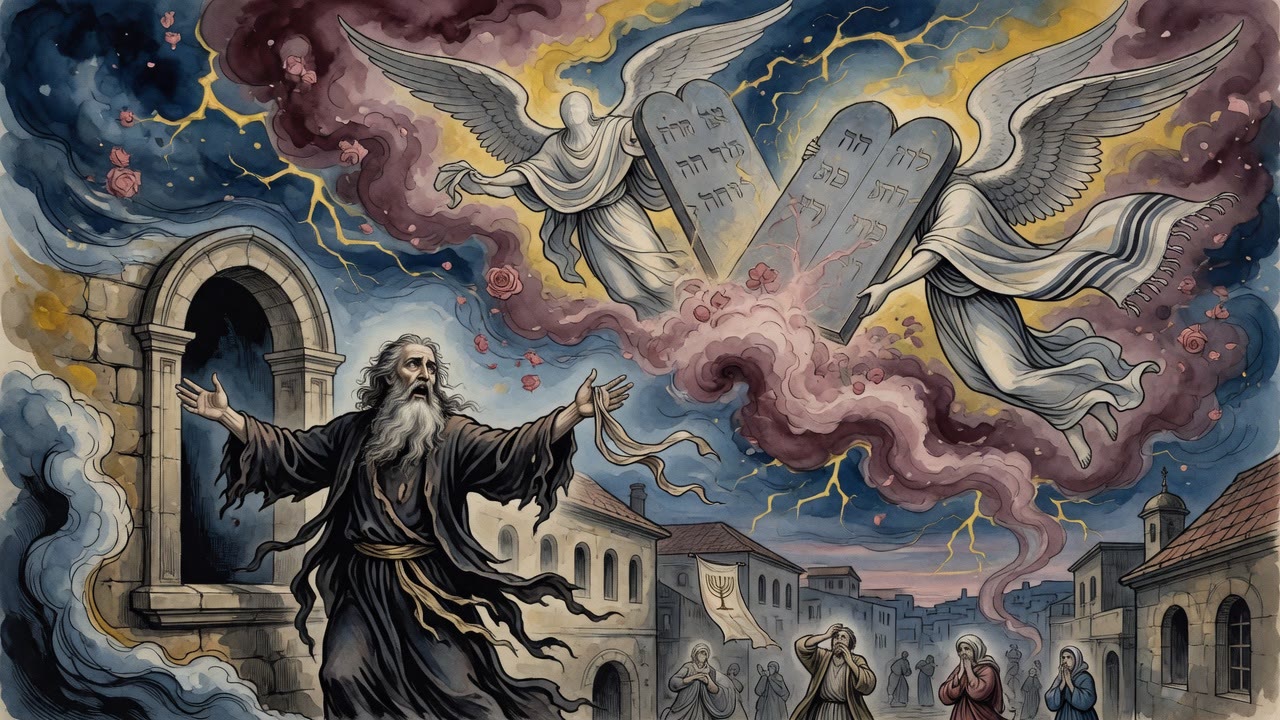
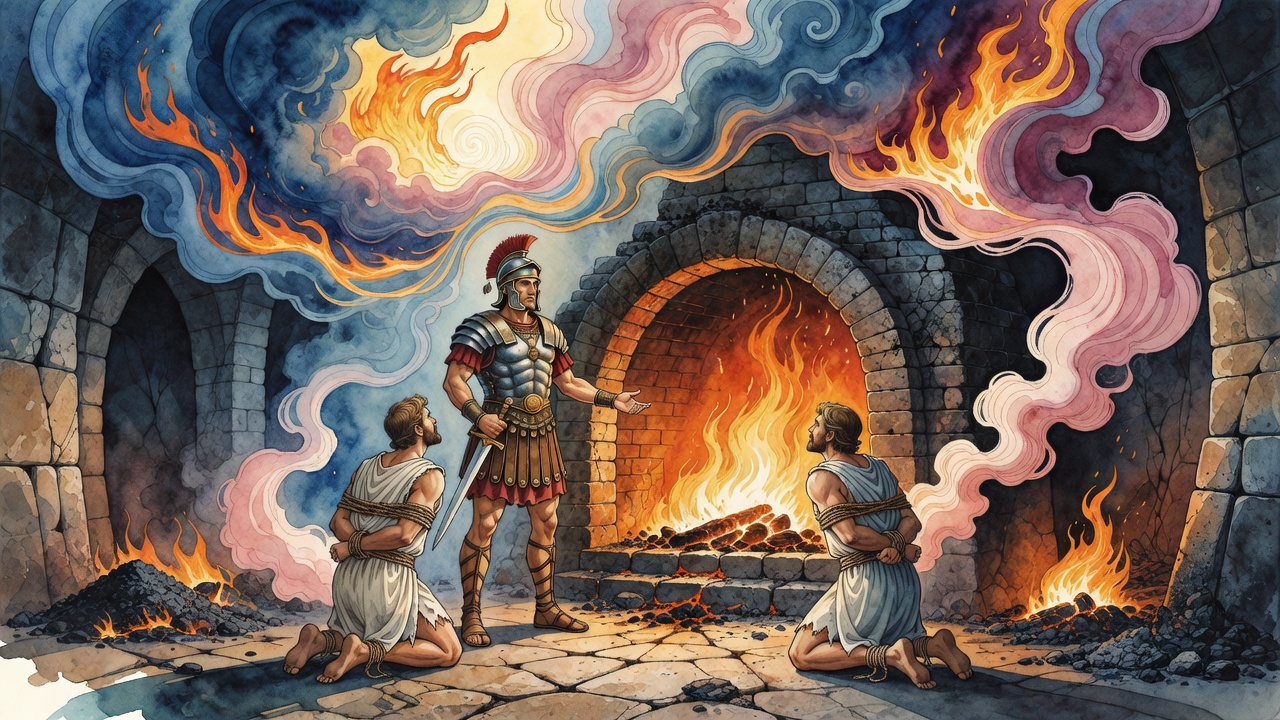
The court at Laodicea was arranged for a wonder. Trayanos had set the platform, the soldiers, the iron in the brazier, and two condemned men where everyone could see them. He wanted a miracle that would not come, and he wanted the whole city to watch it fail.
 Click for full size
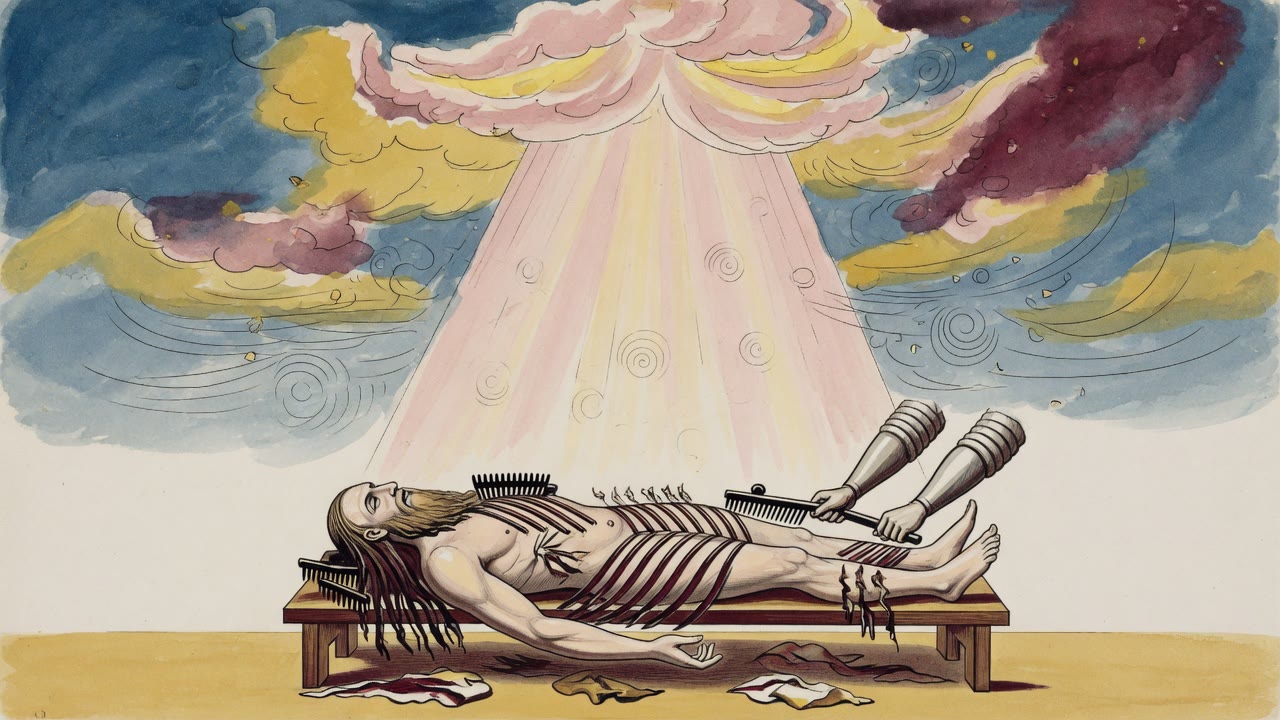
The two men were brothers. Lulianus and Pappus had been taken in the general's sweep through the province and sentenced to die before the morning was old. They stood with their hands bound while the general circled them, in no hurry, savoring the thing he was about to say.
The General Stages a Wonder That Will Not Come
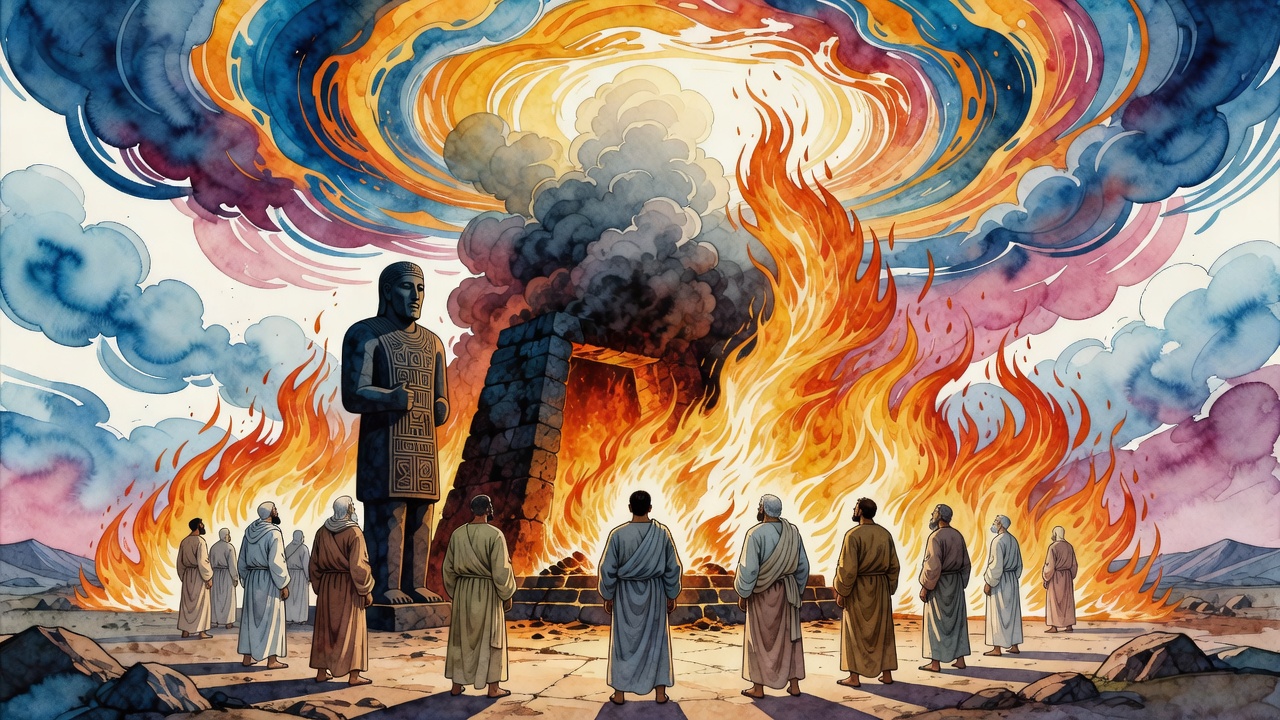
"You are the kinsmen of those three boys, are you not," Trayanos said, loud enough for the back of the crowd. "Hananiah, Mishael, Azariah. The three who walked in Nebuchadnezzar's furnace and came out without a singed hair."
He let the names hang there. The crowd knew the story. A king of Babylon had heated a furnace seven times hotter than its custom, had bound three young men of Judah and thrown them into the flame, and the fire had refused them. They had walked in the heart of it and walked out whole, and the smell of smoke was not on them.
"So," the general went on, "if your God is the God who did that, let Him do it again. Here. Now. Let Him reach down and pull you out of my hand the way He pulled them out of the king's. I will wait."
It was a trap dressed as faith. If they begged heaven for rescue and none came, he would have unmasked their God in front of a province. If they said nothing, he would kill them anyway and call it proof. He had built a stage on which there was no good answer, and he stood at the center of it, certain.
The Brothers Refuse the Premise
The brothers looked at him, and they did not pray. They answered him.
"Those three were perfectly righteous men," Lulianus said. "Hananiah, Mishael, and Azariah deserved a miracle. We do not claim to be their equals. We are not perfectly righteous, and we will not pretend to be, to win a wonder from you."
That alone should have ended it. But the brothers were not finished, and the second half of the answer turned the general's own trap back on him.
"And consider the king you named," Pappus said. "Nebuchadnezzar was a king. When the Holy One chose to display His power in the furnace, He chose a worthy stage for it, a ruler whom the whole world watched. A miracle through such a man means something. But you, Trayanos, are a wicked, common man. You are no Nebuchadnezzar. The Holy One does not spend His wonders to glorify a nobody."
The crowd had come for a humiliation. They were getting one. It simply was not the humiliation the general had advertised.
God Has Many Agents of Death
"Do not imagine you are necessary to us," the brothers went on. "If it has been decreed in heaven that we die today, the Holy One has no shortage of agents. A bear could kill us. A lion. A serpent in the road, a scorpion under a stone. He did not need you. There are a thousand deaths waiting in the world that have nothing to do with your sword."
The general's face was changing. The spectacle he had built required two frightened men pleading with the sky. Instead two bound prisoners were lecturing him on the economics of miracles, and the soldiers around the platform had gone quiet to listen.
"So understand why you are holding the sword," Lulianus said. "The Holy One has delivered us into your hand for one reason only. So that when the accounting comes, He may demand our blood back from you. You are not the instrument of our rescue and you are not the instrument of heaven's decree. You are the debtor. We are the loan."
The Sword Falls and the Debt Stands
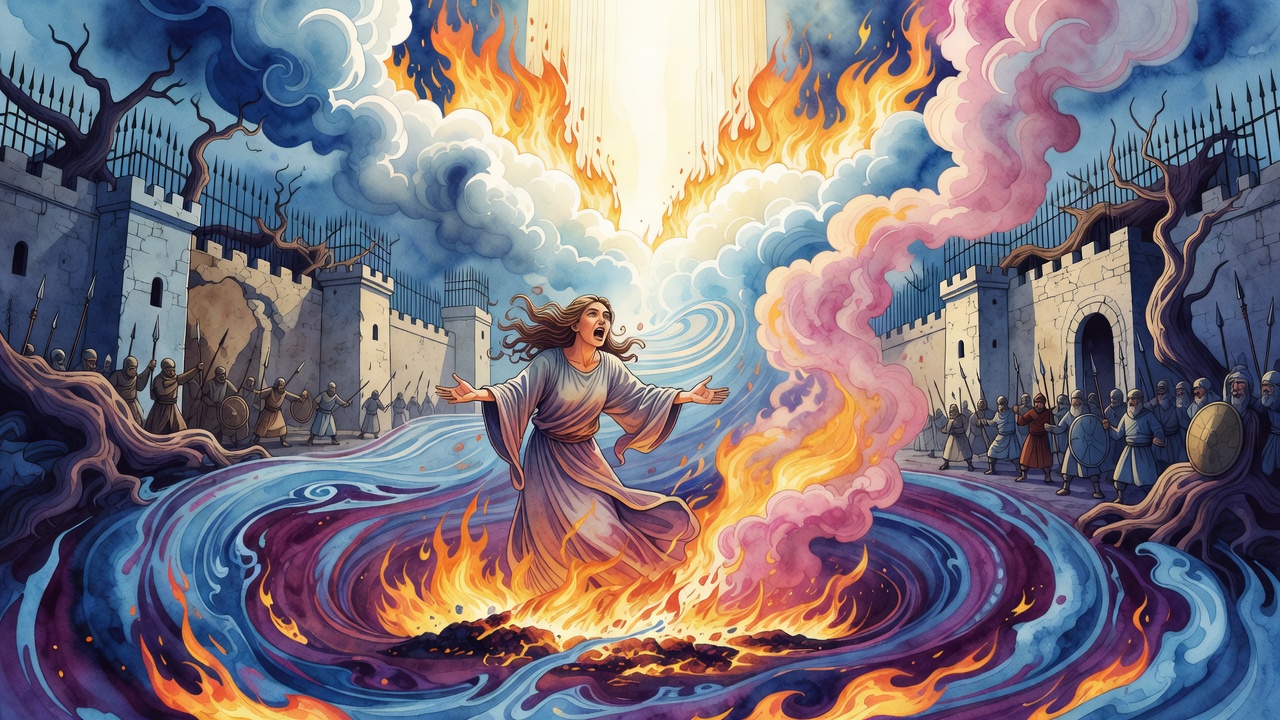
There was no thunder. No furnace cooled itself in the brazier. The brothers had promised no rescue, and none came, and that was the heart of their refusal. They had taken the miracle off the table themselves so that the general could not pretend its absence was a verdict against their God.
Trayanos gave the order, because it was the only move the brothers had left him. The sword came down on Lulianus, and then on Pappus, and the spectacle he had staged collapsed into the one thing he had wanted to avoid. He had not exposed a powerless God. He had executed two men who died telling him, calmly, that he was already condemned.
He did not enjoy his victory for long. The tradition that remembers the brothers remembers the rest of it too. The general who battered down the cult of Israel had his own head battered in not long after, by order of the Senate in Rome. The blood he had spilled in Laodicea was charged to his account exactly as the brothers had told him it would be, and the bill came due faster than he could have guessed.
What the crowd carried home was not a failed miracle. It was the memory of two men who would rather die than let a tyrant turn their God into a coin trick, and a general who learned, too late, that he had been an agent of nothing at all.
← All myths