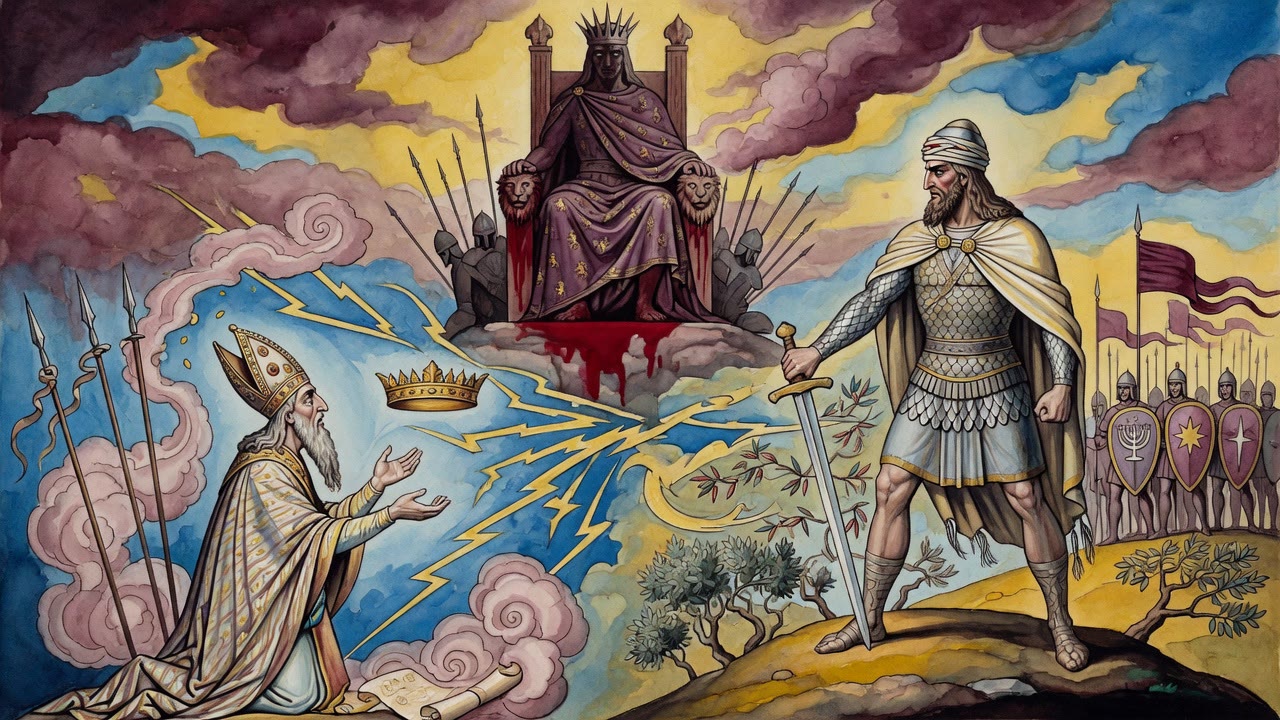
The Captured Child Who Read Genesis Aloud
The dungeon boy knew only the first chapters. Rome set a Hebrew book in front of him and waited. He opened it and began at the beginning.
Table of Contents
 Click for full size
A Book No One in the Palace Could Open
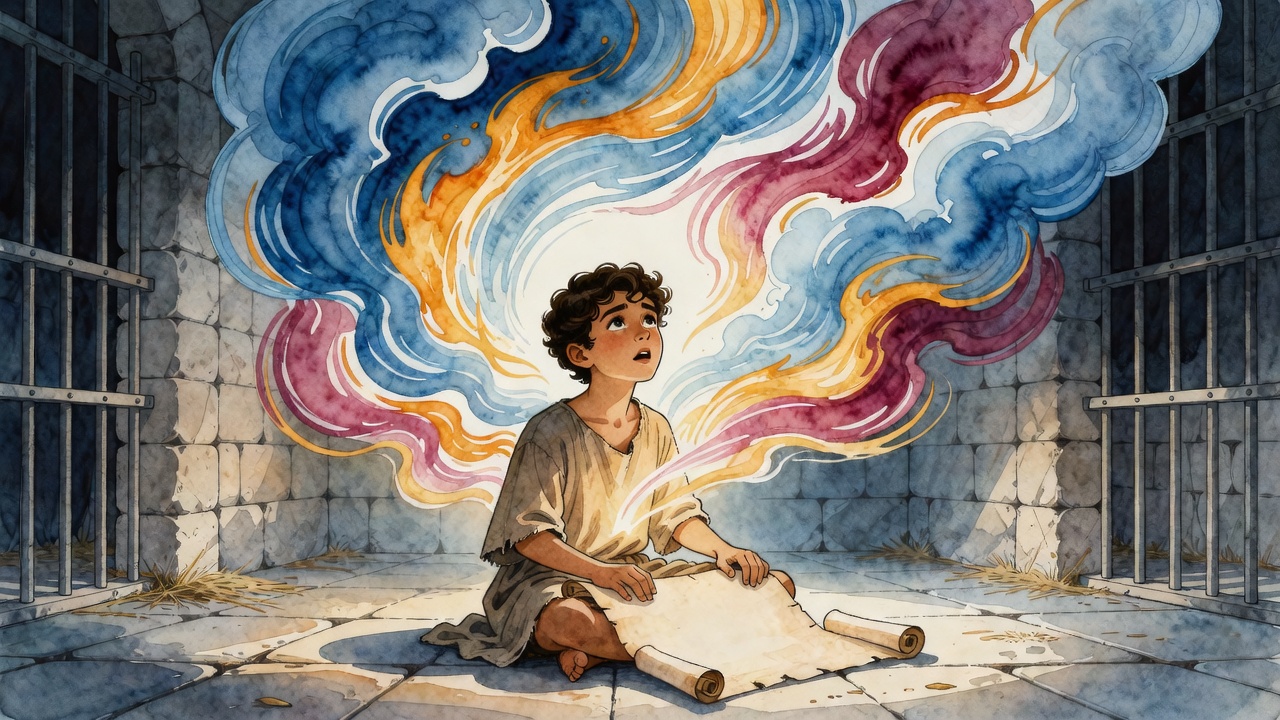
The Jewish child had learned only the opening chapters of Genesis before soldiers took him. Nothing more. Then the dungeon, the Roman stone, the long days without a teacher. He was young, alone, and far from anyone who could help him. He recited the verses in the dark to keep his mouth from forgetting the shapes of the letters.
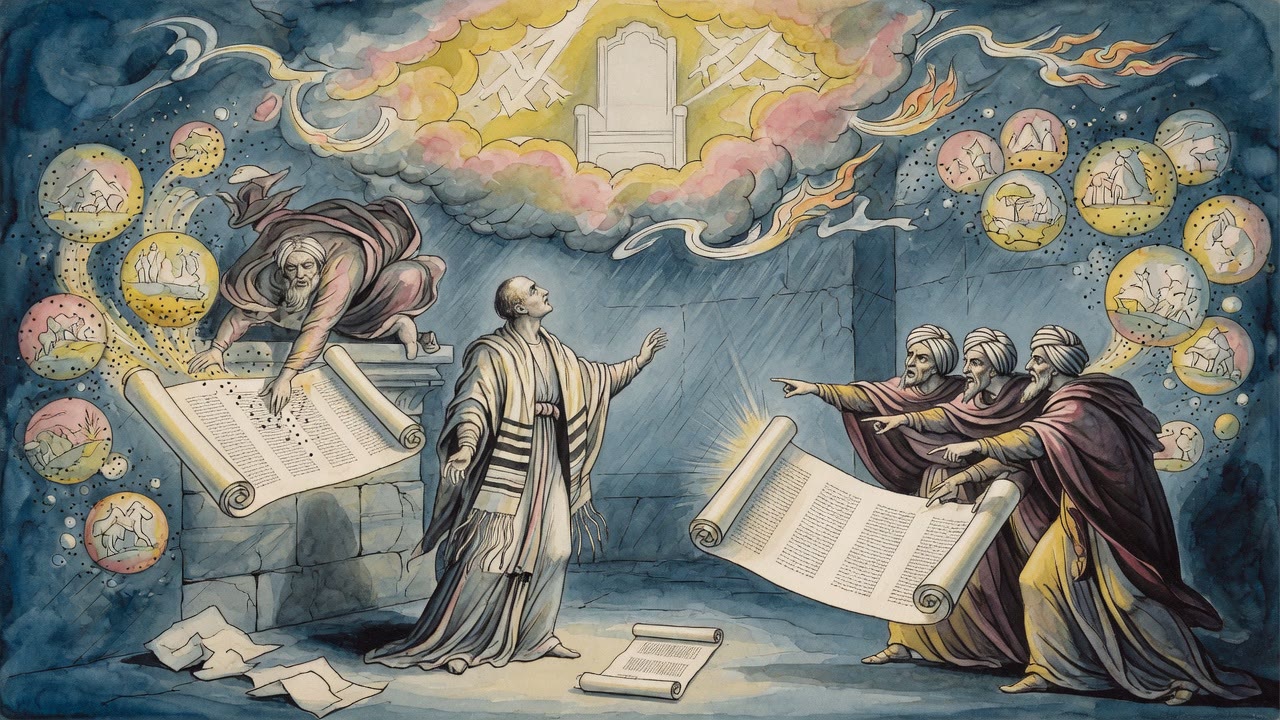
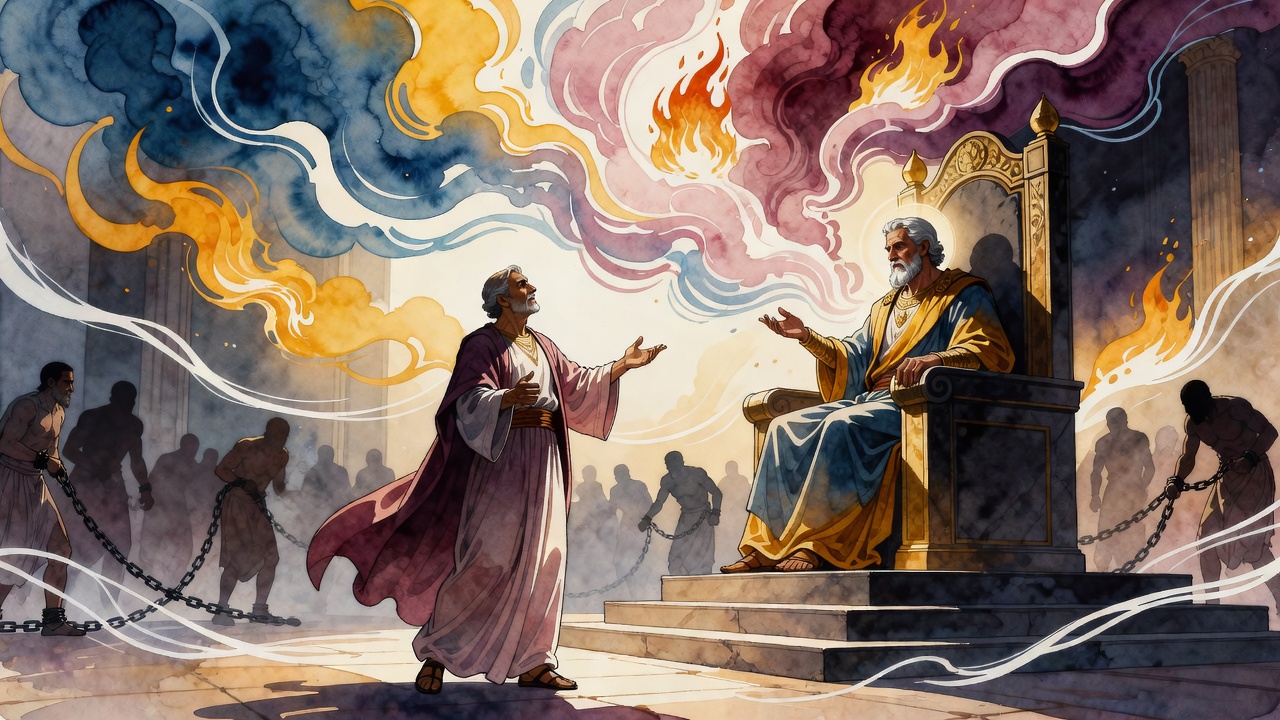
One day the Emperor asked for a book from the royal library. It arrived. No one in the court could read it. The letters were Hebrew. Advisors, translators, scholars of other tongues stood baffled before the page. Someone remembered the boy rotting below. They dragged him up and set the book before him.
"Can you read this?"
He knew the risk. If he read, they might kill him for the knowledge, or use him and discard him. If he refused, they would kill him at once. He chose the letters.
He Began at the Beginning
He opened the book and began. "In the beginning, God created the heavens and the earth" (Genesis 1:1). Word by word he translated for a room that had never heard the verse from a Jewish mouth. His voice cracked once. Then it steadied. He kept going through the days of making, light and dark, water and dry land, because those were the chapters he had, and he would not leave them hollow.
The emperor leaned forward. A child who had nothing left but a few chapters of Torah was spending them in a court that could crush him. When the last word of what he knew left his mouth, the room was quiet. Rome had conquered bodies. It had not conquered the alphabet that still began the world.
The emperor, struck by the courage of a child who risked his life on a few chapters, freed him and honored him. The boy stood blinking in the light. Chains had a weight. Air had a different one.
Two Particles in the Study House
Those first words hide more than a translation can carry. Hebrew places the particle et (את) twice in the verse, once before the heavens and once before the earth. English usually drops them.
In the study house of the second century, Rabbi Ishmael and Rabbi Akiva sat over the same line the boy had just spoken. Ishmael read plainly. Et marks the direct object. Nothing more. Grammar, not cargo.
Akiva refused emptiness. Scripture itself says the Torah is no empty thing (Deuteronomy 32:47). If nothing in Torah is empty, et cannot be filler. Without the double et a reader might hear heaven and earth as co-creators named beside God. With et, the grammar locks. God alone creates. Heaven and earth, and everything that belongs to them, are objects of one verb. Sun, stars, trees, animals, humans. All included. One Actor.
Akiva set his finger on the page and would not lift it. Ishmael shook his head. The Greek translator Aquila, who studied under Akiva, later carried the same stubborn care into Greek, rendering et so that nothing of the inclusion was lost. A particle small enough for a child to overlook became a wall against many gods. The boy in the palace did not argue particles. He simply refused to leave the verse hollow when he spoke it aloud.
Awe Inside the First Word
Centuries later a mystic in Castile opened the first word the boy had spoken. Inside Be-Reishit (בראשית), "In the beginning," he found the letters of yirat (יראת), awe. Peel those letters away and what remains alludes to shuv (שוב), return. Creation begins not only with a command but with a demand for reverence, and with a path back when reverence is lost.
He sat with the letters until the lamp burned low. If there is no awe, there is no wisdom. Awe is the house where wisdom is stored, the palace of the King. The mystic did not know the dungeon boy. He knew the same first word. He traced it until his hand shook.
The boy in the dungeon had not known those later readings. He knew enough of Bereshit to stand in a hostile court and speak the opening of the world without stammering. That is already a kind of awe. The page did not protect him by magic. The memory of the page made him useful to an emperor and therefore free. Awe kept him company when the stone was cold.
He Walked Out With the Opening
When they led him out, the court was still quiet. The emperor's honor was political. The boy's survival was simpler. He had kept the first chapters when he could keep nothing else, and when the empire needed those chapters, they needed him.
Outside the palace the air smelled of dust and horses. He walked with the only wealth that had not been stripped from him in the prison. A beginning. Two particles he had not yet been taught to name. Enough awe to open a book no one else could open.
He walked out lighter than he had walked in, and heavier with the knowledge that a few lines can outweigh a chain. Partial Torah is still Torah under pressure. A few chapters, held when the rest has been stolen, can still open a sealed book in a palace that thought Hebrew was only noise.
← All myths