Parshat Shemot5 min read

The Desert Nursed the Babies the Nile Refused to Drown

Pharaoh turned the Nile into a grave for Hebrew sons, but the river spat the infants back onto the sand, where God fed them milk and oil from the rock.

Curated by Arthur · Told by Maggid ·
Table of Contents
  1. The Taskmasters Came on the Wedding Night
  2. Pharaoh Handed His River the Hebrew Sons
  3. The River Would Not Keep What It Was Given
  4. The Rocks That Ran With Honey and Oil
  5. The Boy the River Dared Not Drown
The Desert Nursed the Babies the Nile Refused to Drown Click for full size

The Taskmasters Came on the Wedding Night

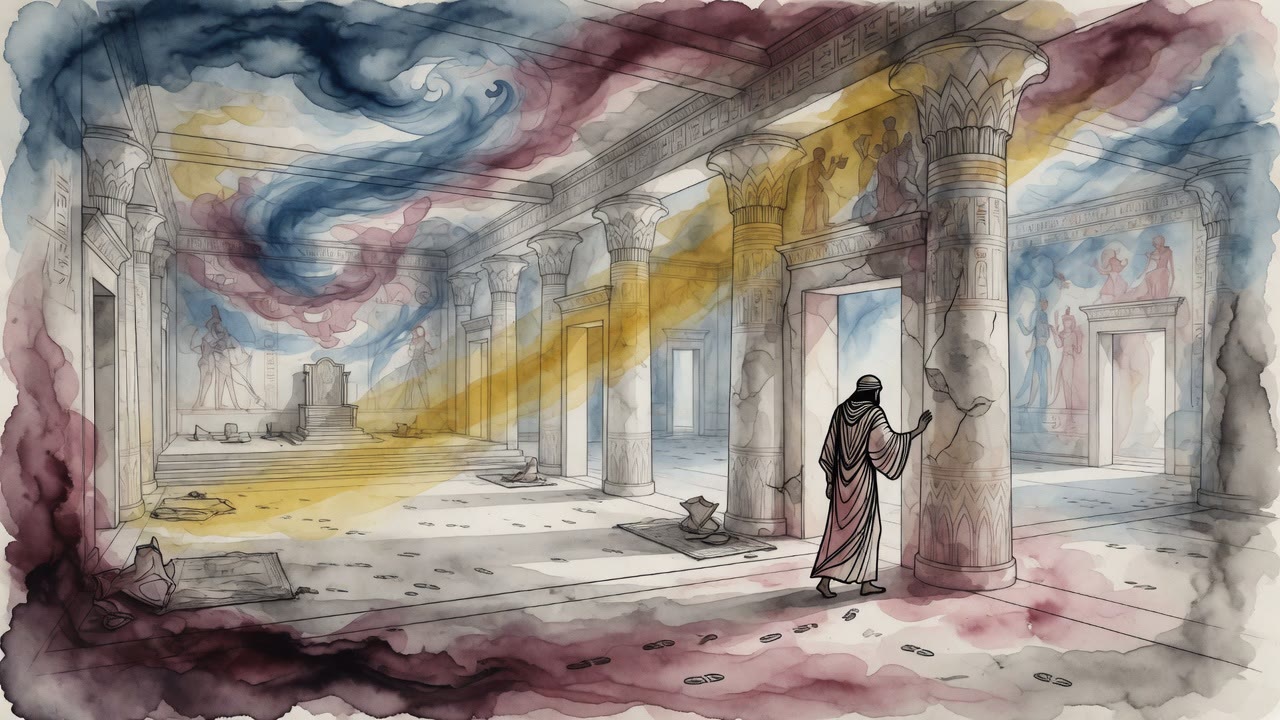
Bedijah, grandson of Dan, took Shelomith, daughter of Dibri, a woman of his own tribe, and they stood together under a cloth in a slave's yard while the lamps still burned. Before the oil went low, the door filled with Egyptian taskmasters. They killed Bedijah where he stood, in his wedding clothes. Then they took Shelomith. She conceived that night, and the son she would carry out of it was already bent toward what he would become. Years later, at the very edge of freedom, he would open his mouth and curse the Name of God aloud.

That was the weight under the bricks, heavier than the mortar and the lash. The taskmasters walked into the wedding yards and the birthing rooms as though they owned what happened there, and no law in Egypt rose to stop them. The bitterness went into the blood of the next generation before that generation drew breath.

Pharaoh Handed His River the Hebrew Sons

Then came the decree that turned the Nile into a mouth. Every boy born to a Hebrew woman was to be thrown into the water. Pharaoh set watchers to count the bellies of the slave women and mark the months, so that no birth could pass him unseen. When a count came due, his men went house to house through the mud-brick lanes, listening at the walls for the thin cry of a newborn.

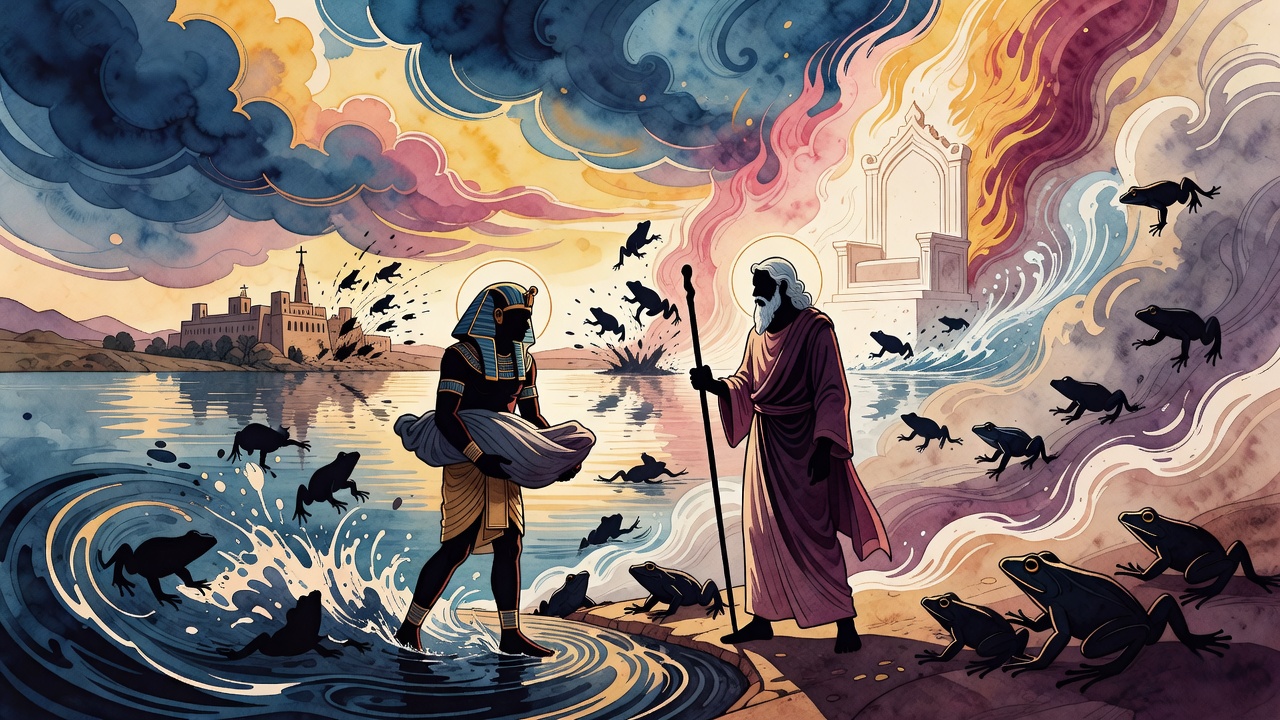
The women went out to the fields to labor alone. They knelt in the furrows and under the open sky, far from the counting eyes, and bore their sons in silence and left them. And the Egyptians hunted the fields, and when they found a Hebrew boy they carried him to the river and gave him to the current, and the mothers heard the small sound the water made and could not run to it.

The River Would Not Keep What It Was Given

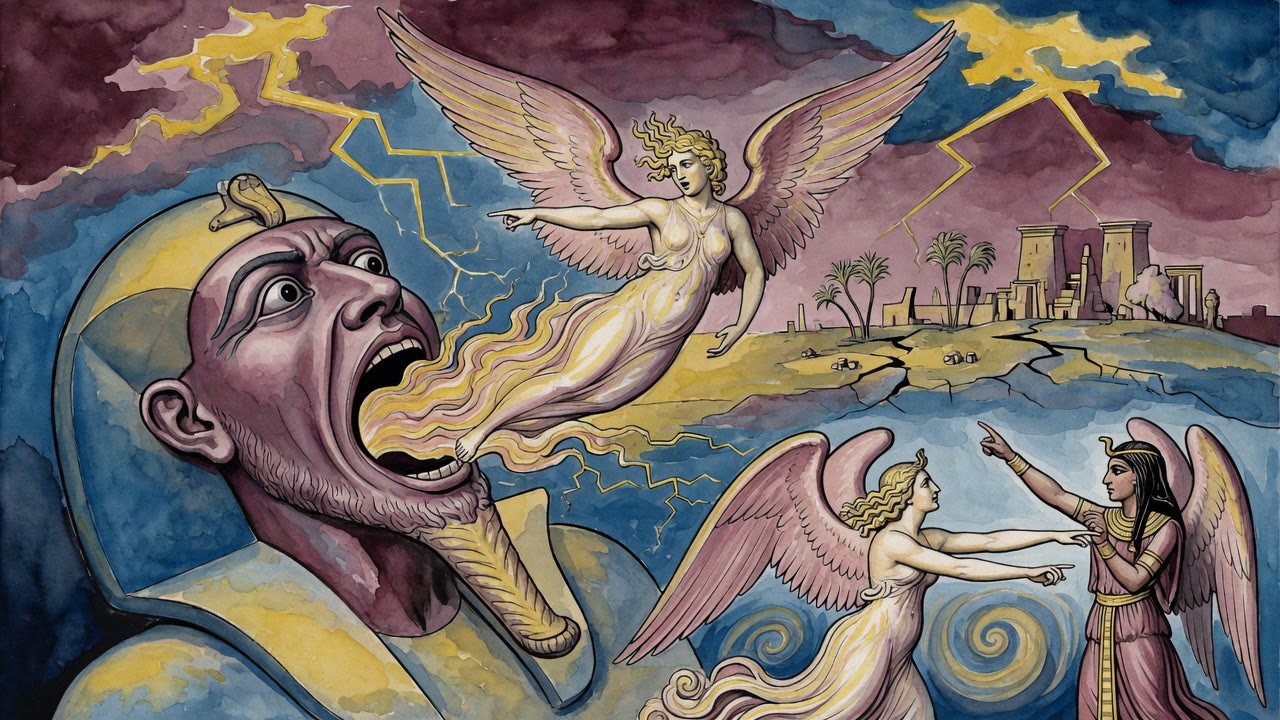
But the Nile refused the gift. Rabbi Shela told it plainly: the river would not swallow the Hebrew children. It carried them under and then heaved them up again, and cast them out living onto the shore at the desert's edge. Every infant the water was meant to drown, it spat back onto the sand, breathing, small chests rising and falling under the sun.

The Egyptians hauled some of them back and flung them in a second time, and a third, and each time the current shrugged them loose and laid them again on the bank. They lay in the open wilderness with no mother near, no roof, no milk. Nothing that lives should have lasted a night there.

The Rocks That Ran With Honey and Oil

So God came down to the sand and tended them Himself. To each child He brought two stones. He set one against the child's mouth, and it ran with honey and with milk, and the infant drank from the rock in a place where no herd grazed and no bee should have built. He set the second stone at the child's side, and it flowed with oil, and the oil anointed the small body and warmed it the way a mother's hands warm a newborn after birth.

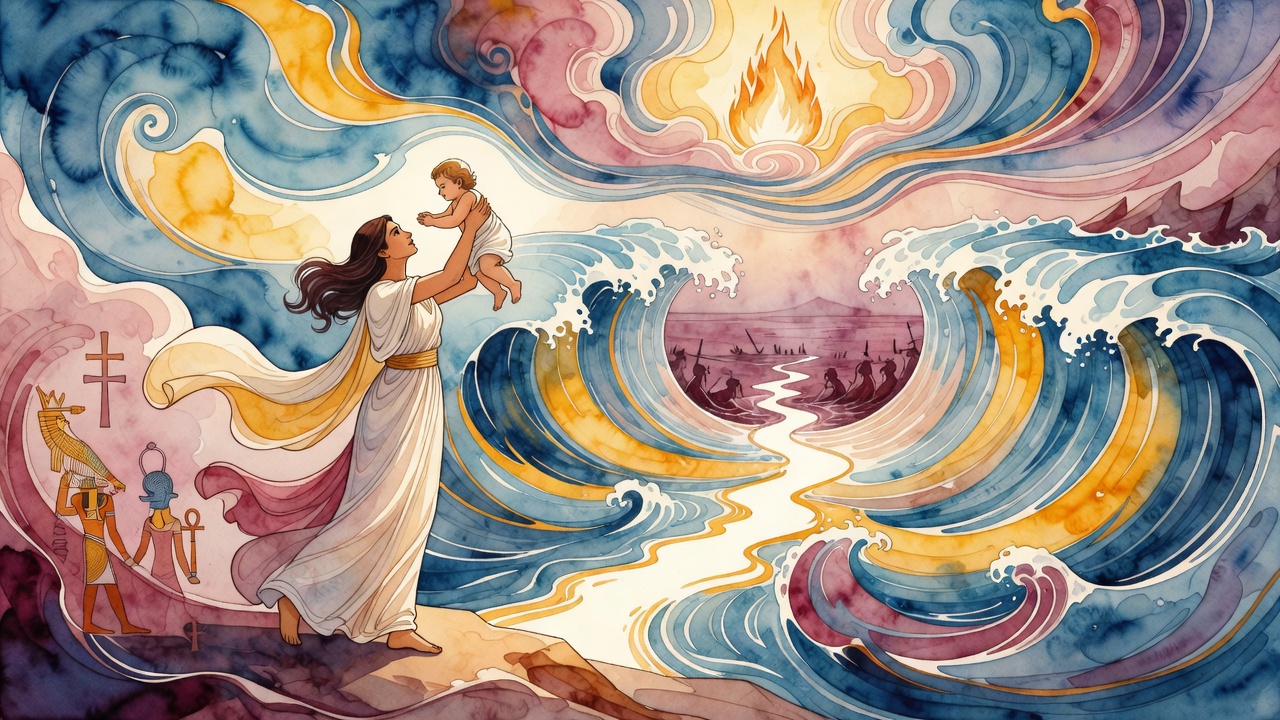
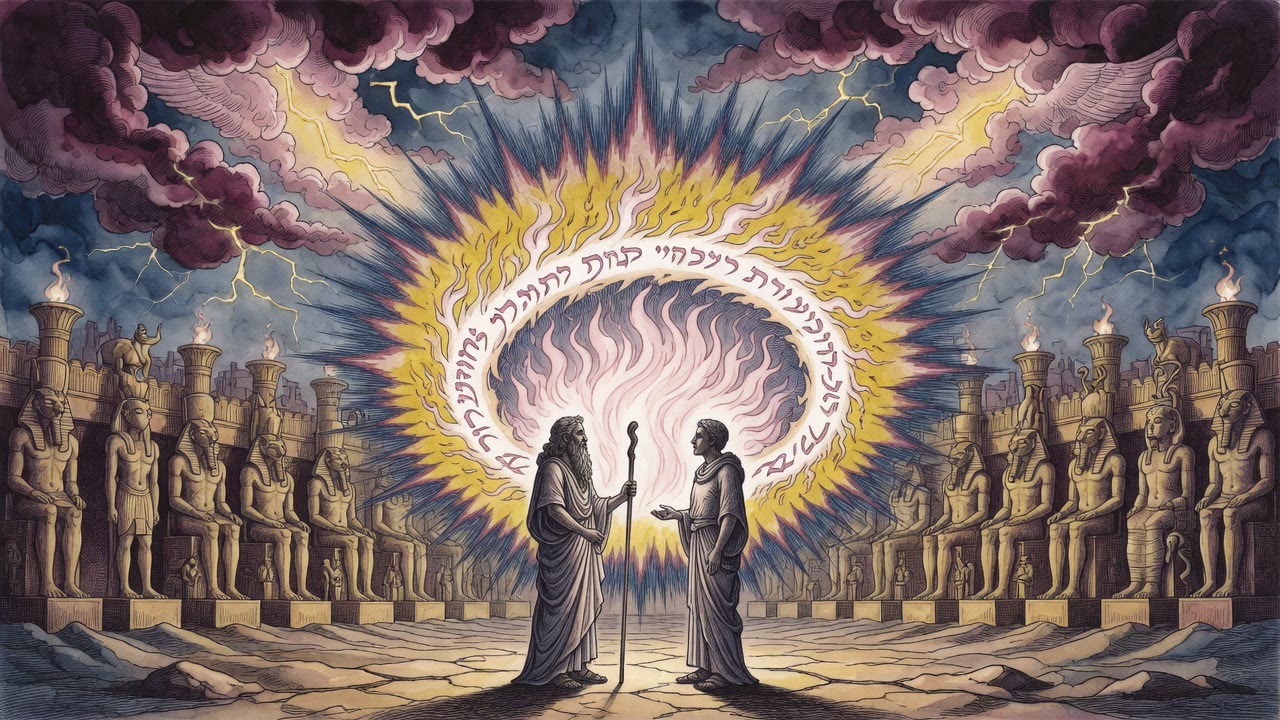
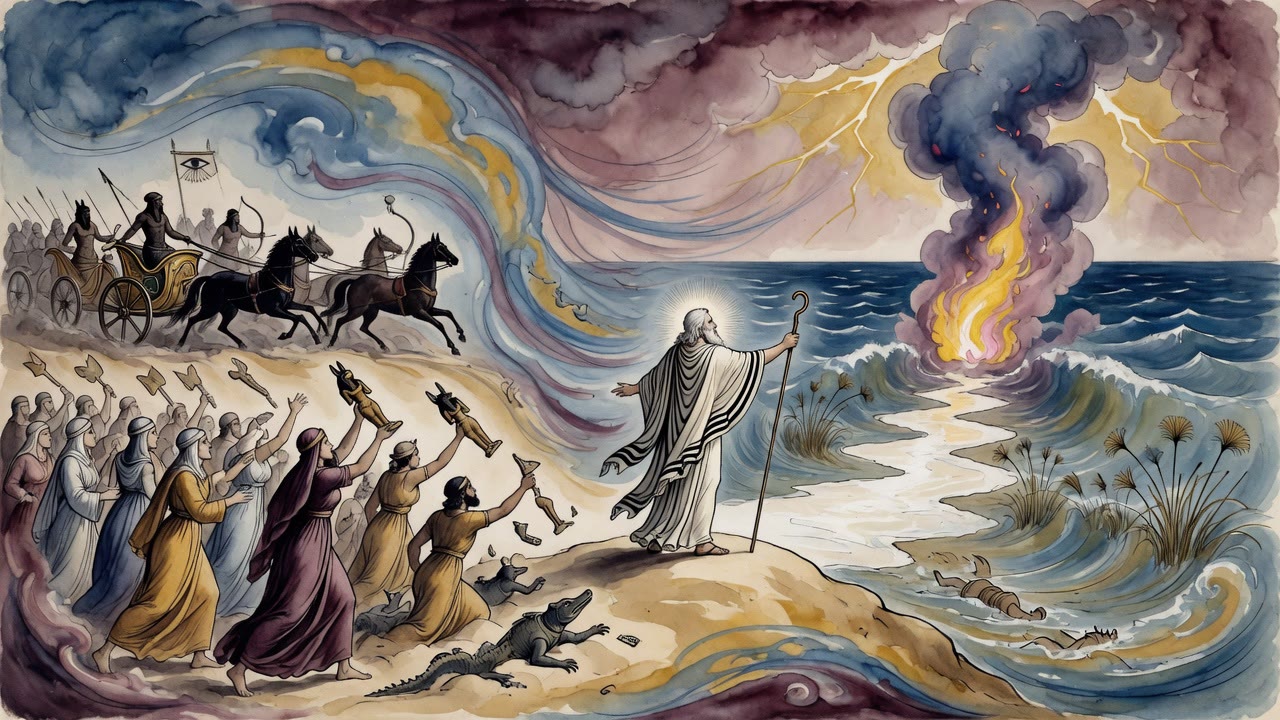
The children of Israel that Egypt had thrown away were nursed by the desert floor. They grew strong on stone in the emptiest ground under heaven, fed by the flinty rock, and they did not know yet whose hand had reached for them. That knowing would come later, at another shore, when the water stood up in walls and they looked and cried out, "This is my God, and I will praise Him," because the God who had fed them from the rock was standing plainly in front of their eyes.

The Boy the River Dared Not Drown

Three years of this passed. Then Moses was born, and the room he was born into filled with light, and his mother and father looked at him and his face was like the face of an angel of God. On the eighth day they circumcised him, and they called him Jekuthiel, a name that meant their hope was fixed on God alone.

Word climbed to the palace. "He is born," Pharaoh's men told him, "and he is hidden from our sight." Pharaoh did not send the knives. He changed the shape of the cruelty instead. "Since he is born," he said, "you shall no longer cast the male children into the river. Lay a hard yoke on them, and make their lives bitter with heavy labor." He would grind the people down slowly now, and break the deliverer inside a nation too exhausted to lift him up.

His mother hid the boy while she could. When she could hide him no longer, she wove a basket, sealed it against the water, and set the child into the very river that had learned to refuse Hebrew sons. The current took the basket and held it up, and carried it, and did not pull it under. The Nile that Egypt had made into a grave lifted one boy on its back and would not drown him.


← All myths
From the tradition

Sources

3 sources

The texts behind this telling. Some cards carry a translation of the source; others are our own retelling of it, and each card says which. Every card links out to the original.

Pirkei DeRabbi Eliezer 42:9Pirkei DeRabbi Eliezer

Retold in our words. Read the original at the link below.Pirke de Rabbi Eliezer, trans. Rabbi Gerald Friedlander, London (1916) · CC-BY

The desperation, the cruelty… it’s almost too much to bear. But what if I told you that Jewish tradition offers a surprising, even comforting, twist on that horrific decree?

In Pirkei DeRabbi Eliezer, a fascinating collection of stories and interpretations from the early Middle Ages, not all those babies perished. Rabbi Shela tells us that the river, in a moment of unexpected grace, actually spat them back out! Instead of succumbing to the waters, the Nile cast them onto the shores of the Egyptian desert.

Can you imagine? Abandoned, yes, but alive. Now what?

This is where the story takes an even more wondrous turn. The text describes how God, in His infinite compassion, provided for these vulnerable children in the most miraculous way. He brought a rock to the mouth of each child, and another to their side. But these weren’t just ordinary rocks. The rock at their mouth nourished them with honey and milk – pure sustenance in the barren desert. And the rock at their side? It anointed them with oil, like a mother tending to her newborn.

It’s such a tender image, isn’t it? This idea of God as a nurturing presence, a divine caregiver watching over the most helpless among us. It echoes the verse from Deuteronomy (32:13): "And he made him to suck honey out of the rock, and oil out of the flinty rock." This verse, often interpreted as a general blessing of the land, here takes on a deeply personal and immediate meaning.

The story in Pirkei DeRabbi Eliezer goes on. It jumps ahead to the splitting of the Red Sea. When the Israelites finally reached the sea, they experienced a profound moment of recognition. They saw God – not as some abstract concept, but as a tangible, present force. And in that moment, they cried out, "This is my God, and I will praise him!" (Exodus 15:2). connection. The very children who were saved by divine intervention in the desert, who were nurtured by miraculous rocks, were now witnessing another miracle – the parting of the waters. It makes you wonder… did they perhaps recognize the hand of God in a way that others didn't? Did their earlier experience of divine care prepare them for this ultimate act of salvation?

It's a powerful reminder that even in the darkest of times, even in the face of unimaginable suffering, there is always the possibility of hope, of redemption, and of divine grace. The story of the Israelite babies in the desert isn't just a tale of survival; it's evidence of the enduring power of God's love and protection. What do you think this story teaches us about faith and resilience?

Full source
Pirkei DeRabbi Eliezer 48:7Pirkei DeRabbi Eliezer

Retold in our words. Read the original at the link below.Pirke de Rabbi Eliezer, trans. Rabbi Gerald Friedlander, London (1916) · CC-BY

The moments leading up to his birth were fraught with danger and a whole lot of divine intervention.

The book of Pirkei DeRabbi Eliezer, a fascinating text filled with stories and interpretations of the Torah, gives us a glimpse into those tense times. Specifically, Chapter 48.

It tells us that three long years passed. Three years of fear and anticipation as the prophecy of a deliverer hung in the air. Then, Moses was born. scene for a moment. The relief, the joy… quickly overshadowed by the ever-present danger.

In Pirkei DeRabbi Eliezer, when Moses was born, word somehow reached Pharaoh. "Behold, he is born, and he is hidden from our vision," they said. How did Pharaoh react? Did he order the immediate execution of all newborn boys? Not quite.

Instead, he issued a new decree. "Since he is born," Pharaoh declared, "henceforth ye shall not cast the male children into the river, but put upon them a hard yoke to embitter the years of their lives with hard labour, as it is said, 'And they made their lives bitter' (Ex. 1:14)."

A chilling compromise. Pharaoh, perhaps sensing that fate was already at play, decided to change tactics. Instead of outright murder, he would crush the Israelites' spirits through relentless toil. He would break them slowly, deliberately. A different kind of cruelty. A different kind of genocide.

But here's where the story takes a turn towards the miraculous.

Rabbi Nathaniel adds a beautiful detail: "The parents of Moses saw the child, (for) his form was like that of an angel of God." Can you imagine the sight? A baby, radiating an otherworldly glow. A tangible sign of divine favor. A beacon of hope in the darkest of times.

And what did they do? They followed Jewish law, tradition. "They circumcised him on the eighth day, and they called his name Jekuthiel."

Jekuthiel. It's a name rich with meaning. Some say it means "God is my hope" or "May God nourish". It's a powerful declaration of faith and trust in the face of overwhelming adversity. A name whispered with love and defiance.

So, what does this little snippet from Pirkei DeRabbi Eliezer tell us? That even the smallest act of faith can have profound consequences. And that sometimes, the greatest leaders come into the world cloaked in wonder, destined for greatness, even from the very beginning.

Full source
Pirkei DeRabbi Eliezer 48:15Pirkei DeRabbi Eliezer

Retold in our words. Read the original at the link below.Pirke de Rabbi Eliezer, trans. Rabbi Gerald Friedlander, London (1916) · CC-BY

There's one in Pirkei DeRabbi Eliezer, Chapter 48, that's definitely worth exploring.

Rabbi Joseph tells us a troubling tale about the Israelites' suffering in Egypt. It's a story of degradation, forced upon them by their oppressors. He says that the Egyptians didn’t just enslave the Israelites; they defiled them, specifically the Israelite women.

He then gives a striking example: Bedijah, the grandson of Dan, married Shelomith, daughter of Dibri, from his own tribe. But on their wedding night, the Egyptian taskmasters came for them. They murdered Bedijah and then violated Shelomith. She conceived and bore a son from this horrific encounter.

Here's where it gets complicated. Rabbi Joseph adds a rather blunt observation: "In every case the offspring follows the (nature of) the seed: if it be sweet, it will be due to the sweet (seed); if it be bitter, it will be due to the bitter (seed)." It’s a stark statement about heredity, suggesting that the child's nature would be influenced by the circumstances of his conception.

And what became of this child?

The story doesn't end there. When the Israelites finally left Egypt, this son, born from such a traumatic event, began to blaspheme and revile the Name of God. This is directly linked to the verse in (Leviticus 24:11): "And the son of the Israelitish woman blasphemed the Name, and cursed."

So, what are we to make of this?

It’s a difficult passage, no doubt. It paints a grim picture of the Israelites' suffering and raises uncomfortable questions about fate, free will, and the impact of trauma across generations. Is the implication that the child was somehow predetermined to blaspheme because of his origins? Or is it a commentary on the long shadow that oppression casts?

Perhaps it’s a reminder that freedom isn’t just about physical liberation. It's also about healing the wounds of the past, confronting the darkness, and choosing to build a different future. And perhaps, most importantly, it's a call to remember and honor the stories of those who suffered, so that we can learn from the past and create a more just and compassionate world.

Full source