Parshat Shemot5 min read

From Nile Basket to Road Through the Sea

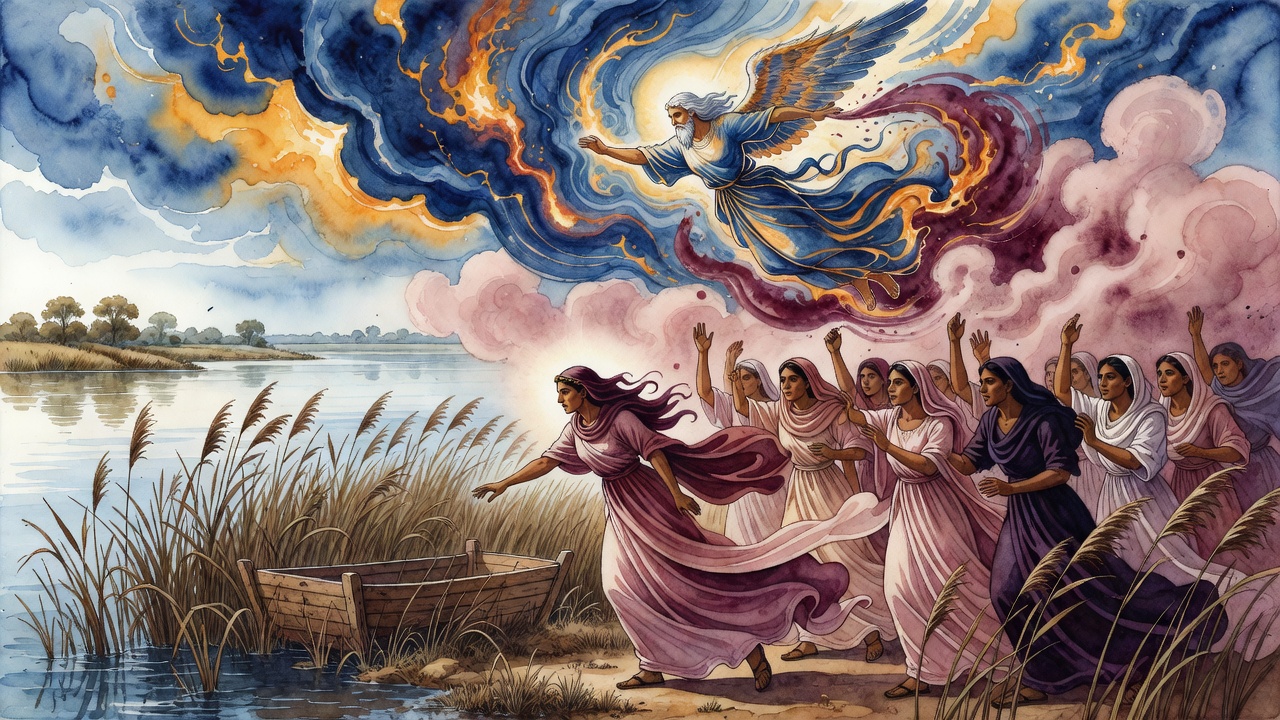
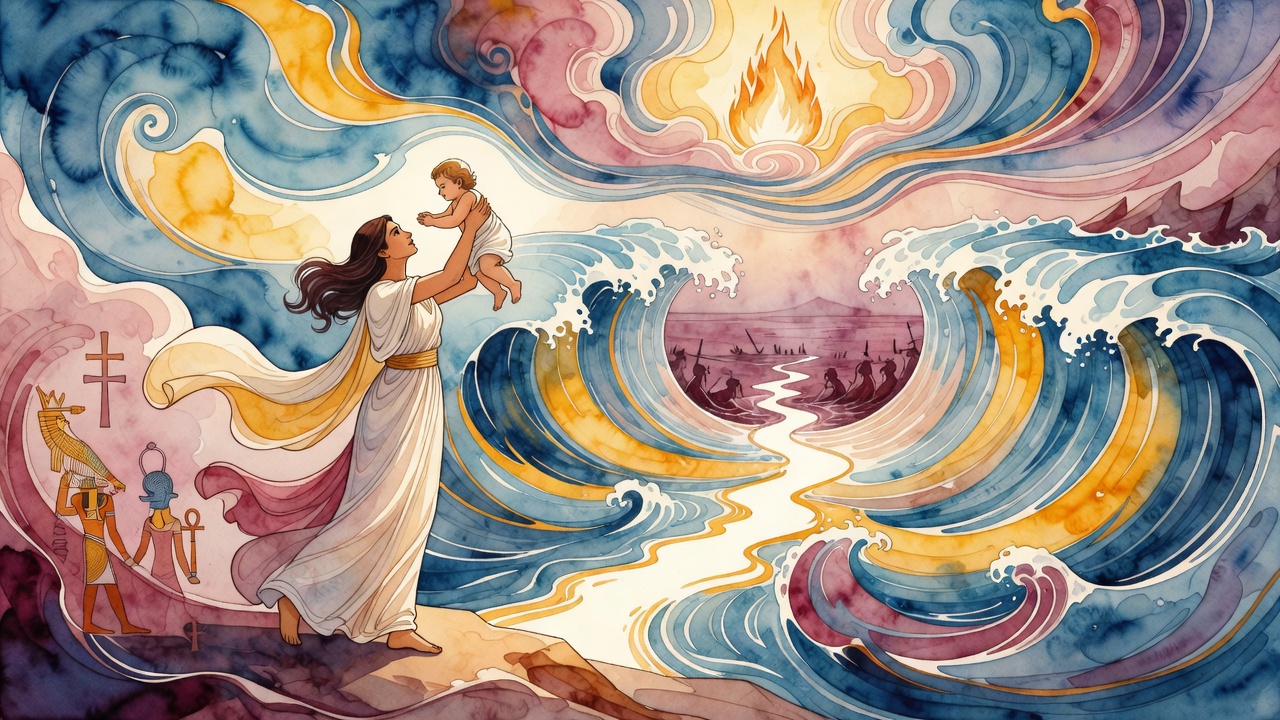
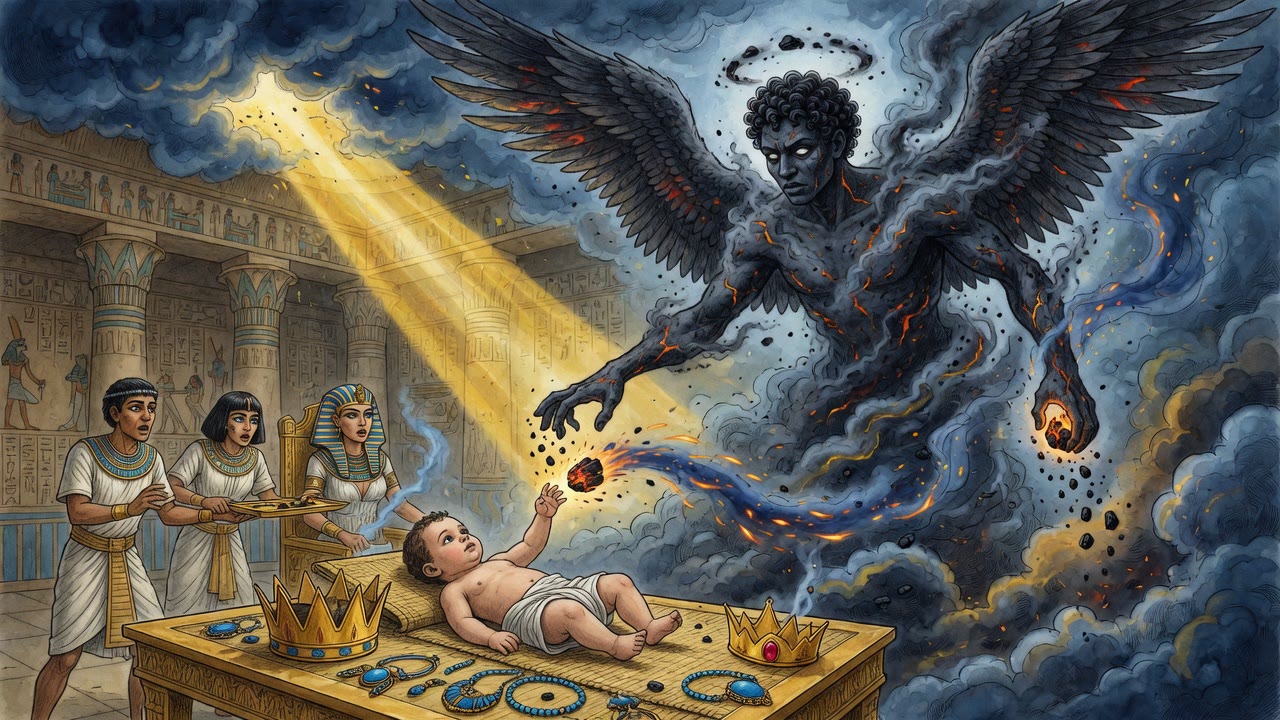
Pharaoh's daughter went down to the Nile to wash off her father's idolatry. Her maidens told her the decree still stood. Gabriel struck them down on the bank.
Curated by Arthur · Told by Maggid ·
Table of Contents
  1. Bathing Off Idolatry
  2. The Oath in Midyan
  3. A Road No King Can Cut
  4. From Reeds to Deep
From Nile Basket to Road Through the Sea Click for full size

Bathing Off Idolatry

The daughter of Pharaoh came down to bathe in the Nile while her maidens walked the bank (Exodus 2:5). Shemot Rabbah will not let the bath be only cool water. She came to wash off the idolatry of her father's house. Conflict walked with her into the river, a royal body trying to rinse a royal creed.

She saw the basket among the reeds. The maidens challenged her. The way of the world, they said, is that a king issues a decree and the world may ignore it, but his children and household fulfill it. You are violating your father's command. The decree was death for Hebrew boys. The princess reached anyway, hand toward pitch and a crying Hebrew life.

The angel Gabriel struck. Maidens fell on the bank. Loyalty to murder lost its escort in a breath. One servant may have been spared so a princess would not stand alone. Another reading stretches her arm, amatah, farther than flesh should reach, until the basket comes to a hand that has already chosen against the house of idols.

She took the child. Moses entered a palace that had tried to erase him, carried by a woman scrubbing river water over a religion of force. The Nile that was meant to drown Hebrew sons became the road by which one of them entered the court.

The Oath in Midyan

Years later the Lord spoke to Moses in Midyan. "Go, return to Egypt; as all the men who sought your life are dead" (Exodus 4:19). Rabbi Yoḥanan heard proper behavior in the place-name. If you make an oath to someone, annul it in their presence, so they will not think you dishonest behind their back.

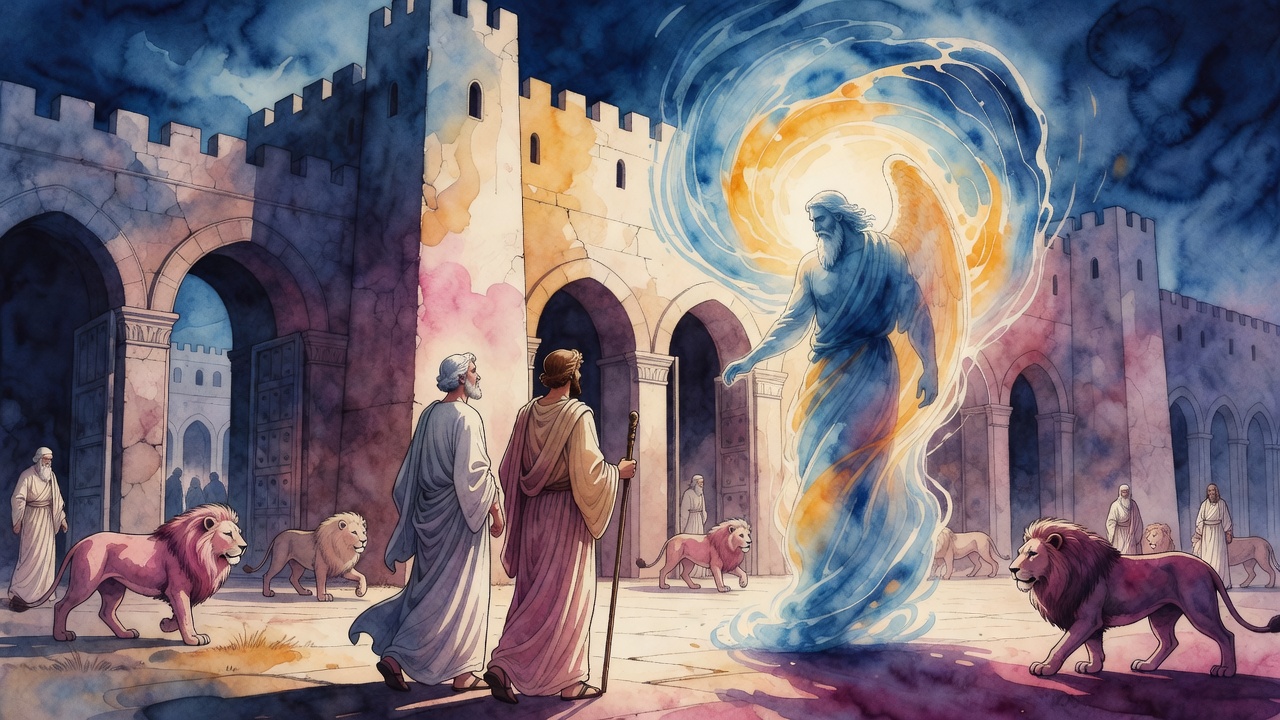
Moses had bound himself to Yitro, his father-in-law. In Midyan he had taken the oath. In Midyan he must be released. The Holy One said, in effect, here you vowed, here you are freed. Then go down to the brick and the blood. A prophet does not slip a private promise while standing at a burning bush in another wilderness.

"All the men who sought your life are dead." Datan and Aviram would still rise later with Korah. Not every death is a grave. The midrash counts the impoverished among the dead, and the childless, and the leper, and the blind. Power that once hunted Moses had withered into a kind of death. The road home opened through a status collapse, not only through funerals and closed tombs.

So the shepherd unties what he owed Yitro, faces the man who held his word, and only then turns his face toward the river that once held his basket.

A Road No King Can Cut

Picture a king of flesh and blood in a rage. When mortals provoke him, he drives them from his province and shuts the gate. Can he tear open the sea, march his enemies into its depths, and seal the waters over their heads? No king who ever lived could do such a thing. Exile is the limit of mortal anger. Drowning by architecture of water is not.

The Holy One, blessed be He, grew angry with the Egyptians and did not merely banish them. He cut a road through the heart of the sea, led them down into it, and drowned them where the waters ran deep. As the prophet says, "Who makes a way in the sea, and a path in the mighty waters."

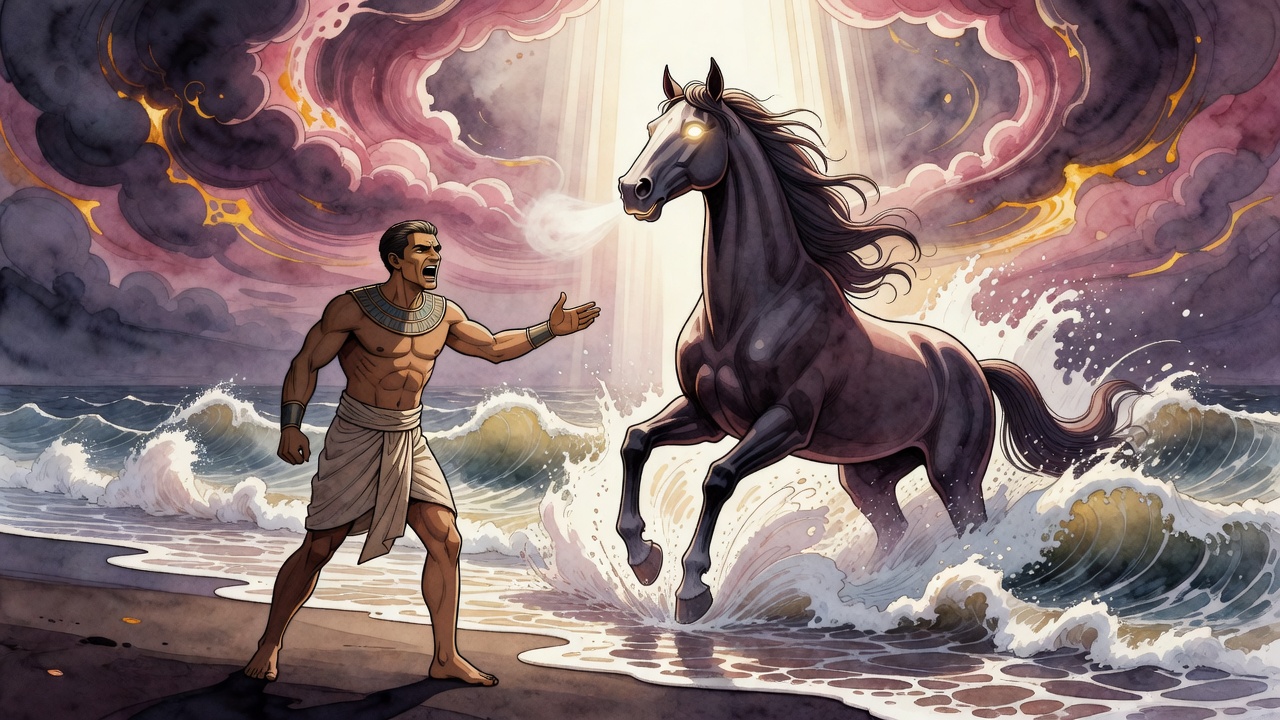
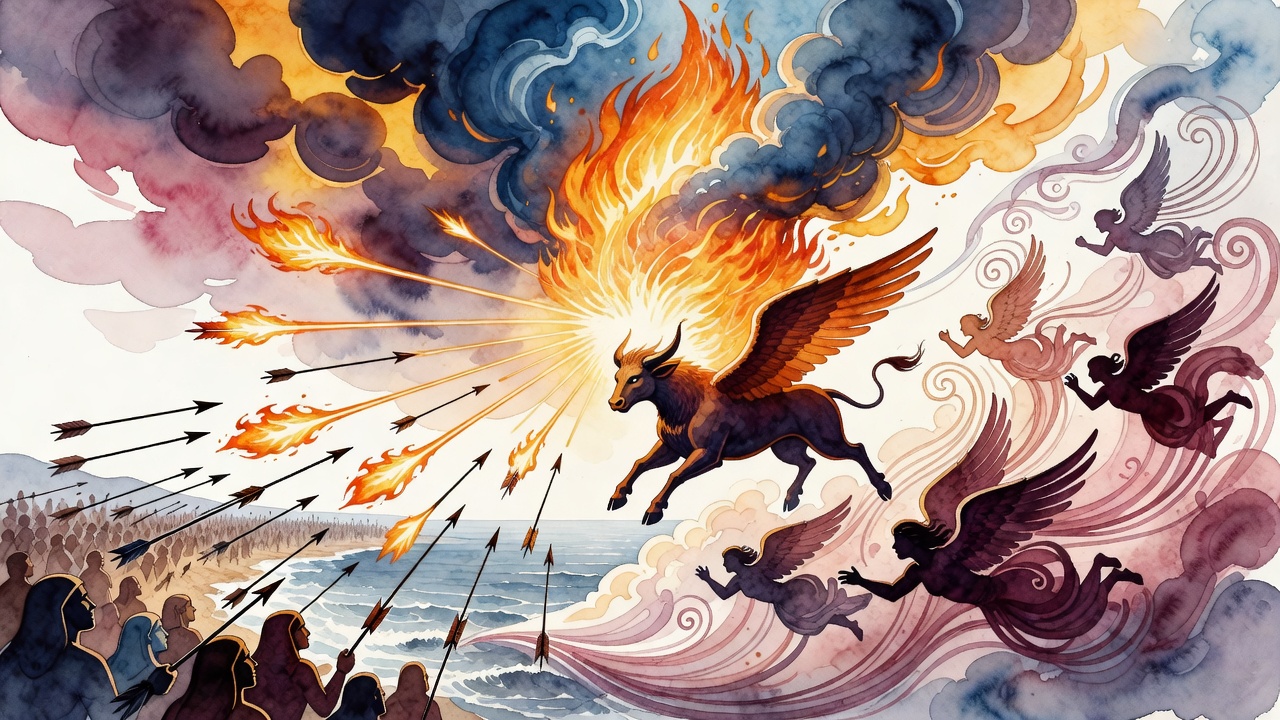
He brings forth chariot and horse, army and might, and casts them into the deep. No mortal sovereign summons that judgment. "For My thoughts are not your thoughts." The mind of God moves on a road no human king can travel, a road that is dry for Israel and wet death for Egypt in the same hour.

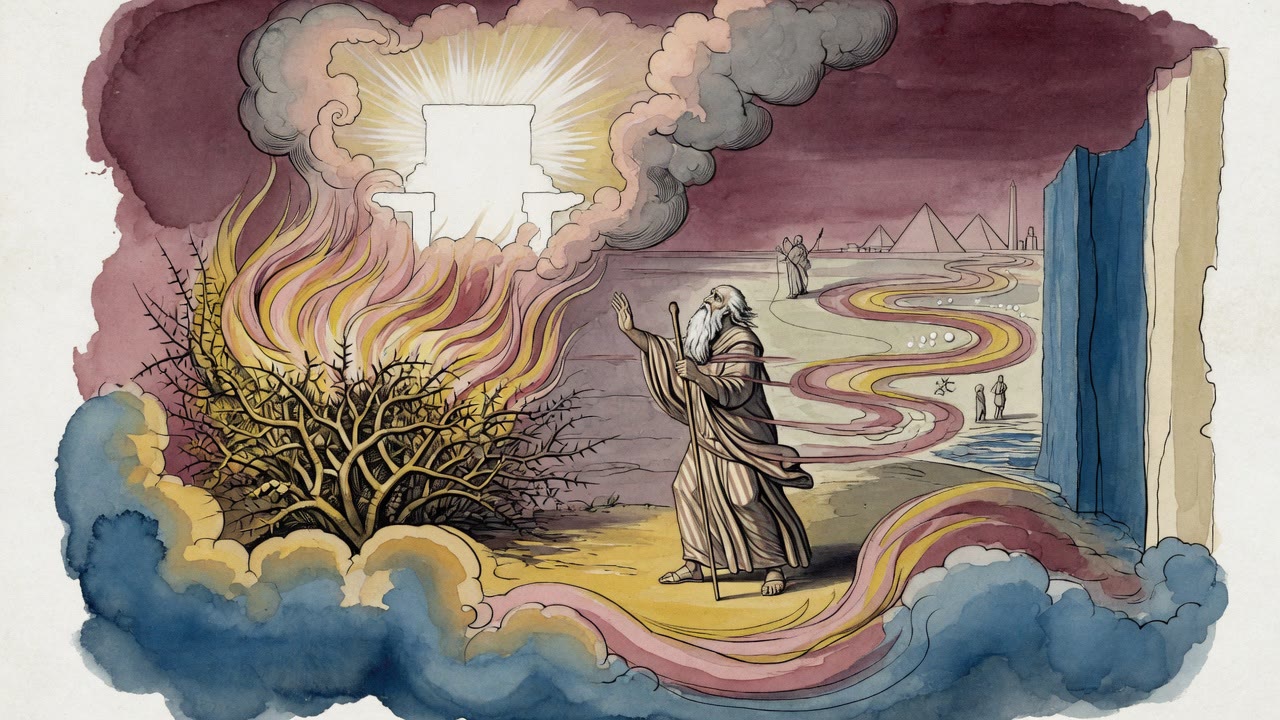
The child of the basket walks that road as a man with a staff. The river that once hid him opens into a sea that hides his pursuers. Pharaoh's decree met a princess. Pharaoh's army met a path no province gate can copy.

From Reeds to Deep

First a princess washes and reaches. Then an oath is untied in the presence of the man who held it. Then a sea becomes a street for Israel and a grave for Egypt.

Moses begins as cargo in pitch and ends as the one who stands while waters wall a nation. Between basket and road runs Midyan, where a shepherd learns that release must be spoken face to face, and that some enemies die by losing the power to hunt even while their names still breathe.

Pharaoh could decree death for boys. He could fill the Nile with fear. He could not decree a road through the sea. That thought belongs to another King, and His thoughts are not a mortal king's thoughts. The basket and the dry path are one story told at two shores of water.


← All myths
From the tradition

Sources

3 sources

The texts behind this telling. Some cards carry a translation of the source; others are our own retelling of it, and each card says which. Every card links out to the original.

Shemot Rabbah 1:23Shemot Rabbah

Retold in our words. Read the original at the link below.The Sefaria Midrash Rabbah, 2022 · CC-BY

The familiar version gives us the basics: baby Moses in a basket, found by Pharaoh's daughter. But what if I told you there's a whole world of interpretation swirling around just a few verses? to one fascinating passage from Shemot Rabbah, a classic collection of rabbinic commentary on the Book of Exodus.

The verse in question is (Exodus 2:5): “The daughter of Pharaoh came down to bathe in the Nile while her maidens were walking on the bank of the Nile. She saw the basket among the reeds and she sent her maidservant [amatah] and she took it.” Simple enough. But the Rabbis, with their keen eyes and boundless curiosity, saw so much more.

First, why was Pharaoh's daughter bathing in the Nile? Shemot Rabbah offers a striking answer: to wash off the idolatry of her father’s house. It paints a powerful picture of inner conflict and a yearning for something more.

Then there's the curious phrase, "While her maidens were walking [holekhot]." Rabbi Yoḥanan, a prominent sage of the Talmudic period, offers a startling interpretation: the term halikha, walking, is an expression of death. He points to (Genesis 25:32), "Behold, I am going [holekh] to die," as evidence. What does this mean for the maidens?

The Rabbis envision a dramatic scene. The maidens, loyal to Pharaoh, challenge their mistress: "Our mistress, the way of the world is that a king issues a decree and the entire world does not fulfill it, but his children and the members of his household fulfill it; and you are violating the command of your father!" They're reminding her of Pharaoh's decree to kill Hebrew baby boys.

Immediately, the angel Gabriel appears! He slams the maidens to the ground, killing them. Talk about a plot twist! This is a stark reminder of the divine power at play in this story, the forces aligning to protect Moses.

But wait, there's more! The verse says, "She sent her maidservant [amatah] and she took it." The Hebrew word amatah sparks a debate between Rabbi Yehuda and Rabbi Neḥemya. One says amatah means "her arm," while the other insists it means "her maidservant." Why the disagreement?

The one who says "her arm" argues that if the verse meant "maidservant," it would have used the word na’aratah, which appears earlier in the verse. The one who says "her maidservant" counters that the more common term for "her arm," yadah, isn't used. It's a classic example of rabbinic close reading, finding layers of meaning in every word.

According to the opinion that it was a maidservant, Gabriel spared one of them, because a princess shouldn't be alone. But then, wouldn't the verse say yadah, if it meant "her arm"? Not necessarily, comes the reply. The word amatah is used specifically because her arm was stretched – incredibly far! As we find in other places, like (Psalms 3:8), sometimes words can be read in different ways to imply enlargement or extension.

This leads to a fascinating image: Pharaoh's daughter, or perhaps her miraculously extended arm, reaching out to save Moses. It emphasizes the extraordinary nature of the event, the divine intervention that made it possible.

Finally, the Rabbis offer one more intriguing explanation. Pharaoh’s daughter was a leper. That’s why she went to bathe in the Nile seeking healing. When she touched the basket, she was cured! This explains her compassion for Moses, her immediate and profound love for the child who brought healing into her life.

So, what do we take away from this deep dive into a single verse? It shows us the richness and complexity of Jewish tradition. It reveals the Rabbis' unwavering commitment to uncovering every possible layer of meaning in the sacred text. Perhaps, the next time you read the story of Moses in the basket, you'll remember the angel Gabriel, the stretched arm, and the princess seeking healing in the waters of the Nile.

Full source
Shemot Rabbah 5:4Shemot Rabbah

Retold in our words. Read the original at the link below.The Sefaria Midrash Rabbah, 2022 · CC-BY

The verse says, "The Lord said to Moses in Midyan: Go, return to Egypt; as all the men who sought your life are dead" (Exodus 4:19). Simple enough. But the Rabbis of the Midrash (rabbinic interpretive commentary), those incredible interpreters of the sacred texts, they dive deeper. This particular passage comes from Shemot Rabbah, a compilation of rabbinic interpretations on the Book of Exodus.

Rabbi Yoḥanan makes a fascinating point: "The Torah teaches you proper behavior." He suggests that if you make an oath to someone, you should only annul it in their presence. Why? So they don't think you're being dishonest! It's about maintaining trust and transparency.

The Midrash connects this idea to Moses' oath to Yitro, his father-in-law. Moses had gone to Midyan, and according to Rabbi Yoḥanan, he needed to be in Midyan to be released from his obligations. Hence the verse, "The Lord said to Moses in Midyan." The Holy One, blessed be He, was saying, in a way, "In Midyan you took the oath; go and annul your oath in Midyan!"

Some commentaries, like the Etz Yosef, suggest a slightly different reading of the verse. They propose that God was actually telling Moses at the burning bush to go to Midyan first, and then return to Egypt.

But there's another wrinkle in the story. The verse also says, "…as all the men…are dead." Now, hold on a second. Are they really dead? The Midrash points out that Datan and Aviram, two troublemakers from earlier in the story, show up later with Korah in his rebellion against Moses (Numbers 16:1). So, clearly, they weren't physically dead.

So, what does "are dead" mean? The Midrash gives us a powerful interpretation: "They became impoverished." And it goes on to list four types of people who are considered as though they are dead: A blind person, a leper, an impoverished person, and one without children (Avoda Zara 5a). It's not just physical death that matters. There are states of being, conditions of life, that can be considered a kind of death. Impoverishment, in this context, isn't just about money; it's about a lack of potential, a lack of opportunity, a loss of status. It's about being unable to fully participate in life.

The Midrash here is not just about interpreting a verse. It's about teaching us something profound about life, about obligation, about redemption, and about what it truly means to be alive. What oaths have we made, consciously or unconsciously? And what does it mean to be truly alive, to be free from the constraints that hold us back?

Full source
Midrash Tanchuma Buber, Vayeshev 11:2Midrash Tanchuma Buber, Vayeshev

Translation of the source text.Midrash Tanchuma (Buber), Public Domain, on Sefaria · CC-BY-SA

Another interpretation: "For My thoughts are not your thoughts" (Isaiah 55:8). A king of flesh and blood grew angry with human beings and banished them from his province. Is he able to make a road through the sea, to bring them down and to sink them within it? But the Holy One, blessed be He, is not so. Rather, He was angry with the Egyptians, and He made a road through the sea, and He brought them down and sank them within it. From where do we know this? As it is said, "Who makes a way in the sea, and a path in the mighty waters" (Isaiah 43:16). And what is greater than all of them? He who brings forth chariot and horse, army and might. Thus, "For My thoughts are not your thoughts."

Full source