The Donkey That Carried Isaac, Moses, and the Messiah
One donkey carried Isaac to the Akeidah, then Moses toward Egypt. The rabbis traced it as the same beast that will carry the Messiah at the end of days.
Table of Contents
 Click for full size
The Animal Before Dawn
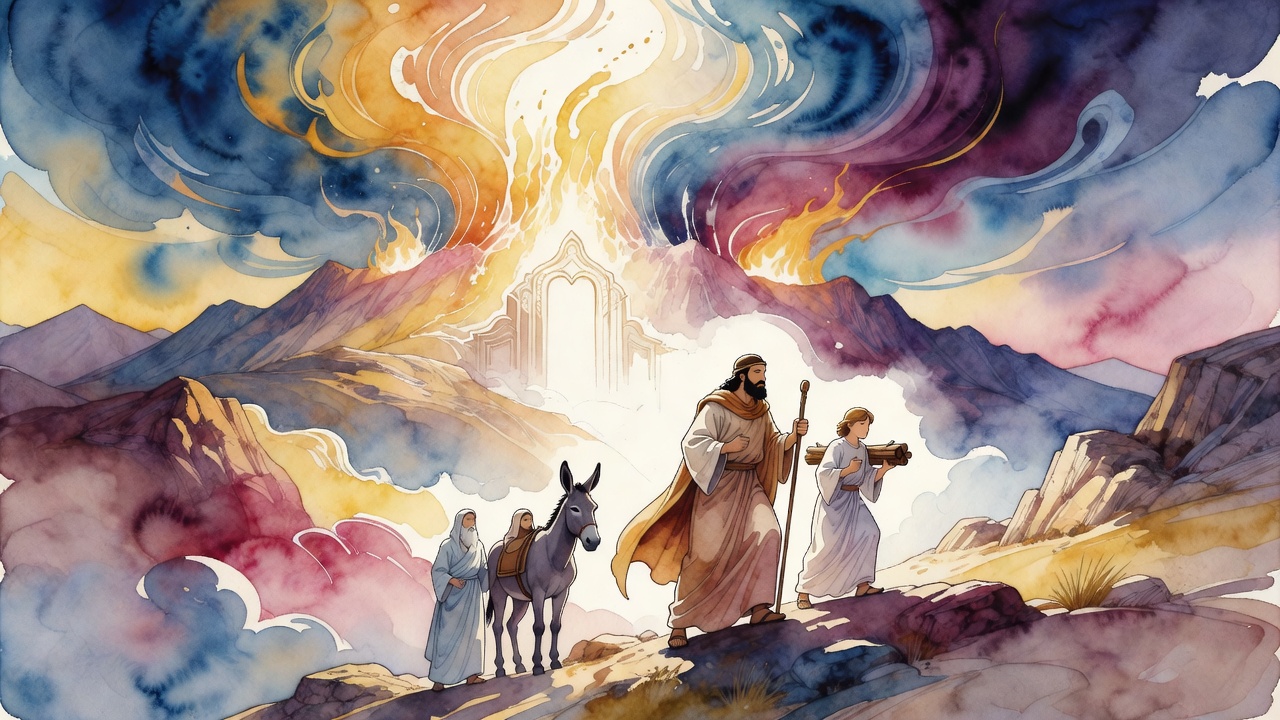
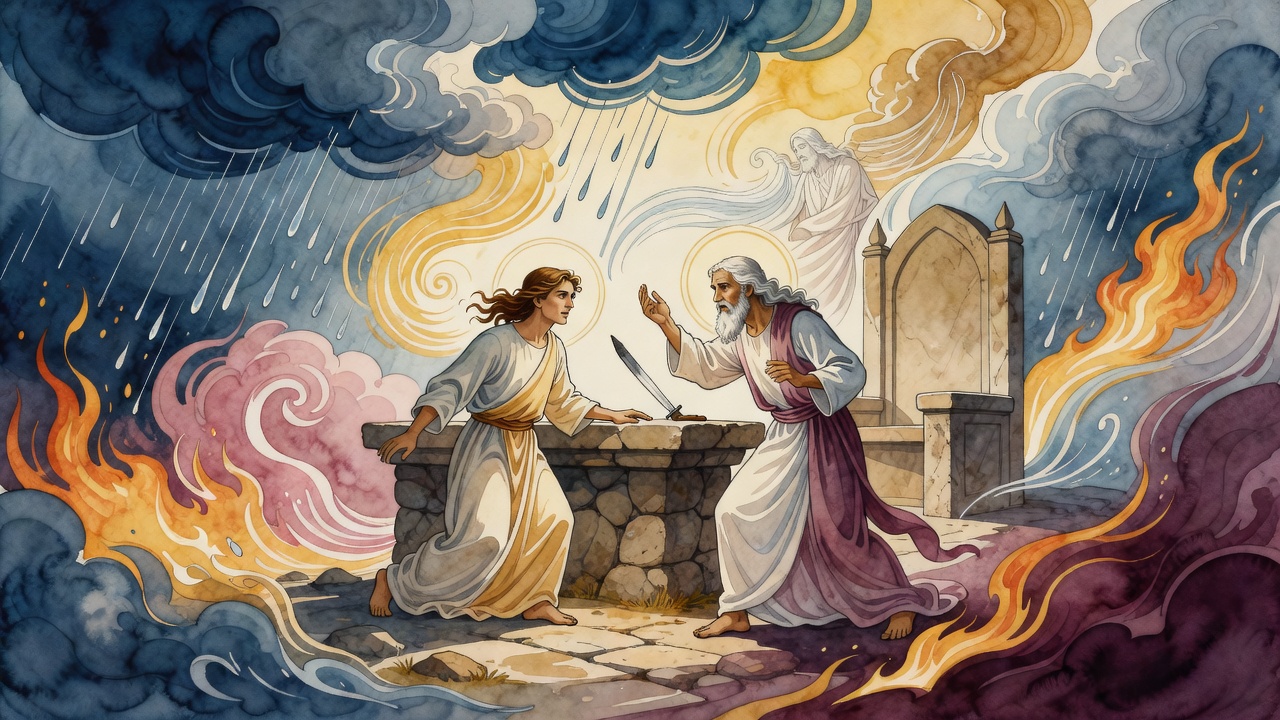
Abraham rose early in the morning and saddled his donkey. He did not send a servant to do it. He rose early and saddled it himself, and the Midrash on Genesis noted that this self-saddling was significant: the same eagerness to complete a divine task that had made Abraham circumcise his entire household on the very day of the command was operating again here. He did not delay. He rose and saddled the animal himself and set out for the mountain God had named.
The Bereshit Rabbah asked what kind of test this was. Rabbi Yosei HaGelili offered a beautiful image: God lifted Abraham up the way a ship's ensign is raised on a mast, so everyone below could see him. Rabbi Akiva read it more plainly: God wanted people to understand that Abraham had not been stunned or confused, that his obedience on the mountain was chosen, deliberate, and clear-eyed all the way to the moment the angel's voice stopped his hand.
The Same Donkey
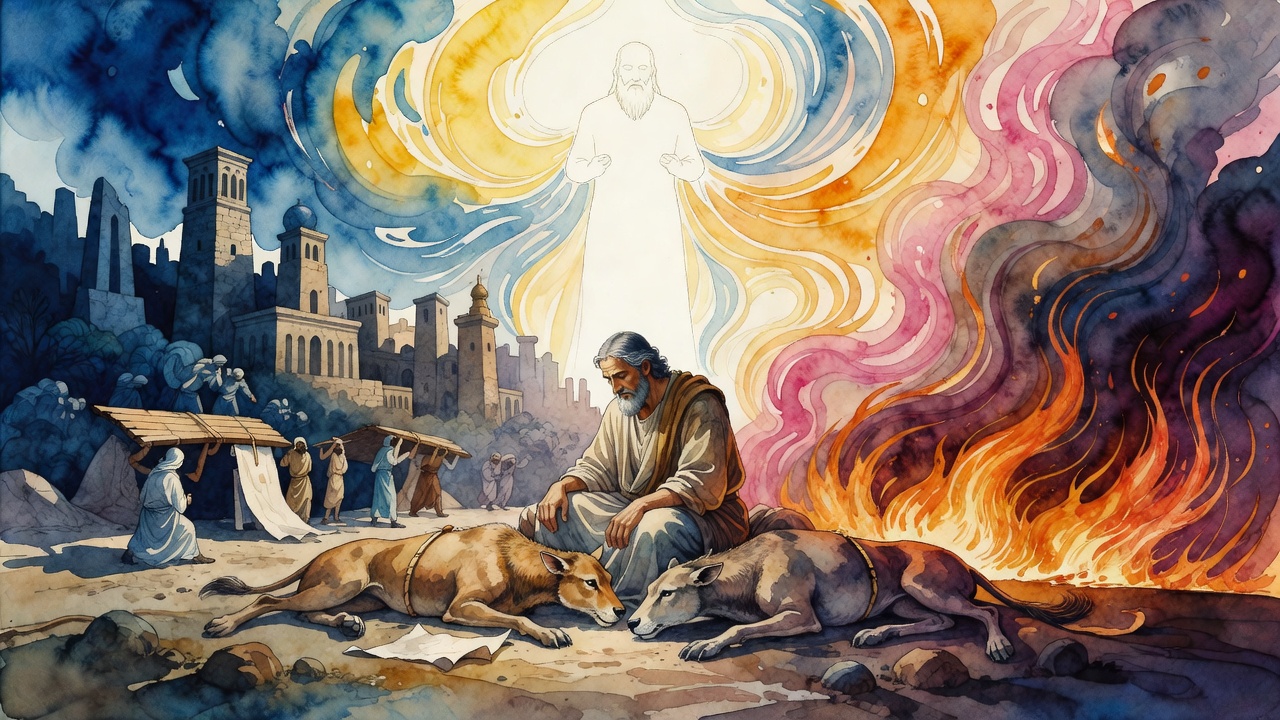
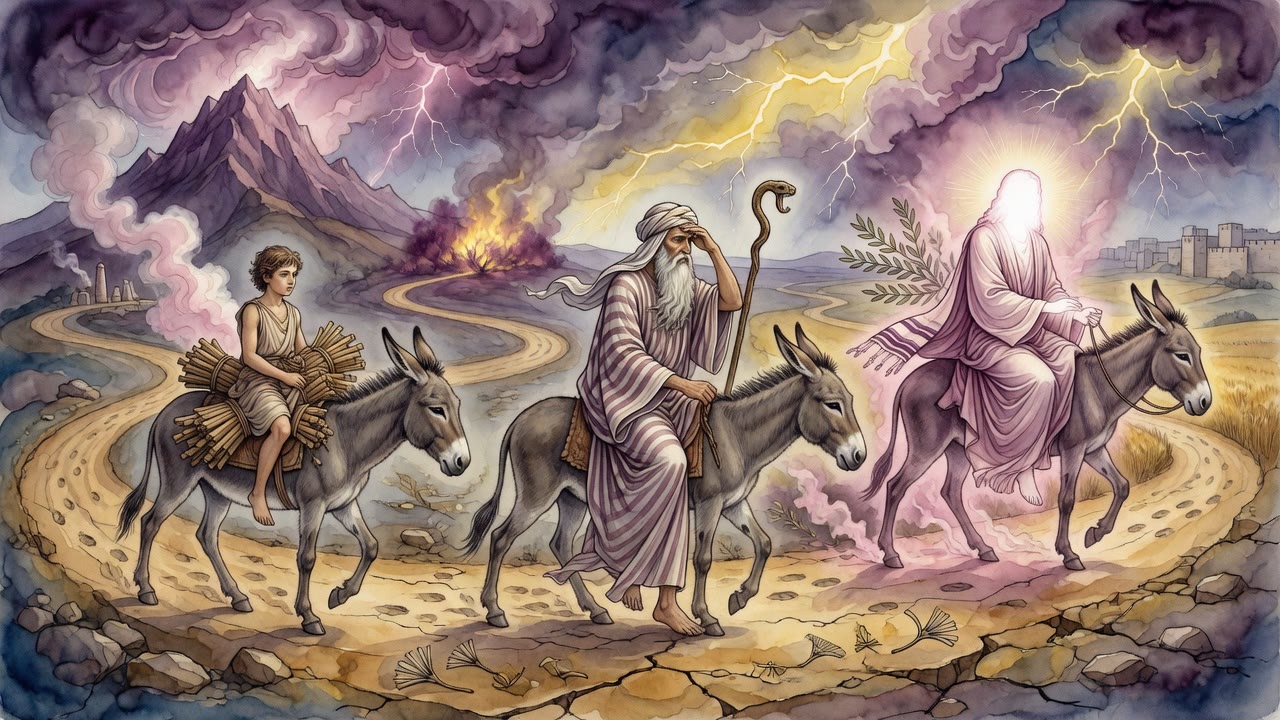
Ginzberg's Legends of the Jews made explicit what had stayed implicit in the earlier sources: the donkey Abraham saddled in the predawn dark was not an ordinary work animal. It was the same creature Moses would ride toward Egypt when he set out to lead the Israelites out of bondage, and the same one that Zechariah's prophecy promised would carry the Messiah into Jerusalem at the end of days. One animal, three riders, three moments of redemption separated by centuries.
Moses, riding this animal on his way to Egypt with his wife and children, was not moving quickly. The Legends of the Jews noted that he traveled with what looked like reluctance, almost leisurely. The source identified why: he was calculating the reception he would receive when he arrived and told the Israelites that their time of slavery was over. They knew the number, four hundred years. He feared they would tell him the four hundred years were not up yet, that he had come too early, that they did not yet have the merit for redemption. He rode slowly because he was working out how to answer that objection.
The Patriarch and the Prophet
The Shemot Rabbah preserved the moment when Moses stood before God and invoked the merit of the three patriarchs on behalf of an Israelite people who had already used up considerable goodwill at the golden calf. He did not simply ask for mercy. He named the specific quality of each patriarch that he was calling on: Abraham, who had walked into the fire of Chaldea. Isaac, who had lain on the wood on the mountain. Jacob, whose whole life had been a series of displacements endured without abandoning the covenant.
Moses was drawing on accumulated merit the way a man draws on a reserve fund. The connection between the patriarchs and the people's present emergency was not sentimental. It was structural. The covenant had been made with Abraham on the understanding that his descendants would suffer and then be redeemed. When the suffering arrived and the people's own conduct gave God reasons to reconsider, Moses reminded God of the original terms. The donkey that had carried Abraham's son to the mountain of testing was the same one carrying Moses toward the moment when that testing would finally produce its promised result.
The Third Rider
The donkey's third assignment had not yet come. Zechariah had prophesied it: a king, humble and mounted on a donkey, entering Jerusalem while the nations laid down their weapons. The rabbis read this figure as the Messiah, and the donkey he would ride as continuous with the one that had already carried two of the redemption story's central figures through their defining moments.
The animal connected the three acts of the story the way a refrain connects the verses of a song. It had stood at the foot of Mount Moriah while Abraham and Isaac climbed. It had carried Moses and his family through the desert toward Egypt. It waited now, somewhere in the logic of the tradition, for the third rider, the one who would complete the sequence by entering the city that Abraham's sacrifice had placed at the center of all subsequent Jewish history.
What the Animal Knew
The Midrash did not attribute wisdom to the donkey the way it attributed wisdom to Balaam's donkey. This animal did not speak. It simply carried. But the tradition that a single donkey ran through all three moments made a claim about the nature of redemption: it was not three separate events but a single ongoing story, the same story beginning again each time, the same promise being made good by degrees. Abraham's obedience on the mountain was not finished when the angel stopped the knife. It rippled forward into Moses's reluctant departure for Egypt, and from there into an arrival in Jerusalem that had not yet happened but was already inscribed in the pattern.
← All myths