The Door in the Wall That Opened on Gehinnom
A rich man warns his wife never to open one door. The hand that pulls her through leads into Gehinnom, the afterlife of judgment, and its burning floors.
Table of Contents
There was one door in the wall of that house, and the husband said what he had to say about it so often that his wife could have recited it back to him. The court had four good walls, and in one of them stood a door. "Whatever else you do," he told her, "do not go near that door."
 Click for full size
He never said what was behind it, and she never asked, because in a house where the money came from nowhere anybody could name there were a number of things nobody asked. They were rich and she was beautiful, and by every measure that counts they were both bad people.
The Morning He Went Out
Years went by with the door shut. Then he tied up his pack and went out on the road, and the house was hers.
She did the ordinary things first. She ate, she gave orders, she walked the court, and each time she came around the court she passed the door. A warning repeated for years is not a warning anymore, it is furniture, and furniture stops being visible. But the house was empty now, and an empty house makes an old sentence loud again.
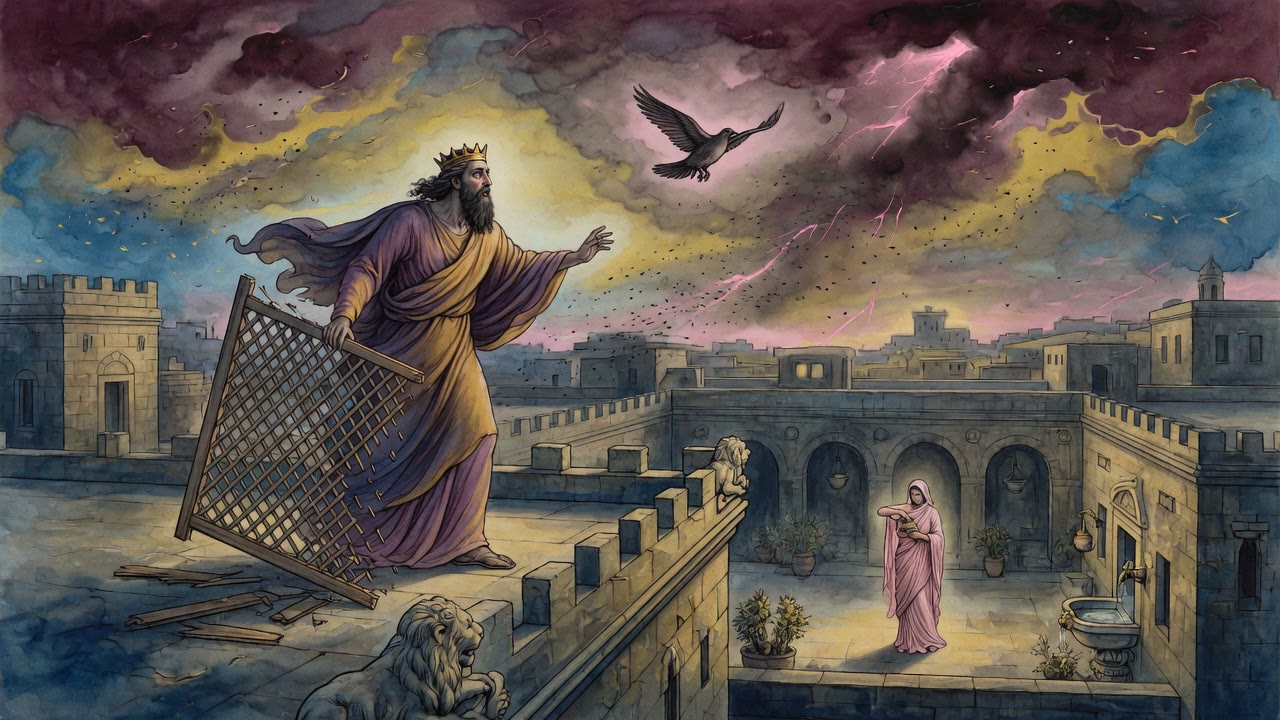
She stood in front of it. She thought about her husband's face when he said it and about how he had never once explained it, and she thought about the fact that he was days away on a road and there was nobody in the whole court but her. Then she put her hand on the door and pulled it open.
The Hand That Came Through
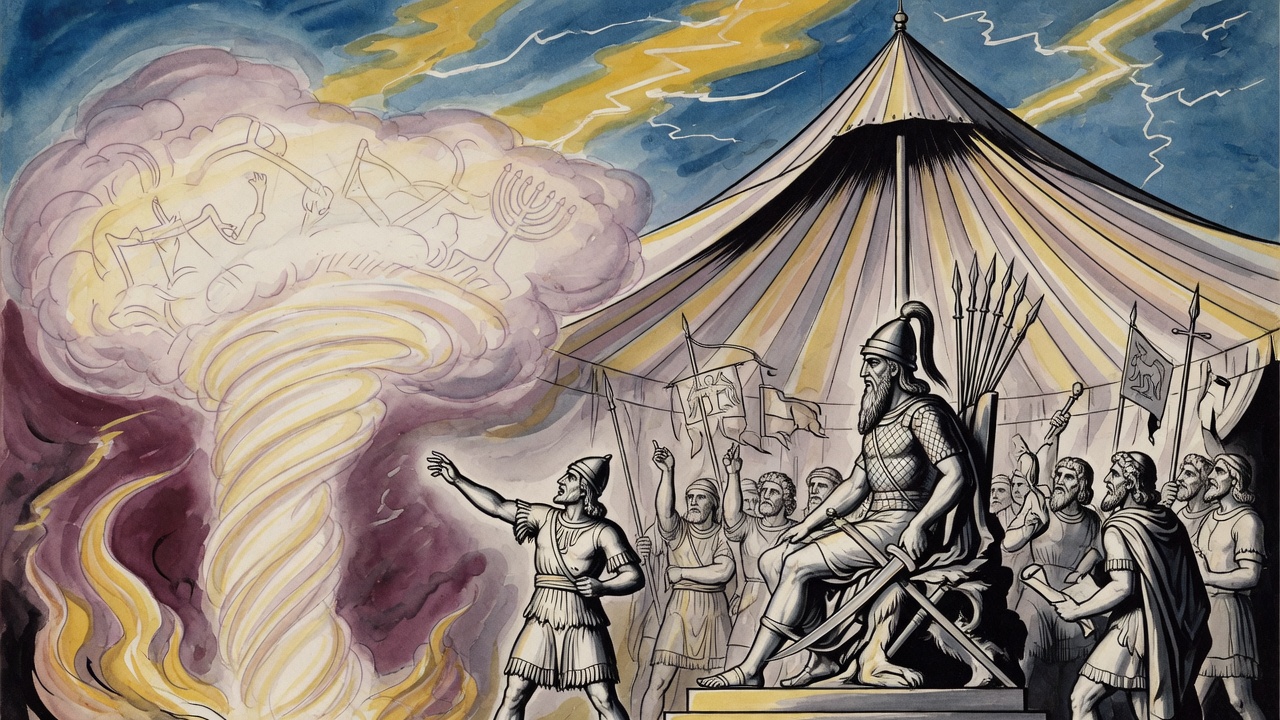
A hand came out of the opening and closed on her, and it did not have to drag her, because it took her through her own wall in one motion. The door shut behind her.
The court stayed exactly as it was. Nothing had been knocked over, so no servant heard anything and there was nothing for anybody to report, and the wall stood there whole with the door in it while the food went cold on the table.
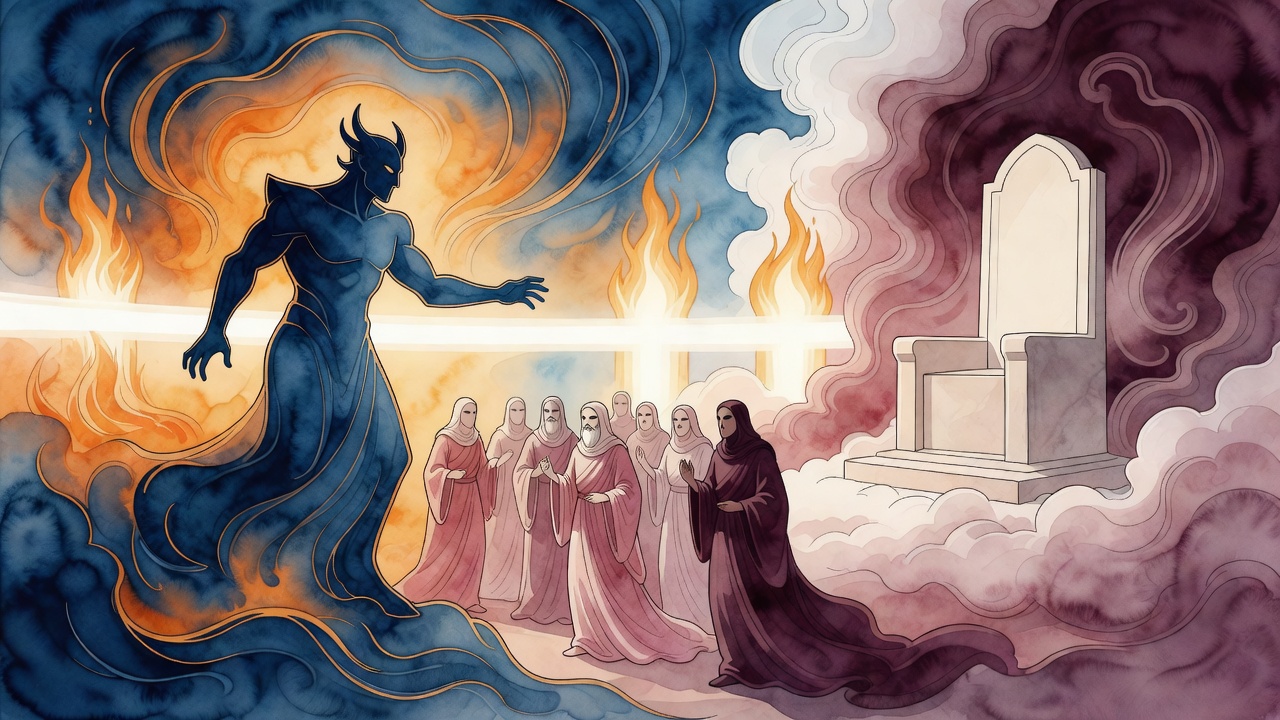
The husband came home to that. He went through the rooms and the yard and out onto the road calling her name, and when the road gave him nothing he went into the forest. A figure came down to meet him there, enormous, black from crown to foot, and told him there was one way to learn where his wife had gone. Send a faithful servant. The servant would be shown her, and shown was all.
Down Past the Water
The servant went, and the way down ran longer than any cellar on earth.
Rabbi Joshua put the width of the earth at a journey of sixty years, and he said that one of the depths lying near Gehinnom (the fiery place of punishment below) bubbles with water and produces it for the delight of the sons of man. Once a month the ducts come up out of that depth and wet the whole face of the ground. The clouds make the seas hear the sound of their waterspouts, and the seas make the depths hear theirs, until deep is calling to deep. The servant walked down past all of that calling, and the water noise thinned out behind him, and he kept going.
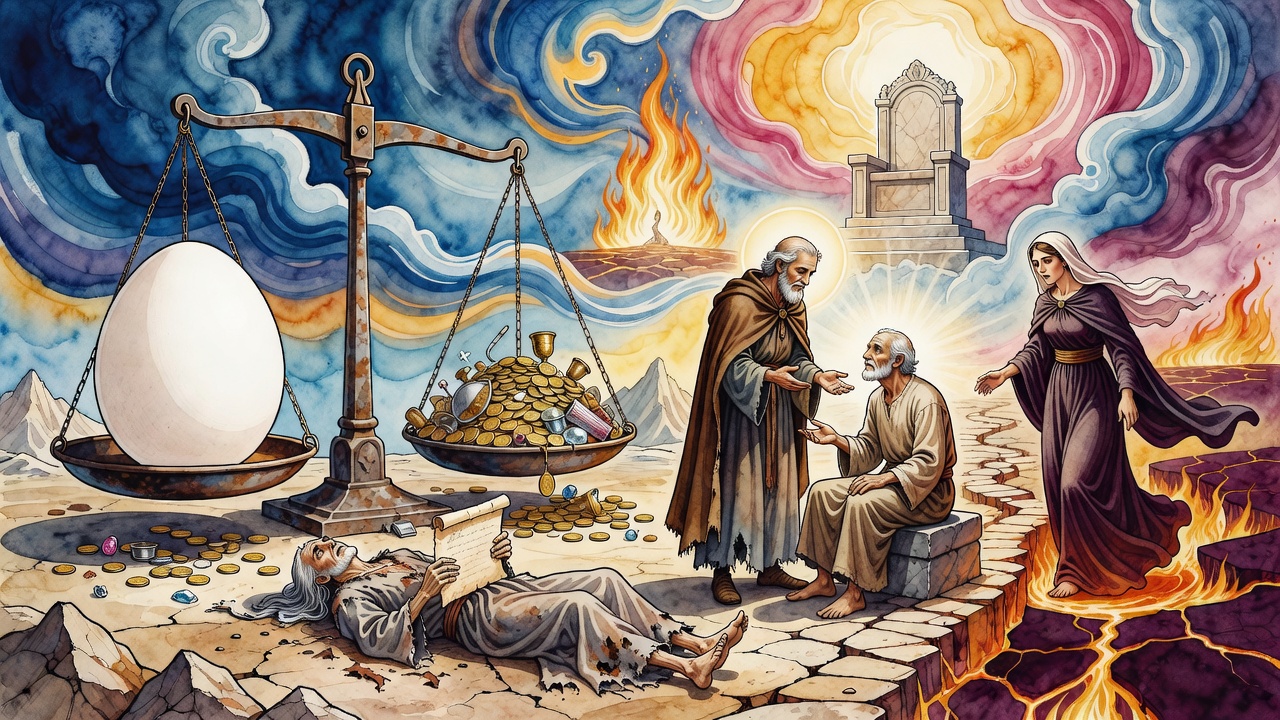
A noble matron had once put the hard verse to Rabbi Yose ben Halafta: who knows whether the spirit of a man goes upward and the spirit of the beast goes down to the earth. He gave it to her straight. The souls of the righteous are put in a treasury and kept there, bound up the way a king binds what he does not want loose. The souls of the wicked get slung out of the hollow of a sling, and they go down.
The servant was walking the road they land on.
The Golden Room
At the bottom the place opened out, and it was not what he had braced himself for, because there were no chains anywhere in it and no pit. His mistress sat in a golden apartment at a golden table with beautiful food laid out in front of her, dressed as well as she had ever been dressed in the house above.
He stopped in the doorway. "Why do they call this a punishment?" he asked.
Because every single thing in that room was burning red hot. The gold of the chair was cooking the backs of her legs where she sat on it, and the gold of the table took her hands each time she set them down, and the food went into her mouth as fire and stayed fire all the way down and never once filled her. She had been eating that meal since the door shut behind her.
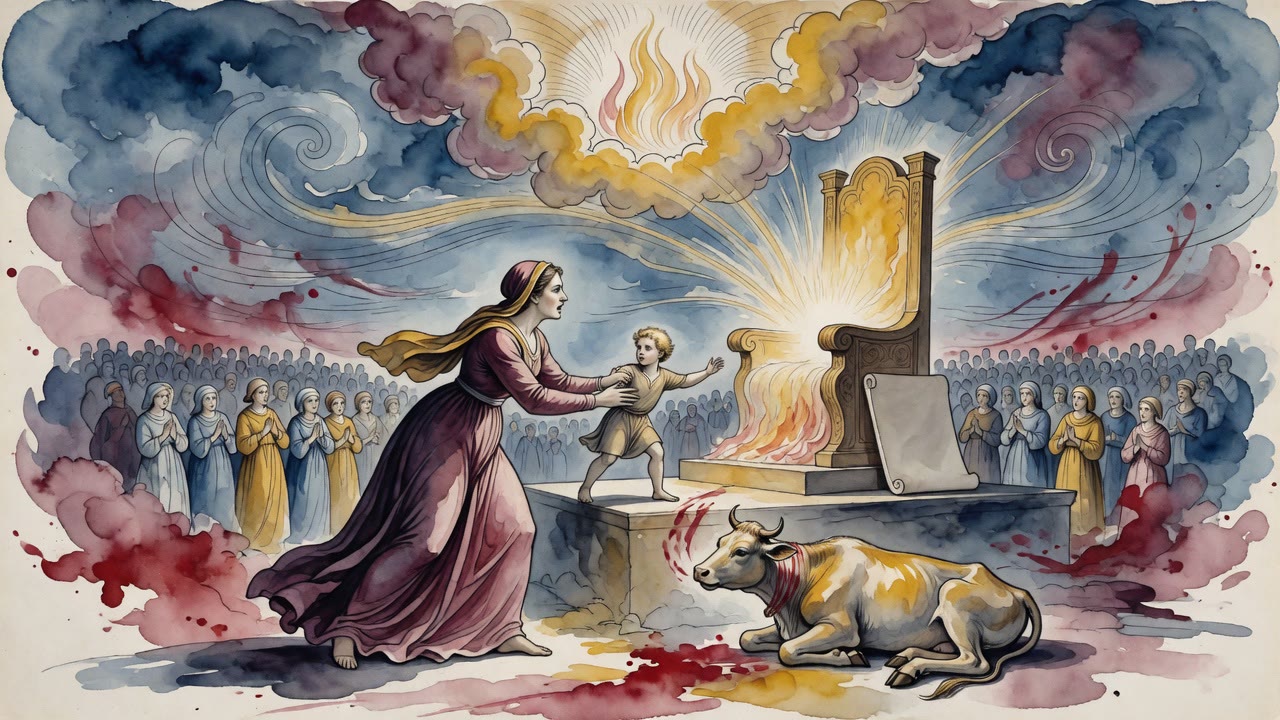
Nobody was coming for her, either. She had left no son behind to stand up and say Kaddish, no child to answer Baruch Hu u'Varuch Shemo after the Name, so there was no hand anywhere above that could reach in on her account. She had committed every sin a person can commit, and the one thing that might have lifted her out of that chair had never been born.
She worked a ring off a finger the fire was still working on and held it out to him. "Take this to my husband."
The Ring Came Up
The servant climbed back into the world and put the ring in the husband's hand.
He knew it. He had seen it on her a thousand mornings, and here it came up to him out of the ground. Everything he had spent a whole married life not looking at arrived at once and all the way, so he tore his clothes and wept. Then he went into teshuvah, full repentance, and did not come back out of it, and it saved him, because he was still on the living side of the wall where repentance is something a man can do for himself.
The door stayed in the wall. So did the well in the yard and the cup on the table and every drink either of them had ever taken in that house, all of it water that comes up once a month out of the depth beside the burning to wet the face of the ground.
← All myths