The Single Egg That Tipped the Heavenly Scale
The shell clicked in the dish while a beggar waited at the threshold. The dying man gave the egg away. He never opened his eyes again.
Table of Contents
The wicked man lay on his deathbed with a dry mouth and a closed door behind every year of his life. Coins had been his habit. Palms at the gate had not. He asked for a boiled egg. That was all his stomach would take.
 Click for full size
The household boiled it. Steam rose. The shell clicked against the dish. A servant peeled it as if careful peeling could buy a week. Then a beggar's voice came from the threshold, the same threshold that had refused a thousand times.
One Egg Leaves the House
The family froze. They knew the house rules. The dying man opened his eyes. Something in him broke without his permission.
"Give it to him," he said. Not half. Not a crust beside it. The whole egg, the only food he had asked for in his last hour.
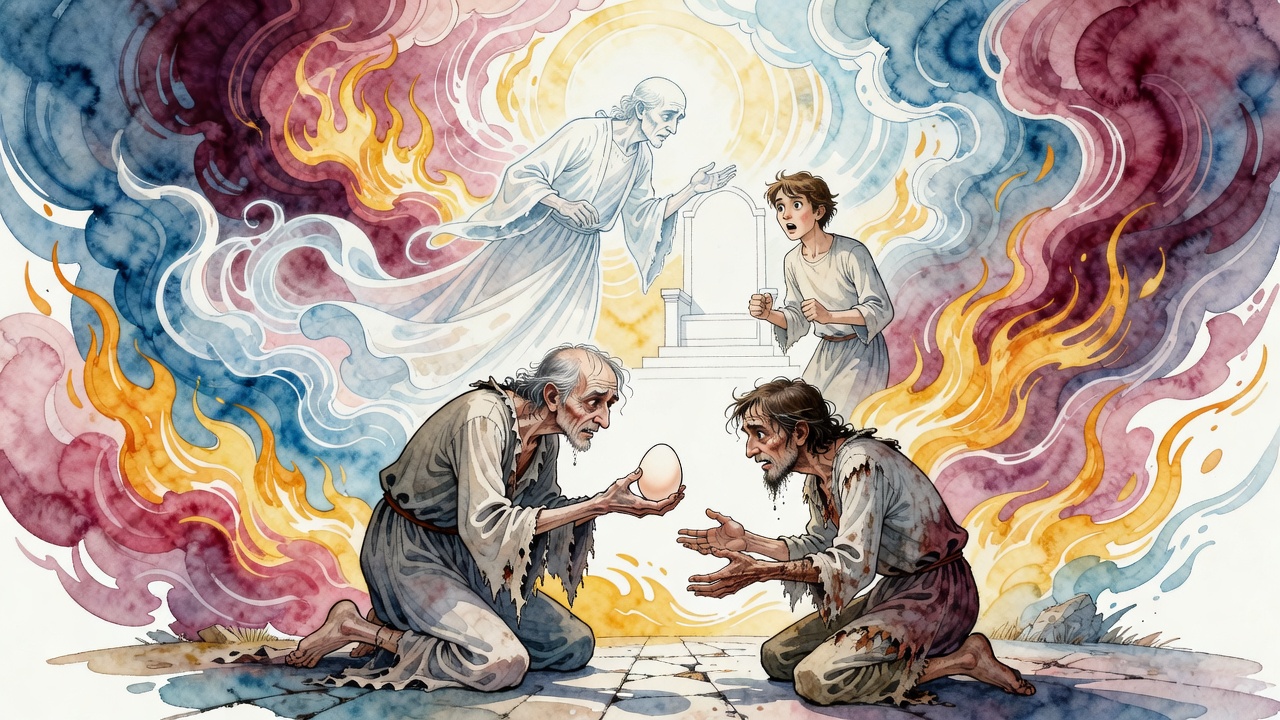
The servant carried it to the door on the dish still warm from the water. The beggar took it in both hands as if it might go out. Yolk smell mixed with illness. The man on the bed closed his eyes and did not open them again.
His sons buried him with the honors wealth can buy. Neighbors said what neighbors say about a hard man who went soft for one minute. Grass began its work on the grave.
The Scale in the Dark
Some nights later the dead father stood in a son's sleep without pride. "Give charity," he said. "Do not wait. Give constantly. Do not think a small gift is nothing."
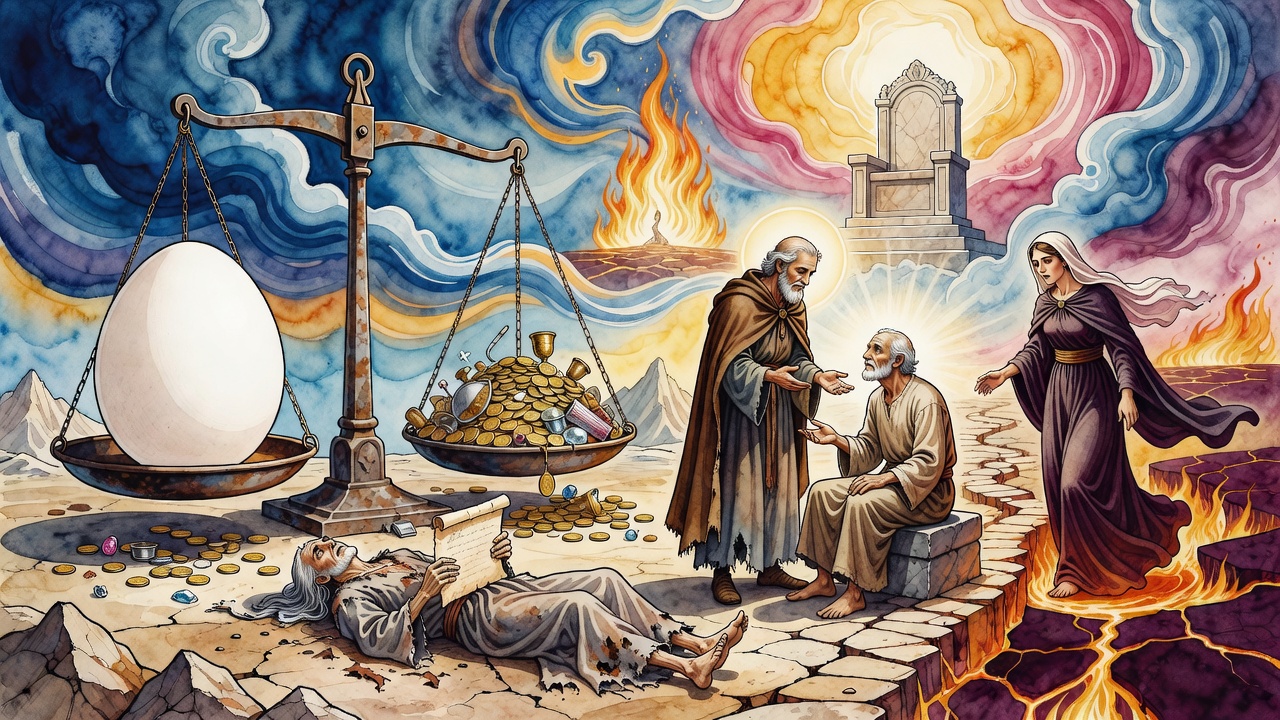
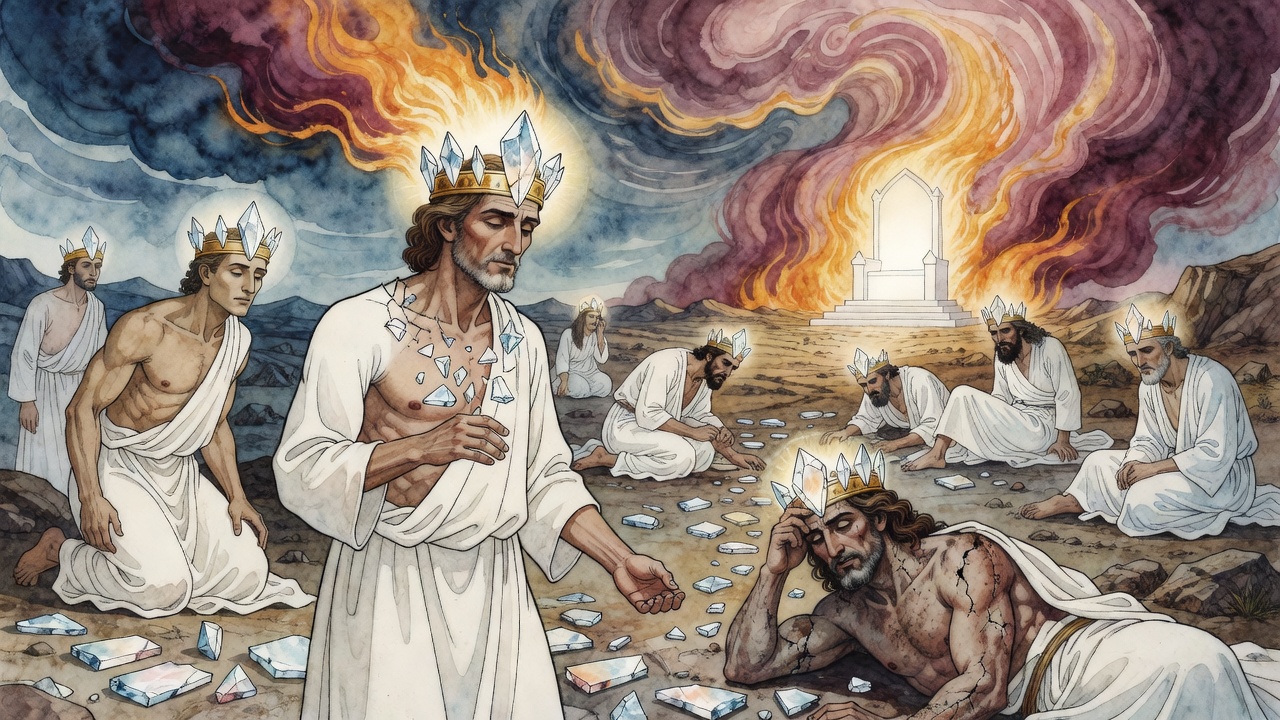
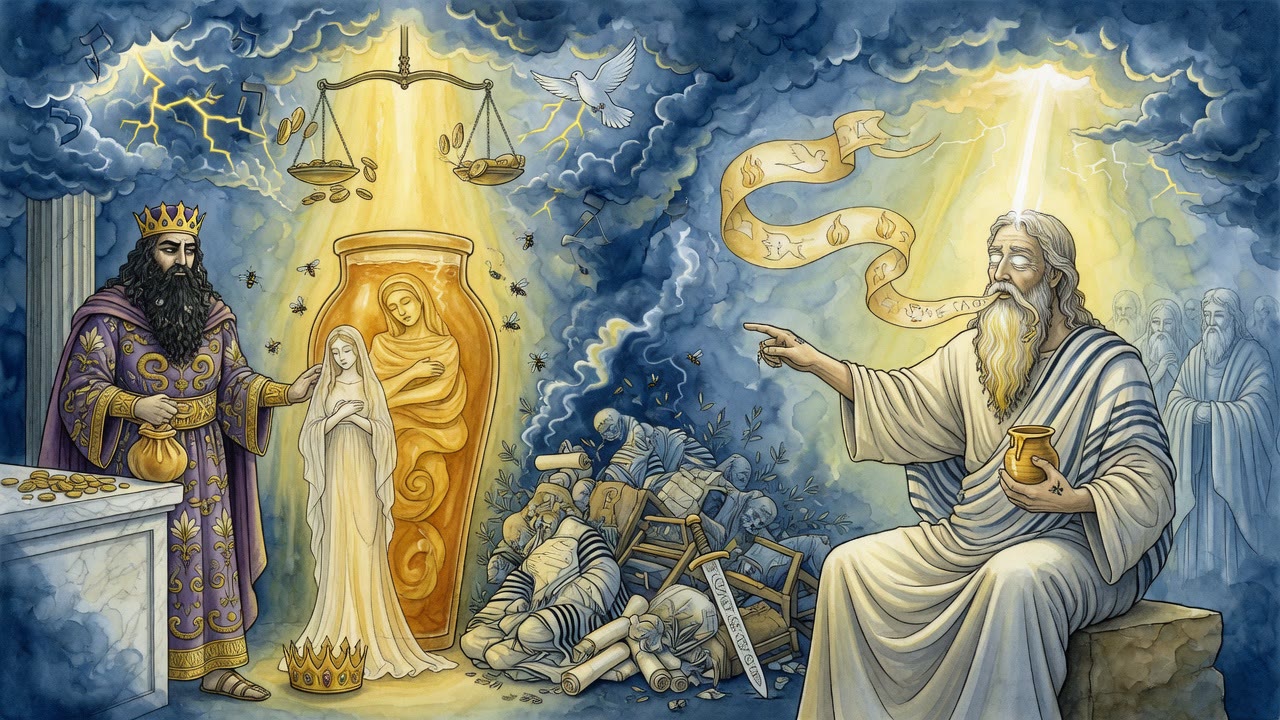
The son asked why the dead sounded afraid. The father described the court. Sins piled on one pan until the beam leaned toward Gehinnom (גיהנם), the place of punishment after death. Merits on the other pan were scraps from a long life of refusal. Then an angel set a single egg on the side of merit. That egg, the deathbed gift, was enough. The scale tipped. A place opened that greed alone would have shut.
The son woke with metal on his tongue. One egg had moved the beam. How many doors had stayed locked while the pans were still empty? He sat up in the dark and listened to his own house, wondering which thresholds still copied the dead man.
Hire Them and Name the Meal
In another house a living father taught the opposite habit before anyone reached a deathbed. Rabbi Johanan ben Matya sent his son to hire laborers and told him to feed them properly. The son hired men in the market and promised a meal in vague words, the easy kindness of someone who has never run a kitchen for strangers. When he came home, his father went pale.
"What exactly did you promise?"
"I told them they would eat."
"That is the problem," said Rabbi Johanan. "These are the children of Abraham, Isaac, and Jacob. Even if you set a feast like King Solomon's, you could not finish satisfying the heirs of the patriarchs."
A shrug at a table is a debt. Workers whose lineage runs through the covenant need a named meal, not a fog of goodwill. The son went back to the market before the sun was high. He named bread of such and such, meat of such and such, wine measured. The workers nodded. The day could begin without a hidden hunger hanging over the field.
The Door That Learned to Open
The son of the dead man rose before dawn, found bread, and walked to a door he had never knocked. The hinge complained. Night air smelled of yeast and dust. He set the loaf in a neighbor's hands and did not wait for another deathbed to teach him.
In the other house the laborers sat to a named table. Bread of such and such. Meat of such and such. Wine measured. Rabbi Johanan watched his son pour and did not have to go pale a second time. The men ate and went out to the rows with no argument left in their mouths about what had been promised.
The egg still sat on the pan in the dream, small and white. The living kept copying it with plates while they still had breath. A door that had been a wall became a hinge. The beam in heaven, if it was listening, registered the sound.
← All myths