5 min read

The Prince of Gehinnom Was Denied Israel's Names

Nargesanel demands Israel for his fire and is refused. Shabbat stills Gehinnom (afterlife of judgment) each week, and the World to Come locks Accuser and.

Curated by Arthur · Told by Maggid ·
Table of Contents
  1. The Petition for Fuel
  2. The Bird Outside the Canopy
  3. Friday and the Herald
  4. Din Banished for a Day
  5. Closed Books, Open Fragrance
The Prince of Gehinnom Was Denied Israel's Names Click for full size

The Petition for Fuel

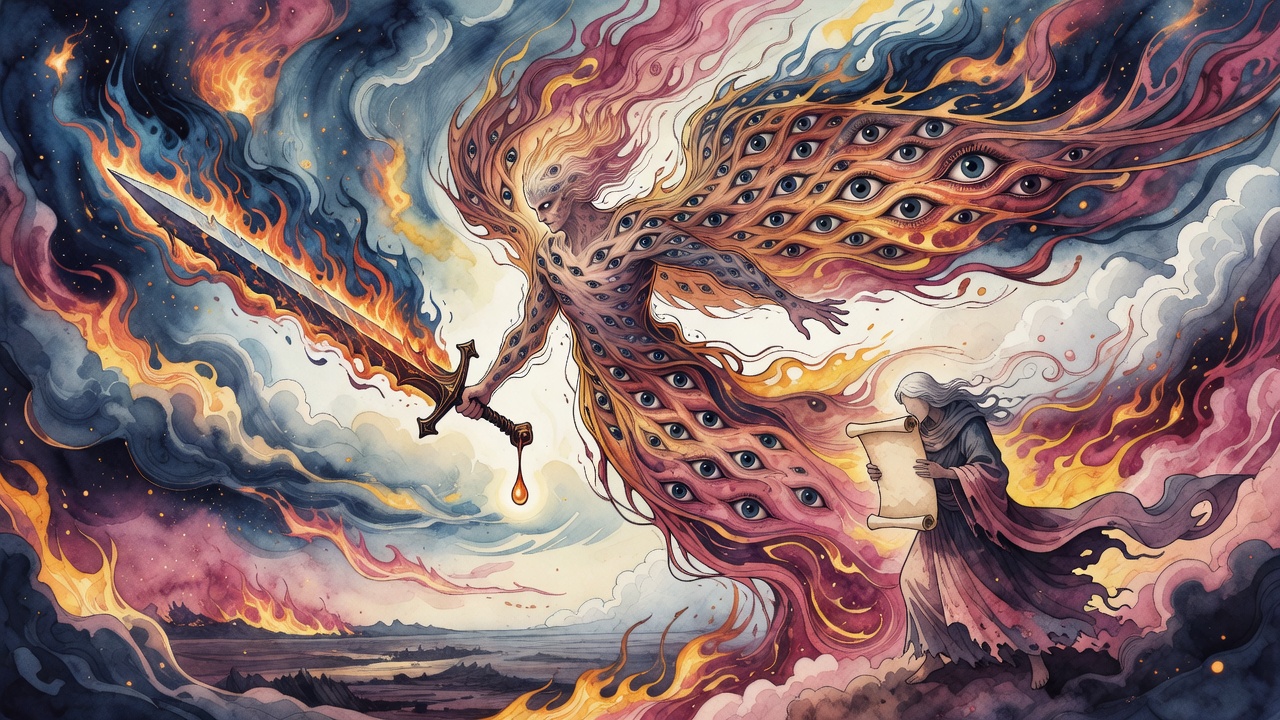
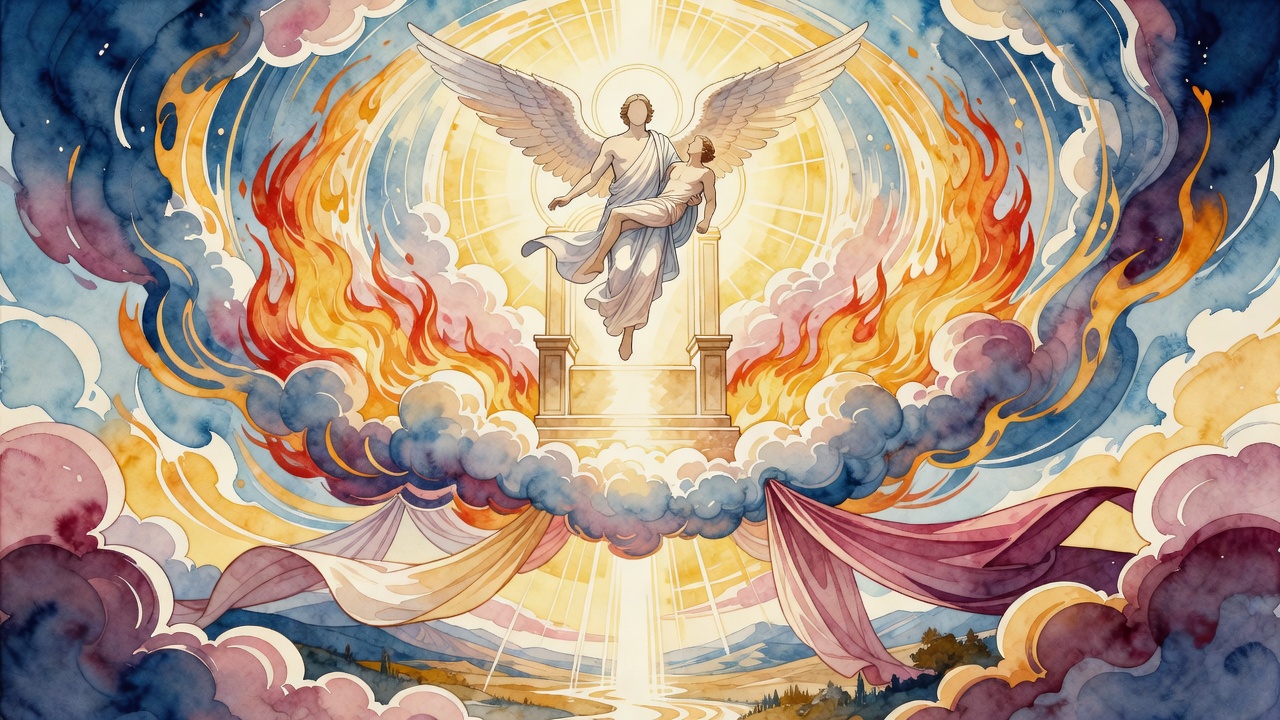
Nargesanel, prince of Gehinnom, stood before God with a clerk's hunger. He held fire enough for nations. He wanted names. Why has Israel not been handed over to his flame? He asked as if the books had simply forgotten a column.
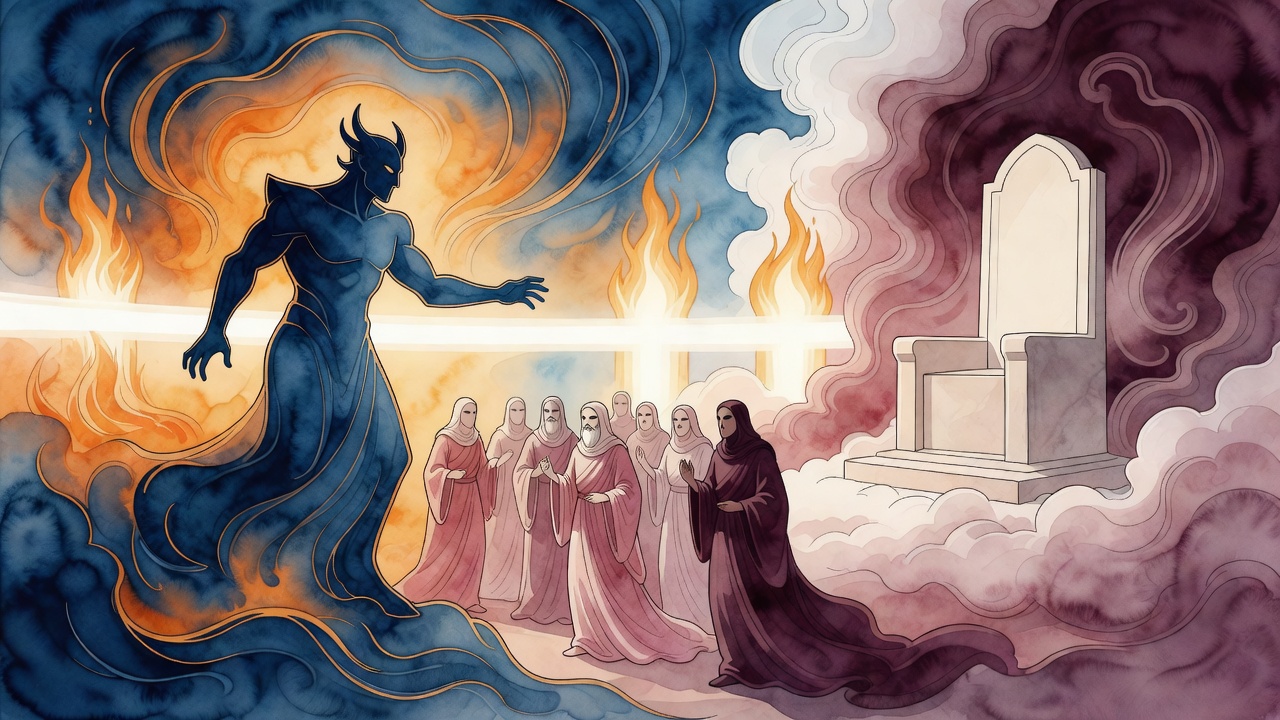
God answered that Israel was not in his records. Torah, commandments, and everlasting love stood between them and Gehinnom (the realm of judgment after death). The prince of Gehinnom was denied Israel's names. The cipher turned another way. El bam. God is among them. If the prince wanted to know where they go instead, the answer was Gan Eden (the Garden of Eden, where the righteous rest) of myrtle, whose fragrance crosses the world.

Nargesanel left without a list. He fled the court empty. The refusal was not a negotiation. It was a closed ledger.

The Bird Outside the Canopy

Later he asked a smaller favor. Let him see the honor of the righteous in Gan Eden (the Garden of Eden). God refused. Like a bird with no right to enter royal canopies, he had no permission to look at Israel's good. The future dwelling had no Accuser, no Angel of Death, and no evil inclination. Rest became a cleared house where death itself was not admitted.

The prince of Gehinnom pressed his face toward light he could not enter. The refusal taught more than the fire ever did. Some rooms are not improved by his presence. Some joys are defined by his absence.

Israel's path was not a thin escape from heat. It was a positive destination with doors that know how to stay shut against the wrong guest. He turned away from the canopy and went back to his own domain with nothing.

Friday and the Herald

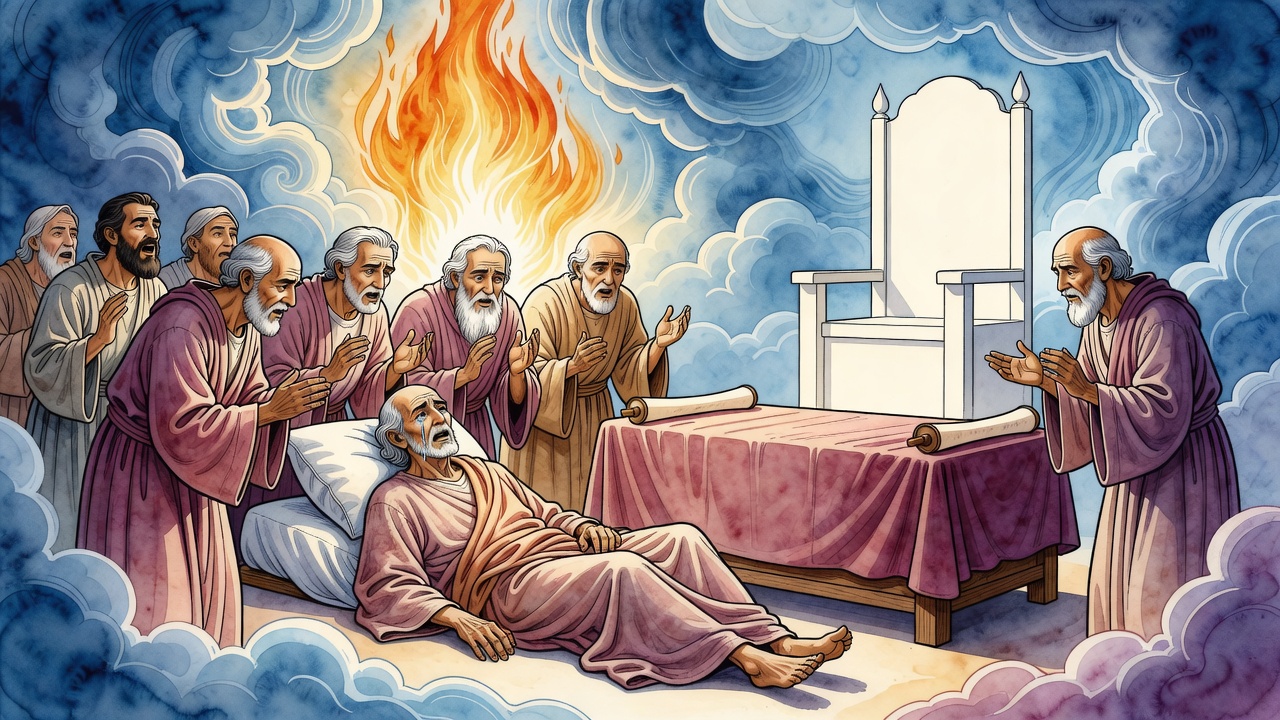
Even now, before the World to Come finishes its work, Shabbat reached into the fire. Every Sabbath eve, as the day was sanctified, an angel proclaimed, Let the punishment of the sinners cease, for the Holy King approaches and the Day is about to be sanctified. He protects all. Instantly the punishments stopped.

Those who observed Shabbat in their lives were led to two mountains of snow for the duration, a white mercy against the usual burn. When Shabbat ended, the angel in charge of the spirits shouted them back. All evildoers, back to Gehinnom, the Sabbath is over. Some tried to sneak away with snow to cool themselves during the week. Even that theft was forbidden. Woe to those who steal even in the place of judgment.

For those who never kept Shabbat, the fires did not pause. An angel named Santriel took the sinner's body from the grave and carried it before the guilty in Gehinnom. Worms and shame became a second court. The other souls surrounded the body and declared the guilt of one who would not regard the honor of his Master. After Shabbat the body returned to its grave, and body and soul were punished each in its way, as long as the body remained intact.

Din Banished for a Day

Harsh justice was banished on the eve of Shabbat even from the sinners in Gehinnom, for Shabbat protects the cosmos. On Saturday night Din was restored to its station. A herald cried that the wicked return to their place. The weekly rhythm trained the world for a larger rest. If fire itself must bow once in seven days, how much more will the World to Come refuse the Accuser a permanent seat.

Nargesanel's petition and Shabbat's herald were two answers to the same hunger. One said Israel is not fuel. The other said even the guilty feel a taste of the King's approach. Between them ran the myrtle scent of Gan Eden, promising that the final house will not need weekly truces because the enemies of rest will not be invited in.

A living Israelite lit candles on Friday and did more than mark time. He joined a decree that reached under the earth. The prince who wanted names watched snow mountains open for souls he thought were only kindling. He raised no claim that held.

Closed Books, Open Fragrance

God did not mock the prince with riddles alone. He closed the books and opened the garden. Torah was not a slogan in that courtroom. It was a wall. Commandments were not decorations. They were names written on the right side of the ledger. Everlasting love was not a mood. It was the reason Nargesanel went home empty after he was denied Israel's names again in every form of the request.

When the World to Come stands finished, no one will need to explain to the Accuser why the door stays shut. The house will simply not contain him. No Angel of Death will hang his coat in the hall. No evil inclination will sit at the table rehearsing old speeches. The righteous will not perform their joy for an audience of fire-princes.

Until then, every Shabbat is a rehearsal of that closed door and that open rest. The fire paused. The snow received. The herald spoke. Israel kept lighting the week into holiness, and Gehinnom learned, again, that it does not own every name it craves. The Accuser sat outside. Death left the room. The myrtle scent entered instead.


← All myths
From the tradition

Sources

3 sources

The texts behind this telling. Some cards carry a translation of the source; others are our own retelling of it, and each card says which. Every card links out to the original.

Aleph Bet of Rabbi Akiva, Version B, Part B, Albam Gehinnom expositionOtzar Midrashim, Aleph Bet of Rabbi Akiva

Translation of the source text.Hebrew Wikisource transcription of Aleph Bet of Rabbi Akiva, Version B, based on Eisenstein, Otzar Midrashim (CC-BY-SA 4.0) · CC-BY-SA

Albam. The editorial note explains that the first and third letters follow the order of the alphabet until its midpoint and finish with Tet, Yod, Kaf, while the second and fourth letters are from the middle of the alphabet, Lamed and Mem, finishing with Resh, Shin, Tav; when they are squared together, this alphabetic order is called Albam. Do not read Albam, but libbam, "their heart." What is "their heart"? It teaches that Nargesan'el, the prince of Gehinnom, stood before the Holy One, blessed be He, and said before Him, "Master of the universe, You gave me every nation for the fire of Gehinnom to consume, as it says, 'Therefore, as the tongue of fire consumes straw,' and so on (Isaiah 5:24). Why do You not give me this nation of Israel, so that my fire may consume them as it consumes all the nations of the world?" The Holy One, blessed be He, answered and said to him, "All the nations of the world are in your records, for you to treat them according to the evil of their deeds and judge them inside Gehinnom. This nation of Israel is not in your records, and you have no business with them." He said before Him, "Why?" He said to him, "Because they occupy themselves with Torah and commandments and keep them, and their love is in My heart forever, as it says, 'I have loved you with everlasting love,' and so on (Jeremiah 31:3). They do not pass through Gehinnom because I am with them."

Another interpretation of Albam: do not read Albam, but El bam, "God is among them," as it says, "When you pass through the waters, I am with you," and so on (Isaiah 43:2). Not only that, but My Shekhinah dwells among them, as it says, "I will walk among you and be your God" (Leviticus 26:12). Therefore it says El bam.

Gan Das: What is Gan Das? Nargesan'el said before the Holy One, blessed be He, "Master of the universe, if so, where do they dwell when they merit the life of the World to Come?" He said to him, "In a Gan Eden of myrtle, whose fragrance travels from one end of the world to the other, as it says, 'As the days of the tree are the days of My people,' and so on" (Isaiah 65:22).

Full source
Aleph Bet of Rabbi Akiva, Version B, Part B, HE VF World to Come expositionOtzar Midrashim, Aleph Bet of Rabbi Akiva

Translation of the source text.Hebrew Wikisource transcription of Aleph Bet of Rabbi Akiva, Version B, based on Eisenstein, Otzar Midrashim (CC-BY-SA 4.0) · CC-BY-SA

HE VF: This teaches that the prince of Gehinnom said before Him, "Master of the universe, do You wish to inform me of the honor and greatness of the righteous that You bequeath to them in Gan Eden in the World to Come?" The Holy One, blessed be He, said to him, "No," as it says, "Thus says the LORD: Behold, My servants shall eat, but you shall be hungry," and so on (Isaiah 65:13). VF: just as a bird flies in the air of the world and has no permission to enter the canopies of kings and nobles to sit in their dwellings with them on the Throne of Glory, so you have no permission and no business with them, to see the good of Israel, as it says, "Evil shall not dwell with You" (Psalms 5:4-5). What is "evil shall not dwell with You"? It teaches that David said this before the Holy One, blessed be He: "Master of the universe, let no evil be in Your dwelling." Evil here means the Accuser and the evil inclination, as it says, "For the inclination of the heart of man is evil" (Genesis 8:21). Just as the evil inclination is not in the dwellings of the Holy One, blessed be He, so Israel is destined to have no Accuser, no Angel of Death, and no evil inclination in their dwelling. When? In the World to Come, as it says, "My people shall dwell in a peaceful habitation and in secure dwellings" (Isaiah 32:18), without the Accuser, "and in quiet resting places," without the Angel of Death and without the evil inclination, as it says, "He will swallow up death forever," and so on (Isaiah 25:8).

Full source
Pesikta Rabbati 23:8Pesikta Rabbati

Retold in our words. Read the original at the link below.Rabbi Mike Feuer, Jerusalem Anthology · CC0

A place of purification, and for some, punishment. Now, even in this fiery realm, the Sabbath casts its protective light. It's a concept that speaks volumes about the power and sanctity of Shabbat (the Sabbath).

The tradition says every Shabbat eve, as the day is sanctified, an angel proclaims, "Let the punishment of the sinners cease, for the Holy King approaches and the Day is about to be sanctified. He protects all!" Instantly, all punishment ceases. The Pesikta Rabbati and the Zohar (2:151a) both touch on this idea of respite. Think of it: even in the depths of Gehenna, the holiness of Shabbat brings a moment of peace.

Those sinners who observed Shabbat during their lives get an extra perk. They're led to two mountains of snow for the duration, a welcome contrast to the flames. But as Shabbat ends, the angel in charge of the spirits shouts, "All evildoers, back to Gehenna, the Sabbath is over!" And they're thrust back. Some try to sneak away with some snow to cool themselves during the week, but even that is forbidden. It's as if God says, "Woe to you who steal even in hell!"

What about those who never observed Shabbat? For them, there's no respite. As we find in sources like Orhot Hayim, the fires keep burning. An angel named Santriel – meaning "God is my Guardsman" – fetches the sinner's body from the grave and brings it before the guilty in Gehenna. They know this soul has no escape from the flames.

The other guilty souls surround the body and proclaim, "This person is guilty, for he would not regard the honor of his Master, he denied the Holy One, blessed be He, and denied the Torah. Woe to him! It had been better for him never to be created and not to be subjected to this punishment and this disgrace!"

Rabbi Yehudah adds a chilling detail: after Shabbat, the angel returns the body to its grave, and both body and soul are punished, each in its own way. This continues as long as the body is intact. Once it decays, the punishments cease. As Sha'ar ha-Gemul and Nishmat Hayim (1:12, 1:14) explain, those who must leave Gehenna leave, and those who must find rest, find it. Each gets what is appropriate.

The Tola'at Ya'akov (58b) puts it beautifully: "Din" – harsh justice – "is banished on the eve of the Shabbat, even from the sinners in Gehenna. For the Shabbat protects the cosmos. But on Saturday night Din is restored to its station. A herald cries out: ' Let the wicked be in Sheol!'" (Ps. 9:18). And the Zohar (2:150b) even mentions reprieves on new moons and festivals.

This whole concept, this "Shabbat in Gehenna," is a powerful reminder of the all-encompassing nature of holiness and the transformative power of Shabbat. It is so potent, that even the souls being punished are allowed a moment of rest, evidence of its protective embrace.

Isn't it amazing to think that even in the darkest corners of existence, the light of Shabbat can penetrate? What does that tell us about the potential for redemption, for renewal, even in the face of our deepest flaws?

Full source