The Angel of the Sabbath Ascends the Throne of Glory
God carried Adam, one day old and still wet from the river of Eden, past every gate to the highest heaven. The first man sang his hymn to the day, not to God.
Table of Contents
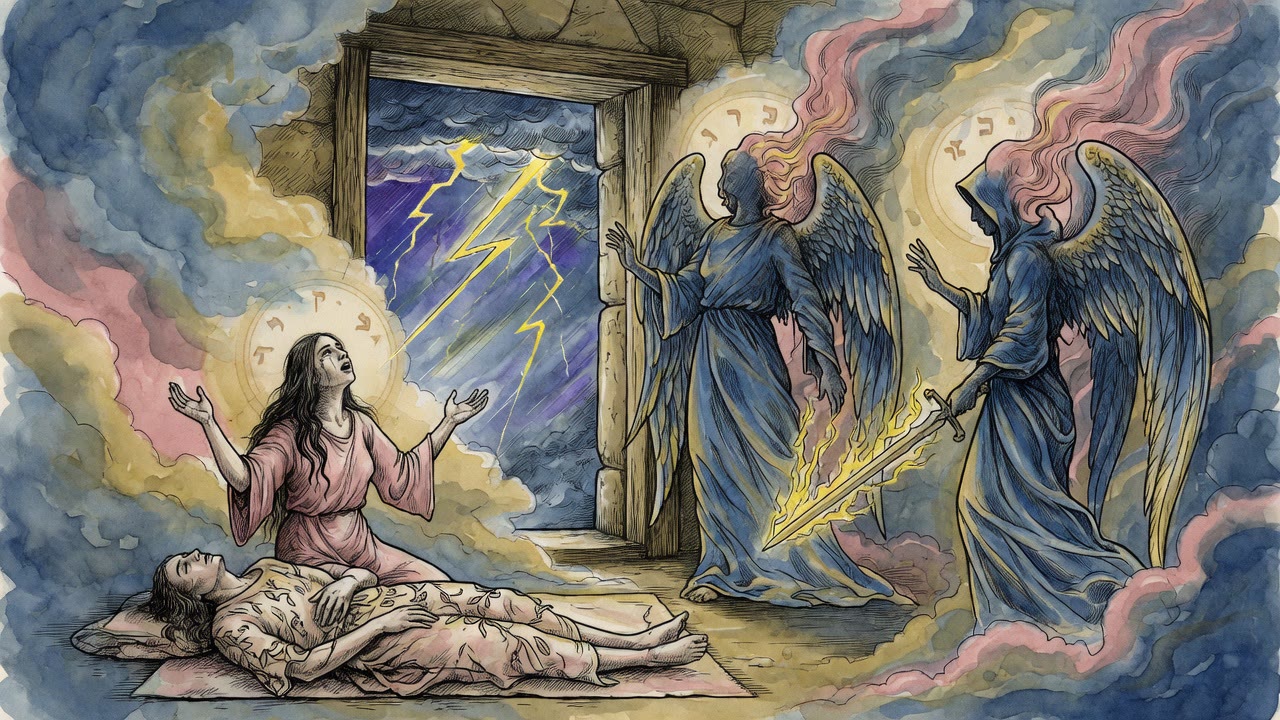
On the sixth evening, when the last work of creation had cooled and the dust of Adam still held the warmth of the hand that shaped it, a hush moved across every floor of heaven. The wheels stopped turning. The rivers of fire stood still in their channels. God had finished, and the finishing had a sound to it, and the sound was silence.
 Click for full size
Then a voice broke it. "Let the Sabbath ascend."
The Seventh Day Is Called Up to the Throne
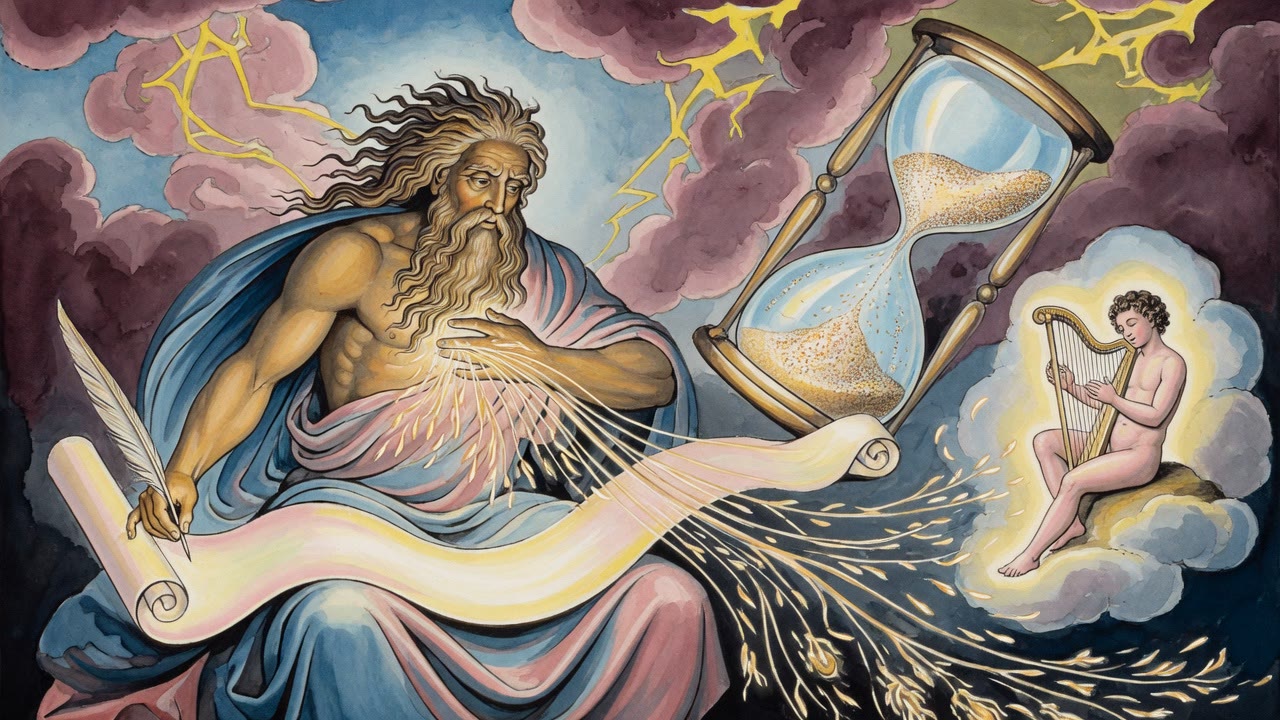
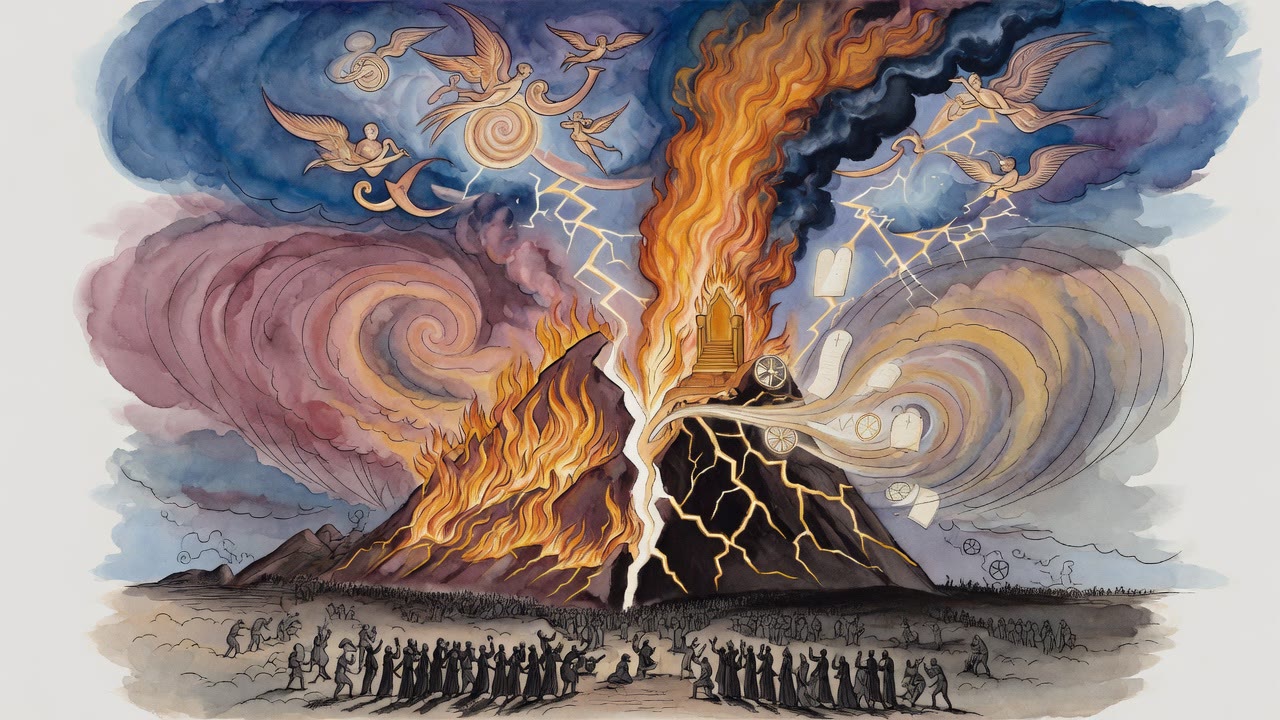
No one had ever been summoned to that place. The Throne of Glory stood at the highest point of the highest heaven, blazing so that the angels who served nearest it had to turn their faces. It was the seat of the Almighty, and nothing created had ever rested upon it.
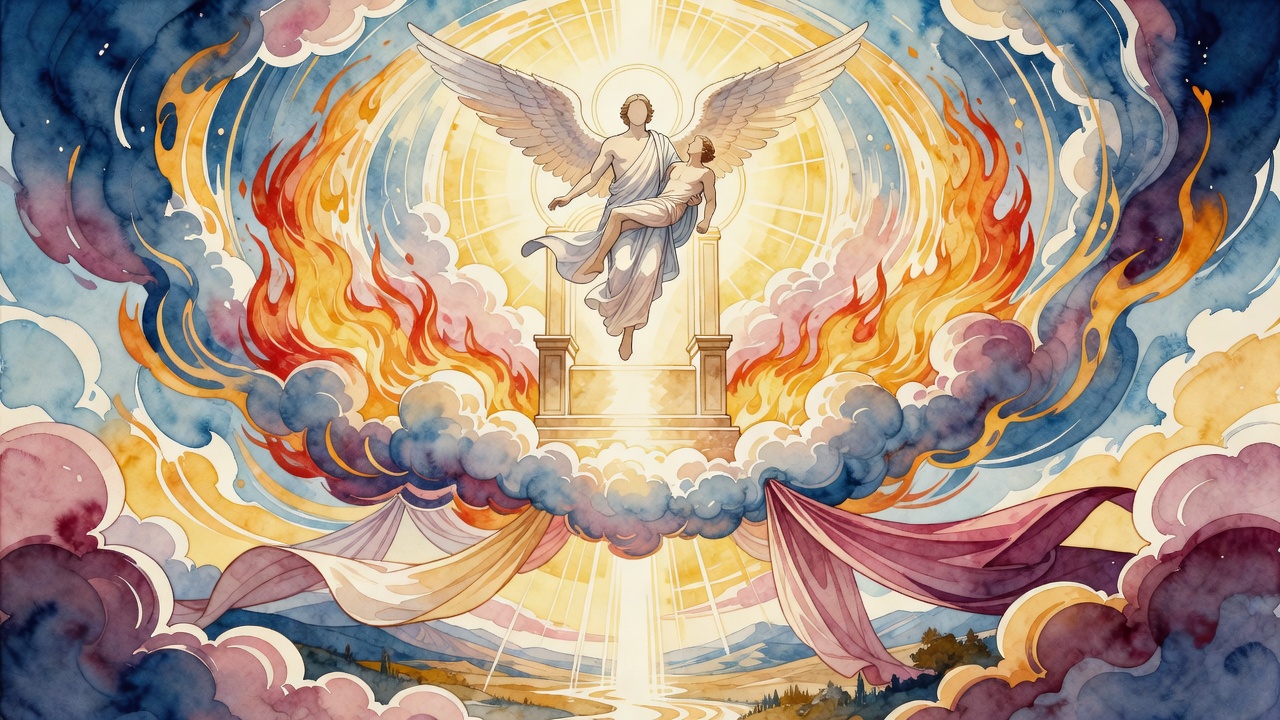
Now the Angel of the Sabbath came forward. He was the seventh day made into a being, the day given a face and feet and the bearing of a prince, and he climbed toward the light while ten thousand thousand chiefs of the host held their breath. He reached the Throne. He turned. And he sat.
Light poured off him then, the soft and enormous light of rest itself. The day was enthroned. The honor belonged to no other creature in all the heavens, not the seraphim who sing without ceasing, not the ofanim heavy with eyes, not the great captains who command whole legions of flame. Only the Sabbath.
A Celebration Breaks Across Every Heaven
What followed was not solemn. It was wild.
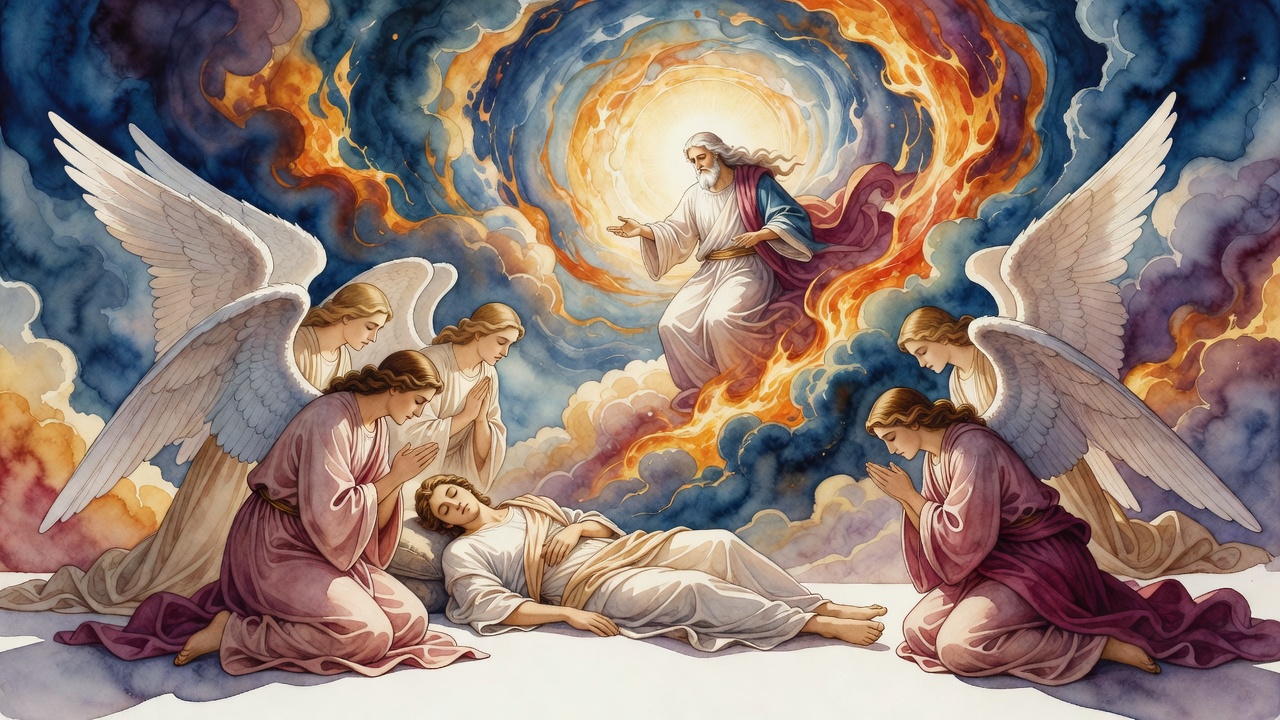
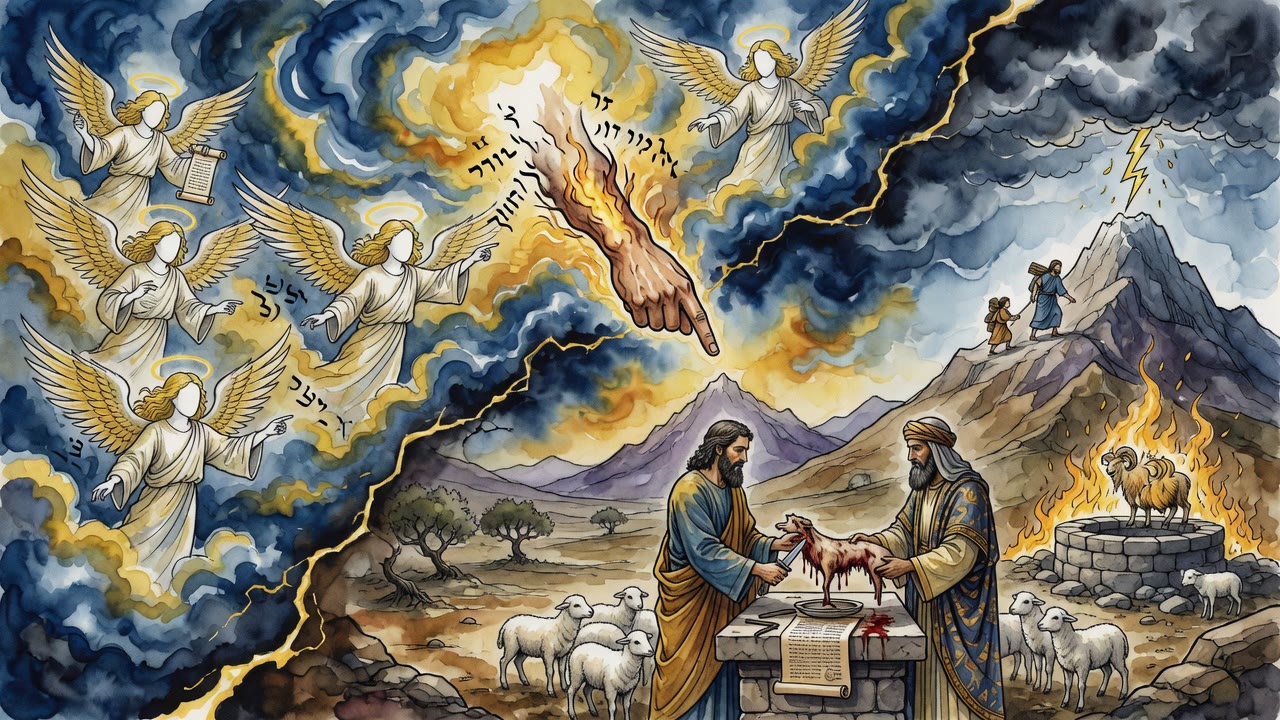
God called the chiefs of the angels from every corner of existence, from the topmost vault down to the deepest abyss where the waters were sealed, and He commanded them to dance. They came in their thousands and their tens of thousands, and they whirled around the enthroned day until the firmament rang.
"Sabbath it is unto the Lord," God proclaimed, and the cry rolled back through the cosmos from host to host. "Unto the Lord it is Sabbath." The two halves of the sentence chased each other across the heavens, and the whole of creation became one ringing chord.
And into this celebration God brought the newest thing He had made. He lifted Adam, the man of clay still wet from the river of Eden, and carried him past every gate to the highest heaven, so that the first human being stood inside the joy of the angels on the very first evening of his life. God did not keep the Sabbath joy for the deathless ones. He shared it, and dedicated His finished world by it.
Adam Sings to the Wrong King
Adam stood in that light and could not hold his silence. He had been alive for a single day, and already he had seen the most splendid thing in existence. So he sang. He lifted his new voice and poured out a song of praise to the Sabbath day, to its beauty and its honor and its greatness.
The dancing did not stop, but the voice from the Throne grew quiet and close.
"Thou singest a song of praise to the Sabbath day," God said, "and singest none to Me, the God of the Sabbath?"
Adam went still. The first man, one day old, had aimed his first hymn at the gift and forgotten the Giver.
Then the Sabbath himself, the enthroned day, the one creature exalted above all others, rose from the Throne of Glory. He came down from the highest seat in heaven and bowed himself to the ground. "It is a good thing to give thanks unto the Lord," the Sabbath said. And the angels and the man together took up the rest of the verse and finished it. "And to sing praises unto Thy Name, O Most High."
The day that had been crowned chose, of its own will, to kneel.
The Master Builds Canopies in Eden
That same hand, the one that lifts the lowly to high seats, did not stop at the seventh day. Long after Eden was lost, the sages saw it reaching forward into the world to come.
The Holy One, blessed be He, they taught, is destined to raise shelters and canopies in the Garden of Eden. Not only for the masters of Torah who bent over the scrolls until their eyes failed. The canopies are built also for those who never had the hours to learn, who instead opened their purses and fed a scholar and paid for the lamp oil so another man could study through the night. The merchant and the sage stand side by side in the shade of paradise.
They proved it from the brothers. There was Shimon, the greater scholar, and his brother Azarya, who went into the markets and made the money that kept Shimon free to learn. The teaching is handed down not in Shimon's name but as the word of Shimon, brother of Azarya, because the one who paid the price is bound forever to the reward. So it was with the tribes. Issachar was the elder and sat in the tents over the law, yet the verse blesses Zebulun first, because Zebulun went out to the sea trade and carried Issachar on his back.
The Dust on Adam's Eyes
One sage, looking down the long corridor from the Garden to the canopies, turned back to the man who had stood one day old in the highest heaven.
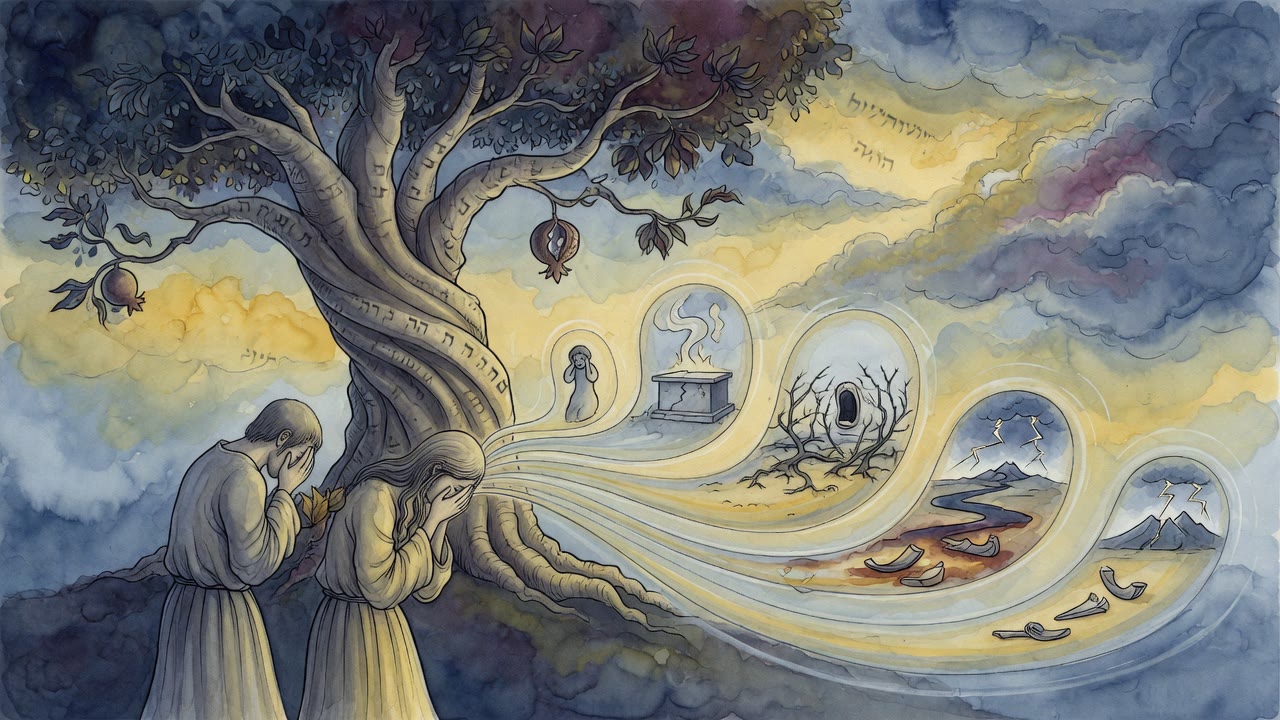
"Who will remove dust from your eyes, Adam the first man," he said, "you who could not keep your single command for one hour, while your descendants wait three full years before they so much as taste the fruit of a young tree."
The man who had been carried up to the Throne's own celebration, who had worn the Sabbath joy as a crown on the first evening of the world, could not hold his one law past the afternoon. And his children, the ordinary keepers of ordinary commandments, would stand in their orchards counting three patient years before they ate, and for that patience the Master of the universe was already, quietly, raising their canopies in the Garden.
← All myths