Parshat Bereshit5 min read

The Men Who Inherited Adam's Beauty and Died From It

Adam's beauty broke into shards, and each man who caught one wore it like a crown until the same gift became the thing that killed him.

Curated by Arthur · Told by Maggid ·
Table of Contents
  1. The First Man Was Too Bright to Look At
  2. His Splendor Scattered Into Living Shards
  3. The Gift Turned on the Man Who Bore It
  4. Absalom Chose the Rope Over the Fire
The Men Who Inherited Adam's Beauty and Died From It Click for full size

The First Man Was Too Bright to Look At

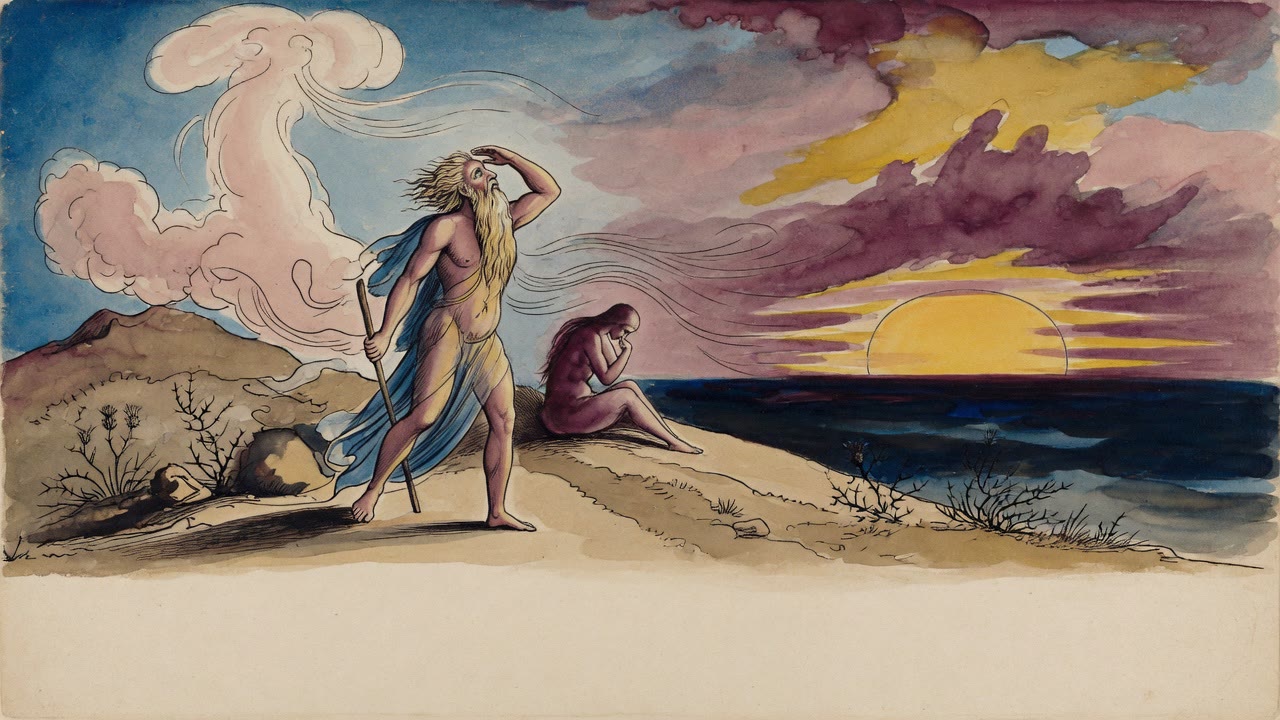
Before there were nations or kings, there was one body that filled the world. Adam stood so tall his head brushed the vault of heaven and his shoulders spanned the horizon, east to west, a single man laid across the whole width of creation. And he was beautiful. The soles of his feet threw off more light than the sun, so that the burning disk in the sky looked dull beside the skin of his heel.

The beauty that came after Adam was a slow diminishing. The loveliest woman set beside Sarah was an ape beside a human being. Sarah set beside Eve was the ape. Eve set beside Adam was the ape. Each generation held a smaller coin of the same gold, and the gold kept thinning, until what a man inherited of the first father was no longer a body of light but a single feature, one bright limb or organ where the old radiance still burned.

His Splendor Scattered Into Living Shards

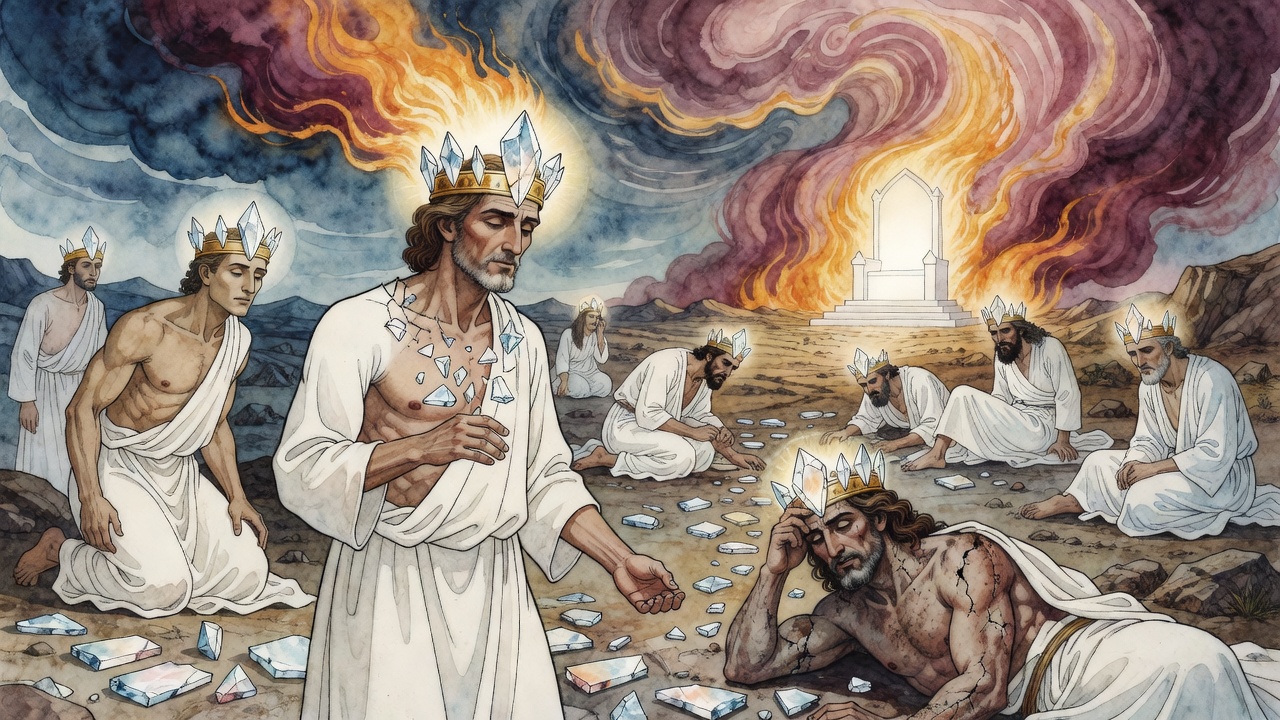
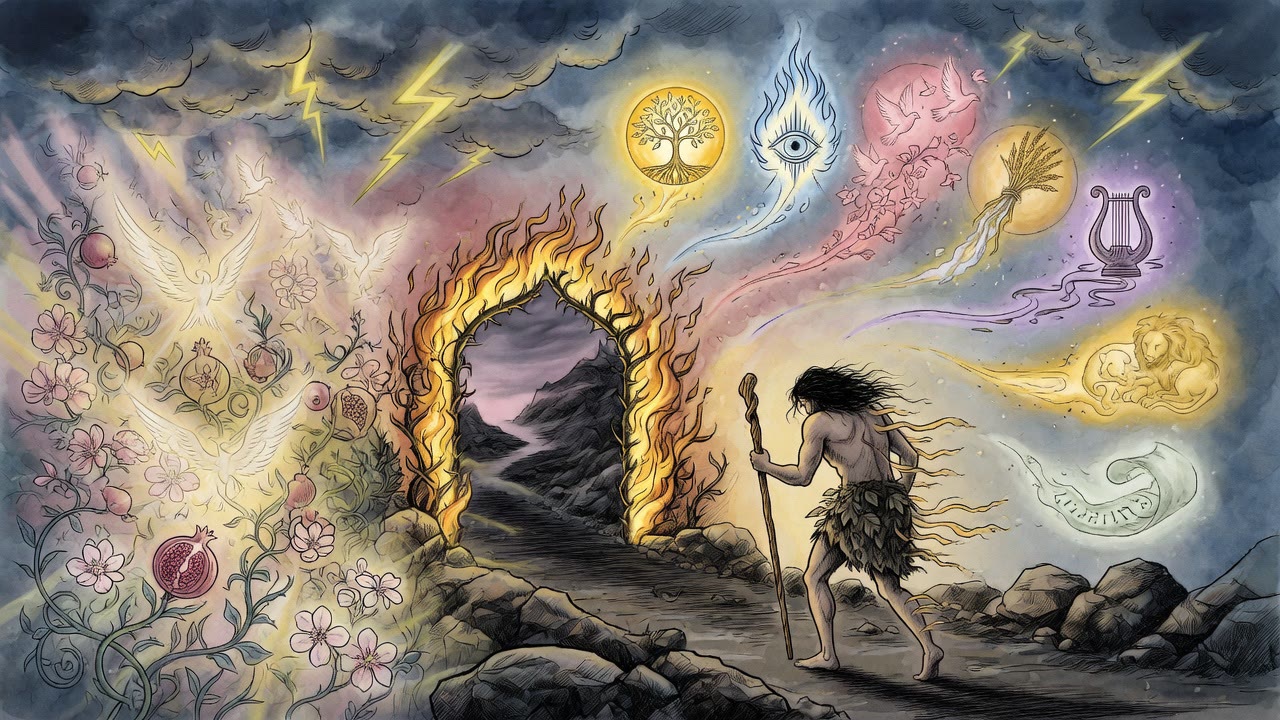
When Adam fell, his glory did not vanish all at once. It broke. It broke as though the first man had been shattered and a single splinter of him lodged in the bodies of men not yet born, one shard of that first perfection to each. Samson caught his strength. Saul caught the height of his neck and stood a head above every other man in Israel. Asahel caught his speed and could run down a deer across open ground. Absalom caught his hair, thick and heavy and gleaming, the envy of Jerusalem. Uzziah caught the breadth of his forehead. Josiah caught the shape of his nostrils, where the breath of life had first been blown. Zedekiah caught the light of his eyes. Zerubbabel caught the power of his voice.

Each of them walked the world carrying a piece of the first man. Each of them, save one, was killed by the very piece he carried.

The Gift Turned on the Man Who Bore It

Samson's arms tore lions apart and brought down a temple, and those same arms were bound with fresh rope and his eyes were put out, until he set his hands to the pillars and pulled the roof down onto his own head. Saul stood tallest of all on the field at Gilboa, and when the battle broke against him he braced the hilt of his sword against the ground and fell forward onto the blade, that long neck the last of him to give. Asahel ran so fast he closed the gap on Abner across the plain, and Abner thrust the butt of a spear back through his belly, so that the swiftest man in Israel dropped in mid-stride and did not rise. Uzziah reached into the Temple to burn incense he had no right to burn, and the mark bloomed on that famous forehead, tzara'at spreading white across his skin, and he lived his last years shut away and unclean. Josiah rode into a war that was never his, and the arrows found him, and one went in through the nostrils, the breath-gate of the first man. Zedekiah watched his sons cut down in front of him, and that sight was the last his bright eyes ever held, for his captors blinded him on the spot and led him into the dark. Only Zerubbabel kept his shard whole. The great voice carried him home to build again, and the stories let him keep it.

Absalom Chose the Rope Over the Fire

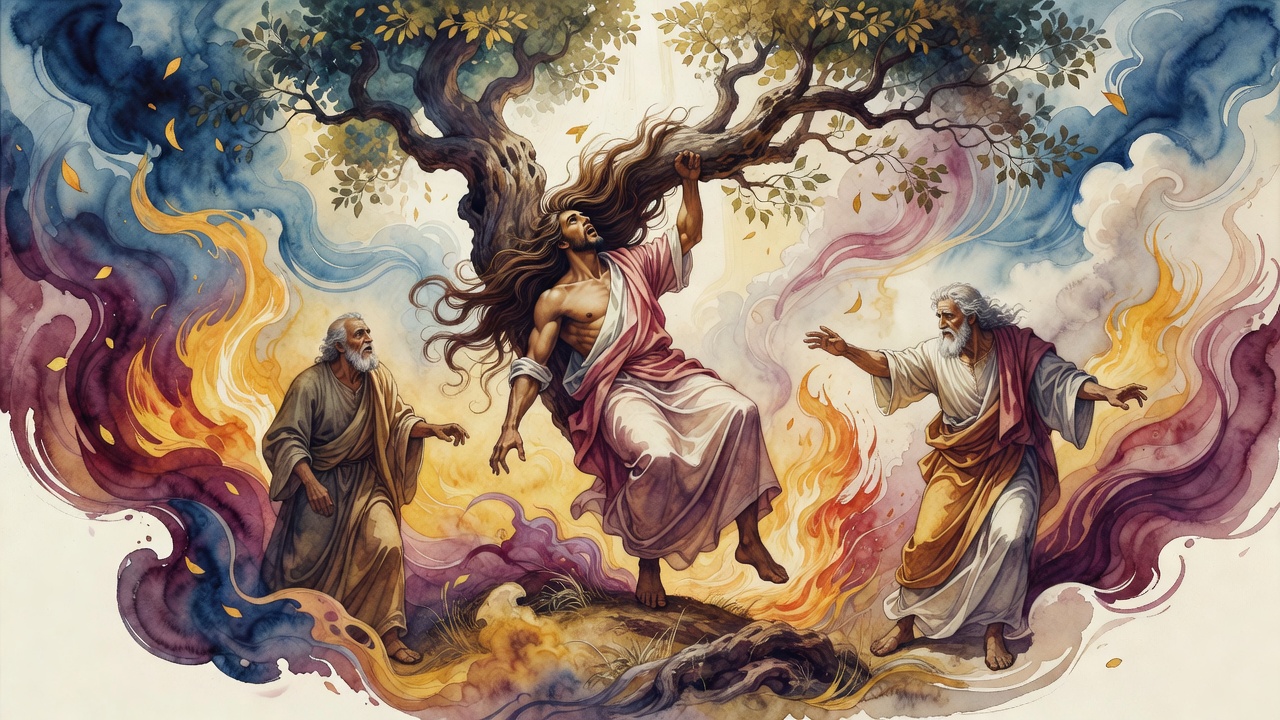
Absalom was the proudest of them, and his pride was the hair on his head, so thick and so admired that all Jerusalem turned to watch him pass. He rode to war against his own father with a sword strapped to his side. Then his mule carried him under the low branches of a great oak, and the boughs took hold of that famous hair and lifted him clean out of the saddle. The mule ran on without him. He hung there, alive, swinging between heaven and earth, the pride of his whole life now the noose around his skull, every hair he had ever combed and oiled holding him fast to the wood.

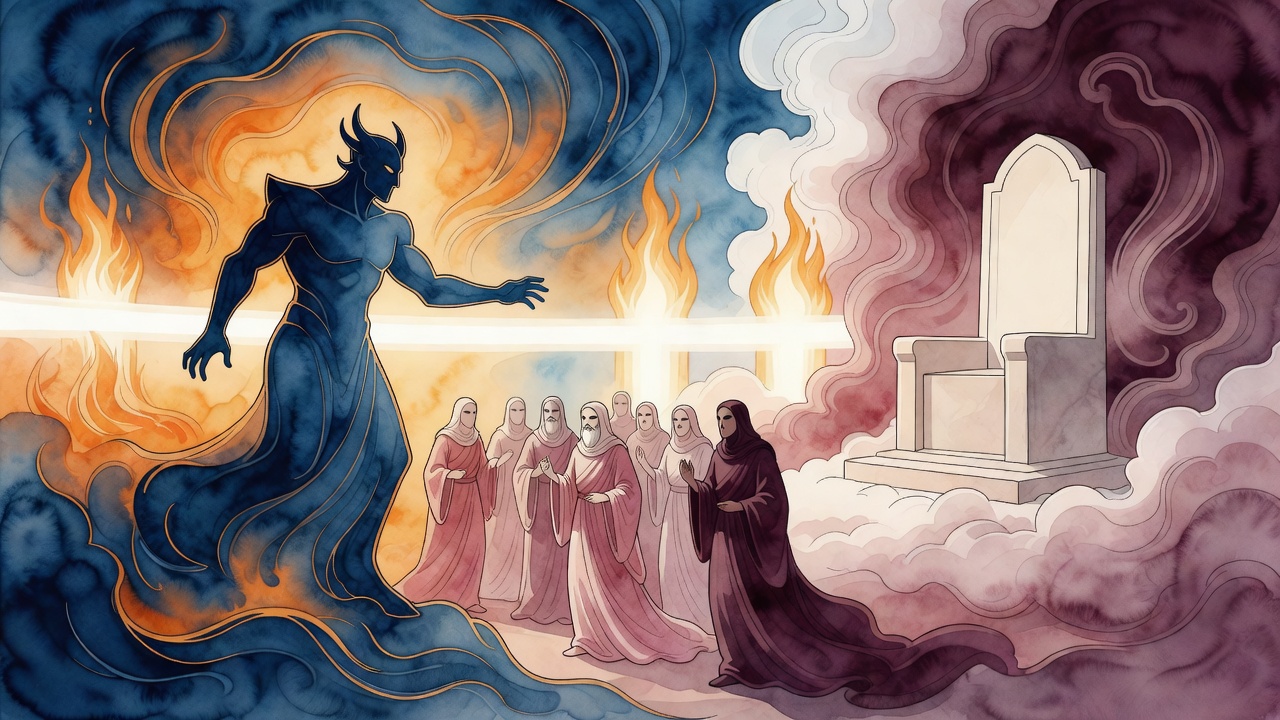
He had a sword. One stroke would cut the hair or hack the branch and drop him to the ground and freedom. He never drew it. As he swung, Absalom looked down, and the earth under his feet opened. Gehinnom (the realm of judgment after death) yawned below him, the pit of fire waiting to swallow him the instant his feet touched the ground. So he made his choice, and he said it aloud. "It is better for me to hang by my hair and not to descend into the fire." He hung on. He was still hanging when Joab came through the wood and found him and drove three darts into his heart.

Eight men had worn a fragment of the first man's glory. Seven of them died where the glory sat, struck at the strength, the neck, the running feet, the forehead, the nostrils, the eyes, the beautiful hair. The brightness that made them remembered was the seam where they broke.


← All myths
From the tradition

Sources

3 sources

The texts behind this telling. Some cards carry a translation of the source; others are our own retelling of it, and each card says which. Every card links out to the original.

Pirkei DeRabbi Eliezer 53:9Pirkei DeRabbi Eliezer

Retold in our words. Read the original at the link below.Pirke de Rabbi Eliezer, trans. Rabbi Gerald Friedlander, London (1916) · CC-BY

The notion that certain individuals, blessed (or cursed) with similar attributes, might share a similar fate.

Pirkei DeRabbi Eliezer, an ancient Jewish text, presents a rather striking and somewhat unsettling thought: that six figures in our history mirrored aspects of Adam and, tragically, met violent ends because of it. It's a powerful idea that links physical characteristics to destiny in a way that makes you stop and think.

Samson, of course, immediately comes to mind. Endowed with superhuman strength, he was ultimately betrayed and slain. Then there's Saul, a king known for his impressive stature, who also met a tragic death. Asahel, renowned for his incredible swiftness, also fell.

The text doesn't stop with strength, stature, or speed. It explores more peculiar similarities. Consider Josiah, whose demise came "through his nostrils," mirroring, perhaps, the breath of life first breathed into Adam. Zedekiah, too, suffered a fate linked to his eyes. The text says he was slain through his eyes. These aren't just random deaths; they're presented as echoes of a primal narrative.

And then there's Absalom. Ah, Absalom. Famous – or perhaps infamous – for his magnificent, flowing hair.

The story of Absalom is particularly vivid. He was a formidable warrior. We're told his sword was strapped to his side, ready for battle. But when his fateful moment arrived, entangled in the branches of an oak by his very own hair, why didn't he simply draw his sword and cut himself free?

Pirkei DeRabbi Eliezer offers a chilling explanation. Absalom saw Gehinnom, the Jewish concept of hell, yawning beneath him. He believed it was better to hang suspended by his hair than to descend into the fiery abyss. "It is better for me to hang by my hair and not to descend into the fire," the text says, "therefore he was hanging, as it is said, 'Behold, I saw Absalom hanging in an oak' (2 Sam. 18:10)."

A moment of terrifying clarity. Is it a literal depiction? A metaphor for the choices we make and the consequences we face? Perhaps both.

What does it all mean? Is it simply a cautionary tale about pride and physical excess? Or is there a deeper message about the burdens and blessings of inheriting certain traits, about the echoes of our origins that continue to resonate within us? It is worth pondering if our strengths can also become our downfalls. Perhaps these stories, these echoes of Adam, serve as a reminder to be mindful of the potential pitfalls that lie hidden within our greatest gifts.

Full source
Legends of the Jews 2:29Legends of the Jews

Retold in our words. Read the original at the link below.The Legends of the Jews by Louis Ginzberg (1909) · Public Domain

Legends of the Jews turns to Asahel, Adam at the Dawn of Creation.

The stories tell us his dimensions were. well, gigantic. Some say he stretched from heaven to earth! Or, to put it another way, from east to west. A being whose physical form encompassed the entire horizon.

Obviously, later generations of humans weren’t quite on that scale. But the legends suggest that certain individuals possessed echoes of Adam's extraordinary qualities. Ginzberg, in his Legends of the Jews, highlights a few.

For example, Samson possessed Adam's strength. Saul had his impressive neck. Absalom his glorious hair. Asahel his unmatched speed. And so on… Uzziah had his forehead, Josiah his nostrils, Zedekiah his eyes, and Zerubbabel his powerful voice. It's like a shattered mirror, with each piece reflecting a fragment of that original, perfect image.

But here's the thing, and it's a rather sobering thought. These gifts, these echoes of Adam's perfection, didn't always bring happiness. In fact, the tradition implies they often led to ruin. Samson's legendary strength? It ultimately caused his death. Saul, with his imposing neck, ended his own life by falling on his sword. Asahel, so swift of foot, was pierced by a spear while running. Absalom, proud of his beautiful hair, was caught in a tree by it, leading to his demise. Uzziah was struck with tzara'at (often translated as leprosy) on his forehead, a visible mark of his transgression. The arrows that killed Josiah entered through his nostrils, and Zedekiah’s eyes were blinded.

It's a powerful, almost tragic irony. These men possessed extraordinary qualities, qualities that reminded people of the first man, Adam. And yet, these very qualities contributed to their downfall.

What are we to make of this? Perhaps the legends are telling us that physical perfection, or any single outstanding trait, isn't enough. Perhaps true greatness lies not in possessing extraordinary gifts, but in how we use the gifts we do have. It's a reminder that even the most impressive qualities can become liabilities if they aren't tempered with wisdom, humility, and a strong moral compass.

Full source
Legends of the Jews 2:31Legends of the Jews

Retold in our words. Read the original at the link below.The Legends of the Jews by Louis Ginzberg (1909) · Public Domain

The Legends of the Jews, that monumental work by Louis Ginzberg, compiles centuries of Jewish folklore, and it paints a pretty incredible picture. It tells us that most of humankind inherited very little of Adam's beauty, or his massive size. for a second. The text implies Adam was huge. But the really interesting part is the beauty.

The text goes on to say something quite striking about beauty in general. It uses Sarah, our matriarch, as a benchmark. Compared to Sarah, the most beautiful women were like apes compared to humans. And Sarah compared to Eve was the same comparison – apes to humans. But Eve compared to Adam? Again, the same. His beauty was so radiant, so overwhelming, that even the soles of his feet obscured the sun! That’s… quite a statement.

So, what does that even mean? It suggests that the original human was created in a state of perfection, a state that we can barely comprehend now.

It wasn’t just about looks. Adam's spiritual qualities matched his physical perfection. The Legends of the Jews says God fashioned his soul with particular care. And here, the text launches into a beautiful description of the soul itself. It says she – the soul – is the image of God.

Think about these parallels: As God fills the world, the soul fills the body. As God sees all things, and is seen by none, the soul sees but cannot be seen. As God guides the world, the soul guides the body. As God in His holiness is pure, so is the soul. And as God dwells in secret, so too does the soul.

Wow.

This isn't just about Adam anymore, is it? It's about us. It's about the spark of the Divine that resides within each of us. It's about the potential for beauty, for wisdom, for goodness that we all carry, however dimmed it might be by the realities of everyday life.

These ancient stories aren't just historical accounts; they're mirrors. They reflect back at us what we could be, what we were meant to be. And maybe, just maybe, they offer a glimpse of what we can still become.

Full source