Parshat Bereshit5 min read

The First Woman Formed While Adam Watched and He Turned Away

Before Eve, God shaped a first woman from the raw earth while Adam looked on. Repelled by her making, he turned away, and only sleep gave him a second bride.

Curated by Arthur · Told by Maggid ·
Table of Contents
  1. The Man Who Was Left Alone
  2. God Shaped Her From the Wet Earth
  3. Adam Turned His Face Away
  4. The Bride Made in the Dark
  5. The Never-Silent Bell
  6. Earth and Bone Would Never Soften the Same Way
The First Woman Formed While Adam Watched and He Turned Away Click for full size

The Man Who Was Left Alone

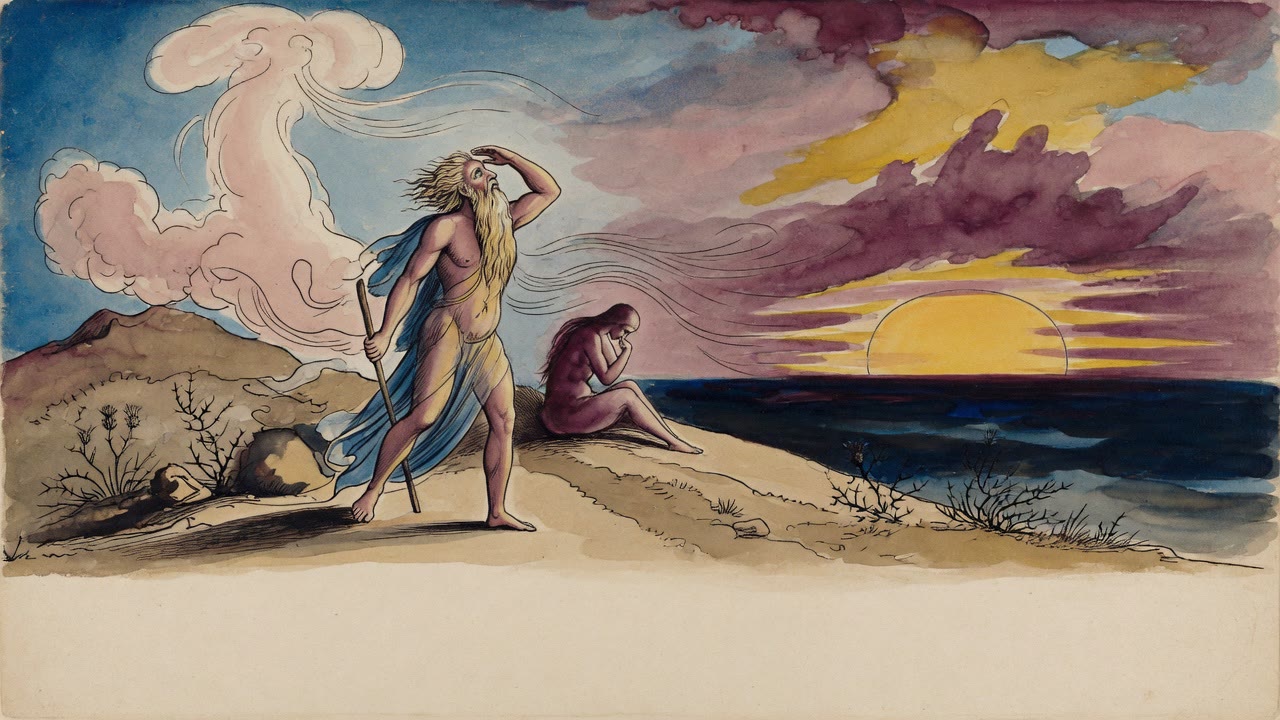
Adam walked the new world and named the animals, and every beast came to him in a pair. The lion had a lioness. The ox had a mate to low beside it in the dark. Only the man walked back to his rest with no one at his side. He lay down alone and rose alone, and the emptiness of it sat on him heavier than the whole weight of the ground he had been shaped from.

God saw the man turning in his sleep with no one to turn toward. "It is not good for the man to be alone," He said. So He bent to the earth again, to the same wet clay He had used to raise Adam, and He began to build a companion.

God Shaped Her From the Wet Earth

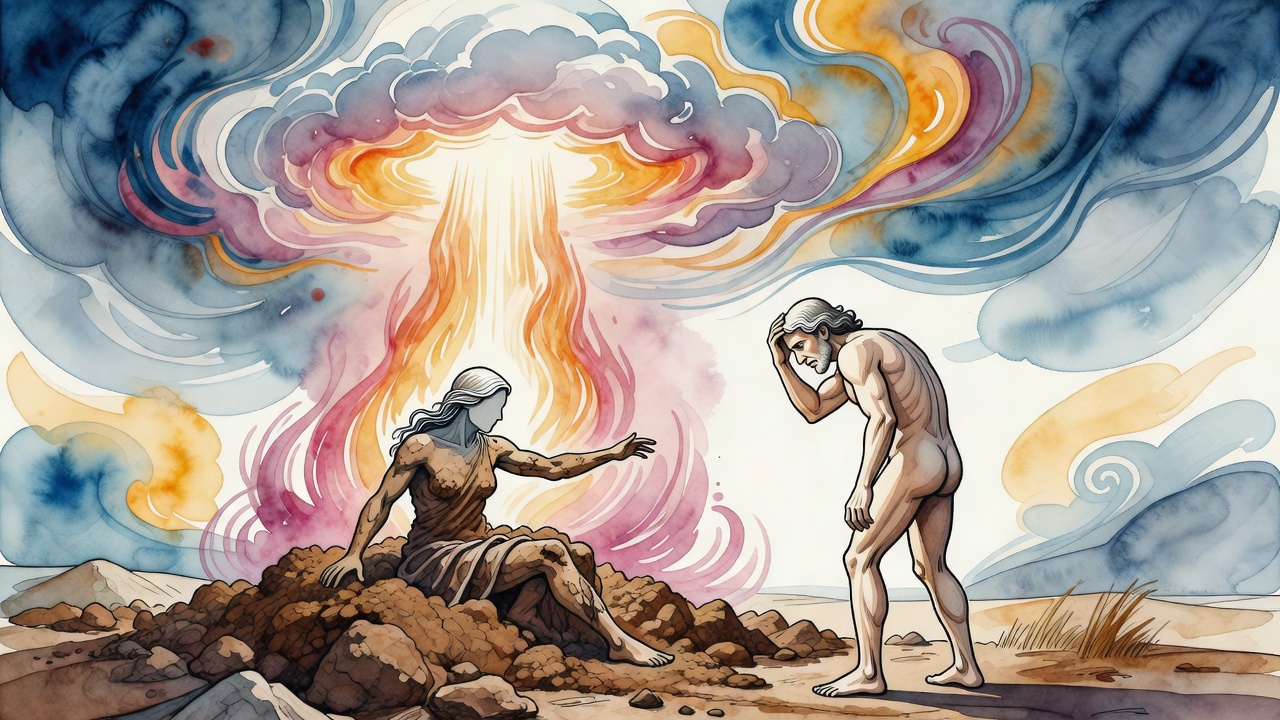
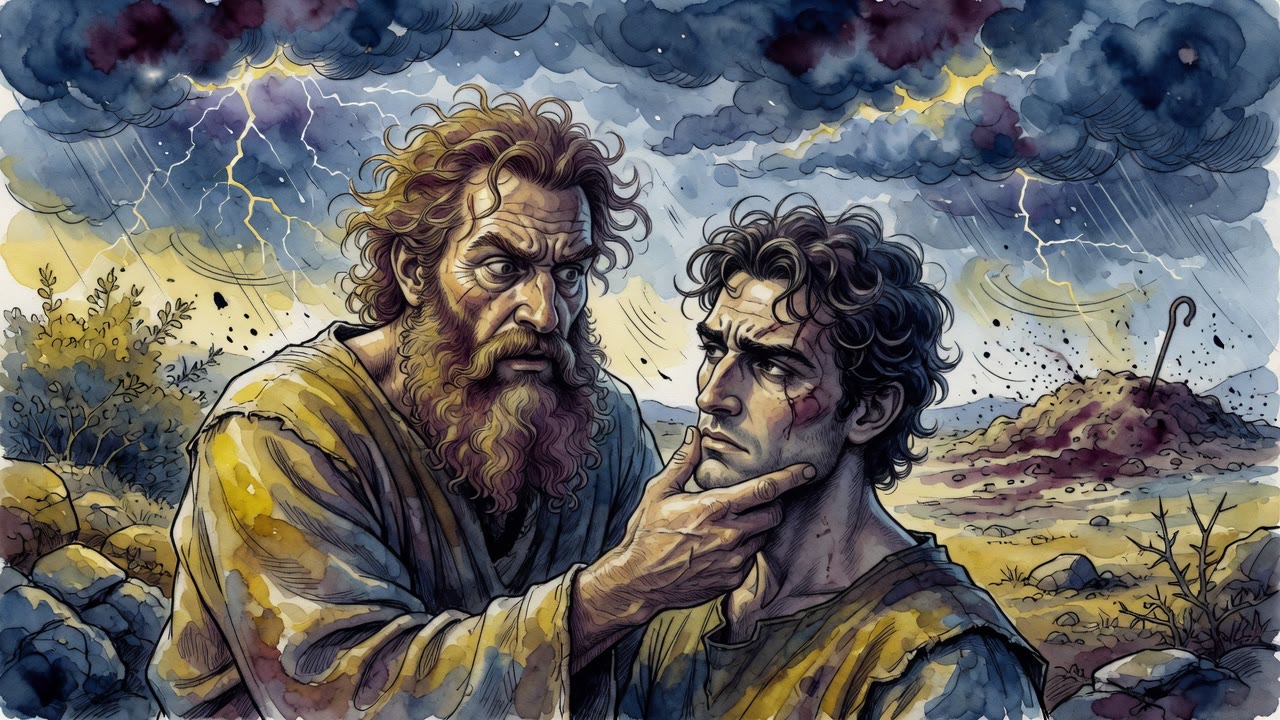
This time He did not hide the work. Adam stood and watched. He saw the woman begin as the man had begun, as a thing of the ground, of blood and the fluids of the body and the raw matter a living creature is knit from before skin closes over it. He watched sinew laid on bone. He watched the wet seams of her. Nothing was kept back from his eyes. He saw every stage of her making, the way a person sees the inside of a thing that was meant to stay hidden.

And something in him closed.

Adam Turned His Face Away

He could not want her. He had seen too much. The mystery that draws one body toward another had been spent before she ever drew breath, poured out in front of him detail by detail until nothing was left to wonder at. He turned his face from the finished woman the way a man turns from something he has watched too closely to love. He would not take her hand. He would not call her his.

So she did not last. God took the rejected woman away, and she was gone from the world, and the man was alone again. But now heaven understood the thing it had not weighed the first time. A creature watched into being cannot be desired. What is seen from the beginning wakes no longing. Men do not burn for the faces they have known since childhood, the faces that hold no surprise. Love needs a door it has not yet opened.

The Bride Made in the Dark

So the second time, God closed the man's eyes first. He sent a sleep down onto Adam deeper than any night, a sleep with no watching in it, and while the man lay senseless He worked by a hidden art. He did not build from the mud this time. He took a single bone from Adam's side, closed the flesh over the gap, and out of that one clean rib He raised Eve. No one saw her made. Not even the man she was made for.

When Adam woke, she was standing there whole and finished, and he had no memory of the wet and the blood and the seams. He saw only the wonder of her, arrived out of a darkness he had slept through. His heart lurched. "This is she," he said, "who caused my heart to throb many a night." He had ached for someone before he ever had a face to put on the ache, and here she was, as if she had walked out of the longing itself.

The Never-Silent Bell

But Adam was not only smitten. Even in that first rush he understood what had come to stand beside him. He looked at her and knew she would move him not by force but by other means, by entreaties and tears, by flattery and by the soft press of caresses, until his no became her yes. He half laughed at it. "This is my never-silent bell," he said, and the name was not unkind. It was the awe of a man who has met a power he cannot out-argue.

Earth and Bone Would Never Soften the Same Way

The two of them were made of different stuff, and it showed in everything after. The man had been raised from dust, and dust keeps. Leave it a thousand years and it is still itself, needing nothing. The woman had been raised from bone and flesh, and flesh does not keep on its own. It wants salt to stay sweet, oils and perfumes to hold off the turn. What looked like vanity was only the memory of the material she was knit from.

Their tempers ran the same way. Pour a little water on a clod of earth and it gives at once, softens, yields to the hand. Soak a bone for days and it stays hard, unbending, itself to the last. So the man was quick to be calmed and the woman was not, each of them true to the ground of their making. And the man, who had lost a rib and felt the gap in his side, spent the rest of his days walking out to close it, reaching for the one taken out of him, trying to be whole again.


← All myths
From the tradition

Sources

2 sources

The texts behind this telling. Some cards carry a translation of the source; others are our own retelling of it, and each card says which. Every card links out to the original.

Legends of the Jews 2:47Legends of the Jews

Retold in our words. Read the original at the link below.The Legends of the Jews by Louis Ginzberg (1909) · Public Domain

The familiar story is this: God creates Adam, the first man. But did you know there’s a little-known prelude to the Eve story? According to some traditions, Adam actually had a different wife before Eve! But the relationship didn't last.

The Zohar, a foundational text of Jewish mysticism, and Ginzberg's "Legends of the Jews" both offer a fascinating explanation. This first woman was created while Adam was fully conscious. He saw every detail of her formation. And, well, let's just say the spark wasn't there. He was repelled. He couldn't quite connect with her.

So, what did God do? He put Adam into a deep, deep sleep. And then He created Eve.

Why the snooze button? The sages tell us it was all about love, about sparking that initial attraction. The text says that had Adam watched Eve's creation, "she would not have awakened love in him." There's a profound insight here, isn't there? Sometimes, the mystery, the unknown, is what ignites our passion. Even today, it's said that "men do not appreciate the charms of women whom they have known and observed from childhood up." Familiarity, it seems, can sometimes breed… well, not always fondness, at least not the romantic kind!

When Adam awoke from his slumber and saw Eve, radiant and new, he was smitten. He exclaimed, "This is she who caused my heart to throb many a night!" It was love at first sight, or rather, love at first awakening.

But even in that moment of initial infatuation, Adam understood something fundamental about the nature of woman. It wasn’t all starry eyes and blissful ignorance. He recognized that she possessed a powerful influence. He knew she could get her way through "entreaties and tears, or flattery and caresses." He even called her, rather wryly, "This is my never-silent bell!"

A bit harsh? Perhaps. But it reveals a deep understanding of the dynamic between men and women, the push and pull, the dance of persuasion. As we find in Midrash Rabbah, the rabbis often explored the complexities of relationships, never shying away from the messier aspects of human interaction.

So, the next time you hear the story of Adam and Eve, remember that little detour, that first attempt at companionship. Remember the deep sleep, the moment of awakening, and the recognition of woman's power. It’s a reminder that even in paradise, relationships are complex, and that sometimes, a little mystery can go a long way.

Full source
Legends of the Jews 2:46Legends of the Jews

Retold in our words. Read the original at the link below.The Legends of the Jews by Louis Ginzberg (1909) · Public Domain

The answer, according to some fascinating corners of Jewish lore, goes all the way back to the very beginning – to Adam and Eve.

Ginzberg's Legends of the Jews dives deep into the tradition of Midrashic (rabbinic interpretive commentary) and Talmudic thought, and it offers some pretty compelling explanations for the distinctions we see between the sexes. It all starts with how they were created. Man, formed from the earth, and woman, formed from bone. the physical creation of woman is incredibly complex, designed for the miracle of childbearing. And as a result, the sages observed, her intelligence often matures faster than a man's. But the differences go deeper. The very building blocks of their beings affect their natures. Remember, these are symbolic interpretations, ways of understanding human nature through the lens of creation.

In this line of thinking, women need perfumes, while men don't, because "dust of the ground remains the same no matter how long it is kept; flesh, however, requires salt to keep it in good condition." A man is easily placated, not so a woman; a few drops of water suffice to soften a clod of earth; a bone stays hard, even if you soak it for days.

Well, the texts suggest it's because man is the one who "sustained the loss of his rib, and he sallies forth to make good his loss again." He is seeking wholeness.

Even customs like women covering their hair can be traced back to Eve, and a symbolic act of hiding her shame for bringing sin into the world. And why do women sometimes precede men in a funeral procession? Because it was woman, according to this interpretation, who brought death into the world. Heavy stuff. But the story doesn't end there. The special commandments given specifically to women are also seen as connected to the story of Eve. Adam, we're told, was the heave offering, the terumah, of the world, and Eve, well, she "defiled it." So, as an act of expiation, all women are commanded to separate a portion of dough, another terumah, when baking. It's a tangible reminder of that original act.

And because woman "extinguished the light of man's soul," she is bidden to kindle the Sabbath light. This act of lighting the candles transforms an act of supposed transgression into an act of sacred illumination. It's a powerful image of redemption and renewal.

These aren't just dusty old stories. They're reflections on the roles and responsibilities that have been assigned to men and women throughout history. They invite us to confront complex ideas about sin, redemption, and the enduring power of ritual. They ask us to consider: How do we see these roles today? How do we reinterpret these ancient narratives in a way that is both respectful of tradition and relevant to our modern lives? It's a conversation that continues to this day.

Full source