Parshat Noach6 min read

Noah Planted the Cedars for the Ark and the Town Laughed

The neighbors asked what the cedar saplings were for. Noah told them the truth. They laughed, and he went on watering the trees.

Curated by Arthur · Told by Maggid ·
Table of Contents
  1. The Man Who Planted Cedars in a Fat Year
  2. What All Flesh Had Become
  3. He Tended Them Until They Were Tall
  4. The Queue of Pairs
  5. The Sentence Read Over the Rest
Noah Planted the Cedars for the Ark and the Town Laughed Click for full size

The Man Who Planted Cedars in a Fat Year

The saplings went into the ground in a season when nobody needed anything. Fields in that generation were sown once and fed a household for forty years. Men lived long enough to hold the fifth and the sixth generation of their own descendants, and they had stopped counting harvests, because the harvests had stopped ending.

So when Noah walked out to open ground with an armful of cedar saplings, people came to watch.

"What are these cedars for?"

"The Holy One intends to bring a flood upon the earth," he said. "He has ordered me to build an ark so that I and my family might escape."

They laughed and went back to the heaps in their barns. He had a hundred and twenty years. That was the span heaven had set for the generation to turn around, and Noah, who had gone over his own sins first and put them right, meant to spend every year of it in the same field, saying the same sentence to the same faces.

What All Flesh Had Become

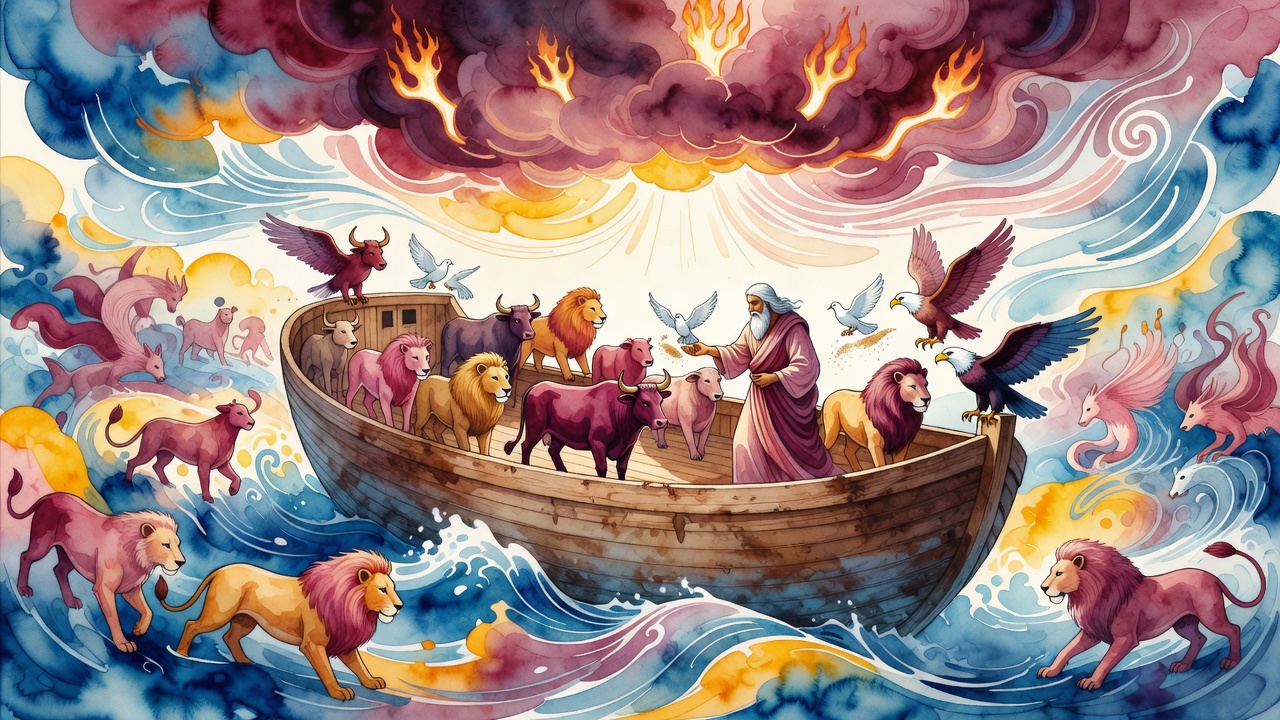
On the hour they were made, every living thing had been given one rule. Each shall cleave to its own and is forbidden to go to another. The command was older than any city. It sat in fur and feather and instinct.

By Noah's day the rule was a joke. Cattle went to the wild beasts and the wild beasts came back to the cattle. Beasts went to men. Men went to them. The world had lost every fence it was given, and the air over the towns was thick with it.

Heaven had a long history of overlooking things. Not that. When a whole generation is soaked in it, the seizure that follows takes the decent along with the rotten, and the decent had already grown thin on the ground.

Above the towns the giants walked, the mighty men whose names everyone knew. They stared at the sun and the moon and worked their magic through them. They had an answer ready for anyone who mentioned the God who made the two lights.

"Depart from us. We desire not knowledge of Thy ways. What is the Almighty, that we should serve Him? And what profit should we have, if we pray unto Him?"

He Tended Them Until They Were Tall

Noah watered the cedars. He pruned them and kept the goats off them and watched them thicken through decades in which nothing whatever happened to the weather.

People came back. Years had passed, and the trees now threw real shade.

"What are you doing?"

He told them again. A flood. An ark. Escape for a household. They mocked him again, and this time the mockery had the ease of a routine, because a man who has been wrong for forty years is a fixture rather than a threat.

Then he felled them. He cut the trunks he had raised and sawed them into lumber, and the yard filled with boards that smelled of resin and had no possible use, and the crowd came out for the third time.

"What are you doing?"

Same answer. Same laugh. They did not turn back.

The road under Noah was mud the whole way. A king walking his son through that kind of road keeps a hand on the boy so he does not go down in it, and something like that hand stayed on Noah for the whole hundred and twenty years, because a man who spends a lifetime being laughed at by everyone he knows does not usually stay upright on his own.

The Queue of Pairs

What he was called, in the end, was not builder. He was called righteous, and the reason given was feeding. He fed the creatures of the Holy One. That was the whole of it, and only one other man in the tradition earned the same word for the same reason, and that was Joseph, who fed Egypt when the grain ran out.

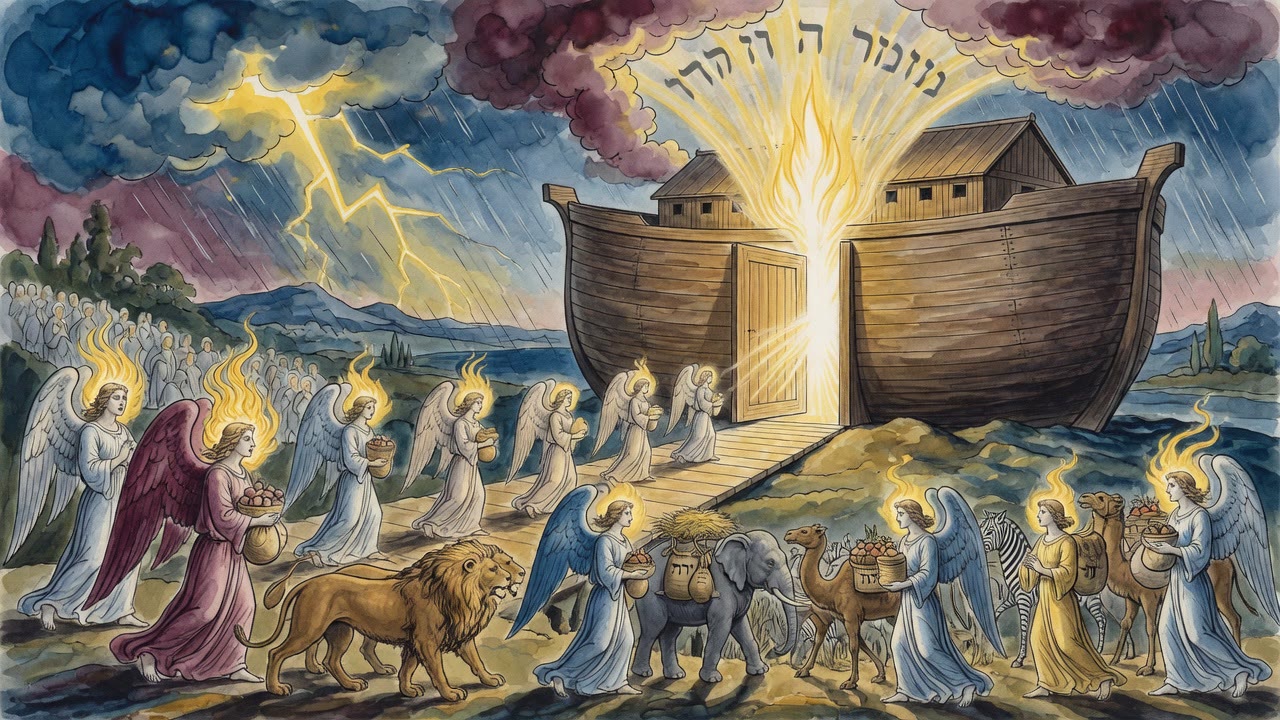
The animals that walked up the ramp were counted righteous too. Not for obedience. For their kind. Out in the fields every border had gone down, and these came two by two in their own pairs, cattle with cattle, birds with birds, the small things that move along the ground with their own, and they stood in the dark of the hold and let a man portion out their feed.

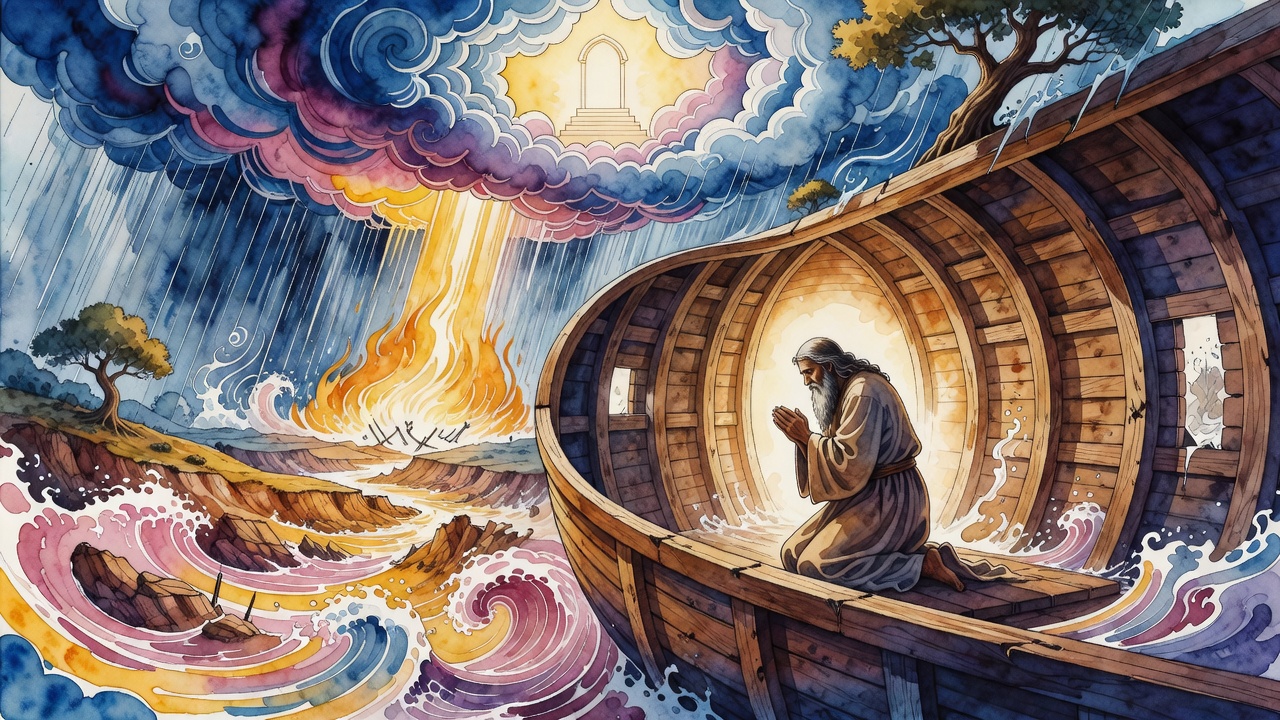
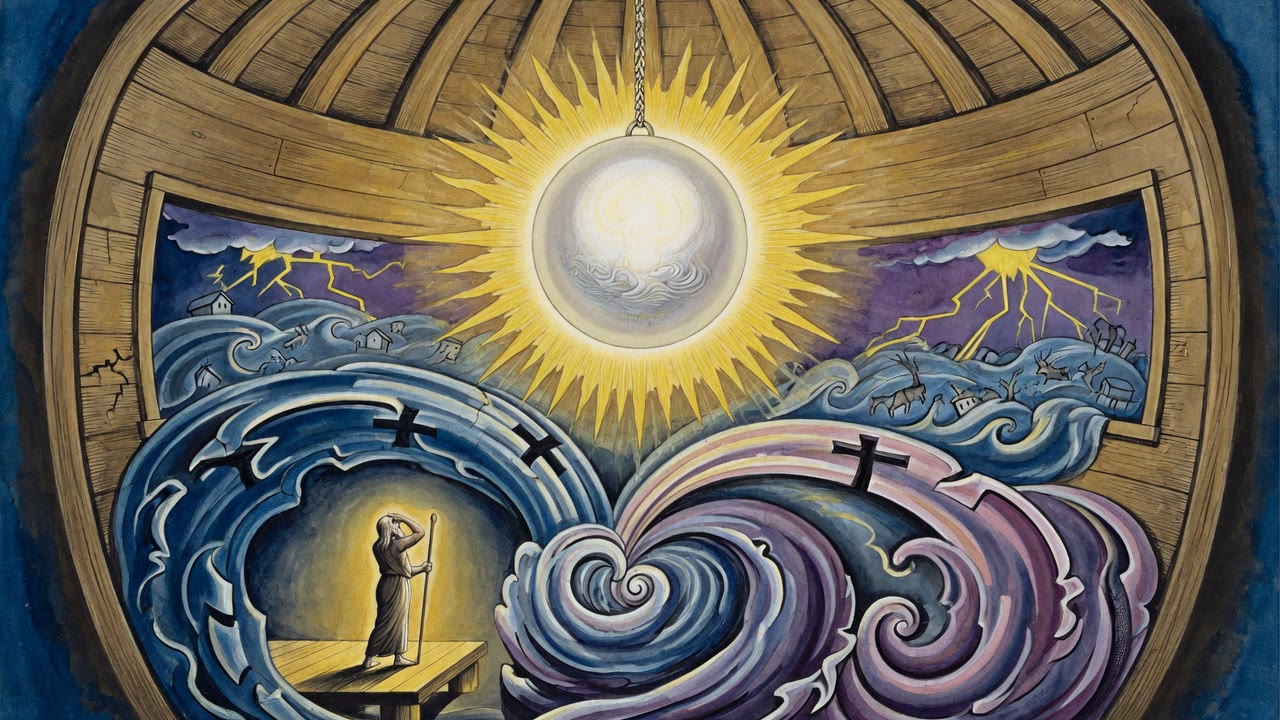
Then the deeps broke open underneath and the windows of heaven opened above, and the laughter outside stopped all at once.

The Sentence Read Over the Rest

The generation that had never seen a bad year got its terms.

Seedtime and harvest, from now on. You will sow every single year, and you will bury children you have raised. Cold and heat: fever and the wasting cough. Summer and winter: the sick stomach, the face gone grey. Day and night, which means no rest in either, and fire and snow waiting at the end of both.

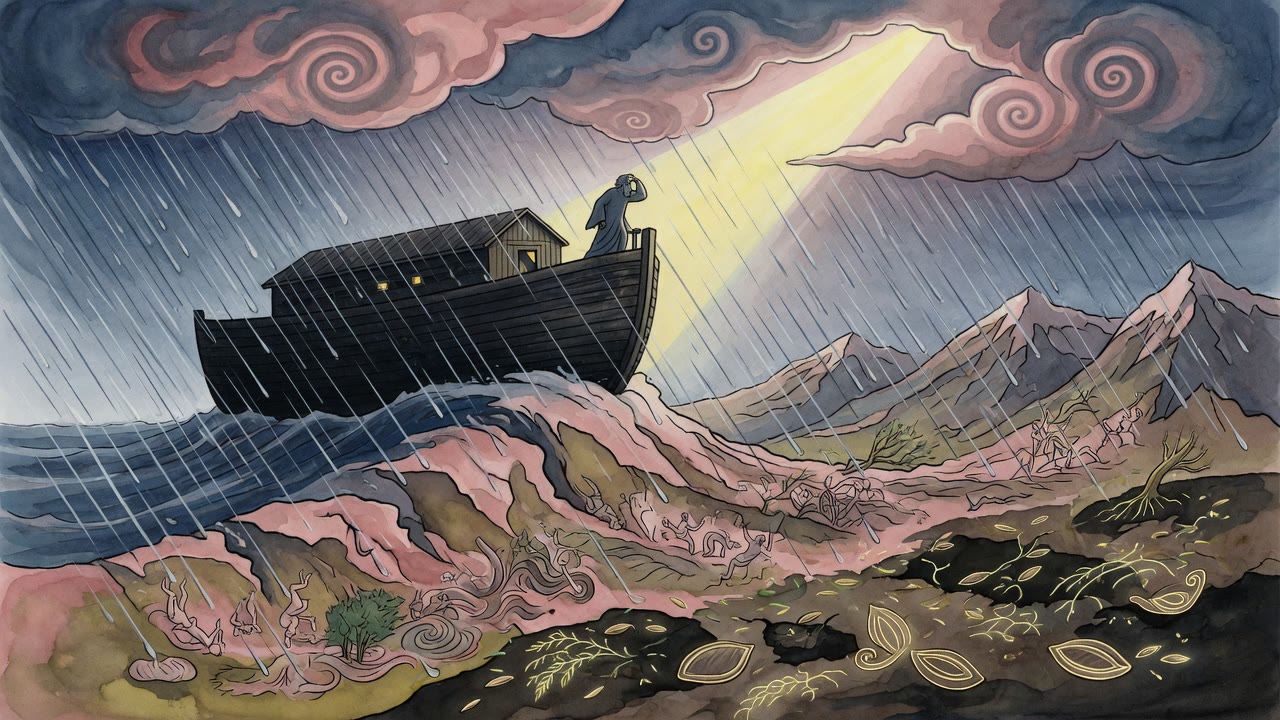
The water rose out of the ground before it fell from the sky. It filled the valleys where the mixed herds had grazed. It stood in the barns where the forty-year heaps had been, and the heaps went soft and floated.

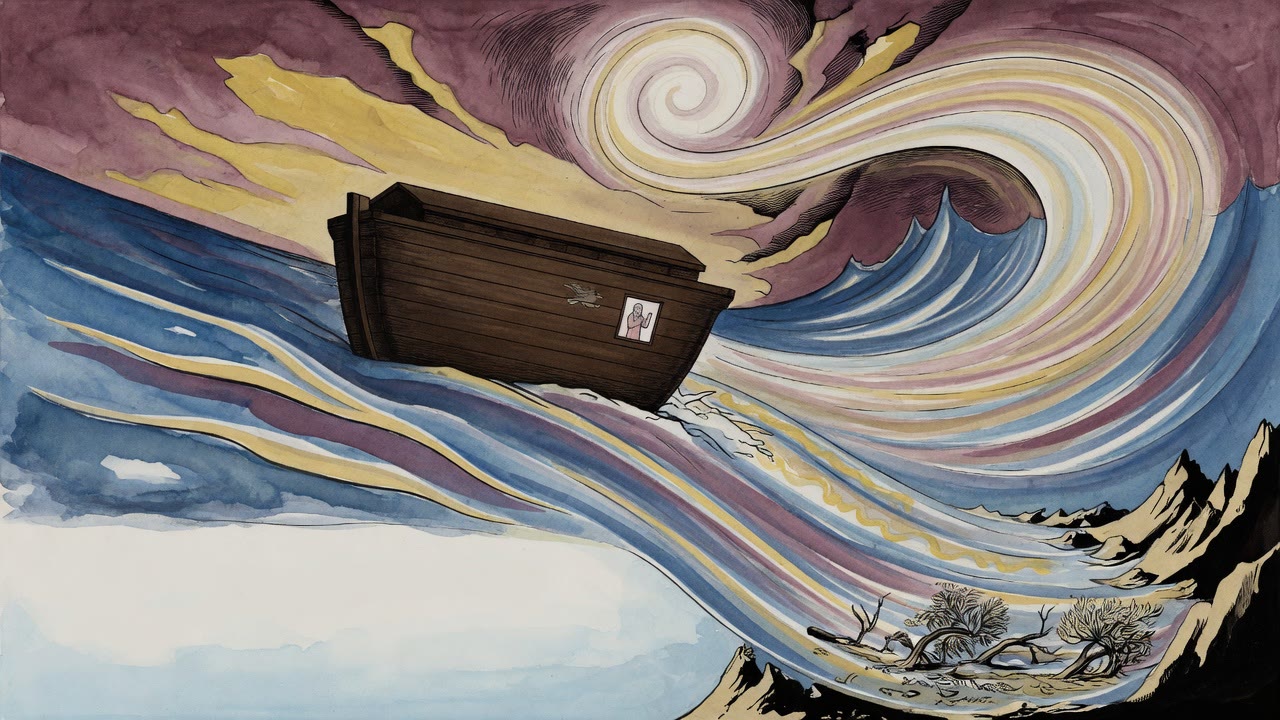
The ark lifted. Inside, a man moved along a row of stalls with grain in his hands, feeding animals that had never asked him for anything, on boards he had planted as saplings while a whole town stood at the fence and laughed.


← All myths
From the tradition

Sources

2 sources

The texts behind this telling. Some cards carry a translation of the source; others are our own retelling of it, and each card says which. Every card links out to the original.

Midrash Tanchuma, Bereshit 12Midrash Tanchuma

Retold in our words. Read the original at the link below.Townsend 1989 translation of Midrash Tanhuma, S. Buber Recension · CC-BY

And the Lord saw that the wickedness of man was great in the earth (Gen. 6:5). Our sages taught: As punishment for lewdness (in the world) androlepsia appeared, destroying the virtuous together with the wicked. R. Azariah said: The Holy One, blessed be He, would overlook everything but lewdness. Observe that when they were immersed in lewdness, it is written in Scripture: The sons of God saw the daughters of men, that they were fair; and they took them wives, whomsoever they chose (Gen. 6:1), and after that it is said: And it repented the Lord that He had made man on the earth … and He said: I will blot out man whom I have created from the face of the earth (ibid. 6:6–7). Likewise in reference to the Sodomites, it is said: But before they lay down, the men of the city, the men of Sodom, compassed the house around … and they called unto Lot … For we will destroy this place, because the cry of them is waxed great before the Lord; the Lord hath sent us to destroy it (Gen. 19:4, 13). Why is the Lord repeated twice in this verse? The Holy One, blessed be He, said: I am He who exacted punishment upon Zimri, Samson, and Amnon, and I am He who will bestow a reward upon the one who refrains from lewdness, even as I did for Joseph, Jael, and Palti.

R. Simeon stated: Joseph was rewarded in kind for his behavior. Because his mouth had not indulged in sinful kissing, he was told: According to thy word shall all my people be kissed (i.e. ruled)(Gen. 41:40); because he had not lowered his neck to sin, He placed a gold chain about his neck (ibid., v. 42); because he had not used his hand to fondle sinfully, Pharaoh removed his signet ring from his hand and put it upon Joseph’s hand (ibid.); because his body had not clung to another in sin, he arrayed him in garments of fine linen (ibid.); because his feet had not led him to her, He caused him to ride in the second chariot (ibid., v. 43); because he did not entertain wicked thoughts, he was called understanding and wise (ibid., v. 39); and because his heart had not reflected upon committing evil, they called before him: “Abrech” and Zaphenath-paneah (ibid., vv. 43, 45). Upon the Sodomites, however, He rained fire and brimstone, as it is said: The Lord caused to rain upon Sodom and Gomorrah brimstone (ibid. 19:24), and it likewise says: I will blot out man whom I have created from the face of the earth; both man and beast and creeping things, and fowls of the air; for it repenteth Me that I have made them (Gen. 6:7).

The Nephilim were on the earth in those days…. these were the mighty men that were of old, the men of renown (Gen. 6:4). This verse informs us that the Nephilim would gaze upon the sun and the moon and perform feats of magic through them, as it is said of them: These are of them that rebel against the light (Job 24:13). The word these in both verses indicates that the Nephilim were the mighty men and were cruel and rebellious and performed acts of magic. Yet they said unto God: Depart from us, for we desire not knowledge of Thy ways. What is the Almighty, that we should serve Him? And what profit should we have, if we pray unto him? (Job 21:14–15).

R. Yohanan explained the cause of their rebelliousness as follows: They would sow for a single year and it would produce harvests that lasted forty years. Thus the Holy One, blessed be He, said to them: “Is this how you act? While the earth remaineth, seedtime and harvest, and cold and heat, summer and winter, day and night shall not cease (Gen. 8:22).”

R. Samuel the son of Abba explained the cause of their rebelliousness as follows: They lived so long that they beheld the fifth and sixth generations of their descendants. The Holy One, blessed be He, said to them: “Since ye rebelled, seedtime and harvest means ye shall beget children and bury them, cold and heat implies that you shall be afflicted with consumption and fever; summer and winter indicates that you shall be nauseated, your faces shall turn pale, your punishment shall not cease, and you shall be afflicted in your bodies; day and night indicates that you shall have no rest by day and night, and you shall be sentenced to fire and snow.”

Full source
Midrash Tanchuma, Noach 5Midrash Tanchuma

Retold in our words. Read the original at the link below.Townsend 1989 translation of Midrash Tanhuma, S. Buber Recension · CC-BY

These are the generations of Noah. Noah was a righteous man … Noah walked with God (Gen. 6:9). Why is Noah’s name repeated three times in this single verse? Because he was one of the three men privileged to experience three changes that occurred in the world. The three were Noah, Daniel, and Job. Noah saw the world inhabited, he witnessed its destruction, and finally he beheld it reinhabited. Daniel saw the first Temple intact, he beheld its destruction, and then he witnessed the erection of the second Temple. Job saw his household established, he beheld its destruction, and he finally witnessed its reestablishment. Noah was a righteous man. Noah was called righteous because he fed the creatures of the Holy One, blessed be He. Two men were called righteous because they fed the creatures of the Holy One, blessed be He. They were Noah and Joseph. It is written concerning Joseph: Because they sell the righteous for silver (Amos 2:6), and of Joseph it is also said: And Joseph fed (Gen. 47:12).

R. Ahava the son of R. Ze’era said: Even Noah’s sons, the animals, the beasts, the birds, and the creeping things that accompanied him into the ark were righteous. At the time of the generation of the flood, all flesh had corrupted their way upon the earth (Gen. 6:12), as it is stated in Scripture concerning them. The domesticated animals copulated with the beasts, the beasts with the animals, they with men, and the men with them. Therefore, it is stated: Behold, I will destroy them with the earth (ibid., v. 13). How do we know that at the very hour that they were created, the animals, the beasts, the birds, and the creeping things were commanded not to copulate with any species other than their own? It is written: And God made the beast of the earth after its kind (Gen. 1:25). The Holy One, blessed be He, told them: Each shall cleave to its own and is forbidden to go to another.

He was righteous (Gen. 6:9). This suggests that he was one of the seven men born circumcised. Adam and his son Seth were born circumcised, as it is written: He begot a son in his own likeness after his image, and he called him Seth (Gen. 5:3). Noah was born circumcised, as it is written: He was righteous (lit. “perfect”) in his generations (ibid. 7:1); Jacob was born circumcised, for it is said: And Jacob was a quiet (lit. “perfect”) man (ibid. 25:27); Joseph was born circumcised, for it is written: These are the generations of Jacob: Joseph (ibid. 37:2) because he resembled his father; Moses was born circumcised, as it is said: And she saw that he was a goodly child (Exod. 2:2); and Job was born circumcised, as it is written: A wholehearted (lit. “just”) and upright (“perfect”) man (Job 1:1).

In his generation. Do these words imply that Noah would not have been considered righteous if he had lived in another generation? R. Judah and R. Nehemiah differed concerning this question. One said: He was righteous in comparison to the men who lived during the Generation of the Flood and the Generation of the Separation, but if he had lived in Abraham’s generation he would have been lost among them. For example, if a barrel of balsam oil is placed in a filthy area, its scent permeates that area, but if it is placed in another locality (a clean area), its scent might not permeate that area. The other argued: If he was righteous in such a generation, how much more righteous would he have been had he lived in any other generation! For example, if a vial of spikenard oil is set in a filthy place, it will give forth a pleasant fragrance, but how much more pleasant would its fragrance be were it placed in an attractive area.

Noah walked with God. The Holy One, blessed be He, supported Noah lest he sink to the level of the generation of the flood. For example, if a king’s son starts out on a journey as his father’s emissary, and is forced to travel upon a road thick with mud, the king supports him along the road lest he sink into the mire. However, with reference to Abraham, it is written: Walk before Me, etc. (Gen. 17:1), and concerning the patriarchs, it is said: The God before whom my fathers walked (ibid. 48:15). They preceded the Shekhinah (the Divine Presence), in order to fulfill His will.

Make yourself an ark of acacia-wood (Gen. 6:14). R. Huna said in the name of R. Yosé: The Holy One, blessed be He, forewarned the generation of the flood to repent its misdeeds for one hundred and twenty years. When they refused to repent, He commanded Noah to build an ark of acacia-wood. Then Noah arose, repented his sins, and planted cedar trees. They asked him: “What are these cedars for?” “The Holy One, blessed be He, intends to bring a flood upon the earth, and He has ordered me to build an ark so that I and my family might escape,” he replied. They laughed at him and ridiculed his words. Nevertheless, he tended the trees till they grew large. Once again they asked him: “What are you doing?” He repeated what he had told them previously, but they continued to mock him. After some time, he cut down the trees and sawed them into lumber. Again they inquired: “What are you doing?” He warned them once again as to what would happen, but they still refused to repent. Thereupon the Holy One, blessed be He, brought the flood upon them, as it is said: And they were blotted out from the earth (Gen. 7:23).

Full source