The Foundation Stone Nearly Crushed the World for Joseph
Simon and Gad lifted their hands. Joseph hid behind Zebulon. Years later a sword found his throat in an Egyptian doorway.
Table of Contents
 Click for full size
Hands Raised in the Field
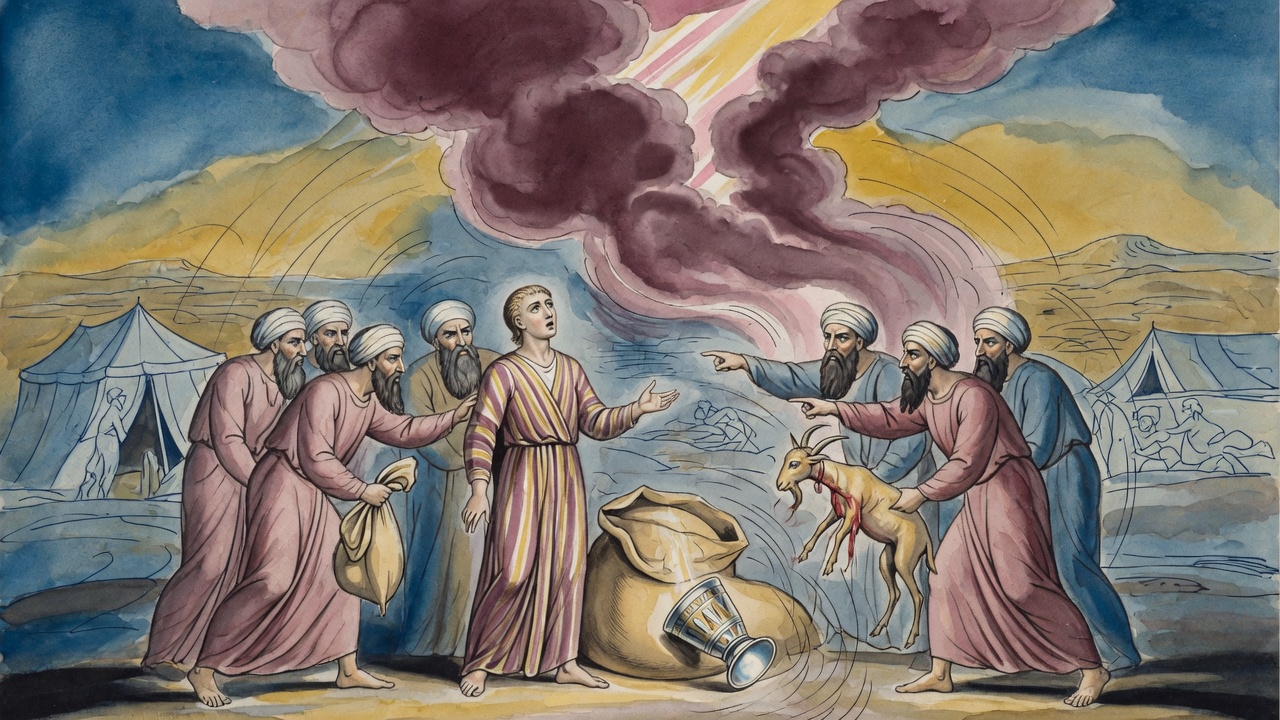
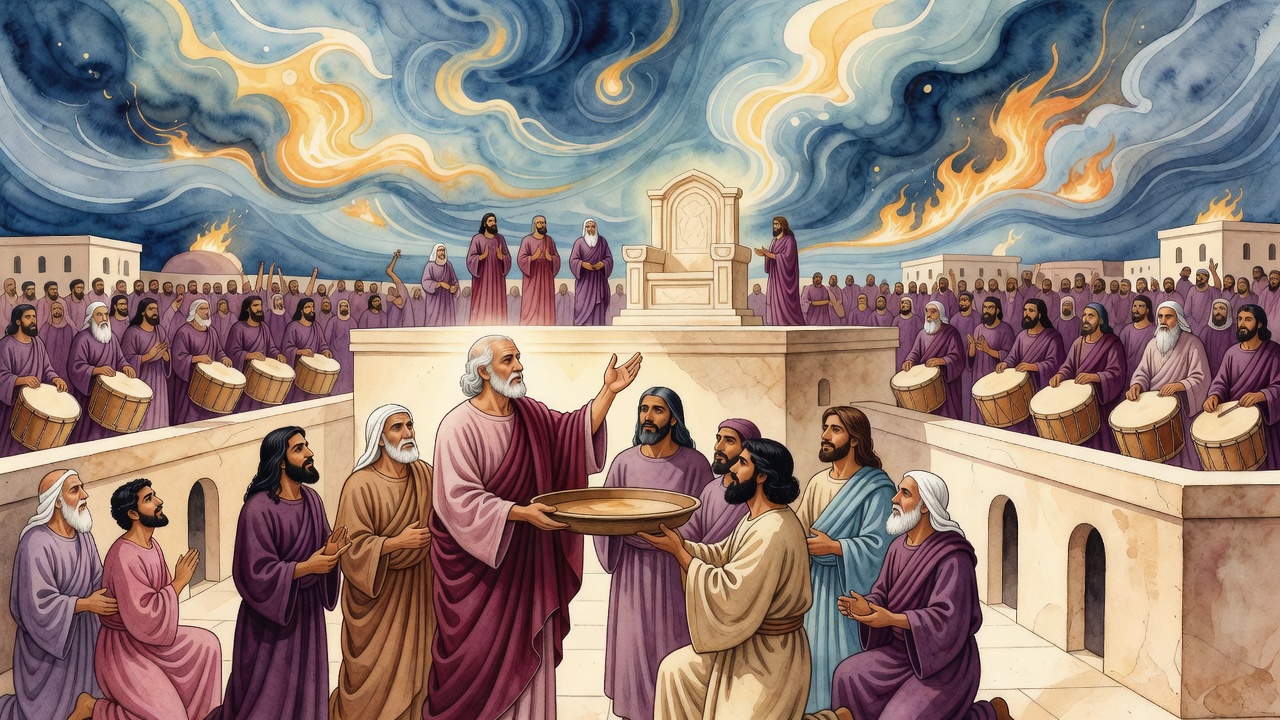
Simon and Gad moved to kill Joseph in the open field. Joseph fell on his face and begged. "Have mercy with me, my brethren, have pity on the heart of my father Jacob. Lay not your hands upon me, to spill innocent blood, for I have done no evil unto you."
If he had done evil, he said, chastise him. Do not use their hands for blood, for the sake of Jacob. The plea cracked Zebulon. Wailing rose from two throats at once. When Simon and Gad lifted their hands again, Joseph hid behind Zebulon and begged the rest for mercy.
Dust stuck to his mouth. Brothers' shadows crossed his back. The favorite coat had already been stripped. What remained was a boy asking not to be made into a corpse before the father who loved him could even hear the news.
A Dry Pit Waited
Reuben found the half-measure that kept a murder from finishing. Cast him into one of the dry pits their fathers had dug without finding water. God had held the water down in those shafts so the boy could live long enough for Ishmaelite ropes. The pits stayed dry until Joseph was safe in trader hands.
In the pit the dark had a taste. No water rose to cool Joseph's throat because heaven had locked the springs. Traders' voices floated over the rim like another country. The brothers ate and argued above him. Reuben planned a private rescue that arrived too late. The rope that finally came belonged to Ishmaelites, not to a brother's repentance.
Joseph went down into Egypt with pit dust under his nails and his brothers' hands still in his memory, raised and not quite used.
The Stone in God's Hand
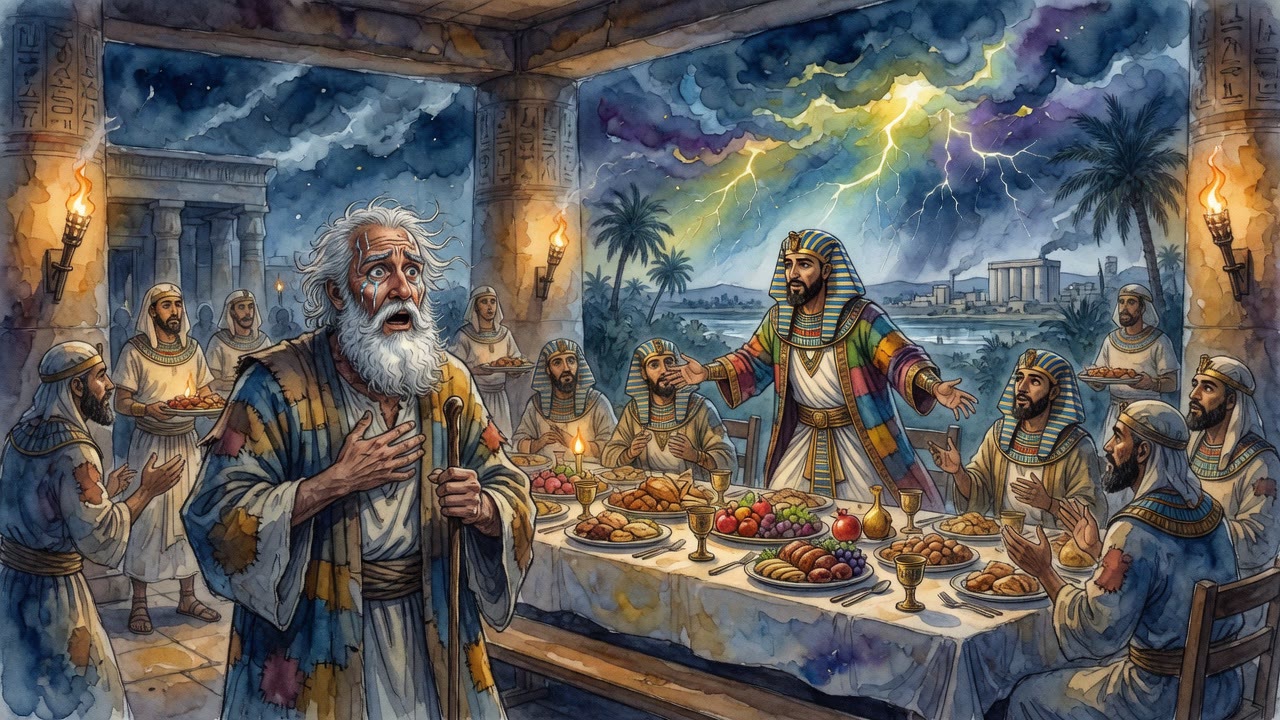
Years later the same man stood in an Egyptian house that memory linked to Sarah's captivity under Pharaoh. Zuleika watched his face change and called him friend and true-love. She asked why he looked near to swooning. She saw no one else in the room.
"Where is he? Why, there is none in the house."
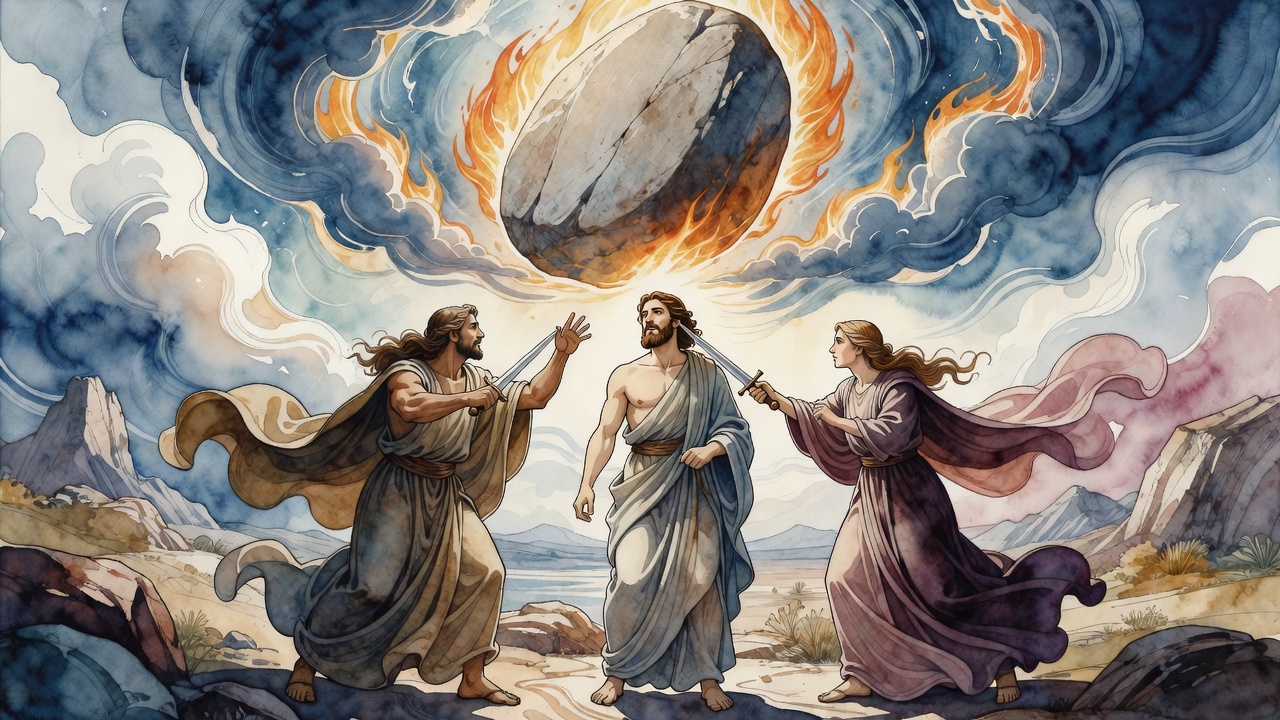
Joseph told her she belonged to a people that perceives nothing, and he belonged to those who can see. He fled. Outside, desire dragged him back toward the chamber. Then the Lord appeared holding the Eben Shetiyah (אבן השתייה), the foundation stone of the earth, and spoke a sentence that made lust feel small. "If thou touchest her, I will cast away this stone upon which the earth is founded, and the world will fall to ruin."
The world hung on a private refusal. One touch, and mountains would have nowhere to sit. Joseph sobered. He turned to run.
Cloth Tore in Her Fist
Zuleika caught his garment. "As the king liveth, if thou wilt not fulfil my wish, thou must die." Her free hand drew a sword from under her dress and set the edge at his throat. Do as she bid, or die.
The blade learned the heat of his pulse. He wrenched free with a hard motion and left cloth in her fist. The sword did not drink. The foundation stone stayed in the Maker's hand. A bed, a dress, a strip of torn linen, a king's oath spoken by a woman who was not the king. Against a stone that founds the earth, her threats weighed nothing, and still Joseph's legs shook when he ran.
Egypt would invent a prison story. Heaven had already staged a trial of the whole world in one doorway.
Shepherds Named for Pharaoh
When famine later drove the family south, Joseph chose the weakest brothers to present to Pharaoh. He did not want warriors skimmed into Egyptian service. He named them shepherds. Egyptians who honored rain stars and animals kept distance from shepherds. The label was a shield.
Pharaoh granted Goshen, pasture land that tradition already tied to Sarah as irrevocable gift from an earlier Pharaoh who had taken her by force. The family would live near Egypt's power without melting into Egypt's gods. Joseph's body, once nearly knifed by brothers and nearly ruined by a mistress, now arranged geography like a board of survival.
He remembered dry pits and a sword at the throat. He picked men who looked harmless. He named them by the work Egyptians scorned. Goshen opened. Flocks moved in. Children of Jacob learned the roads to the granaries without learning to bow to the rain-star in their private hearts.
Night wind moved over pasture. Joseph, in linen, could still feel phantom cloth tearing in a woman's hand and phantom dirt of a dry pit under his nails. The foundation stone did not fall. The family did not vanish into the Nile's religion. Those two refusals kept the same spine in different years.
← All myths