6 min read

The Frog Outside Gan Eden and the Dead Man Inside It

The robbers crossed the plank first. The Baal Shem Tov saw a flaming sword turning above the far bank and stepped back. A frog was standing in the mud.

Curated by Arthur · Told by Maggid ·
Table of Contents
  1. The Flame Turned Him Back on the Robbers' Road
  2. Five Hundred Years Inside a Frog
  3. A Taler a Day in Rabbi Isaac's Tefillin Pouch
  4. The Dead Man Came Back Teaching Zohar
  5. The Litvak Who Came to Kaminka Anyway
  6. It Is He and No Other
The Frog Outside Gan Eden and the Dead Man Inside It Click for full size

The Flame Turned Him Back on the Robbers' Road

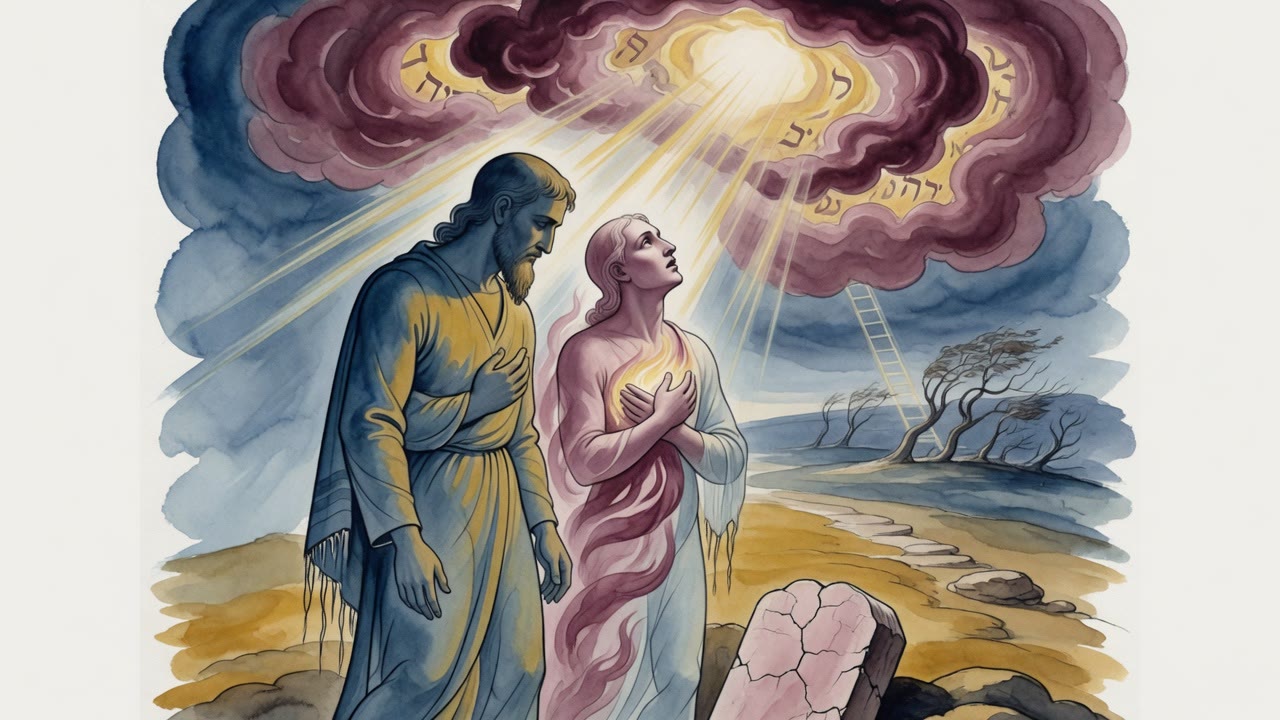
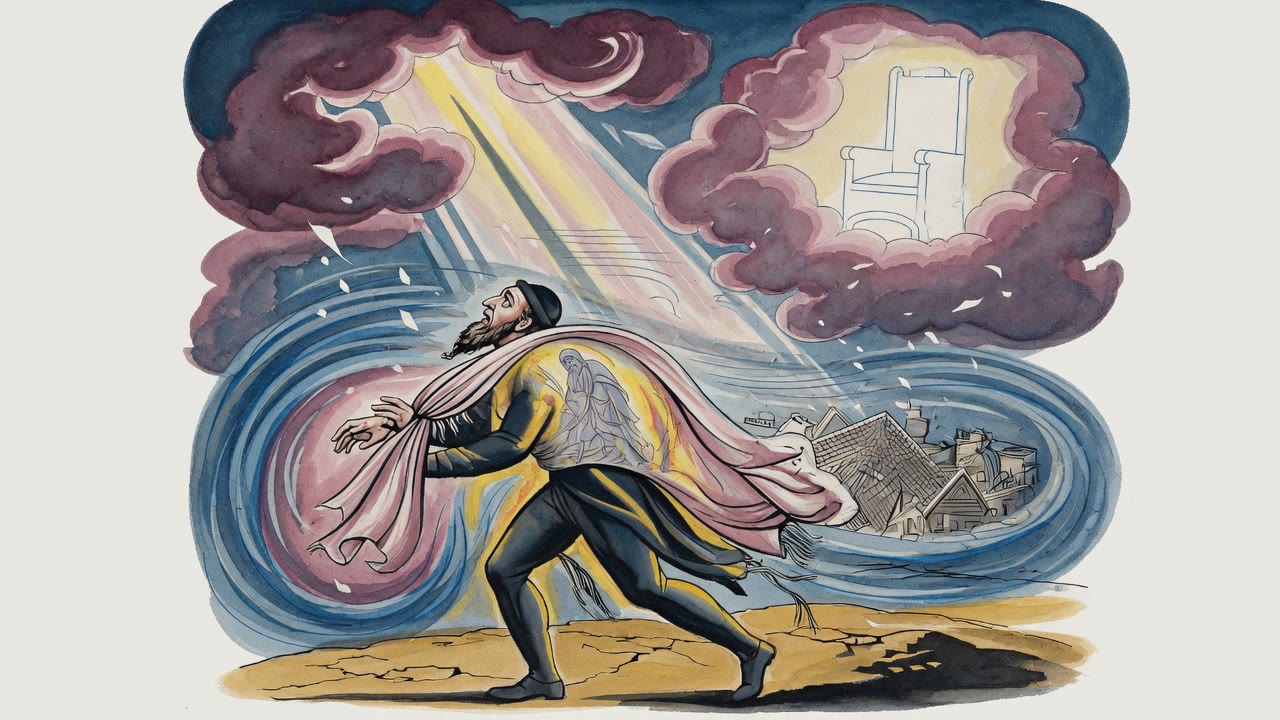
The robbers knew a shorter way to the Land of Israel, through caves and tunnels, and offered to guide him. The Baal Shem Tov went. The road narrowed to one board over a ravine of mud, with a single stake in the marsh to lean on. The robbers crossed. He set his foot on the plank, saw the flame of the revolving sword turning above the far bank, and stepped back.

He watched them go. "Surely I did not come this far for nothing," he said.

Five Hundred Years Inside a Frog

It was a frog, so enormous he could not tell at first what animal stood before him.

"Who are you?"

"A Torah scholar," it said.

"You are a Torah scholar?" With those four words he raised it high enough to speak plainly, and it told him it had sat in that body five hundred years. The holy Ari had repaired every soul of his generation, but this one they drove past the last village into country where Jews do not travel, because one blessing from a passing Jew would have brought the precious out of the vile.

"I treated the washing of the hands lightly," the frog said. "Once."

Ha-Satan (the Accuser) brought the charge. The court answered that no man is thrown away for one transgression, but one pulls the next behind it, and a second fall would put the first on his account too. He fell a second time. He fell a third. He kept falling until he had worked through nearly the whole Torah, and the ruling came down to refuse his repentance.

Ha-Satan made him a drunkard after that, and a drunkard has no quiet hour in which to count what he has become. When he died, that first careless sin sent him into water. Into a body that is never dry, where nobody passes.

The Baal Shem Tov made the repair and lifted the soul out. The frog fell over dead in the mud. Its jailer had no further use for it.

A Taler a Day in Rabbi Isaac's Tefillin Pouch

In Mezritch a man with money and nothing else felt old age coming up the road toward him. Vanity and emptiness, no Torah in it. He could think of nothing to do with the fear except give where nobody would see. Every morning, one taler into the tefillin (prayer boxes bound on arm and head) pouch (the bag holding the small scripture boxes worn at prayer) of Rabbi Isaac.

Rabbi Isaac found the coin twice and set the study house attendant to watch the pouch during prayers. The attendant caught the hands on the tallit. Rabbi Isaac drilled him through the six orders of Mishnah, chapter by chapter, each one repeated until it ran off his tongue. Then Ein Yaakov. He bought a place in the Mishnah society, worked through the Zohar, and learned until the day he died.

The Dead Man Came Back Teaching Zohar

At the sickbed Rabbi Isaac would not leave without a handclasp on it. The man pledged to appear to him at any time, and died. For thirty days the Mishnah society finished all of Mishnah for his soul. On the thirtieth day he was standing in the room.

"Where is your resting place?"

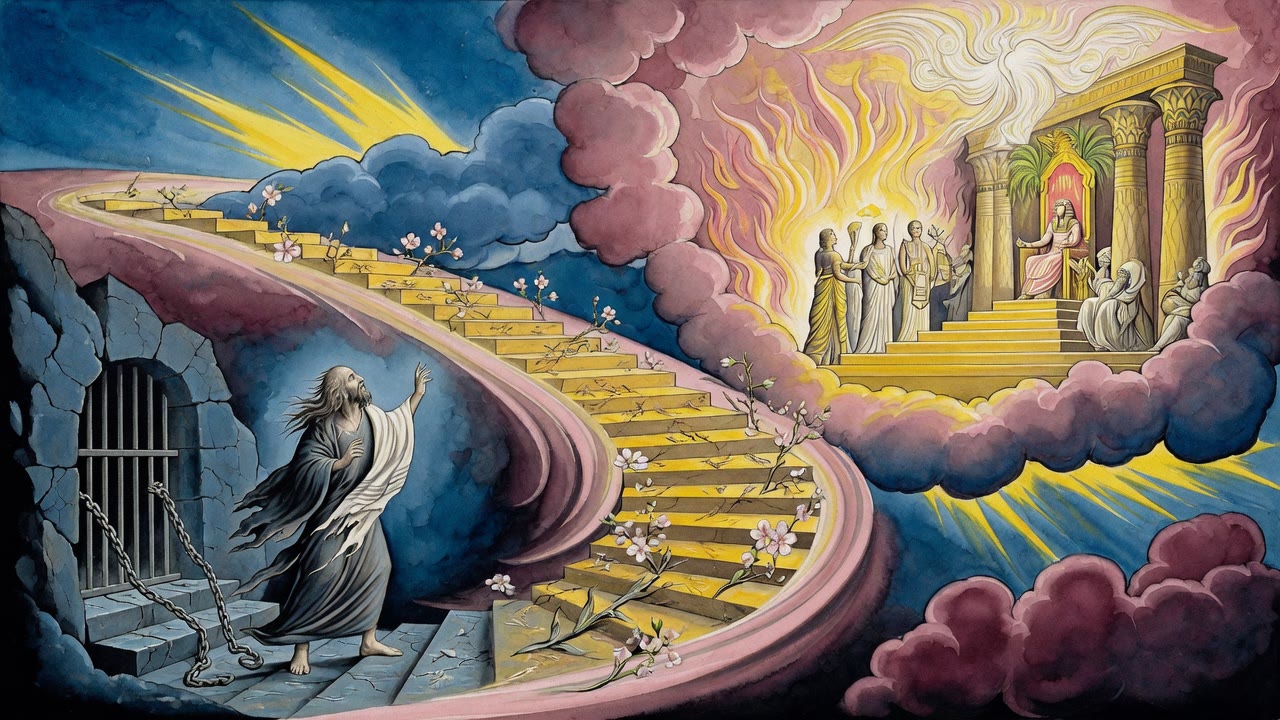
"Among the righteous in Gan Eden (the Garden of Eden). I repaired everything in life except one matter. The society finished that one for me with their learning."

He came and went freely after that. Rabbi Isaac would put a knotted passage of Zohar to him and hear how it is learned in Gan Eden (the paradise of the righteous dead). Then he repeated one of those teachings outside the room, and the visits stopped.

The handclasp dragged him back anyway. "They have raised me into very high worlds," he said, "and it is bitter to come down out of them into this one. Your hand is still on mine. Release me." Rabbi Isaac released him.

The Litvak Who Came to Kaminka Anyway

Rabbi Abraham Abba was a Litvak and hard as a nail about it, and the Baal Shem Tov meant nothing to him. When Rabbi Pinchas of Koretz asked his father where he meant to spend Shabbat, the answer came back flat. "What need do I have of the Baal Shem Tov? I will teach here."

At the first words of Hodu, Rabbi Abraham walked into the Kaminka study house and planted himself at the holy ark, praying loud enough to fill the room while the Baal Shem Tov prayed before it. Shabbat Rosh Chodesh, so they took out two scrolls. Rabbi Abraham picked up the second and walked behind him toward the table. "Take the Torah scroll from his hand," the Baal Shem Tov said to a man beside him. The scroll came out of the old man's arms. He said nothing, and his son could not account for the silence.

It Is He and No Other

At the third meal the people of Kaminka steered him to a side table with bottles of mead, because they knew what he was. When the Baal Shem Tov began to say Torah, Rabbi Abraham left the mead, walked into the middle of the house, and stared into his face until the teaching ended.

They lit candles and ate meat. The Baal Shem Tov started again. "We need to say one more matter. It was not in my mind to say this. I heard it said in Gan Eden in my name." His father was on his feet before the sentence finished.

After the evening prayer the old man took his son by the arm. "It is he and no other. It is he and no other."

"What did you see in him?"

"You thought I was silent when he pulled the scroll out of my hands. I was waiting for the end. Last night I stood in Gan Eden, and the Prince of Torah said words of Torah in the name of the Baal Shem Tov. What I heard there, I heard tonight from his own lips."


← All myths

From the tradition

Sources

3 sources

The texts behind this telling. Some cards carry a translation of the source; others are our own retelling of it, and each card says which. Every card links out to the original.

Shivchei HaBesht 3Shivchei HaBesht

Translation of the source text.Shivchei HaBesht, Kopyst 1815 + JewishMythology.com faithful English Beta translation · Public Domain

Once, robbers came to him and said, "Our master, we know a short road to go to the Land of Israel, by caves and tunnels. If you wish, go with us, and we will be guides before you on the road you should take." He agreed to go with them.

As they went on the road, there was one deep ravine full of water, mud, and clay. Their path was over one board set from side to side, and they leaned on one stake that they stuck into the marsh. They went first. When the Baal Shem Tov wanted to go on it, he saw that here was the flame of the revolving sword, and he turned backward, for there would have been great danger to him if he crossed that passage.

The Baal Shem Tov said in his heart, "Surely I did not come here for nothing." When he returned, he encountered that frog. Others say that once the rabbi entered very deep contemplation and walked in that contemplation for three days and three nights, and knew nothing of it. Afterward he recognized that he was in a great wilderness, very far from his place. He wondered greatly that he had wandered into such a wilderness, and certainly it was not an empty matter.

Meanwhile a very great frog came before him, so great that he almost could not recognize what creature it was. He asked it, "Who are you?" It said that it was a Torah scholar and had been reincarnated in this frog. The Baal Shem Tov said, "You are a Torah scholar?" With this speech he elevated it greatly. It told him that for five hundred years it had been reincarnated in it.

Although the holy Ari had repaired all souls, because of the greatness of its sins they had driven it wandering to a place where human beings were not found, so that they would not repair it. He asked it, "What was your sin?" It said that once it had treated washing of the hands lightly, and did not wash its hands properly. Ha-Satan accused it, and they answered that it should not be blamed for one transgression. But one transgression draws another transgression. If Ha-Satan could make it stumble in another transgression, then this one too would be counted against it. If it remembered the Lord and returned from it, then it would be clean from this also.

He tested it with another transgression, and it stumbled in it and did not stand in the test. So he repeated it a second and a third time, until it almost transgressed the entire Torah. The decision was made to push it away and not accept its repentance. Even so, if it had pressed at the gates of repentance, they would have accepted it, as is known from Acher, when the heavenly voice went out, "Return, backsliding children, except for Acher." That exclusion was a punishment for sin, to push him away; but if he had pressed and returned, they would have accepted him, for nothing stands before repentance.

Ha-Satan incited it, and it became a great drunkard, until it had no time to reflect and return. It transgressed all the transgressions in the world. Because the first sin, slighting the washing of the hands, caused the other sins, when it died it was reincarnated in a frog, which is always in water. It was placed where human beings were not found, because when a Jew passes by, or says a blessing, or thinks one good thought, by this he can bring out the precious from the vile. The Baal Shem Tov made a repair for its soul and elevated it, until the frog remained dead.

After seven years had passed while he sat in seclusion among the mountains, and the time of his revelation came near, he traveled with his wife to the holy community of Brody, to his brother-in-law Rabbi Gershon. When they came, Rabbi Gershon asked his sister about her welfare and where they had been. She answered him, "We were going from city to city, and many troubles surrounded us." He was filled with mercy for his sister, settled them near his house, and took the Baal Shem Tov to be a servant before him.

Once Rabbi Gershon traveled on some road and took him to be the wagon driver. Meanwhile Rabbi Gershon fell asleep, and the Baal Shem Tov led the horses down into a marsh of water, mud, and clay, until it was impossible in any way to get the horses out. He woke his brother-in-law Rabbi Gershon. Rabbi Gershon saw that their trouble was great. If he sent him to a village to bring gentiles who would pull out the horses, he would go wherever his heart desired, for Rabbi Gershon did not consider him sound of mind. It seemed better to him to go himself to find people.

Rabbi Gershon had to go down from the wagon into the mud and clay and go to a village. He returned from there with several people to pull the horses from the mud. As he went, he saw the Baal Shem Tov traveling toward him. He said, "Who got you out of there?" He answered him, "I set the horses once, and they came out immediately and gently." Rabbi Gershon said, "See, even this service cannot be accepted from him, for he will not succeed at any work."

Full source
Shivchei HaBesht 57Shivchei HaBesht

Translation of the source text.Shivchei HaBesht, Kopyst 1815 + JewishMythology.com faithful English Beta translation · Public Domain

I heard from the rabbi of our community: there was a man from the holy community of Mezritch who was somewhat wealthy. When he came near the days of old age, he thought in his heart, "What have I done all the days of my life? What will become of me, since I have spent my years in vanity and emptiness, without Torah and without good deeds?" He did not know what to do. It came into his mind to give charity in secret, and every day he placed one taler in the tefillin pouch of Rabbi Isaac.

Rabbi Isaac found the money once and twice and said in his heart, "Who is putting money into my tefillin pouch?" He asked the attendant of the study house to watch who was handling his tefillin pouch during prayer, and not to reveal it to anyone except him. The attendant watched until he saw that this man was handling Rabbi Isaac's tallit and tefillin pouch. After prayer he revealed the man to Rabbi Isaac.

Rabbi Isaac began to draw him close and to learn the six orders of Mishnah with him. Every chapter of Mishnah that he learned with him, he reviewed with him many times until it was fluent in his mouth. Then he returned and learned another chapter with him, until he completed all the chapters of Mishnah with him. He also learned Ein Yaakov with him in this way. When he completed Mishnah and Ein Yaakov, the man became somewhat learned. He studied books of piety, books of moral instruction, and the Zohar, and bought himself a place in the Mishnah society, and he learned until the day of his death.

When he fell ill before his death, Rabbi Isaac went to visit him and compelled him to give him a handclasp pledge that he would appear to him at any time. The custom in that city was that at the time of dying all the members of the Mishnah society came at the departure of the soul and studied Mishnah. During the thirty days, they studied and completed all of Mishnah for his soul.

After thirty days, he appeared to Rabbi Isaac, who asked him where his resting place was. He said, "My resting place is among the righteous in Gan Eden. It is true that I repaired everything in life, but one matter remained with me that I had not repaired. The society, by their study on my behalf, repaired that matter." He would go and come to Rabbi Isaac at all times, and Rabbi Isaac would ask him statements of the Zohar, and he revealed to him how they learn that statement in Gan Eden.

Once Rabbi Isaac revealed to someone one statement that the man had told him, and the man did not come to him for a long time. Even so, he had to come because of the handclasp pledge. When he came, Rabbi Isaac asked him, "Why have you delayed coming now? I did not reveal it to anyone." He said, "Know that they raised me to very high worlds, and it is very bitter for me to descend from those worlds to this world. Therefore I delayed coming, but I was compelled to come because of the handclasp pledge. Therefore I ask your honor to release me from the pledge." Rabbi Isaac released him from the pledge.

Full source
Shivchei HaBesht 87Shivchei HaBesht

Translation of the source text.Shivchei HaBesht, Kopyst 1815 + JewishMythology.com faithful English Beta translation · Public Domain

I heard from the rabbi of our community: once Rabbi Pinchas of Koretz went with the rabbi of the holy community of Rovno for the redemption of captives, because a relative of both of them had been seized in prison. Rabbi Pinchas said to that rabbi, "I heard that the Baal Shem Tov is spending Shabbat in the holy community of Kaminka. Let us travel to him; perhaps there will be salvation, and we will not need to trouble ourselves with the trouble of a man."

They decided together and hurried to find him before he went to the mikveh, because after the mikveh it was impossible to speak any word with him. Even so, they found him after he had come from the mikveh and put on Shabbat clothes. In the study house, his people said to them, "Show yourselves, and he will surely know your need, even if you do not tell it to him." They did so and came to the door of the study house. When he saw them, he motioned with his hand for them to go.

Afterward Rabbi Pinchas heard that his father, Rabbi Abraham Abba, had come from across the river to the holy community of Maripolia, and he went to him. He feared that perhaps his father would want to spend Shabbat with the Baal Shem Tov, though the Baal Shem Tov was not important to him at all, and he would always say to his son, "Why do you travel?" Rabbi Pinchas feared that they might not show him honor in some matter, and he would certainly speak boldly before him, and there would be pain and shame for him, Heaven forbid.

Rabbi Pinchas asked him where he would spend Shabbat. He said, "What need do I have to go to the Baal Shem Tov? I will spend Shabbat here and teach here." In the morning, when the Baal Shem Tov began Hodu, Rabbi Abraham came to the study house of Kaminka and stood by the holy ark. The Baal Shem Tov was praying before the ark, and his father was praying in a loud voice. Rabbi Pinchas feared that, Heaven forbid, he might disturb the Baal Shem Tov and that the Baal Shem Tov would rebuke him. The Baal Shem Tov did not speak to him at all until after the morning prayer.

It was Shabbat Rosh Chodesh, and they had to take out two Torah scrolls. The Baal Shem Tov took one Torah scroll, and his father took the second Torah scroll and walked after the Baal Shem Tov to the table. The Baal Shem Tov saw that he was holding the Torah scroll and rebuked someone, saying, "Take the Torah scroll from his hand." Rabbi Abraham was silent and did not answer him at all. Rabbi Pinchas wondered at this.

After the prayer, Rabbi Abraham went to the city across the river to the redemption-of-captives agent, ate there, slept a little, and went to the synagogue to teach. At the third meal he came to the Baal Shem Tov. The people of Kaminka had the custom that when the Baal Shem Tov was with them, they set up a table on the side, while the guests sat with the Baal Shem Tov at the table in the house. When they saw Rabbi Abraham come, they called him to them, because they knew he was a Litvak and strong-minded, lest he disturb the Baal Shem Tov or interrupt his words. They called to him, "Rabbi Abraham, come and sit with us," and gave him bottles of mead.

When the Baal Shem Tov began to say Torah, Rabbi Abraham left his place, stood opposite the Baal Shem Tov in the middle of the house, and gazed into his face. Rabbi Pinchas was afraid to tell him not to look into the Baal Shem Tov's face, because of honoring his father, and he stood opposite the Baal Shem Tov while Rabbi Pinchas was in distress. When the Baal Shem Tov stopped saying Torah, Rabbi Abraham returned to his place.

Afterward they lit candles and ate meat. The Baal Shem Tov returned and said, "We need to say one more matter. It was not in my mind to say this matter, except that I heard it said in Gan Eden in my name." He began to say it, and Rabbi Abraham left his place a second time and stood opposite the Baal Shem Tov until he finished, and returned to his place.

They recited Grace after Meals and prayed the evening prayer. After the prayer, Rabbi Abraham said to Rabbi Pinchas, "It is he and no other; it is he and no other." Rabbi Pinchas said, "What did you see in him?" He said to him, "Do you think I was silent to him when he rebuked me during the Torah reading? I waited until the end."

"I will tell you, my son: I saw in a dream that night that I entered Gan Eden, and the Prince of Torah came and said words of Torah in the name of the Baal Shem Tov. When I woke from my sleep, I remembered them well, and I came here for that matter. Just as I heard them, so I heard them from his holy mouth." Concerning the captive, I did not hear from that rabbi, and I forgot to ask him.

Full source