The Golden Donkey's Head and the Gods Who Wept and Bled
A schemer wrapped himself in lamps to steal a golden ass from the Temple, and Josephus answered by putting the accusers' own gods on trial.
Table of Contents
 Click for full size
The Star That Came Walking Down From Dora
It began in Alexandria, with a man who hated his neighbors and lied about them with a straight face. His name was Apion, and he set the story down as though he had witnessed every step of it.
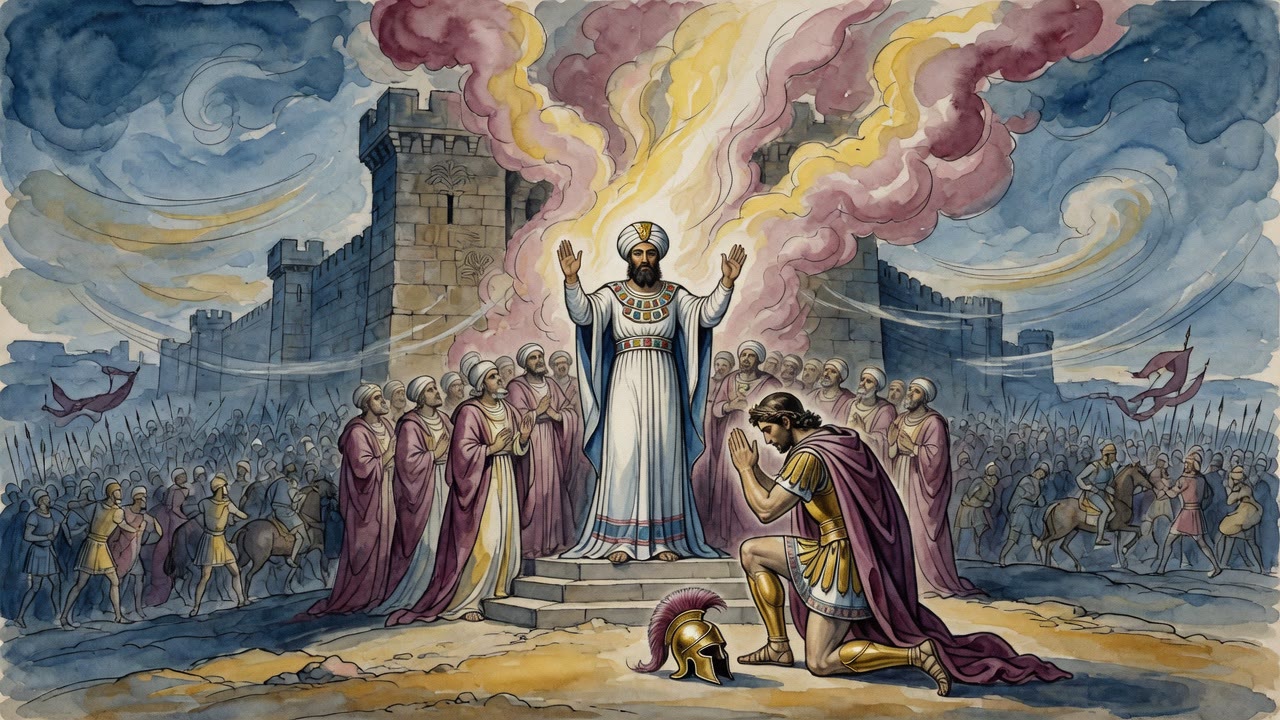
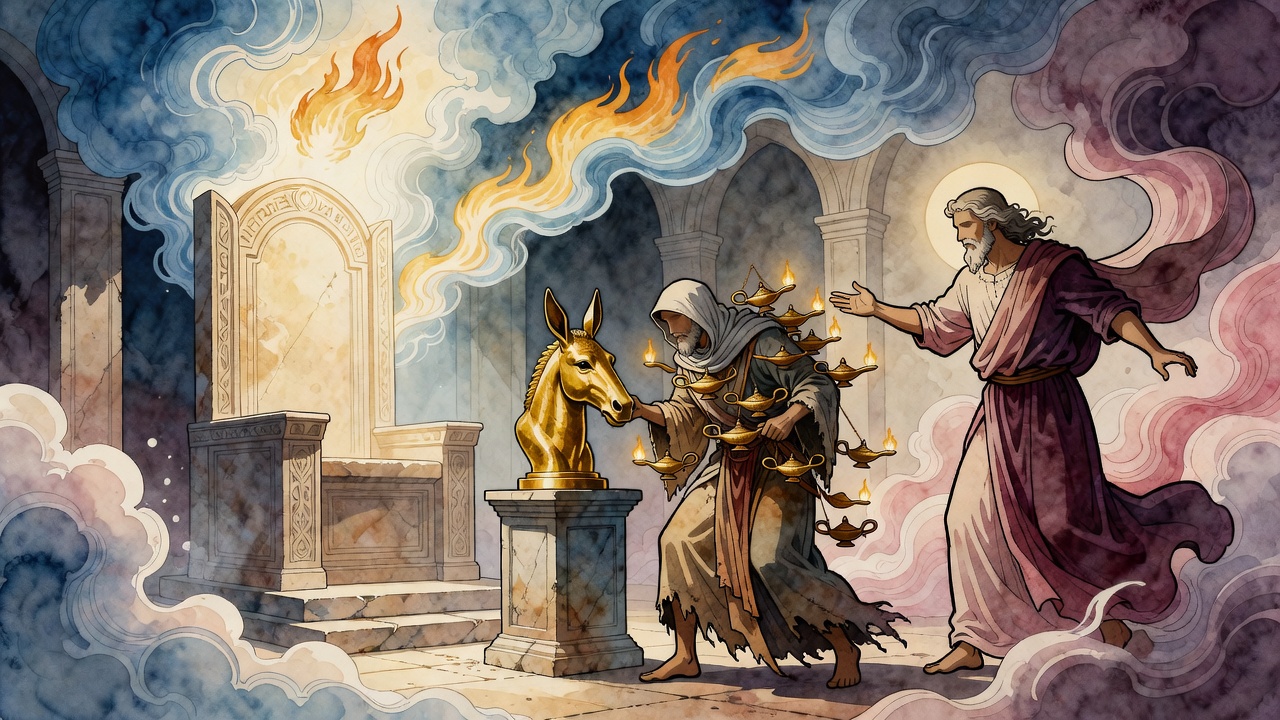
Here is what he swore. During a war between the Judeans and the Idumeans, a man of Idumea named Zabidus, a worshipper of Apollo, went over to the Judeans and promised to hand his own god into their power. Then he built a strange machine. A wooden frame fitted with three rows of lamps, strapped about his body so the whole thing burned as he moved. At night he walked out into the open country between the armies, and the men who saw him fell back in terror. "A star," they whispered. "A star has come down and walks upon the earth."
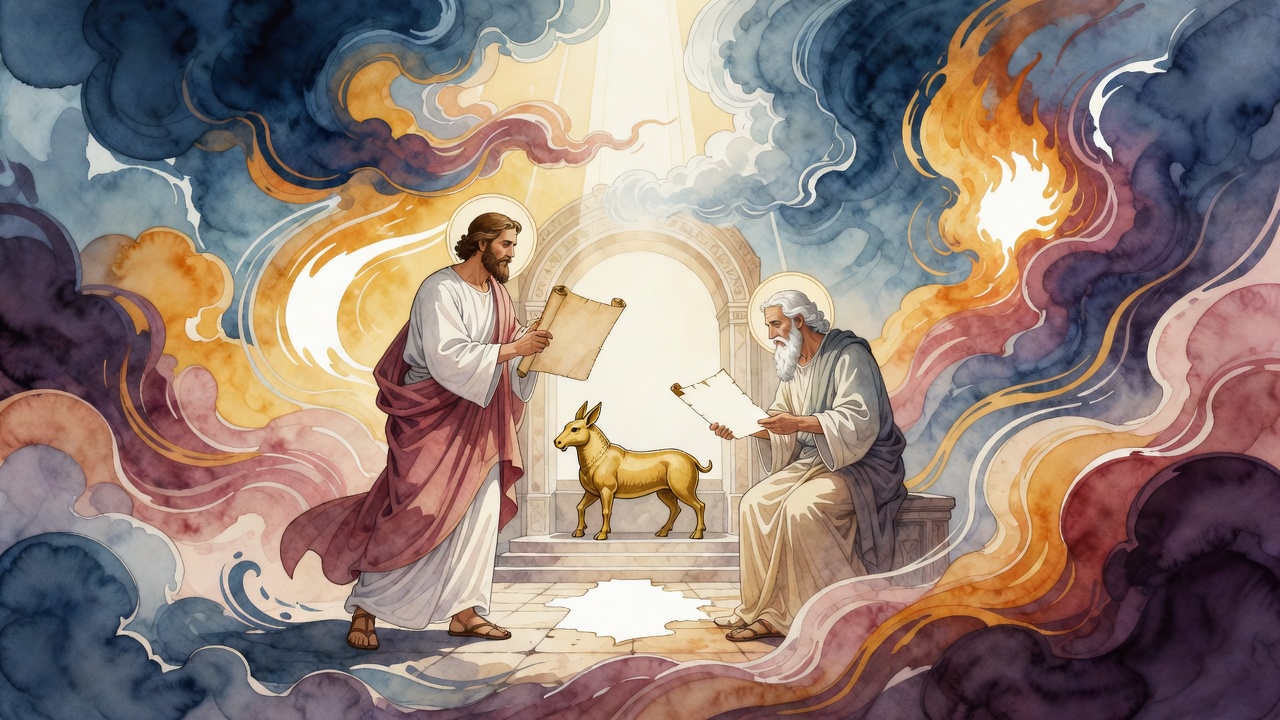
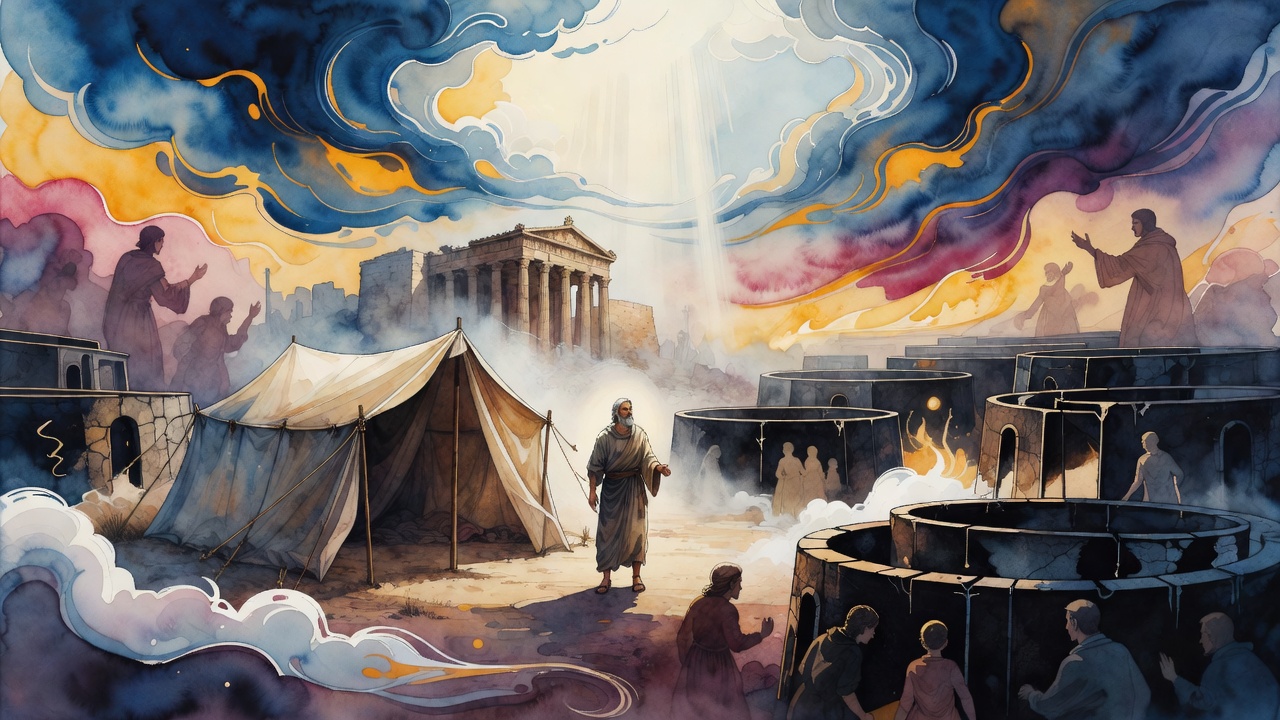
While the country stood frozen, Zabidus walked. Past the sleeping camps. Up to the walls of Jerusalem, which somehow no one was guarding. Through gates that somehow no one had shut. Into the Temple, and past its courts into the innermost room where none but the High Priest might ever stand. There, Apion swore, the lamp-wrapped Idumean lifted away the thing the Judeans were said to keep hidden and adore in secret. The golden head of a donkey. He carried it out beneath his burning frame and walked home to Dora, and the Judeans never knew their god was gone.
The Doors It Took Twenty Men to Close
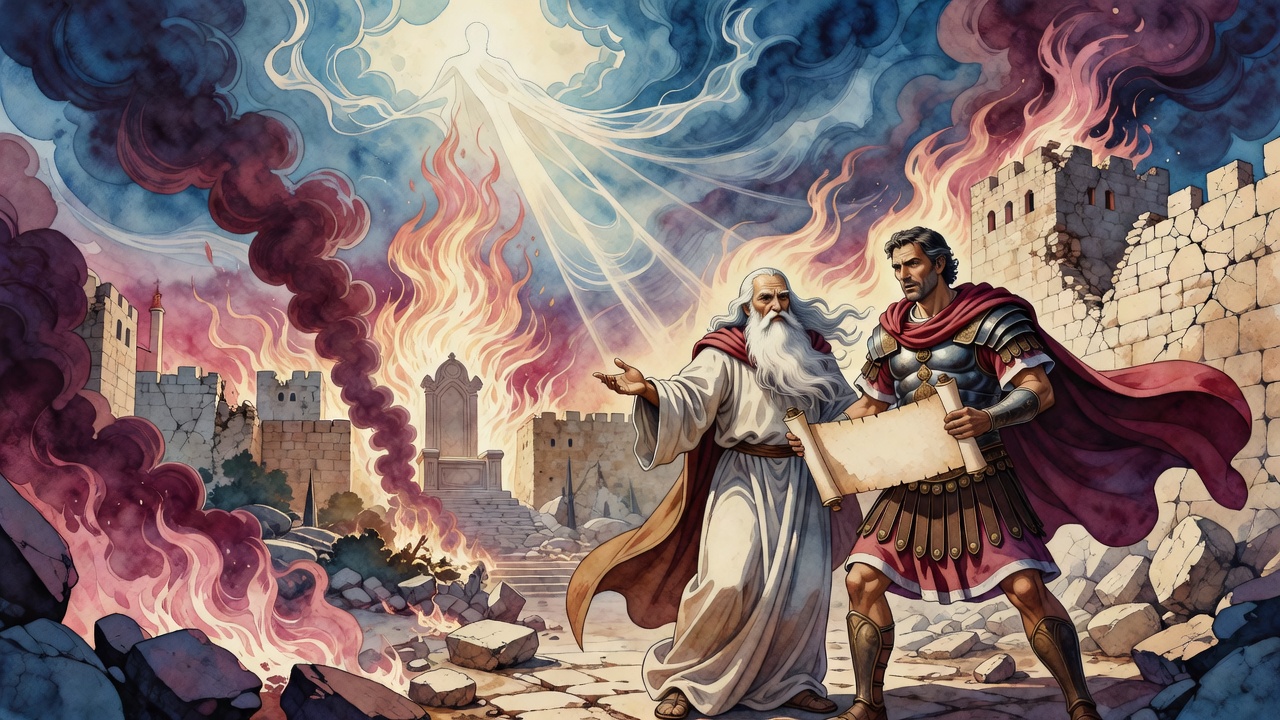
Then Josephus took the story in his hands and turned it over, looking for the seams. "And say you so, sir," he answered, and every line after that was a blade.
Where was this Dora the man strolled home to? Idumea lay beside Judea, down near Gaza, and there was no Dora within reach of it. The only Dora he knew of stood far to the north in Phoenicia, under Mount Carmel, four days off by road. Apion could not hold the map steady for the length of one sentence.
And the walls. A land swarming with soldiers, a war at full heat, and a single man in a rack of lamps crosses the whole of it and not one sentry stops him. He finds Jerusalem open. He finds the Temple open. Josephus had stood before those doors. Seventy cubits high, twenty broad, plated in gold, so heavy that twenty men leaned into them to swing them shut each evening. Apion's own book, garbled by some careless copyist, had swollen that number to two hundred. Those doors were never left standing open, not on any night. And still a man selling lamplight had supposedly wandered in and out.
A People Who Lit Lamps at Every Festival
The donkey almost made Josephus laugh. Here was a nation that kindled lamps at every festival of its year, that kept a lampstand of pure gold burning inside that very house, and Apion imagined them struck senseless with awe by one man wearing candles. Here was a nation accused in one breath of sharing no gods with anyone on earth, and in the next of hoarding a secret idol like every other people around it. Both charges could not stand, and neither did.
He did not know which ending to believe. Perhaps Zabidus carried the head back to Dora. Perhaps Apion had simply set a golden head inside the sanctuary himself, so that some later Antiochus could march in, "discover" it, and breed the next lie out of the first. That was how such fables multiplied. One man invents an idol, and a hundred years later another swears he found it.
The Gods Who Bled and Wept
Then Josephus stopped defending and went on the attack. These accusers who sneered at a people for its God, he said. Look now at the gods they themselves kept.
Some were boys, smooth-cheeked and beardless. Others were greybeards bent with age, and both were called deathless and eternal. Among them worked common tradesmen, a god sweating over a forge with a hammer, a god hunched at a loom. There were gods who marched to war against mortal men and lost, who bled where the spear went in, who brawled with one another and traded blows in full view of the world.
And the lust of them. The one they set highest, a father of gods, could not master his own body. He crept into his own wife's bedchamber like a burglar. He scattered children across heaven and earth and then stood aside while the women he had ruined were chained in prison or flung into the sea. Bound so tightly by fate that he could not save his own sons, this ruler of all things wept over their graves like any broken mortal. "These are fine things," Josephus said, and meant none of it.
The Cities That Bribed Their Gods Like Thugs
It went lower still. Adultery in heaven, admired and even envied. Gods sold into service, raising walls for a wage, driving another man's flocks to pasture. Gods clapped in irons like common thieves. Men had taken fear itself, and madness, and fraud, and cowardice, and lifted these up as gods to be worshipped.
And beneath them knelt whole cities, sacrificing out of dread. They coaxed the givers of good and bought off the bringers of harm, pressing gifts on their gods the way a traveler presses silver on the cruelest brigand on the road, asking only to be let past unhurt. That, Josephus wrote, was the faith of the men who dared to laugh at Jerusalem. He set down his pen against a golden donkey that never was, and left the beardless boys and the weeping king and the shackled thieves standing in their own heaven, waiting for their bribes.
← All myths