The Honey on Jonathan's Staff Nearly Killed Him
The army chased Philistines all day on empty stomachs. Jonathan, deep in the woods, had never heard the oath that nearly killed him by nightfall.
Table of Contents
 Click for full size
The Oath That Reached the Forest Late
Saul bound the army with a curse before the pursuit began. Any man who tasted food before evening would die. The words went out over a camp already thin with hunger, and the men chased Philistines all day with nothing in them.
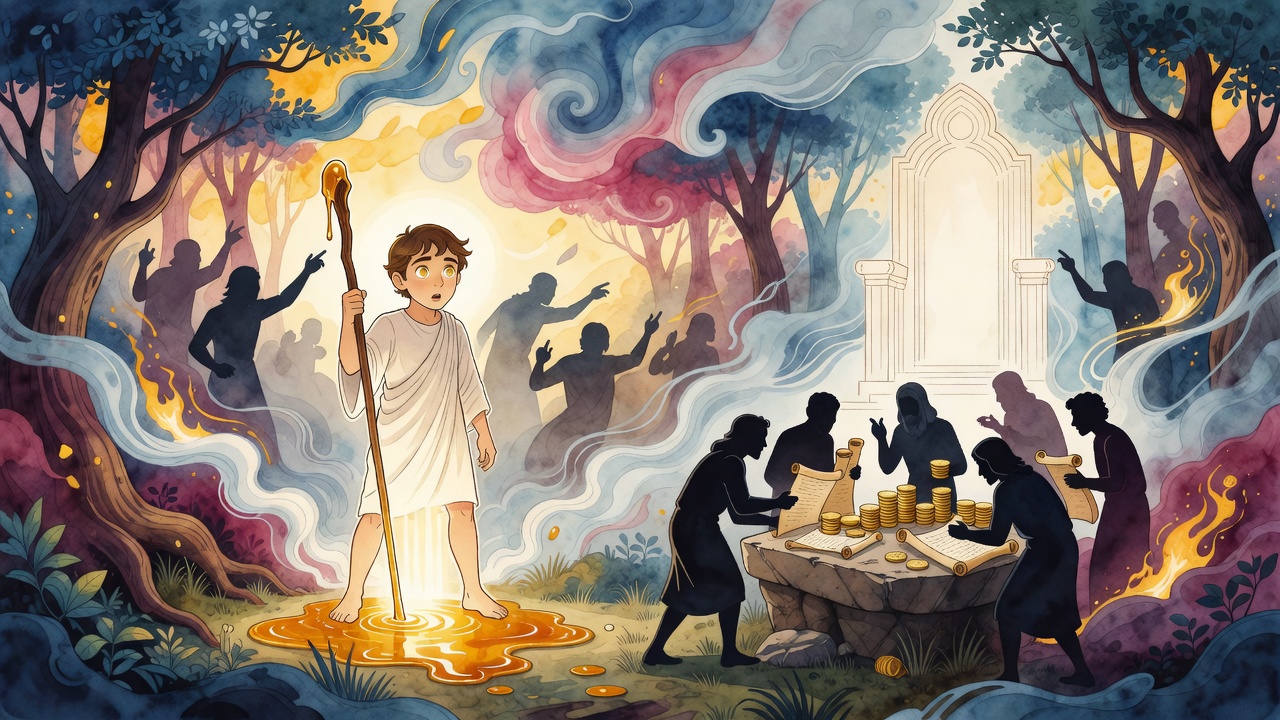
Jonathan was in the trees when the oath was spoken. Nobody carried it to him. He came on honey running from a comb onto the forest floor, put out the staff in his hand, dipped the end, and touched it to his mouth. Strength came back into his arms. His eyes brightened. He kept moving.
The Lot Points at the King's Son
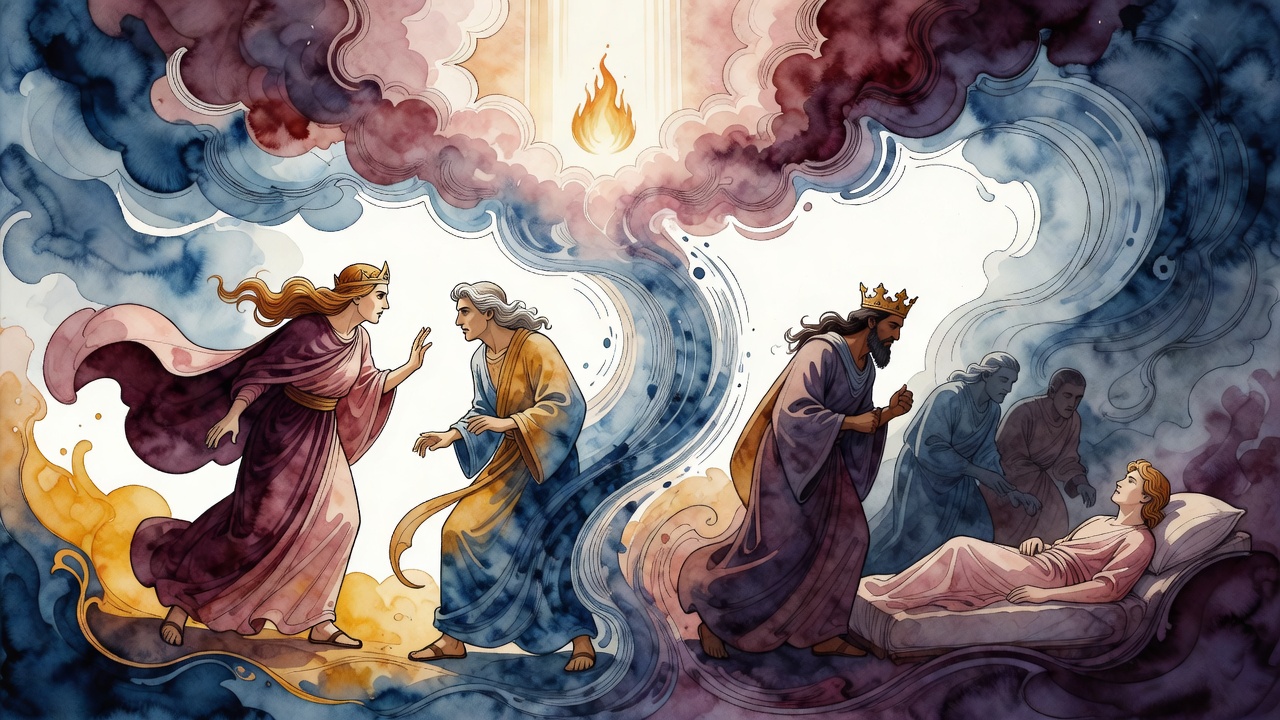
That night the lot was cast. It fell on Jonathan.
Saul heard the answer and did not soften it. He had sworn in the hearing of the whole camp, and a king who breaks his own curse has taught an army that his mouth means nothing. So he said his son must die. The man who had broken the Philistine line that morning stood condemned by a sentence he had never heard passed, for a mouthful of honey he had eaten alone in the woods.
The People Stand Between the Sword and the Boy
The army would not have it. "Shall Jonathan die," they cried, "who has wrought this great deliverance in Israel?"
Rabbi Elazar taught that they did not argue him free. They bought him. Gold went onto one pan of a scale and the weight of Jonathan's body onto the other, coin after coin, until the metal balanced a living son, and they carried him out of the sentence the way a field is carried out of debt.
Three Sages Weigh a Mouthful
Rabbi Yochanan came at it from the other side. Did Jonathan eat bread? He ate no bread. He ate honey.
Rabbi Shimon ben Lakish pressed harder. Did he eat at all? A staff-end touched to the tongue is not a meal. It was a tasting and nothing more. And Rabbi Ba the Pious, son of Rabbi Ze'ira, had already ruled what a tasting is worth in law: it is bound by no rule of eating and no rule of drinking, it breaks no fast, and it requires no blessing over it.
Which means the oath was never crossed. The curse had reached for a man who stood outside it the whole time. The people redeemed Jonathan, and he did not die.
The King Who Began Forgiven
Saul's own beginning had run the other direction. Scripture says he was a year old when he became king, and no grown man is a year old. He was a year old in the way a child is, with nothing behind him to answer for. Heaven had wiped the slate on the day the oil touched his head.
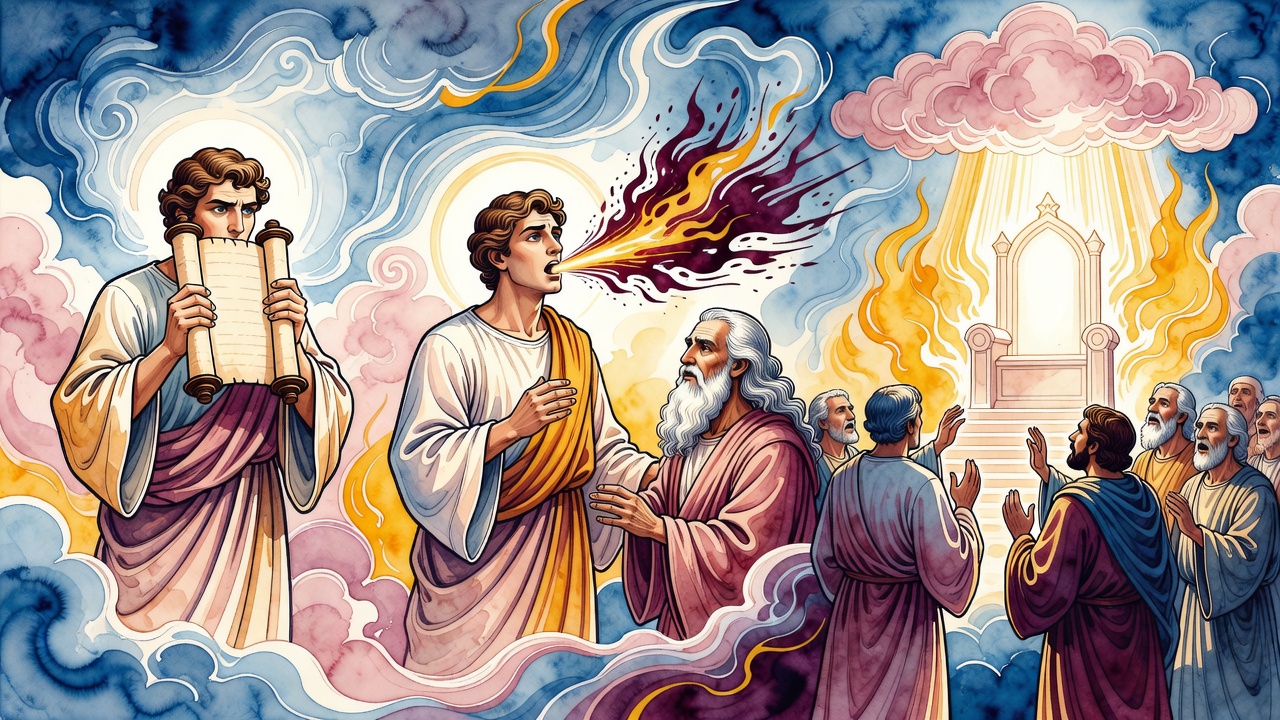
Generations later Rabbi Zeira ran from that same oil. They came to ordain him and he refused, unwilling to carry a community on his back. Then he heard the teaching: three stand forgiven on the day they are raised, a sage newly appointed, a bridegroom, and a nasi over the people. The sage is learned from the convert, pardoned everything on the day he enters. The bridegroom is learned from the wife the Torah calls Mahalath though her name was Basemath, because on his wedding day Esau was pardoned, mochalah, every transgression. And the nasi is learned from Saul, clean as an infant who has never yet tasted the taste of sin.
Zeira accepted the appointment. Saul had accepted a throne on those terms once.
Honey Still on the Staff
The mouth that began its reign forgiven everything spent one night swearing a hungry army into a curse, and then would not take the curse back off his own son.
The people took it back for him. They weighed gold. They split hairs over what a tongue can touch and still be innocent. When the shouting stopped, the smear of comb was still on the staff and Jonathan was still standing in a camp that had refused to let its deliverer die for a taste of sweetness in a forest where no one had told him anything.
← All myths