The House of David Was Founded on Executions
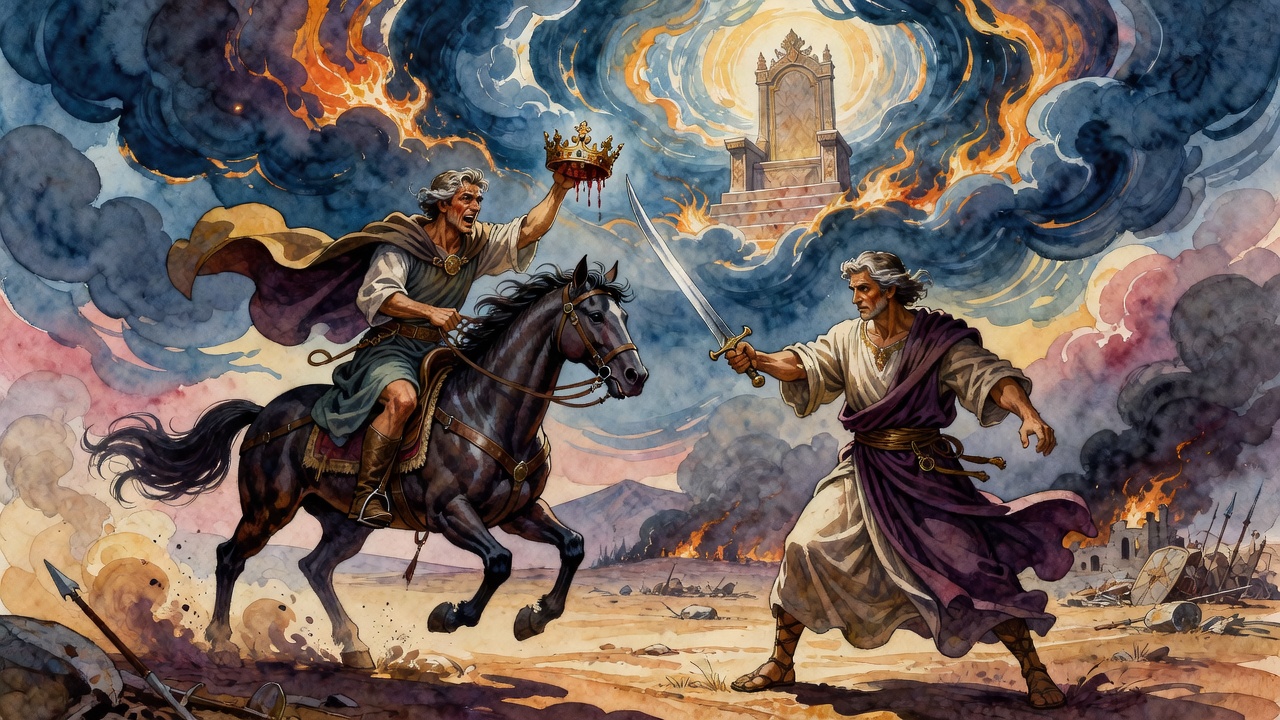
An Amalekite rode into Ziklag with Saul's crown, expecting a reward for finishing the wounded king. David had him cut down where he knelt.
Table of Contents
 Click for full size
The Crown Came Into Ziklag on a Dead Man's Arm
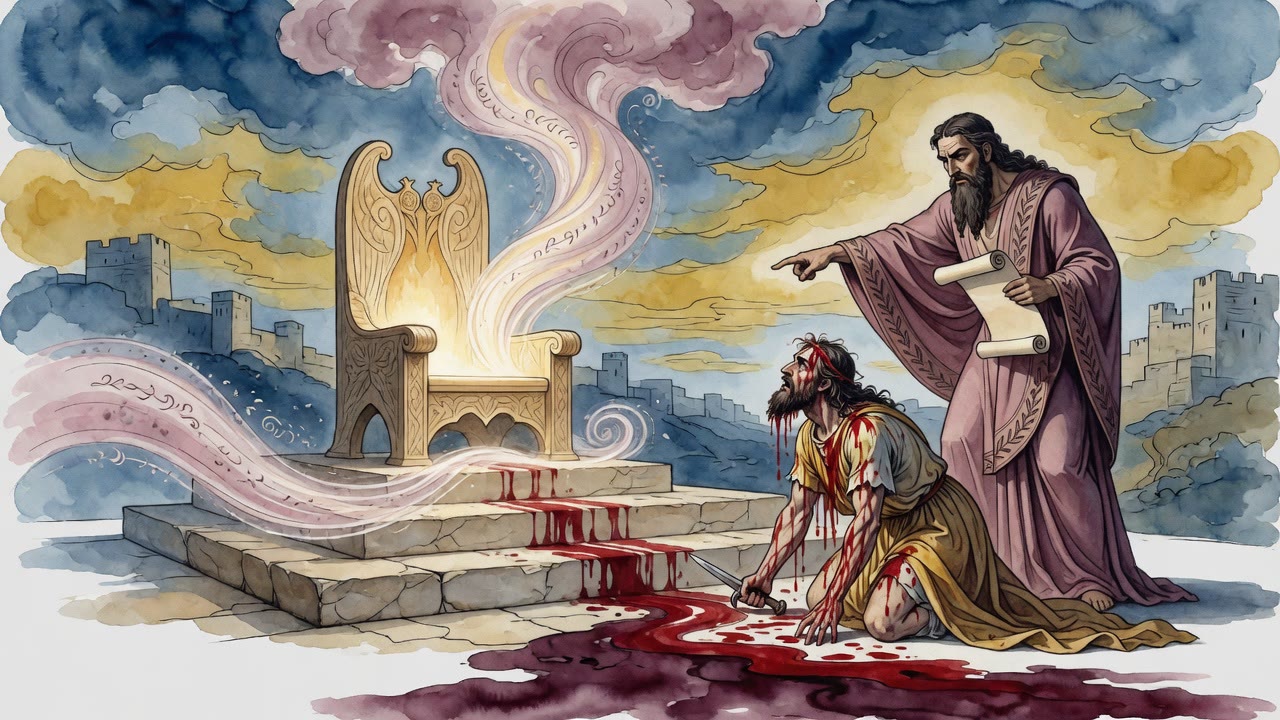
The rider reached the camp at Ziklag at a gallop, and he was smiling. On his arm he carried a golden bracelet, and in his hands a crown still warm from the head it had circled. He knelt before David and told him how he had come by them. He had found Saul wounded on the field, the king begging to die, and he had finished the work himself, a mercy, one soldier to another. He had ridden day and night to lay the crown of Israel at David's feet before anyone else could. He expected gold. He expected thanks.
David did not take the crown. He asked the man how his hand had not trembled to strike the anointed of the Lord. Then he had him cut down where he knelt. The Amalekite died still holding the proof of his own good news.
What followed was not celebration. David tore his clothes and wept the whole day, not only for Jonathan, the friend closer to him than any brother, but for Saul, the king who had hunted him across the wilderness for years. He made a lament for both of them, a song that men were still singing generations later.
David Would Take No Throne Built on Treachery
The throne did not simply fall to him. God sent him up to Hebron, and there the tribe of Judah anointed him. Only Judah. Saul's general Abner crowned the dead king's surviving son Ishbosheth over the rest of Israel, and the two houses went to war.
It was ugly from the first hour. At the pool of Gibeon twelve of David's men and twelve of Abner's seized each other by the hair and drove their swords home in the same instant, and all twenty-four fell together. In the rout that followed, Asahel, fast enough to run down a horse, chased Abner and would not turn back though Abner begged him. Abner killed the boy with one backward thrust of his spear.
Then the killing turned quiet and political. Abner, insulted by Ishbosheth over Saul's concubine Rizpah, changed sides and promised David the north, and he brought back Michal, David's first wife. Joab, David's own general, saw a rival and lured Abner back into the gate of Hebron and stabbed him there, calling it vengeance for Asahel. David cursed the deed aloud and wept over the body until the whole nation believed his hands were clean. When two of Ishbosheth's officers murdered their master in his bed and carried the head to Hebron for a reward, David had them killed too. He would sit on no throne raised by assassins.
Only then did every tribe come to Hebron and make him king over all of them. His first act as one king over one people was to take Jerusalem from the Jebusites, who had lined their walls with the blind and the lame to mock him. Joab was first up the rock face, and for that he kept command of the army. David called the fortress the City of David and never left it.
The Son Emptied the Room His Father Left Him
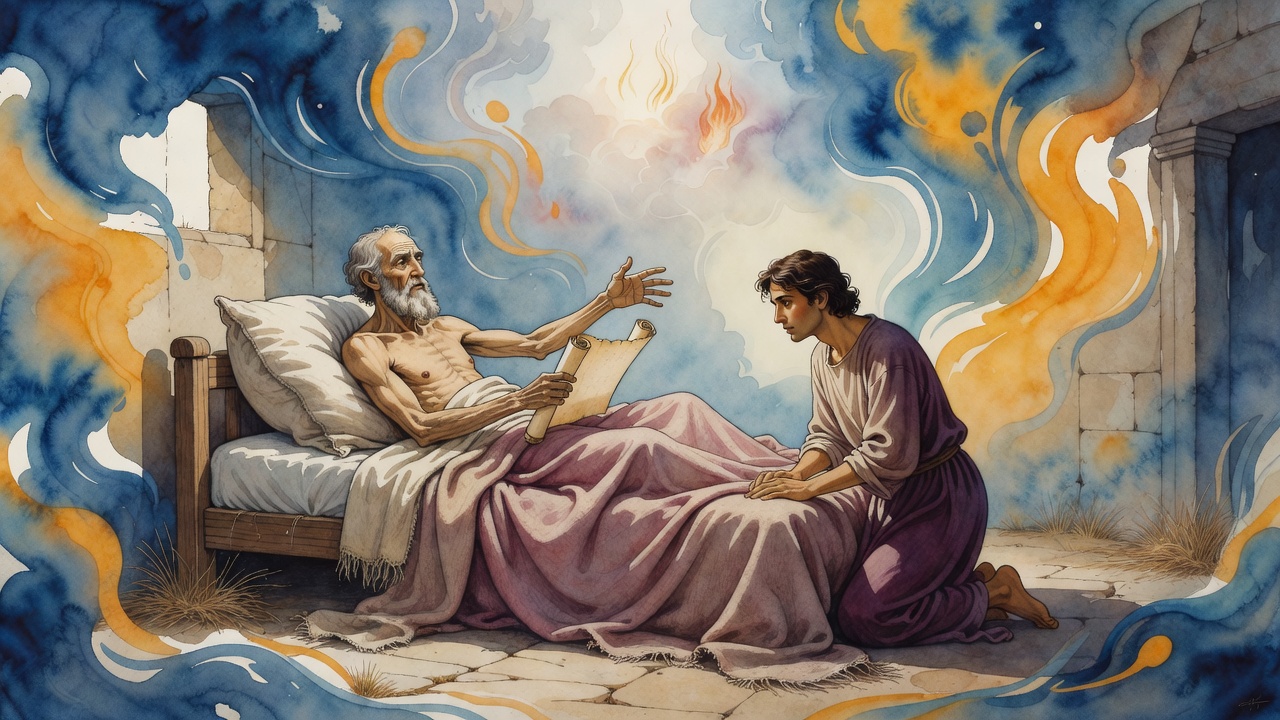
Solomon began his reign by clearing the room, and he did it fast. His older half brother Adonijah, who had already reached for the crown once, asked Bathsheba to carry one small request to the new king, the hand of Abishag, the young woman who had lain against the dying David to keep him warm. Solomon heard it and knew it at once. A dead king's woman was a claim on a dead king's throne. He sent Benaiah, captain of the guard, and Adonijah did not see another morning.
The priest Abiathar had backed Adonijah, and Solomon stripped him of the priesthood and sent him to his fields. He spared the man's life only because Abiathar had carried the Ark beside David through all the hard years. The office passed to Zadok, and an old sentence spoken against the house of Eli came due at last.
Joab Died Gripping the Horns of the Altar
Joab heard that Adonijah was dead and did the arithmetic. He ran to the sanctuary and seized the horns of the altar with both hands and swore he would die there before he would be dragged out to trial. Solomon did not blink. He sent Benaiah with an order to strike him down where he stood, and the blood Joab had spilled in the gate of Hebron, and Amasa's blood after it, came back onto his own head at the altar he had run to for cover.
One man was left. Shimei had once stood on a hillside and cursed David as he fled his own son, and Solomon gave him a strange leash: build a house in Jerusalem and never cross the brook Kidron. For three years Shimei kept inside the line. Then two of his slaves ran off to Gath and he rode out after them, and when he came back Solomon was waiting. "Did you not swear never to leave," the king said, "and break your oath to God?" Benaiah did the rest.
At Gibeon He Asked for the Wrong Thing
The list was empty now. The blood had dried. Solomon married the daughter of Pharaoh, raised the walls of the city higher, and then rode up to the high place at Gibeon, where the bronze altar Moses had built still stood, and burned a thousand offerings on it until the smoke hid the hills.
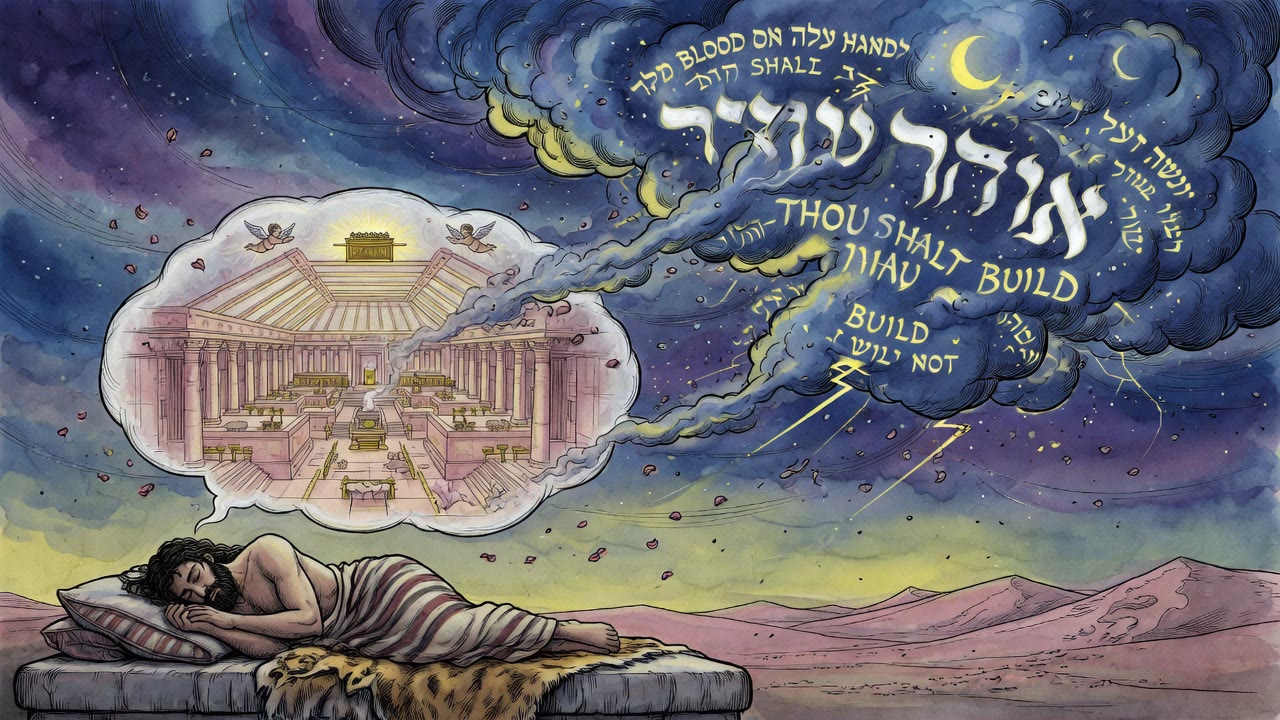
That night God came to him and offered him anything he could name. He was young. The whole court would have understood a boy who had just killed his way to safety asking for a long life, or an army that could not lose, or gold enough to bury every rival left standing. Solomon asked for none of it. "Give me, O Lord, a sound mind and a good understanding," he said, "that I may hear this people and judge them by truth and righteousness." He had opened his reign with the sword. He knelt at the altar and asked instead for the one thing no sword could win him, and God, pleased that he had not asked for power, gave him power too.
← All myths