4 min read

Solomon Brought Joab's Bloodguilt to Judgment

David left Solomon a throne and one brutal command: bring Joab's bloodguilt to judgment before it followed him beyond death.

Curated by Arthur · Told by Maggid ·
Table of Contents
  1. The Command Left at the Bedside
  2. The General Fit for the Academy
  3. The Blood That Would Not Sleep
  4. Solomon Took the Crown and the Debt
  5. A Fire Without Flame

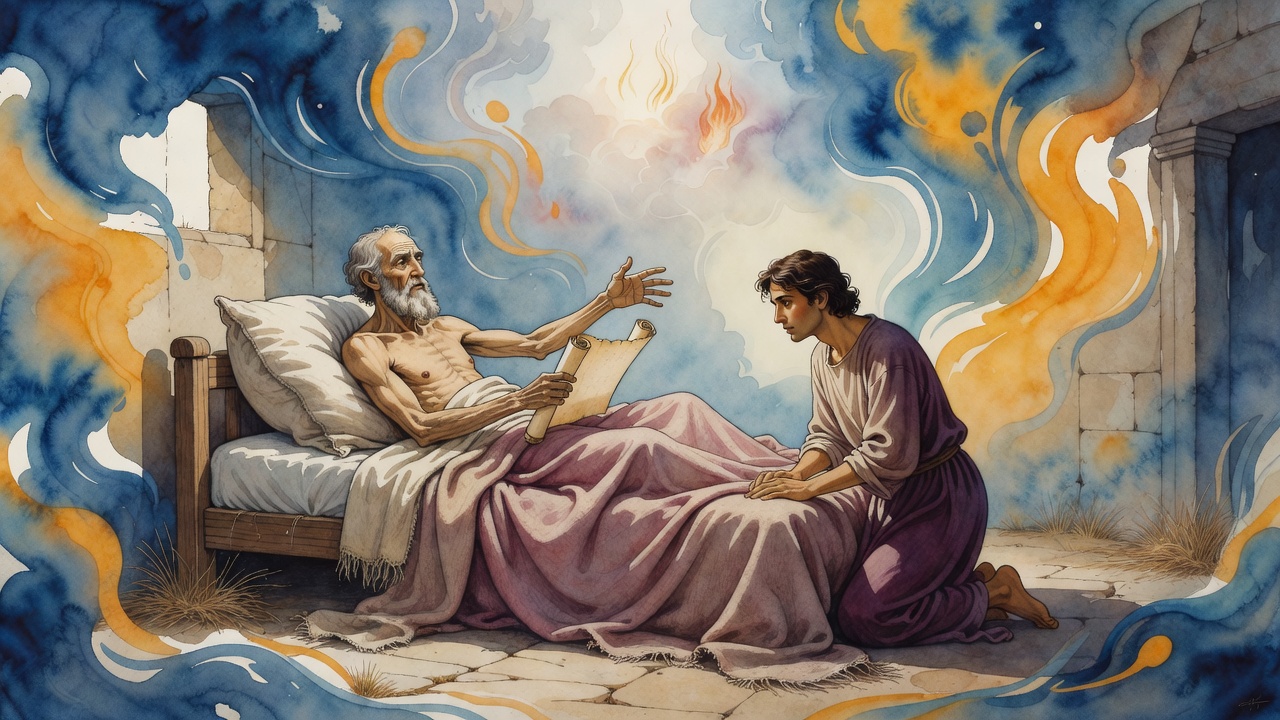
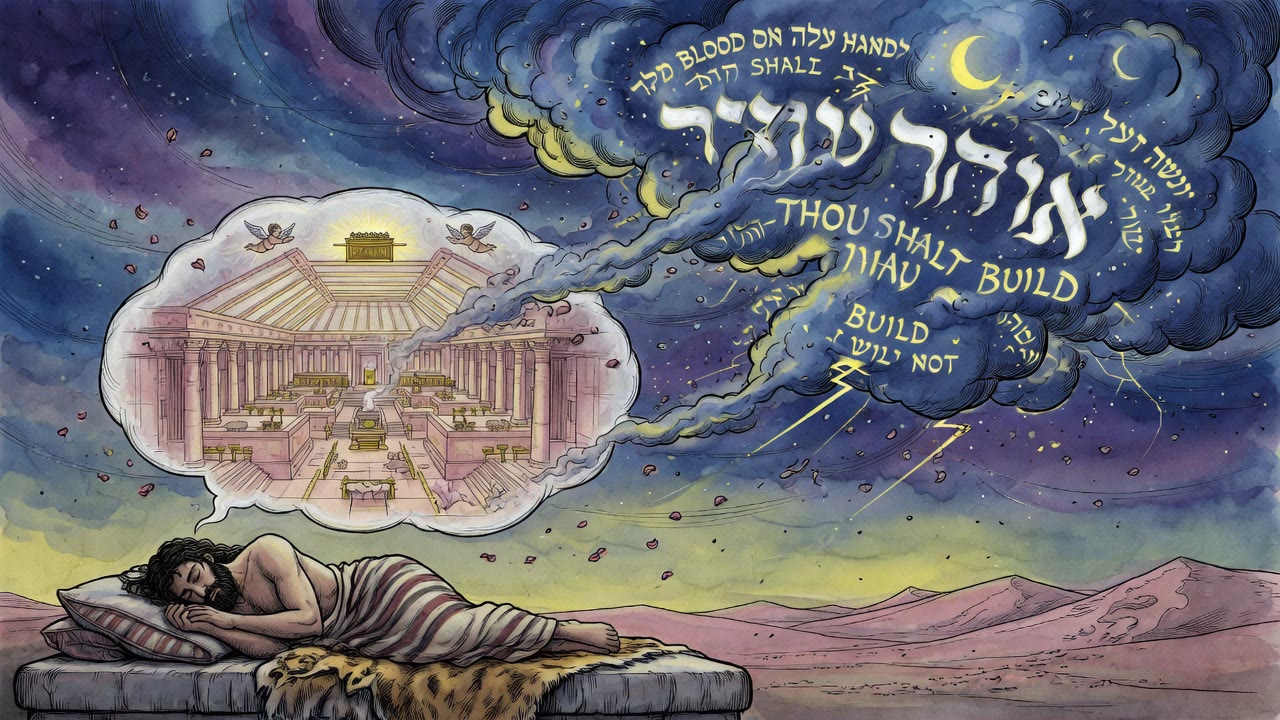
David was dying with one command still too heavy for his own hands.
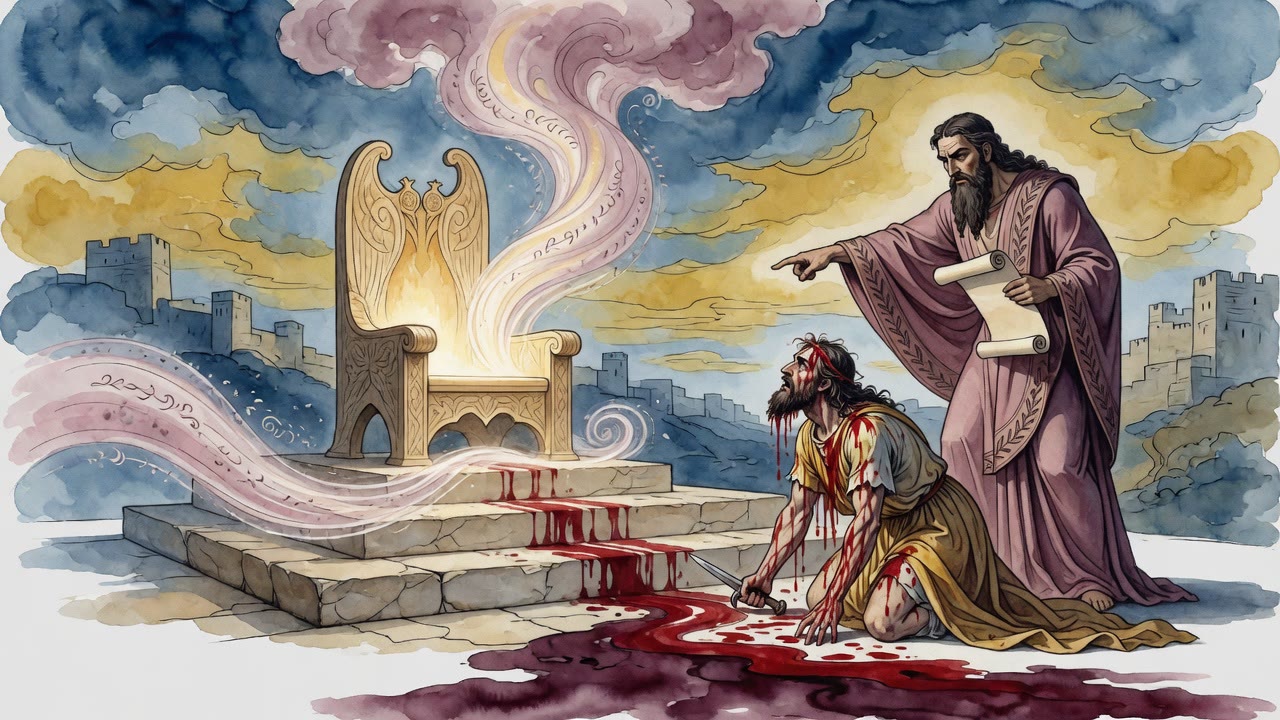
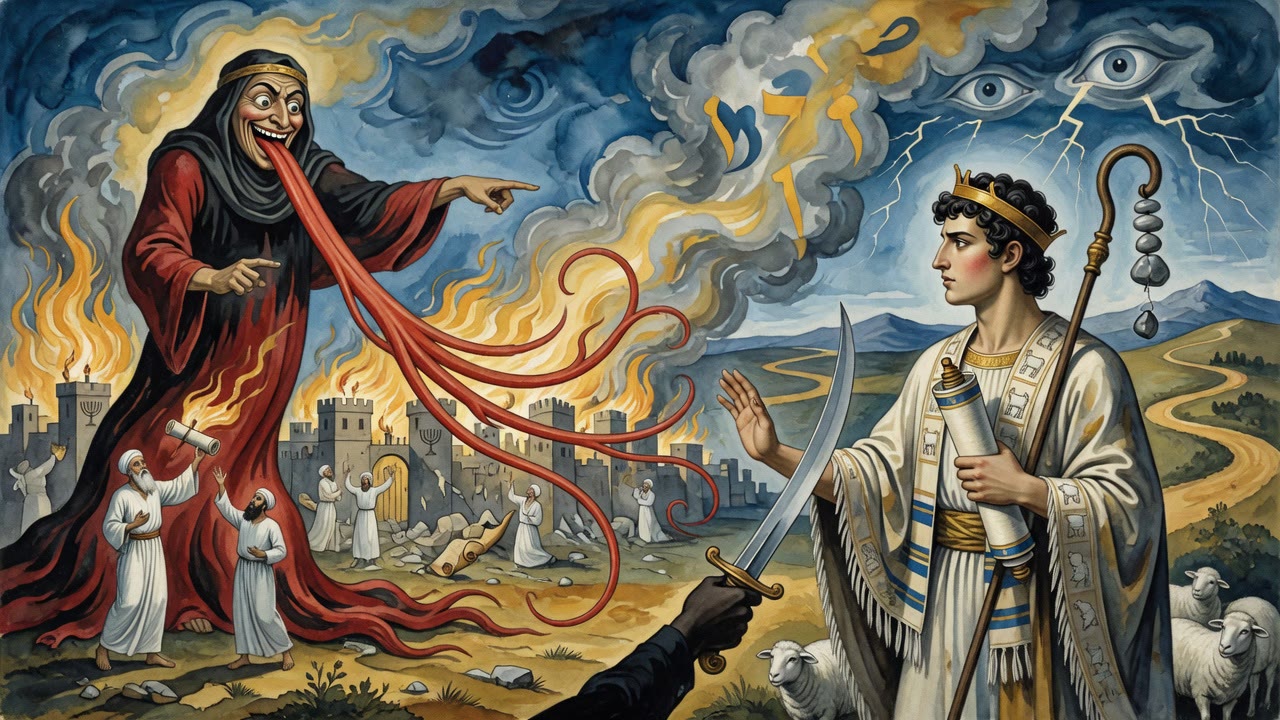
The old king had survived wars, betrayals, rebellions, and the humiliation of watching his own household split open. He had punished enemies. He had buried sons. But Joab remained. The general who had carried David through battlefield after battlefield still stood inside the kingdom like an unsheathed blade.

The Command Left at the Bedside

Solomon came to his father's bed and received more than a crown. He received unfinished blood.

David did not frame the order as revenge. Joab had to answer in this world, where a human court, a king's word, and a soldier's sword could finish what justice required. If the guilt stayed untouched, it would follow Joab beyond the grave. A punishment carried out in the flesh could become, in the hard mercy of the old king, a way of sparing the soul from a heavier accounting.

That was the terrible tenderness of the command. David could not bear to lift the blade against the man who had won his wars. He could not pretend the blood had dried clean.

The General Fit for the Academy

Joab was not a small man swollen by violence. That would have made the judgment easier.

He was the kind of mind that could have stood at the head of the academy, the bet midrash, with students around him and Torah arguments moving through the room like sparks. He had the intelligence to lead scholars and the nerve to lead soldiers. On the field, he knew how to read panic before it spread. In council, he knew where power hid its weak joint.

This made him more dangerous, not less. A fool can spill blood and leave only ruin behind. Joab could spill blood and explain it, justify it, fold it into loyalty, make murder wear the uniform of necessity.

The Blood That Would Not Sleep

Two names stood first: Abner and Amasa.

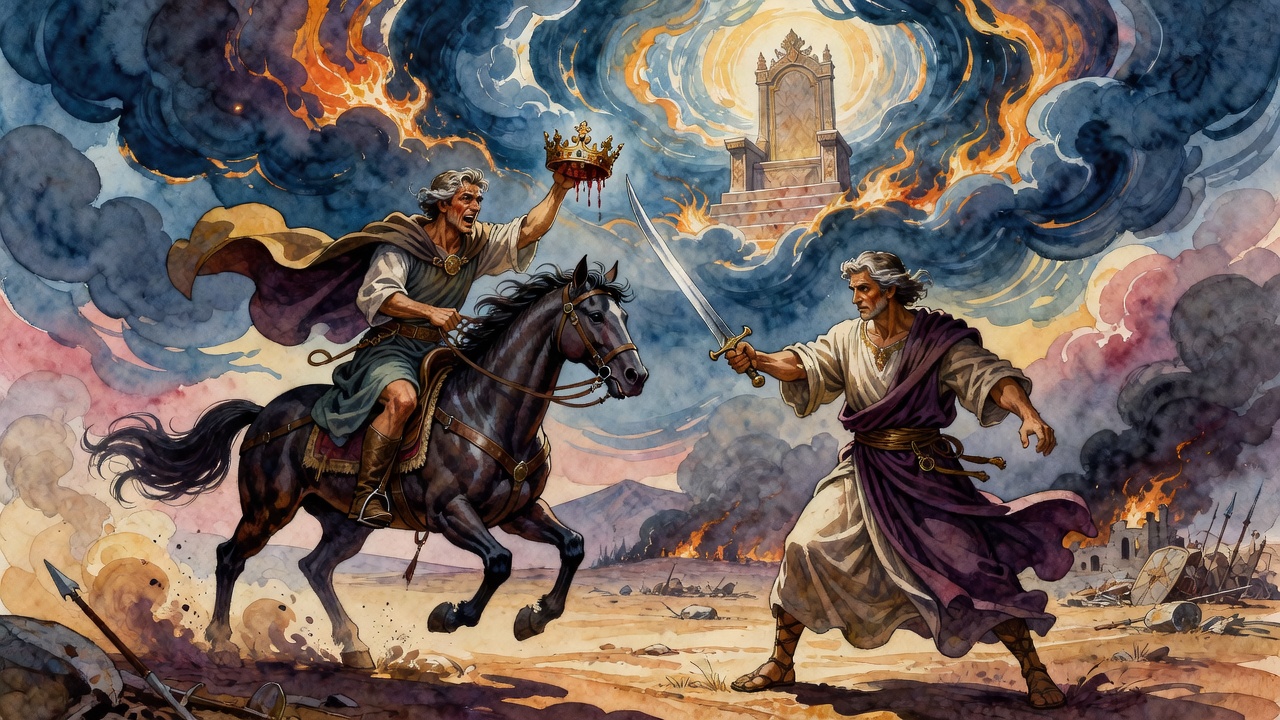
Abner, commander of Saul's army, had been killed in a time that should have opened peace. Amasa, another general, had been cut down during what should have been reconciliation. Joab knew exactly how to make a sword enter a political moment. He could turn a greeting into a wound before the room understood that death had arrived.

There was also the shame inside David's own house. Joab had exposed the king's letter about Uriah the Hittite, the letter that sent an innocent man toward death so David could take his wife. He let the generals know the king's guilt was written in ink, not rumor. Even loyalty became a weapon in Joab's hand. He could serve David and injure him with the same act.

Solomon Took the Crown and the Debt

David died. The throne passed. The debt came due.

Solomon did not share his father's old campaigns with Joab. He had no memory of desperate marches where the general's cunning saved the army. He had not leaned on Joab's strength for decades, had not watched him become indispensable, had not made the compromises that turn a dangerous servant into a necessary one.

That distance made Solomon clean where David had been tangled. The new king could see Joab as a case of bloodguilt rather than a lifetime of victories. He could hear the charge without hearing every trumpet that had once announced Joab's success.

So the order went out.

A Fire Without Flame

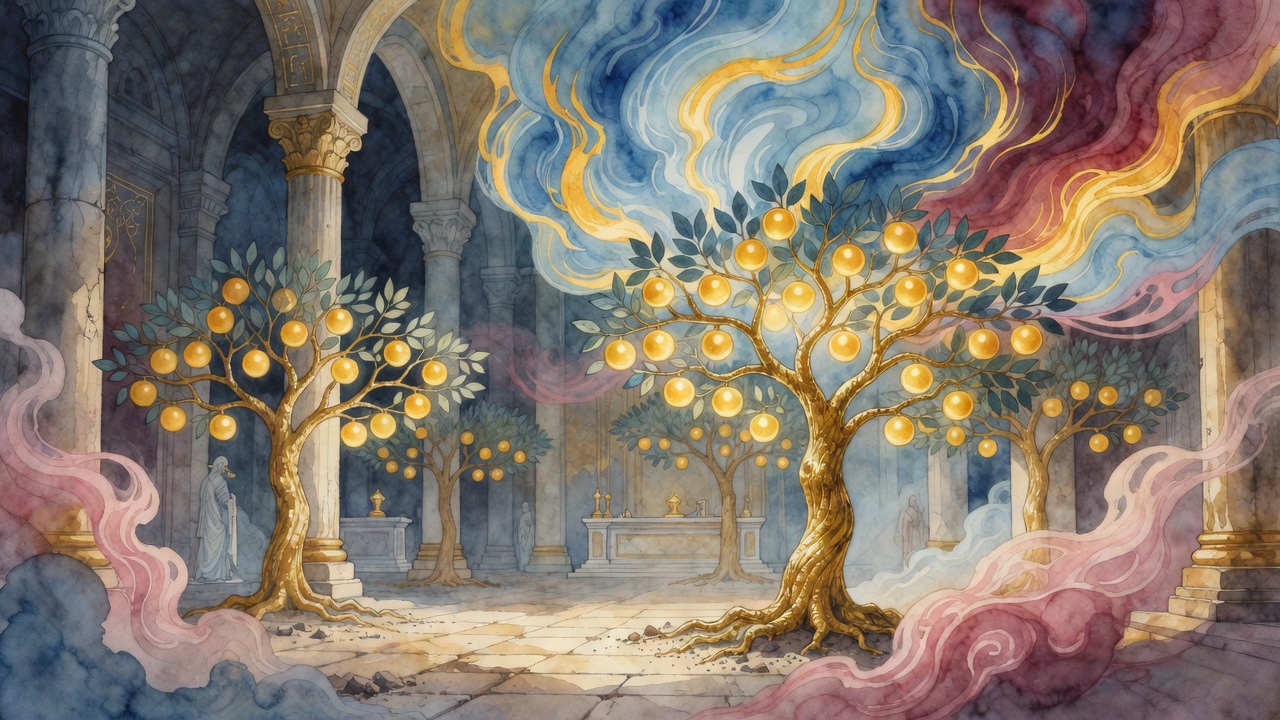
Fire comes down in the old accounts for honor and for correction. It consumes offerings when heaven accepts them. It also burns when the world needs to be forced back into order.

No flame fell on Joab. No visible blaze crossed the court. The heat had been gathering for years in quieter materials: a deathbed command, two murdered generals, a letter about Uriah, a son willing to do what his father could not do.

By the time Solomon acted, the kingdom had already learned the shape of the verdict. Brilliance did not erase blood. Loyalty did not purchase immunity. A man fit to lead the academy could still be called to account by a king young enough to have no reason to flinch.

David left the world with Joab still alive. Solomon made sure the command did not stay alive after him.


← All myths

From the tradition

Sources

3 sources

The texts this telling draws on, in full. Open a card to read inline, or expand it for a wider, quieter read.

Legends of the Jews 5:6Legends of the Jews

Sometimes, there's a little unfinished business to take care of. And in the case of King Solomon, that unfinished business came in the form of his father, David’s, final instructions.

Being Solomon, inheriting not just a kingdom, but a to-do list from beyond the grave. And right at the top of that list? Dealing with Joab.

Joab wasn't just some random guy. He was David's right-hand man, his top general. According to some accounts, he even had the intellect to head up the Academy, the bet midrash (house of study), a place of Torah scholarship! He had all the qualities needed to lead in ancient Israel. But here's the thing: even the most capable people can make some serious mistakes.

Joab? Well, he'd made a few doozies.

We're not just talking about a little white lie or a missed deadline. We're talking about murder. Two murders, actually: Abner and Amasa. The blood was on his hands. But according to the biblical narrative, that wasn't all. He was also suspected of arranging the death of Uriah the Hittite, and even worse, he used David's own letter – the one that sealed Uriah's fate – to cover his tracks! for a second. Betrayal on multiple levels.

Now, you might be thinking, why didn't David just deal with Joab himself? Why leave it to Solomon? The text hints that David may have considered forgiving Joab. But, and this is key, David wanted Joab to atone for his sins in this world. Why? So that Joab might be spared punishment in the world to come. A fascinating concept. That earthly consequences could somehow lighten the spiritual load in the afterlife. We see that concept echoed in the Talmud.

So, Solomon, fresh on the throne, had a heavy task before him. He had to balance justice, mercy, and the wishes of his late father. It was a test of his wisdom, right from the start. What would you do?

Full source
Legends of the Jews 4:54Legends of the Jews

Fire that blazes with purpose, either as a sign of God's favor or His… well, let's just say, His displeasure. Fire is powerful, transformative. It can create and destroy. And in Jewish tradition, it's often a direct manifestation of the Divine.

In rabbinic tradition, God sent a Divine fire down to Earth not just once or twice, but a whopping twelve times! Ginzberg, in his monumental work, Legends of the Jews, breaks them down neatly: six times as a gift, a symbol of honor; and six times as, shall we say, a cosmic course correction.

Six times, fire descends as a kavod, an honor, a sign of divine acceptance. Remember the consecration of the Mishkan, the Tabernacle in the desert? Fire from Heaven consumed the offerings, a clear sign that God was present and pleased (Leviticus 9:24).

Then there’s Gideon, that reluctant hero. He offers a sacrifice, and bam! Fire leaps up and consumes it (Judges 6:21). The same thing happens with Manoah, the father of Samson (Judges 13:19-20). And David, too, experiences this Divine validation (1 (Chronicles 21:2)6).

And who could forget the dedication of Solomon's Temple? Talk about a spectacle! Fire rained down from the heavens, consuming the burnt offering and the sacrifices (2 Chronicles 7:1). A clear sign that God was dwelling amongst His people.

Finally, there's Elijah on Mount Carmel (1 (Kings 18:3)8). Facing off against the prophets of Baal, he calls upon God, and fire descends, consuming the offering, the wood, the stones, even the dust! Talk about a mic drop moment.

So, six times fire represents Divine favor. But what about the other side of the coin? The six times fire comes as a punishment? These are much darker tales.

First, there's the tragic story of Nadav and Abihu, the sons of Aaron. They offered "strange fire" before the Lord, and fire came forth and devoured them (Leviticus 10:1-2). A stark reminder that ritual and intention matter.

Then, there's the fire that broke out among the Israelites when they were grumbling and complaining in the desert (Numbers 11:1). A reminder that discontent can have fiery consequences.

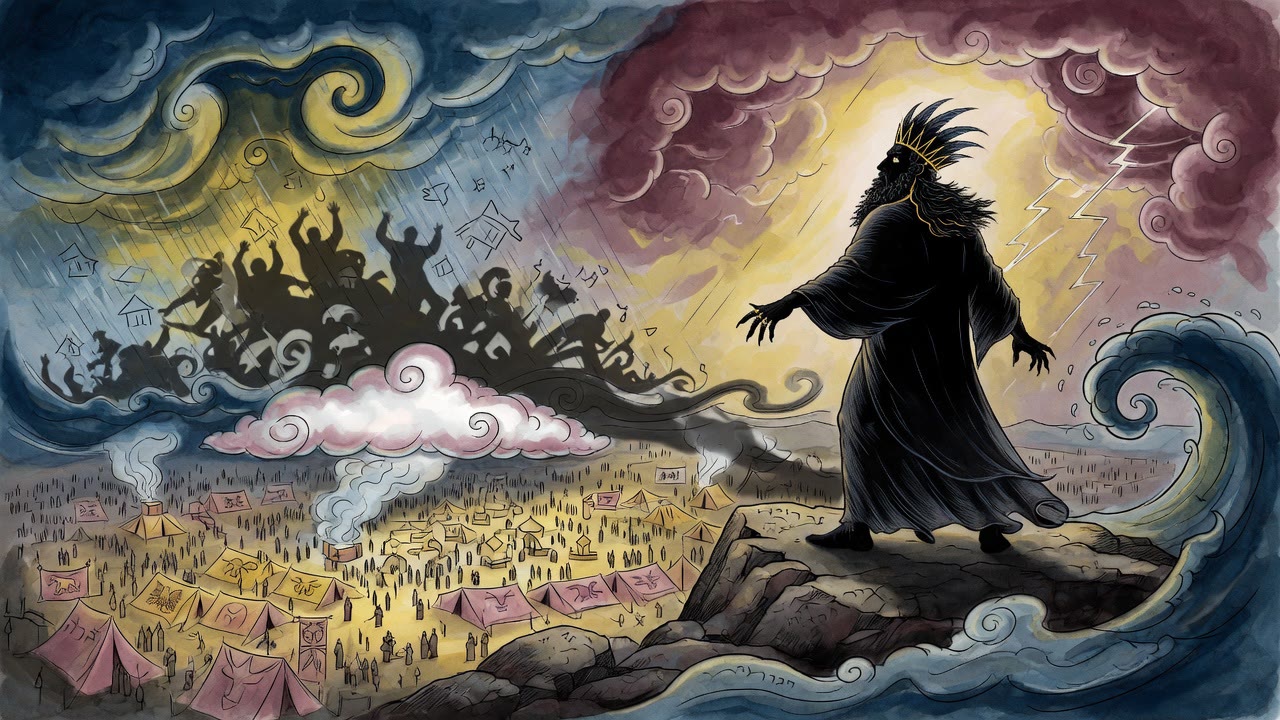
And who can forget Korah and his rebellious crew? They challenged Moses' authority, and the earth swallowed them up, and then fire came and consumed the 250 men who offered incense (Numbers 16:35). Ouch.

Even Job, that paragon of righteousness, wasn't immune to fire's destructive power. In his trials, fire consumed his sheep and the servants tending them (Job 1:16). A reminder that even the righteous can suffer loss.

Finally, there are the two fires that consumed the first and second troops that Ahaziah sent against Elijah (2 (Kings 1:10-1)2). Elijah, in his righteous indignation, called down fire from heaven, twice! A evidence of the prophet's power and God's protection of His messengers.

So, twelve instances. Six of blessing, six of judgment. It's a powerful image, isn’t it? Fire, as a direct expression of the Divine will. It makes you think about the power we wield, the choices we make, and the kind of "fire" we bring into the world. Is it a fire of creation, of devotion, of building? Or a fire of destruction, of anger, of tearing down? Maybe, just maybe, these ancient stories can help us choose wisely.

Full source
Legends of the Jews 5:16Legends of the Jews

The story comes to us courtesy of Ginzberg's masterful retelling in Legends of the Jews, drawing from the wellspring of Jewish tradition.

The air is thick with unspoken accusations. Solomon confronts Joab, a powerful and somewhat controversial figure in David's court, about the deaths of Abner and Amasa, two men who met untimely ends.

"Very well, then," Solomon concedes, "we shall drop Abner's case. But why didst thou slay Amasa?"

Joab, never one to mince words, defends his actions: "He acted rebelliously toward King David! He omitted to execute his order to gather an army within three days; for that offense he deserved to suffer the death penalty." A stark, almost brutal explanation. Did he really think he was above reproach?

But Solomon, ever the shrewd judge, sees through the surface. "Amasa failed to obey the king's order, because he had been taught by our sages that even a king's injunctions may be set at defiance if they involve neglect of the study of the Torah," that is, Jewish law and teachings. A fascinating concept, isn't it? The idea that devotion to sacred study could supersede even a royal command. It speaks volumes about the priorities of the time.

And Solomon doesn't stop there. He continues, driving the point home: "And, it was not Amasa but thou thyself who didst rebel against the king, for thou wert about to join Absalom, and if thou didst refrain, it was from fear of David's strong-fisted troops." Ouch. Solomon turns the accusation back on Joab, suggesting his loyalty was born not of conviction, but of fear.

What are we to make of this exchange? It's a snapshot of power, justice, and the complexities of leadership. It highlights the tension between obedience and conscience, and the delicate balance between earthly authority and spiritual devotion. It makes you wonder, doesn't it, where true loyalty really lies? And how easy it is to justify our actions, even when they're steeped in self-interest.

Full source